Market Overview
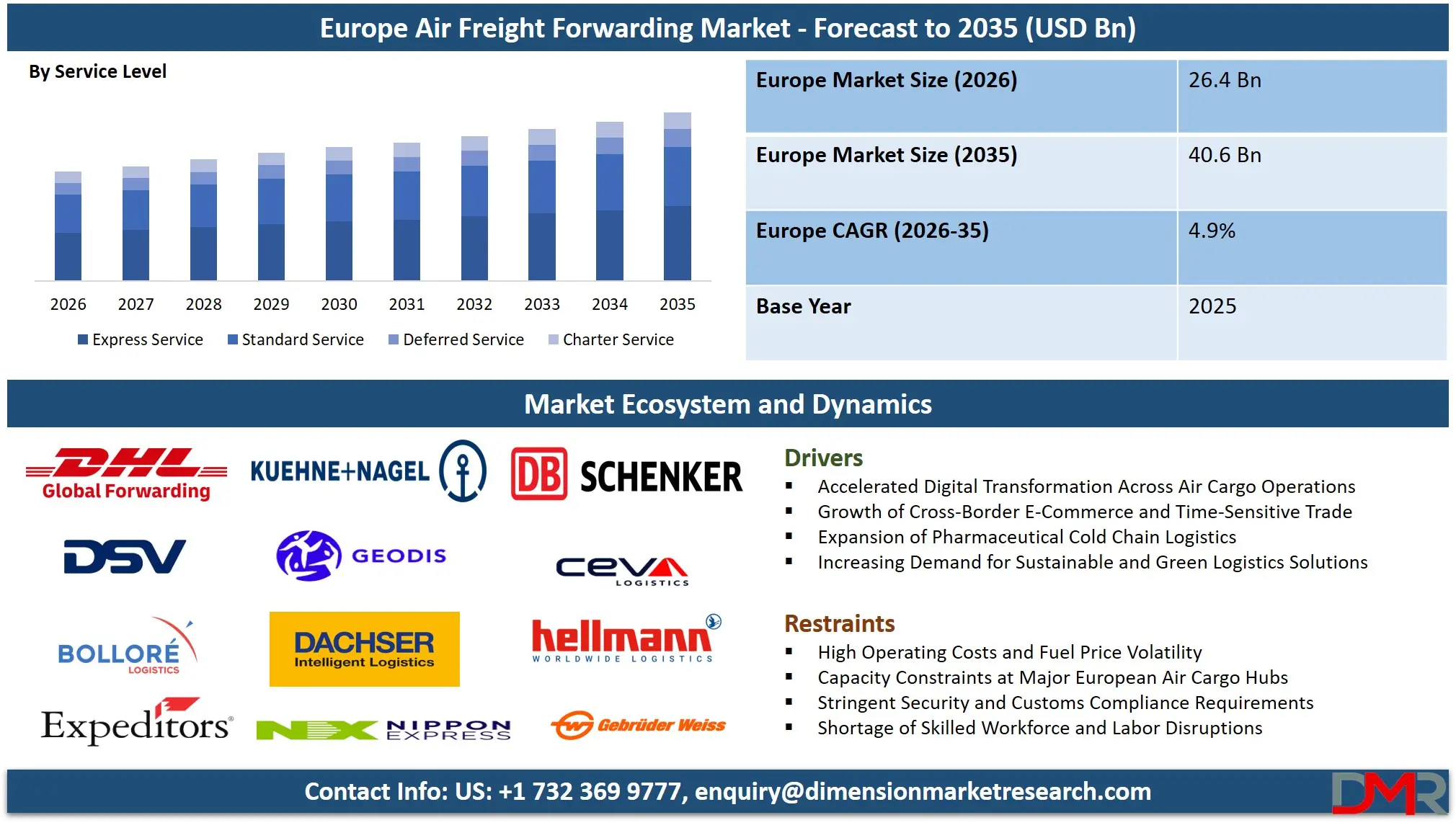
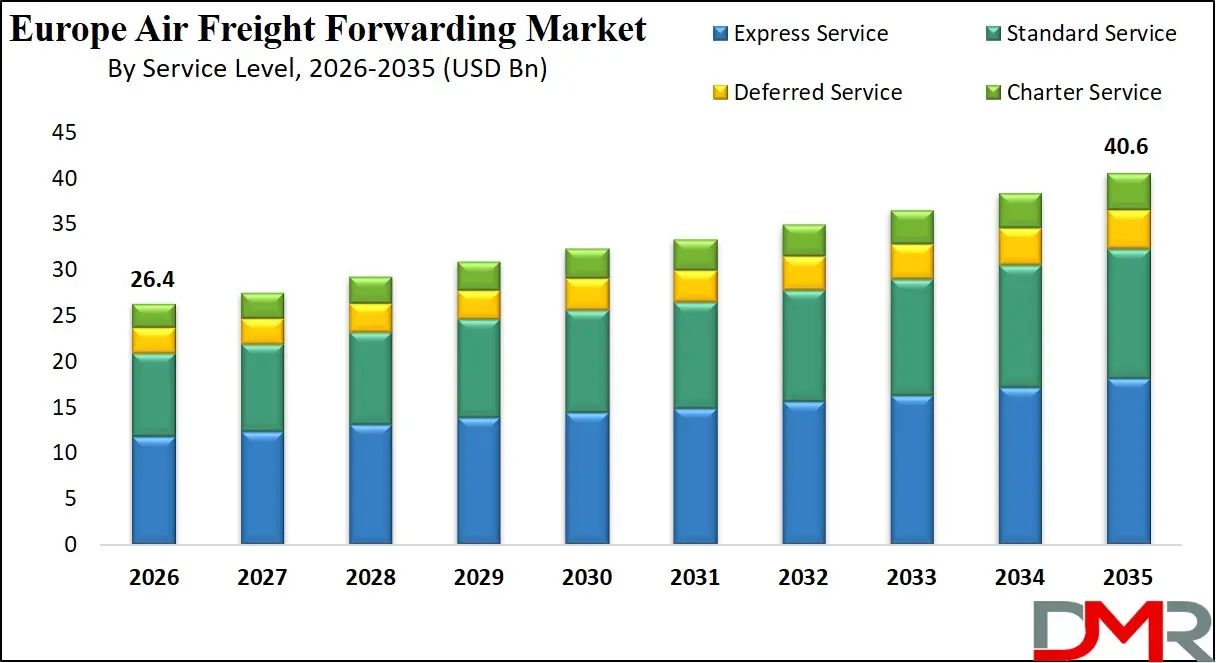
The Europe Air Freight Forwarding Market size is expected to reach a value of USD 26.4 billion in 2026, and it is further anticipated to reach a market value of USD 40.6 billion by 2035 at a CAGR of 4.9%.
ℹ
To learn more about this report –
Download Your Free Sample Report Here
The air freight forwarding market is an important part of the logistics and supply chain ecosystem in Europe, driven by robust trade flows and the region's commitment to seamless connectivity, facilitating just-in-time deliveries and global commerce. As a global leader in trade facilitation and logistics infrastructure, Europe occupies a privileged position in the development and adoption of advanced freight management solutions. The sector covers a wide range of services, from general cargo and special cargo handling to customs brokerage and value-added logistics, which are crucial in reducing transit times and supporting the growth of e-commerce and industrial supply chains. The European Union's commitment to enhancing trade efficiency has resulted in substantial investment in digitalization, infrastructure, and technology, significantly transforming the air cargo landscape.
Over the last few years, the air freight forwarding market in Europe has witnessed a strategic transition in adopting advanced technologies like AI, blockchain, and IoT tracking. These technologies are making logistics operations more efficient, developing real-time shipment visibility, facilitating easier decision-making, and further helping in the mitigation of supply chain disruptions. Also, with the rapid growth of e-commerce and time-sensitive deliveries, the need for sophisticated tracking and intervention systems has accelerated the demand for companies to scale up their logistics portfolios. All these evolutions of technology and the market are likely to drive the sector's growth, signifying a good future outlook for the market.
Key trends currently evident within the air freight forwarding arena in Europe are digital transitions taking hold of logistics operations by moving from traditional manual processes to proactive, tech-based ecosystems. Aside from this, further integration of AI and blockchain brings predictive analytics and real-time decisions with enhanced shipment visibility for better outputs of efficiency. Furthermore, with the augmenting emphasis on sustainability and carbon reduction in line with the European Green Deal, the adaptation of fuel-efficient aircraft and optimized routing solutions is on the rise. Similarly, the rise in cross-border e-commerce and just-in-time manufacturing has changed strategies for service integration as companies try to meet customer expectations of reliable and timely deliveries.
ℹ
To learn more about this report –
Download Your Free Sample Report Here
The market is consequently witnessing huge opportunities on the back of high investments by the European government in digital infrastructure development. Initiatives such as the construction of smart border systems and connected logistics corridors are creating a robust trade backbone to support regional commerce. Megaprojects like the development of digital freight platforms for cross-border shipments illustrate the strategic importance of air freight forwarding in enabling Europe's ambitious trade and sustainability goals. The technological prowess of the region enhances its potential to become a global hub for logistics innovation, offering unparalleled access to key markets across the continent. Further, the focus on smart technologies like AI, edge computing, and real-time tracking provides companies with opportunities to gain a competitive edge by improving operational accuracy and reducing costs.
Europe Air Freight Forwarding Market: Key Takeaways
- Market Value: The Europe Air Freight Forwarding Market size is estimated to have a value of USD 26.4 billion in 2026 and is expected to reach USD 40.6 billion by the end of 2035.
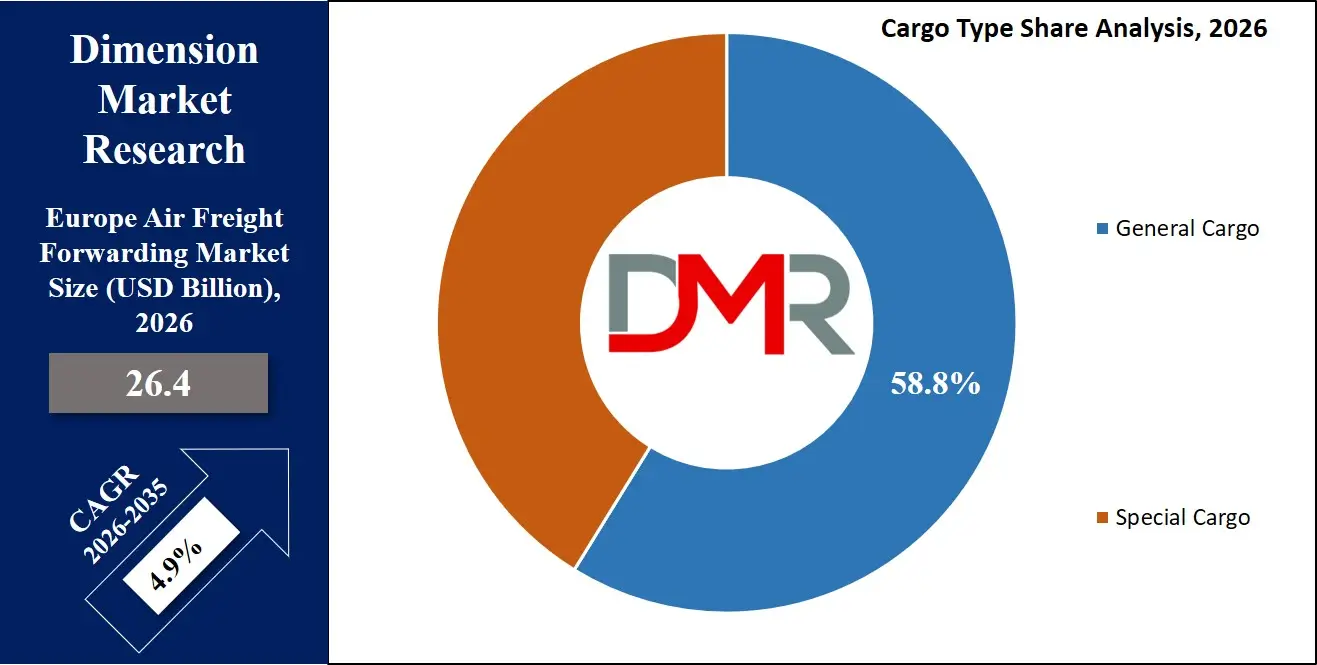
- By Cargo Type Segment Analysis: General Cargo is anticipated to dominate this segment in this market as it will hold 58.8% of market share in 2026.
- By Destination Segment Analysis: International shipments are projected to dominate the destination segment in the Europe Air Freight Forwarding Market with the highest market share in 2026.
- By Customer Type Segment Analysis: The Business-to-Business (B2B) segment is anticipated to dominate the Europe air freight forwarding market with a major market share in 2026.
- By Service Level Segment Analysis: Standard Service and Express Service are projected to hold the leading positions in the service level segment of this market in 2026.
- By Core Service Offering Segment Analysis: Freight Transportation is projected to dominate the core service offering segment in the Europe air freight forwarding market in 2026.
- By End-Use Industry Segment Analysis: The high-tech and electronics sector is projected to dominate the end-use industry segment in the Europe air freight forwarding market in 2026.
- Key Players: Some of the major key players in the Europe Air Freight Forwarding Market are DHL Global Forwarding, Kuehne + Nagel, DB Schenker, DSV A/S, GEODIS, CEVA Logistics, Bolloré Logistics, and many others.
- Market Growth Rate: The market is growing at a CAGR of 4.9% over the forecasted period.
Impact of Iran Conflict on Europe Air Freight Forwarding Market
- The Iran conflict can influence the Europe Air Freight Forwarding Market through its effects on fuel prices, supply chains, and economic stability. Rising geopolitical tensions in the Middle East often lead to higher oil and jet fuel prices, which increase operating costs for European freight forwarders and airlines. Higher operating costs can raise shipping rates and may slow the growth of air cargo volumes in the short term.
- The conflict can also disrupt global logistics and trade routes, causing delays in the supply of critical goods and increasing transit times for shipments moving through affected regions. These supply chain disruptions may affect delivery schedules for time-sensitive cargo such as pharmaceuticals, high-tech components, and perishable goods.
- Additionally, economic uncertainty caused by geopolitical tensions can influence consumer spending and trade volumes across Europe. However, rising air freight rates may encourage shippers to optimize supply chains and adopt digital tracking solutions, which could support long-term growth of the air freight forwarding market in the region.
Europe Air Freight Forwarding Market: Use Cases
- Pharmaceutical Cold Chain Logistics: This application ensures temperature-sensitive medicines and vaccines maintain required conditions throughout transit, leveraging real-time monitoring and specialized packaging to prevent spoilage and maintain efficacy across European distribution networks.
- E-Commerce Cross-Border Deliveries: Express services for online retail shipments enable fast delivery of consumer goods across European borders, with integrated tracking and customs clearance solutions reducing transit times and enhancing customer satisfaction.
- Automotive Just-in-Time Parts Supply: Time-definite air freight services deliver critical automotive components to manufacturing plants, preventing production line stoppages and supporting lean inventory strategies across European vehicle production hubs.
- High-Value Electronics Logistics: Secure handling and tracking of semiconductors, smartphones, and other high-tech goods with specialized packaging and customs expertise ensures safe transit and rapid clearance for time-sensitive electronics shipments.
Europe Air Freight Forwarding Market: Stats & Facts
European Commission (EU Transport & Trade)
- Around 3.2 million tonnes of air freight is handled monthly at major EU airports.
- The EU recorded an average of 15.8 million air freight shipments per month in 2024.
- The European Union aims to reduce cargo transit times by 30% by 2030 under the Digital Transport and Logistics Forum initiative.
- EU digital customs initiatives are expected to save about €2 billion annually in administrative costs.
- These digitalization efforts could also reduce customs clearance delays by approximately 40%.
- The EU Customs Union affects over 200 million customs declarations annually across member states.
Eurostat (European Union Statistics Office)
- European air freight volumes reached 14.2 million tonnes in 2023.
- More than 75% of air freight shipments in Europe involve cross-border international movements.
- Around 32% of European shippers consider transit time reliability essential when selecting freight forwarders.
- Europe recorded €4.8 trillion in extra-EU trade in 2024, representing a 6.2% annual increase.
- Air freight accounts for approximately 35% of the value of extra-EU trade, despite representing only 1% of volume.
European Civil Aviation Conference (ECAC)
- Nearly 95% of major European airports have invested in cargo handling modernization.
- Europe has more than 450 airports handling commercial freight operations.
- ECAC introduced enhanced security screening requirements for air cargo in 2021.
- In 2021, only 65% of freight forwarders had fully digital tracking capabilities.
- By 2024, over 85% of major freight forwarders offered real-time shipment visibility.
European Logistics Association
- The European logistics market employs over 11 million people across the continent.
- Air freight forwarding accounts for approximately 22% of total logistics spending in Europe.
- Pharmaceutical air freight shipments grew by 18% annually between 2020 and 2024.
- E-commerce related air freight volumes increased by 24% in 2023 alone.
European Environment Agency
- Air freight operations contribute approximately 3% of EU transport-related CO2 emissions.
- Sustainable aviation fuel adoption in cargo operations could reduce emissions by up to 80% per flight.
- Over 40 major European freight forwarders have committed to net-zero targets by 2050.
European Freight Forwarding Studies
- Digital booking platforms can reduce freight forwarding transaction costs by 25% to 35% when widely implemented.
- Real-time tracking and visibility solutions could reduce shipment delays by 15% to 25%.
- Automated customs clearance systems can reduce processing times by 40% to 60%.
- Around 20% of air freight shipments in Europe involve time-sensitive pharmaceuticals or perishables, where reliability is crucial.
Europe Air Freight Forwarding Market: Market Dynamic
Driving Factors in the Europe Air Freight Forwarding Market
Accelerated Digital Transformation Across Air Cargo Operations
The European air freight forwarding market is undergoing rapid digital transformation, driven by strong regulatory support under the EU’s digital strategy and increasing demand for operational efficiency. Freight forwarders are actively integrating advanced technologies such as artificial intelligence, cloud-based platforms, and automated documentation systems to streamline air cargo processes. These technologies enable real-time shipment tracking, predictive disruption management, and optimized routing across complex international networks. The transition toward electronic air waybills (e-AWB) and digital booking platforms is further improving data accuracy and reducing manual intervention, allowing forwarders to enhance service reliability and decision-making in time-sensitive air cargo operations.
Growth of Cross-Border E-Commerce and Time-Sensitive Trade
The continued expansion of cross-border e-commerce is a major demand driver for air freight forwarding services across Europe. Leading online retailers such as Amazon, Zalando, and Otto Group are setting high standards for delivery speed and reliability, pushing logistics providers to rely more heavily on air transport for international shipments. The need to meet short delivery windows for high-value and time-sensitive goods is accelerating demand for efficient air cargo solutions. This trend is also driving investments in automated sorting hubs, fulfillment centers, and integrated digital platforms that connect inventory, transportation, and last-mile delivery within a unified system.
Restraints in the Europe Air Freight Forwarding Market
High Operating Costs and Fuel Price Volatility
Air freight forwarding operations in Europe face significant cost pressures due to high fuel prices, stringent environmental regulations, and ongoing investments in fleet modernization and sustainable aviation fuel (SAF). Fuel represents a substantial portion of total air cargo costs, and price volatility directly impacts freight rates and forwarder margins. Additionally, compliance with evolving environmental standards and sustainability initiatives increases operational expenses, particularly for smaller logistics providers that may lack the financial capacity to invest in advanced technologies or green solutions. This creates a competitive imbalance between large multinational forwarders and smaller regional players.
Capacity Constraints at Major European Air Cargo Hubs
Limited infrastructure capacity at key European air cargo hubs remains a critical challenge for the market. Major airports such as Frankfurt Airport, Amsterdam Airport Schiphol, and Paris Charles de Gaulle Airport frequently operate near maximum capacity, particularly during peak shipping seasons. Slot constraints, congestion, and limited warehouse space can lead to shipment delays and increased handling costs. While ongoing infrastructure development and EU transport policies aim to address these bottlenecks, expansion efforts often lag behind rising demand, forcing forwarders to rely on secondary airports or alternative routing strategies.
Opportunities in the Europe Air Freight Forwarding Market
Expansion of Pharmaceutical and Temperature-Controlled Logistics
Europe’s strong pharmaceutical and biotechnology sector presents a significant growth opportunity for air freight forwarders specializing in temperature-controlled logistics. The increasing demand for biologics, vaccines, and specialty medicines requires highly reliable cold chain solutions that maintain strict temperature conditions throughout transit. Forwarders are investing in advanced packaging, real-time monitoring systems, and certified handling processes to ensure compliance with regulatory standards and protect product integrity. As Europe remains a major exporter of pharmaceutical products, the demand for specialized air freight services in this segment is expected to grow steadily.
Adoption of AI-Driven Predictive Logistics and Automation
The integration of artificial intelligence and data analytics into air freight forwarding operations is creating new opportunities for efficiency and service optimization. Advanced digital platforms are enabling forwarders to predict potential disruptions, optimize cargo routing, and automate documentation processes. Predictive analytics, combined with real-time data from weather systems and global trade networks, allows companies to proactively manage delays and improve transit reliability. These innovations are transforming traditional forwarding models into more agile, data-driven systems capable of delivering enhanced visibility and operational control.
Trends in the Europe Air Freight Forwarding Market
Advancement of Digital Trade Facilitation and Customs Modernization
Europe is at the forefront of digital trade facilitation, with initiatives focused on electronic customs clearance, pre-arrival processing, and integrated single-window systems. These advancements are significantly improving the efficiency of cross-border air cargo movement by reducing clearance times and administrative complexity. Countries such as Germany, the Netherlands, and Belgium are leading investments in digital logistics infrastructure, strengthening Europe’s position as a global air freight hub. Programs such as Authorized Economic Operator (AEO) certification further enhance trust, compliance, and operational efficiency within the air freight ecosystem.
Rising Demand for Sustainability and Green Air Freight Solutions
Sustainability is becoming a defining trend in the European air freight forwarding market, driven by strict environmental regulations and increasing customer demand for low-carbon logistics solutions. The adoption of sustainable aviation fuel (SAF), carbon offset programs, and optimized flight routing is gaining momentum among forwarders and airlines. Companies are increasingly offering carbon-neutral shipping options, enabling shippers to reduce the environmental impact of their air freight activities. As regulatory pressure intensifies and corporate sustainability commitments grow, green logistics is expected to play a central role in shaping the future of air freight forwarding in Europe.
Europe Air Freight Forwarding Market: Research Scope and Analysis
By Cargo Type Analysis
General Cargo is projected to dominate the cargo type segment in this market as they will hold 58.8% of market share in 2026. The dominance of general cargo in the cargo type segment of the Europe Air Freight Forwarding Market is owing to high manufacturing output and consistent demand for consumer and industrial goods in the region. Manufacturers and retailers in Europe are heavily investing in air freight solutions to move finished goods, machinery, and components across their supply chains; hence, advanced solutions are being used to smooth logistics operations, ranging from consolidated shipments to optimized routing and handling processes. Europe's position as a major export hub underlines the emphasis on moving non-perishable manufactured goods, therefore raising demand for cost-effective general cargo services that help in maintaining regular trade flows with real-time tracking and building service reliability, critical to maintaining logistics performance in this highly competitive market. Such huge production volumes of industrial and consumer goods spur demand for high-quality general cargo forwarding.
ℹ
To learn more about this report –
Download Your Free Sample Report Here
It will help in the complete interconnectivity of manufacturing and retail supply chains within the logistics ecosystem, thus making its future in the market indispensable. E-commerce, omnichannel retail, and global manufacturing completely depend on this basic general cargo forwarding for moving and synchronizing goods within their networks. Growth in the cross-border trade sector also adds to the contribution of advanced tracking integrated with standard services that optimize the processes of shipment visibility. Government-backed trade facilitation programs and initiatives advocate the use of the latest available technology to reduce transit times, thus supporting the market of general cargo forwarding. Hence, general cargo remains an integral factor as it provides the foundational logistics skeleton for modern European trade.
By Destination Analysis
International shipments are anticipated to dominate the share in the destination segment of the air freight forwarding market in Europe, owing to the strategic reliance on cross-border trade flows and Europe's position as a global trading hub. Europe has vast export capabilities with a supply chain connecting major manufacturing regions for easier distribution of goods to global markets across Germany, France, and Italy. International air freight offers a proven balance of speed and capacity that no other mode can match for time-sensitive goods like high-tech components and pharmaceuticals. First-generation trade lanes, being very essential, do happen with both exports and imports across European and intercontinental routes. There is an unparalleled growth in the number of trade agreements, as with a growing demand for faster delivery times, shippers would want to expect reliable transit times under all conditions.
The logistics technology investments involve the expansion of digital tracking capabilities for international shipments, adding handling facilities along major trade corridors, and furthering customs clearance algorithms. This development also aligns with the EU's Digital Decade in positioning Europe as a leader in trade facilitation. The proximity of major export industries to international gateway airports further cements their position as the main destination type for air freight forwarding. Among many factors, trade volume comes forward. Compared with domestic movements, international air freight operates at higher volumes for high-value goods, thus making it perfectly fit for meeting trade requirements across industry segments. The increased use of technologies for digital documentation, like blockchain-based platforms, improves the operational efficiency-cum-visibility more in enhancing international shipment dominance.
By Customer Type Analysis
The Business-to-Business (B2B) segment is poised to dominate the Europe air freight forwarding market due to several reasons, such as high industrial output, long-standing supplier relationships, and complex supply chain requirements. B2B shipments are at the forefront of air freight forwarding adoption, driven by their high value per shipment and industrial demand for raw materials and components. Europe's manufacturing base places a strong emphasis on reliable freight services for production inputs, a factor that industrial companies across Germany, France, and Italy are eyeing with great interest. These manufacturers could be operating very extensive supply chains for which they need reliable forwarding services to enable functions like just-in-time delivery and inventory optimization. B2B forwarders also boast scale for the adoption of innovative technologies like AI routing and blockchain documentation, paving the way to enhance efficiency and complete transparency in operations. The reason B2B freight forwarders can negotiate better with airlines and deploy integrated logistics solutions is because of their overall shipment volumes.
B2B freight forwarders have benefited from such initiatives funded by the European Commission, examples of which are the research programs under Horizon Europe to provide different types of funding and infrastructure to extend the logistics capabilities of their networks. In summary, this dominant position has also been enabled by driving the wheel of Europe's industrial export economy. At the forefront in the implementation of state-of-the-art logistics best practices, leading B2B freight forwarders continue to help set new thresholds in terms of service reliability and innovative applications across the industry, therefore continuing their top market performance.
By Service Level Analysis
Standard Service and Express Service are projected to lead in the Europe Air Freight Forwarding Market due to their highly transformative effect in achieving immediate delivery improvements and widespread availability across cargo types. These service levels power basic and time-definite logistics, respectively, and, most importantly, provide stepping stones toward specialized services in solving the complexity brought along by modern supply chain scenarios. Europe's trade environment focuses on utilizing standard and express services across all major trade lanes. All these objectives also align with standard and express applications focused on improved transit reliability and shipper convenience. Firms utilize standard and express services to meet customer requirements, reduce inventory costs, and create better supply chain value.
B2B and e-commerce adoption have gained momentum in Europe, thus increasing the need for standard and express solutions. For example, express services improve time-to-market for new products, and standard services offer cost-effective movement for regular shipments. Standard and express functions enhance the end-user experience, which is an important factor in the competitive market. Government-backed trade facilitation and partnerships with global tech leaders further fuel standard and express adoption. These are increasingly being integrated into digital forwarding platforms, packaging what is to be expected in the future. Having already proven their potential through improvement in speed, reliability, and scalability, standard and express remain among the major service levels that will still dominate in the European air freight forwarding sector.
By Core Service Offering Analysis
Freight Transportation is projected to hold the leading position with 58.3% of market share in the core service offering segment of the Europe Air Freight Forwarding Market in 2026, as such a service is very crucial to ensure cargo movement and supply chain continuity. With the fast growth of trade volumes and global commerce in Europe, the demand for freight transportation solutions that could meet logistics demands effectively is increasingly felt. Core freight transportation enables forwarders under EU regulations to attain the goal of Europe being a global trade leader by ensuring the best routing with minimum handling issues and improved transit reliability. Advanced freight solutions integrate AI, real-time tracking, and digital documentation to offer on-time deliveries and smooth logistics operations that minimize delays, optimize load factors, and improve customer satisfaction. The increasing adoption of integrated forwarding platforms underlines the importance of this segment all the more. Besides, integrated technologies are increasingly being adopted by forwarders that work in tandem with airline partnerships to help lower costs and meet customer expectations.
Further, this segment ensures dominance through the development of growing trade volumes and e-commerce. Most advanced freight systems have their dependence on such kinds of core transportation by serving industry segments that range from automotive parts to consumer electronics. Supporting the market's demand are also some government initiatives towards developing digital trade infrastructure. Due to its immediate effects relating to shipment reliability, capacity management, and customer satisfaction, it keeps its superiority in the market.
By End-Use Industry Analysis
The high-tech and electronics sector is projected to dominate the end-use industry segment in the Europe air freight forwarding market because this sector has the highest value-to-weight ratio shipments and the most stringent reliance on time-definite delivery and supply chain velocity. Electronics production is showing stable demand in Europe, driven by semiconductor manufacturing and consumer device assembly, with seamless logistics integration driving this segment to dominate. Europe's position in global electronics trade emphasizes time-critical movements across global supply chains, with a key focus on the high-tech sector. Further, this segment would need the implementation of advanced air freight solutions to guarantee delivery windows and security-impacting aircraft selection, route planning, and shipment tracking, since product lifecycles evolve day by day. Heavy investments have been made in logistics partnerships and handling capabilities not only by leading electronics manufacturers like Infineon and Bosch but also by specialized freight forwarders, making the market competitive in reality. Enhanced service packages for air and ground transport are increasingly being offered by forwarders, further raising the requirement for sophisticated freight forwarding solutions.
The EU's support in enhancing digital infrastructure, thereby establishing innovation hubs, improves the supply chain for electronics companies. Because this industry is considered a major contributor to the EU GDP and employment, it is considered one of the most dominant end-use industries. The high-tech sector continues to lead with the latest technologies and comprehensive logistics solutions in shaping the region's air freight forwarding ecosystem.
The Europe Air Freight Forwarding Market Report is segmented on the basis of the following:
By Cargo Type
- General Cargo
- Special Cargo
By Destination
By Customer Type
- Business-to-Business (B2B)
- Business-to-Consumer (B2C)
By Service Level
- Standard Service
- Express Service
- Deferred Service
- Charter Service
By Core Service Offering
- Freight Transportation
- Warehousing & Distribution
- Customs Brokerage
- Freight Consolidation
- Value-Added Logistics Services
By End-Use Industry
- Healthcare
- Food & Beverage
- High-Tech & Electronics
- Automotive
- Retail & E-commerce
- Aerospace & Defense
- Agriculture
- Industrial Manufacturing
Impact of Artificial Intelligence on the Europe Air Freight Forwarding Market
- Automation of Customs and Documentation Processes: Artificial intelligence is streamlining complex customs procedures across Europe by automating documentation checks, classification, and compliance verification under frameworks such as the Union Customs Code. AI-powered systems reduce manual errors, accelerate clearance timelines, and improve regulatory compliance in cross-border air freight operations.
- Enhanced Predictive Analytics and Disruption Management: AI-driven analytics tools are enabling forwarders to anticipate potential disruptions such as weather delays, congestion at major hubs, or capacity shortages. By leveraging real-time and historical data, these systems allow proactive decision-making, including route optimization and shipment rescheduling, significantly improving reliability.
- Optimization of Capacity Utilization and Pricing: AI is transforming how freight forwarders manage air cargo capacity by enabling dynamic pricing models and real-time space allocation. Intelligent algorithms analyze demand patterns, seasonal trends, and route performance to optimize load factors and improve profitability while ensuring better access to capacity for shippers.
- Improved Shipment Visibility and Customer Experience: AI-powered tracking platforms are enhancing end-to-end visibility by providing accurate estimated time of arrival (ETA) predictions and real-time shipment updates. This shift from reactive tracking to predictive visibility is improving transparency, enabling better planning for shippers, and strengthening customer satisfaction.
- Automation of Warehouse and Ground Handling Operations: The integration of AI with robotics and smart systems is improving efficiency in cargo handling, sorting, and warehouse management at major European air freight hubs. Automated processes reduce turnaround times, minimize operational errors, and support the handling of increasing cargo volumes.
By Region
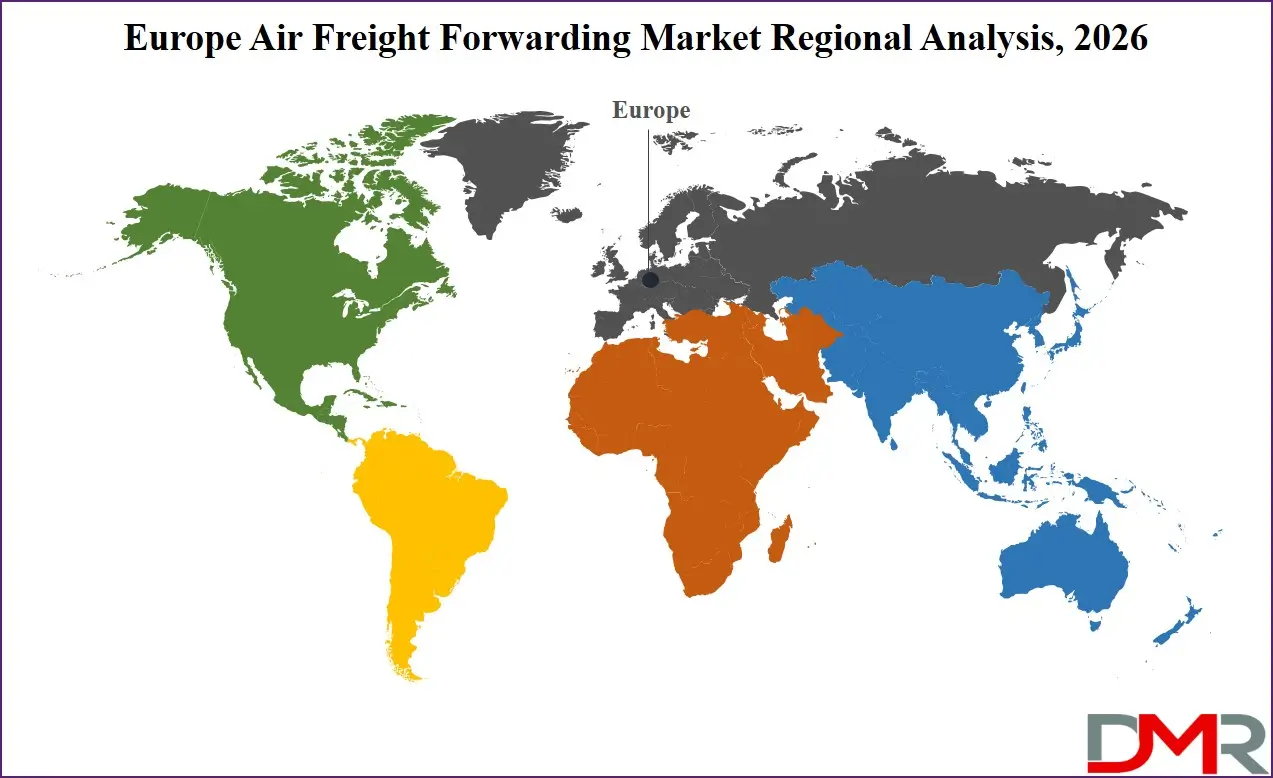
Europe
- Germany
- The U.K.
- France
- Italy
- Russia
- Spain
- Benelux
- Nordic
- Rest of Europe
Europe Air Freight Forwarding Market: Competitive Landscape
The competitive landscape is fueled by participation, both domestic and international, in the Europe Air Freight Forwarding Market, with dissimilar capabilities across transportation networks, technology platforms, and value-added services. Major companies, therefore, strategize to develop advanced technologies such as AI, blockchain, and IoT tracking to enhance forwarding capabilities to better competitiveness. The leading players are Deutsche Post DHL Group, Kuehne + Nagel, and DB Schenker in integrated logistics solutions, while in digital and AI-based platforms, the leading players include Flexport, Sennder, and Transporeon. These companies leverage Europe's trade facilitation initiatives by aligning their offerings with regulatory priorities meant to attract investments and improve efficiency. It addresses both the growing B2B and e-commerce sectors, where these focus more on niche capabilities: pharmaceutical cold chain and automotive logistics, while global forwarders have emerged, providing end-to-end solutions in transportation and technology development.
ℹ
To learn more about this report –
Download Your Free Sample Report Here
Mergers and partnerships are common strategies that allow companies to expand service portfolios and reach. For instance, technology companies partnering with forwarders enhance data-driven decision-making and operational agility. While the leading companies are competitive, innovation in the fields of AI, digital documentation, and predictive analytics separates the leaders. These opportunities are likely to come along with an intense competitive landscape for both established players and new entrants, with strong governmental support for developing logistics innovation clusters.
Some of the prominent players in the Europe Air Freight Forwarding Market are:
- DHL Global Forwarding
- Kuehne + Nagel
- DB Schenker
- DSV A/S
- GEODIS
- CEVA Logistics
- Bolloré Logistics
- DACHSER
- Hellmann Worldwide Logistics
- Gebrüder Weiss
- Expeditors International
- Nippon Express
- Kintetsu World Express
- Kerry Logistics
- Yusen Logistics
- XPO Logistics
- Noatum Logistics
- FIEGE Logistics
- Rhenus Logistics
- Agility Logistics
- Other Key Players
Recent Developments in the Europe Air Freight Forwarding Market
- February 2026: CEVA Logistics entered a strategic partnership with HAECO Group to strengthen its air cargo handling capabilities, focusing on improving service reliability, operational efficiency, and network integration across key international air freight routes.
- December 2025: GEODIS announced the acquisition of Malherbe to strengthen its European transport network, improving end-to-end logistics integration, operational efficiency, and service reliability across key regional freight corridors.
- April 2025: DSV A/S secured regulatory approval for its USD 16.5 billion acquisition of DB Schenker, a major consolidation move aimed at expanding its global footprint, enhancing air freight capacity, and strengthening its competitive position in the European logistics market.
- July 2024: CEVA Logistics completed the integration of Bolloré Logistics operations, enabling the company to expand its air freight forwarding network, enhance multimodal capabilities, and improve service offerings across key European and global trade corridors.
- July 2024: XPO Logistics introduced a new multimodal transport corridor connecting Antwerp and Istanbul, aimed at improving regional connectivity, optimizing transit times, and supporting more efficient integration of air and road freight services across Europe.
Report Details
| Report Characteristics |
| Market Size (2026) |
USD 26.4 Bn |
| Forecast Value (2035) |
USD 40.6 Bn |
| CAGR (2026–2035) |
4.9% |
| Historical Data |
2021 – 2025 |
| Forecast Data |
2027 – 2035 |
| Base Year |
2025 |
| Estimate Year |
2026 |
| Report Coverage |
Market Revenue Estimation, Market Dynamics, Competitive Landscape, Growth Factors and etc. |
| Segments Covered |
By Cargo Type (General Cargo and Special Cargo), By Destination (Domestic and International), By Customer Type (Business-to-Business (B2B) and Business-to-Consumer (B2C)), By Service Level (Standard Service, Express Service, Deferred Service, Charter Service), By Core Service Offering (Freight Transportation, Warehousing & Distribution, Customs Brokerage, Freight Consolidation, and Value-Added Logistics Services), By End-Use Industry (Healthcare, Food & Beverage, High-Tech & Electronics, Automotive, Retail & E-commerce, Aerospace & Defense, Agriculture, and Industrial Manufacturing) |
| Regional Coverage |
Europe – Germany, The UK, France, Russia, Spain, Italy, Benelux, Nordic, & Rest of Europe |
| Prominent Players |
DHL Global Forwarding, Kuehne + Nagel, DB Schenker, DSV A/S, GEODIS, CEVA Logistics, Bolloré Logistics, DACHSER, Hellmann Worldwide Logistics, Gebrüder Weiss, Expeditors International, Nippon Express, Kintetsu World Express, Kerry Logistics, Yusen Logistics, XPO Logistics, Noatum Logistics, FIEGE Logistics, Rhenus Logistics, Agility Logistics, and Other Key Players. |
| Purchase Options |
We have three licenses to opt for: Single User License (Limited to 1 user), Multi-User License (Up to 5 Users) and Corporate Use License (Unlimited User) along with free report customization equivalent to 0 analyst working days, 3 analysts working days and 5 analysts working days respectively. |
Frequently Asked Questions
How big is the Europe Air Freight Forwarding Market?
▾ The Europe Air Freight Forwarding Market size is estimated to have a value of USD 26.4 billion in 2026 and is expected to reach USD 40.6 billion by the end of 2035.
Who are the key players in the Europe Air Freight Forwarding Market?
▾ Some of the major key players in the Europe Air Freight Forwarding Market are DHL Global Forwarding, Kuehne + Nagel, DB Schenker, DSV A/S, GEODIS, CEVA Logistics, Bolloré Logistics, and many others.
What is the growth rate in the Europe Air Freight Forwarding Market?
▾ The market is growing at a CAGR of 4.9% over the forecasted period.