Market Overview
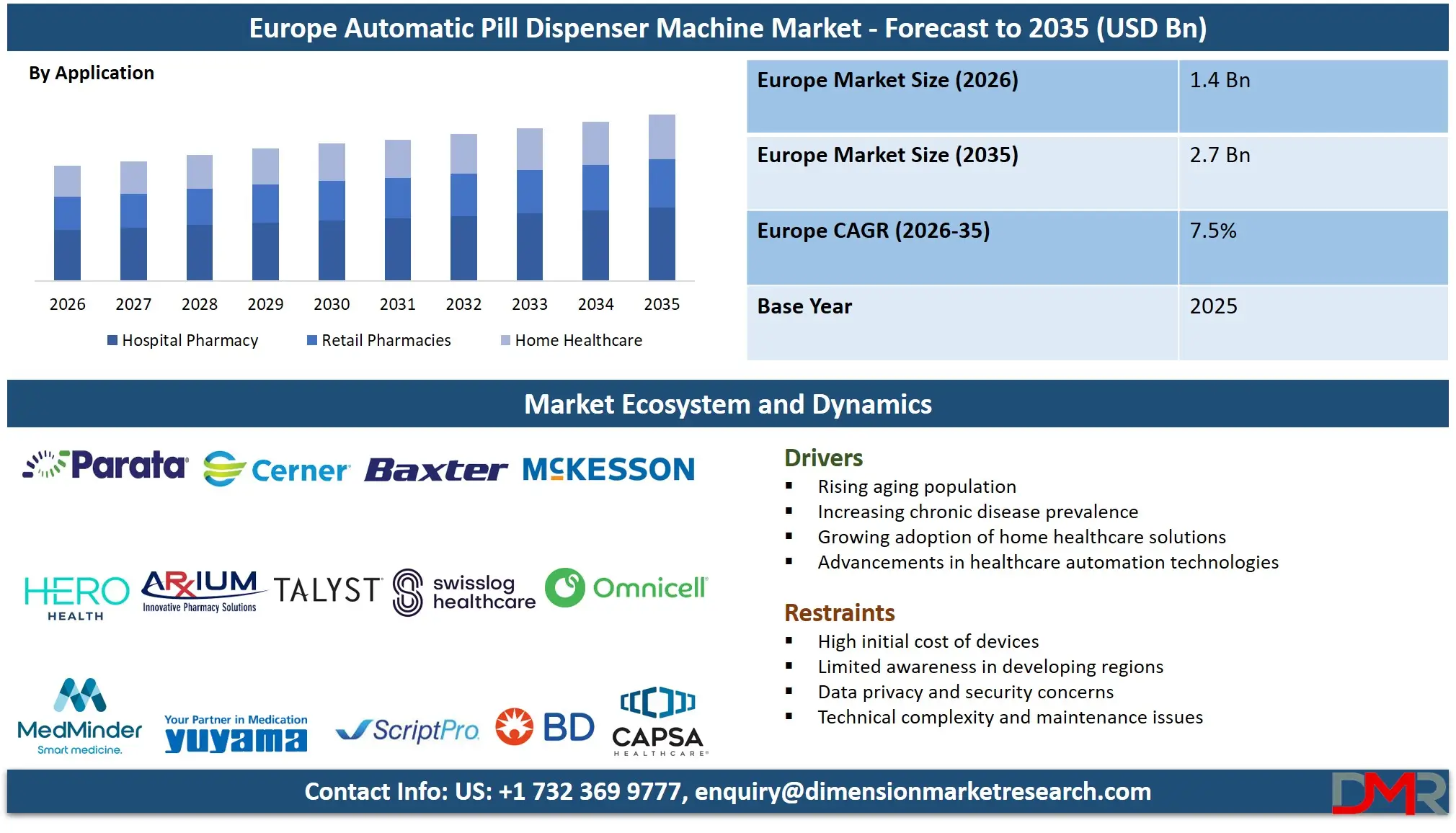
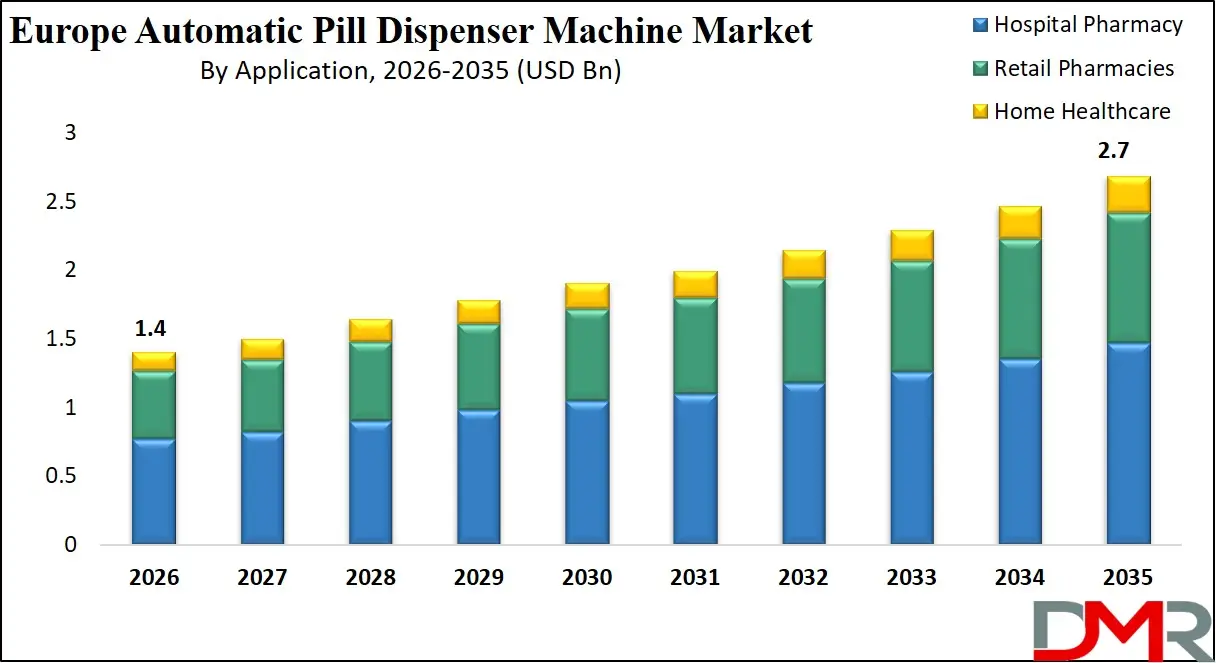
The Europe Automatic Pill Dispenser Machine Market size is expected to reach a value of USD 1.4 billion in 2026, and it is further anticipated to reach a Market value of USD 2.7 billion by 2035 at a CAGR of 7.5%.
ℹ
To learn more about this report –
Download Your Free Sample Report Here
European Automatic Pill Dispenser Machine Market, there has been significant growth as a result of the region's advanced healthcare system, an aging population, and the government's concern for patient safety and medication errors. The adoption of these devices is rising in hospital pharmacies, retail outlets, and home healthcare facilities as a result of the need for efficient and effective medication dispensing and adherence. Additionally, the market is being driven by the prevalence of diseases such as diabetes, heart diseases, and dementia that require effective management through complex polypharmacy.
Technologies including RFID and barcode technologies have been used in Europe for integration with EHRs as part of the automation process. Western Europe leads in terms of the market share because of advanced healthcare facilities and investment in healthcare. Countries leading in this market include Germany, France, and Benelux. Southern and Eastern Europe have shown great promise as a result of investments in modernization of healthcare practices in these regions. Important firms involved in this sector include BD, Omnicell Inc., and Swisslog Healthcare.
ℹ
To learn more about this report –
Download Your Free Sample Report Here
Europe Automatic Pill Dispenser Machine Market: Key Takeaways and Other Influencing Factors
- Europe Market Value: The Europe Automatic Pill Dispenser Machine Market was valued at USD 1.45 billion in 2026 and is anticipated to reach USD 2.7 billion by 2035, owing to the growth in automation technology, the aging population trend, and growing demand for more efficient drug dispensing technologies.
- European Growth Rate: The European automatic pill dispenser machine market is predicted to grow at a compound annual growth rate (CAGR) of 7.5%, owing to the rapid digitization of the health sector, the rise in chronic disease cases, and the need for minimizing medical errors.
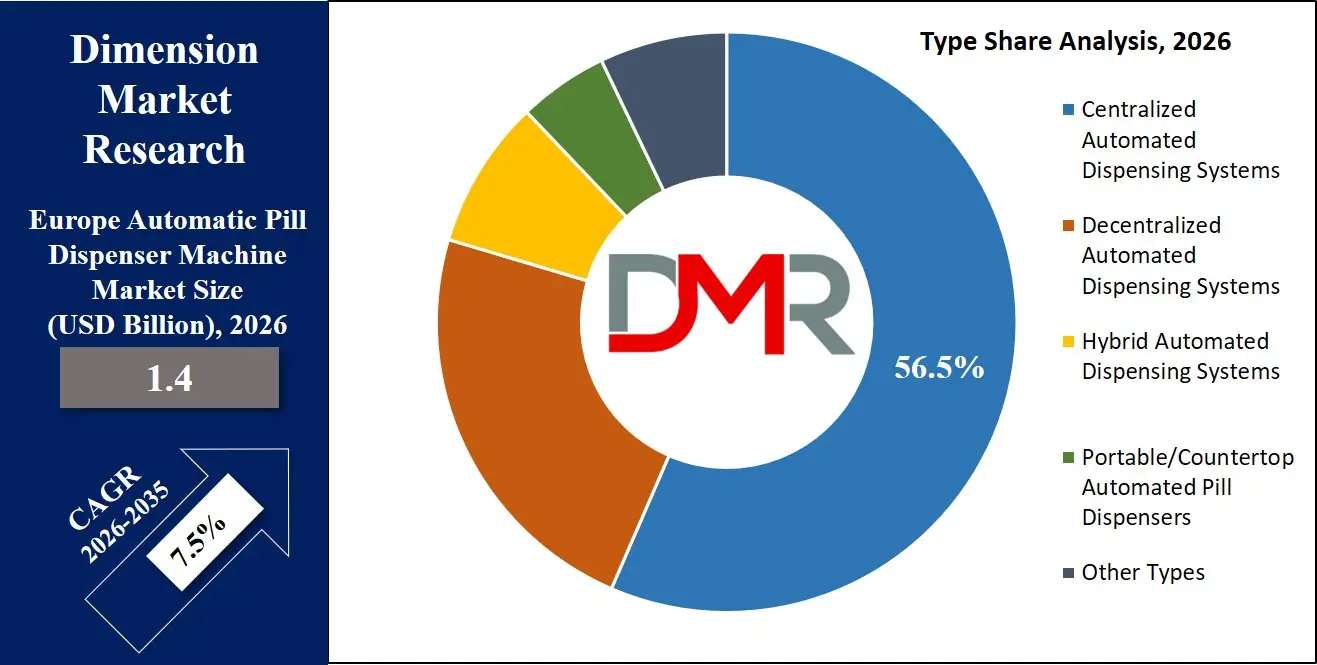
- By Type Segment Analysis: Centralized automated dispensing systems hold the largest share of 56.5% in 2026, mainly because of their wide application in extensive hospital networks that provide effective bulk drug storage and inventory management.
- By Technology Segment Analysis: RFID-based systems dominate the technology segment due to their ability to provide real-time tracking, enhanced accuracy, and compliance with EU regulations such as the Falsified Medicines Directive, ensuring medication safety and traceability across healthcare supply chains.
- By Application Segment Analysis: The hospital pharmacy segment occupies the largest share of 39.8.0% in 2024 because of the high volume of medications handled and required standards, whereas home healthcare is becoming one of the fastest-growing segments because of increasing demand for remote patient monitoring solutions.
- European Medicines Agency / EU Regulatory Bodies: Medication errors are the primary problem in European countries and require mandatory reporting to pharmacovigilance programs in all EU member states including EudraVigilance.
- Council of Europe / WHO (European Data): Medication errors account for 18.7%–56% of the adverse drug events occurring in hospitals, whereas the proportion of prescribing errors varies within 0.3% to 9.1%, stressing the significance of automation and technological solutions in the field.
- European Patients’ Forum: Adverse drug events are accounted for up to 56% among medication errors that may vary between 7.5% of prescription errors and 0.08% of dispensing errors associated with improper medication and dosage.
Impact of Iran Conflict on the Europe Automatic Pill Dispenser Machine Market
There has been a growing effect of the Iran crisis on the Europe automatic pill dispenser machine market, although not directly, but indirectly. Delays in the delivery of components, whether medical or electrical, in key transport routes, such as the strait of Hormuz, have affected delivery times and increased costs. Higher costs associated with oil and the scarcity of chemicals derived from oil are also pushing up the manufacturing costs of medical machines, including automatic pill dispensers. There is also a risk of pharmaceutical supply chain delays in the delivery of active ingredients that affect drug availability.
Europe Automatic Pill Dispenser Machine Market: Use Cases
- Home Healthcare Use: The use of automatic medication dispensers in home health care will assist patients with chronic diseases to take medications effectively, thereby providing on-time administration of medications, fewer missed doses, better compliance, and remote monitoring of patients in Europe.
- Hospital and Care Facility Use: these systems streamline medication distribution, reduce human errors, improve patient safety, and enhance operational efficiency in hospitals, nursing homes, and assisted living facilities facing rising patient loads and staffing constraints.
- Pharmacy Automation Use: Pharmaceutical organizations will benefit from automatic dispensers as they enable faster prescription preparation with minimum human interference, ensuring accuracy at a higher volume.
Europe Automatic Pill Dispenser Machine Market: Market Dynamic
Market Trends in the Europe Automatic Pill Dispenser Machine Market
Shift Toward Integrated and Decentralized Solutions
More and more, the healthcare systems within Europe have been changing from centralized pharmacies into decentralized approaches for managing medication distribution. Hospitals are now implementing automatic dispensing devices right in the ward where the nurses can access their medications immediately without having to go through the centralized pharmacy system. The process not only makes nurse activities more efficient but is also beneficial for patients' welfare. In terms of emergency situations, the decentralized system offers better control over their inventories and less medication delays. With the emphasis being put on efficiency and effective patient care, dispensing ecosystems will emerge as the best solution.
Integration with E-Health and Telemedicine Platforms
The EU's heavy focus on interoperable digital health is leading to increased interoperability between automated dispensers and electronic health records and telemedicine platforms. The dispensers are being integrated into cloud systems in order to be able to transmit information regarding medication compliance in real time to healthcare professionals as well as caregivers. This becomes especially important for remote monitoring of patients suffering from chronic ailments like heart and lung disease. The increased interoperability makes clinical decision making more efficient, helps healthcare professionals take necessary actions, and is integral to remote patient monitoring programs.
Growth Drivers in the Europe Automatic Pill Dispenser Machine Market
Rapidly Aging Population (“Silver Tsunami”)
Europe’s population is one of the fastest-growing populations worldwide in terms of old age, especially those who are above 65 years. The increase in the number of older people brings about the problem of chronic ailments and cases of polypharmacy, which means that many people are taking several drugs. The management of this complicated process leads to the problem of non-compliance and potential adverse drug events. The solution to this challenge is through the use of automated pill dispenser technology that will facilitate compliance to taking drugs.
Focus on Reducing Medication Errors and Improving Patient Safety
Medication errors continue to be an issue of great concern within the European health systems, affecting the well-being of patients and raising the cost of healthcare. There is growing interest in automated dispensing machines because they greatly minimize the potential for human errors involved in the manual process of handling medicines. The accuracy of dosage, proper labeling, and control of drugs are some of the benefits offered by these machines, which help promote patient safety. With increased efforts aimed at minimizing errors, adoption of these machines will rise in coming years.
Growth Opportunities in the Europe Automatic Pill Dispenser Machine Market
Expansion into Southern and Eastern Europe
Even though Western Europe presents an advanced market for dispensing automation systems, ample growth potential exists in Southern and Eastern European nations like Italy, Spain, Poland, and Czechia. Healthcare establishments in these areas are currently investing in modernization and improving infrastructure using European Union recovery and development funds. Increased hospital investment in digital health tools will drive the adoption of drug administration technology, especially with better economic performance and growing awareness about healthcare. This presents a lucrative opportunity for companies to develop innovative and affordable products targeting the nascent healthcare sector in emerging Europe.
AI-Powered Predictive Adherence Solutions
The implementation of artificial intelligence in automated pill dispensers is opening up new possibilities for growth in the European market. Artificial intelligence systems will be able to monitor patients' behavioral patterns and predict possible instances of medication non-compliance in advance. This helps implement preventive measures, such as alerting the caregiver or providing automatic notifications from the healthcare provider. Advanced prediction models increase patient compliance with medications and lead to positive results in treating conditions. Given the efforts being made in Europe in the sphere of digital health technologies, AI-powered pill dispensers will gain momentum in the near future.
Market Restraints in the Europe Automatic Pill Dispenser Machine Market
High Initial Costs and Reimbursement Complexity
The considerable amount of capital that needs to be invested in automated dispensing machines is another major obstacle, especially for hospitals and smaller healthcare organizations. Centralized dispensing machines cost millions of euros, making budgeting difficult. As for domestic machines, although inexpensive, there is no uniform system of reimbursement across Europe, leading to limited availability. There is also the problem of the absence of universal coverage by statutory health insurance, causing delays in the acceptance of the technology. Hospitals need to assess their ROI, leading to delayed purchases.
Fragmented Regulatory Landscape (MDR Compliance)
The introduction of the MDR 2017/745 regulation of the European Union has imposed strict rules on manufacturers of automated pill dispensers. On one hand, this is important for ensuring quality and safety; on the other hand, it makes the production process more expensive and complex. Manufacturers have to deal with different understandings of the regulation in each state that is part of the union, which often results in delayed launches on the market. In addition, small businesses encounter problems while complying with certification standards, and thus find it difficult to enter the European market.
Europe Automatic Pill Dispenser Machine Market: Research Scope and Analysis
By Type Analysis
Centralized automated dispensing systems have a greater prevalence in Europe as they closely follow the current trends of operation within hospitals and patient-centered treatment. The installation of Centralized automated dispensing systems is done right inside hospital wards where patients receive treatments, which ensures that the drug can be obtained immediately.
ℹ
To learn more about this report –
Download Your Free Sample Report Here
This increases efficiency by saving time because the nurses do not have to go back and forth between wards and the pharmacy to collect medicine. Many healthcare institutions in Europe are adopting centralized systems in order to improve the safety of their patients and increase medication efficiencies.
By Technology Analysis
The leading technology used is RFID because it provides better accuracy, automation, and real-time tracking of medication movements. Unlike the use of bar codes, RFID systems do not need line of sight scanning of tags for identification. This makes medication processing more convenient and faster. The use of RFID will improve the accuracy of medication dispensing and management through real-time inventory monitoring and automation processes. There is a need to provide greater patient care and transparency by healthcare organizations in Europe, thus promoting the implementation of RFID dispensing systems. Another major advantage is that stock control becomes easier through automation processes using the RFID system.
By Application Analysis
The Hospital Pharmacy segment is poised to lead the Europe automatic pill dispenser machine market based on the large number of medications used and stringent patient safety standards in place. Hospitals represent the main end-users of automatic dispensing equipment since they strive to minimize medication errors and optimize the processes to ensure optimal patient results. Given the complexities of managing medications within the hospital environment, particularly considering the prevalence of chronic diseases and aging, the use of automation becomes imperative. Other factors that make hospitals the leading segment include the need to adhere to regulations and track medication usage effectively. Retail pharmacies and home care are also expanding applications.
The Europe Automatic Pill Dispenser Machine Market Report is segmented on the basis of the following:
By Type
- Centralized Automated Dispensing Systems
- Decentralized Automated Dispensing Systems
- Hybrid Automated Dispensing Systems
- Portable/Countertop Automated Pill Dispensers
- Other Types
By Technology
- RFID-Based Systems
- Barcode-Based Systems
By Application
- Hospital Pharmacy
- Retail Pharmacies
- Home Healthcare
Impact of Artificial Intelligence in the Europe Automatic Pill Dispenser Machine Market
The introduction of Artificial Intelligence technology into automatic pill dispenser devices has greatly improved their effectiveness in the European region. The ability of the AI system to predict and provide personalized medication management makes it possible for healthcare professionals to track patient behavior and adherence patterns to detect cases of missed dosages or wrong usage. With such data, healthcare facilities can trigger real-time alerts that can assist in preventing future complications and improving patient care. Additionally, the use of AI technology helps in optimizing the supply chain process within hospitals through accurate predictions of medicine demand.
Moreover, the introduction of AI technology into automatic pill dispenser machines encourages the adoption of remote patient monitoring and home-based health care systems. Patients who are taking long-term medications can benefit from voice-assisted services provided by intelligent dispensers to help them manage their conditions effectively at home.
Europe Automatic Pill Dispenser Machine Market: Regional Analysis
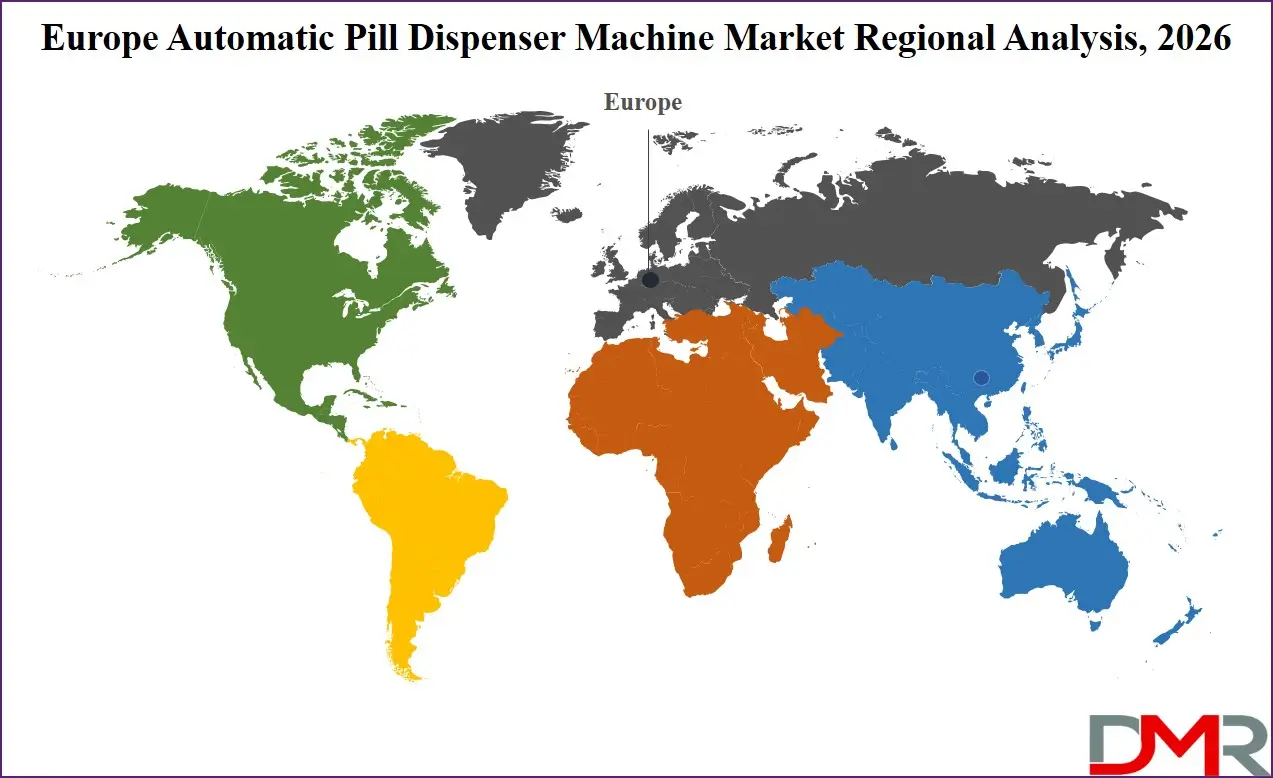
There are marked regional variations evident in the Europe Automatic Pill Dispenser Machine Market with Western Europe having the highest number of adopters owing to well-developed healthcare facilities, higher expenditure on healthcare, and greater digitalization. Some of the leading markets include Germany, France, and United Kingdom, owing to their aging population demographics, favorable regulations, and utilization of automation in hospitals. On the other hand, Northern European nations like Sweden and Denmark stand out owing to their high adoption of digital health services and home care practices. South and Eastern Europe, including Italy, Spain, Poland, and Czechia, are the emerging markets in Europe.
By Region
Europe
- Germany
- The U.K.
- France
- Italy
- Russia
- Spain
- Benelux
- Nordic
- Rest of Europe
Europe Automatic Pill Dispenser Machine Market: Competitive Landscape
The competitive environment within the Europe Automatic Pill Dispenser Machine Market can be described as moderately fragmented and innovation-oriented, with the involvement of large pharmaceutical and healthcare technology companies operating globally alongside young and innovative startups working within the digital health sector. Such major players as Becton, Dickinson and Company, Omnicell, Inc., Swisslog Healthcare, and McKesson Corporation control their market share by relying on robust distribution channels, innovative technologies, and integration into hospital settings.
ℹ
To learn more about this report –
Download Your Free Sample Report Here
Main sources of competition include technological advancements, regulatory compliance, and system integration capabilities; price competition is unlikely because of significant investment costs associated with research and development activities and stringent regulatory frameworks. Moreover, companies have been actively pursuing strategic alliances and geographical expansion in order to reinforce their competitive advantage in the market. Capsa Healthcare and ScriptPro LLC are among the examples of companies following this path.
Some of the prominent players in the Europe Automatic Pill Dispenser Machine Market are:
- Omnicell Inc.
- Becton, Dickinson and Company
- Capsa Healthcare
- Swisslog Healthcare
- McKesson Corporation
- Baxter International Inc.
- ScriptPro LLC
- Talyst Inc.
- Yuyama Co., Ltd.
- Koninklijke Philips N.V.
- Cerner Corporation
- ARxIUM Inc.
- Accu-Chart Plus Healthcare Systems Inc.
- MedMinder Systems Inc.
- Medipense Inc.
- Hero Health Inc.
- Parata Systems
- Pearson Medical Technologies
- TouchPoint Medical
- Willach Group
- Other Key Players
Europe Automatic Pill Dispenser Machine Market: Recent Developments
- December 2025: BD stated that its Pyxis automated dispensing system was successfully made interoperable with Oracle Health's EHR system, which is employed by over 200 major hospitals in Europe. The interoperability will enable two-way data exchange, providing automated updates of MARs whenever medication doses are dispensed by ADCs.
- November 2025: The joint Nordic procurement agency NIPH released a tender for up to 10,000 units of smart pill dispensers to be deployed in patients' homes across Sweden, Norway, Denmark, and Finland. The tender focuses on compatibility with GDPR, ability to interface with national e-prescription systems, and multi-language voice support (including Swedish, Norwegian, Danish, and Finnish).
- October 2025: Talyst and ScriptPro launched a compact hybrid dispensing system targeted at Apotheken in Europe. The solution consists of centralizing drug dispensing using a blister pack filler along with a retrieval cabinet and occupies merely 8 m² area with an affordable price tag of less than €150,000.
- September 2025: French statutory health insurance started to reimburse patients who purchase portable electronic pill dispensers with alarms for Parkinson's disease, Alzheimer's disease, or polypharmacy after stroke. Patients can now receive approved devices (such as MedMinder and Omnicell units) at a discounted price (30% of the original cost).
Report Details
| Report Characteristics |
| Market Size (2026) |
USD 1.4 Bn |
| Forecast Value (2035) |
USD 2.7 Bn |
| CAGR (2026–2035) |
7.5% |
| Historical Data |
2021 – 2025 |
| Forecast Data |
2026 – 2035 |
| Base Year |
2025 |
| Estimate Year |
2026 |
| Report Coverage |
Market Revenue Estimation, Market Dynamics, Competitive Landscape, Growth Factors and etc. |
| Segments Covered |
By Type (Centralized Automated Dispensing Systems, Decentralized Automated Dispensing Systems, Hybrid Automated Dispensing Systems, Portable/Countertop Automated Pill Dispensers, and Other Types), By Technology (RFID-Based Systems, and Barcode-Based Systems), By Application (Hospital Pharmacy, Retail Pharmacies, and Home Healthcare) |
| Regional Coverage |
Europe – Germany, The UK, France, Russia, Spain, Italy, Benelux, Nordic, & Rest of Europe |
| Prominent Players |
Omnicell Inc., Becton, Dickinson and Company, Capsa Healthcare, Swisslog Healthcare, McKesson Corporation, Baxter International Inc., ScriptPro LLC, Talyst Inc., Yuyama Co., Ltd., Koninklijke Philips N.V., Cerner Corporation, ARxIUM Inc., Accu-Chart Plus Healthcare Systems Inc., MedMinder Systems Inc., Medipense Inc., Hero Health Inc., Parata Systems, Pearson Medical Technologies, TouchPoint Medical, Willach Group, and Other Key Players |
| Purchase Options |
We have three licenses to opt for: Single User License (Limited to 1 user), Multi-User License (Up to 5 Users), and Corporate Use License (Unlimited User) along with free report customization equivalent to 0 analyst working days, 3 analysts working days and 5 analysts working days respectively. |
Frequently Asked Questions
How big is the Europe Automatic Pill Dispenser Machine Market?
▾ The Europe Automatic Pill Dispenser Machine Market size is estimated to have a value of USD 1.4 billion in 2026 and is expected to reach USD 2.7 billion by the end of 2035.
Who are the key players in the Europe Automatic Pill Dispenser Machine Market?
▾ Some of the major key players in the Europe Automatic Pill Dispenser Machine Market are Baxter International Inc., ScriptPro LLC, Talyst Inc., Yuyama Co., Ltd., Koninklijke Philips N.V., Cerner Corporation, ARxIUM Inc., Accu-Chart Plus Healthcare Systems Inc., and many others.
What is the growth rate in the Europe Automatic Pill Dispenser Machine Market?
▾ The Market is growing at a CAGR of 7.5 percent over the forecasted period.