Market Overview
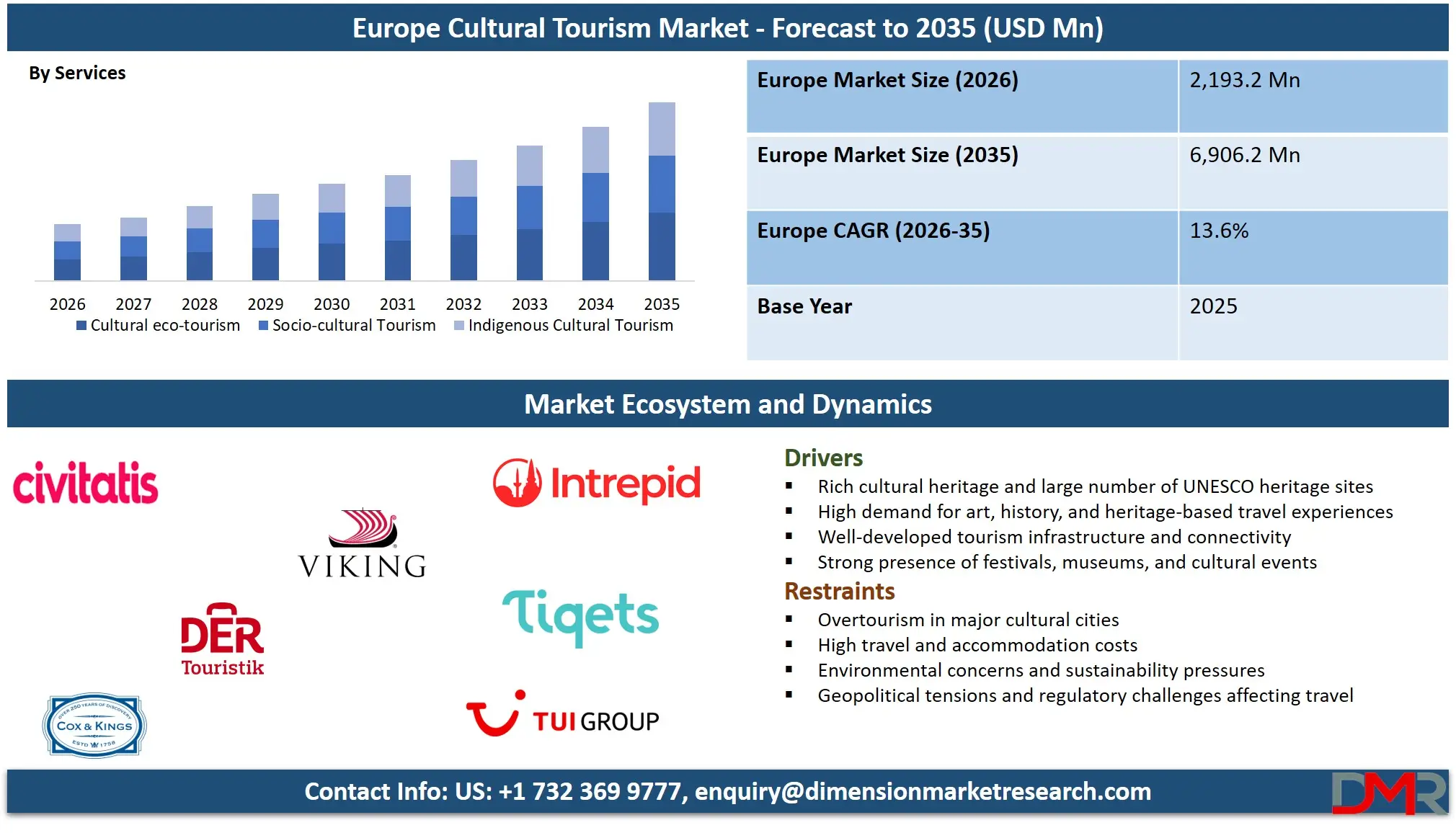
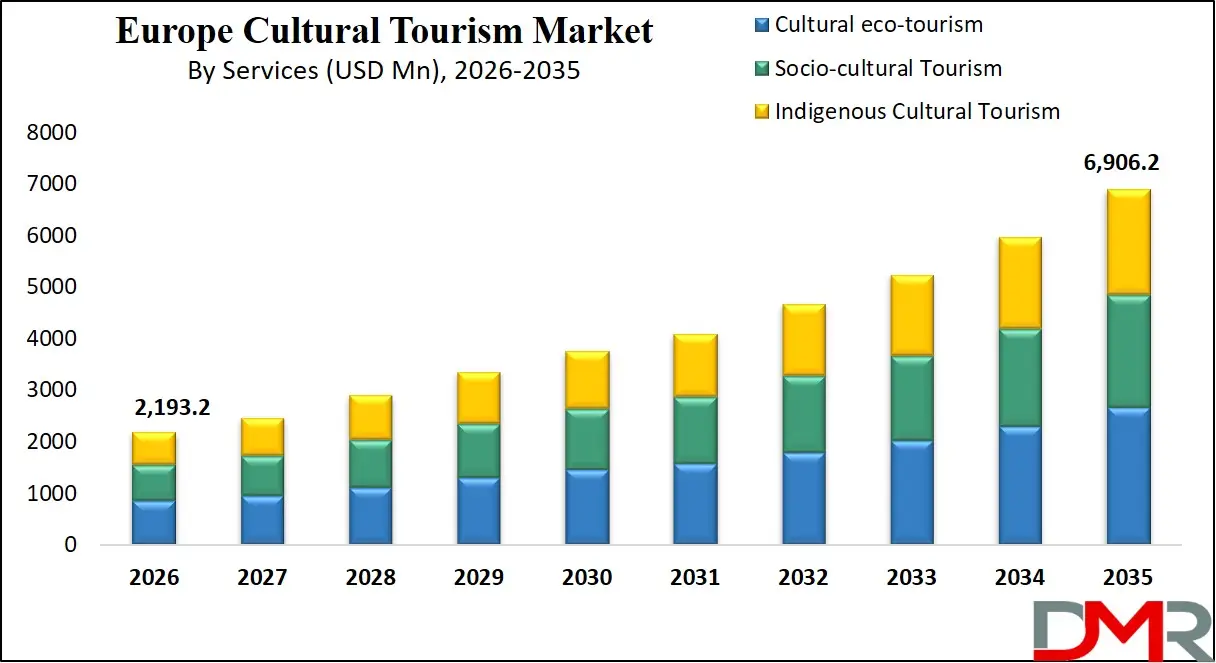
The Europe Cultural Tourism Market size is projected to reach USD 2,193.2 million in 2026 and grow at a compound annual growth rate of 13.6% to reach a value of USD 6,906.2 million in 2035.
ℹ
To learn more about this report –
Download Your Free Sample Report Here
Europe Cultural Tourism refers to travel experiences centered on exploring the rich heritage, traditions, arts, architecture, and lifestyles of European destinations. It includes visits to historical landmarks, museums, festivals, and local communities, offering immersive connections with regional identities. This segment plays a vital role in Europe’s tourism economy, supported by its extensive cultural assets. Technological integration, such as augmented reality and AI-powered travel planning, is enhancing visitor engagement, while government-backed heritage conservation programs are strengthening infrastructure and accessibility across destinations.
The market is mainly shifting toward experiential and sustainable tourism, with travelers favoring authentic, interactive experiences over passive sightseeing. Digital tools like virtual tours and smart guides are improving accessibility and enriching storytelling. At the same time, there is growing emphasis on preserving intangible heritage, including crafts, languages, and culinary traditions. Changing consumer preferences toward educational and meaningful travel are driving demand, moving the industry from mass tourism to value-driven tourism focused on depth and quality of experience.
ℹ
To learn more about this report –
Download Your Free Sample Report Here
Growth is further supported by policy initiatives promoting cultural preservation and tourism integration. Increased investments in digital heritage platforms and smart tourism ecosystems are reshaping the landscape. Collaborations between tourism boards and cultural institutions are creating seamless travel experiences, while visitor management systems address overtourism challenges. The rise of niche segments such as literary, film, and gastronomy tourism is expanding the market’s scope, positioning Europe cultural tourism as a more personalized, technology-driven, and sustainable industry.
Europe Cultural Tourism Market: Key Takeaways
- Market Growth: The Europe Cultural Tourism Market size is expected to grow by USD 4,445.6 million, at a CAGR of 13.6%, during the forecasted period of 2027 to 2035.
- By Service: The cultural eco-tourism segment is anticipated to get the majority share of the Europe Cultural Tourism market in 2026.
- By Traveler Type: The friends/family segment is expected to get the largest revenue share in 2026 in the Europe Cultural Tourism market.
- Use Cases: Some of the use cases of cultural tourism include heritage exploration, cultural festival, and more.
Europe Cultural Tourism Market: Use Cases
- Heritage Exploration: Travelers visit UNESCO-listed sites and historic landmarks, engaging with Europe’s architectural and archaeological legacy while supporting preservation efforts.
- Cultural Festivals: Participation in music, art, and traditional festivals offers immersive experiences that highlight regional customs and seasonal celebrations.
- Museum Tourism: Visitors explore world-class museums and galleries, benefiting from curated exhibitions and digital storytelling tools.
- Culinary Tourism: Tourists experience local cuisines, wine routes, and cooking traditions, linking gastronomy with cultural identity.
- Religious Pilgrimages: Faith-based travel to cathedrals, monasteries, and pilgrimage routes remains a strong segment.
- Rural Cultural Tourism: Travelers engage with indigenous communities, crafts, and traditions in countryside settings.
- Educational Tourism: Students and researchers visit cultural institutions and heritage sites for academic enrichment.
Stats & Facts
- European Commission reported that cultural tourism accounts for approximately 40% of all European tourism activities in 2025.
- Eurostat stated that over 60% of international tourists in Europe engaged in at least one cultural activity in 2024.
- UNESCO recorded more than 450 World Heritage Sites in Europe as of 2025.
- World Tourism Organization (UNWTO) highlighted that cultural tourism grew by 12% year-on-year in Europe in 2024.
- European Travel Commission noted that 70% of travelers prioritize cultural experiences when visiting Europe in 2025.
- OECD indicated that cultural tourism contributes nearly 4% to Europe’s GDP in 2024.
- UK Office for National Statistics reported that museum visits increased by 18% in 2025 compared to 2023.
- French Ministry of Culture stated that heritage sites saw over 90 million visitors in 2024.
- German National Tourist Board reported a 15% rise in cultural event tourism in 2025.
- Italian National Institute of Statistics recorded that art city visits accounted for 55% of total tourism stays in 2024.
- Spanish Tourism Institute noted that cultural routes saw a 20% increase in participation in 2025.
- European Environment Agency highlighted that 35% of tourism projects in 2025 incorporated sustainability measures.
Market Dynamic
Driving Factors in the Europe Cultural Tourism Market
Rising Demand for Experiential Travel
Modern travelers increasingly prefer immersive and meaningful experiences over traditional sightseeing. Cultural tourism aligns perfectly with this shift, offering opportunities to engage with local traditions, arts, and heritage. Travelers are seeking authentic narratives, interactive exhibits, and community-based tourism experiences that provide deeper cultural understanding. This demand is particularly strong among younger generations and high-value tourists who prioritize learning and personal enrichment. As a result, destinations are investing in storytelling, guided experiences, and participatory activities, which significantly enhances visitor satisfaction and drives repeat tourism.
Government Support and Heritage Preservation Initiatives
European governments and regional organizations actively promote cultural tourism through funding programs, restoration projects, and policy frameworks. Initiatives aimed at preserving historical monuments and intangible heritage are strengthening the tourism ecosystem. Investments in infrastructure, digitalization of heritage assets, and cross-border cultural routes are improving accessibility and visitor experiences. These efforts not only safeguard cultural assets but also generate employment and regional development. Public-private partnerships further accelerate growth, ensuring long-term sustainability and resilience in the market.
Restraints in the Europe Cultural Tourism Market
Overtourism and Infrastructure Strain
Popular cultural destinations often face overtourism, leading to overcrowding, environmental degradation, and damage to heritage sites. Cities with high tourist inflows struggle to maintain infrastructure and ensure quality experiences for visitors. This creates challenges for local authorities in balancing tourism growth with preservation. Restrictions such as visitor caps and higher entry fees may limit accessibility and reduce overall tourist numbers. These constraints can negatively impact revenue generation and create uneven distribution of tourism benefits across regions.
High Maintenance and Conservation Costs
Preserving cultural heritage sites requires significant financial investment and technical expertise. Restoration, conservation, and maintenance activities are often costly and time-consuming. Smaller destinations and rural areas may lack adequate funding, leading to underdeveloped tourism potential. Additionally, strict regulatory requirements for heritage conservation can delay development projects. These financial and operational challenges can hinder market expansion and discourage private sector participation in cultural tourism initiatives.
Opportunities in the Europe Cultural Tourism Market
Expansion of Digital and Smart Tourism Solutions
The integration of digital technologies presents significant growth opportunities. Virtual tours, augmented reality experiences, and AI-based travel assistants are enhancing accessibility and engagement. These technologies allow destinations to reach global audiences and offer hybrid experiences that combine physical and digital exploration. Smart tourism platforms also enable better visitor management and personalized travel planning. As technology adoption increases, cultural tourism providers can create innovative offerings that attract tech-savvy travelers.
Growth in Sustainable and Niche Tourism Segments
There is rising interest in sustainable tourism and niche experiences such as culinary tourism, literary tourism, and heritage trails. Travelers are increasingly conscious of environmental and social impacts, favoring eco-friendly and community-based tourism options. This trend opens new revenue streams for lesser-known destinations and rural areas. Governments and tourism boards are promoting sustainable practices and certifications, encouraging responsible travel. These developments create long-term growth opportunities while preserving cultural and natural resources.
Trends in the Europe Cultural Tourism Market
Integration of Technology in Cultural Experiences
Technological advancements are reshaping how tourists interact with cultural sites. Augmented reality, virtual reality, and mobile applications provide interactive and personalized experiences. Digital guides, multilingual apps, and AI-driven recommendations enhance accessibility and convenience. Museums and heritage sites are adopting smart technologies to engage visitors and improve operational efficiency. This trend is transforming traditional tourism into a more dynamic and interactive experience.
Shift Toward Sustainable and Responsible Tourism
Sustainability has become a central focus in cultural tourism. Destinations are implementing eco-friendly practices, promoting local communities, and reducing environmental impact. Cultural routes and slow tourism initiatives encourage longer stays and deeper engagement. Travelers are increasingly choosing destinations that prioritize sustainability and authenticity. This shift is influencing policy decisions and investment strategies, ensuring the long-term viability of the market.
Impact of Artificial Intelligence in Europe Cultural Tourism Market
- Personalized Travel Planning: AI analyzes traveler preferences to recommend tailored cultural itineraries, enhancing satisfaction and engagement.
- Smart Tour Guides: AI-powered apps provide real-time translations, historical insights, and interactive storytelling for visitors.
- Visitor Flow Management: AI helps manage crowds at popular sites by predicting peak times and optimizing entry systems.
- Digital Heritage Preservation: AI assists in restoring and digitizing artifacts, ensuring long-term conservation.
- Enhanced Customer Support: Chatbots and virtual assistants improve communication and booking processes.
- Predictive Analytics: AI forecasts tourism trends, helping stakeholders make data-driven decisions.
- Content Creation: AI generates immersive content such as virtual tours and interactive exhibits.
- Fraud Detection: AI improves security in ticketing and online transactions.
- Accessibility Improvements: AI tools support disabled travelers through voice navigation and assistive technologies.
Research Scope and Analysis
By Type Analysis
Heritage Sites dominate the Europe Cultural Tourism Market and are projected to hold approximately 34.7% share in 2026. These sites continue to attract millions of visitors annually due to their deep historical, architectural, and cultural importance, which reflects centuries of European civilization. Strong institutional and government support for preservation, along with international recognition through heritage listings, significantly contributes to their leadership. Continuous investments in restoration, conservation, and digital engagement tools are enhancing the visitor experience. The integration of guided tours, augmented reality, and interactive storytelling further strengthens their appeal, while their role in educational tourism and cross-border cultural collaborations ensures sustained growth and long-term relevance.
Museums represent the fastest-growing segment in the Europe Cultural Tourism Market, driven by their transformation into dynamic and interactive cultural hubs. Modern museums are increasingly incorporating advanced digital technologies such as virtual reality, augmented reality, and immersive exhibitions to engage visitors more effectively. These innovations attract a broader demographic, especially younger audiences seeking interactive and educational experiences. Increased public and private funding, along with partnerships between cultural institutions and technology providers, are accelerating innovation in this segment. Additionally, museums are expanding their global reach through virtual tours and online collections, making them more accessible while strengthening their role as key cultural and educational destinations.
By Services Analysis
Cultural eco-tourism leads the services segment, with an estimated 38.2% share in 2026, as it aligns with the growing global emphasis on sustainability and responsible travel. This segment combines cultural exploration with environmental consciousness, appealing strongly to eco-aware travelers who prioritize low-impact tourism. Destinations across Europe are actively promoting sustainable practices such as reducing carbon footprints, preserving local ecosystems, and involving local communities in tourism activities. Government regulations and sustainability certifications further support the growth of this segment. Cultural eco-tourism also encourages longer stays and deeper engagement with local traditions, increasing economic benefits for communities while ensuring environmental and cultural preservation.
Indigenous cultural tourism is the fastest-growing segment within services, fueled by rising interest in authentic, community-based travel experiences. Travelers increasingly seek meaningful interactions with local populations, including participation in traditional crafts, rituals, and daily lifestyles. This segment plays a crucial role in preserving indigenous cultures and providing economic opportunities for local communities. Governments and international organizations are supporting this growth through funding initiatives, promotional campaigns, and capacity-building programs. Additionally, increasing awareness of cultural diversity and heritage conservation is encouraging travelers to explore lesser-known destinations, further boosting demand and positioning indigenous tourism as a key growth driver.
By Travel Type Analysis
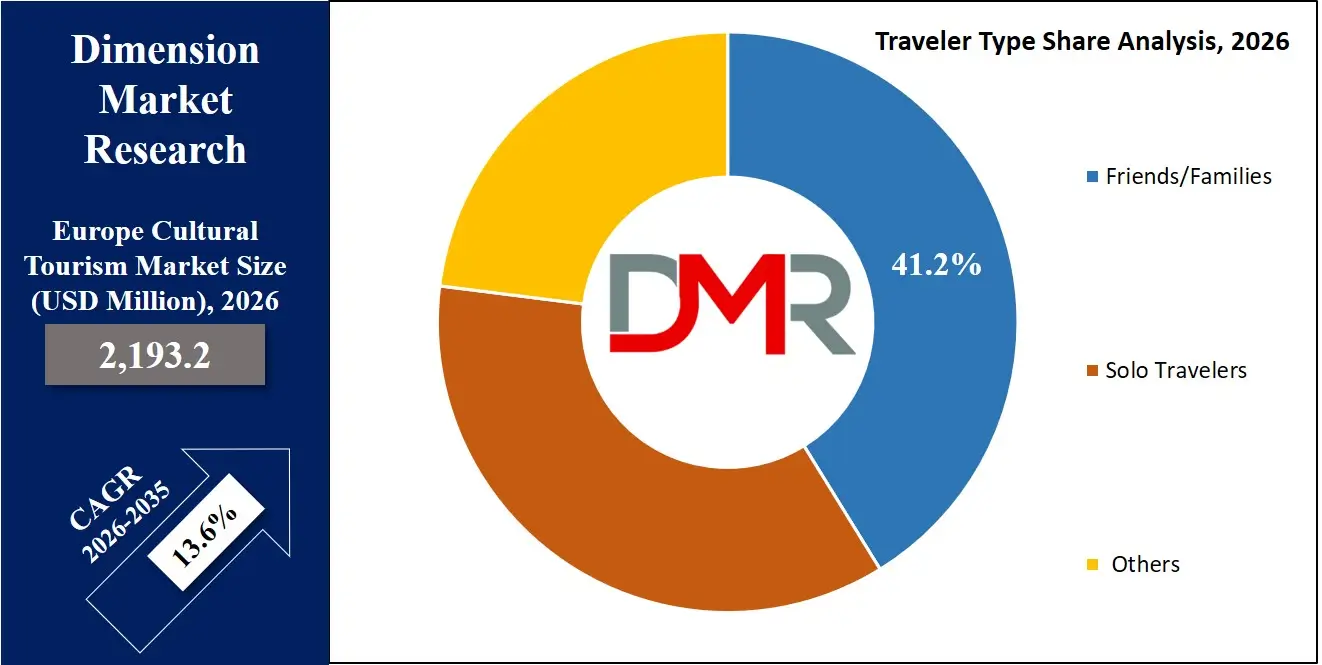
Friends and families dominate the Europe Cultural Tourism Market, with a projected share of 41.5% in 2026, as group travel continues to be a preferred choice for cultural exploration. Traveling in groups allows for shared experiences, making visits to heritage sites, festivals, and museums more engaging and memorable. Destinations are increasingly offering family-friendly infrastructure, including guided tours, educational programs, and interactive exhibits designed for all age groups. Customized travel packages tailored to group needs, along with cost-sharing benefits, enhance convenience and affordability. This segment also benefits from improved accessibility and transportation networks, making it easier for families to explore multiple cultural destinations within a single trip.
ℹ
To learn more about this report –
Download Your Free Sample Report Here
Solo travelers are emerging as the fastest-growing segment, driven by the rise of independent travel trends and digital travel platforms. This group values flexibility, autonomy, and personalized experiences, often seeking deeper cultural immersion through self-guided exploration. Advances in technology, including AI-driven travel planning tools, mobile applications, and enhanced safety features, are making solo travel more accessible and appealing. Additionally, the growing popularity of experiential tourism encourages individuals to engage more intimately with local cultures and traditions. As more travelers prioritize self-discovery and meaningful journeys, the solo travel segment is expected to witness sustained growth and increasing influence in the market.
The Europe Cultural Tourism Market Report is segmented on the basis of the following:
By Type
- Heritage Sites
- Religious Sites
- Parks & Gardens
- Museums
- Monuments
- Others
By Services
- Cultural eco-tourism
- Indigenous cultural tourism
- Socio-cultural tourism
By Traveler Type
- Solo Travelers
- Friends/Families
- Others
Country Analysis
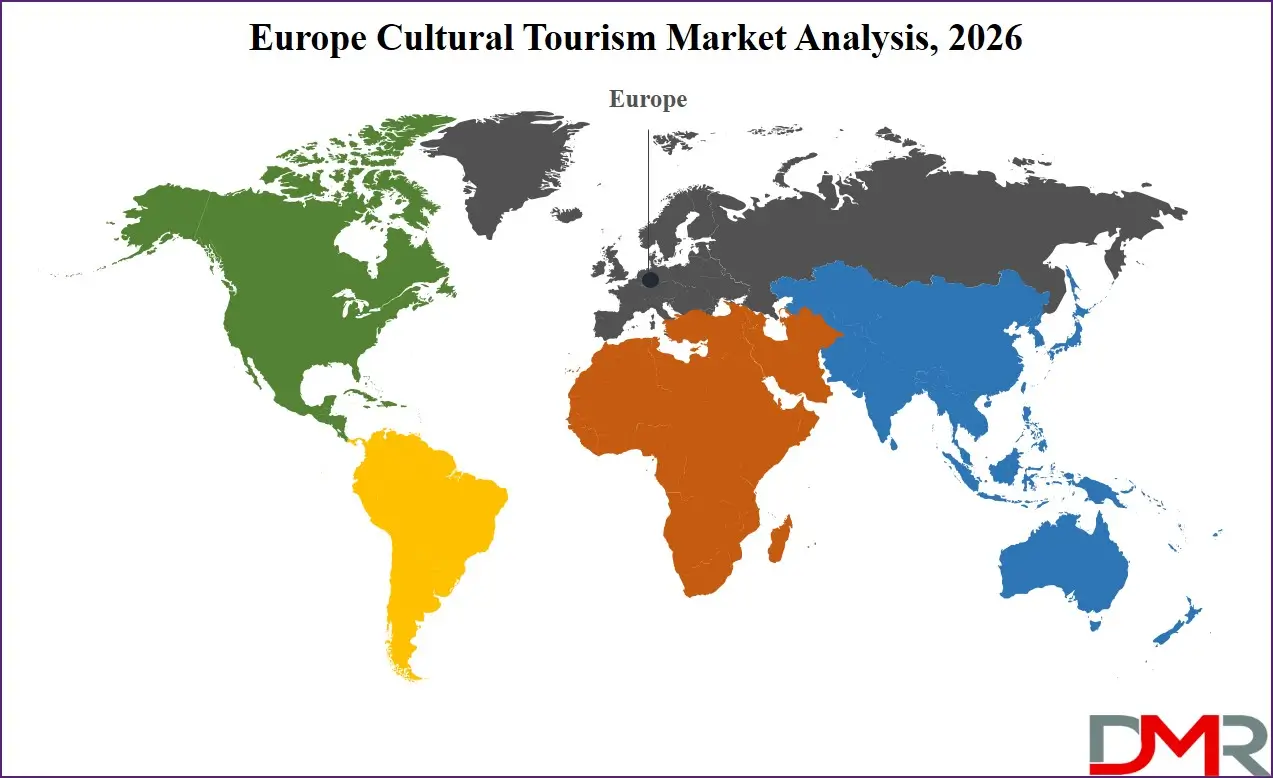
The Europe cultural tourism market is led by key destinations such as France, Italy, Spain, and Germany, driven by rich heritage, museums, festivals, and historic landmarks. France and Italy dominate due to iconic attractions and strong global appeal, while Spain benefits from vibrant cultural festivals. Germany focuses on heritage routes and cultural events.
ℹ
To learn more about this report –
Download Your Free Sample Report Here
United Kingdom contributes through museums and literary tourism. Eastern Europe, including Poland and Hungary, is emerging with affordable cultural experiences. Government support, infrastructure, and digital promotion further strengthen regional growth.
By Country
Europe
- Germany
- The U.K.
- France
- Italy
- Russia
- Spain
- Benelux
- Nordic
- Rest of Europe
Competitive Landscape
The Europe Cultural Tourism Market is characterized by strong competition driven by innovation, partnerships, and strategic investments. Market participants focus on enhancing visitor experiences through digital transformation and sustainable practices. Entry barriers are relatively high due to the need for heritage preservation expertise and regulatory compliance. Competitive advantage is achieved through unique cultural offerings, brand positioning, and integration of technology. Collaborations between tourism boards, cultural institutions, and private entities are common, enabling the development of comprehensive tourism ecosystems. Continuous investment in infrastructure and marketing ensures sustained growth and differentiation.
Some of the prominent players in the Europe Cultural Tourism are:
- TUI Group
- Viking Cruises
- DER Touristik Group
- Kuoni Travel Group
- Intrepid Travel
- G Adventures
- Contiki (The Travel Corporation)
- Cox & Kings (UK)
- Exodus Travels
- Abercrombie & Kent
- Tiqets
- GetYourGuide
- Civitatis
- Walks (Walks LLC Europe operations)
- Context Travel
- Trafalgar (The Travel Corporation)
- Insight Vacations
- Europamundo Vacations
- Rail Europe
- Eurail
- Other Key Players
Recent Developments
- In March 2025, TUI Group announced a significant investment in a digital platform designed to enhance cultural tourism experiences. The platform integrates virtual tours, AI-driven itineraries, and real-time booking systems. This initiative aims to provide seamless access to cultural attractions while improving visitor management. TUI partnered with technology firms and cultural institutions to develop immersive content and expand its offerings.
- In January 2025, Airbnb introduced a new range of cultural heritage experiences across Europe, focusing on immersive local activities such as traditional crafts, guided historical tours, and culinary workshops. The initiative aims to connect travelers directly with local communities, promoting authentic cultural exchange. Airbnb collaborated with regional tourism boards and heritage organizations to ensure quality and sustainability.
Report Details
| Report Characteristics |
| Market Size (2026) |
USD 2,193.2 Mn |
| Forecast Value (2035) |
USD 6,906.2 Mn |
| CAGR (2026–2035) |
13.6% |
| Historical Data |
2021 – 2025 |
| Forecast Data |
2027 – 2035 |
| Base Year |
2025 |
| Estimate Year |
2026 |
| Report Coverage |
Market Revenue Estimation, Market Dynamics, Competitive Landscape, Growth Factors and etc. |
| Segments Covered |
By Type (Heritage Sites, Religious Sites, Parks & Gardens, Museums, Monuments, and Others), By Services (Cultural eco-tourism, Indigenous cultural tourism, and Socio-cultural tourism), By Traveler Type (Solo Travelers, Friends/Families, and Others) |
| Regional Coverage |
Europe – Germany, The UK, France, Russia, Spain, Italy, Benelux, Nordic, & Rest of Europe |
| Prominent Players |
TUI Group, Viking Cruises, DER Touristik Group, Kuoni Travel Group, Intrepid Travel, G Adventures, Contiki (The Travel Corporation), Cox & Kings (UK), Exodus Travels, Abercrombie & Kent, Tiqets, GetYourGuide, Civitatis, Walks (Walks LLC Europe operations), Context Travel, Trafalgar (The Travel Corporation), Insight Vacations, Europamundo Vacations, Rail Europe, Eurail, and Other Key Players |
| Purchase Options |
We have three licenses to opt for: Single User License (Limited to 1 user), Multi-User License (Up to 5 Users) and Corporate Use License (Unlimited User) along with free report customization equivalent to 0 analyst working days, 3 analysts working days and 5 analysts working days respectively. |
Frequently Asked Questions
How big is the Europe Cultural Tourism Market?
▾ The Europe Cultural Tourism Market size is expected to reach USD 2,193.2 million by 2026 and is projected to reach USD 6,906.2 million by the end of 2035.
Who are the key players in the Europe Cultural Tourism Market?
▾ Some of the major key players in the Europe Cultural Tourism Market include Interpid, TUI, Viking and others.
What is the growth rate in the Europe Cultural Tourism Market?
▾ The market is growing at a CAGR of 13.6 percent over the forecasted period.