Market Overview
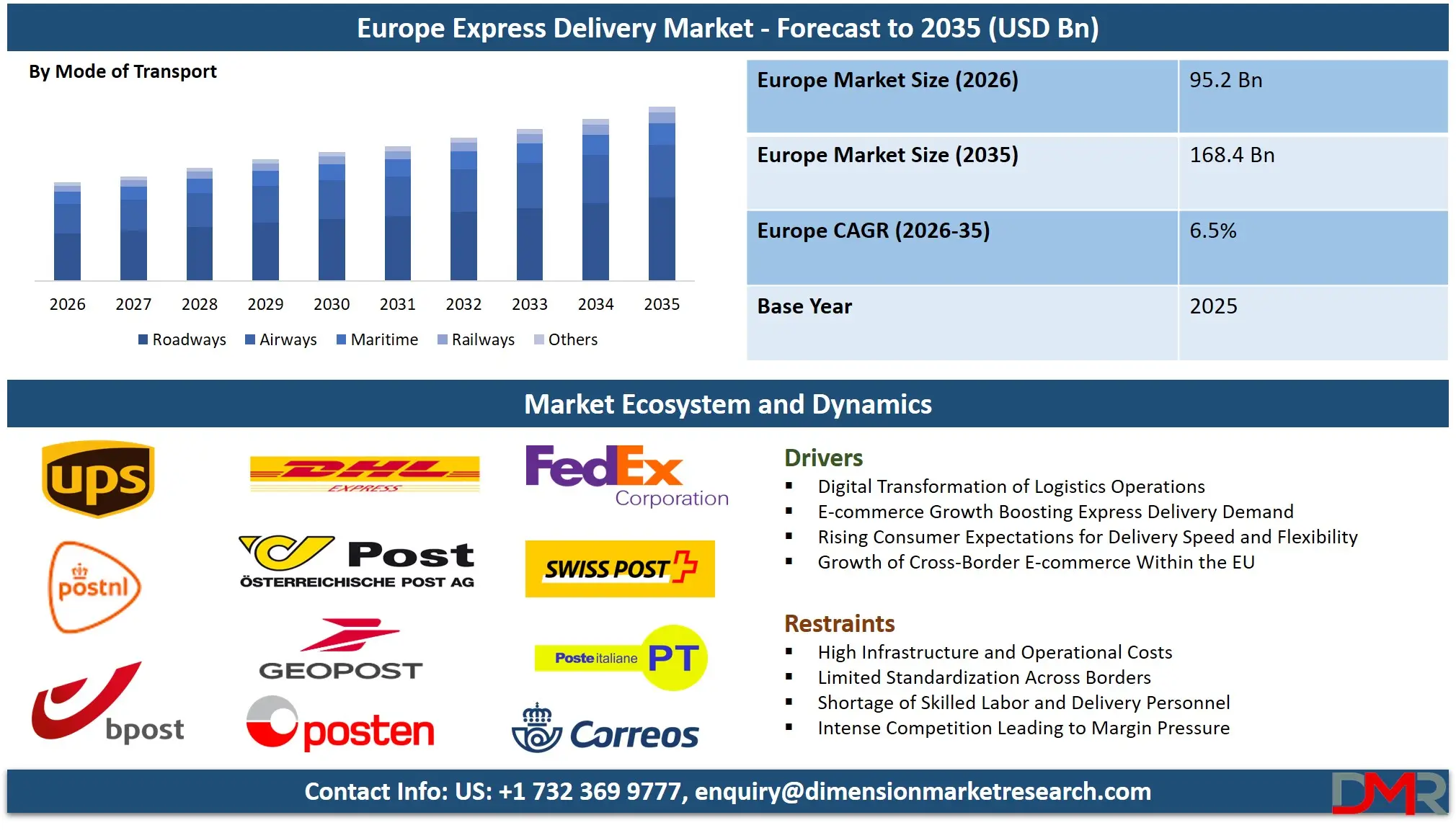
The Europe Express Delivery market size is expected to reach a value of USD 95.2 billion in 2026, and it is further anticipated to reach a market value of USD 168.4 billion by 2035 at a CAGR of 6.5%.
ℹ
To learn more about this report –
Download Your Free Sample Report Here
The express delivery market is an important part of the logistics and e-commerce ecosystem in Europe, driven by the explosive growth of online retail and the region's demand for speed and reliability. As a global leader in digital infrastructure and cross-border trade facilitation, Europe occupies a privileged position in the development and adoption of advanced logistics solutions. The sector covers a wide range of services, from domestic and international parcel delivery to specialized freight and on-demand instant delivery, which are crucial in supporting modern consumer habits and just-in-time industrial supply chains. The European Union's commitment to creating a single digital market has resulted in substantial investment in transport networks, digital infrastructure, and customs modernization, significantly transforming the logistics landscape.
Over the last few years, the express delivery market in Europe has witnessed a strategic transition in adopting advanced technologies like AI-driven route optimization, automated sorting hubs, and real-time tracking platforms. These technologies are making logistics operations more efficient, developing greater supply chain visibility, facilitating easier last-mile execution, and further helping in the reduction of delivery times and carbon footprints. Also, with the rapid growth of e-commerce and the on-demand economy, the need for sophisticated, flexible delivery networks has accelerated the demand for companies to scale up their logistics portfolios. All these evolutions of technology and the market are likely to drive the sector's growth, signifying a good future outlook for the market.
Key trends currently evident within the express delivery arena in Europe are digital transitions taking hold of logistics operations by moving from traditional, linear models to dynamic, data-driven ecosystems. Aside from this, further integration of AI and big data brings predictive logistics and real-time decision-making with enhanced route optimization for better efficiency. Furthermore, with the augmenting emphasis on sustainability in line with the European Green Deal, the adaptation of low-emission delivery vehicles, such as electric vans and cargo bikes, is on the rise. Similarly, the rise in omnichannel retail and consumer demand for flexibility has changed strategies for last-mile delivery as companies try to meet expectations for seamless and sustainable service.
ℹ
To learn more about this report –
Download Your Free Sample Report Here
The market is consequently witnessing huge opportunities on the back of high investments by the European government in smart infrastructure development. Initiatives such as the construction of intelligent transport systems (ITS) and connected logistics corridors are creating a robust logistics backbone to support regional mobility. Megaprojects like the development of cross-border rail freight networks and digital customs platforms illustrate the strategic importance of express delivery in enabling Europe's ambitious digital and sustainability goals. The technological prowess of the region enhances its potential to become a global hub for logistics innovation, offering unparalleled access to key markets across the continent. Further, the focus on smart technologies like AI, warehouse automation, and drone delivery provides companies with opportunities to gain a competitive edge by improving service speed and reducing operational costs.
Europe Express Delivery Market: Key Takeaways
- Market Value: The Europe Express Delivery Market size is estimated to have a value of USD 95.2 billion in 2026 and is expected to reach USD 168.4 billion by the end of 2035.
- By Destination Segment Analysis: Domestic deliveries are anticipated to dominate this segment in this market as they will hold approximately 62.0% of market share in 2026.
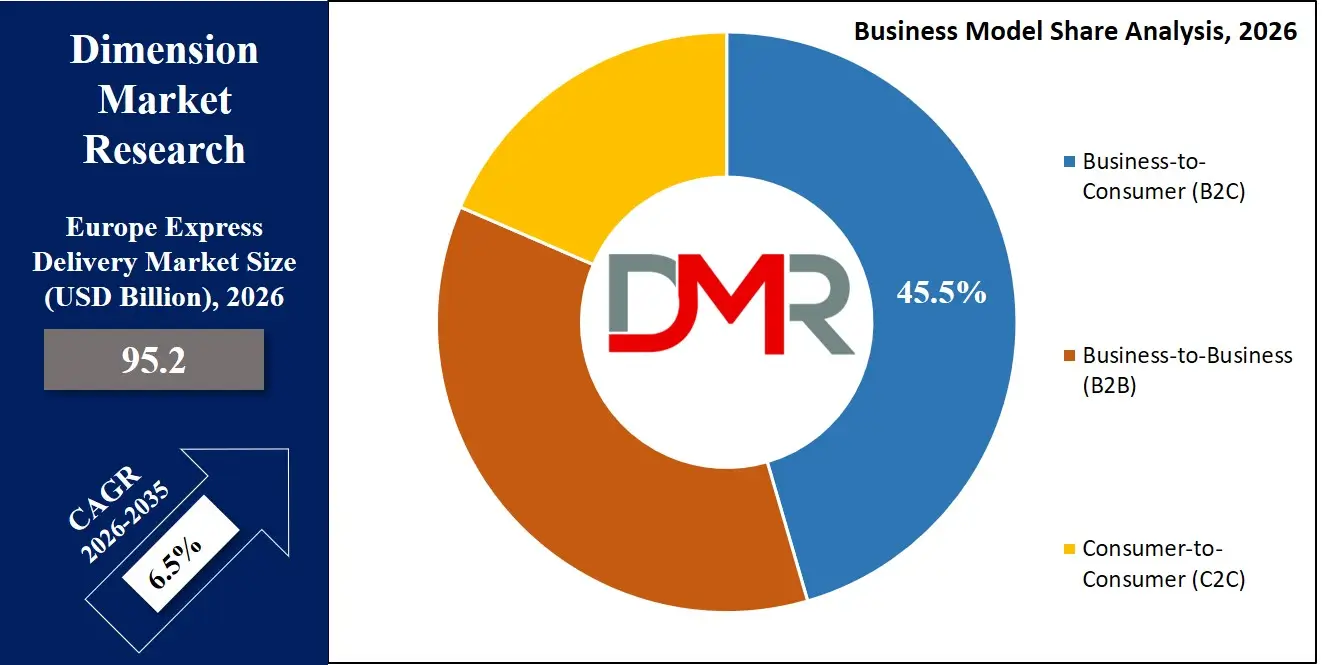
- By Business Model Segment Analysis: Business-to-Consumer (B2C) services, driven by e-commerce, are projected to dominate the business model segment in the Europe Express Delivery Market with the highest market share in 2026.
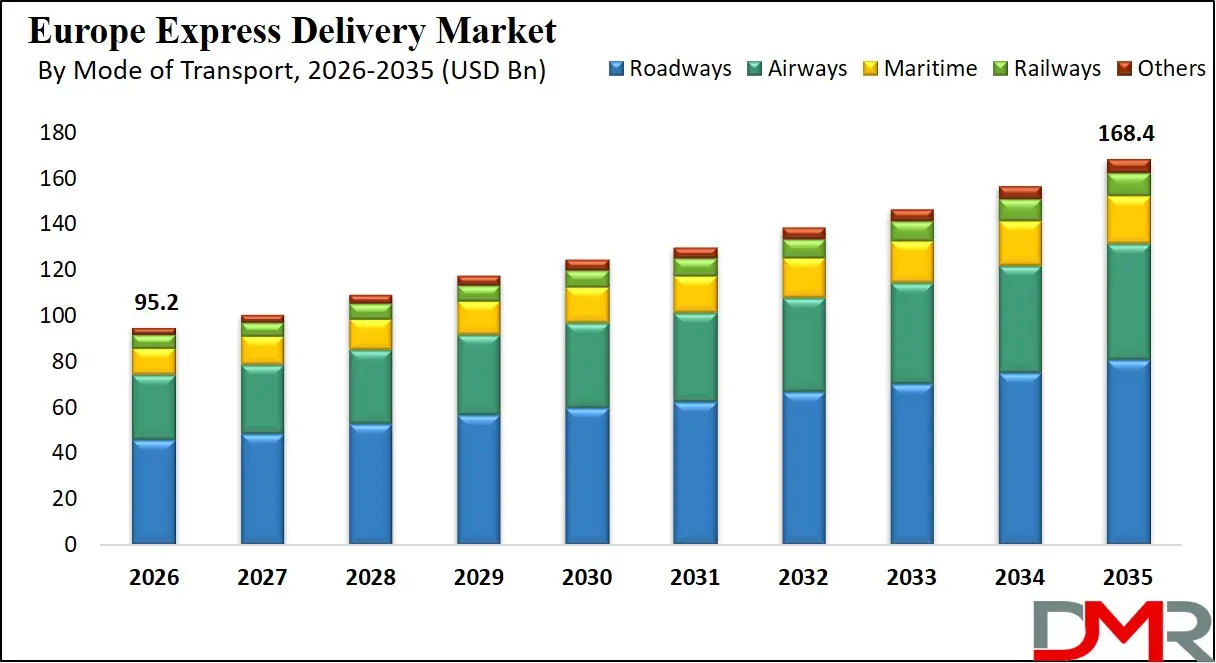
- By Mode of Transport Segment Analysis: The roadways segment is anticipated to dominate the Europe express delivery market with a major market share in 2026, particularly for last-mile and short-haul deliveries.
- By Shipment Weight Segment Analysis: Lightweight parcels (under 5kg) are projected to hold the leading position in the shipment weight segment of this market in 2026.
- By Service Type Segment Analysis: Next-Day Delivery is projected to dominate the service type segment in the Europe express delivery market in 2026.
- By End-User Industry Segment Analysis: The Retail & E-commerce sector is projected to dominate the end-user industry segment in the Europe express delivery market in 2026.
- Key Players: Some of the major key players in the Europe Express Delivery Market are Deutsche Post DHL Group, UPS, FedEx, La Poste Group, Royal Mail, Geopost, and many others.
- Market Growth Rate: The market is growing at a CAGR of 6.5% over the forecasted period.
Impact of Iran Conflict On Europe Express Delivery Market
- The Iran conflict can influence the Europe Express Delivery Market through its effects on energy prices, supply chains, and economic stability. Rising geopolitical tensions in the Middle East often lead to higher oil and fuel prices, which increase transportation and last-mile delivery costs for European logistics companies. Higher operational costs can raise shipping prices for consumers and businesses and may slow the volume of parcels being sent in the short term.
- The conflict can also disrupt global logistics and trade routes, causing delays in the supply chain and increasing transit times for international shipments, particularly those relying on maritime routes through the Suez Canal or air freight overflying the region. These disruptions may affect delivery schedules and service reliability for cross-border express deliveries across Europe.
- Additionally, economic uncertainty caused by geopolitical tensions can influence consumer spending and e-commerce demand across Europe. However, rising fuel costs may accelerate the shift towards more efficient logistics operations and the adoption of electric delivery fleets, which could support long-term sustainability goals for the express delivery market in the region.
Europe Express Delivery Market: Use Cases
- E-commerce Parcel Delivery for Retailers: This core application involves the rapid fulfillment and delivery of online orders directly to consumers' doorsteps, leveraging extensive hub-and-spoke networks and local depots to meet promised delivery windows and enhance customer satisfaction.
- Healthcare Logistics for Temperature-Sensitive Shipments: Specialized express services deliver pharmaceuticals, lab samples, and biologics using temperature-controlled containers and real-time monitoring, ensuring compliance with strict healthcare regulations across European borders.
- Spare Parts Delivery for Industrial Maintenance: Time-critical delivery of automotive or manufacturing components ensures minimal downtime for production lines and repair shops, utilizing dedicated courier networks and sometimes even instant delivery services for urgent needs.
- Cross-Border Document and Parcel Services for Businesses: B2B express delivery facilitates the rapid exchange of contracts, legal documents, and small packages between corporate offices across different European countries, supporting seamless international business operations.
Europe Express Delivery Market: Stats & Facts
European Commission (EU Digital & Transport Policy)
- Around 2 billion parcels were shipped cross-border within the EU in 2023.
- The EU recorded an average of 4.5 billion e-commerce deliveries annually.
- The European Union aims to reduce transport emissions by 90% by 2050 under the Sustainable and Smart Mobility Strategy.
- EU cross-border parcel delivery prices have decreased by an average of 20-30% since 2019 due to increased transparency and regulation.
- These regulations aim to make cross-border e-commerce as simple as domestic delivery.
- The EU's Digital Services Act and e-commerce rules affect over 1 million online retailers selling to consumers across member states.
Eurostat (European Union Statistics Office)
- E-commerce revenues in Europe reached approximately USD 851.8 billion in 2023.
- More than 60% of internet users in Europe shop online.
- Around 12% of EU enterprises' total turnover comes from e-commerce.
- Cross-border e-commerce accounted for over 20% of all online purchases in the EU.
- The EU saw a 15% increase in e-commerce users between 2020 and 2023.
International Post Corporation (IPC)
- Nearly 90% of European online shoppers have used cross-border delivery services.
- Europe has more than 150,000 parcel lockers installed across key markets.
- Free delivery is the most important factor for 68% of European online shoppers.
- In 2023, delivery speed was a key factor for 41% of consumers when making a purchase decision.
- By 2024, the number of parcel lockers in Europe is projected to exceed 200,000.
European E-commerce Reports
- The European e-commerce market is expected to grow by over 50% by 2030.
- Parcel volume in Europe is projected to reach 27 billion shipments annually by 2030.
- Returns management costs can account for up to 20% of total logistics costs for retailers.
- Around 50% of consumers expect delivery within 24 hours for an additional fee.
- Nearly 25% of consumers have abandoned a shopping cart due to unsatisfactory delivery options.
- Electric vans and cargo bikes could reduce last-mile delivery emissions by up to 80% in urban areas.
Last Mile Delivery Studies
- The last mile accounts for up to 41% of total supply chain costs.
- Same-day delivery services can increase customer lifetime value by 15% to 30%.
- Delivery route optimization software can reduce mileage by 10% to 20%.
- Around 60% of delivery failures occur due to the customer not being home.
- Automated parcel lockers can reduce failed delivery rates to near zero.
Europe Express Delivery Market: Market Dynamic
Driving Factors in the Europe Express Delivery Market
Digital Transformation of Logistics Operations
The express delivery sector in Europe is also becoming a hub of digital transformation due to the initiatives laid down by the EU's Digital Decade for integrating technology across all mobility and logistics sectors. Companies are leveraging technologies such as AI, big data analytics, and cloud-based platforms for real-time route optimization, predictive demand forecasting, and enhanced supply chain visibility. For example, AI-enabled routing software provides timely adjustments for traffic and weather, hence reducing any inefficiencies in transit. Real-time tracking enhances data accuracy for both sender and receiver, building trust among stakeholders.
E-commerce Growth Boosting Express Delivery Demand
This rapid growth in e-commerce has produced high demand in Europe for the sector to implement efficient and reliable express delivery solutions. Retailers such as Amazon, Zalando, and Otto have partnered with leading logistics providers to try to meet today's demanding expectations around speed and convenience. As online shopping is increasingly integral to consumer habits, this trend is producing real investment in the hard infrastructure of automated warehouses and distribution centers, but also increasingly in digital platforms that then tie the delivery operation together in one seamless interface for retailers and consumers alike.
Restraints in the Europe Express Delivery Market
High Infrastructure and Operational Costs
Advanced express delivery networks and last-mile solutions require huge capital investment, although demand is very supportive. Smaller logistics providers can hardly afford automated sorting hubs, electric delivery fleets, or comprehensive urban consolidation centers. This may impede market expansion and further widen the gap between large corporations and SMEs in access to next-generation logistics capabilities.
Limited Standardization Across Borders
The express delivery industry will have challenges with varying national interpretations of EU directives and differing infrastructure readiness across member states. While logistics harmonization is included in EU transport policy, the pace of its implementation often outpaces the standardization of customs procedures and last-mile regulations. Normally, companies incur additional costs for cross-border compliance and region-specific operations. Getting over this restraint will involve considerable investments in cross-border collaboration and unified digital standards.
Opportunities in the Europe Express Delivery Market
Integration of Emerging Technologies
The adoption of technologies such as AI, warehouse robotics, and drone delivery presents an excellent opportunity for express delivery optimization. Automated sorting and packing cut down processing times, while AI-powered systems enhance delivery route prediction. Startups and established firms alike are testing such integrations, which offer an excellent opportunity for technology providers and investors to reach the European logistics market.
Expansion of Sustainable and Urban Logistics Solutions
With growing demand for eco-friendly delivery in city centers, this sustainable logistics segment is developing at a very fast pace. There is also more inflow of investments into electric vans, cargo bikes, and micro-depots tailored for low-emission last-mile delivery. Additionally, urban mobility development in Europe and changing commuting habits will further contribute to this segment and open doors for value-added service providers through innovative solution design.
Trends in the Europe Express Delivery Market
EU Sustainability Regulations and Mandates
Europe's Green Deal underlines the mandatory fitment of low-emission transport solutions in logistics, pushing the express delivery industry to become one of the mainstays of sustainable supply chains. Huge investments in electric vehicle fleets and urban logistics hubs across Germany, France, and the Netherlands have been driving growth. In addition, it also comprises sustainability-friendly policies like Low Emission Zones, which also attract investment in green delivery technologies. This helps strengthen the region's standing as a leading sustainable logistics hub globally.
Increasing Consumer Demand for Speed and Convenience
European consumers are also actively seeking faster and more flexible delivery options, with participation in digital commerce increasing the demand for services with high convenience, which in turn are raising demand for more sophisticated express delivery solutions. The integration of these services in mass-market e-commerce, the expansion of features to same-day and instant delivery, and the development of more affordable delivery options are easing the way to broader adoption. All these growth drivers increase the region's penetration of logistics technologies and ensure the prosperity of the express delivery sector in the globalized digital economy.
Europe Express Delivery Market: Research Scope and Analysis
By Destination Analysis
Domestic deliveries are projected to dominate the destination segment in this market as they will hold 62.0% of market share in 2026. The dominance of domestic deliveries in the destination segment of the Europe Express Delivery Market is owing to high parcel volumes and well-established national logistics networks in the region. Retailers and logistics providers in Europe are heavily investing in optimizing domestic last-mile operations; hence, advanced solutions are being used to smooth delivery operations, ranging from local sorting centers and urban depots to real-time tracking platforms. Europe's e-commerce boom underlines the emphasis on speed for domestic shipments, therefore raising demand for efficient ground transport and delivery networks that help in reaching consumers quickly with real-time updates, building service reliability critical to maintaining performance in this highly competitive market. Such huge volumes of B2C parcels spur demand for high-class domestic express services.
It will help in the complete interconnectivity of e-commerce and logistics functions within a country, thus making its future in the market indispensable. Omnichannel retail and consumer convenience completely depend on this basic domestic infrastructure for fulfilling and synchronizing orders within national borders. Growth in the sustainable logistics movement also adds to the contribution of electric delivery vehicles integrated into domestic fleets that optimize urban delivery processes. Government-backed e-commerce and logistics programs advocate the use of the latest available technology to reduce delivery times, thus supporting the market of domestic express services. Hence, domestic deliveries remain an integral factor as they provide the foundational logistics skeleton for modern e-commerce in Europe.
By Business Model Analysis
Business-to-Consumer (B2C) services, driven by e-commerce, are anticipated to dominate the share in the business model segment of the express delivery market in Europe, owing to the strategic reliance on mature, high-volume delivery networks for mass-market retail applications. Europe has vast e-commerce activity with a supply chain connecting important consumer regions for easier distribution of parcels to households across Germany, France, and Central Europe. B2C offers a proven balance of volume and efficiency that no other business model can match for functions like next-day and standard delivery. First-generation e-commerce functions, being very essential, do happen with online retail and also in omnichannel applications. There is an unparalleled growth in the number of online shoppers, as with a growing demand for delivery convenience, retailers would want to expect reliable service under all conditions.
ℹ
To learn more about this report –
Download Your Free Sample Report Here
The logistics technology investments involve the expansion of delivery capacity for automated sorting and route optimization, adding distribution facilities along major population hubs, and furthering last-mile algorithms. This development also aligns with the EU's Digital Decade in positioning Europe as a leader in digital commerce. The proximity of e-commerce demand centers to logistics hubs further cements their position as the main business model enabler for express delivery. Among many factors, volume comes forward. Compared with B2B or C2C, it has B2C at a higher volume for mass-market applications, thus making it perfectly fit for meeting consumer expectations across delivery segments. The increased use of technologies for route optimization, like AI-based logistics, improves the operational efficiency-cum-situation more in enhancing B2C model dominance.
By Mode of Transport Analysis
The mode of transport segment in the Europe Express Delivery Market is projected to be dominated by roadways, having become essential for last-mile connectivity, flexible scheduling, and comprehensive geographic coverage. Due to the increased adoption of just-in-time delivery by retailers and manufacturers in Europe, road transport solutions offer flexible routing and robust infrastructure support for complex delivery operations. This is also aligned with the aim of EU transport policy toward ensuring service reliability and embracing logistical rigor. Road transport makes the deliveries available on time to make better schedule adherence and meet delivery windows without modal transfer delays. This becomes even more important in a region like Europe, where dense urban areas and diverse road conditions require flexible routing. Moreover, road transport reduces transshipment risks associated with intermodal transfers, such as damage and delays. The operational flexibility appeal appeals to businesses of all sizes, especially last-mile providers, who are a growth segment in Europe's logistics ecosystem.
Not to say that the capability for door-to-door service of the road networks stands in their favor, too. Coverage, high-integrity tracking, and real-time communication integrated with these road transport systems further enable businesses in delivery operations relevant to achieving high service levels. This dream is partly driven by initiatives from the European Commission aimed at improving road infrastructure and partnering with major logistics providers. This will enable them to support dynamic delivery demands and ensure operational integrity, hence remaining the dominant mode of transport within the express delivery market.
By Shipment Weight Analysis
The lightweight segment (typically under 5kg) is poised to dominate the Europe express delivery market due to several reasons, such as high e-commerce parcel volumes, favorable pricing models, and ease of handling. Lightweight parcels are at the forefront of express delivery adoption, driven by their dominance in online retail shipments of clothing, electronics, and small consumer goods. Europe's e-commerce boom places a strong emphasis on the delivery of small parcels, a factor that retailers across Germany, France, and Italy are eyeing with great interest. These retailers could be operating very extensive online catalogs for which they need efficient sorting and delivery systems to enable functions like next-day and locker delivery. E-commerce companies also boast scale for the adoption of innovative technologies like automated sorting and parcel lockers, paving the way to enhance delivery speed and complete transparency in operations. The reason e-commerce companies can negotiate better with logistics providers and deploy integrated delivery solutions is because of their overall scale.
Retailers have benefited from such initiatives funded by the European Commission, examples of which are the digital logistics programs under Horizon Europe to provide different types of funding and infrastructure to extend the delivery capabilities of their shipments. In summary, this dominant position has also been enabled by driving the wheel of Europe's e-commerce economy. At the forefront in the implementation of state-of-the-art logistics best practices, leading retailers continue to help set new thresholds in terms of delivery speed and innovative applications across the industry, therefore continuing their top market performance.
By Service Type Analysis
Next-Day Delivery is projected to lead in the Europe Express Delivery Market due to its highly transformative effect in achieving immediate consumer satisfaction and widespread availability across e-commerce platforms. This service type powers rapid order fulfillment and, most importantly, provides stepping stones toward faster delivery expectations in solving the complexity brought along by modern consumer habits. Europe's e-commerce focus is on meeting consumer demand for speed. All these objectives also align with next-day delivery applications focused on improved customer experience and retailer competitiveness. Firms utilize next-day delivery technologies to meet consumer expectations, reduce cart abandonment, and create better customer value.
E-commerce adoption has gained momentum in Europe, thus increasing the need for next-day solutions. For example, next-day delivery improves online shopping convenience, and real-time tracking prevents uncertainty. Next-day delivery functions enhance the end-user experience, which is an important factor in the competitive market. Government-backed e-commerce mandates and partnerships with global logistics leaders further fuel next-day adoption. These are increasingly being integrated into omnichannel retail models, packaging what is to be expected in the future. Having already proven their potential through improvement in convenience, satisfaction, and scalability, next-day delivery remains among the major service types that will still dominate in the European express delivery sector.
By End-User Industry Analysis
The Retail & E-commerce sector is projected to dominate the end-user industry segment in the Europe express delivery market because this sector has the highest volume of parcels shipped and the most stringent reliance on efficient delivery networks and consumer satisfaction. E-commerce sales are showing stable growth in Europe, driven by a convenience-oriented consumer base, with seamless delivery integration driving this segment to dominate. Europe's e-commerce boom emphasizes delivery improvements across all online retail, with a key focus on the Retail & E-commerce sector. Further, this segment would need the implementation of high-tech express delivery solutions to guarantee speed and reliability—impacting carrier selection, service level choices, and returns management, since consumer expectations evolve day by day. Heavy investments have been made in fulfillment capacity and last-mile partnerships not only by leading retailers like Amazon and Zalando but also by local logistics providers, making the market competitive in reality. Delivery options for online and in-app purchases are increasingly being offered by retailers, further raising the requirement for sophisticated express delivery services.
The EU's support in enhancing digital infrastructure, thereby establishing innovation hubs, improves the supply chain for e-commerce companies. Because this industry is considered a major contributor to the EU digital economy and consumer activity, it is considered one of the most dominant end-user industries. The Retail & E-commerce sector continues to lead with the latest technologies and comprehensive delivery networks in shaping the region's express logistics ecosystem.
The Europe Express Delivery Market Report is segmented on the basis of the following:
By Destination
By Business Model
- Business-to-Business (B2B)
- Business-to-Consumer (B2C)
- Consumer-to-Consumer (C2C)
By Mode of Transport
- Roadways
- Airways
- Railways
- Maritime
- Others
By Shipment Weight
- Lightweight
- Medium Weight
- Heavyweight
By Service Type
- Time-Definite Delivery (Express)
- Deferred Delivery (Standard)
- Same-Day Delivery
- Next-Day Delivery
- Instant Delivery (On-Demand)
- Freight Express
By End-User Industry
- Retail & E-commerce
- Healthcare & Pharmaceuticals
- Automotive & Industrial
- Banking, Financial Services & Insurance (BFSI)
- Technology & Electronics
- Manufacturing
- Construction
- Others
Impact of Artificial Intelligence on the Europe Express Delivery Market
- Strong E-commerce Demand: The rapid growth of online retail in the European Union is driving the mandatory adoption of efficient and fast delivery services such as next-day and same-day delivery.
- Growing Adoption of Logistics Technologies: Increasing integration of AI route optimization, automated sorting systems, and real-time tracking platforms in delivery networks is accelerating the deployment of express delivery solutions across Europe.
- Rising Focus on Sustainability: Europe continues to prioritize sustainability initiatives aimed at reducing carbon emissions from transport, which is encouraging logistics providers to implement low-emission delivery fleets and optimize routes.
- Expansion of Omnichannel and On-Demand Retail: The growth of omnichannel retail and the development of instant delivery services are increasing demand for advanced logistics solutions, including flexible and rapid delivery options.
- Technological Advancements and Innovation: Continuous innovation in artificial intelligence, warehouse robotics, and drone delivery is enhancing the speed, reliability, and cost-effectiveness of express delivery services in modern logistics.
By Region
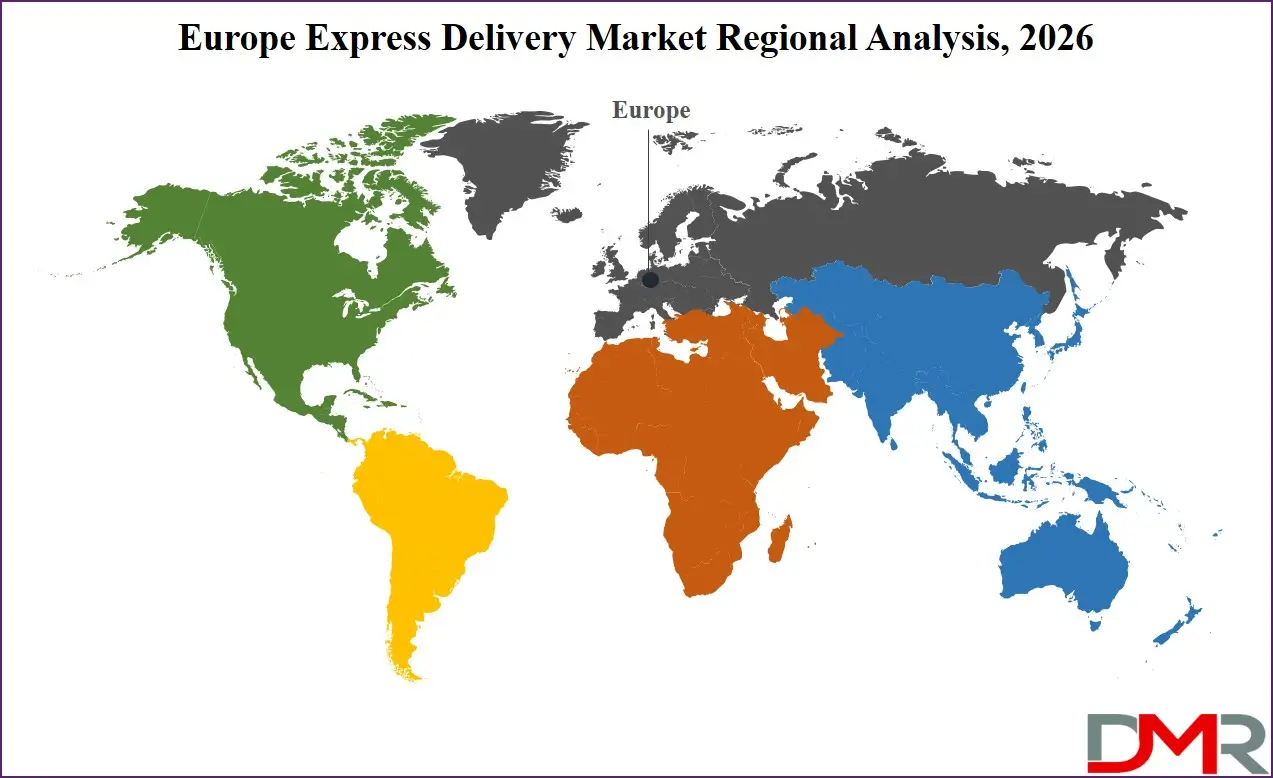
Europe
- Germany
- The U.K.
- France
- Italy
- Russia
- Spain
- Benelux
- Nordic
- Rest of Europe
Europe Express Delivery Market: Competitive Landscape
The competitive landscape is fueled by participation, both domestic and international, in the Europe Express Delivery Market, with dissimilar capabilities across network coverage, technology, and service integration. Major companies, therefore, strategize to develop advanced technologies such as AI, automated sorting, and real-time tracking to enhance delivery capabilities to better competitiveness. The leading players are Deutsche Post DHL Group, UPS, and FedEx in integrated global and European networks, while in technology and last-mile innovation, the leading players include Geopost and DPDgroup. These companies leverage Europe's e-commerce and sustainability initiatives by aligning their offerings with regulatory priorities meant to attract investments and improve service. It addresses both the rising B2C e-commerce and B2B industrial sectors, where these focus more on niche capabilities: healthcare logistics and heavy freight, while major players have emerged, providing end-to-end solutions in network integration and technology development.
ℹ
To learn more about this report –
Download Your Free Sample Report Here
Mergers and partnerships are common strategies that allow companies to expand service portfolios and reach. For instance, technology companies partnering with logistics providers enhance data-driven decision-making and operational agility. While the leading companies are competitive, innovation in the fields of AI, electric vehicle fleets, and predictive logistics separates the leaders. These opportunities are likely to come along with an intense competitive landscape for both established players and new entrants, with strong governmental support for developing sustainable logistics innovation clusters.
Some of the prominent players in the Europe Express Delivery Market are:
- DHL Group
- United Parcel Service (UPS) Europe
- FedEx Europe
- PostNL
- bpost
- Österreichische Post AG
- Swiss Post
- Correos
- Poste Italiane
- Posten Norge AS
- CTT Correios de Portugal
- International Distributions Services plc (Royal Mail)
- GeoPost SA
- Evri
- InPost
- Asendia
- La Poste / Colissimo
- GLS Europe
- Yodel
- ParcelForce Worldwide
- Other Key Players
Recent Developments in the Europe Express Delivery Market
- March 2026: DHL Group announced continued investments in its European logistics network, focusing on automation and digitalization across sorting hubs to improve delivery efficiency, reduce operational costs, and enhance service reliability amid growing cross-border e-commerce demand.
- February 2026: Geopost reported strong parcel volume growth across Europe and accelerated the expansion of its out-of-home delivery network, including parcel lockers and pickup points, to enhance delivery flexibility and reduce last-mile emissions in urban logistics.
- February 2026: FedEx expanded its collaboration with InPost to strengthen last-mile delivery capabilities in Europe by leveraging automated parcel lockers, enabling faster delivery times, improved customer convenience, and reduced failed delivery attempts.
- January 2026: InPost continued scaling its automated parcel locker infrastructure across key European markets, integrating advanced monitoring systems and return functionalities to optimize capacity utilization, improve customer experience, and support the rapid growth of e-commerce deliveries.
- October 2025: Evri completed the integration of DHL’s UK e-commerce logistics operations, forming a large-scale parcel delivery network designed to enhance service coverage, improve delivery speed, and strengthen its competitive positioning in the UK express delivery market.
- April 2025: La Poste accelerated the deployment of electric delivery vehicles across France and neighboring European markets, aiming to reduce carbon emissions, comply with stringent environmental regulations, and support sustainable last-mile delivery operations.
- March 2025: PostNL announced the expansion of its parcel sorting capacity and automation technologies in the Netherlands and Belgium, designed to improve operational efficiency, handle increasing parcel volumes, and enhance delivery performance during peak periods.
Report Details
| Report Characteristics |
| Market Size (2026) |
USD 95.2 Bn |
| Forecast Value (2035) |
USD 168.4 Bn |
| CAGR (2026–2035) |
6.5% |
| Historical Data |
2021 – 2025 |
| Forecast Data |
2027 – 2035 |
| Base Year |
2025 |
| Estimate Year |
2026 |
| Report Coverage |
Market Revenue Estimation, Market Dynamics, Competitive Landscape, Growth Factors and etc. |
| Segments Covered |
By Destination (Domestic and International), By Business Model (Business-to-Business (B2B), Business-to-Consumer (B2C) and Consumer-to-Consumer (C2C)), By Mode of Transport (Roadways, Airways, Railways, Maritime and Others), By Shipment Weight (Lightweight, Medium Weight and Heavyweight), By Service Type (Time-Definite Delivery (Express), Deferred Delivery (Standard), Same-Day Delivery, Next-Day Delivery, Instant Delivery (On-Demand) and Freight Express), By End-User Industry (Retail & E-commerce, Healthcare & Pharmaceuticals, Automotive & Industrial, Banking, Financial Services & Insurance (BFSI), Technology & Electronics, Manufacturing, Construction and Others) |
| Regional Coverage |
Europe – Germany, The UK, France, Russia, Spain, Italy, Benelux, Nordic, & Rest of Europe |
| Prominent Players |
DHL Group, United Parcel Service (UPS) Europe, FedEx Europe, PostNL, bpost, Österreichische Post AG, Swiss Post, Correos, Poste Italiane, Posten Norge AS, CTT Correios de Portugal, International Distributions Services plc (Royal Mail), GeoPost SA, Evri, InPost, Asendia, La Poste / Colissimo, GLS Europe, Yodel, ParcelForce Worldwide, and Other Key Players. |
| Purchase Options |
We have three licenses to opt for: Single User License (Limited to 1 user), Multi-User License (Up to 5 Users) and Corporate Use License (Unlimited User) along with free report customization equivalent to 0 analyst working days, 3 analysts working days and 5 analysts working days respectively. |
Frequently Asked Questions
How big is the Europe Express Delivery Market?
▾ The Europe Express Delivery Market size is estimated to have a value of USD 95.2 billion in 2026 and is expected to reach USD 168.4 billion by the end of 2035.
Who are the key players in the Europe Express Delivery Market?
▾ Some of the major key players in the Europe Express Delivery Market are United Parcel Service (UPS) Europe, FedEx Europe, PostNL, bpost, Österreichische Post AG, Swiss Post, and many others.
What is the growth rate in the Europe Express Delivery Market?
▾ The market is growing at a CAGR of 6.5% over the forecasted period.