Market Overview
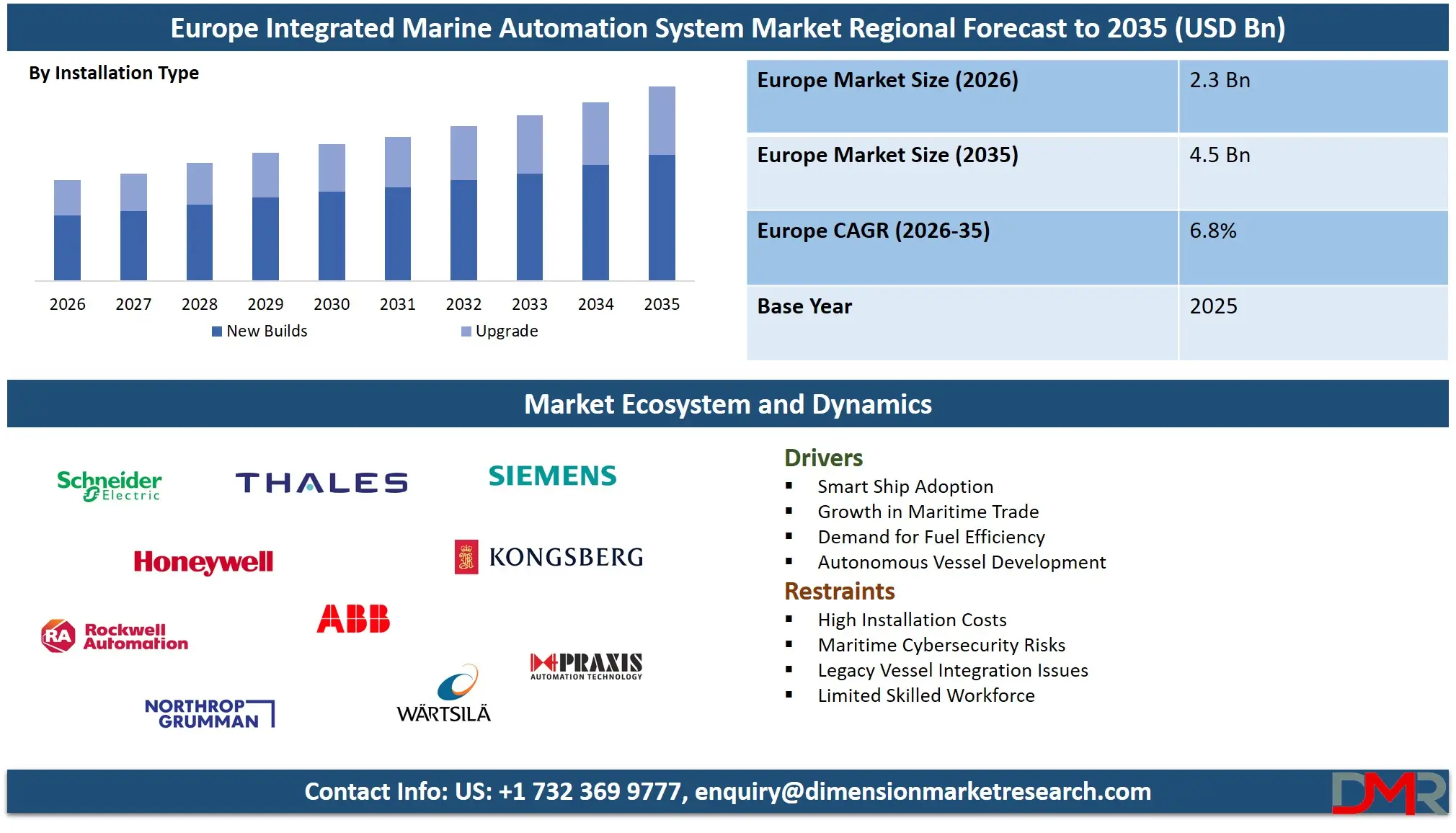
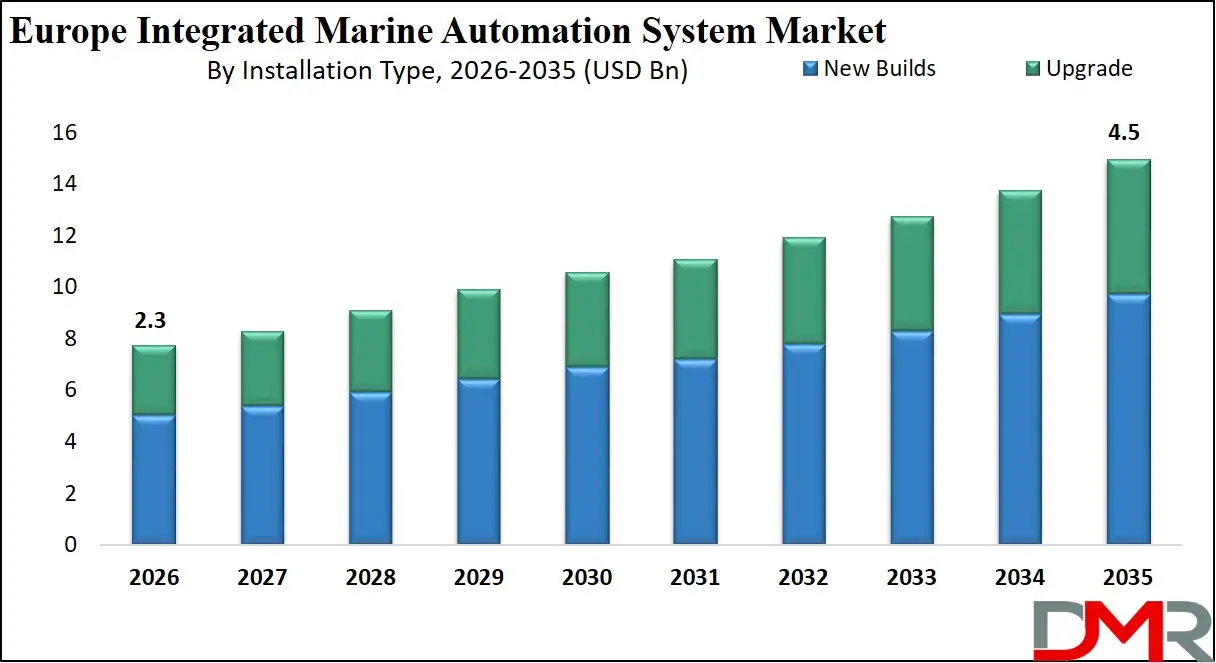
The Europe Integrated Marine Automation System Market is estimated to reach USD 2.3 billion in 2026 and is projected to grow at a CAGR of 6.8% from 2026 to 2035, reaching approximately USD 4.5 billion by 2035, supported by increasing adoption of vessel automation, shipboard control systems, and advanced maritime digitalization technologies.
An integrated marine automation system is an advanced onboard control architecture that digitally connects and manages multiple shipboard operations through a centralized monitoring and control platform. It integrates subsystems such as propulsion control, power management, navigation support, engine performance monitoring, cargo handling supervision, safety alarms, and environmental control into a unified interface.
ℹ
To learn more about this report –
Download Your Free Sample Report Here
These systems rely on industrial sensors, programmable logic controllers, communication networks, and intelligent software to enable real time data acquisition and automated decision support. By reducing manual intervention and enabling predictive maintenance, integrated marine automation systems improve vessel operational efficiency, fuel optimization, safety management, and regulatory compliance. They are widely deployed across commercial vessels, offshore platforms, naval ships, and specialized marine assets where seamless coordination between mechanical, electrical, and digital systems is essential for reliable maritime operations.
The Europe integrated marine automation system market represents a technologically advanced maritime ecosystem driven by the region’s strong shipbuilding industry, maritime trade infrastructure, and emphasis on digital vessel management. Countries such as Norway, Germany, Finland, and the Netherlands are investing in smart ship technologies that integrate shipboard automation, remote monitoring, and advanced power management systems. European shipping operators are increasingly adopting automation solutions to enhance fleet performance, improve navigational safety, and comply with stringent maritime environmental regulations. The growing shift toward digitally connected vessels and smart shipping operations is encouraging the adoption of centralized vessel management systems and advanced maritime control technologies across commercial and defense fleets.
ℹ
To learn more about this report –
Download Your Free Sample Report Here
In addition, the market in Europe is supported by rising investments in autonomous shipping research, maritime digitalization programs, and next generation offshore vessel technologies. Shipowners and maritime operators are implementing integrated automation platforms that support predictive diagnostics, real time operational analytics, and remote fleet management capabilities. The presence of major marine technology providers and maritime engineering firms across the region further strengthens the innovation landscape. As the shipping sector continues to focus on energy efficiency, cybersecurity in maritime systems, and automated navigation support, the demand for integrated marine automation solutions is expected to expand steadily across European maritime operations.
Europe Integrated Marine Automation System Market: Key Takeaways
- Strong Market Growth Outlook: The market is projected to grow from USD 2.3 billion in 2026 to USD 4.5 billion by 2035, expanding at a CAGR of 6.8%, driven by increasing adoption of vessel automation and digital ship systems.
- Hardware Dominates Component Segment: Hardware is expected to hold 63.0% market share in 2026, supported by strong demand for marine sensors, control units, automation panels, and shipboard monitoring equipment.
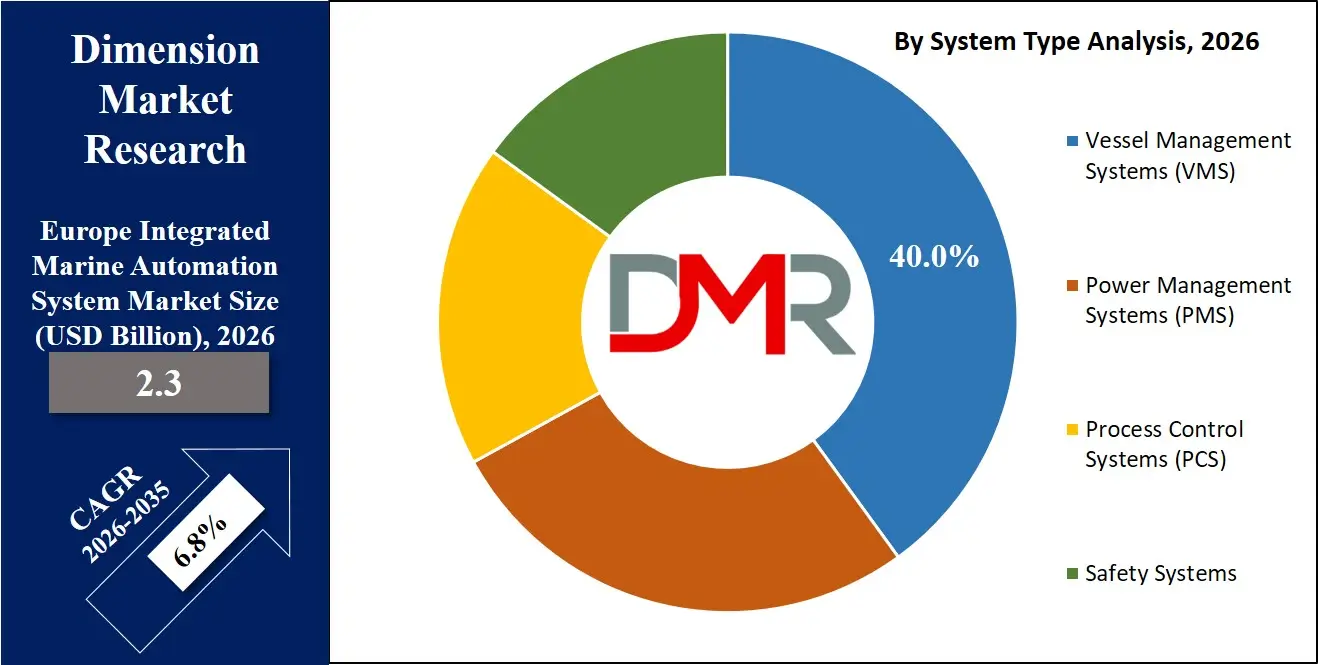
- Vessel Management Systems Lead by System Type: Vessel Management Systems are projected to capture 40.0% of the system type segment in 2026, as they enable centralized control of propulsion, navigation, and onboard machinery.
- New Build Installations Drive Adoption: New ship installations account for 65.0% of the installation segment in 2026, reflecting growing integration of automation technologies during vessel construction.
- Commercial Shipping Remains the Largest End User: Commercial shipping is expected to represent 75.0% of total market demand in 2026, due to widespread adoption of automation across cargo vessels, tankers, and container ships.
Europe Integrated Marine Automation System Market: Use Cases
- Commercial Shipping Automation: Integrated marine automation systems are used across European cargo vessels and container ships to manage propulsion control, engine monitoring, and shipboard alarm systems through centralized vessel control platforms. These solutions improve operational efficiency, reduce manual workload, and support digital ship management.
- Offshore Support Vessel Operations: Offshore vessels operating in North Sea energy projects use marine automation platforms for power management, machinery monitoring, and dynamic vessel control. These systems enhance operational reliability and improve safety in offshore maritime environments.
- Naval and Defense Vessel Control: European naval fleets deploy integrated ship automation systems to monitor propulsion systems, onboard machinery, and safety control networks. These technologies strengthen mission readiness, enable real time system diagnostics, and support advanced maritime defense operations.
- Smart Ship and Remote Fleet Monitoring: Shipping operators in Europe are adopting smart vessel technologies that enable remote monitoring, predictive maintenance, and real time performance analytics. Integrated automation platforms support fleet management, energy optimization, and connected maritime operations.
Impact of US-Iran Conflict in the Europe Integrated Marine Automation System Market
- Rising Demand for Maritime Security Systems: Increasing tensions near strategic shipping routes such as the Strait of Hormuz and the Red Sea encourage European countries to strengthen naval operations. This can increase demand for advanced ship control systems, vessel monitoring technologies, and defense-grade marine automation solutions.
- Higher Operational Risks for Shipping Companies: Security threats in critical trade corridors push shipping operators to adopt enhanced vessel monitoring systems, automated navigation support, and shipboard safety automation to ensure safer maritime operations.
- Shipping Route Disruptions and Longer Transit Times: Geopolitical tensions can force vessels to avoid high-risk regions and take longer routes. This increases the need for predictive maintenance, digital fleet management, and fuel optimization technologies to maintain operational efficiency.
- Energy Price Volatility Influencing Ship Technology Investments: Conflicts in the Middle East can cause fluctuations in oil and LNG prices. Rising fuel costs often encourage shipowners to invest in marine automation systems that improve propulsion efficiency and energy management.
- Rising Freight and Insurance Costs: Geopolitical instability can increase freight charges and maritime insurance premiums. Shipping companies may adopt integrated automation systems to improve operational performance, reduce downtime, and manage costs more efficiently.
Europe Integrated Marine Automation System Market: Stats & Facts
- Eurostat (European Commission)
- In 2024, EU seaports handled about 3.4 billion tonnes of freight, showing stable maritime cargo volumes compared with 2023, which also recorded around 3.4 billion tonnes.
- In 2023, EU ports handled 3.37 billion tonnes of freight, slightly lower than 3.51 billion tonnes recorded in 2022.
- Maritime transport accounted for 75.6% of EU imports by weight in 2024, confirming sea transport as the dominant mode for international trade.
- In 2024, maritime transport represented 73.7% of EU exports by weight, highlighting the critical role of shipping in European trade logistics.
- In terms of trade value, maritime transport represented 51.3% of EU imports in 2024.
- Maritime transport represented 43.6% of EU export value in 2024.
- In 2023, approximately 67.4% of freight transport within the EU measured in tonne kilometres occurred by sea.
- Road transport accounted for 25.3% of freight transport in the EU in 2023.
- Rail transport represented 5.5% of total freight transport in the EU in 2023.
- Inland waterways represented 1.6% of EU freight transport in 2023.
- Air transport accounted for only 0.2% of freight transport volume in the EU in 2023.
- EU ports recorded 395.3 million maritime passengers in 2023, reflecting a 5.8% increase compared with 2022.
- Italy’s ports handled 85.4 million passengers in 2023, representing 22% of the EU’s total maritime passenger traffic.
- Greece recorded 75.0 million maritime passengers in 2023, accounting for 19% of EU passenger transport by sea.
- Denmark handled 41.2 million maritime passengers in 2023, representing around 10% of EU maritime passenger traffic.
- Eleven EU countries each recorded more than 10 million maritime passengers in 2023, collectively accounting for 97% of EU passenger traffic by sea.
- In 2023, short sea shipping in the EU transported 1.6 billion tonnes of goods between European ports.
- Short sea shipping cargo volumes in 2023 declined by 5.4% compared with 2022.
- The Port of Rotterdam handled about 159 million tonnes of short sea shipping cargo in 2023, representing 9.9% of EU short sea shipping volume.
- Antwerp Bruges handled 119 million tonnes of short sea shipping cargo in 2023, ranking as the second busiest EU port in this category.
- Gdańsk handled 61 million tonnes of short sea shipping cargo in 2023, ranking among the top EU ports for maritime freight.
Europe Integrated Marine Automation System Market: Market Dynamic
Driving Factors in the Europe Integrated Marine Automation System Market
Growing Adoption of Smart Ship and Vessel Automation Technologies
European shipping companies are increasingly adopting smart ship technologies to improve operational efficiency and reduce human intervention in complex maritime operations. Integrated marine automation systems enable centralized vessel monitoring, propulsion control, power management systems, and real time engine diagnostics. These digital ship management platforms support data driven decision making, predictive maintenance, and improved navigational safety. The shift toward connected maritime infrastructure and automated ship control solutions is encouraging fleet operators to invest in advanced shipboard automation and intelligent vessel management technologies.
Strong Maritime Digitalization and Regulatory Compliance Initiatives
The European maritime sector is experiencing rapid digital transformation driven by strict environmental regulations and safety compliance standards. Integrated automation platforms help vessel operators monitor fuel consumption, machinery performance, and onboard safety systems through real time data analytics. These systems also support compliance with international maritime safety regulations and environmental monitoring frameworks. As shipping companies focus on energy efficiency and operational transparency, the demand for advanced marine control systems and digital vessel monitoring solutions continues to grow.
Restraints in the Europe Integrated Marine Automation System Market
High Implementation and Integration Costs
The deployment of integrated marine automation systems requires significant investment in sensors, control software, communication networks, and onboard digital infrastructure. Many shipowners face financial challenges when upgrading legacy vessels with advanced ship automation technologies. Integration with existing propulsion systems, navigation equipment, and onboard control networks can also increase installation complexity and project costs, limiting adoption among small and mid-sized maritime operators.
Cybersecurity Risks in Connected Ship Systems
The increasing use of digitally connected ship control systems exposes vessels to potential cybersecurity threats. Integrated automation platforms rely on communication networks and remote monitoring tools that may become vulnerable to cyber intrusions. Unauthorized access to vessel management systems or navigation data could disrupt ship operations and compromise maritime safety. As a result, concerns regarding maritime cybersecurity and data protection remain a key challenge for the widespread deployment of advanced marine automation technologies.
Opportunities in the Europe Integrated Marine Automation System Market
Expansion of Autonomous and Remote Controlled Shipping
Europe is actively investing in autonomous vessel development and remote ship operation technologies. Integrated marine automation systems play a crucial role in enabling automated navigation, remote vessel monitoring, and intelligent propulsion management. These systems provide the digital infrastructure required for autonomous shipping, including real time sensor integration, automated safety alerts, and predictive operational analytics. The growing research and pilot projects for unmanned vessels present significant opportunities for advanced marine automation solutions.
Increasing Demand for Energy Efficient Vessel Operations
Shipping companies across Europe are focusing on reducing fuel consumption and minimizing environmental impact. Integrated marine automation systems help optimize engine performance, monitor energy usage, and improve overall vessel efficiency through advanced control algorithms. Automation platforms that support energy management, emissions monitoring, and fuel optimization are gaining importance as maritime operators pursue sustainable shipping practices and green maritime technologies.
Trends in the Europe Integrated Marine Automation System Market
Integration of Advanced Data Analytics and Predictive Maintenance
Modern integrated marine automation platforms are incorporating advanced data analytics tools to analyze ship performance and machinery health in real time. Predictive maintenance technologies allow operators to detect equipment failures before they occur, reducing maintenance costs and minimizing vessel downtime. The use of digital twin technology, intelligent sensors, and performance analytics is transforming traditional ship management into a data driven maritime operation model.
Rising Adoption of Integrated Bridge and Vessel Control Systems
European shipbuilders and maritime technology providers are increasingly developing integrated bridge systems that combine navigation control, vessel monitoring, and automation functions into a unified digital interface. These advanced control environments enhance crew situational awareness, simplify vessel operation, and improve decision support capabilities. The trend toward centralized ship control platforms and integrated maritime digital systems is shaping the next generation of smart vessel operations across Europe.
Europe Integrated Marine Automation System Market: Research Scope and Analysis
By Component Analysis
Hardware is anticipated to dominate the component segment of the Europe Integrated Marine Automation System market, capturing around 63.0% of the total market share in 2026. The dominance of hardware is largely driven by the extensive deployment of physical shipboard automation equipment such as sensors, control panels, programmable logic controllers, communication modules, alarm systems, and monitoring devices. These components form the backbone of vessel automation infrastructure, enabling real time data acquisition and operational control across propulsion systems, engine rooms, and onboard safety networks. European shipbuilders and fleet operators continue to invest heavily in advanced marine electronics and industrial control hardware to improve vessel reliability, navigation safety, and energy management. The integration of high performance marine sensors and automation control units is also essential for supporting digital ship technologies and intelligent vessel management systems.
Software also plays a critical role in this component segment by enabling centralized monitoring, system integration, and automated decision support across shipboard operations. Marine automation software platforms connect multiple onboard subsystems including propulsion monitoring, power management systems, cargo control, and navigation support tools through a unified interface. These software solutions provide real time operational analytics, alarm management, predictive maintenance insights, and remote vessel monitoring capabilities. As European shipping companies increasingly adopt smart vessel technologies and digital fleet management strategies, the demand for advanced marine control software, data analytics platforms, and cybersecurity enabled automation solutions is steadily increasing across the maritime automation ecosystem.
By System Type Analysis
Vessel Management Systems are anticipated to dominate the system type segment of the Europe Integrated Marine Automation System market, capturing around 40.0% of the total market share in 2026. These systems serve as the central control framework that integrates multiple shipboard operations such as propulsion monitoring, navigation support, machinery diagnostics, alarm control, and vessel performance analytics. Vessel management platforms enable centralized monitoring of onboard equipment through advanced control interfaces and real time data communication networks. European shipping companies are increasingly adopting these systems to enhance operational efficiency, improve safety compliance, and support digital ship operations. The growing focus on smart vessels, remote vessel monitoring, and predictive maintenance solutions across commercial shipping and offshore fleets is further strengthening the demand for advanced vessel management systems.
ℹ
To learn more about this report –
Download Your Free Sample Report Here
Power Management Systems also represent an essential component of integrated marine automation by regulating the generation, distribution, and consumption of electrical power onboard ships. These systems monitor generator performance, balance electrical loads, and optimize energy usage across propulsion units, navigation equipment, and onboard machinery. In European maritime operations, power management platforms help improve fuel efficiency, prevent electrical overloads, and ensure stable power supply for critical ship systems. With increasing emphasis on energy efficient vessel operations, hybrid propulsion technologies, and electrified ship systems, power management solutions are becoming increasingly important for maintaining reliable and sustainable shipboard energy infrastructure.
By Installation Type Analysis
New builds are anticipated to dominate the installation type segment of the Europe Integrated Marine Automation System market, capturing around 65.0% of the total market share in 2026. The dominance of new ship installations is primarily driven by the strong shipbuilding capabilities across several European countries and the growing demand for technologically advanced vessels equipped with modern automation infrastructure. Shipbuilders are increasingly integrating comprehensive marine automation platforms during the vessel design and construction phase, allowing seamless integration of propulsion monitoring systems, vessel management platforms, navigation control units, and safety automation networks. Installing these technologies during the construction stage allows shipowners to deploy fully integrated digital ship control systems that support efficient vessel operations, improved fuel management, and enhanced operational safety.
The upgrade segment also plays an important role in the market as many existing vessels operating across European commercial shipping routes require modernization to remain competitive and compliant with evolving maritime regulations. Shipowners are retrofitting older vessels with advanced marine automation solutions such as updated control software, intelligent monitoring systems, and improved power management technologies. These upgrades help enhance machinery performance monitoring, improve energy efficiency, and enable real time vessel data analytics. As shipping companies focus on extending vessel life cycles and improving operational efficiency, the retrofitting of legacy ships with modern shipboard automation technologies continues to generate steady demand in the upgrade segment.
By Automation Level Analysis
Partial automation is anticipated to dominate the automation level segment of the Europe Integrated Marine Automation System market, capturing around 71.0% of the total market share in 2026. Most commercial vessels and offshore ships operating in Europe rely on partially automated systems where critical ship functions are supported by digital control technologies while still allowing human supervision and decision making. Partial automation enables automated monitoring of propulsion systems, machinery diagnostics, alarm management, and navigation support while maintaining direct crew control over key operational processes. This approach helps shipping companies improve vessel efficiency, reduce operational risks, and enhance safety management without fully replacing onboard crew operations. The widespread adoption of shipboard automation platforms and integrated vessel control systems across cargo vessels, tankers, and passenger ships continues to strengthen the dominance of partial automation in maritime operations.
The remotely operated segment is also gaining attention as maritime operators explore advanced vessel control technologies that allow certain ship functions to be managed from onshore control centers. Remotely operated systems use communication networks, real time vessel monitoring platforms, and advanced marine automation software to enable remote supervision of propulsion systems, navigation data, and onboard machinery performance. These technologies support improved fleet management, operational transparency, and remote diagnostics across maritime operations. Although still emerging compared to traditional automation approaches, remotely operated ship control solutions are gradually expanding in Europe due to increasing research in autonomous shipping, digital maritime infrastructure, and smart vessel management technologies.
By End-User Analysis
Commercial shipping is anticipated to dominate the end user segment of the Europe Integrated Marine Automation System market, capturing around 75.0% of the total market share in 2026. The dominance of this segment is driven by the extensive use of integrated ship automation technologies across cargo vessels, container ships, bulk carriers, and oil tankers operating throughout European maritime trade routes. Shipping companies are increasingly adopting vessel automation systems to improve operational efficiency, optimize fuel consumption, and enhance ship safety management. Integrated marine automation platforms allow centralized monitoring of propulsion systems, engine performance, cargo handling operations, and onboard safety equipment through digital ship control interfaces. The growing demand for efficient fleet management, real time vessel monitoring, and energy efficient shipping operations is encouraging commercial fleet operators to invest in advanced shipboard automation infrastructure.
The defense segment also represents a significant application area for integrated marine automation systems, particularly across naval fleets and maritime security vessels. Defense organizations deploy advanced ship automation technologies to monitor propulsion systems, manage onboard power distribution, and control critical vessel operations through integrated command and control platforms. These systems enhance situational awareness, support real time system diagnostics, and improve operational readiness during complex naval missions. European naval forces are increasingly integrating advanced marine control technologies and digital vessel monitoring solutions to strengthen fleet performance, reduce manual workload, and support modern naval warfare capabilities.
The Europe Integrated Marine Automation System Market Report is segmented on the basis of the following:
By Component
- Hardware
- Software
- Services
By System Type
- Vessel Management Systems (VMS)
- Power Management Systems (PMS)
- Process Control Systems (PCS)
- Safety Systems
By Installation Type
By Automation Level
- Partial Automation
- Remotely-Operated
- Fully Autonomous
By End-User
- Commercial Shipping
- Defense
- Others
Impact of Artificial Intelligence in the Europe Integrated Marine Automation System Market
Artificial intelligence is increasingly transforming the Europe Integrated Marine Automation System market by enhancing the intelligence and efficiency of shipboard automation platforms. AI powered analytics are being integrated with vessel management systems, propulsion monitoring tools, and onboard sensor networks to enable real time data processing and automated operational insights. These technologies allow shipping operators to analyze engine performance, fuel consumption patterns, and machinery health more accurately. By using machine learning algorithms and predictive analytics, AI driven marine automation systems can detect potential equipment failures in advance, optimize propulsion efficiency, and improve overall vessel performance. This integration supports smarter maritime operations and reduces unexpected downtime across commercial fleets.
AI is also strengthening remote vessel monitoring, smart navigation support, and advanced maritime decision making across European shipping operations. Automation platforms equipped with artificial intelligence can process large volumes of maritime data from navigation systems, weather monitoring tools, and ship control networks to assist crew members in route optimization and operational planning. In addition, AI based control software helps improve energy management and enhances safety monitoring by identifying irregular system behavior in real time. As European maritime companies continue investing in digital shipping technologies and smart vessel infrastructure, artificial intelligence is expected to play a key role in advancing autonomous shipping capabilities and intelligent marine automation solutions.
Europe Integrated Marine Automation System Market: Regional Analysis
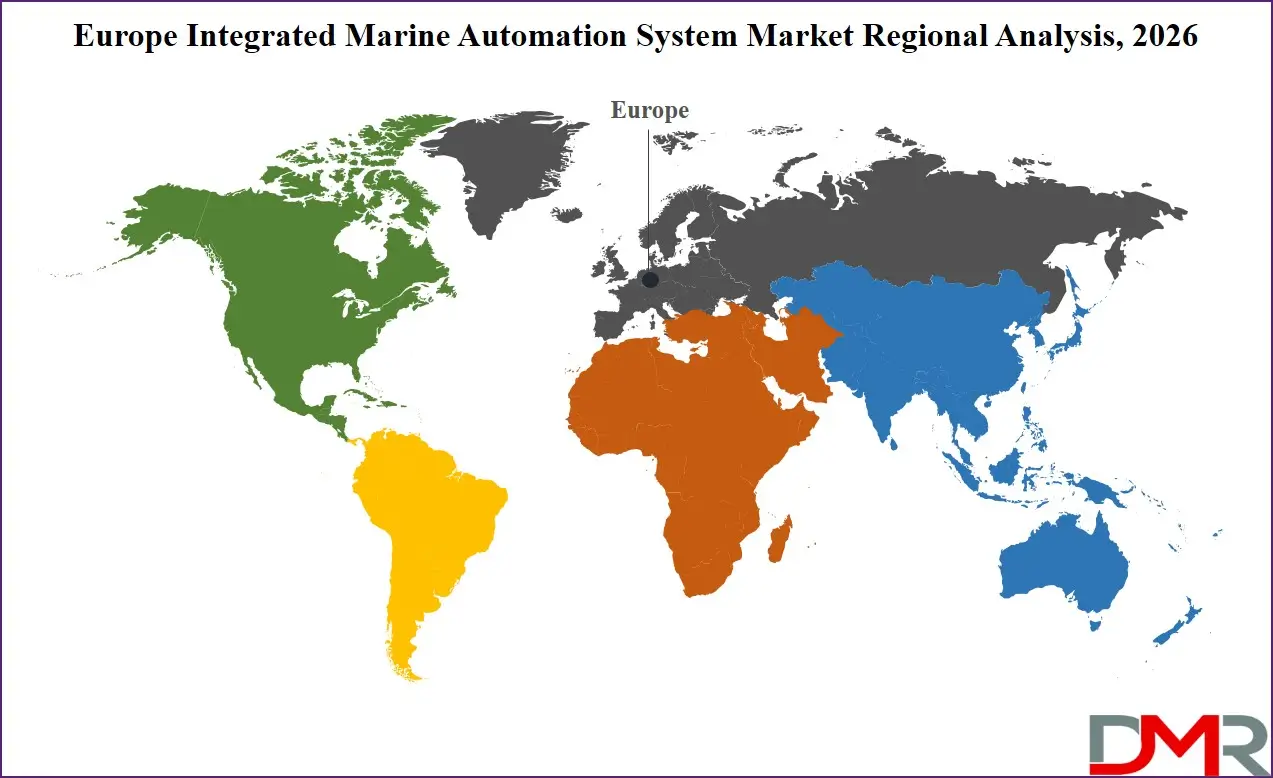
The Europe Integrated Marine Automation System market demonstrates strong regional growth supported by advanced shipbuilding capabilities, extensive maritime trade networks, and rapid adoption of digital ship technologies across the region. Northern and Western European countries such as Norway, Germany, Finland, and the Netherlands play a significant role in market expansion due to their strong maritime engineering industries and investments in smart vessel infrastructure.
ℹ
To learn more about this report –
Download Your Free Sample Report Here
These countries are actively integrating vessel management systems, power management solutions, and advanced shipboard automation platforms to improve fleet efficiency and operational safety. Southern European nations including Italy and Spain are also contributing to market growth through expanding commercial shipping activities and modernization of maritime fleets. In addition, increasing investments in offshore energy projects, autonomous shipping research, and maritime digitalization initiatives across Europe are supporting the adoption of integrated marine automation technologies for efficient vessel operations and advanced maritime control systems.
By Region
Europe
- Germany
- The U.K.
- France
- Italy
- Russia
- Spain
- Benelux
- Nordic
- Rest of Europe
Europe Integrated Marine Automation System Market: Competitive Landscape
The Europe Integrated Marine Automation System market is characterized by strong competition driven by technological innovation, strategic collaborations, and continuous investment in advanced maritime automation solutions. Market participants focus on developing integrated vessel management platforms, power management systems, and intelligent ship control technologies that enhance operational efficiency and maritime safety. Companies are increasingly investing in digital ship technologies, real time monitoring systems, and predictive maintenance solutions to strengthen their product portfolios and address the evolving needs of commercial shipping and naval fleets. Strategic partnerships with shipbuilders, marine engineering firms, and maritime technology providers are also common as organizations aim to expand their market presence and accelerate the deployment of next generation shipboard automation systems across European maritime operations.
Some of the prominent players in the Europe Integrated Marine Automation System Market are:
- ABB Ltd.
- Wärtsilä Corporation
- Siemens AG
- Kongsberg Gruppen
- Thales Group
- Schneider Electric
- Rolls‑Royce plc
- Honeywell International Inc.
- Rockwell Automation
- Emerson Electric Co.
- Northrop Grumman
- Consilium AB
- Praxis Automation Technology
- Marine Technologies LLC
- API Marine
- Danelec Marine
- Ulstein Group
- Transas
- Atlas Elektronik
- Other Key Players
Recent Developments in the Europe Integrated Marine Automation System Market
- February 2026: Kongsberg Maritime introduced advanced digital vessel automation and integrated bridge solutions designed to improve shipboard control, navigation integration, and real time vessel monitoring across commercial shipping and offshore fleets.
- October 2025: Helsing announced the acquisition of Blue Ocean to strengthen its AI powered autonomous maritime systems and accelerate development of advanced naval surveillance and underwater automation technologies.
- September 2025: Sea‑Flux secured USD 2.71 million in funding led by Punakaiki Fund to expand its maritime digital platform that supports vessel compliance management, maintenance monitoring, and crew management systems used across global fleets.
- July 2025: VINCI Energies signed an agreement to acquire Wärtsilä SAM Electronics GmbH from Wärtsilä Corporation to expand its maritime electrical and ship automation technology capabilities.
Report Details
| Report Characteristics |
| Market Size (2026) |
USD 2.3 Bn |
| Forecast Value (2035) |
USD 4.5 Bn |
| CAGR (2026–2035) |
6.8% |
| Historical Data |
2021 – 2025 |
| Forecast Data |
2027 – 2035 |
| Base Year |
2025 |
| Estimate Year |
2026 |
| Report Coverage |
Market Revenue Estimation, Market Dynamics, Competitive Landscape, Growth Factors and etc. |
| Segments Covered |
By Component (Hardware, Software, Services), By System Type (Vessel Management Systems, Power Management Systems, Process Control Systems, Safety Systems), By Installation Type (New Builds, Upgrade), By Automation Level (Partial Automation, Remotely-Operated, Fully Autonomous), and By End-User (Commercial Shipping, Defense, Others) |
| Regional Coverage |
Europe – Germany, The UK, France, Russia, Spain, Italy, Benelux, Nordic, & Rest of Europe |
| Prominent Players |
ABB Ltd., Wärtsilä Corporation, Siemens AG, Kongsberg Gruppen, Thales Group, Schneider Electric, Rolls-Royce plc, Honeywell International Inc., Rockwell Automation, Emerson Electric Co., Northrop Grumman, Consilium AB, Praxis Automation Technology, Marine Technologies LLC, API Marine, Danelec Marine, Ulstein Group, MTU Friedrichshafen (Rolls-Royce Power Systems), Transas, Atlas Elektronik., and Other Key Players |
| Purchase Options |
We have three licenses to opt for: Single User License (Limited to 1 user), Multi-User License (Up to 5 Users) and Corporate Use License (Unlimited User) along with free report customization equivalent to 0 analyst working days, 3 analysts working days and 5 analysts working days respectively. |
Frequently Asked Questions
How big is the Europe Integrated Marine Automation System Market?
▾ The Europe Integrated Marine Automation System Market size is estimated to have a value of USD 2.3 billion in 2026 and is expected to reach USD 4.5 billion by the end of 2035.
What is the growth rate in the Europe Integrated Marine Automation System Market in 2026?
▾ The market is growing at a CAGR of 6.8% over the forecasted period of 2026.
Who are the key players in the Europe Integrated Marine Automation System Market?
▾ Some of the major key players in the Europe Integrated Marine Automation System Market are ABB Ltd., Wärtsilä Corporation, Siemens AG, Kongsberg Gruppen, Thales Group, Schneider Electric, Rolls-Royce plc, Honeywell International Inc., Rockwell Automation, Emerson Electric Co., Northrop Grumman, Consilium AB, Praxis Automation Technology, Marine Technologies LLC, API Marine, and many others.