Market Overview
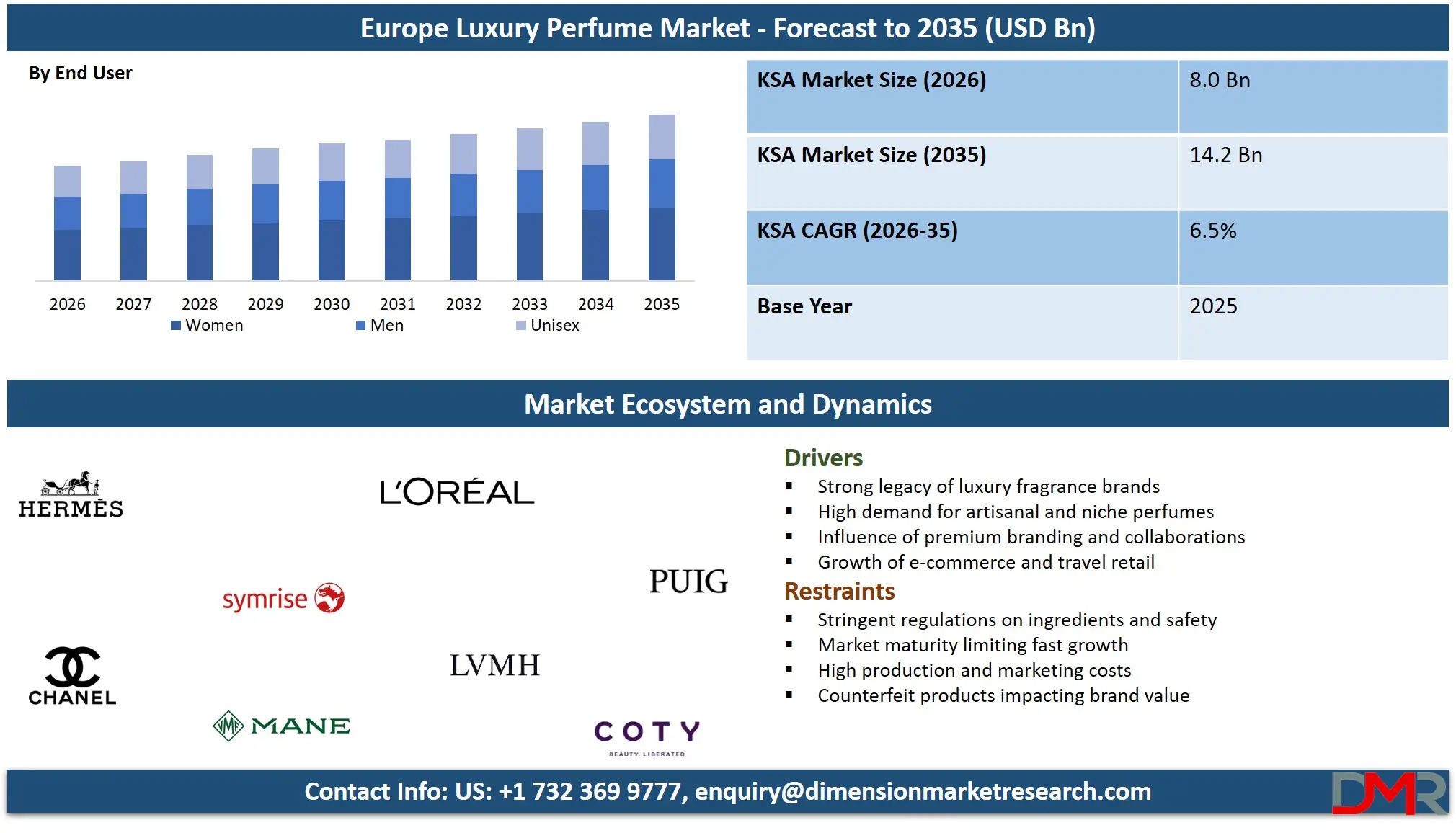
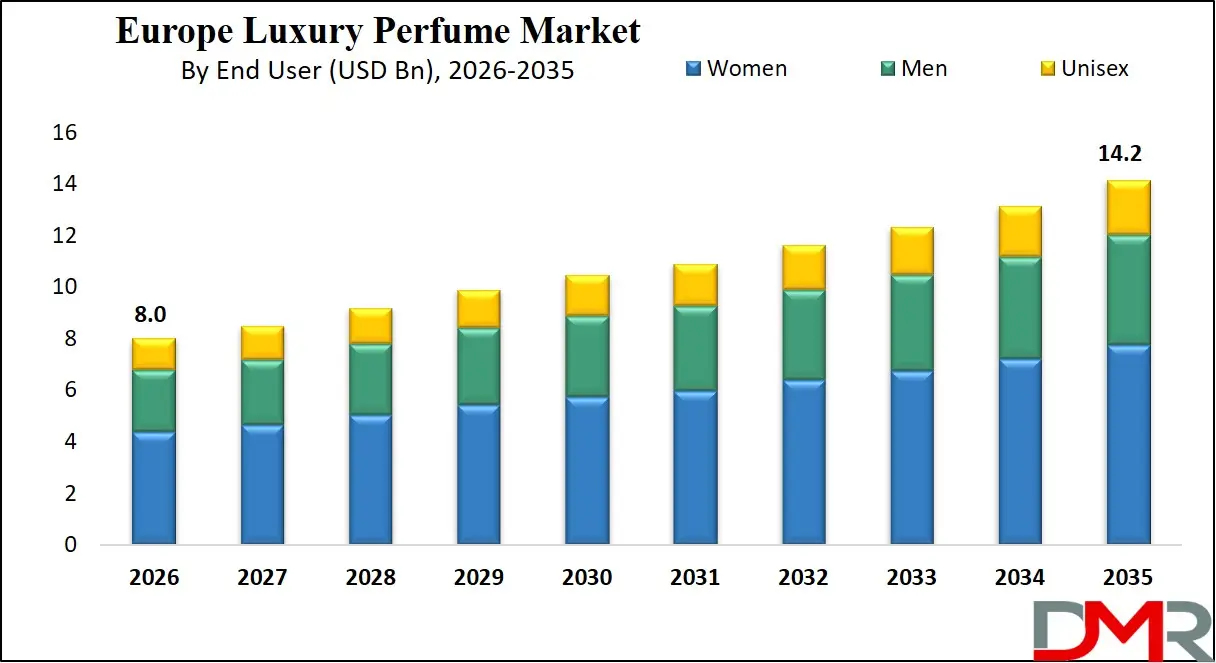
The Europe Luxury Perfume Market size is projected to reach USD 8.0 billion in 2026 and grow at a compound annual growth rate of 6.5% to reach a value of USD 14.2 billion in 2035.
ℹ
To learn more about this report –
Download Your Free Sample Report Here
Luxury perfume refers to the premium fragrance segment defined by the use of high-quality ingredients, advanced formulation techniques, and distinctive brand positioning. These products include parfum, eau de parfum, eau de toilette, and similar variants crafted using rare natural extracts, essential oils, and sophisticated aroma compounds. The segment blends artistic perfumery with scientific precision to deliver long-lasting and layered scent experiences. It is distinguished by elegant packaging, strong heritage narratives, and a focus on exclusivity, making it a key component of the broader cosmetics and personal care industry while symbolizing refinement, identity, and aspirational lifestyles.
In Europe, the sector is undergoing a transformation driven by evolving consumer preferences and technological progress. Increasing demand for niche and artisanal fragrances is encouraging brands to move beyond mass production toward more personalized and distinctive scent offerings. Sustainability has become a central focus, with clean-label formulations, cruelty-free testing, and eco-friendly packaging gaining importance. At the same time, digital platforms and e-commerce channels are reshaping how consumers discover and purchase perfumes, offering immersive experiences and direct engagement. Advances in fragrance chemistry and biotechnology are further enabling the development of innovative, sustainable scent compositions aligned with modern expectations.
ℹ
To learn more about this report –
Download Your Free Sample Report Here
Across Europe, the market continues to expand due to rising disposable incomes, tourism growth, and the strengthening of luxury retail infrastructure. Industry evolution is also marked by strategic collaborations, limited-edition launches, and increased investment in research and development to create alternative ingredients and unique formulations. Mergers and acquisitions are helping companies diversify portfolios and extend their reach, while regulatory frameworks focused on safety and environmental impact are shaping product standards. Collectively, these factors highlight a mature yet dynamic landscape characterized by continuous innovation, sustainability integration, and enhanced consumer engagement.
Europe Luxury Perfume Market: Key Takeaways
- Market Growth: The Europe Luxury Perfume Market size is expected to grow by USD 5.7 billion, at a CAGR of 6.5%, during the forecasted period of 2027 to 2035.
- By End User: Women are anticipated to get the majority share of the Europe Luxury Perfume market in 2026.
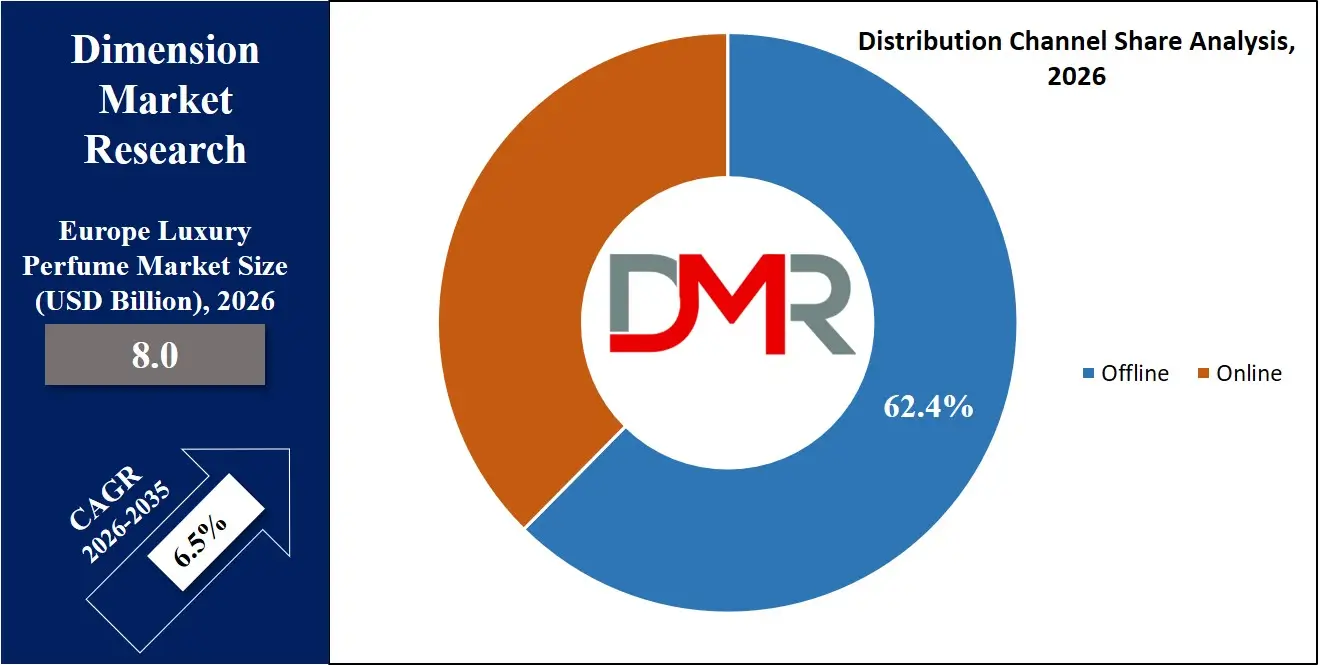
- By Distribution Channel: The offline segment is expected to get the largest revenue share in 2026 in the Europe Luxury Perfume market.
- Use Cases: Some of the use cases of Luxury Perfume include personal identity expression, gifting & special occasions, and more.
Europe Luxury Perfume Market: Use Cases
- Personal Identity Expression: Consumers use luxury perfumes to reflect individuality and social status. Premium fragrances act as a signature element of personal branding, often associated with lifestyle and emotional identity.
- Gifting and Special Occasions: High-end perfumes are widely purchased as gifts for celebrations such as weddings, anniversaries, and holidays. Their premium positioning enhances perceived value and emotional significance.
- Travel Retail and Duty-Free Sales: Airports and travel hubs serve as major distribution points, where tourists purchase luxury perfumes due to tax advantages and exclusive travel editions.
- Corporate and Luxury Hospitality: Hotels and corporate environments use signature scents to enhance brand identity and create memorable sensory experiences for customers and guests.
- Fashion and Lifestyle Integration: Luxury perfumes are often launched alongside fashion collections, reinforcing brand narratives and extending product lines into the fragrance segment.
- Wellness and Aromatherapy: Premium fragrances are increasingly linked to wellness, with certain formulations designed to promote relaxation, focus, or mood enhancement.
- Collector and Limited Editions: Enthusiasts invest in rare and limited-edition perfumes as collectibles, driven by exclusivity, craftsmanship, and artistic packaging.
Stats & Facts
- European Commission reported in 2024 that cosmetics and personal care products industry contributes over EUR 29 billion annually to the EU economy.
- Eurostat stated in 2025 that household expenditure on personal care products in Europe grew by 6.2% year-on-year.
- OECD highlighted in 2024 that luxury goods consumption in Europe increased by 5.8% driven by tourism recovery.
- World Bank noted in 2025 that high-income consumer spending in Europe rose by 4.7%, supporting luxury segments.
- International Trade Centre reported in 2024 that fragrance exports from Europe exceeded EUR 18 billion globally.
- European Chemicals Agency stated in 2025 that over 95% of fragrance ingredients comply with updated safety regulations.
- UNWTO reported in 2024 that Europe recorded over 700 million tourist arrivals, boosting duty-free perfume sales.
- IMF indicated in 2025 that disposable income levels in Western Europe increased by 3.9%.
- European Environment Agency reported in 2024 that sustainable packaging adoption in cosmetics reached 38%.
- OECD stated in 2025 that e-commerce penetration in luxury goods surpassed 25% of total sales in Europe.
- Eurostat reported in 2024 that online retail sales for beauty products grew by 8.5%.
- World Trade Organization noted in 2025 that intra-European trade of luxury goods increased by 6.1%.
Market Dynamic
Driving Factors in the Europe Luxury Perfume Market
Rising Demand for Premium and Personalized Fragrances
Consumers across Europe are increasingly seeking personalized and exclusive fragrance experiences, driving demand for luxury perfumes. This shift is fueled by higher disposable incomes and evolving lifestyle aspirations, where individuals prefer bespoke or niche scents over mass-produced alternatives. Brands are responding by offering customization services and limited-edition collections, enhancing consumer engagement. Additionally, the influence of social media and luxury branding has amplified awareness, encouraging consumers to invest in premium fragrances as part of their identity. This growing inclination toward individuality continues to shape product innovation and marketing strategies.
Expansion of Digital and Omnichannel Retail
The rapid growth of online retail platforms and omnichannel strategies has significantly boosted market accessibility. Luxury perfume brands are leveraging digital tools such as virtual scent discovery, AI-based recommendations, and immersive storytelling to attract consumers. E-commerce platforms enable brands to reach a wider audience while maintaining exclusivity through curated online experiences. Additionally, integration with physical retail stores allows consumers to explore products both digitally and physically, enhancing convenience and engagement. This seamless shopping experience has become a critical driver of growth in the luxury perfume market.
Restraints in the Europe Luxury Perfume Market
High Product Costs and Economic Sensitivity
Luxury perfumes are priced significantly higher due to premium ingredients, branding, and packaging, making them sensitive to economic fluctuations. During periods of economic uncertainty or inflation, consumers may shift toward more affordable alternatives, affecting demand. The high cost of raw materials and production further adds to pricing pressures, limiting accessibility for a broader audience. This price sensitivity can hinder market expansion, especially in regions with lower disposable income levels.
Stringent Regulatory Compliance
The European market is governed by strict regulations related to ingredient safety, labeling, and environmental impact. Compliance with these regulations requires substantial investment in research, testing, and certification processes. Smaller or emerging brands may face challenges in meeting these requirements, limiting their market entry. Additionally, restrictions on certain natural ingredients can impact traditional fragrance formulations, forcing companies to invest in alternative solutions, which may increase production costs and complexity.
Opportunities in the Europe Luxury Perfume Market
Growth of Sustainable and Clean Fragrances
The increasing emphasis on sustainability presents significant opportunities for market players. Consumers are actively seeking eco-friendly and ethically sourced products, encouraging brands to adopt green practices. Innovations such as biodegradable packaging, refillable bottles, and plant-based ingredients are gaining traction. Companies that align with these preferences can differentiate themselves and capture a growing segment of environmentally conscious consumers.
Emerging Markets and Tourism Recovery
The recovery of tourism and rising demand from emerging European markets offer new growth avenues. Travelers often purchase luxury perfumes as souvenirs or duty-free products, boosting sales in travel retail channels. Additionally, expanding distribution networks in Eastern Europe and other developing regions can help brands tap into new consumer bases. These factors collectively create opportunities for sustained market expansion.
Trends in the Europe Luxury Perfume Market
Shift Toward Niche and Artisanal Brands
There is a growing preference for niche and artisanal perfume brands that offer unique and unconventional scent profiles. Consumers are increasingly valuing authenticity and craftsmanship over mass appeal, leading to the rise of independent perfumers. This trend is encouraging innovation and diversification within the market, as brands experiment with rare ingredients and storytelling-driven marketing approaches.
Integration of Technology in Fragrance Development
Technological advancements are transforming fragrance creation and consumer engagement. AI and data analytics are being used to predict consumer preferences and develop tailored scent profiles. Virtual reality and digital platforms are enhancing the shopping experience, allowing consumers to explore fragrances remotely. This integration of technology is reshaping both product development and retail strategies in the luxury perfume market.
Impact of Artificial Intelligence in Europe Luxury Perfume Market
- AI-driven Fragrance Creation: AI helps perfumers analyze vast ingredient combinations to create unique and sustainable scents efficiently.
- Personalized Recommendations: Algorithms suggest fragrances based on user preferences, purchase history, and lifestyle data.
- Virtual Try-On Experiences: Digital tools simulate scent profiles, enhancing online shopping experiences.
- Demand Forecasting: AI predicts market trends and consumer demand, optimizing production and inventory.
- Supply Chain Optimization: Automation improves sourcing and logistics efficiency, reducing operational costs.
- Customer Insights Analysis: AI analyzes consumer behavior to refine marketing strategies and product offerings.
- Sustainability Enhancement: AI identifies eco-friendly ingredients and processes for greener production.
- Fraud Detection: Advanced systems ensure authenticity and prevent counterfeit luxury products.
Impact of Iran War on Europe Luxury Perfume Market
The ongoing Iran conflict is creating indirect pressures on Europe’s luxury perfume market through rising energy costs and supply chain disruptions. Higher oil prices are increasing production and transportation expenses, particularly affecting fragrance manufacturing that depends on petrochemical-based ingredients and packaging. Inflationary pressures across key economies like Germany, France, and the United Kingdom are also reducing consumer spending on discretionary luxury products such as perfumes. In addition, logistical uncertainties and trade route risks are impacting timely product distribution. Despite these challenges, established luxury brands may sustain demand due to strong brand loyalty and their ability to pass on increased costs to premium consumers.
Research Scope and Analysis
By Product Type Analysis
Eau de Parfum (EDP) is expected to dominate the Europe luxury perfume market, holding approximately 38.6% share by 2026, primarily due to its ideal balance between longevity and affordability compared to pure parfum. With a fragrance oil concentration typically ranging between 15% and 20%, EDP offers a long-lasting scent that remains noticeable throughout the day without being overpowering. This makes it highly suitable for both daytime and evening use, appealing to a wide consumer base. Additionally, brands continuously innovate within this category by introducing new scent combinations, sustainable ingredients, and premium packaging formats. The versatility of EDP across seasons, occasions, and demographics further strengthens its leadership position, while its availability across both offline and online channels ensures consistent consumer accessibility and repeat purchases.
Parfum, also known as pure perfume, is emerging as the fastest-growing segment in the Europe luxury perfume market due to its high concentration of fragrance oils, often exceeding 20–30%. This results in superior longevity and depth of scent, making it a preferred choice among consumers seeking exclusivity and luxury. The segment is particularly gaining traction within niche and artisanal perfumery, where craftsmanship and rare ingredients play a significant role. Consumers are increasingly drawn to personalized and bespoke fragrance experiences, which parfum offerings often provide. Limited-edition releases, premium pricing strategies, and luxurious packaging further enhance its appeal. Additionally, the growing culture of fragrance layering and collecting has contributed to increased demand, positioning parfum as a symbol of sophistication and individuality among high-end consumers.
By Distribution Channel Analysis
Offline distribution channels are projected to hold around 62.4% share by 2026, largely due to the sensory and experiential nature of purchasing luxury perfumes. Physical retail environments such as flagship boutiques, department stores, and specialty fragrance shops allow consumers to test scents directly on their skin, which is a critical factor in the decision-making process. These spaces also provide personalized consultations, storytelling experiences, and immersive brand environments that reinforce emotional connections with products. High-end retailers often design their stores to reflect brand heritage and exclusivity, enhancing perceived value. Additionally, travel retail outlets in airports and tourist destinations play a crucial role in driving offline sales. Despite the growth of e-commerce, the tactile and experiential advantages of offline channels continue to sustain their dominance in the luxury perfume market.
ℹ
To learn more about this report –
Download Your Free Sample Report Here
Online distribution is the fastest-growing segment, driven by the rapid expansion of e-commerce platforms and evolving digital consumer behavior. Luxury perfume brands are increasingly adopting direct-to-consumer models, offering exclusive collections and personalized services through their websites. Advanced technologies such as AI-based recommendations, virtual scent profiling, and interactive content are helping bridge the gap between physical and digital experiences. Online channels also provide convenience, wider product availability, and access to global brands, making them particularly appealing to younger, tech-savvy consumers. Social media and influencer marketing further amplify product visibility and engagement, driving traffic to online platforms. Additionally, flexible return policies and sample-based purchasing options are addressing consumer hesitation, contributing to the steady growth of online perfume sales.
By End User Analysis
The women segment is expected to account for approximately 54.8% share by 2026, making it the largest consumer group in the Europe luxury perfume market. This dominance is attributed to the extensive variety of fragrance options tailored specifically for women, ranging from floral and fruity to oriental and woody compositions. Luxury perfumes are deeply embedded in women’s fashion and lifestyle, often serving as an essential accessory that complements personal style and identity. Brands heavily invest in marketing campaigns targeting women, leveraging celebrity endorsements, seasonal launches, and emotional storytelling. Additionally, gifting culture plays a significant role in driving sales within this segment. Continuous product innovation, coupled with strong brand loyalty, ensures sustained demand, making women a key driver of growth in the luxury perfume industry.
Unisex fragrances are witnessing rapid growth as consumer preferences shift toward inclusivity and individuality. These perfumes are designed to transcend traditional gender boundaries, offering balanced scent profiles that appeal to a diverse audience. The rise of gender-neutral fashion and lifestyle trends has significantly influenced this segment, encouraging brands to create fragrances that focus on personal expression rather than gender identity. Unisex perfumes often feature unique ingredient blends, such as woody, citrus, and musky notes, making them versatile and widely appealing. Additionally, younger consumers, particularly millennials and Gen Z, are driving demand for such products due to their progressive outlook and preference for non-traditional branding. This segment’s growth reflects broader societal changes and presents significant opportunities for innovation and market expansion.
The Europe Luxury Perfume Market Report is segmented on the basis of the following:
By Product Type
- Parfum (Pure Perfume)
- Eau de Parfum (EDP)
- Eau de Toilette (EDT)
- Eau de Cologne (EDC)
- Eau Fraiche
By Distribution Channel
By End User
Country Analysis
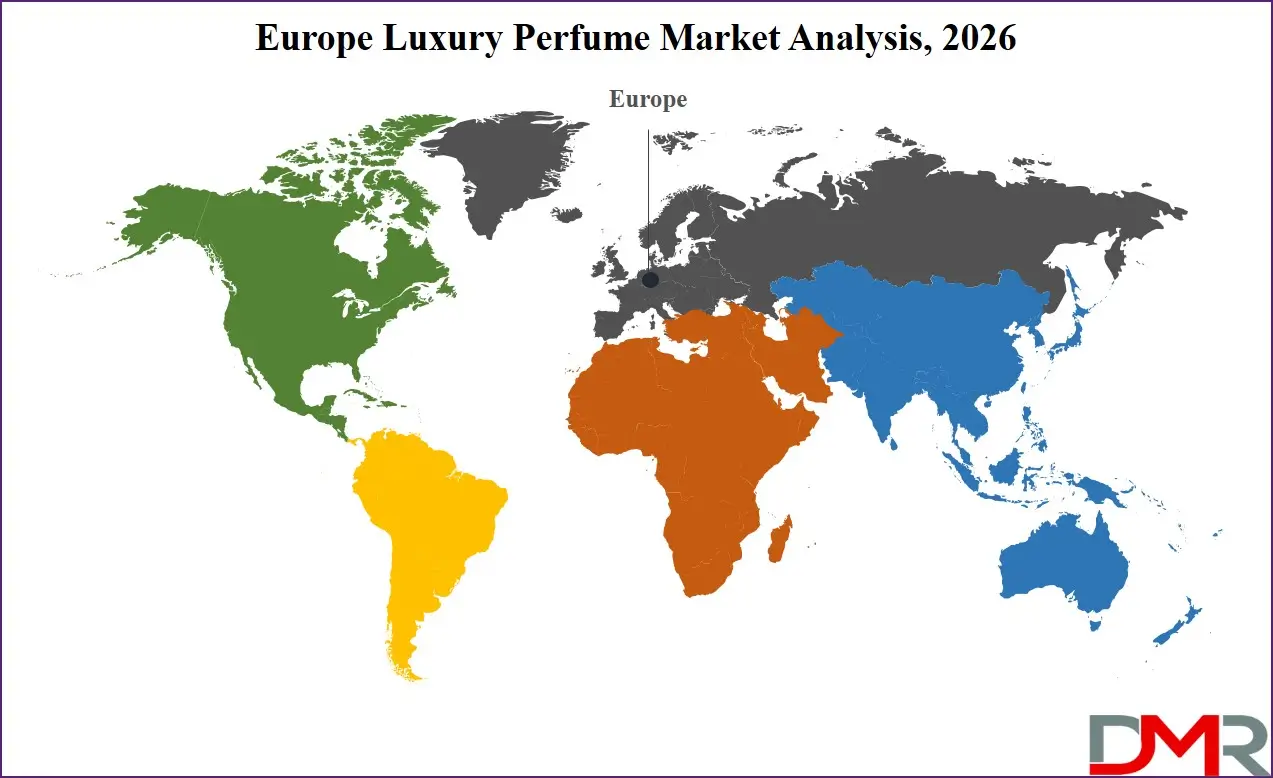
Europe’s luxury perfume market is led by France, driven by its strong perfumery heritage, global luxury brands, and continuous innovation in fragrance creation. The United Kingdom follows with robust demand supported by premium retail networks, e-commerce growth, and gifting culture, particularly in metropolitan areas.
ℹ
To learn more about this report –
Download Your Free Sample Report Here
Italy benefits from its deep connection between fashion and fragrance, positioning perfumes as lifestyle products, while Germany shows stable expansion due to high consumer purchasing power and increasing preference for sustainable and transparent formulations. Meanwhile, Spain is emerging steadily, supported by tourism, growing interest in niche and artisanal scents, and expanding premium retail presence across key cities.
By Country
- Germany
- The U.K.
- France
- Italy
- Russia
- Spain
- Benelux
- Nordic
- Rest of Europe
Competitive Landscape
The Europe luxury perfume market is characterized by intense competition, driven by innovation, branding, and exclusivity. Companies focus on differentiating themselves through unique scent compositions, premium packaging, and storytelling. High entry barriers exist due to significant investment requirements in research, marketing, and regulatory compliance. Established players maintain their position through strong distribution networks and brand heritage, while emerging niche brands compete by offering personalized and artisanal products. Strategic collaborations, digital transformation, and sustainability initiatives are key approaches adopted to maintain and expand market share in this evolving landscape.
Some of the prominent players in the Europe Luxury Perfume are:
- LVMH (Louis Vuitton, Dior, Guerlain)
- Chanel
- L’Oréal Groupe
- Coty Inc.
- Puig
- Kering Beauté
- Hermès
- Richemont
- Firmenich (DSM-Firmenich)
- Givaudan
- Symrise
- Mane
- Interparfums
- Clarins Group
- Diptyque
- Byredo
- Roja Parfums
- Clive Christian
- Parfums de Marly
- Initio Parfums Privés
- Other Key Players
Recent Developments
- In June 2025, Estée Lauder Companies completed the acquisition of a niche European perfume brand known for artisanal fragrances and limited-edition collections. The acquisition aims to expand its portfolio in the high-growth niche segment and enhance its presence in Europe. The deal includes integration of the brand’s distribution network and investment in scaling production capabilities while preserving its unique identity.,
- In February 2025, LVMH announced the launch of a new sustainable luxury perfume line under its fragrance division, incorporating biodegradable packaging and ethically sourced ingredients. The collection focuses on reducing environmental impact while maintaining premium quality standards. The initiative includes refillable bottles and a digital traceability system that allows consumers to track ingredient origins. This move aligns with the company’s broader sustainability goals and responds to increasing consumer demand for eco-conscious luxury products, strengthening its competitive position in the European market.
Report Details
| Report Characteristics |
| Market Size (2026) |
USD 8.0 Bn |
| Forecast Value (2035) |
USD 14.2 Bn |
| CAGR (2026–2035) |
6.5% |
| Historical Data |
2021 – 2025 |
| Forecast Data |
2027 – 2035 |
| Base Year |
2025 |
| Estimate Year |
2026 |
| Report Coverage |
Market Revenue Estimation, Market Dynamics, Competitive Landscape, Growth Factors and etc. |
| Segments Covered |
By Product Type (Parfum (Pure Perfume), Eau de Parfum (EDP), Eau de Toilette (EDT), Eau de Cologne (EDC), Eau Fraiche), By Distribution Channel (Offline, Online), By End User (Women, Men, Unisex) |
| Regional Coverage |
Europe – Germany, The UK, France, Russia, Spain, Italy, Benelux, Nordic, & Rest of Europe |
| Prominent Players |
LVMH (Louis Vuitton, Dior, Guerlain), Chanel, L’Oréal Groupe, Coty Inc., Puig, Kering Beauté, Hermès, Richemont, Firmenich (DSM-Firmenich), Givaudan, Symrise, Mane, Interparfums, Clarins Group, Diptyque, Byredo, Roja Parfums, Clive Christian, Parfums de Marly, Initio Parfums Privés, and Other Key Players |
| Purchase Options |
We have three licenses to opt for: Single User License (Limited to 1 user), Multi-User License (Up to 5 Users) and Corporate Use License (Unlimited User) along with free report customization equivalent to 0 analyst working days, 3 analysts working days and 5 analysts working days respectively. |
Frequently Asked Questions
How big is the Europe Luxury Perfume Market?
▾ The Europe Luxury Perfume Market size is expected to reach USD 8.0 billion by 2026 and is projected to reach USD 14.2 billion by the end of 2035.
Who are the key players in the Europe Luxury Perfume Market?
▾ Some of the major key players in the Europe Luxury Perfume Market include LVMH< LOreal, Chanel, and others.
What is the growth rate in the Europe Luxury Perfume Market?
▾ The market is growing at a CAGR of 6.5 percent over the forecasted period.