Market Overview
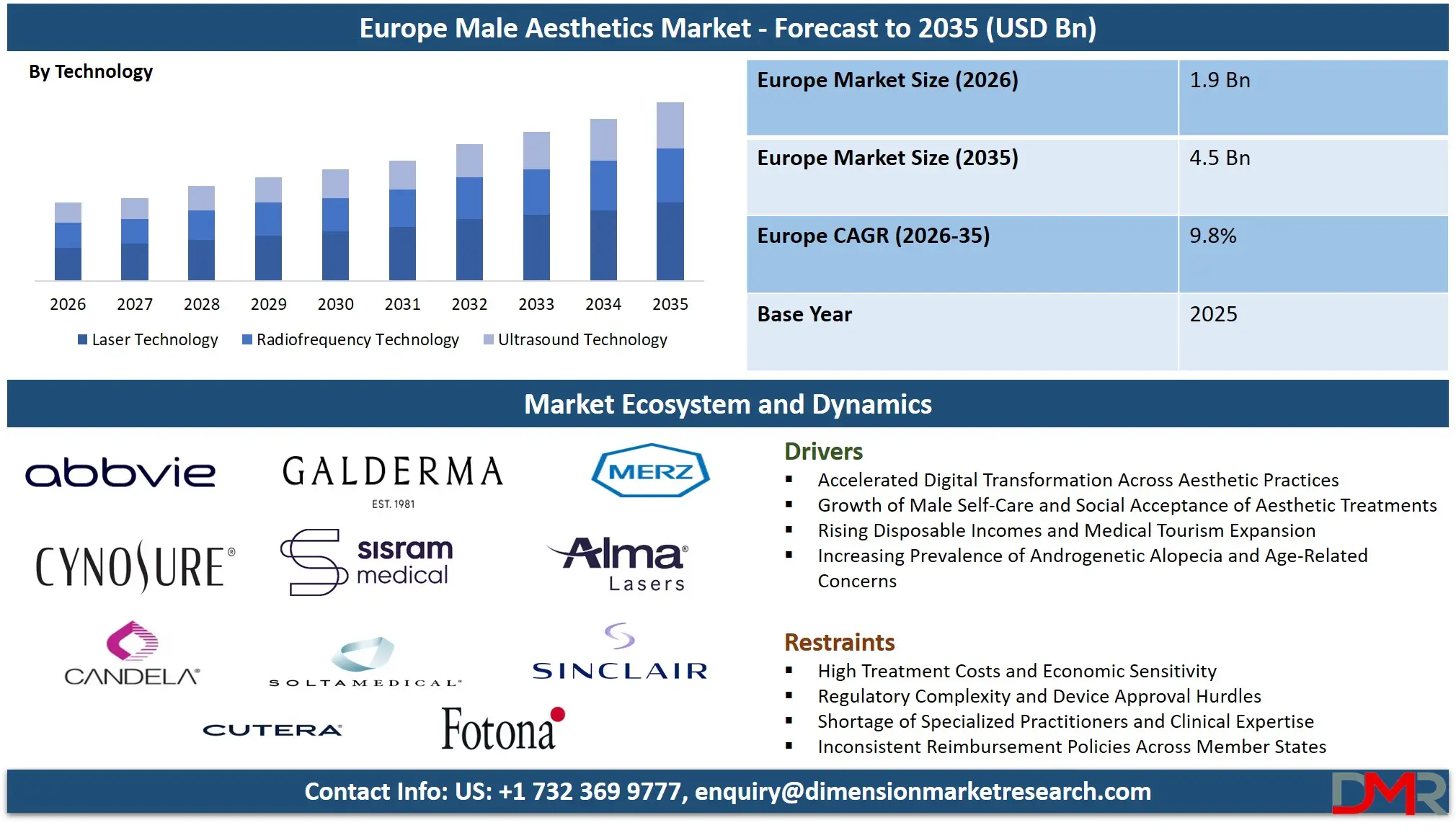
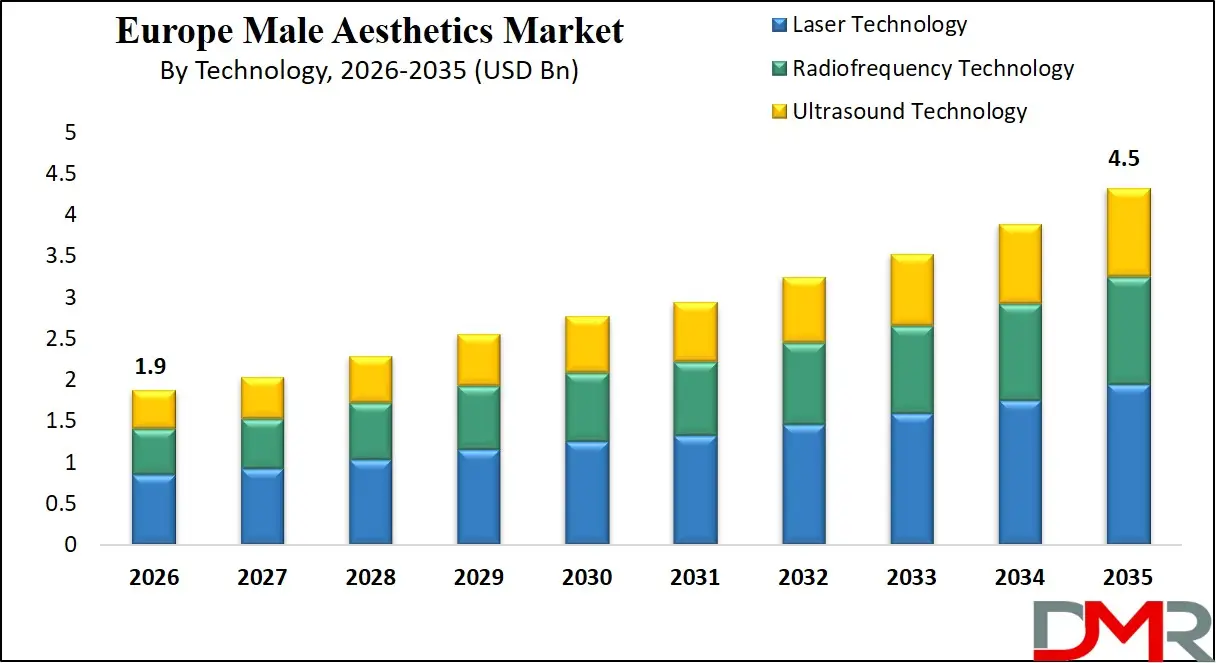
The Europe Male Aesthetics Market size is expected to reach a value of USD 1.9 billion in 2026, and it is further anticipated to reach a market value of USD 4.5 billion by 2035 at a CAGR of 9.8%.
ℹ
To learn more about this report –
Download Your Free Sample Report Here
The male aesthetics market is an important part of the medical aesthetics and wellness ecosystem in Europe, driven by shifting social norms and the region's emphasis on personal grooming and self-care, facilitating greater acceptance of cosmetic treatments among men. As a global leader in healthcare innovation and medical tourism, Europe occupies a privileged position in the development and adoption of advanced aesthetic procedures. The sector covers a wide range of services, from surgical interventions like rhinoplasty and hair transplantation to non-surgical treatments such as injectables and laser therapies, which are crucial in helping men achieve a more youthful and refreshed appearance. The European Union's commitment to enhancing healthcare accessibility has resulted in substantial investment in medical technology, training, and clinical infrastructure, significantly transforming the male aesthetics landscape.
Over the last few years, the male aesthetics market in Europe has witnessed a strategic transition in adopting advanced technologies like laser systems, radiofrequency devices, and ultrasound lifting. These technologies are making aesthetic procedures more effective, minimizing downtime, improving patient outcomes, and further helping in the personalization of treatment plans. Also, with the rapid growth of social media and increased awareness of aesthetic options, the need for sophisticated and discreet treatments has accelerated the demand for clinics to scale up their service portfolios. All these evolutions of technology and the market are likely to drive the sector's growth, signifying a good future outlook for the market.
Key trends currently evident within the male aesthetics arena in Europe are the rise of minimally invasive procedures that offer natural-looking results with reduced recovery times. Aside from this, further integration of AI and advanced imaging brings predictive outcome modeling and real-time treatment adjustments for better outputs of patient satisfaction. Furthermore, with the augmenting emphasis on holistic wellness and preventive skincare, the adaptation of combination therapies and customized treatment regimens is on the rise. Similarly, the rise in the popularity of medical spas and barbershop-adjacent grooming clinics has changed strategies for service integration as providers try to meet male patients' expectations of convenience and personalized care.
ℹ
To learn more about this report –
Download Your Free Sample Report Here
The market is consequently witnessing huge opportunities on the back of high investments by the European government in healthcare digitalization. Initiatives such as the expansion of telemedicine platforms and connected medical records are creating a robust healthcare backbone to support regional aesthetics services. Megaprojects like the development of pan-European clinical networks for aesthetic training illustrate the strategic importance of male aesthetics in enabling Europe's ambitious healthcare and wellness goals. The technological prowess of the region enhances its potential to become a global hub for medical aesthetics innovation, offering unparalleled access to key markets across the continent. Further, the focus on smart technologies like AI, 3D simulation, and real-time monitoring provides clinics with opportunities to gain a competitive edge by improving procedural accuracy and patient outcomes.
Europe Male Aesthetics Market: Key Takeaways
- Market Value: The Europe Male Aesthetics Market size is estimated to have a value of USD 1.9 billion in 2026 and is expected to reach USD 4.5 billion by the end of 2035.
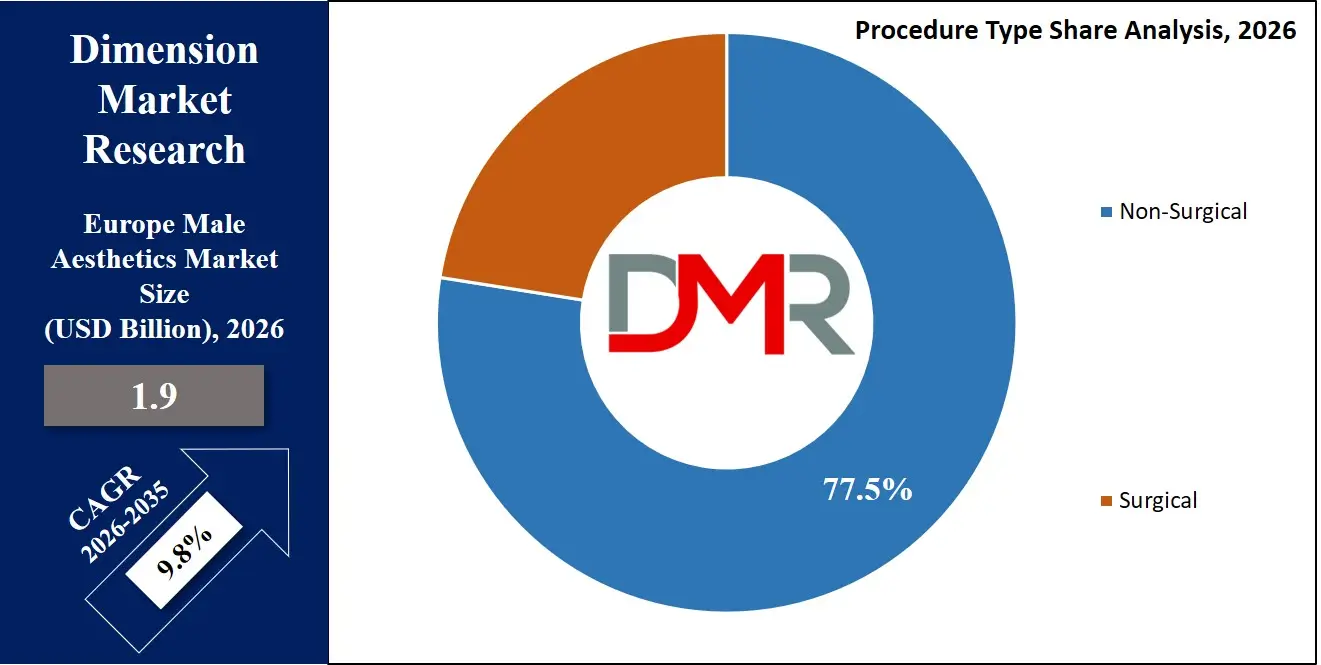
- By Procedure Type Segment Analysis: Non-surgical procedures are anticipated to dominate this segment in this market as they will hold 77.5% of market share in 2026.
- By Age Group Segment Analysis: Middle-aged adults are projected to dominate the age group segment in the Europe Male Aesthetics Market with the highest market share in 2026.
- By Technology Segment Analysis: Laser technology is anticipated to dominate the Europe male aesthetics market with a major market share in 2026.
- By Treatment Frequency Segment Analysis: Series-based treatments and maintenance treatments are projected to hold the leading positions in the treatment frequency segment of this market in 2026.
- By Application Segment Analysis: Facial aesthetics is projected to dominate the application segment in the Europe male aesthetics market in 2026.
- By End-User Segment Analysis: Service providers, particularly dermatology clinics and medical spas, are projected to dominate the end-user segment in the Europe male aesthetics market in 2026.
- Key Players: Some of the major key players in the Europe Male Aesthetics Market are AbbVie Inc., Galderma S.A., Merz Pharma GmbH & Co. KGaA, Sinclair Pharma, Cynosure, LLC, Cutera, Inc., Alma Lasers, Lumenis Ltd., and many others.
- Market Growth Rate: The market is growing at a CAGR of 9.8% over the forecasted period.
Europe Male Aesthetics Market: Use Cases
- Professional Facial Rejuvenation: This application ensures male patients achieve a refreshed and natural appearance through injectables such as botulinum toxin and dermal fillers, leveraging precise administration and anatomical expertise to reduce wrinkles and restore facial volume while maintaining masculine facial features.
- Medical Spa Hair Restoration: Non-surgical hair restoration services at specialized clinics enable men to address early-stage hair loss through laser therapy and platelet-rich plasma (PRP) treatments, with integrated scalp assessments and customized treatment plans improving outcomes and patient retention.
- Post-Weight Loss Body Contouring: Time-definite body contouring procedures, including radiofrequency skin tightening and liposuction, deliver targeted results for men following significant weight loss, preventing loose skin concerns and supporting sustained physical transformation goals.
- Corporate Professional Aesthetic Services: Discreet and efficient aesthetic treatments cater to working professionals seeking minimal downtime, with clinics offering lunchtime procedures such as laser hair removal and ultrasound lifting, ensuring rapid recovery and natural-looking results suitable for business environments.
Europe Male Aesthetics Market: Stats & Facts
European Commission (Healthcare & Consumer Protection)
- Around 4.2 million aesthetic procedures are performed annually on male patients across major EU member states.
- The EU recorded an average of 380,000 male aesthetic treatments per month in 2024.
- The European Union aims to increase patient access to safe aesthetic services by 25% by 2030 under the Cross-Border Healthcare Directive.
- EU digital health initiatives are expected to save approximately USD 1.6 billion annually in administrative costs related to patient management and medical records.
- These digitalization efforts could also reduce patient waiting times for consultations by approximately 30%.
- The EU Medical Device Regulation (MDR) affects over 15,000 aesthetic device certifications annually across member states.
Eurostat (European Union Statistics Office)
- European male aesthetic treatment volumes reached 5.6 million procedures in 2023.
- More than 68% of male aesthetic treatments in Europe involve non-surgical interventions.
- Around 41% of European men consider treatment safety and provider credentials essential when selecting aesthetic clinics.
- Europe recorded USD 2.4 billion in medical tourism revenue related to aesthetic procedures in 2024, representing a 7.8% annual increase.
- Aesthetic medicine accounts for approximately 18% of the value of medical tourism in Europe, driven largely by male patients seeking high-quality care.
European Society of Aesthetic Surgery (ESAS)
- Nearly 90% of major aesthetic clinics in Europe have invested in advanced laser and energy-based devices.
- Europe has more than 3,500 specialized aesthetic clinics catering to male patients.
- ESAS introduced enhanced safety and training protocols for aesthetic practitioners in 2022.
- In 2022, only 55% of aesthetic clinics offered fully digital patient consultation capabilities.
- By 2025, over 80% of major aesthetic providers offered virtual consultations and digital treatment planning.
European Aesthetics Industry Association
- The European medical aesthetics sector employs over 180,000 professionals across the continent.
- Male aesthetics accounts for approximately 26% of total aesthetic treatment spending in Europe.
- Non-surgical male aesthetic treatments grew by 14% annually between 2020 and 2024.
- Hair restoration-related procedures among men increased by 22% in 2023 alone.
European Environment Agency (Sustainability in Aesthetics)
- Energy consumption from aesthetic devices contributes approximately 0.5% of EU healthcare-related CO2 emissions.
- Adoption of energy-efficient laser and radiofrequency systems could reduce emissions by up to 40% per treatment.
- Over 25 major European aesthetic device manufacturers have committed to net-zero targets by 2050.
European Aesthetic Market Studies
- Digital booking and consultation platforms can reduce patient acquisition costs by 20% to 30% when widely implemented.
- Real-time patient feedback and outcome tracking solutions could improve treatment adherence and satisfaction by 15% to 25%.
- Automated patient management systems can reduce administrative processing times by 35% to 50%.
- Around 30% of male aesthetic treatments in Europe involve combination therapies, where multimodal approaches are crucial for optimal results.
Europe Male Aesthetics Market: Market Dynamic
Driving Factors in the Europe Male Aesthetics Market
Accelerated Digital Transformation Across Aesthetic Practices
The European male aesthetics market is undergoing rapid digital transformation, driven by strong regulatory support under the EU's digital health strategy and increasing demand for operational efficiency. Aesthetic clinics are actively integrating advanced technologies such as artificial intelligence, cloud-based platforms, and automated patient management systems to streamline consultation and treatment processes. These technologies enable virtual consultations, predictive outcome modeling, and personalized treatment planning across complex clinical networks. The transition toward electronic health records and digital imaging platforms is further improving data accuracy and reducing manual intervention, allowing practitioners to enhance service reliability and decision-making in time-sensitive aesthetic procedures.
Growth of Male Self-Care and Social Acceptance of Aesthetic Treatments
The continued expansion of male grooming and self-care culture is a major demand driver for aesthetic services across Europe. Leading social media platforms and high-profile male influencers are setting new standards for personal appearance, pushing men to rely more heavily on aesthetic treatments for facial rejuvenation, hair restoration, and body contouring. The need to achieve natural-looking results with minimal downtime is accelerating demand for efficient aesthetic solutions. This trend is also driving investments in advanced clinical technologies, patient engagement platforms, and integrated digital systems that connect consultation, treatment, and follow-up care within a unified patient experience.
Restraints in the Europe Male Aesthetics Market
High Treatment Costs and Economic Sensitivity
Aesthetic treatments in Europe face significant cost pressures due to high equipment expenses, stringent regulatory compliance, and ongoing investments in practitioner training and facility upgrades. Treatment costs represent a substantial portion of patient expenditure, and economic volatility directly impacts treatment volumes and provider margins. Additionally, compliance with evolving safety standards and medical device regulations increases operational expenses, particularly for smaller clinics that may lack the financial capacity to invest in advanced technologies or specialized training. This creates a competitive imbalance between large multi-location providers and smaller independent practices.
Regulatory Complexity and Device Approval Hurdles
Limited harmonization of aesthetic device regulations across European countries remains a critical challenge for the market. The Medical Device Regulation (MDR) has introduced stricter approval processes for aesthetic devices, leading to longer time-to-market and increased compliance costs for manufacturers. Variations in national implementation can create market access barriers, particularly for emerging technologies. While ongoing regulatory alignment aims to address these challenges, implementation timelines often lag behind clinical innovation, forcing providers to navigate complex approval pathways or limit adoption of new technologies.
Opportunities in the Europe Male Aesthetics Market
Expansion of Non-Surgical Hair Restoration and Scalp Treatments
Europe's growing focus on hair restoration presents a significant growth opportunity for clinics specializing in non-surgical solutions. The increasing prevalence of early-onset hair loss and the demand for discreet, effective treatments requires highly reliable laser therapy, PRP, and topical regimens that maintain consistent clinical outcomes. Clinics are investing in advanced laser devices, real-time scalp imaging, and certified treatment protocols to ensure compliance with safety standards and improve patient satisfaction. As Europe remains a major market for hair restoration services, the demand for specialized male aesthetics in this segment is expected to grow steadily.
Adoption of AI-Driven Treatment Planning and Practice Automation
The integration of artificial intelligence and data analytics into aesthetic practice management is creating new opportunities for operational efficiency and service optimization. Advanced digital platforms are enabling clinics to predict patient preferences, optimize treatment scheduling, and automate follow-up communications. Predictive analytics, combined with real-time data from patient feedback systems and clinical outcomes, allows practices to proactively manage appointment flow and improve treatment adherence. These innovations are transforming traditional practice models into more agile, data-driven systems capable of delivering enhanced patient engagement and operational control.
Trends in the Europe Male Aesthetics Market
Advancement of Digital Patient Engagement and Telemedicine
Europe is at the forefront of digital patient engagement, with initiatives focused on virtual consultations, pre-visit intake processing, and integrated patient portals. These advancements are significantly improving access to aesthetic services by reducing consultation times and administrative complexity. Countries such as Germany, France, and the UK are leading investments in digital healthcare infrastructure, strengthening Europe's position as a leader in aesthetic medicine. Programs such as standardized patient outcome registries further enhance transparency, quality assurance, and clinical excellence within the aesthetic ecosystem.
Rising Demand for Sustainability and Eco-Conscious Aesthetic Practices
Sustainability is becoming a defining trend in the European male aesthetics market, driven by strict environmental regulations and increasing patient demand for eco-friendly healthcare solutions. The adoption of energy-efficient devices, waste reduction programs, and sustainable packaging is gaining momentum among clinics and manufacturers. Practices are increasingly offering green-certified treatment options, enabling patients to reduce the environmental impact of their aesthetic procedures. As regulatory pressure intensifies and consumer sustainability commitments grow, eco-conscious operations are expected to play a central role in shaping the future of male aesthetics in Europe.
Europe Male Aesthetics Market: Research Scope and Analysis
By Procedure Type Analysis
Non-surgical procedures are projected to dominate the procedure type segment in this market as they will hold 77.5% of market share in 2026. The dominance of non-surgical procedures in the procedure type segment of the Europe Male Aesthetics Market is owing to the lower risk profile, reduced downtime, and consistent demand for minimally invasive aesthetic solutions among men. Male patients across Europe are heavily investing in non-surgical treatments to achieve subtle, natural-looking enhancements without disrupting their professional and personal commitments; hence, advanced solutions are being used to smooth clinical operations, ranging from injectable treatments to energy-based therapies. Europe's position as a major medical tourism hub underlines the emphasis on offering convenient and effective non-surgical options, therefore raising demand for high-quality injectable and laser services that help in maintaining patient satisfaction with real-time outcome tracking and building clinical reliability, critical to maintaining practice performance in this highly competitive market. Such significant patient preference for minimally invasive treatments spurs demand for advanced non-surgical aesthetic services.
ℹ
To learn more about this report –
Download Your Free Sample Report Here
It will help in the complete integration of aesthetic medicine into mainstream healthcare and wellness ecosystems, thus making its future in the market indispensable. Social media influence, workplace appearance norms, and preventive skincare completely depend on these non-surgical aesthetic treatments for helping men maintain a youthful and refreshed appearance. Growth in the medical tourism sector also adds to the contribution of advanced imaging integrated with standard services that optimize the processes of treatment planning. Government-backed healthcare digitization programs and initiatives advocate the use of the latest available technology to reduce patient wait times, thus supporting the market of non-surgical aesthetics. Hence, non-surgical procedures remain an integral factor as they provide the foundational clinical framework for modern European male aesthetics.
By Age Group Analysis
Middle-aged adults are anticipated to dominate the share in the age group segment of the male aesthetics market in Europe, owing to the strategic focus on age-related concerns and this demographic's higher disposable income and willingness to invest in appearance. Europe has a substantial population of men aged 35 to 55 with established careers, vast purchasing power, and a supply chain connecting them to leading aesthetic providers across Germany, France, and Italy. Non-surgical treatments offer a proven balance of efficacy and convenience that appeals to this demographic for addressing early signs of aging like fine lines, volume loss, and skin laxity. First-generation aesthetic concerns, being very essential, do happen with both subtle enhancements and preventive treatments across European and cross-border clinical networks. There is unparalleled growth in the number of awareness campaigns, as with a growing demand for discreet treatments, middle-aged men would want to expect natural-looking results under all conditions.
The clinical technology investments involve the expansion of digital imaging capabilities for patient consultations, adding specialized treatment protocols along major metropolitan corridors, and furthering outcome tracking algorithms. This development also aligns with the EU's Digital Decade in positioning Europe as a leader in healthcare personalization. The proximity of major employment centers to specialized aesthetic clinics further cements their position as the main age group type for male aesthetics. Among many factors, treatment volume comes forward. Compared with younger adults, middle-aged men operate at higher treatment volumes for high-value procedures, thus making them perfectly fit for meeting aesthetic requirements across service segments. The increased use of technologies for digital documentation, like AI-based imaging platforms, improves the clinical efficiency-cum-visibility more in enhancing middle-aged adult dominance.
By Technology Analysis
Laser technology is poised to dominate the Europe male aesthetics market due to several reasons, such as its broad applicability, long-standing clinical validation, and versatility across multiple treatment areas. Laser-based treatments are at the forefront of non-surgical aesthetic adoption, driven by their proven efficacy and patient demand for hair removal, skin rejuvenation, and scar revision. Europe's technologically advanced clinical base places a strong emphasis on reliable energy-based devices for aesthetic outcomes, a factor that clinics across Germany, France, and Italy are eyeing with great interest. These clinics could be operating very extensive service portfolios for which they need reliable laser platforms to enable functions like multimodal treatments and combination protocols. Laser technology adopters also boast scale for the incorporation of innovative advancements like fractional lasers and picosecond systems, paving the way to enhance safety and complete satisfaction in outcomes. The reason laser technology providers can negotiate better with manufacturers and deploy integrated clinical solutions is because of their overall device procurement volumes.
Laser technology adopters have benefited from such initiatives funded by the European Commission, examples of which are the research programs under Horizon Europe to provide different types of funding and infrastructure to extend the clinical capabilities of their practices. In summary, this dominant position has also been enabled by driving the wheel of Europe's medical aesthetics industry. At the forefront in the implementation of state-of-the-art clinical best practices, leading laser technology adopters continue to help set new thresholds in terms of safety standards and innovative applications across the industry, therefore continuing their top market performance.
By Treatment Frequency Analysis
Series-based treatments and maintenance treatments are projected to lead in the Europe Male Aesthetics Market due to their highly transformative effect in achieving sustained clinical outcomes and widespread adoption across patient demographics. These treatment frequencies power foundational and long-term aesthetic care, respectively, and, most importantly, provide stepping stones toward comprehensive treatment plans in solving the complexity brought along by modern patient expectations. Europe's aesthetic environment focuses on utilizing series-based and maintenance protocols across all major treatment categories. All these objectives also align with series-based and maintenance applications focused on improved patient retention and provider convenience. Clinics utilize series-based and maintenance protocols to meet patient expectations, reduce lifetime treatment costs, and create better practice value.
Middle-aged adult adoption has gained momentum in Europe, thus increasing the need for series-based and maintenance solutions. For example, maintenance treatments improve long-term satisfaction for existing patients, and series-based therapies offer predictable revenue streams for regular treatments. Series-based and maintenance functions enhance the patient experience, which is an important factor in the competitive market. Government-backed healthcare quality initiatives and partnerships with global aesthetic leaders further fuel series-based and maintenance adoption. These are increasingly being integrated into digital practice management platforms, packaging what is to be expected in the future. Having already proven their potential through improvement in outcome durability, revenue stability, and scalability, series-based and maintenance remain among the major treatment frequencies that will still dominate in the European male aesthetics sector.
By Application Analysis
Facial aesthetics is projected to hold the leading position in the application segment of the Europe Male Aesthetics Market in 2026, as such treatments are very crucial to ensure patient satisfaction and natural-looking outcomes. With the fast growth of male self-care awareness and appearance consciousness in Europe, the demand for facial aesthetic solutions that could meet aesthetic demands effectively is increasingly felt. Core facial aesthetics enables clinics under EU regulations to attain the goal of Europe being a leader in aesthetic medicine by ensuring the best treatment protocols with minimal side effects and improved patient reliability. Advanced facial solutions integrate AI imaging, real-time outcome tracking, and digital documentation to offer precise treatments and smooth clinical operations that minimize downtime, optimize treatment plans, and improve patient satisfaction. The increasing adoption of integrated clinical platforms underlines the importance of this segment all the more. Besides, integrated technologies are increasingly being adopted by clinics that work in tandem with device partnerships to help lower costs and meet patient expectations.
Further, this segment ensures dominance through the development of growing patient volumes and social media influence. Most advanced aesthetic systems have their dependence on such kinds of core facial treatments by serving age demographics that range from young adults to seniors. Supporting the market's demand are also some government initiatives towards developing digital healthcare infrastructure. Due to its immediate effects relating to treatment reliability, outcome management, and patient satisfaction, it keeps its superiority in the market.
By End-User Analysis
Service providers, particularly dermatology clinics and medical spas, are projected to dominate the end-user segment in the Europe male aesthetics market because these settings offer the highest level of medical expertise, comprehensive service offerings, and the most stringent reliance on safety protocols and clinical oversight. Aesthetic service demand is showing stable growth across Europe, driven by specialized clinical environments and seamless patient experience integration driving this segment to dominate. Europe's position in global medical aesthetics emphasizes high-quality care across treatment networks, with a key focus on clinical safety. Further, this segment would need the implementation of advanced clinical solutions to guarantee treatment outcomes and safety—impacting device selection, protocol planning, and patient tracking, since patient expectations evolve day by day. Heavy investments have been made in clinical partnerships and specialized training not only by leading aesthetic groups but also by independent practitioners, making the market competitive in reality. Enhanced service packages for consultative and follow-up care are increasingly being offered by clinics, further raising the requirement for sophisticated aesthetic practice management solutions.
The EU's support in enhancing digital health infrastructure, thereby establishing innovation hubs, improves the service delivery for aesthetic patients. Because this segment is considered a major contributor to the EU healthcare economy and employment, it is considered one of the most dominant end-user categories. Service providers continue to lead with the latest technologies and comprehensive clinical solutions in shaping the region's male aesthetics ecosystem.
The Europe Male Aesthetics Market Report is segmented on the basis of the following:
By Procedure Type
- Surgical
- Rhinoplasty
- Liposuction
- Eyelid surgery (Blepharoplasty)
- Hair transplantation
- Non-Surgical
- Injectables: Botulinum Toxin (Botox), Dermal Fillers
- Laser Hair Removal
- Radiofrequency Skin Tightening
- Ultrasound Lifting
By Age Group
- Young Adults
- Middle-Aged Adults
- Seniors
By Technology
- Laser Technology
- Radiofrequency Technology
- Ultrasound Technology
By Treatment Frequency
- One-Time Treatments
- Series-Based Treatments
- Maintenance Treatments
By Application
- Facial Aesthetics
- Hair Restoration
- Body Contouring
- Skin Rejuvenation
- Others
By End-User
- Service Providers
- Hospitals and Cosmetic Centers
- Dermatology Clinics
- Medical Spas
- Ambulatory Surgery Centers
- Franchised Chains
- Barbershop-Adjacent Grooming Clinics
- Direct-to-Consumer
Impact of Artificial Intelligence on the Europe Male Aesthetics Market
- Automation of Patient Consultations and Treatment Planning: Artificial intelligence is streamlining complex aesthetic consultation processes across Europe by automating patient intake, facial analysis, and treatment simulation under frameworks such as the EU Medical Device Regulation. AI-powered systems reduce manual errors, accelerate consultation timelines, and improve treatment accuracy in aesthetic medicine operations.
- Enhanced Predictive Analytics and Outcome Modeling: AI-driven analytics tools are enabling practitioners to anticipate potential treatment outcomes, patient satisfaction levels, and complication risks. By leveraging real-time and historical clinical data, these systems allow proactive decision-making, including personalized treatment adjustments and follow-up scheduling, significantly improving clinical reliability.
- Optimization of Practice Management and Patient Flow: AI is transforming how aesthetic clinics manage appointment scheduling and resource allocation by enabling dynamic booking models and real-time capacity management. Intelligent algorithms analyze patient demand patterns, seasonal trends, and provider performance to optimize clinical efficiency and improve profitability while ensuring better access to services for patients.
- Improved Patient Engagement and Experience: AI-powered engagement platforms are enhancing the patient journey by providing accurate treatment reminders, personalized recommendations, and real-time progress updates. This shift from reactive to proactive patient communication is improving transparency, enabling better planning for patients, and strengthening satisfaction and loyalty.
- Automation of Administrative and Marketing Operations: The integration of AI with practice management software and digital marketing tools is improving efficiency in patient acquisition, retention, and administrative workflows across major European aesthetic clinics. Automated processes reduce operational overhead, minimize errors, and support the handling of increasing patient volumes.
By Region
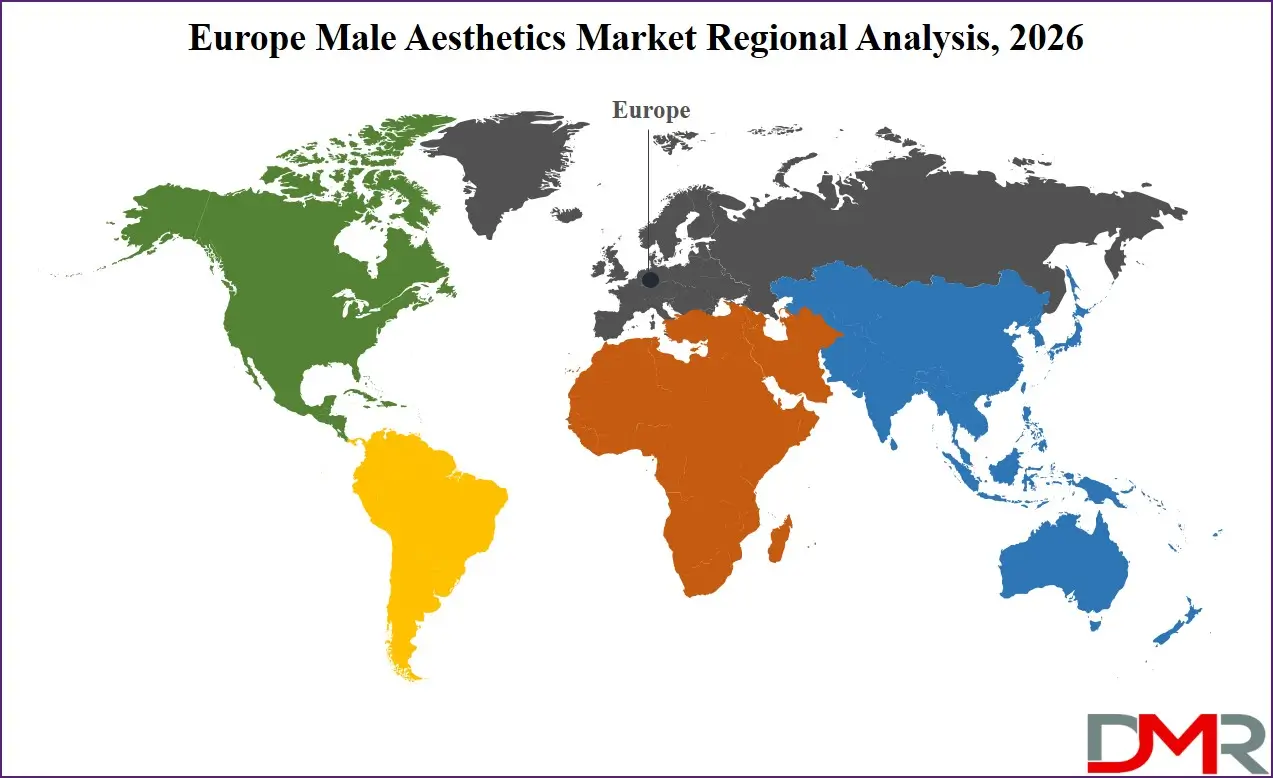
Europe
- Germany
- The U.K.
- France
- Italy
- Russia
- Spain
- Benelux
- Nordic
- Rest of Europe
Europe Male Aesthetics Market: Competitive Landscape
The competitive landscape is fueled by participation, both domestic and international, in the Europe Male Aesthetics Market, with dissimilar capabilities across clinical networks, technology platforms, and patient services. Major companies, therefore, strategize to develop advanced technologies such as AI, digital imaging, and practice management software to enhance aesthetic capabilities to better competitiveness. The leading players are Allergan Aesthetics (AbbVie), Galderma, and Merz Aesthetics in pharmaceutical and injectable solutions, while in laser and energy-based platforms, the leading players include Cynosure (Hologic), Cutera, and Lumenis. These companies leverage Europe's healthcare innovation initiatives by aligning their offerings with regulatory priorities meant to attract investments and improve clinical outcomes. It addresses both the growing medical tourism and domestic patient sectors, where these focus more on niche capabilities: surgical excellence and non-surgical innovation, while global aesthetic companies have emerged, providing end-to-end solutions in product development and clinical training.
ℹ
To learn more about this report –
Download Your Free Sample Report Here
Mergers and partnerships are common strategies that allow companies to expand service portfolios and reach. For instance, technology companies partnering with clinics enhance data-driven decision-making and operational agility. While the leading companies are competitive, innovation in the fields of AI, digital treatment planning, and predictive analytics separates the leaders. These opportunities are likely to come along with an intense competitive landscape for both established players and new entrants, with strong governmental support for developing medical innovation clusters.
Some of the prominent players in the Europe Male Aesthetics Market are:
- AbbVie Inc. (Allergan Aesthetics)
- Galderma S.A.
- Merz Pharma GmbH & Co. KGaA
- Johnson & Johnson Services Inc.
- Sisram Medical Ltd.
- Alma Lasers Ltd.
- Lumenis Ltd.
- Cutera, Inc.
- Cynosure, LLC
- Candela Corporation
- Fotona d.o.o.
- BTL Industries
- Sinclair Pharma plc
- InMode Ltd.
- Venus Concept Inc.
- Aerolase Corp.
- Apyx Medical Corporation
- Straumann Group
- Zimmer Biomet Holdings, Inc.
- Human Med AG
- Other Key Players
Recent Developments in the Europe Male Aesthetics Market
- March 2026: AbbVie Inc., presented new research and advanced its AA Signature multimodal treatment approach at AMWC 2026 in Monaco, supporting personalized injectable and combination aesthetic treatments across Europe.
- March 2026: Galderma S.A. announced the presentation of multiple scientific posters and symposia at AMWC 2026 in Monaco, showcasing the latest clinical innovations and real-world data across its injectable aesthetics portfolio, including Restylane and Sculptra, while reinforcing its commitment to advancing evidence-based treatments and supporting healthcare professionals in delivering optimal patient outcomes across Europe.
- October 2025: Merz Pharma GmbH & Co. KGaA expanded its European footprint by inaugurating a new affiliate office in Warsaw, Poland, aimed at strengthening regional operations, enhancing market access, and providing closer support to local clinics and partners, while facilitating faster distribution of its aesthetic injectables and medical device portfolio across Central and Eastern Europe.
- September 2025: AbbVie Inc., expanded the rollout of SKINVIVE by JUVÉDERM across multiple international markets including Europe, reinforcing its focus on skin quality treatments and minimally invasive procedures.
Report Details
| Report Characteristics |
| Market Size (2026) |
USD 1.9 Bn |
| Forecast Value (2035) |
USD 4.5 Bn |
| CAGR (2026–2035) |
9.8% |
| Historical Data |
2021 – 2025 |
| Forecast Data |
2027 – 2035 |
| Base Year |
2025 |
| Estimate Year |
2026 |
| Report Coverage |
Market Revenue Estimation, Market Dynamics, Competitive Landscape, Growth Factors and etc. |
| Segments Covered |
By Procedure Type (Surgical and Non-Surgical), By Age Group (Young Adults, Middle-Aged Adults and Seniors), By Technology (Laser Technology, Radiofrequency Technology and Ultrasound Technology), By Treatment Frequency (One-Time Treatments, Series-Based Treatments, and Maintenance Treatments), By Application (Facial Aesthetics, Hair Restoration, Body Contouring, Skin Rejuvenation, and Others), By End-User (Service Providers and Direct-to-Consumer) |
| Regional Coverage |
Europe – Germany, The UK, France, Russia, Spain, Italy, Benelux, Nordic, & Rest of Europe |
| Prominent Players |
AbbVie Inc. (Allergan Aesthetics), Galderma S.A., Merz Pharma GmbH & Co. KGaA, Johnson & Johnson Services Inc., Sisram Medical Ltd., Alma Lasers Ltd., Lumenis Ltd., Cutera, Inc., Cynosure, LLC, Candela Corporation, Fotona d.o.o., BTL Industries, Sinclair Pharma plc, InMode Ltd., Venus Concept Inc., Aerolase Corp., Apyx Medical Corporation, Straumann Group, and Zimmer Biomet Holdings, Inc., Human Med AG, and Other Key Players. |
| Purchase Options |
We have three licenses to opt for: Single User License (Limited to 1 user), Multi-User License (Up to 5 Users) and Corporate Use License (Unlimited User) along with free report customization equivalent to 0 analyst working days, 3 analysts working days and 5 analysts working days respectively. |
Frequently Asked Questions
How big is the Europe Male Aesthetics Market?
▾ The Europe Male Aesthetics Market size is estimated to have a value of USD 1.9 billion in 2026 and is expected to reach USD 4.5 billion by the end of 2035.
Who are the key players in the Europe Male Aesthetics Market?
▾ Some of the major key players in the Europe Male Aesthetics Market are AbbVie Inc., Galderma S.A., Merz Pharma GmbH & Co. KGaA, Sinclair Pharma, Cynosure LLC, Cutera, Inc., Alma Lasers, Lumenis Ltd., and many others.
What is the growth rate in the Europe Male Aesthetics Market?
▾ The market is growing at a CAGR of 9.8% over the forecasted period.