Europe Medical Rubber and Balloon Products Market Snapshot
- Europe Medical Rubber and Balloon Products Market Size in 2026: USD 1.4 Billion
- Europe Medical Rubber and Balloon Products Market Size in 2035: USD 2.2 Billion
- Europe CAGR from 2026 to 2035: 5.1%
- Angioplasty Balloons is the leading product type segment in 2026: 31.4%
- Latex Rubber is the leading material segment in 2026: 33.8%
- Cardiology is the leading application segment in 2026: 39.6%
- Hospitals is the leading end user segment in 2026: 56.2%
What is the Europe Medical Rubber and Balloon Products Market and its Market Size?
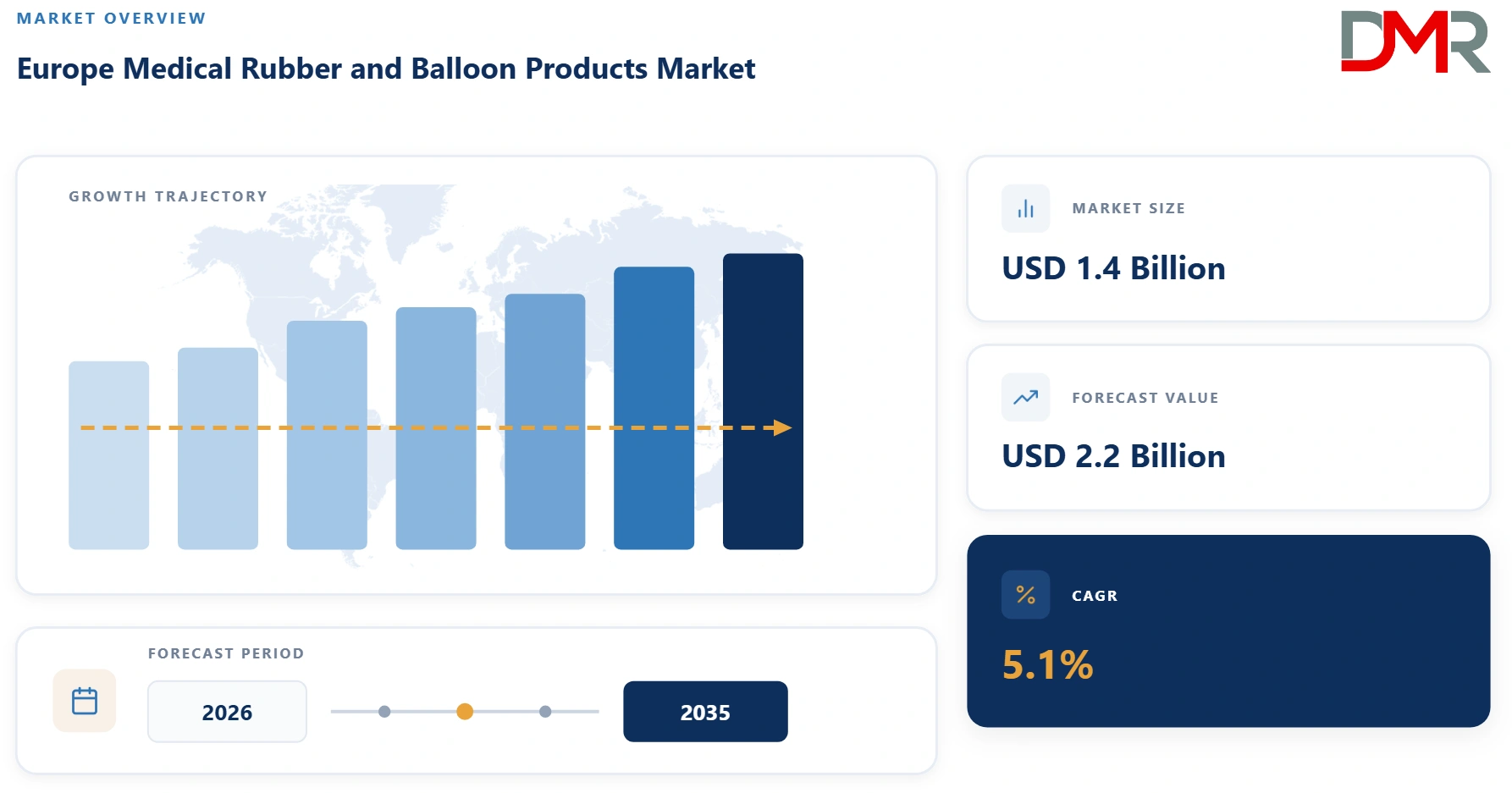
The Europe Medical Rubber and Balloon Products Market is projected to be valued at USD 1.4 Billion in 2026 and is projected to reach USD 2.2 Billion by 2035, expanding at a CAGR of 5.1% during the forecast period.
ℹ
To learn more about this report –
Download Your Free Sample Report Here
Growth is being propelled by the rising burden of cardiovascular disease across Europe, particularly in Eastern Europe where cardiovascular mortality rates remain among the highest globally, driving sustained demand for angioplasty and balloon catheter-based interventions, continued conversion of open surgical procedures toward catheter-based minimally invasive interventions across cardiology, urology, and gastroenterology, and growing clinical adoption of drug-coated and drug-eluting balloon technology to reduce restenosis and repeat revascularization. The maturing of advanced elastomeric and thermoplastic balloon materials offering improved deliverability, compliance, and biocompatibility relative to legacy latex-based products, growing regulatory emphasis on allergen-free and MDR-compliant device materials, and continued expansion of ambulatory and outpatient catheterization capacity across European health systems are reshaping the market from a largely commoditized rubber products category into an increasingly technology-differentiated, clinically specialized medical device segment. Investment is accelerating as manufacturers expand drug-coating capability and advanced elastomer material platforms to serve both high-volume hospital catheterization labs and growing ambulatory intervention settings across Europe.
Use Cases
- Coronary and Peripheral Angioplasty for Cardiovascular Disease Treatment: Interventional cardiologists across Europe use angioplasty balloon catheters, including drug-coated variants, to dilate stenotic coronary and peripheral arteries, restore blood flow, and reduce the need for open bypass surgery in patients with coronary and peripheral artery disease.
- Drug-Coated Balloon Therapy for Restenosis Prevention: Hospitals and cardiac catheterization labs use drug-coated and drug-eluting balloon catheters to deliver antiproliferative agents directly to vessel walls, reducing in-stent restenosis and repeat revascularization rates without leaving a permanent metallic implant.
- Urological Dilatation for Stricture and Obstruction Management: Urologists use dilating and drug-coated balloon catheters to treat urethral strictures and other urological obstructions, offering a minimally invasive alternative to repeated endoscopic dilation or open reconstructive surgery.
- Occlusion Balloon Use in Vascular Access and Emergency Procedures: Interventional radiologists and emergency care teams use occlusion balloon catheters for temporary vessel occlusion during embolization, hemorrhage control, and complex endovascular procedures requiring precise blood flow management.
Key Takeaways
- Market Size: The Europe Medical Rubber and Balloon Products Market is anticipated to be valued at USD 1.4 Billion in 2026 and is forecast to reach USD 2.2 Billion by 2035, expanding at a CAGR of 5.1%.
- Growth Outlook: Market expansion is sustained by the rising burden of cardiovascular disease, continued conversion toward catheter-based minimally invasive interventions, and growing clinical adoption of drug-coated balloon technology.
- Primary Growth Drivers: Rising cardiovascular disease incidence across Europe, continued minimally invasive procedure adoption, growing drug-coated balloon technology uptake, and expanding ambulatory catheterization capacity are accelerating market growth.
- By Product Type Analysis: Angioplasty Balloons are projected to lead the product type segment with a 31.4% share in 2026, reflecting sustained coronary and peripheral intervention volumes. Catheter Balloons are the fastest-growing product type segment at 7.2% CAGR, driven by expanding use across gastroenterology and urology procedures.
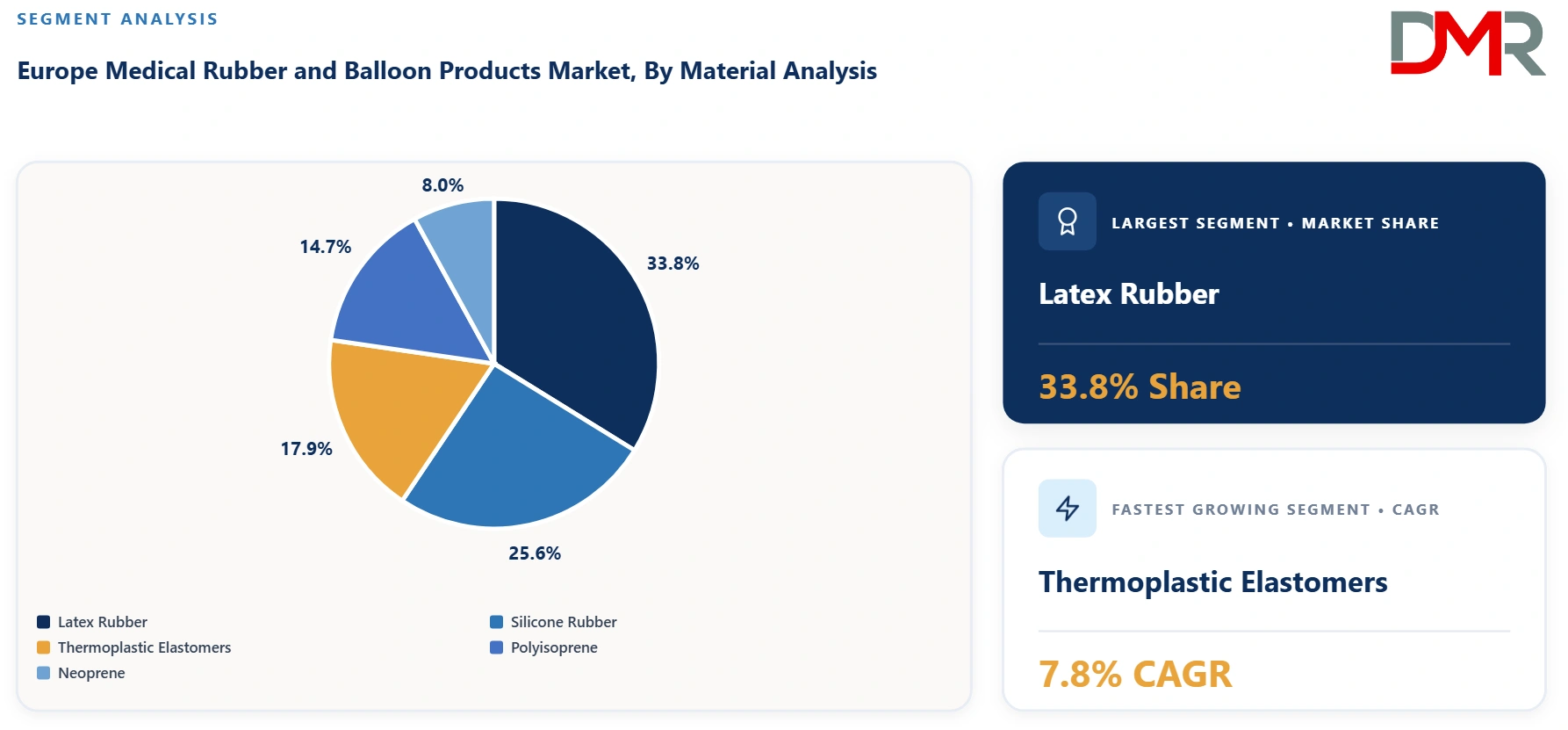
- By Material Analysis: Latex Rubber is expected to retain the largest share at 33.8% in 2026, reflecting its continued cost-effectiveness and established manufacturing base. Thermoplastic Elastomers are the fastest-growing material segment at 7.8% CAGR, driven by growing demand for allergen-free, MDR-compliant biocompatible materials.
- By Application Analysis: Cardiology is poised to lead with a 39.6% share in 2026, reflecting the scale of coronary and peripheral vascular intervention volumes across Europe. Peripheral Vascular Procedures is the fastest-growing application segment at 7.0% CAGR, driven by an aging population and rising peripheral artery disease prevalence.
- By End User Analysis: Hospitals are projected to dominate with a 56.2% share in 2026, reflecting the concentration of catheterization labs and complex interventional capability. Ambulatory Surgical Centers are the fastest-growing end user segment at 7.4% CAGR, driven by continued shift of eligible procedures to outpatient settings.
Key Drivers in the Europe Medical Rubber and Balloon Products Market
Rising Burden of Cardiovascular Disease Across European Populations
Cardiovascular disease remains a leading cause of death across Europe, with Eastern European countries recording particularly high mortality rates from coronary artery disease and peripheral artery disease. This sustained and growing disease burden directly drives demand for angioplasty and balloon catheter-based interventions capable of restoring vascular blood flow with lower procedural risk than open surgical alternatives, positioning cardiovascular disease prevalence as a primary structural driver of market expansion.
Continued Conversion Toward Catheter-Based Minimally Invasive Interventions
European healthcare systems continue to shift eligible surgical procedures across cardiology, urology, and gastroenterology toward catheter-based, minimally invasive interventional approaches, reflecting shorter recovery times, reduced hospital length of stay, and lower overall procedural cost relative to open surgery. This continued procedural shift is driving sustained demand for compatible balloon catheter products across an expanding range of clinical applications and anatomical sites.
Restraints in the Europe Medical Rubber and Balloon Products Market
EU Medical Device Regulation Compliance Complexity Increasing Development and Certification Costs
The European Union's Medical Device Regulation imposes substantial biocompatibility testing, clinical evidence, and CE marking requirements on medical rubber and balloon products, representing a meaningful restraint on the Europe Medical Rubber and Balloon Products Market. Manufacturers must invest significantly in expanded clinical data generation, notified body certification, and post-market surveillance capability, increasing development costs and potentially slowing new product launch timelines, particularly for smaller manufacturers with more limited regulatory resources relative to larger, well-capitalized competitors.
Growth Opportunities in the Europe Medical Rubber and Balloon Products Market
Drug-Coated and Drug-Eluting Balloon Technology Expansion
Growing clinical evidence supporting drug-coated balloon technology in reducing restenosis and repeat revascularization across coronary, peripheral, and urological applications presents a substantial opportunity for manufacturers to differentiate through advanced drug-coating capability integrated within established balloon catheter platforms. Companies capable of demonstrating validated long-term patency and safety outcomes can capture premium positioning and stronger clinical adoption as drug-coated balloon technology continues maturing.
Development of Allergen-Free, Biodegradable, and Advanced Elastomer Balloon Materials
Growing clinician and patient concern around latex allergy, combined with tightening EU MDR biocompatibility requirements, presents a substantial opportunity for manufacturers developing latex-free thermoplastic elastomer and biodegradable balloon materials offering equivalent or superior mechanical performance. Companies developing next-generation materials that reduce allergy risk while meeting stringent regulatory and clinical performance requirements can capture significant value from continued material transition across the European market.
Trends in the Europe Medical Rubber and Balloon Products Market
Growing Clinical Adoption of Drug-Coated Balloon Technology Across Vascular and Urological Applications
European interventionalists are increasingly adopting drug-coated balloon technology across coronary, peripheral vascular, and urological applications, reflecting growing clinical evidence of reduced restenosis and repeat intervention rates relative to uncoated balloon catheters. This trend is particularly pronounced in patients with complex, calcified, or in-stent restenotic lesions where drug delivery without a permanent metallic implant offers meaningful clinical advantages.
Rising Preference for Single-Use Disposable Balloon Products Over Reusable Devices
Healthcare providers across Europe are increasingly favoring single-use disposable balloon products over reusable devices, reflecting heightened infection control standards and simplified sterilization logistics within catheterization labs and endoscopy suites. This trend is encouraging manufacturers to prioritize disposable product line development and cost-efficient single-use manufacturing capability.
Research Scope and Analysis
The Europe Medical Rubber and Balloon Products Market is segmented by product type, material, application, and end user, covering angioplasty, dilating, occlusion, and catheter balloon products across latex, silicone, thermoplastic elastomer, and other material types and various clinical applications.
ℹ
To learn more about this report –
Download Your Free Sample Report Here
By Product Type Analysis
Angioplasty Balloons are projected to dominate the Europe Medical Rubber and Balloon Products Market with 31.4% share in 2026, reflecting sustained coronary and peripheral artery intervention volumes across European catheterization labs of all sizes and specializations. Catheter Balloons are expected to register the highest CAGR of 7.2% during 2026-2035, driven by expanding use across gastroenterology, urology, and other non-cardiology interventional applications.
By Material Analysis
Latex Rubber is anticipated to retain the largest share of the Europe Medical Rubber and Balloon Products Market, accounting for 33.8% share in 2026, supported by its established manufacturing base, cost-effectiveness, and favorable elastic properties for a broad range of balloon products. Thermoplastic Elastomers are projected to register the highest CAGR as manufacturers and health systems increasingly favor allergen-free, MDR-compliant advanced materials offering improved biocompatibility and reduced hypersensitivity risk.
By Application Analysis
Cardiology is projected to lead the Europe Medical Rubber and Balloon Products Market with an estimated 39.6% share in 2026, reflecting the scale of coronary and peripheral vascular intervention volumes representing the largest clinical application for balloon-based devices across Europe. Peripheral Vascular Procedures is expected to register the fastest CAGR of 7.0% through 2035, driven by an aging population and rising peripheral artery disease prevalence requiring endovascular intervention.
By End User Analysis
Hospitals are projected to dominate the Europe Medical Rubber and Balloon Products Market with 56.2% share in 2026, reflecting the concentration of catheterization labs, complex interventional capability, and emergency vascular access procedures within hospital settings. Ambulatory Surgical Centers are expected to register the fastest CAGR of 7.4% through 2035, driven by continued shift of eligible lower-complexity interventional procedures to outpatient settings.
The Europe Medical Rubber and Balloon Products Market Report is segmented based on the following:
By Product Type
- Angioplasty Balloons
- Dilating Balloons
- Occlusion Balloons
- Catheter Balloons
- Other Medical Balloons
By Material
- Latex Rubber
- Silicone Rubber
- Thermoplastic Elastomers
- Polyisoprene
- Neoprene
By Application
- Cardiology
- Urology
- Gastroenterology
- Neurology
- Peripheral Vascular Procedures
By End User
- Hospitals
- Ambulatory Surgical Centers
- Specialty Clinics
- Diagnostic Centers
- Research Laboratories
Country Analysis
Germany is poised to dominate the Europe Medical Rubber and Balloon Products Market, supported by its large hospital and catheterization lab base, strong domestic medical device manufacturing sector, and rapid clinical adoption of drug-coated balloon technology. Hospitals and cardiac catheterization labs across the country increasingly use advanced balloon catheter products for coronary, peripheral, and structural interventions. France also represents a significant market, anchored by an active clinical research base generating real-world evidence for drug-coated balloon products, while the U.K. is expanding through growing interventional cardiology and peripheral vascular procedure volumes. Italy and Spain are witnessing steady adoption as hospital groups modernize catheterization lab infrastructure. The Rest of Europe is growing through increasing cardiovascular disease burden, wider adoption of minimally invasive interventional techniques, and growing demand for advanced, MDR-compliant balloon catheter products.
By Country
Europe
- Germany
- France
- The U.K.
- Italy
- Spain
- Rest of Europe
Technology Analysis
Technology development is increasingly shaping competitiveness in the Europe Medical Rubber and Balloon Products Market as manufacturers invest in advanced drug-coating chemistries for restenosis reduction, next-generation elastomeric and thermoplastic balloon materials offering improved deliverability and biocompatibility, and expanded clinical evidence generation supporting long-term device performance. Growing use of real-world registry data is supporting long-term patency and safety validation for drug-coated balloon products across coronary and peripheral applications. Opportunities are expanding for companies developing clinically validated drug-coating technology, allergen-free advanced elastomer materials, and MDR-compliant clinical evidence and post-market surveillance infrastructure. However, achieving cost-competitive advanced material adoption alongside rising EU MDR compliance costs remains an ongoing challenge across the European balloon products manufacturing landscape.
Investment and White Space Analysis
Investment opportunities in the Europe Medical Rubber and Balloon Products Market are expanding alongside continued cardiovascular disease burden, growing minimally invasive procedure adoption, and rising clinical demand for drug-coated balloon technology. Significant white space exists in advanced drug-coating chemistry development, allergen-free and biodegradable balloon material innovation, and MDR-compliant clinical evidence generation supporting confident regulatory approval and market access. Companies with strong clinical research capability, established relationships with growing catheterization lab and ambulatory intervention networks, and robust MDR compliance infrastructure are positioned to capture premium, longer-duration growth opportunities. However, EU MDR compliance complexity, along with the cost of generating extensive clinical evidence for new device categories, can constrain smaller manufacturers' ability to compete effectively for larger hospital network procurement contracts.
Competitive Landscape
The Europe Medical Rubber and Balloon Products Market is moderately consolidated and increasingly competitive, comprising large diversified global medical device companies with substantial European operations, specialized European balloon catheter and drug-coating vendors with deep clinical and regulatory expertise, and emerging drug-coating technology innovators. Competition centers on drug-coating technology differentiation, advanced material biocompatibility, clinical evidence depth, and established relationships with hospital catheterization labs and interventional specialists. Large diversified global companies benefit from broad product portfolios and substantial research and development resources, while specialized European vendors compete through deep regional clinical relationships and focused drug-coating and material innovation. Companies increasingly differentiate through drug-coating technology and long-term clinical outcomes data rather than standalone balloon mechanical performance alone.
Some of the prominent players in the Europe Medical Rubber and Balloon Products Market are:
- Freudenberg Medical
- Trelleborg AB
- Saint-Gobain Life Sciences
- RAUMEDIC AG
- Elkem ASA
- Wacker Chemie AG
- Dow Inc.
- Momentive Performance Materials Inc.
- Parker Hannifin Corporation
- Tekni-Plex, Inc.
- Qosina Corporation
- GW Plastics, Inc.
- Nolato AB
- Röchling Medical
- HEXPOL TPE
- Stockwell Elastomerics, Inc.
- Minnesota Rubber & Plastics
- Apple Rubber Products Inc.
- Precision Polymer Engineering Ltd.
- Hutchinson SA
- Datwyler Holding Inc.
- AptarGroup, Inc.
- West Pharmaceutical Services, Inc.
- Sumitomo Riko Company Limited
- Shin-Etsu Chemical Co., Ltd.
- Mitsubishi Chemical Group Corporation
- Zeus Company LLC
- Nordson MEDICAL
- Teleflex Incorporated
- B. Braun Melsungen AG
- Terumo Corporation
- Medtronic plc
- Boston Scientific Corporation
- Merit Medical Systems, Inc.
- Cook Medical LLC
- AngioDynamics, Inc.
- BD (Becton, Dickinson and Company)
- Edwards Lifesciences Corporation
- Abbott Laboratories
- Cardinal Health, Inc.
- Other Key Players
Recent Developments
- May 2025: Medtronic received expanded CE Mark indications for its Prevail paclitaxel-coated PTCA balloon catheter, including complex bifurcation lesions, multivessel disease, acute coronary syndrome, and diabetes, based on real-world data from the Swedish Coronary Angiography and Angioplasty Registry.
- January 2026: iVascular presented three-year follow-up results from its LUMIFOLLOW registry at the Leipzig Interventional Course, showing 87.3% freedom from revascularization for its Luminor drug-coated balloon in complex femoropopliteal artery disease across 542 French patients.
- April 2026: Urotronic's Optilume drug-coated balloon catheter received CE Mark approval in Europe for the treatment of urethral strictures, following ROBUST I pilot study data showing sustained symptom improvement at two years.
- 2026: European drug-coated balloon manufacturers continued expanding clinical registry and real-world evidence generation across coronary and peripheral applications as EU Medical Device Regulation requirements raised the clinical evidence bar for new device certification.
Report Details
| Report Characteristics |
| Market Size (2026) |
USD 1.4 Bn |
| Forecast Value (2035) |
USD 2.2 Bn |
| CAGR (2026–2035) |
5.1% |
| Historical Data |
2021 – 2025 |
| Forecast Data |
2026 – 2035 |
| Base Year |
2025 |
| Segments Covered |
By Product Type, By Material, By Application, and By End User |
| Country Coverage |
Europe – Germany, France, The UK, Italy, Spain, Rest of Europe |
Frequently Asked Questions
How big is the Europe Medical Rubber and Balloon Products Market?
▾ The Europe Medical Rubber and Balloon Products Market is poised to be valued at USD 1.4 Billion in 2026 and is projected to reach USD 2.2 Billion by 2035, reflecting rising cardiovascular disease burden and continued adoption of minimally invasive interventional procedures.
What is the CAGR of the Europe Medical Rubber and Balloon Products Market from 2026 to 2035?
▾ The market is projected to expand at a compound annual growth rate (CAGR) of 5.1% between 2026 and 2035, supported by rising cardiovascular disease prevalence, growing drug-coated balloon technology adoption, and continued minimally invasive procedure conversion.
What factors are driving the growth of the Europe Medical Rubber and Balloon Products Market?
▾ Growth is driven by the rising burden of cardiovascular disease across Europe, continued conversion toward catheter-based minimally invasive interventions, growing clinical adoption of drug-coated balloon technology, and expanding ambulatory catheterization capacity.
What are the major trends in the Europe Medical Rubber and Balloon Products Market?
▾ Major trends include growing clinical adoption of drug-coated balloon technology across vascular and urological applications, rising preference for single-use disposable balloon products, and increasing development of allergen-free, advanced elastomer balloon materials.
Who are the key players in the Europe Medical Rubber and Balloon Products Market?
▾ Key market participants include Boston Scientific, Medtronic, Abbott Laboratories, B. Braun Melsungen, and Terumo Corporation, among other global and specialized European balloon catheter and drug-coating vendors.
How is the Europe Medical Rubber and Balloon Products Market segmented?
▾ The market is segmented by product type, material, application, and end user, with demand analysis concentrated across Germany, France, the United Kingdom, Italy, Spain, and Rest of Europe.