Market Overview
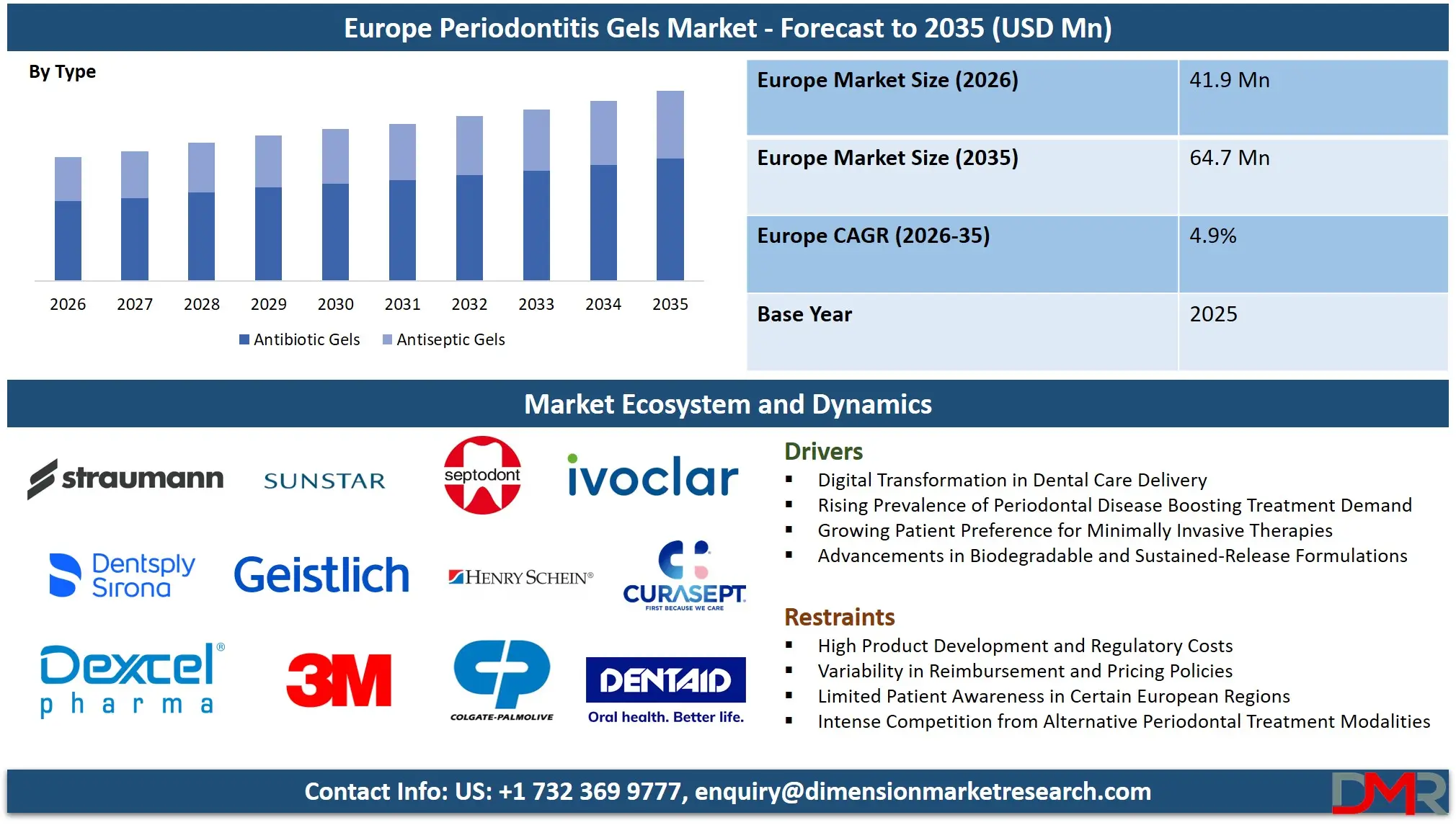
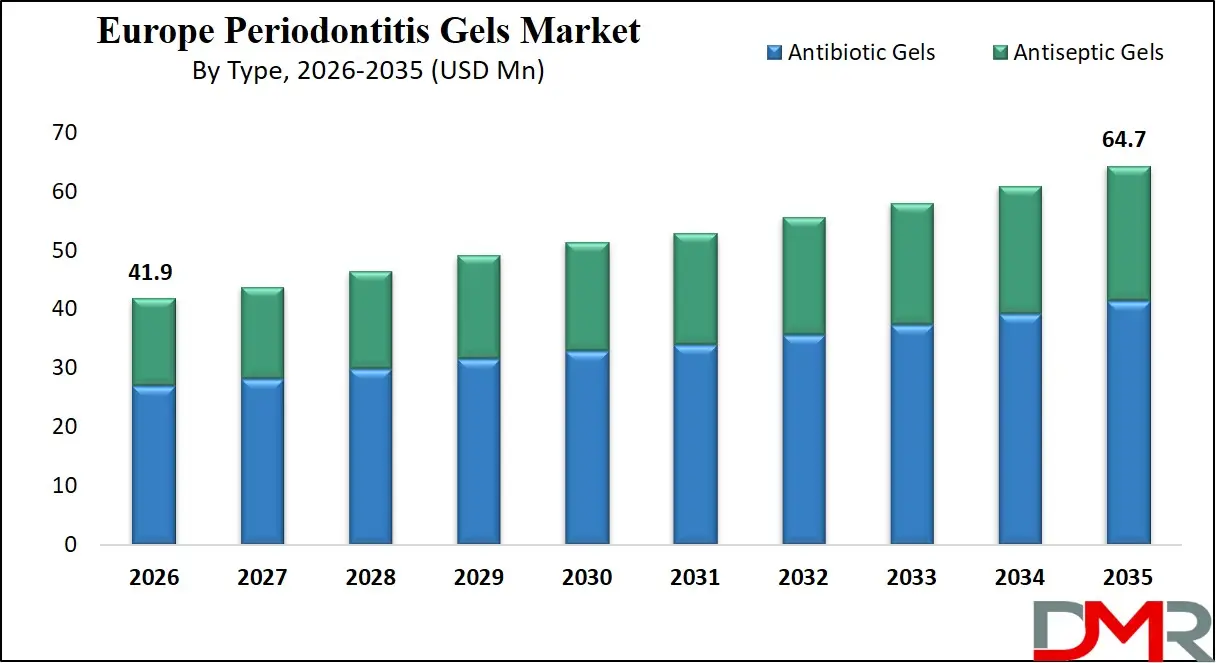
The Europe Periodontitis Gels Market size is expected to reach a value of USD 41.9 million in 2026, and it is further anticipated to reach a market value of USD 64.7 million by 2035 at a CAGR of 4.9%.
ℹ
To learn more about this report –
Download Your Free Sample Report Here
The periodontitis gels market is a vital segment within the broader dental therapeutics and oral care ecosystem in Europe, driven by the increasing prevalence of periodontal diseases and the region's demand for minimally invasive, targeted treatment options. As a global leader in healthcare innovation and regulatory standards for advanced drug delivery systems, Europe holds a distinguished position in the development and clinical adoption of sophisticated topical formulations. The sector encompasses a diverse range of products, from antibiotic and antiseptic gels used in general practice to specialized biodegradable matrices for guided tissue regeneration, which are essential in managing chronic inflammation and preventing tooth loss. The European Union's emphasis on improving oral health outcomes and reducing the burden of non-communicable diseases has led to substantial investment in biomedical research, clinical infrastructure, and harmonized regulatory pathways, significantly transforming the dental therapeutics landscape.
Over the last few years, the periodontitis gels market in Europe has witnessed a strategic transition in the adoption of advanced technologies like controlled-release polymer systems, bio-adhesive formulations, and nanotechnology-enhanced carriers. These innovations are enabling more effective drug delivery at the periodontal pocket site, improving patient compliance, reducing the frequency of application, and minimizing systemic side effects. Also, with the growing awareness of the link between oral health and systemic conditions such as diabetes and cardiovascular disease, the need for sophisticated, easy-to-administer periodontal treatments has accelerated the demand for companies to expand their product portfolios. All these evolutions of technology and the market are likely to drive the sector's growth, signifying a positive future outlook for the market.
Key trends currently evident within the periodontitis gels arena in Europe are the shift toward patient-centric, self-administered care models that reduce the need for repeated in-office procedures. Aside from this, further integration of smart biomaterials and enzyme-responsive gels enables localized, on-demand drug release for improved therapeutic outcomes. Furthermore, with the augmenting emphasis on sustainability in line with the European Green Deal, the adaptation of biocompatible and biodegradable gel formulations derived from natural sources is on the rise. Similarly, the rise in preventive dental care and consumer demand for effective at-home treatments has changed strategies for product development as companies aim to meet expectations for both clinical efficacy and ease of use.
ℹ
To learn more about this report –
Download Your Free Sample Report Here
The market is consequently witnessing huge opportunities on the back of high investments by European governments and research bodies in advanced drug delivery and regenerative medicine. Initiatives such as the Horizon Europe program and funding for innovation in biomaterials are creating a robust clinical and commercial backbone to support next-generation periodontal therapies. Megaprojects like the development of harmonized clinical guidelines for periodontal care and the expansion of digital health platforms for treatment monitoring illustrate the strategic importance of periodontitis gels in enabling Europe's ambitious health technology and personalized medicine goals. The technological prowess of the region enhances its potential to become a global hub for dental therapeutics innovation, offering unparalleled access to key markets across the continent. Further, the focus on smart technologies like thermosensitive gels, 3D-printed drug delivery matrices, and bioactive scaffolds provides companies with opportunities to gain a competitive edge by improving treatment precision and reducing overall therapy costs.
Europe Periodontitis Gels Market: Key Takeaways
- Market Value: The Europe Periodontitis Gels Market size is estimated to have a value of USD 41.9 million in 2026 and is expected to reach USD 64.7 million by the end of 2035.
- By Type Segment Analysis: Antibiotic gels are anticipated to dominate the segment in this market, driven by their proven clinical efficacy in reducing pathogenic bacterial load and their widespread use as adjunctive therapy in periodontal treatment.
- By Category Segment Analysis: Degradable gels, driven by advantages in sustained release and reduced need for removal, are projected to dominate the category segment in the Europe Periodontitis Gels Market with the highest market share in 2026.
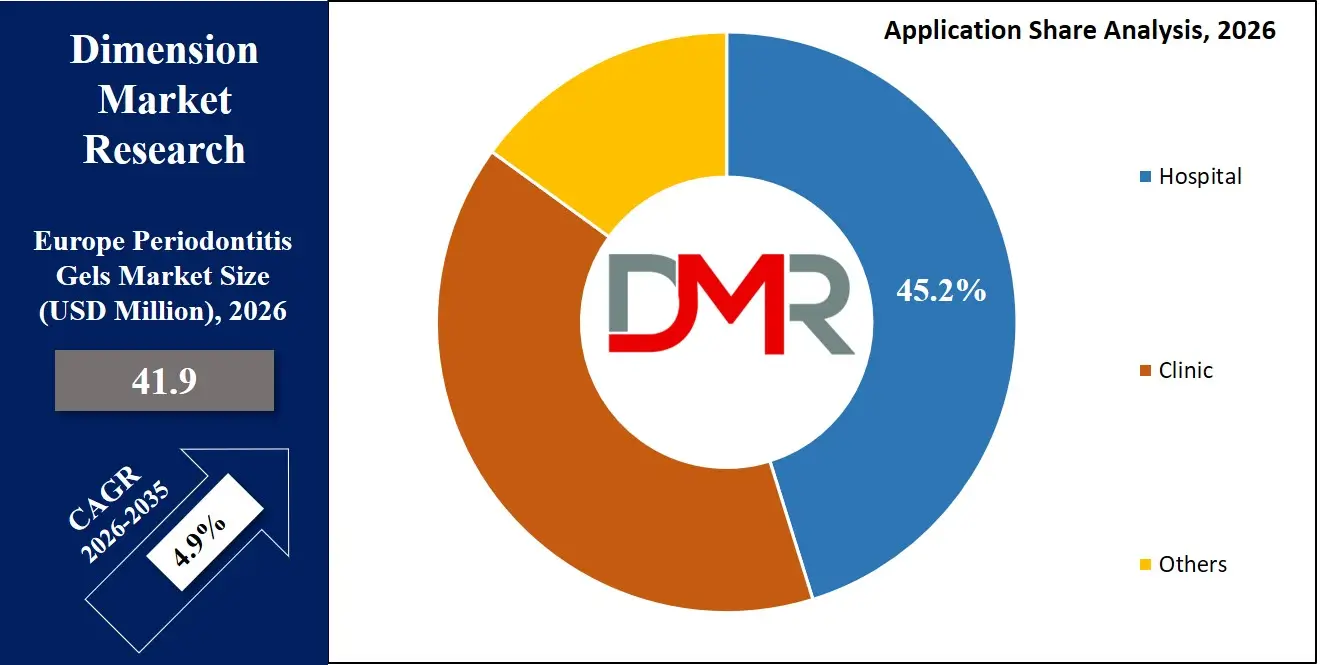
- By Application Segment Analysis: The hospitals segment is anticipated to dominate the Europe periodontitis gels market in 2026, primarily due to the higher value contribution of treatments performed in these settings. While a significant volume of periodontal procedures is conducted in dental clinics, hospitals account for a larger share of market revenue owing to the management of complex cases, higher treatment costs, greater utilization of adjunctive pharmacological therapies such as gels, and access to specialized dental professionals.
- Key Players: Some of the major key players in the Europe Periodontitis Gels Market are Straumann Holding AG, Sunstar Suisse SA, Septodont Holding, Ivoclar Vivadent AG, Dentsply Sirona, Geistlich Pharma AG, and many others.
- Market Growth Rate: The market is growing at a CAGR of 4.9% over the forecasted period.
Impact of Iran Conflict on Europe Periodontitis Gels Market
- The Iran conflict can influence the Europe Periodontitis Gels Market through its effects on energy prices, pharmaceutical raw material supply chains, and economic stability. Rising geopolitical tensions in the Middle East often lead to higher oil and fuel prices, which increase transportation and cold-chain logistics costs for European medical product manufacturers. Higher operational costs can raise the price of periodontitis gels for dental clinics, hospitals, and patients, and may temporarily affect procurement volumes in price-sensitive healthcare systems.
- The conflict can also disrupt global supply chains for key pharmaceutical ingredients, specialized polymers, and packaging materials, particularly those sourced from or routed through the Middle East region. These disruptions may lead to extended lead times, inventory constraints, and potential shortages of certain gel formulations, affecting treatment availability for periodontal patients across European markets.
- Additionally, economic uncertainty caused by geopolitical tensions can influence healthcare budgets, insurance reimbursement policies, and the prioritization of elective or non-urgent dental treatments across Europe. However, rising input costs may accelerate the shift toward more localized manufacturing, diversified sourcing strategies, and the adoption of alternative biomaterials, which could support long-term supply chain resilience and sustainability goals for the periodontitis gels market in the region.
Europe Periodontitis Gels Market: Use Cases
- Non-Surgical Periodontal Pocket Debridement: This core application involves the subgingival administration of antibiotic or antiseptic gels as an adjunct to scaling and root planing, leveraging localized drug delivery to reduce bacterial load, control inflammation, and support tissue healing in general dental practice.
- Regenerative Periodontal Therapy: Specialized degradable gels containing growth factors or matrix components are used to facilitate guided tissue regeneration, enabling the restoration of periodontal attachment and bone support in patients with moderate to severe periodontitis.
- Maintenance Therapy for Chronic Periodontitis: Patient-applied antiseptic gels serve as a convenient maintenance option for individuals undergoing long-term periodontal care, helping to manage biofilm accumulation between professional visits and reduce disease recurrence.
- Treatment of Peri-Implantitis: Targeted gel formulations are applied around dental implants to manage inflammation and infection, supporting the longevity of implant restorations through minimally invasive, site-specific intervention.
Europe Periodontitis Gels Market: Stats & Facts
European Commission (Health & Digital Policy)
- Periodontal diseases affect approximately 50% of adults in the European Union, making it one of the most prevalent oral health conditions.
- The EU recorded an average of over 10 million dental visits annually related to periodontal treatment.
- The European Union aims to reduce the burden of oral diseases by 20% by 2030 under its new EU Health Policy framework.
- Prices for advanced periodontal therapeutics have stabilized with increased competition and generic entries since 2020.
- These regulations aim to ensure equitable access to high-quality oral healthcare across member states.
- The EU's Medical Device Regulation (MDR) and pharmaceutical policies affect over 500 dental product manufacturers supplying treatments across member states.
Eurostat (European Union Statistics Office)
- Healthcare expenditure in Europe reached approximately USD 2.1 trillion in 2023.
- More than 70% of dental practices in Europe now offer periodontal disease management services.
- Around 15% of EU healthcare expenditure on dental services is attributed to periodontal care.
- Out-of-pocket spending for dental treatments accounts for over 60% of total dental expenditure in several EU member states.
- The EU saw a 20% increase in demand for non-surgical periodontal treatments between 2020 and 2023.
European Federation of Periodontology (EFP)
- Nearly 75% of European dental professionals have used localized antimicrobial gels in periodontal treatment protocols.
- Europe has over 80,000 specialized periodontal clinics and dental practices offering advanced care.
- Clinician training and product familiarity are the most important factors for 65% of dental practitioners when selecting a periodontal gel.
- In 2023, treatment speed and ease of application were key factors for 45% of clinicians when making a purchasing decision.
- By 2026, the number of dental practices incorporating adjunctive gel therapies is projected to exceed 120,000.
European Oral Health Reports
- The European oral health market is expected to grow by over 40% by 2030.
- The number of periodontitis treatment procedures in Europe is projected to reach 22 million annually by 2030.
- Treatment costs for periodontal disease can account for up to 30% of total dental practice revenue.
- Around 55% of patients prefer non-invasive treatment options for periodontal care.
- Nearly 30% of patients have delayed periodontal treatment due to concerns about discomfort or invasiveness.
- Advanced localized gel formulations could reduce systemic antibiotic use by up to 70% in periodontal therapy.
Periodontal Therapy Studies
- Local drug delivery accounts for up to 35% of total costs in non-surgical periodontal treatment protocols.
- Sustained-release gel formulations can improve clinical attachment levels by 15% to 25% compared to conventional therapy alone.
- Advanced formulation technologies can reduce application frequency by 30% to 50%.
- Around 65% of treatment failures in periodontitis are associated with poor patient compliance.
- Self-applied maintenance gels have been shown to reduce disease recurrence rates by up to 40%.
Europe Periodontitis Gels Market: Market Dynamic
Driving Factors in the Europe Periodontitis Gels Market
Digital Transformation in Dental Care Delivery
The periodontitis gels sector in Europe is also becoming a hub of digital integration due to the initiatives laid down by the EU's Digital Health agenda for incorporating technology across all aspects of patient care. Companies and clinical networks are leveraging technologies such as teledentistry platforms, AI-driven diagnostic tools, and cloud-based patient management systems for real-time treatment monitoring, predictive disease progression modeling, and enhanced patient engagement. For example, AI-enabled imaging software provides timely assessment of periodontal pocket depth and bone loss, hence reducing diagnostic variability. Digital treatment tracking enhances data accuracy for both clinician and patient, building trust and improving adherence.
Rising Prevalence of Periodontal Disease Boosting Treatment Demand
This growing prevalence of periodontal disease has produced high demand in Europe for the sector to implement effective and accessible treatment solutions. Dental practices, hospital clinics, and public health systems have increasingly adopted advanced localized gel therapies to meet today's clinical expectations around efficacy and patient comfort. As awareness of the systemic health implications of periodontitis becomes more widespread, this trend is driving real investment in the clinical infrastructure for early diagnosis and intervention, but also increasingly in digital platforms that then tie the treatment journey together in a seamless interface for practitioners and patients alike.
Restraints in the Europe Periodontitis Gels Market
High Product Development and Regulatory Costs
Advanced periodontal gel formulations and controlled-release systems require substantial investment in clinical research and regulatory approval, although clinical demand is very supportive. Smaller manufacturers can hardly afford the biocompatibility testing, stability studies, or the rigorous documentation required under the EU Medical Device Regulation and pharmaceutical directives. This may impede market expansion and further widen the gap between large multinational corporations and small-to-medium enterprises in access to next-generation product capabilities.
Variability in Reimbursement and Pricing Policies
The periodontitis gels market faces challenges with varying national reimbursement frameworks and differing healthcare budget allocations across member states. While harmonization of medical device and pharmaceutical regulations is included in EU health policy, the pace of its implementation often outpaces the standardization of reimbursement pathways and pricing mechanisms. Normally, companies incur additional costs for market access strategies and region-specific clinical evidence generation. Getting over this restraint will involve considerable investments in cross-border collaboration and unified health technology assessment standards.
Opportunities in the Europe Periodontitis Gels Market
Integration of Emerging Biomaterial Technologies
The adoption of technologies such as thermosensitive polymers, enzyme-responsive hydrogels, and bioactive glass composites presents an excellent opportunity for periodontitis gel optimization. Automated formulation and manufacturing processes cut down development timelines, while AI-enhanced systems predict release kinetics and clinical performance. Startups and established firms alike are testing such integrations, which offer an excellent opportunity for technology providers and investors to reach the European dental therapeutics market.
Expansion of Preventive and At-Home Care Solutions
With growing demand for convenient, patient-administered oral care options, this preventive segment is developing at a very fast pace. There is also more inflow of investments into user-friendly gel applicators, pre-filled syringes, and digitally connected adherence tools tailored for at-home use. Additionally, oral health promotion initiatives in Europe and changing patient preferences for self-care will further contribute to this segment and open doors for value-added service providers through innovative solution design.
Trends in the Europe Periodontitis Gels Market
EU Sustainability Regulations and Eco-Friendly Formulations
Europe's Green Deal and the broader emphasis on environmental responsibility underline the mandatory fitment of sustainable biomaterials in medical products, pushing the periodontitis gels industry to become one of the mainstays of eco-conscious healthcare. Huge investments in biodegradable polymer development and green manufacturing processes across Germany, France, and the Netherlands have been driving growth. In addition, sustainability-friendly procurement policies in public health systems also attract investment in environmentally responsible product technologies. This helps strengthen the region's standing as a leading sustainable healthcare hub globally.
Increasing Patient Preference for Minimally Invasive Treatments
European patients are also actively seeking less invasive and more convenient treatment options, with greater participation in preventive care increasing the demand for therapies with high ease of use, which in turn are raising demand for more sophisticated periodontal gel formulations. The integration of these treatments in mainstream dental practice, the expansion of features to include sustained-release and once-a-day application, and the development of more affordable self-care options are easing the way to broader adoption. All these growth drivers increase the region's penetration of advanced dental technologies and ensure the prosperity of the periodontitis gels sector in the globalized health economy.
Europe Periodontitis Gels Market: Research Scope and Analysis
By Type Analysis
Antibiotic gels are projected to dominate the type segment in the Europe Periodontitis Gels Market in 2026. Their strong position is driven by proven efficacy in reducing pathogenic bacterial load, along with well-established clinical protocols and widespread adoption across dental practices in the region. Clinicians and healthcare providers in Europe are heavily investing in evidence-based treatment pathways; hence, advanced formulations are being used to optimize clinical outcomes, ranging from sustained-release doxycycline gels to minocycline microsphere systems. Europe's high standards for periodontal care underline the emphasis on antimicrobial efficacy, therefore raising demand for reliable gel formulations that help in achieving pocket depth reduction quickly with predictable results, building clinical confidence critical to maintaining treatment standards in this highly regulated market. Such high volumes of non-surgical procedures spur demand for high-quality antibiotic gel products.
It will help in the complete interconnectivity of clinical guidelines and therapeutic product development within a country, thus making its future in the market indispensable. Preventive dental care and minimally invasive treatment protocols completely depend on this foundational clinical infrastructure for delivering consistent results within established healthcare systems. Growth in the evidence-based medicine movement also adds to the contribution of next-generation antibiotic formulations integrated into clinical workflows that optimize treatment efficiency. Government-backed oral health programs advocate the use of the latest available technology to improve treatment outcomes, thus supporting the market of antibiotic gel products. Hence, antibiotic gels remain an integral factor as they provide the foundational therapeutic backbone for modern periodontitis management in Europe.
By Category Analysis
Degradable gels, driven by advantages in sustained release and reduced need for removal, are anticipated to dominate the share in the category segment of the periodontitis gels market in Europe, owing to the strategic reliance on advanced, patient-friendly biomaterials for mass-market clinical applications. Europe has extensive clinical research infrastructure with a supply chain connecting important academic and medical regions for easier distribution of innovative formulations across Germany, France, and Central Europe. Degradable gels offer a proven balance of therapeutic efficacy and convenience that no other category can match for functions like slow antibiotic release and tissue regeneration. First-generation biodegradable systems, being very essential, do happen with standard periodontal therapy and also in advanced regenerative applications. There is an unparalleled growth in the number of patients seeking minimally invasive treatment, as with a growing demand for convenience, clinicians would want to expect reliable performance under all conditions.
The biomaterial technology investments involve the expansion of formulation capacity for controlled-release polymers and hydrogels, adding research facilities along major academic hubs, and furthering degradation kinetics modeling. This development also aligns with the EU's Horizon Europe program in positioning Europe as a leader in advanced biomaterials. The proximity of clinical research centers to manufacturing hubs further cements their position as the main category enabler for periodontitis gels. Among many factors, clinical evidence comes forward. Compared with non-degradable alternatives, degradable gels have higher clinical acceptance for mass-market applications, thus making them perfectly fit for meeting treatment expectations across delivery segments. The increased use of technologies for formulation optimization, like AI-assisted polymer design, improves the product performance-cum-situation more in enhancing degradable gel category dominance.
By Application Analysis
The application segment in the Europe Periodontitis Gels Market is projected to be dominated by dental clinics, having become essential for professional administration, clinical supervision, and comprehensive patient care pathways. Due to the increased adoption of evidence-based treatment protocols by periodontists and general dentists in Europe, dental clinic solutions offer controlled application conditions and robust clinical support infrastructure for complex treatment regimens. This is also aligned with the aim of EU health policy toward ensuring treatment quality and embracing clinical rigor. Dental clinics enable gel applications to be available under professional oversight to make better adherence to treatment protocols and meet therapeutic windows without patient-administered variability. This becomes even more important in a region like Europe, where diverse healthcare systems and treatment pathways require consistent clinical governance. Moreover, dental clinics reduce risks associated with improper patient self-application, such as incomplete coverage or adverse reactions. The clinical supervision appeal appeals to practitioners of all specializations, especially periodontists, who are a growth segment in Europe's healthcare ecosystem.
ℹ
To learn more about this report –
Download Your Free Sample Report Here
Not to say that the capability for integrated treatment planning of dental clinics stands in their favor, too. Coverage, high-integrity clinical record-keeping, and real-time monitoring integrated with these clinic-based systems further enable practitioners in treatment management relevant to achieving high success rates. This dream is partly driven by initiatives from the European Commission aimed at improving oral healthcare infrastructure and partnering with major professional associations. This will enable them to support dynamic treatment demands and ensure clinical integrity, hence remaining the dominant application within the periodontitis gels market.
The Europe Periodontitis Gels Market Report is segmented on the basis of the following:
By Type
- Antibiotic Gels
- Antiseptic Gels
By Category
- Degradable Gels
- Non-degradable Gels
By Application
- Hospitals
- Dental Clinics
- Others
Impact of Artificial Intelligence on the Europe Periodontitis Gels Market
- High Periodontal Disease Prevalence: The high burden of periodontitis affecting a significant portion of the European population is driving the mandatory adoption of effective and targeted treatment solutions such as localized antibiotic and antiseptic gels.
- Growing Adoption of Digital Dental Technologies: Increasing integration of AI diagnostic software, 3D imaging, and digital patient monitoring platforms in dental practices is accelerating the deployment of precision periodontitis gel therapies across Europe.
- Rising Focus on Sustainability: Europe continues to prioritize sustainability initiatives aimed at reducing the environmental footprint of healthcare products, which is encouraging manufacturers to implement biodegradable formulations and eco-friendly packaging.
- Expansion of Preventive and Minimally Invasive Dentistry: The growth of preventive dental care and the development of patient-administered maintenance options are increasing demand for advanced therapeutic solutions, including easy-to-use and sustained-release gel formulations.
- Technological Advancements and Innovation: Continuous innovation in polymer chemistry, nanotechnology, and bioactive materials is enhancing the efficacy, safety, and patient acceptability of periodontitis gels in modern dental practice.
By Region
Europe
- Germany
- The U.K.
- France
- Italy
- Russia
- Spain
- Benelux
- Nordic
- Rest of Europe
Europe Periodontitis Gels Market: Competitive Landscape
The competitive landscape is fueled by participation, both domestic and international, in the Europe Periodontitis Gels Market, with dissimilar capabilities across product portfolios, technology platforms, and clinical integration. Major companies, therefore, strategize to develop advanced technologies such as controlled-release polymers, bio-adhesive systems, and combination formulations to enhance therapeutic outcomes and better competitiveness. The leading players are Sunstar Group and Dentsply Sirona in integrated global and European distribution networks, while in technology and formulation innovation, the leading players include Bausch Health and Teva Pharmaceuticals. These companies leverage Europe's healthcare and sustainability initiatives by aligning their offerings with regulatory priorities meant to attract investments and improve clinical acceptance. It addresses both the rising demand in dental clinics and hospital settings, where these focus more on niche capabilities: regenerative materials and advanced drug delivery, while major players have emerged, providing end-to-end solutions in product development and market access.
ℹ
To learn more about this report –
Download Your Free Sample Report Here
Mergers and partnerships are common strategies that allow companies to expand product portfolios and geographic reach. For instance, biomaterial companies partnering with pharmaceutical firms enhance formulation expertise and regulatory pathways. While the leading companies are competitive, innovation in the fields of smart hydrogels, enzyme-responsive systems, and combination antibiotic/regenerative platforms separates the leaders. These opportunities are likely to come along with an intense competitive landscape for both established players and new entrants, with strong governmental support for developing dental therapeutics innovation clusters.
Some of the prominent players in the Europe Periodontitis Gels Market are:
- Straumann Holding AG
- Sunstar Suisse SA
- Septodont Holding
- Ivoclar Vivadent AG
- Dentsply Sirona
- Geistlich Pharma AG
- Henry Schein Inc.
- Curasept S.p.A.
- Dexcel Pharma
- VOCO GmbH
- 3M Company
- Haleon
- Colgate-Palmolive
- ZimVie Europe
- FREZYDERM S.A.
- Dentaid S.L.
- DMG GmbH
- Kulzer GmbH
- Dent-O-Care Ltd.
- SDI Limited
- Other Key Players
Recent Developments in the Europe Periodontitis Gels Market
- January 2026: Straumann Holding AG highlighted new clinical research findings in its Scientific Highlights publication, demonstrating strong long-term performance and clinical success of zirconia dental implants, supporting their adoption in advanced dental treatments.
- July 2025: Dentaid S.L. expanded its VITIS professional oral care range across European markets, focusing on preventive dentistry and adjunctive periodontal care solutions tailored for clinical use.
- May 2025: DMG GmbH launched new preventive and restorative dental materials aimed at simplifying clinical workflows and improving treatment reliability, particularly in minimally invasive dental procedures.
- March 2025: Ivoclar Group announced the launch of its redefined Prevention & Care portfolio, introducing a new generation of prophylactic products designed to support modern preventive dentistry, enhance clinical efficiency, and address the evolving needs of dental professionals and prophylactic care teams across global markets.
- March 2025: Kulzer GmbH showcased new products including Vivida whitening technology and HeraCeram materials at IDS 2025, emphasizing advancements in aesthetic dentistry and clinical efficiency through live demonstrations and expert sessions.
- January 2025: Colgate-Palmolive Company expanded its professional oral care portfolio in Europe with new formulations targeting gum health and preventive care, aimed at supporting dental professionals in managing early-stage periodontal conditions and improving patient compliance.
Report Details
| Report Characteristics |
| Market Size (2026) |
USD 41.9 Mn |
| Forecast Value (2035) |
USD 64.7 Mn |
| CAGR (2026–2035) |
4.9% |
| Historical Data |
2021 – 2025 |
| Forecast Data |
2027 – 2035 |
| Base Year |
2025 |
| Estimate Year |
2026 |
| Report Coverage |
Market Revenue Estimation, Market Dynamics, Competitive Landscape, Growth Factors and etc. |
| Segments Covered |
By Type (Antibiotic Gels, Antiseptic Gels), By Category (Degradable Gels, Non-degradable Gels), By Application (Hospitals, Dental Clinics, Others) |
| Regional Coverage |
Europe – Germany, The UK, France, Russia, Spain, Italy, Benelux, Nordic, & Rest of Europe |
| Prominent Players |
Straumann Holding AG, Sunstar Suisse SA, Septodont Holding, Ivoclar Vivadent AG, Dentsply Sirona, Geistlich Pharma AG, Henry Schein Inc., Curasept S.p.A., Dexcel Pharma, VOCO GmbH, 3M Company, Haleon, Colgate-Palmolive, ZimVie Europe, FREZYDERM S.A., Dentaid S.L., DMG GmbH, Kulzer GmbH, Dent-O-Care Ltd., SDI Limited, and Other Key Players. |
| Purchase Options |
We have three licenses to opt for: Single User License (Limited to 1 user), Multi-User License (Up to 5 Users) and Corporate Use License (Unlimited User) along with free report customization equivalent to 0 analyst working days, 3 analysts working days and 5 analysts working days respectively. |
Frequently Asked Questions
How big is the Europe Periodontitis Gels Market?
▾ The Europe Periodontitis Gels Market size is estimated to have a value of USD 41.9 million in 2026 and is expected to reach USD 64.7 million by the end of 2035.
Who are the key players in the Europe Periodontitis Gels Market?
▾ Some of the major key players in the Europe Periodontitis Gels Market are Straumann Holding AG, Sunstar Suisse SA, Septodont Holding, Ivoclar Vivadent AG, Dentsply Sirona, Geistlich Pharma AG, and many others.
What is the growth rate in the Europe Periodontitis Gels Market?
▾ The market is growing at a CAGR of 4.9% over the forecasted period.