Market Overview
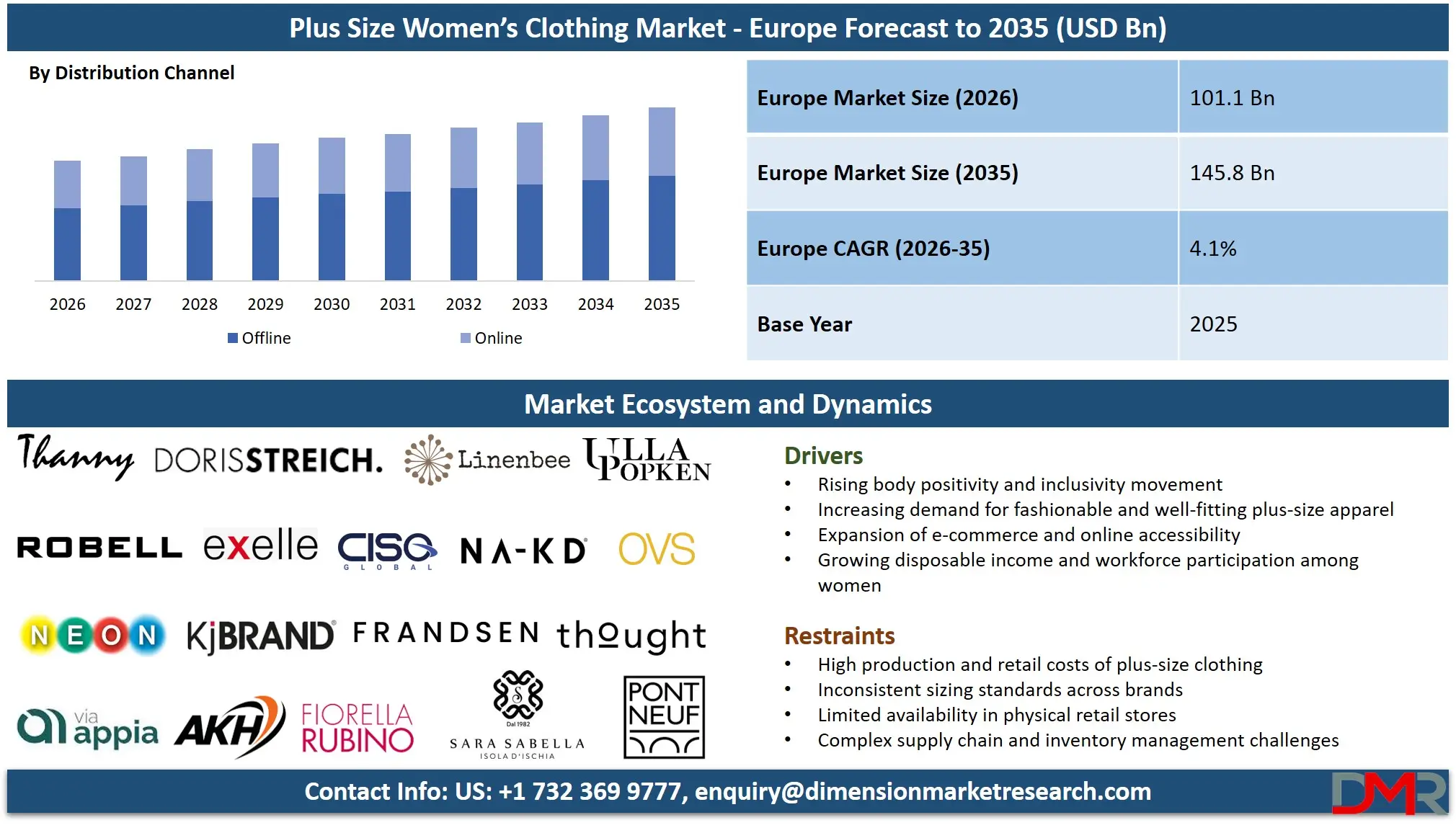
The Europe Plus-Size Women’s Clothing Market is expected to reach USD 101.1 billion by 2026 and to maintain a 4.1% compound annual growth rate from 2026 to 2035, reaching USD 145.8 billion.
ℹ
To learn more about this report –
Download Your Free Sample Report Here
The European market is very diverse, with major centers in fashion-forward destinations such as the UK, Germany, France, and Italy. The market is witnessing an increase in the number of consumers seeking fashionable, high-quality, and well-fitting clothing that is in line with mainstream fashion trends. The need to move beyond the basics and invest in separate plus-size clothing is driving retailers to invest in the same.
The market is largely driven by the digitalization and social media revolutions. The rise of the vocal and influential section of the market, advocating the need to promote the ‘plus-size’ market, is driving the market. The market is also being driven by the growth of the ‘e-commerce’ platform, which is offering much more variety compared to the traditional ‘brick and mortar’ stores, where the variety is usually very limited.
ℹ
To learn more about this report –
Download Your Free Sample Report Here
Key Takeaways and Other Influencing Factors
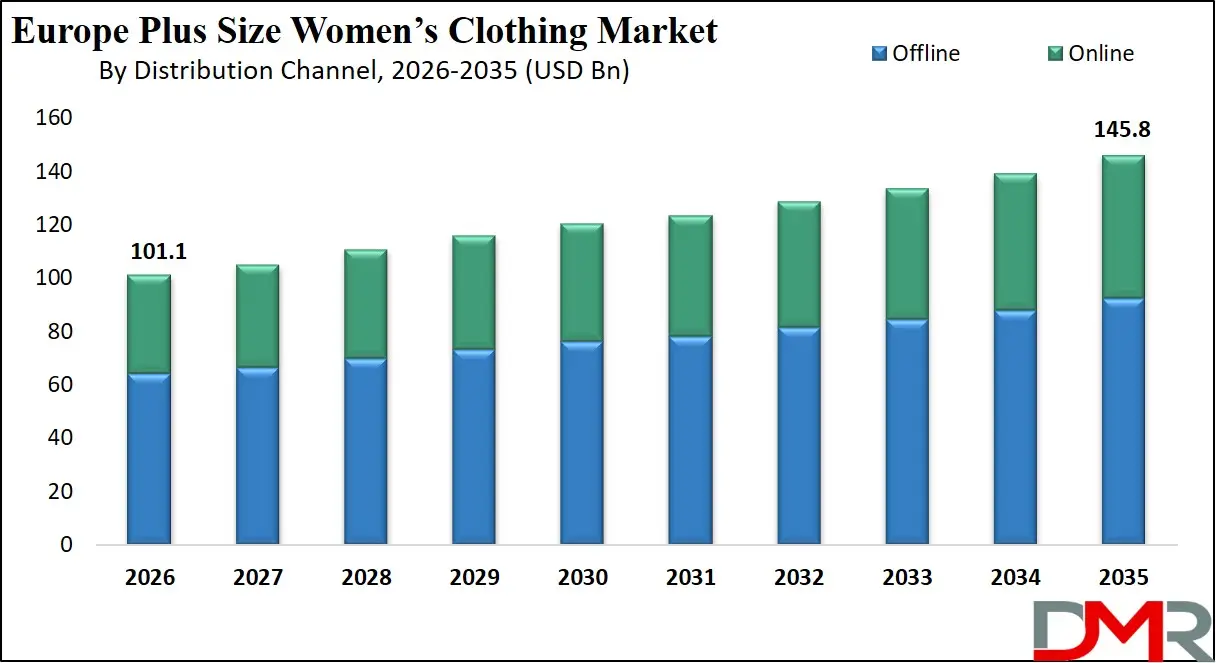
- Market Growth Insights: The market is expected to reach USD 101.1 billion by 2026 and is expected to expand to reach 145.8 billion USD by 2035, growing at a compound annual growth rate of 4.1% from 2026 to 2035.
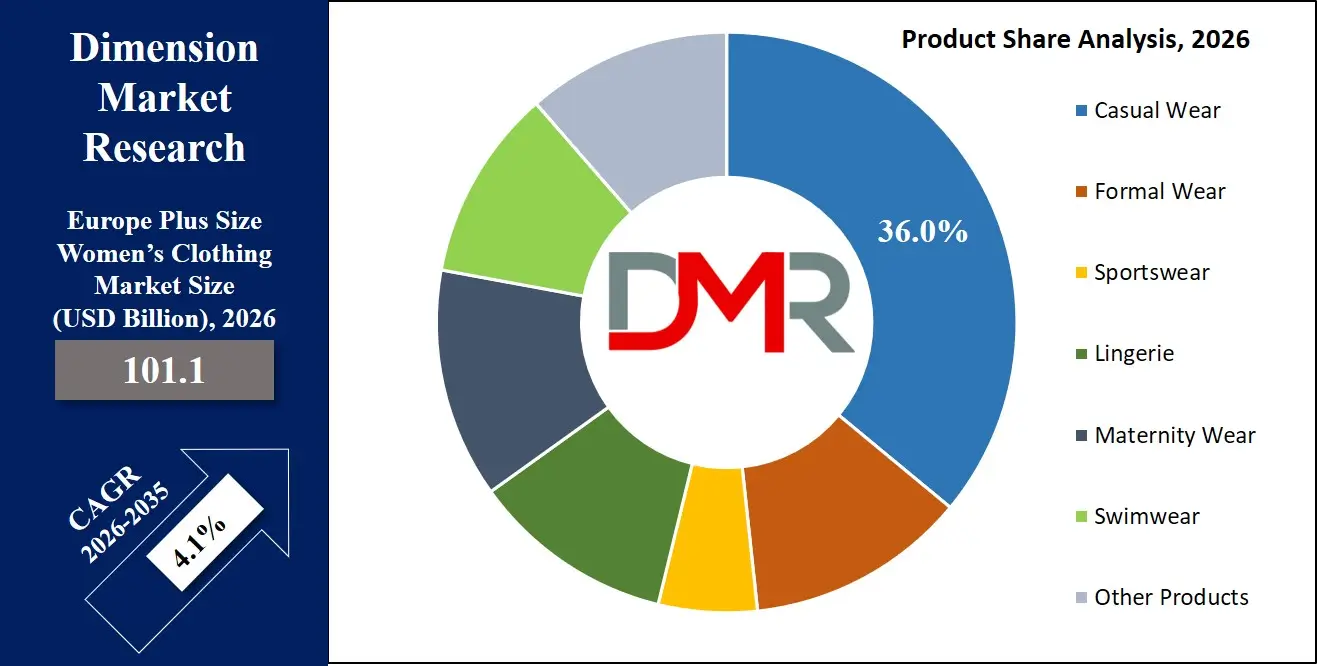
- By Product Insights: The casual wear segment is the largest contributor, with jeans, t-shirts, and leggings being the most popular clothing items. However, the formal wear and sportswear segments are the fastest-growing segments.
- By Age Group Insights: The 31-45 Years age group represents the largest consumer segment with significant purchasing power and a strong need for versatile and quality clothing materials of various product types.
- By Raw Material Insights: Cotton is the most popular material due to its comfort and breathability. However, the demand for sustainable and performance-driven materials like organic cotton, recycled polyester, and elastane blends is growing at a rapid pace.
- Eurostat (European Commission): Overweight prevalence among females in the EU countries varies significantly and ranges between 31% in Italy and nearly 57% in Latvia. The rates of obesity among women in some of the European Union countries are as high as 23.9%, thus representing a significant segment of the population requiring longer size clothing and thus encouraging the growth of inclusive fashion among women by the clothing manufacturers and retailers.
- World Health Organization (WHO Europe): Nearly 60% of adults in the WHO European region are overweight or obese, thus representing a significant and growing segment of the population requiring larger size clothing materials, and thus encouraging the growth of inclusive fashion among women by the clothing manufacturers and retailers.
- European Food Information Council (EUFIC): Approximately 53% of adults are overweight in Europe, and the rates are higher among women belonging to the lower socioeconomic classes of the population, which pushes the growth of this market in the European countries.
Impact of Iran Conflict on the Europe Plus Size Women’s Clothing Market
The Iran conflict is also indirectly affecting the Europe plus-size women’s clothing industry through factors such as increased fuel and power costs and inflation. The fuel and power costs are increasing the production and distribution costs for clothing manufacturers, especially for plus-size clothing, as this type of clothing is required to be made with additional material and craftsmanship. The trade route disruptions are also affecting the industry through increased costs and time required for the distribution and procurement of materials. The inflation rates are also affecting the industry, as the overall economy is affected, and people are becoming cautious about spending on luxury products such as clothing. However, the demand for such clothing is consistent, and the industry is becoming flexible and adaptable to these changes through cost optimization and diversification.
Use Cases
- Everyday Style and Self-Expression: The major use case for plus-size clothing is daily wear, and this type of clothing is helping women express themselves through clothing. The industry is becoming flexible and adaptable to these changes, and brands are focusing on producing clothing that can be used for multiple purposes, such as high-end denim, tops, and hoodies.
- Professional Attire and Workplace Inclusivity: The diversity and inclusion movement is becoming increasingly important for corporations, and this is why formal wear for plus-size women is becoming increasingly popular. The use case for formal wear is to help plus-size women purchase formal wear that is well-fitted and stylish, and that helps these women build a formal wardrobe.
- Intimate Apparel and Self-Care: The market for lingerie and sleepwear has transformed from functional wear to comfort wear, sensual wear, and self-care wear, with a growing demand for stylish everyday bras, shapewear, and sleepwear designed to meet the needs of plus-size women.
Market Dynamic
Driving Factors in the Europe Plus Size Women's Clothing Market
Body Positivity and Inclusivity Movement
The body positivity and inclusivity movement has been a key driving force, changing the way consumers think and how brands operate. Social media has provided a platform for plus-size influencers to voice their opinions, raising awareness and influencing a large number of consumers to embrace this new phenomenon, moving away from traditional beauty standards and perceptions. This has forced brands to accept the commercial benefits of catering to a segment of consumers they previously ignored, and consumers are rewarding brands with brand loyalty for those brands that embrace this new way of thinking and doing business, moving from a trend to a way of life.
Digital-First Retail and Enhanced Online Experience
E-commerce has been the driving force behind the growth of the plus-size market, which has bypassed the size limitations of physical stores. E-commerce provides an unparalleled range of styles, sizes, and brands, which has empowered the consumer in the plus-size market. Retailers are working to improve the e-commerce experience through the use of sophisticated features, including virtual fits, detailed size information, including body measurements, and artificial intelligence-powered recommendations, which have helped address the historical issue of sizing in the plus-size market. The ability to read reviews from other plus-size consumers has further cemented the position of e-commerce as the dominant platform.
Restraints in the Europe Plus Size Women's Clothing Market
Consistent Sizing and Fit
One of the biggest and most consistent restraints facing the industry is the lack of consistent sizing between brands. While a size XXL can vary significantly between brands, making the shopping experience frustrating and time-consuming for the consumer, it also makes the process of finding the right size and style difficult and frustrating. This further compounds the problem because many brands are simply taking a straight-size pattern and making it bigger, which can result in poor fits and unflattering shapes on a plus-size woman who has a different body type and proportion than a straight-size woman.
Higher Prices and Value Gap
Another restraint facing the industry is the fact that plus-size clothing tends to be more expensive than straight-size clothing, which is a problem that many people consider a fat tax on women who are plus-size. While the reasoning behind the cost of plus-size clothing may be due to the fact that there are fewer people in the plus-size category and therefore the brands can charge more and still maintain a strong customer base, the fact remains that the value gap between straight-size and plus-size women is perceived as being significant.
Opportunities in the Europe Plus Size Women's Clothing Market
Sustainable and Ethically Made Plus-Size Clothing
Sustainability is an opportunity for growth. The plus-size market has shown promise in embracing brands that are socially responsible and have the same values as the consumer. Sustainability is the need of the hour, and the plus-size market is looking for sustainable and environmentally conscious fashion. Brands that can successfully integrate sustainability with the plus-size market are likely to find a loyal customer base that is willing to invest in high-quality, sustainable, and responsible fashion.
Innovation in Fit, Fabric, and Technology
Technological advancements are an opportunity to overcome the challenges related to fit and size. Brands can invest in 3D body scans and other technologies to ensure the best fit and sizes, especially in the online shopping scenario. Innovation in fabric is also an opportunity, as brands can develop fabric that is stretchy, comfortable, and sustainable, thereby creating the best fit and longevity. Innovation is also an opportunity in the product development arena, as brands can use specialized techniques to create the best product for the plus-size market, gaining customer loyalty and premium pricing.
Trends in the Europe Plus Size Women Clothing Market
"Phygital" Retail and Experiential Shopping
Although the online shopping scenario is the most popular, the "phygital" retail trend is gaining popularity. "Phygital" is the combination of physical and digital, and brands are using physical stores as showrooms and experience centers. Brands are using physical stores as showrooms and experience centers, creating brand experiences and brand touchpoints through pop-up stores and partnerships with department stores. The idea is to create an experience, and the customer can touch, feel, and try on the product, creating brand loyalty and avoiding the reluctance to shop online.
Athleisure and Performance-Based Fashion
The athleisure wear market has a huge influence on the plus size clothing market. The athleisure wear market, which includes clothing and accessories for fitness and casual wear, has seen a huge boom in recent times. This has resulted in innovation in sportswear clothing, especially for plus size clothing, with brands developing new and improved wearables such as moisture-wicking, supportive, and durable clothing materials for plus size activewear clothing.
Research Scope and Analysis
By Product Analysis
The casual wear segment is likely to account for a large share of the Europe plus-size women's clothing market, considering the growing demand for comfortable and versatile clothing for daily wear. Under this segment, jeans and leggings are leading categories, considering their ability to fit in different settings and scenarios. T-shirts and hoodies also remain among the top-selling casual wear clothing types. The formal wear segment, especially office wear such as suits and trousers, is also growing rapidly, considering the growing inclusivity and need for professional clothing for plus-size women.
ℹ
To learn more about this report –
Download Your Free Sample Report Here
Sportswear, including activewear, gym wear, and sports bras, also remains a prominent segment in the European plus-size women's clothing market, considering the growing fitness and wellness trends among women. The lingerie segment, however, has also seen a shift toward inclusivity, especially with a focus on daily wear bras and shapewear. Maternity wear and swimwear also account for a prominent share in the Europe plus size women's clothing market, considering their uniqueness and need for expertise.
By Age Group Analysis
The age group of 31–45 Years currently holds the highest market share for consumers who have ample disposable income and require a wide range of products, from casual wear to professional formal wear. The age group of 15–30 Years holds the highest market share in terms of growth rate, highly influenced by social media, body positivity, and digital brands. The age group of 46–60 Years and 60+ Years holds a significant market for comfortable and well-fitting clothing such as trousers, blouses, and comfortable sleepwear.
By Raw Material Analysis
The raw material cotton currently holds the highest market share in terms of prevalence, due to its smoothness, breathability, and comfort. However, currently, there is a significant shift in market trend towards chemical fibers such as Elastane, Nylon, and Polyester, which is imperative for providing the required stretch, support, and fit for sportswear, lingerie, and comfortable casual wear. Silk and wool hold a small market share but hold significant importance for high-end lingerie, formal wear, and high-end winter wear. Others hold a small market share for sustainable raw materials such as Tencel, Modal, and Recycled Polyester.
By Pricing Analysis
The mid-priced range holds the highest market share for consumers who prefer products within this range for its quality, style, and affordability. The low-priced range holds a small market share for consumers who prefer products within this range for its affordability. The premium range holds a significant market for its high-end quality products, innovative designs, perfect fit, and sustainability.
By Distribution Channel Analysis
Online channels are the most popular among plus-size women, as they offer the largest range of products in terms of size and style. E-commerce websites are the largest online channels, while brand websites are the other online channels. Offline channels are changing, as specialty stores are the key offline channels, which are plus-size fashion stores only. Department stores are the other offline channels, which are plus-size stores in these malls. Fashion stores are becoming popular, while hypermarkets and supermarkets are the other offline channels, which are the most basic plus-size stores.
The Europe Plus Size Women’s Clothing Market Report is segmented on the basis of the following:
By Product
- Casual Wear
- T-shirts
- Jeans
- Casual Dresses
- Leggings
- Hoodies
- Formal Wear
- Office Suits
- Blazers
- Trousers
- Formal Dresses
- Skirts
- Sportswear
- Activewear
- Gym Wear
- Yoga Pants
- Joggers
- Sports Bras
- Lingerie
- Everyday Bras
- Shapewear
- Panties
- Sleepwear
- Maternity Wear
- Maternity Dresses
- Nursing Bras
- Maternity Leggings
- Swimwear
- One-Piece
- Tankinis
- Swim Dresses
- Beachwear Accessories
- Other Products
By Age Group
- 15–30 Years
- 31–45 Years
- 46–60 Years
- 60+ Years
By Raw Material
- Cotton
- Wool
- Silk
- Chemical
- Others
By Pricing
- Low-Priced
- Mid-Priced
- Premium
By Distribution Channel
- Online
- E-commerce Platforms
- Official Websites
- Offline
- Department Stores
- Specialty Stores
- Hypermarkets and Supermarkets
- Fashion Boutiques
- Outlet Stores
Impact of Artificial Intelligence on the European Plus-Size Women’s Clothing Market
- Personalized Fit and Size Recommendation: The use of Artificial Intelligence helps in accurately determining the sizes and fits of the clothing, as the algorithms are programmed to take into account the measurements and purchase history of the customer. This helps in creating customer satisfaction, as the chances of incorrect sizes are eliminated, and the customer becomes more confident while shopping, especially through online channels.
- Demand Forecasting and Inventory Optimization: The application of Artificial Intelligence helps in accurately predicting the sales and purchases of clothing, as the algorithms are programmed to take into account the sales and purchase patterns of the customer. This helps in creating customer satisfaction, as the chances of incorrect sizes are eliminated, and the customer becomes more confident while shopping, especially through online channels.
- Virtual Try-On and Enhanced Visualization: The application of Artificial Intelligence helps in creating an immersive shopping experience, as the customer is allowed to virtually try on the clothing and visualize the product on the virtual mannequin, which is designed according to the measurements and type of the customer. This helps in creating customer satisfaction, as the chances of incorrect sizes are eliminated, and the customer becomes more confident while shopping, especially through online channels.
Regional Analysis
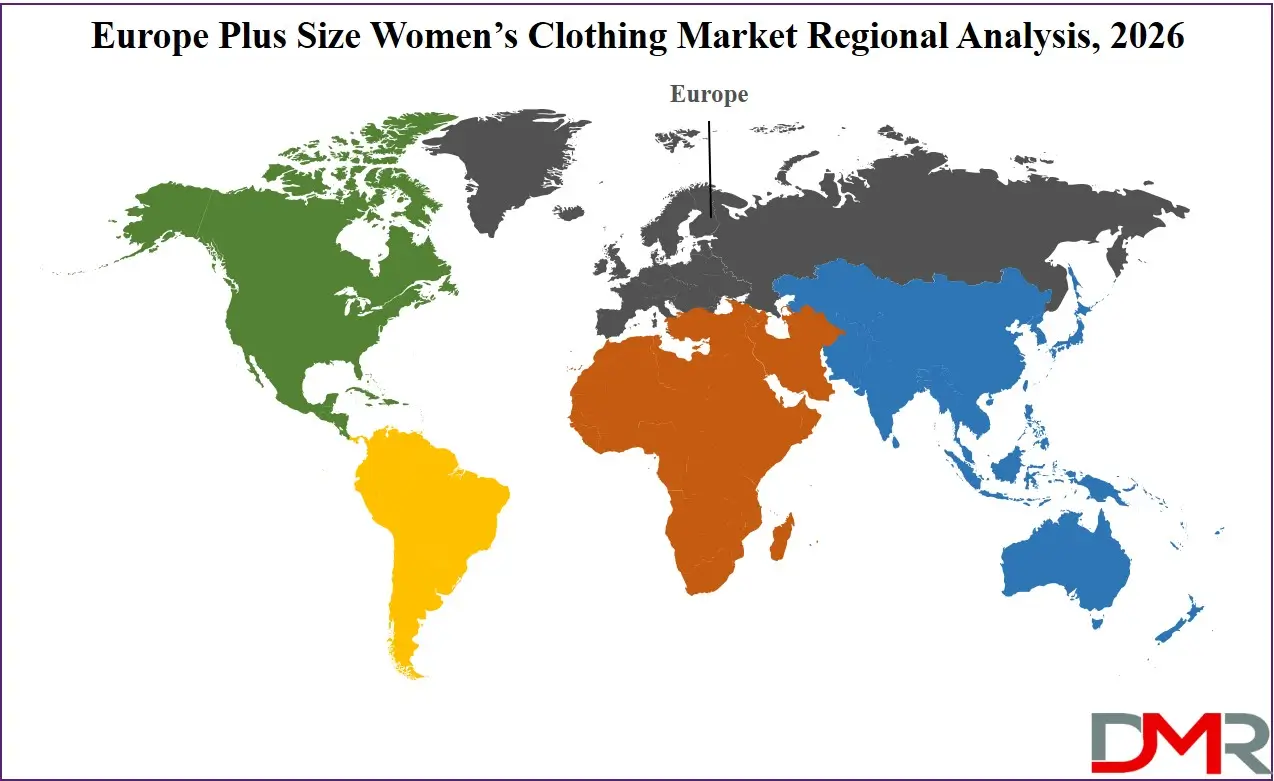
Europe is the dominant force in this market, with the UK, Germany, and France being at the forefront due to high levels of fashion awareness, high e-commerce penetration, and the rise of body positivity movements. The UK leads in terms of market share due to the inclusivity of brands and retail infrastructure.
ℹ
To learn more about this report –
Download Your Free Sample Report Here
The southern part of the region, comprising Italy and Spain, is also witnessing steady growth, with traditional fashion destinations slowly accepting the concept of size inclusivity. The northern part of the region, comprising Sweden and Denmark, is witnessing high levels of acceptance due to progressive social attitudes and sustainable fashion. The eastern part of the region is an emerging market with high potential, with increasing disposable income levels and the rise of international brands. Regulatory pressure on standardization of sizes and diversity in advertising is also driving the market.
By Region
Europe
- Germany
- The U.K.
- France
- Italy
- Russia
- Spain
- Benelux
- Nordic
- Rest of Europe
Competitive Landscape
The Europe plus size women's clothing market has a competitive and dynamic environment, with a mix of fast-fashion retailers, plus-size clothing retailers, and disruptive direct-to-consumer digital natives. Fast-fashion retailers like H&M and Zara, through their parent company Inditex, are entering the plus-size segment, although they are criticized for the depth and quality of their offerings. Online retailers like ASOS Curve, Boohoo, and Navabi have gained huge popularity among plus-size women due to the depth and quality of their offerings. Traditional European department stores like Galeries Lafayette and El Corte Inglés are also responding to this segment by allocating more floor space to dedicated plus-size stores and brands. Premium and niche brands like Ulla Popken and Elvi have a long tradition and a large customer base in this segment. The market also has a growing number of innovative direct-to-consumer brands that are solving specific problems through innovative use of technology and brand loyalty, catering to the needs of plus-size women and gaining huge brand loyalty among them.
Some of the prominent players in the Europe Plus Size Women’s Clothing Market are:
- Ulla Popken
- Fiorella Rubino
- OVS
- NA-KD
- Thought
- Sara Sabella
- Alegria Sorrento Moda
- Linenbee
- AKH
- Ciso
- Doris Streich
- Exelle
- Frandsen
- KJ Brand
- Mona Lisa
- Noen
- Pont Neuf
- Robell
- Thanny
- Via Appia
- Other Key Players
Recent Developments in the Europe Plus Size Women’s Clothing Market
- March 2026: ASOS has launched a 'Fit Assistant' tool, which uses AI technology, enabling customers to receive personalized size recommendations for ASOS’s Curve and Plus-size ranges, ensuring customer confidence and reducing returns.
- February 2026: H&M has announced a partnership with a circular fashion platform, enabling H&M to launch a rental service for its Plus-size Formal Wear range in select European cities.
- February 2026: Zalando has extended its 'Size & Fit' tool, enabling customers to view more detailed body type analysis for Plus-size products, allowing customers to filter reviews and recommendations from users with similar body types.
- January 2026: A new D2C brand has been launched, specializing in Plus-size sustainable activewear, targeting the sustainable segment of the Plus-size clothing market, securing significant funding in seed capital.
Report Details
| Report Characteristics |
| Market Size (2026) |
USD 101.1 Bn |
| Forecast Value (2035) |
USD 145.8 Bn |
| CAGR (2026–2035) |
4.1% |
| Historical Data |
2021 – 2025 |
| Forecast Data |
2027 – 2035 |
| Base Year |
2025 |
| Estimate Year |
2026 |
| Report Coverage |
Market Revenue Estimation, Market Dynamics, Competitive Landscape, Growth Factors and etc. |
| Segments Covered |
By Product (Casual Wear, Formal Wear, Sportswear, Lingerie, Maternity Wear, Swimwear, and Other Products), By Raw Material (Cotton, Wool, Silk, Chemical, Other Raw Materials), By Age Group (15–30 Years, 31–45 Years, 46–60 Years, and 60+ Years), By Pricing (Low-Priced, Mid-Priced, and Premium), By Distribution Channel (Online, and Offline) |
| Regional Coverage |
Europe – Germany, The UK, France, Russia, Spain, Italy, Benelux, Nordic, & Rest of Europe |
| Prominent Players |
Ulla Popken, Fiorella Rubino, OVS, NA-KD, Thought, Sara Sabella, Alegria Sorrento Moda, Linenbee, AKH, Ciso, Doris Streich, Exelle, Frandsen, KJ Brand, Mona Lisa, Noen, Pont Neuf, Robell, Thanny, Via Appia, and Other Key Players |
| Purchase Options |
We have three licenses to opt for: Single User License (Limited to 1 user), Multi-User License (Up to 5 Users) and Corporate Use License (Unlimited User) along with free report customization equivalent to 0 analyst working days, 3 analysts working days and 5 analysts working days respectively. |
Frequently Asked Questions
How big is the Europe Plus Size Women's Clothing Market?
▾ The Europe Plus Size Women's Clothing Market size is estimated to have a value of USD 101.1 billion in 2026 and is expected to reach USD 145.8 billion by the end of 2035.
Who are the key players in the Europe Plus Size Women's Clothing Market?
▾ Some of the major key players in the Europe Plus Size Women's Clothing Market are ASOS (Curve), Boohoo, Navabi, Zalando, H&M, Elvi, Ulla Popken, and many others.
What is the growth rate in the Europe Plus Size Women's Clothing Market?
▾ The market is growing at a CAGR of 4.1 percent over the forecasted period.