Market Overview
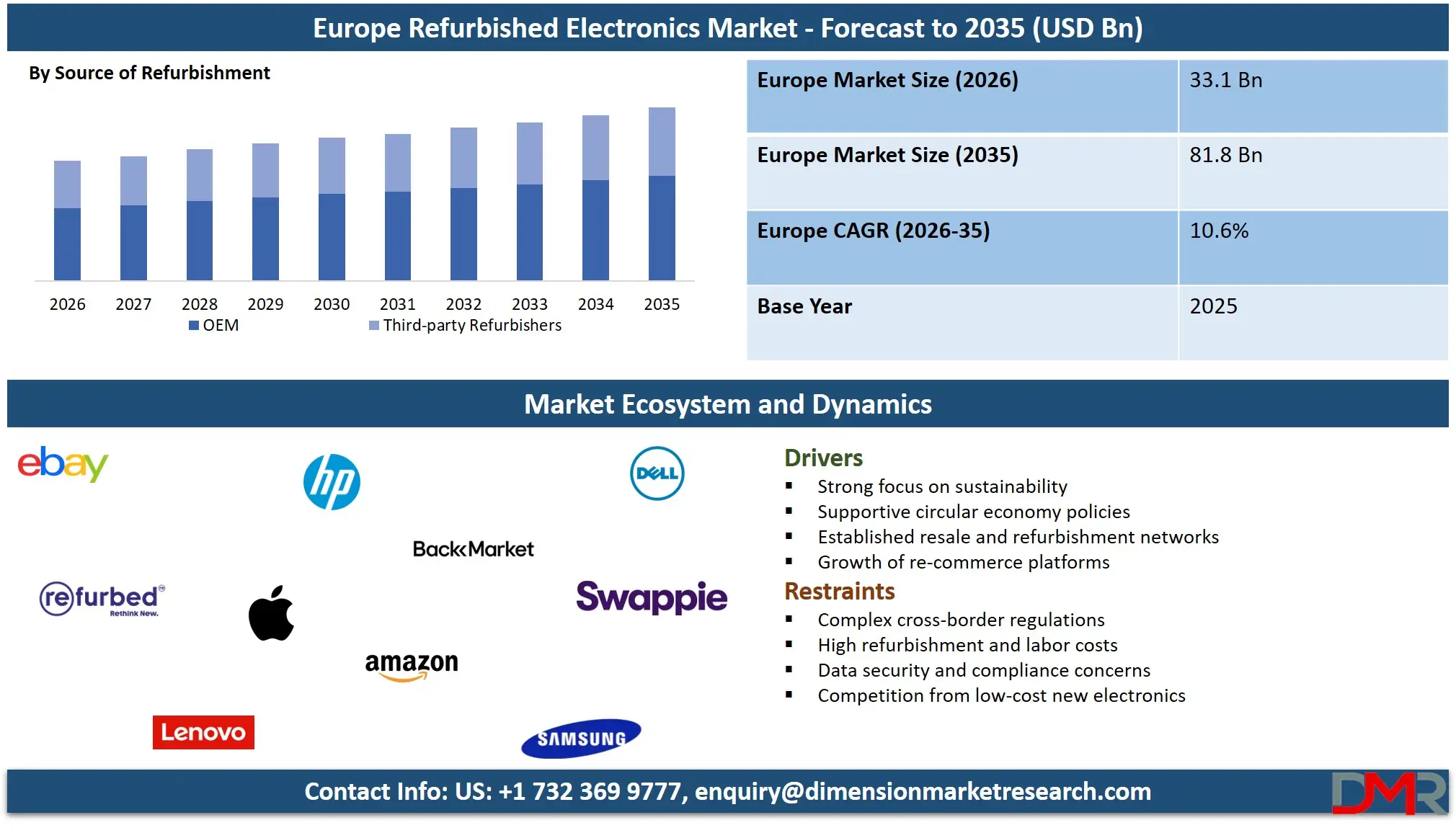
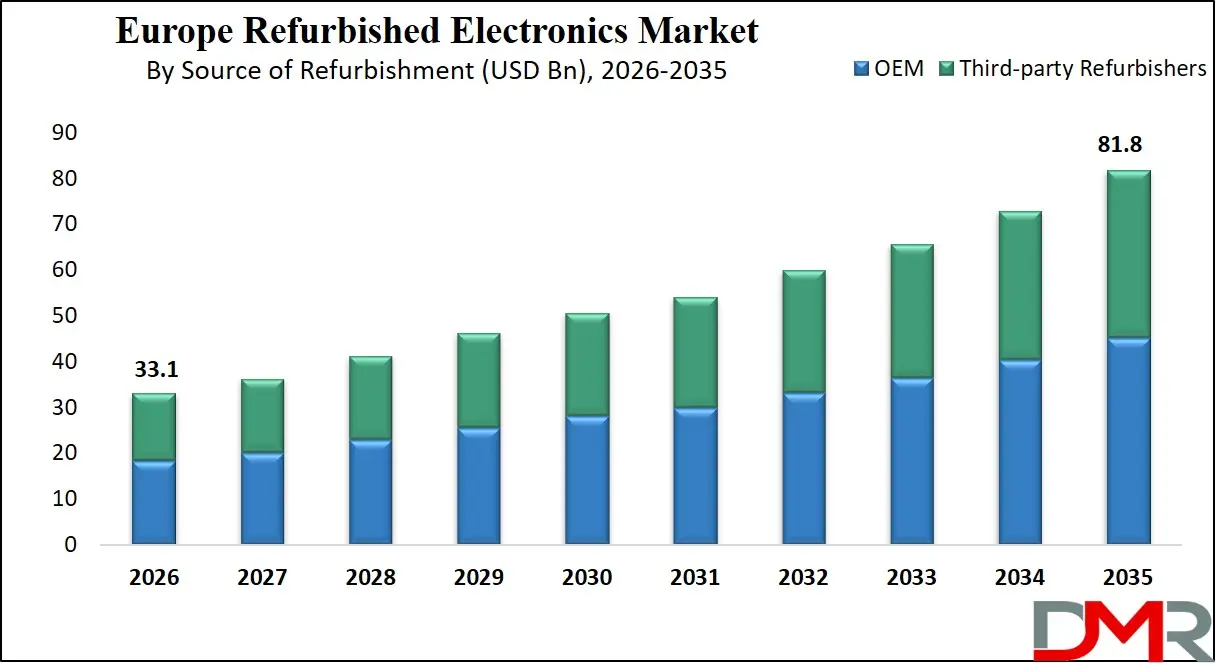
The Europe Refurbished Electronics Market size is projected to reach USD 33.1 billion in 2026 and grow at a compound annual growth rate of 10.6% to reach a value of USD 81.8 billion in 2035.
ℹ
To learn more about this report –
Download Your Free Sample Report Here
Refurbished electronics refers to the structured process of restoring, repairing, testing, and reselling previously used electronic devices such as smartphones, laptops, tablets, and home appliances so they function close to new condition. This ecosystem includes device collection, diagnostics, component replacement, software optimization, and quality assurance before redistribution through various sales channels. It plays a vital role in promoting resource efficiency by extending product lifecycles, minimizing electronic waste, and offering affordable alternatives to new devices for both consumers and organizations across multiple sectors.
In Europe, the refurbished electronics sector is rapidly gaining traction as part of the region’s broader sustainability and digital transformation goals. Increasing environmental awareness, along with stringent regulations on electronic waste and repairability, is encouraging the adoption of refurbished devices as a credible substitute for new products. Technological advancements in refurbishment processes, including automation and standardized grading systems, have improved product reliability and consistency. Additionally, warranty-backed resale models and certified refurbishment practices are strengthening consumer confidence, while businesses across Europe are increasingly integrating refurbished IT equipment to optimize operational costs without compromising performance.
ℹ
To learn more about this report –
Download Your Free Sample Report Here
The Europe refurbished electronics market is further shaped by rising investments, evolving regulatory frameworks, and strategic industry collaborations. Companies are expanding refurbishment capabilities, enhancing trade-in and buyback programs, and forming partnerships with e-commerce platforms to improve market reach and accessibility. The growth of cross-border resale networks is also enabling wider distribution across European countries. Furthermore, the integration of AI-driven testing and grading technologies is improving operational efficiency and reducing turnaround times. These developments, combined with growing demand for cost-effective and sustainable solutions, are positioning the market for continued expansion across the region.
Europe Refurbished Electronics Market: Key Takeaways
- Market Growth: The Europe Refurbished Electronics Market size is expected to grow by USD 45.6 billion, at a CAGR of 10.6%, during the forecasted period of 2027 to 2035.
- By Source of Refurbishment: OEMs are anticipated to get the majority share of the Europe Refurbished Electronics market in 2026.
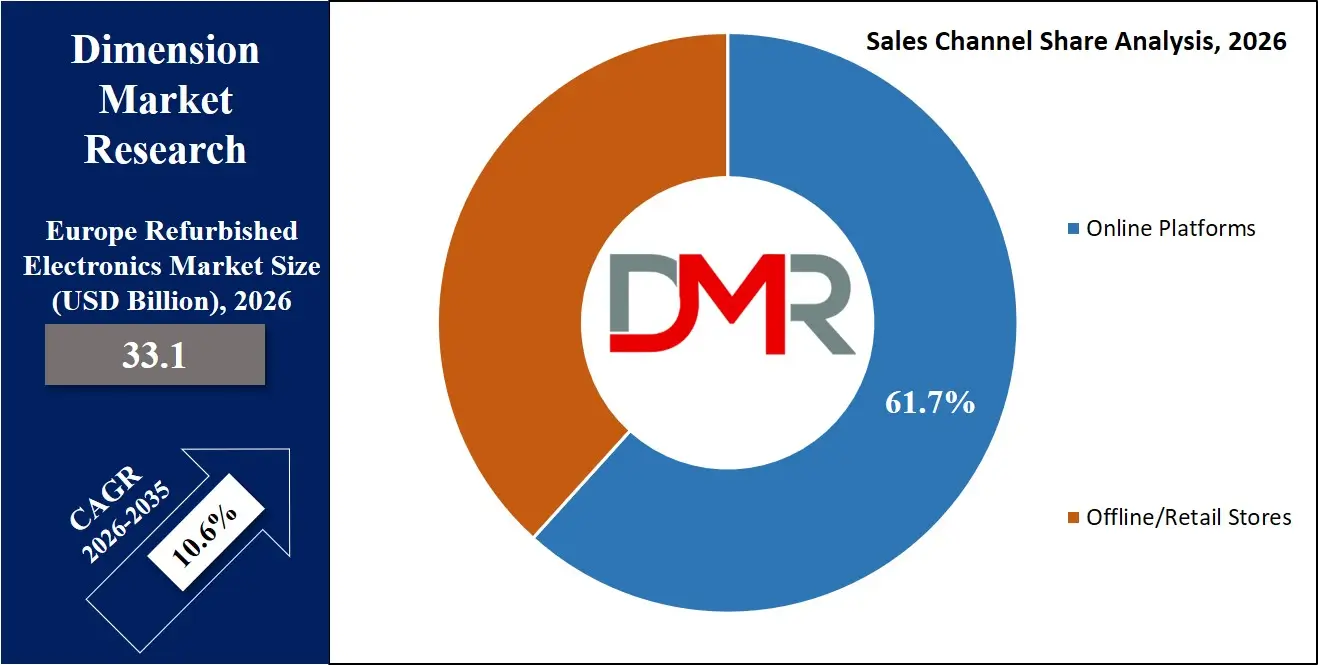
- By Sales Channel: The online platforms segment is expected to get the largest revenue share in 2026 in the Europe Refurbished Electronics market.
- Use Cases: Some of the use cases of Refurbished Electronics include affordable consumer electronics, educational institutions, and more.
Europe Refurbished Electronics Market: Use Cases
- Affordable Consumer Electronics: Refurbished smartphones and laptops provide cost-effective alternatives for budget-conscious consumers, enabling access to high-quality devices at reduced prices. These products are widely adopted by students and middle-income households seeking performance without premium costs.
- Enterprise IT Procurement: Businesses leverage refurbished desktops and servers to reduce capital expenditure while maintaining operational efficiency. This is especially beneficial for SMEs aiming to scale infrastructure economically.
- Educational Institutions: Schools and universities adopt refurbished devices to equip students and staff with necessary technology, supporting digital learning initiatives at lower costs.
- Government Programs: Public sector initiatives use refurbished electronics to bridge the digital divide, ensuring access to technology in underserved communities.
- E-commerce Resale Platforms: Online marketplaces facilitate easy buying and selling of refurbished devices, increasing accessibility and transparency for consumers.
- Sustainability Initiatives: Organizations integrate refurbished electronics into ESG strategies to reduce carbon footprint and electronic waste generation.
- Rental and Leasing Models: Refurbished devices are increasingly used in short-term rental or leasing models for events, training, and temporary workforce needs.
Stats & Facts
- European Commission reported that e-waste in Europe reached approximately 12.3 million tonnes in 2024.
- Eurostat stated that only about 40% of electronic waste was officially recycled in 2024.
- European Environment Agency highlighted that extending device life by one year can reduce carbon emissions by up to 4 million tonnes annually in Europe (2025).
- International Energy Agency noted that electronics reuse could cut lifecycle emissions by up to 30% in 2024.
- OECD reported that refurbished electronics demand grew by over 10% annually across Europe in 2025.
- European Commission indicated that right-to-repair regulations expanded across multiple product categories in 2025.
- United Nations University estimated that global e-waste recycling rates remained below 25% in 2024.
- Eurostat recorded that over 65% of Europeans purchased second-hand or refurbished goods in 2025.
- European Investment Bank reported increased funding for circular economy projects exceeding EUR 5 billion in 2024.
- European Environment Agency confirmed that electronics account for nearly 70% of toxic waste in landfills in 2025.
- International Telecommunication Union highlighted that smartphone replacement cycles extended to 3–4 years in Europe in 2024.
- European Commission noted that refurbished electronics can cost 30–70% less than new devices in 2025.
Market Dynamic
Driving Factors in the Europe Refurbished Electronics Market
Sustainability Regulations and Circular Economy Push
Europe’s strong regulatory framework promoting sustainability is a major driver of the refurbished electronics market. Policies encouraging recycling, reuse, and reduced carbon emissions are compelling manufacturers and consumers to adopt refurbished products. Initiatives such as right-to-repair laws and extended producer responsibility are reshaping industry practices by ensuring devices are designed for longevity and repairability. Governments are also incentivizing businesses to integrate circular economy models, making refurbishment a strategic priority. This regulatory push not only reduces environmental impact but also creates a structured ecosystem that boosts consumer confidence and market growth.
Cost Efficiency and Rising Consumer Demand
Economic factors, including inflation and rising device costs, are driving consumers toward refurbished electronics as a practical alternative. These products offer high performance at significantly lower prices, appealing to both individuals and enterprises. Businesses, particularly SMEs, are increasingly adopting refurbished IT equipment to optimize budgets while maintaining productivity. Additionally, improved quality assurance, warranties, and certification processes have reduced skepticism, encouraging wider adoption. The combination of affordability and reliability is significantly influencing purchasing decisions, making refurbished electronics a preferred choice across diverse user segments.
Restraints in the Europe Refurbished Electronics Market
Perceived Quality and Trust Issues
Despite improvements in refurbishment standards, some consumers remain hesitant due to concerns about product reliability and longevity. Variability in refurbishment quality across providers can lead to inconsistent user experiences, impacting trust. Lack of standardized grading systems in certain regions further complicates purchasing decisions. These perception challenges can limit adoption, especially among premium buyers who prefer new devices. Addressing these concerns requires stronger certification frameworks, transparent quality benchmarks, and enhanced customer education to build confidence in refurbished products.
Supply Chain Constraints and Limited Device Availability
The availability of high-quality used devices is dependent on efficient collection and trade-in systems. Inconsistent supply chains can restrict the volume of devices available for refurbishment. Additionally, rapid technological advancements can render older devices less desirable, affecting resale value. Logistics challenges, including cross-border regulations and transportation costs, further complicate operations. These constraints can hinder scalability and profitability for refurbishers, limiting market expansion despite growing demand.
Opportunities in the Europe Refurbished Electronics Market
Expansion of Online Marketplaces and Digital Platforms
The growth of e-commerce platforms dedicated to refurbished electronics presents significant opportunities. These platforms enhance accessibility, transparency, and consumer trust through detailed product descriptions, reviews, and warranties. Digital marketplaces also enable cross-border trade, expanding the customer base for refurbishers. The integration of AI-driven recommendation systems further improves user experience, driving higher conversion rates. This digital transformation is expected to unlock new revenue streams and accelerate market growth.
Enterprise and Institutional Adoption
Increasing adoption of refurbished electronics by enterprises, educational institutions, and government bodies offers substantial growth potential. Organizations are prioritizing cost optimization and sustainability, making refurbished devices an attractive option. Bulk procurement contracts and long-term partnerships with refurbishers can ensure consistent demand and supply. This segment is expected to grow rapidly as institutions align with ESG goals and digital transformation strategies.
Trends in the Europe Refurbished Electronics Market
Integration of Advanced Refurbishment Technologies
The adoption of automation, AI-driven diagnostics, and robotics is transforming refurbishment processes. These technologies improve efficiency, reduce turnaround time, and enhance product quality. Automated testing and grading systems ensure consistency and reliability, addressing consumer concerns. As technology continues to evolve, refurbishers are able to handle larger volumes while maintaining high standards, driving market competitiveness.
Shift Toward Subscription and Leasing Models
A growing trend is the adoption of subscription-based and leasing models for refurbished electronics. These models provide flexibility for consumers and businesses, allowing access to devices without significant upfront investment. Companies are offering device-as-a-service solutions, bundling maintenance and upgrades. This shift is reshaping consumption patterns and creating recurring revenue opportunities for market players.
Impact of Artificial Intelligence in Europe Refurbished Electronics Market
- AI-based Diagnostics: Enhances device testing accuracy by identifying faults quickly, reducing manual inspection time and improving efficiency.
- Automated Grading Systems: Uses machine learning to classify device conditions consistently, ensuring transparency and trust for buyers.
- Predictive Maintenance: Helps refurbishers anticipate component failures and replace parts proactively, improving product lifespan.
- Inventory Optimization: AI analyzes demand patterns to manage stock levels and reduce overstock or shortages.
- Customer Personalization: Recommends products based on user preferences and purchase history, improving conversion rates.
- Fraud Detection: Identifies counterfeit or tampered devices during procurement stages, ensuring quality control.
- Pricing Optimization: Uses algorithms to determine competitive pricing based on market trends and device conditions.
- Supply Chain Efficiency: Enhances logistics planning and reduces delays in device collection and distribution.
Impact of Iran War on Europe Refurbished Electronics Market
The Iran war is influencing Europe’s refurbished electronics market primarily through rising energy costs and economic pressure. Increased oil and gas prices are driving up manufacturing and refurbishment expenses, leading to higher prices for new devices and encouraging a shift toward refurbished alternatives. However, supply chain disruptions and reduced availability of components are constraining refurbishment activities. Inflation and slower economic growth are also affecting consumer spending patterns. While demand for refurbished electronics is rising due to affordability concerns, ongoing cost pressures and supply limitations may restrict the pace of market expansion.
Research Scope and Analysis
By Product Type Analysis
Smartphones and mobiles are anticipated to remain the dominant segment in the Europe refurbished electronics market, accounting for an estimated 42.6% share in 2026. This leadership position is largely attributed to their high replacement frequency, as consumers frequently upgrade to newer models with enhanced features. This constant upgrade cycle ensures a steady inflow of used devices suitable for refurbishment. In addition, strong trade-in and buyback programs offered by manufacturers and telecom operators further support supply. Premium smartphones retain significant resale value, making them attractive for both refurbishers and consumers. The growth of e-commerce platforms offering certified refurbished devices with warranties has also strengthened consumer trust, accelerating adoption across diverse demographics.
Laptops and notebooks are emerging as the fastest-growing segment within the refurbished electronics market, fueled by the rapid expansion of remote work, hybrid office models, and digital education systems. Businesses and educational institutions are increasingly investing in refurbished laptops to equip employees and students with reliable computing devices at reduced costs. These devices are capable of handling most professional and academic tasks efficiently, making them a practical alternative to new systems. Continuous improvements in refurbishment processes, including hardware upgrades and software optimization, have enhanced performance and reliability. As digital transformation accelerates across Europe, the demand for affordable and scalable computing solutions continues to drive this segment’s growth.
By Source of Refurbishment Analysis
Original Equipment Manufacturer refurbishment (OEM) is projected to dominate this category, holding approximately 55.3% market share in 2026. OEMs have a competitive advantage due to their direct access to original components, proprietary technologies, and established brand reputation. Their refurbishment processes follow strict quality standards, often including multi-stage testing, certification, and warranty offerings, which significantly enhance consumer confidence. Additionally, OEM-led trade-in and upgrade programs ensure a consistent supply of used devices for refurbishment. These programs also enable manufacturers to maintain customer relationships and brand loyalty. As consumers increasingly prioritize reliability and authenticity, OEM refurbishment continues to strengthen its position as a preferred choice in the market.
Third-party refurbishers are witnessing rapid expansion due to their cost competitiveness, operational flexibility, and ability to cater to a wide range of product categories. These players often provide refurbished devices at lower price points compared to OEM offerings, making them appealing to price-sensitive consumers. Their agility allows them to process large volumes of devices efficiently, sourcing from multiple channels such as trade-ins, corporate disposals, and secondary markets. Additionally, third-party refurbishers are expanding their reach through partnerships with online marketplaces and retailers. While challenges related to standardization and quality perception remain, ongoing improvements in certification and transparency are helping this segment gain credibility and market share.
By Price Range Analysis
The medium price range is expected to dominate the Europe refurbished electronics market, capturing an estimated 48.1% share in 2026. This segment strikes an optimal balance between affordability and performance, making it highly attractive to a wide range of consumers. Devices in this category typically include mid-range smartphones and laptops that offer advanced features, reliable performance, and longer usability at significantly reduced prices compared to new products. Students, professionals, and small business owners are key contributors to demand in this segment. The availability of certified refurbished options with warranties further boosts confidence. As consumers increasingly seek value-driven purchases, this segment continues to lead in both volume and revenue.
The low-price segment is experiencing rapid growth as demand rises among budget-conscious consumers and underserved populations. Devices in this category are typically used for basic functionalities such as communication, browsing, and light productivity tasks. This segment plays a crucial role in bridging the digital divide by providing affordable access to technology. Emerging markets within Europe and low-income consumer groups are key drivers of growth. Additionally, government and non-profit initiatives often procure devices in this price range for distribution programs. While margins may be lower, the high volume of sales and increasing demand ensure that this segment remains a vital contributor to overall market expansion.
By Sales Channel Analysis
Online platforms are projected to lead the market with a 61.7% share in 2026, driven by the convenience, accessibility, and transparency they offer. Consumers can browse a wide selection of refurbished devices, compare prices, and evaluate product conditions through detailed descriptions and customer reviews. The integration of secure payment systems, return policies, and warranty options enhances trust and simplifies the purchasing process. Additionally, online channels enable cross-border transactions, expanding market reach for sellers. The use of AI-driven recommendation engines and personalized marketing strategies further improves user experience. As digital adoption continues to grow, online platforms remain the primary distribution channel for refurbished electronics.
ℹ
To learn more about this report –
Download Your Free Sample Report Here
Offline and retail stores continue to play an important role in the refurbished electronics market, particularly among consumers who prefer hands-on evaluation before making a purchase. These physical outlets allow customers to inspect device condition, test functionality, and receive personalized assistance from sales representatives. Retail stores also provide immediate product availability, eliminating delivery wait times. In addition, they often offer after-sales services such as repairs and maintenance, enhancing customer satisfaction. While online channels dominate in terms of volume, offline stores maintain steady growth by catering to trust-driven purchasing behavior. Their presence is especially significant in regions where digital adoption is still developing.
By End-User Analysis
Individual consumers are expected to dominate the market with a 58.9% share in 2026, driven by increasing awareness of refurbished products and their cost advantages. Rising living costs and economic uncertainty have made affordability a key consideration for many buyers, prompting a shift toward refurbished devices. Consumers are also becoming more environmentally conscious, recognizing the benefits of extending product lifecycles and reducing electronic waste. The availability of certified refurbished devices with warranties has significantly improved trust and acceptance. Additionally, the convenience of online purchasing and flexible payment options further supports growth in this segment, making it the largest contributor to overall market demand.
Enterprises and small-to-medium-sized businesses represent the fastest-growing end-user segment, driven by the need for cost optimization and sustainable business practices. Refurbished electronics provide a practical solution for organizations looking to expand or upgrade their IT infrastructure without incurring high capital expenditure. These devices are suitable for a wide range of business applications, including office productivity, communication, and data management. Bulk procurement options and service agreements further enhance their appeal. Additionally, adopting refurbished technology aligns with corporate sustainability goals and ESG commitments. As businesses increasingly prioritize efficiency and environmental responsibility, this segment is expected to witness strong and sustained growth.
The Europe Refurbished Electronics Market Report is segmented on the basis of the following:
By Product Type
- Smartphones & Mobiles
- Laptops & Notebooks
- Tablets & iPads
- Desktops & Monitors
- Televisions & Displays
- Home Appliances
- Audio Devices
- Cameras & Imaging Devices
- Gaming Consoles & Accessories
- Others
By Source of Refurbishment
- OEM
- Third-party Refurbishers
By Price Range
- Low (<USD 200)
- Medium (USD 200-500)
- High (> USD 500)
By Sales Channel
- Online Platforms
- Offline/Retail Stores
By End-User
- Individual Consumers
- Enterprises/SMEs
- Educational Institutions
- Government/NGOs
Country Analysis
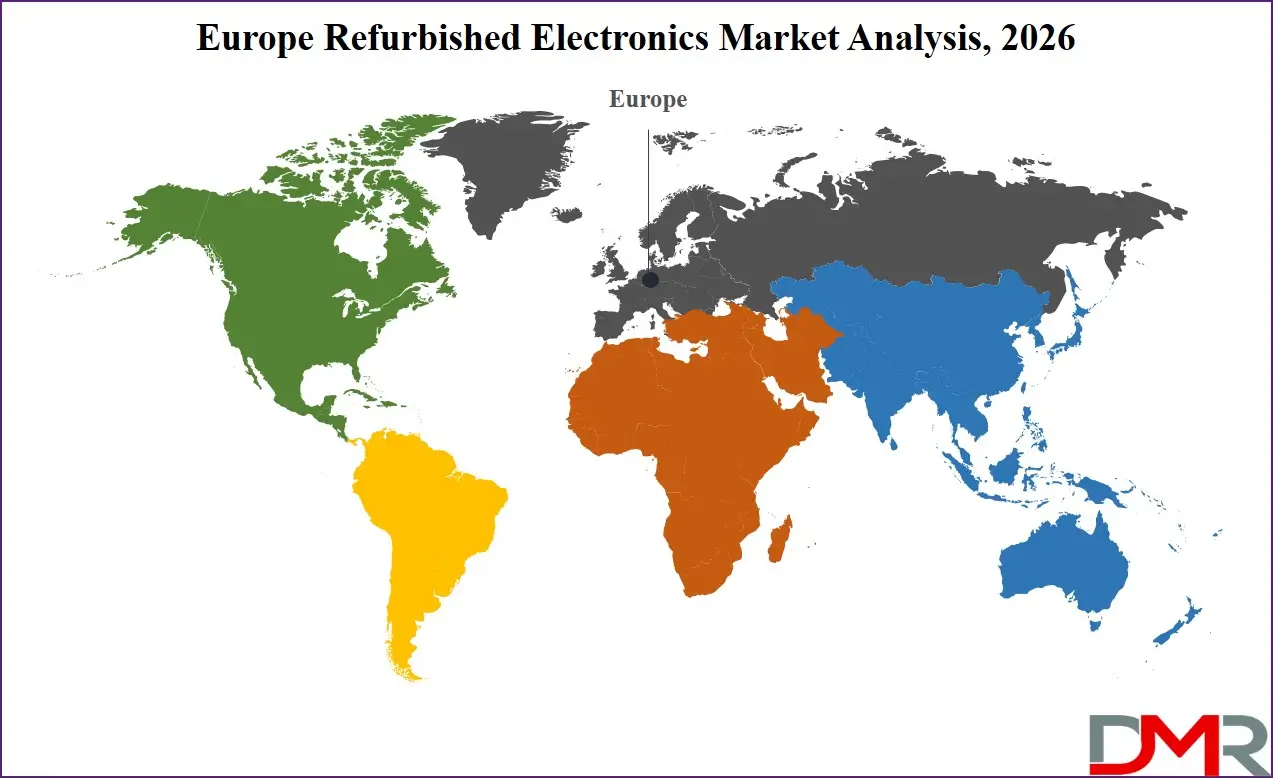
Europe’s refurbished electronics market is led by Germany, driven by strong environmental regulations, advanced recycling infrastructure, and high consumer trust in certified refurbished products. The United Kingdom is the fastest-growing market, supported by price-sensitive consumers and rising adoption of second-hand devices.
ℹ
To learn more about this report –
Download Your Free Sample Report Here
France benefits from well-established recommerce platforms and government support for circular economy initiatives. Italy is emerging as a high-growth market due to increasing affordability concerns and expanding resale channels, while Spain shows steady growth driven by demand for cost-effective smartphones and digital access. Overall, sustainability awareness and regulatory push continue to shape country-level dynamics.
By Country
- Germany
- The U.K.
- France
- Italy
- Russia
- Spain
- Benelux
- Nordic
- Rest of Europe
Competitive Landscape
The Europe refurbished electronics market is characterized by intense competition, driven by a mix of OEM-backed programs and independent refurbishers. Companies focus on enhancing product quality, offering warranties, and building strong distribution networks to gain a competitive edge. Strategic partnerships with e-commerce platforms and logistics providers are crucial for expanding market reach. High entry barriers exist due to the need for advanced refurbishment infrastructure, quality certification, and regulatory compliance. Continuous investment in automation, AI technologies, and customer service is essential for maintaining competitiveness and scaling operations in this evolving market.
Some of the prominent players in the Europe Refurbished Electronics are:
- Back Market
- Refurbed
- Swappie
- Recommerce Group
- musicMagpie
- Asgoodasnew
- Foxway Group
- Renewd
- Amazon Renewed
- Apple Inc.
- Samsung Electronics
- Dell Technologies
- HP Inc.
- Lenovo Group Limited
- Microsoft Corporation
- Envirofone
- Inrego AB
- Renewtech
- Circular Computing
- eBay Inc.
- Other Key Players
Recent Developments
- In March 2025, Apple Inc. expanded its certified refurbished electronics program across multiple European countries, introducing a wider range of iPhones, MacBooks, and iPads. The company enhanced its refurbishment process by incorporating advanced diagnostic tools and extended warranty options. This move aimed to strengthen Apple’s position in the circular economy while addressing growing demand for affordable premium devices. The initiative also included improved trade-in options and faster delivery services, making refurbished products more accessible to consumers and reinforcing Apple’s sustainability commitments.
- In January 2025, Back Market raised significant funding to expand its refurbished electronics marketplace across Europe. The investment focused on enhancing platform capabilities, improving logistics infrastructure, and integrating AI-driven product grading systems. The company also announced partnerships with certified refurbishers to ensure consistent quality standards.
Report Details
| Report Characteristics |
| Market Size (2026) |
USD 33.1 Bn |
| Forecast Value (2035) |
USD 81.8 Bn |
| CAGR (2026–2035) |
10.6% |
| Historical Data |
2021 – 2025 |
| Forecast Data |
2027 – 2035 |
| Base Year |
2025 |
| Estimate Year |
2026 |
| Report Coverage |
Market Revenue Estimation, Market Dynamics, Competitive Landscape, Growth Factors and etc. |
| Segments Covered |
By Product Type (Smartphones & Mobiles, Laptops & Notebooks, Tablets & iPads, Desktops & Monitors, Televisions & Displays, Home Appliances, Audio Devices, Cameras & Imaging Devices, Gaming Consoles & Accessories, Others), By Source of Refurbishment (OEM, Third-party Refurbishers), By Price Range (Low (<USD 200), Medium (USD 200-500), High (> USD 500)), By Sales Channel (Online Platforms, Offline/Retail Stores), By End-User (Individual Consumers, Enterprises/SMEs, Educational Institutions, Government/NGOs) |
| Regional Coverage |
Europe – Germany, The UK, France, Russia, Spain, Italy, Benelux, Nordic, & Rest of Europe |
| Prominent Players |
Back Market, Refurbed, Swappie, Recommerce Group, musicMagpie, Asgoodasnew, Foxway Group, Renewd, Amazon Renewed, Apple Inc., Samsung Electronics, Dell Technologies, HP Inc., Lenovo Group Limited, Microsoft Corporation, Envirofone, Inrego AB, Renewtech, Circular Computing, eBay Inc, and Other Key Players |
| Purchase Options |
We have three licenses to opt for: Single User License (Limited to 1 user), Multi-User License (Up to 5 Users) and Corporate Use License (Unlimited User) along with free report customization equivalent to 0 analyst working days, 3 analysts working days and 5 analysts working days respectively. |
Frequently Asked Questions
How big is the Europe Refurbished Electronics Market?
▾ The Europe Refurbished Electronics Market size is expected to reach USD 33.1 billion by 2026 and is projected to reach USD 81.8 billion by the end of 2035.
Who are the key players in the Europe Refurbished Electronics Market?
▾ Some of the major key players in the Europe Refurbished Electronics Market include HP, Dell, Apple and others.
What is the growth rate in the Europe Refurbished Electronics Market?
▾ The market is growing at a CAGR of 10.6 percent over the forecasted period.