What is the EV Fleet Management Software Market Size?
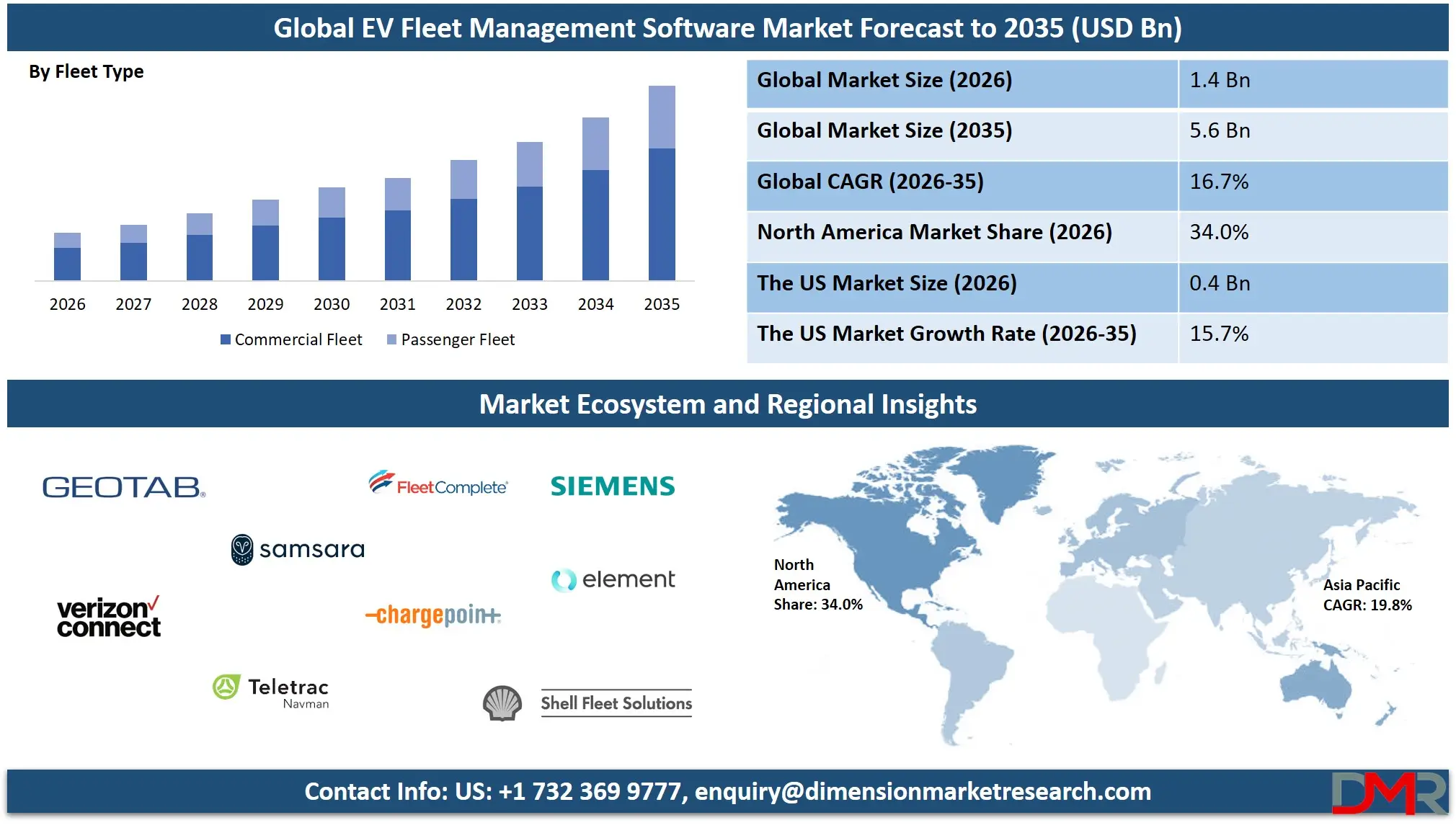
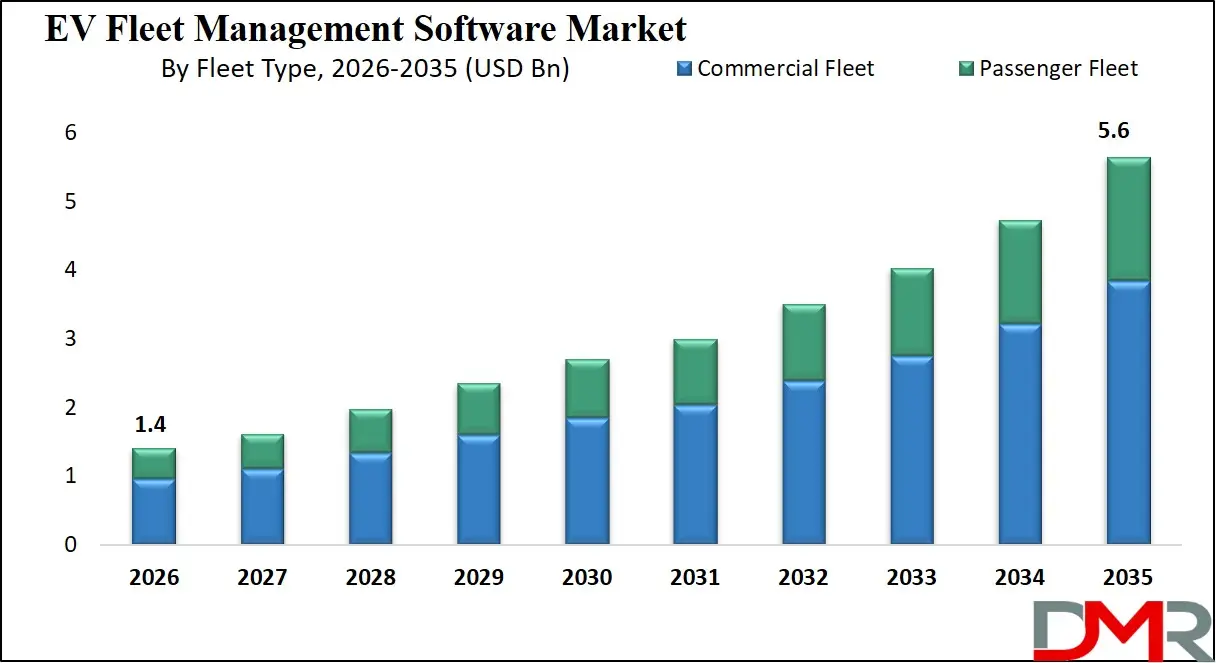
The Global EV Fleet Management Software Market size is projected to reach USD 1.4 billion in 2026 and grow at a compound annual growth rate of 16.7%, reaching USD 5.6 billion by 2035.
ℹ
To learn more about this report –
Download Your Free Sample Report Here
The EV Fleet Management Software market comprises digital platforms used to monitor, optimize, and manage electric vehicle fleets. Growth is driven by rising EV adoption and the need for efficient charging, routing, and battery management. According to the International Energy Agency, global EV stock crossed 14 million units, expanding the demand base. Government electrification mandates and infrastructure investments further accelerate adoption. Operational cost optimization and energy efficiency are key drivers. Future growth will be shaped by AI analytics and grid-integrated fleet systems.
ℹ
To learn more about this report –
Download Your Free Sample Report Here
US EV Fleet Management Software Market
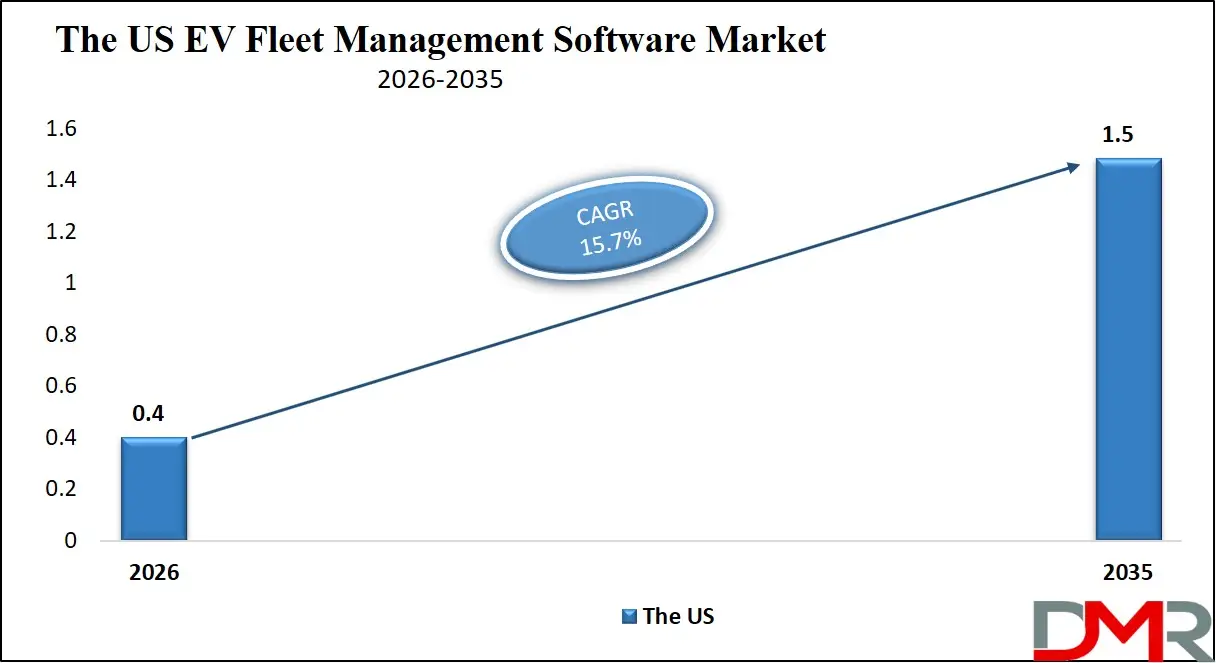
The US EV Fleet Management Software Market is projected to reach USD 0.4 billion in 2026 and grow at a compound annual growth rate of 15.7%, reaching USD 1.5 billion by 2035.
ℹ
To learn more about this report –
Download Your Free Sample Report Here
The U.S. EV Fleet Management Software market is growing with rising fleet electrification across logistics and public transport. Supportive policies like the Inflation Reduction Act and funding from the U.S. Department of Energy are accelerating adoption. Increasing EV deployment is driving demand for charging and fleet optimization software. Operators are focusing on cost efficiency and energy management. Future growth is supported by AI integration and smart grid connectivity.
Europe EV Fleet Management Software Market
Europe EV Fleet Management Software Market is anticipated to reach USD 392 Mn in 2026, expanding with a CAGR of 15.8%. Growth is driven by strong regulatory push toward fleet electrification and strict emission norms across the region. Increasing investments in EV charging infrastructure are supporting software adoption for efficient fleet operations. Additionally, rising demand for energy optimization and digital fleet solutions among logistics and public transport operators is further accelerating market expansion.
Japan EV Fleet Management Software Market
Japan EV Fleet Management Software Market is anticipated to reach USD 84 Mn in 2026, expanding with a CAGR of 17.5%. Growth is supported by increasing EV adoption and government initiatives promoting carbon neutrality and smart mobility. Strong presence of advanced automotive and technology ecosystems is accelerating software integration in fleets. Additionally, rising focus on energy efficiency and urban mobility optimization is driving demand for intelligent fleet management solutions.
Key Takeaways
- Market Size: The global EV Fleet Management Software market is projected to reach USD 1.4 Billion by 2026 and expand significantly by 2035, driven by accelerating fleet electrification.
- Growth Rate and Outlook: The market is expected to grow at a CAGR of 16.7%, supported by increasing adoption of digital fleet solutions and energy optimization technologies.
- Primary Growth Drivers: Key drivers include rising EV adoption, government regulations, demand for cost efficiency, and the need for advanced routing, charging, and battery management systems.
- By Component Analysis: Software dominates the segment with a 75.0% share, driven by demand for integrated platforms enabling fleet optimization, energy management, and real-time analytics.
- By Fleet Type Analysis: Commercial fleets lead with a 68.0% share due to large-scale deployment in logistics and delivery operations requiring high efficiency and utilization.
- By Deployment Analysis: Cloud-based solutions hold a 72.0% share, supported by scalability, real-time access, and seamless integration capabilities.
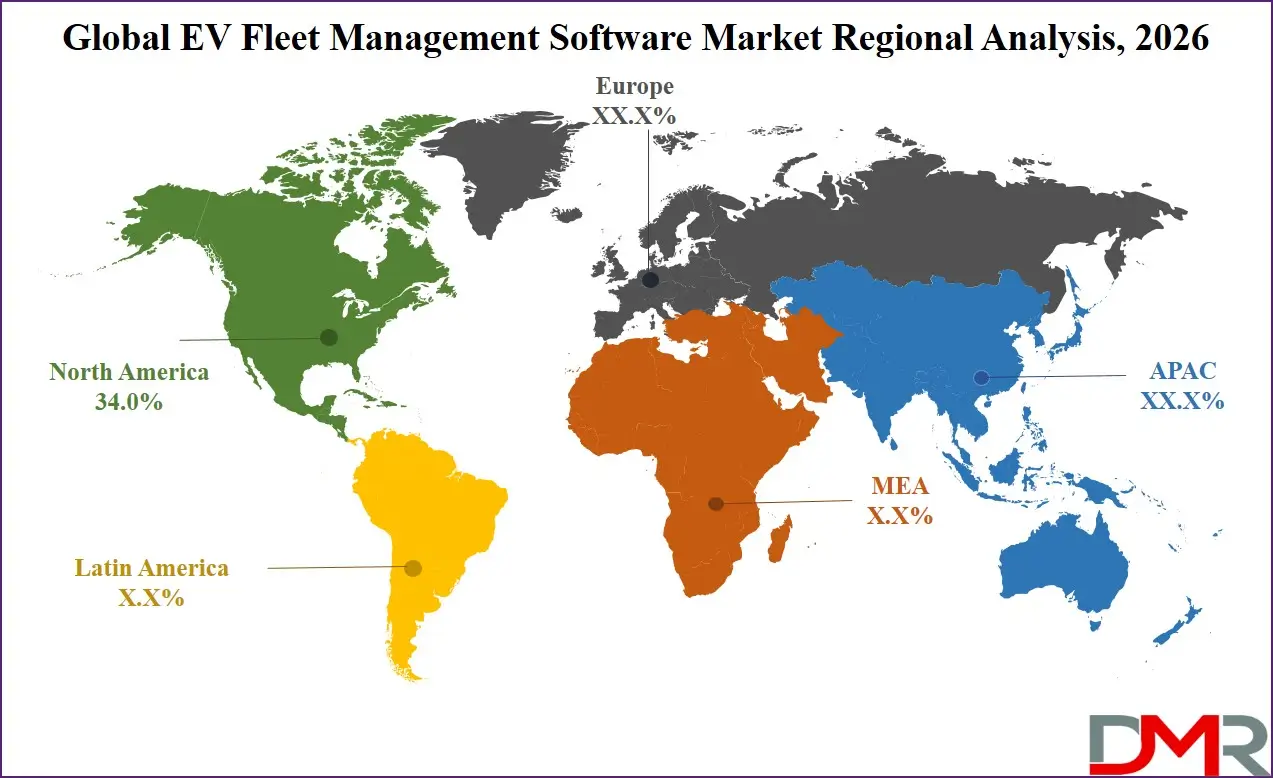
- Regional Leadership: North America leads the market with a 34.0% share, driven by strong EV adoption, advanced infrastructure, and presence of key technology providers.
What is EV Fleet Management Software?
EV Fleet Management Software is a digital platform used to monitor, manage, and optimize electric vehicle fleet operations including routing, charging, and battery usage. It provides real-time tracking, energy optimization, and predictive maintenance to improve efficiency and reduce costs. The software integrates with telematics and charging systems for centralized control. According to the U.S. Department of Energy, transportation contributes about 28% of U.S. emissions, supporting EV fleet adoption. Government incentives and regulations are accelerating demand for such solutions. It also ensures compliance and sustainability tracking. The market is evolving with AI-driven and energy-integrated capabilities.
Use Cases
- Last-Mile Delivery Optimization: EV fleet software enables route planning, real-time tracking, and efficient dispatch for delivery fleets. It reduces downtime by optimizing charging schedules alongside delivery routes. This improves delivery speed while lowering energy and operational costs.
- Public Transport Electrification: Transit agencies use the software to manage electric buses, monitor battery health, and schedule charging cycles. It ensures reliable operations and minimizes service disruptions. This supports emission reduction goals and regulatory compliance.
- Corporate Fleet Management: Enterprises deploy the software to oversee employee mobility fleets and company-owned EVs. It helps track usage, optimize energy consumption, and manage fleet costs. This enhances operational efficiency and sustainability reporting.
- Utility and Energy Fleet Operations: Energy companies use the software to manage field service EV fleets and integrate with grid systems. It enables load balancing and smart charging based on energy demand. This improves grid efficiency and supports renewable energy utilization.
How AI is Transforming the EV Fleet Management Software Market?
AI is transforming the EV Fleet Management Software market by enabling predictive analytics for battery health, vehicle performance, and maintenance scheduling. It optimizes route planning and charging decisions using real-time data and demand forecasting.
AI also enhances energy management through smart load balancing and grid integration. These capabilities improve operational efficiency, reduce costs, and support scalable fleet electrification.
Market Dynamics
Key Drivers in the Global EV Fleet Management Software Market
Rising Fleet Electrification Mandates
Government regulations are accelerating the transition from internal combustion fleets to electric vehicles across logistics and public transport sectors. Policies supporting zero-emission mobility are compelling fleet operators to adopt digital tools for efficient EV management. This shift increases the need for software to handle charging coordination, battery monitoring, and compliance tracking. Regulatory pressure is particularly strong in North America and Europe, driving structured adoption. As mandates tighten, software becomes essential rather than optional for fleet operations.
Need for Energy and Cost Optimization
EV fleets require precise energy management to control charging costs and avoid grid overloads. Fleet management software enables intelligent scheduling, reducing peak electricity expenses and improving utilization rates. Operators are increasingly focused on total cost of ownership, where software-driven insights play a critical role. Optimization tools also minimize downtime and enhance vehicle lifespan. This financial efficiency is a major catalyst for market growth.
Restraints in the Global EV Fleet Management Software Market
High Integration Complexity
Integrating EV fleet software with existing telematics, ERP systems, and charging infrastructure can be technically challenging. Many fleets operate mixed environments, increasing compatibility issues and deployment timelines. Lack of standardization across hardware and software platforms adds to complexity. This can lead to higher upfront costs and slower adoption among smaller operators. As a result, integration barriers remain a key restraint in the market.
Data Security and Privacy Concerns
EV fleet software relies heavily on real-time data collection, including vehicle location, driver behavior, and energy usage. This creates potential vulnerabilities related to cybersecurity and data breaches. Organizations are cautious about sharing sensitive operational data across cloud platforms. Compliance with data protection regulations adds further complexity. These concerns can delay implementation and limit full-scale adoption.
Growth Opportunities in the Global EV Fleet Management Software Market
Expansion of Charging Infrastructure
The rapid development of EV charging networks is creating new integration opportunities for fleet software providers. Advanced platforms can connect directly with charging stations to enable smart scheduling and load management. This enhances operational efficiency and supports large-scale fleet electrification. As infrastructure grows, software demand increases in parallel. This creates a strong long-term growth avenue for the market.
AI and Predictive Analytics Integration
The integration of artificial intelligence is unlocking new capabilities in fleet optimization and decision-making. AI-driven insights enable predictive maintenance, battery health forecasting, and dynamic routing. These features significantly reduce operational risks and improve efficiency. Companies adopting AI-enabled platforms gain a competitive advantage in fleet performance. This trend is expected to drive next-generation software adoption.
Trends in the Global EV Fleet Management Software Market
Shift toward Cloud-Based Platforms
Cloud deployment is becoming the preferred model due to scalability, flexibility, and lower infrastructure costs. It allows fleet operators to access real-time data from multiple locations with ease. Continuous updates and remote management enhance system performance. Cloud platforms also support integration with third-party services and APIs. This trend is reshaping the overall software delivery landscape.
Integration with Smart Grid Systems
EV fleet software is increasingly being integrated with smart grids to enable energy-aware operations. This allows fleets to participate in demand response programs and optimize charging based on grid conditions. Such integration supports renewable energy utilization and grid stability. It also opens new revenue streams through vehicle-to-grid capabilities. This convergence is redefining the role of fleet software in the energy ecosystem.
Research Scope and Analysis
By Component Analysis
Software is set to dominate the component segment with a 75.0% share in 2026, driven by demand for platforms enabling routing, charging optimization, battery analytics, and real-time monitoring. Fleet operators rely on these systems to improve efficiency and reduce costs, with AI and cloud adoption further accelerating growth. Services, while smaller, remain essential for deployment, integration, consulting, and maintenance. They support smooth transition to EV fleets and ensure system scalability and performance over time.
By Fleet Type Analysis
Commercial fleets will dominate with a 68.0% share in 2026, driven by electrification in logistics and delivery requiring advanced routing and charging software. High utilization and cost optimization needs further boost adoption. Passenger fleets are growing across corporate, government, and rental use cases. They use software for tracking, charging management, and efficiency improvement. Growth is supported by sustainability initiatives and gradual EV adoption.
By Core Function Analysis
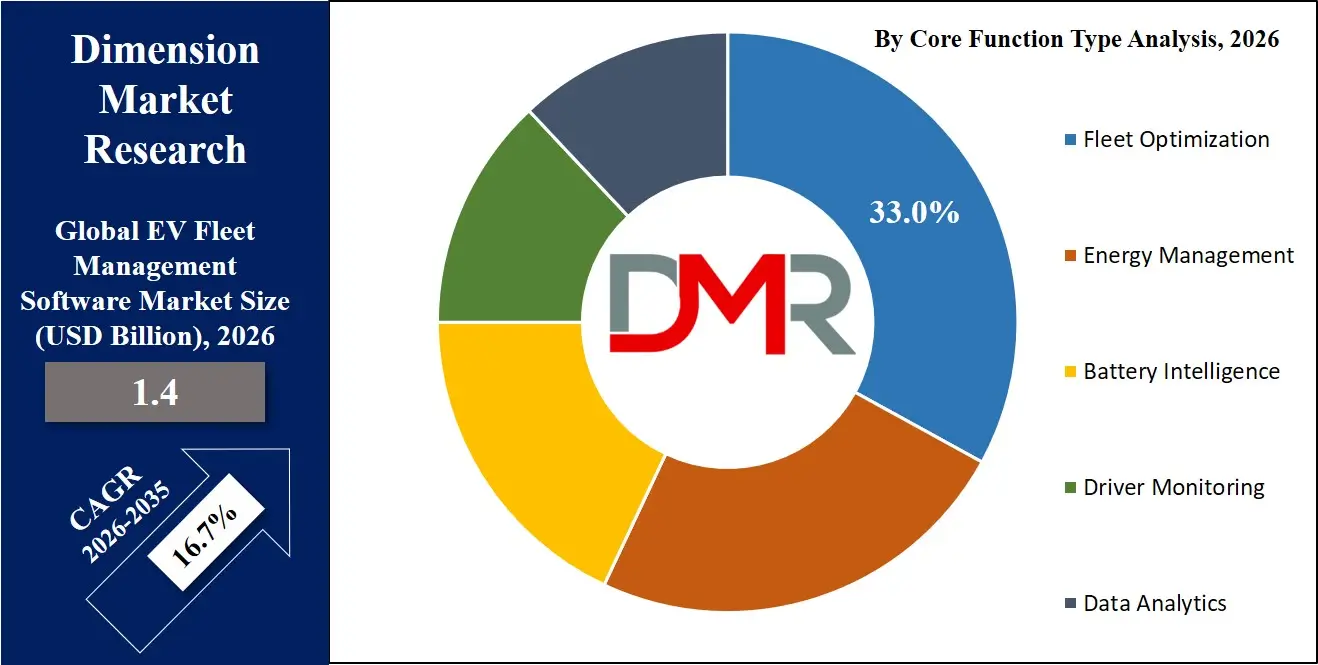
Fleet optimization will dominate with a 33.0% share in 2026, driven by demand for efficient routing, scheduling, and vehicle utilization to reduce costs and downtime. It is central to high-frequency logistics and mobility operations. Energy management is also growing as fleets need smart charging, load balancing, and cost control. It helps optimize charging schedules and improve energy efficiency. Together, these functions are critical for effective EV fleet operations.
ℹ
To learn more about this report –
Download Your Free Sample Report Here
By Deployment Analysis
Cloud deployment will dominate with a 72.0% share in 2026 due to scalability, real-time access, and lower infrastructure costs. It supports seamless integration with telematics and charging systems, driving adoption. On-premise remains relevant for organizations needing high data control and security. It is used by regulated sectors but has higher costs and lower flexibility.
By Enterprise Size Analysis
Large enterprises will dominate with a 62.0% share in 2026 due to large fleet sizes and higher investment in advanced EV management software. They adopt integrated systems for optimization, energy management, and compliance. Small and medium enterprises are growing steadily with increasing access to cloud-based solutions. They focus on tracking, charging, and basic efficiency improvements.
By End Use Analysis
Logistics will dominate the end-use segment with a 38.0% share in 2026, driven by rapid electrification of delivery and freight fleets requiring advanced routing, charging, and utilization software. High vehicle usage and cost pressure make efficiency tools essential in this sector. The growth of e-commerce further accelerates adoption of EV fleet management solutions. Public transport is also expanding as cities electrify bus and transit fleets. These systems use software for scheduling, battery monitoring, and reliable operations. Adoption is supported by government initiatives and emission reduction targets.
The Global EV Fleet Management Software Market Report is segmented on the basis of the following:
By Component
- Software
- Fleet Control Systems
- Energy Management Systems
- Battery Analytics Systems
- Telematics Platforms
- AI Optimization Engines
- Services
- Deployment & Integration
- Managed Services
- Consulting Services
- Support Services
By Fleet Type
- Commercial Fleet
- Light Duty Fleet
- Heavy Duty Fleet
- Mobility Fleet
- Passenger Fleet
- Corporate Fleet
- Government Fleet
- Rental Fleet
By Core Function
- Fleet Optimization
- Energy Management
- Battery Intelligence
- Driver Monitoring
- Data Analytics
By Deployment
By Enterprise Size
- Large Enterprises
- Small & Medium Enterprises
By End Use
- Logistics
- Public Transport
- Energy Utilities
- Retail Delivery
- Others
Regional Analysis
Leading Region by Market Share
North America will lead with a 34.0% share in 2026, driven by strong EV adoption and advanced digital fleet ecosystems. Supportive policies and investments in charging infrastructure are accelerating software deployment across fleets. High presence of major technology providers further strengthens regional dominance.
ℹ
To learn more about this report –
Download Your Free Sample Report Here
Fastest-Growing Regional Market
Asia Pacific is the fastest-growing regional market, driven by rapid EV adoption and expanding fleet electrification across China, India, and Southeast Asia. Strong government incentives and large-scale charging infrastructure development are accelerating software demand. Rising logistics and mobility services further support high growth momentum.
By Region
North America
Europe
- Germany
- The U.K.
- France
- Italy
- Russia
- Spain
- Benelux
- Nordic
- Rest of Europe
Asia-Pacific
- China
- Japan
- South Korea
- India
- ANZ
- ASEAN
- Rest of Asia-Pacific
Latin America
- Brazil
- Mexico
- Argentina
- Colombia
- Rest of Latin America
Middle East & Africa
- Saudi Arabia
- UAE
- South Africa
- Israel
- Egypt
- Rest of MEA
Competitive Landscape
The market is highly competitive with a mix of telematics providers, software platforms, and energy solution players competing across integrated capabilities. Companies are focusing on cloud-based platforms, AI-driven analytics, and end-to-end fleet optimization solutions to differentiate. Strategic partnerships with charging infrastructure providers and mobility operators are a key growth strategy. Continuous innovation in energy management, real-time data integration, and scalability is shaping competitive positioning.
Some of the prominent players in the Global EV Fleet Management Software Market are:
- Geotab
- Samsara
- Verizon Connect
- Teletrac Navman
- Fleet Complete
- ChargePoint
- Siemens
- Shell Fleet Solutions
- Element Fleet Management
- ALD Automotive
- LeasePlan
- Donlen
- EV Connect
- AMPLY Power
- GreenRoad Technologies
- Fleetio
- WEX Inc.
- Free2Move
- Motive
- Trimble
- Other Key Players
Recent Developments
- June 2025: Samsara launched CTC Manager to automate emissions compliance and reporting for fleets, improving operational efficiency and regulatory adherence.
- June 2025: Samsara partnered with Element Fleet Management to expand integrated fleet and operations solutions across North America.
- April 2025: Fleetio introduced new platform updates including enhanced workflows, integrations, and analytics tools to improve fleet operations and maintenance efficiency.
Report Details
| Report Characteristics |
| Market Size (2026) |
USD 1.4 Bn |
| Forecast Value (2035) |
USD 5.6 Bn |
| CAGR (2026–2035) |
16.7% |
| Historical Data |
2021 – 2025 |
| Forecast Data |
2027 – 2035 |
| Base Year |
2025 |
| Estimate Year |
2026 |
| Segments Covered |
By Component (Software, Services), By Fleet Type (Commercial Fleet, Passenger Fleet), By Core Function (Fleet Optimization, Energy Management, Battery Intelligence, Driver Monitoring, Data Analytics), By Deployment (Cloud, On-Premise), By Enterprise Size (Large Enterprises, Small & Medium Enterprises), By End Use (Logistics, Public Transport, Energy Utilities, Retail Delivery, Others) |
| Regional Coverage |
North America – The US and Canada; Europe – Germany, The UK, France, Russia, Spain, Italy, Benelux, Nordic, & Rest of Europe; Asia-Pacific – China, Japan, South Korea, India, ANZ, ASEAN, Rest of APAC; Latin America – Brazil, Mexico, Argentina, Colombia, Rest of Latin America; Middle East & Africa – Saudi Arabia, UAE, South Africa, Turkey, Egypt, Israel, & Rest of MEA |
Frequently Asked Questions
How big is the EV Fleet Management Software Market?
▾ The EV Fleet Management Software Market is anticipated to be valued at USD 1.4 Billion in 2026 and is projected to reach USD 5.6 Billion by 2035.
What is the CAGR of the EV Fleet Management Software Market from 2026 to 2035?
▾ The market is expected to grow at a CAGR of 16.7% during the forecast period.
What factors are driving the growth of the EV Fleet Management Software Market?
▾ Key growth drivers include increasing fleet electrification, rising demand for energy and cost optimization, government regulations supporting EV adoption, and the need for advanced routing and battery management solutions.
What are the major trends in the EV Fleet Management Software Market?
▾ Major trends include adoption of cloud-based platforms, integration of AI and predictive analytics, smart charging and grid integration, and expansion of connected fleet ecosystems.
Which region held the largest share of the EV Fleet Management Software Market in 2026?
▾ North America held the largest market share in 2026, accounting for 34.0% of the global market.
Which region is expected to grow the fastest in the EV Fleet Management Software Market?
▾ Asia Pacific is expected to be the fastest-growing region during the forecast period.
Who are the key players in the EV Fleet Management Software Market?
▾ Key players include Geotab, Samsara, Verizon Connect, Teletrac Navman, Fleet Complete, ChargePoint, Siemens, Shell Fleet Solutions, Element Fleet Management, ALD Automotive, LeasePlan, Donlen, EV Connect, AMPLY Power, GreenRoad Technologies, Fleetio, WEX Inc., Free2Move, Motive, Trimble, along with other key players.
How is the EV Fleet Management Software Market segmented?
▾ The market is segmented by Component, Fleet Type, Core Function, Deployment, Enterprise Size, and End Use.