What is the Food Service Quality Assurance Market Size?
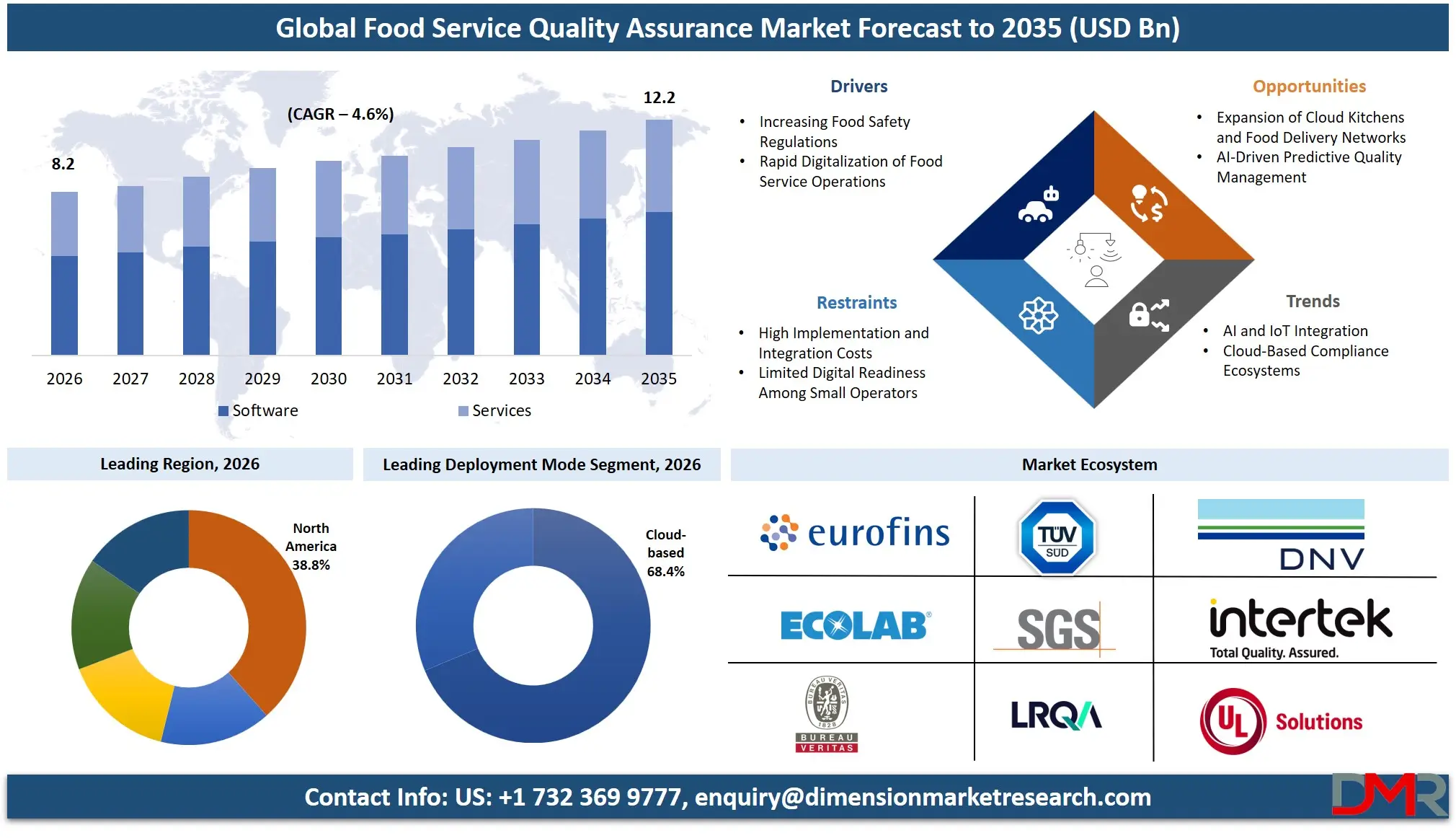
The Food Service Quality Assurance Market size is expected to be USD 8.2 billion in 2026 and increase at a compound annual growth rate of 4.6% to USD 12.2 billion in 2035 due to increasing food safety regulations.
ℹ
To learn more about this report –
Download Your Free Sample Report Here
Food Service Quality Assurance encompasses the technologies, software platforms, inspection services, laboratory testing, certification solutions, and consulting activities that help food service providers maintain food safety, regulatory compliance, product quality, hygiene, and operational consistency. The market supports restaurants, hotels, catering companies, institutional kitchens, cloud kitchens, and retail food businesses through preventive quality management systems and continuous monitoring. Growing digital transformation, stricter food safety regulations, rising consumer awareness, AI-enabled monitoring, cloud-based compliance platforms, and increased demand for traceability are reshaping market development while encouraging organizations to adopt proactive quality assurance strategies that minimize operational risks and improve customer confidence.
The US Food Service Quality Assurance Market
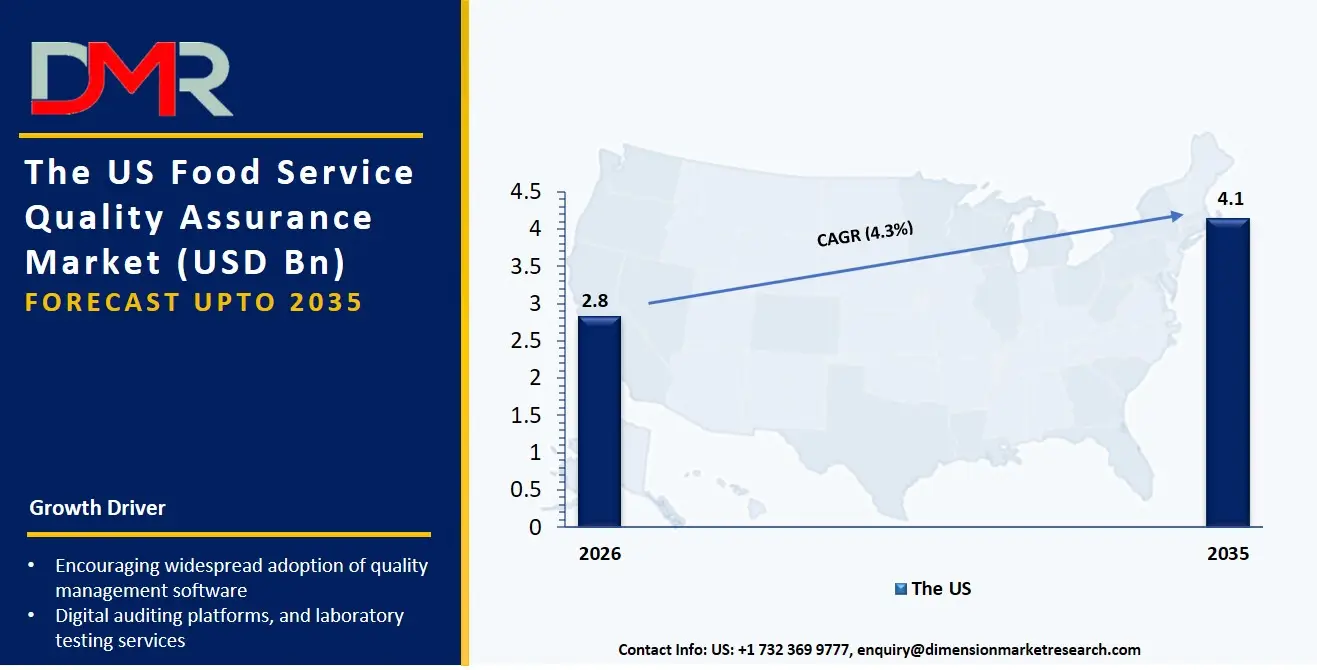
The US Food Service Quality Assurance Market size is estimated to be USD 2.8 billion in 2026 and is expected to increase at a CAGR of 4.3% over the forecast period.
ℹ
To learn more about this report –
Download Your Free Sample Report Here
The US Food Service Quality Assurance Market is supported by one of the world's most comprehensive food safety regulatory environments, encouraging widespread adoption of quality management software, digital auditing platforms, and laboratory testing services. Large restaurant chains, hospitality groups, institutional kitchens, and food delivery operators increasingly invest in automated compliance solutions to reduce operational risks. Continuous innovation by technology providers, strong investments in cloud infrastructure, and growing demand for real-time food safety monitoring contribute to market expansion. Increasing adoption of predictive analytics, supplier verification platforms, and AI-powered inspection systems further strengthens market competitiveness while improving operational transparency.
Europe Food Service Quality Assurance Market
The Europe Food Service Quality Assurance Market size is estimated to be USD 2.1 billion in 2026 and is expected to increase at a CAGR of 4.1% over the forecast period.
Europe represents a mature market driven by stringent food safety legislation, sustainability initiatives, and continuous modernization of food service operations. The European Green Deal and evolving food traceability requirements encourage businesses to adopt digital quality assurance platforms that improve resource efficiency and regulatory compliance. Restaurants, hospitality providers, catering companies, and institutional food operators increasingly implement integrated software solutions for hygiene monitoring, supplier quality management, and audit automation. Innovation in sustainable packaging verification, digital documentation, and risk-based inspection methodologies continues to accelerate adoption across both established and emerging European economies.
Japan Food Service Quality Assurance Market
The market size of Japan Food Service Quality Assurance will be USD 492 million in 2026 and at a CAGR of 4.0% in the forecast period.
Japan's Food Service Quality Assurance Market benefits from exceptionally high food quality expectations, advanced automation capabilities, and continuous investments in digital transformation across the hospitality and restaurant sectors. Food service operators increasingly deploy smart monitoring systems, IoT-enabled temperature tracking, automated inspection technologies, and cloud-based compliance management platforms. Government initiatives promoting food safety, operational efficiency, and technological innovation further encourage adoption. The expansion of convenience food services, tourism recovery, premium dining experiences, and centralized kitchen operations creates additional opportunities despite challenges associated with labor shortages and rising operational costs.
Key Takeaways
- Market Size & Forecast: The Food Service Quality Assurance Market size is projected to reach USD 8.2 billion in 2026 and is anticipated to have a value of USD 12.2 billion in 2035.
- Growth Rate & Outlook: The Food Service Quality Assurance Market size is set to grow at a compound annual growth rate of 4.6% during the forecast period of 2026 to 2035.
- Primary Growth Drivers: Some of the major growth drivers in the market are Increasing Food Safety Regulations and more.
- Key Market Trends: Some of the major trends in the market are AI and IoT Integration, and more.
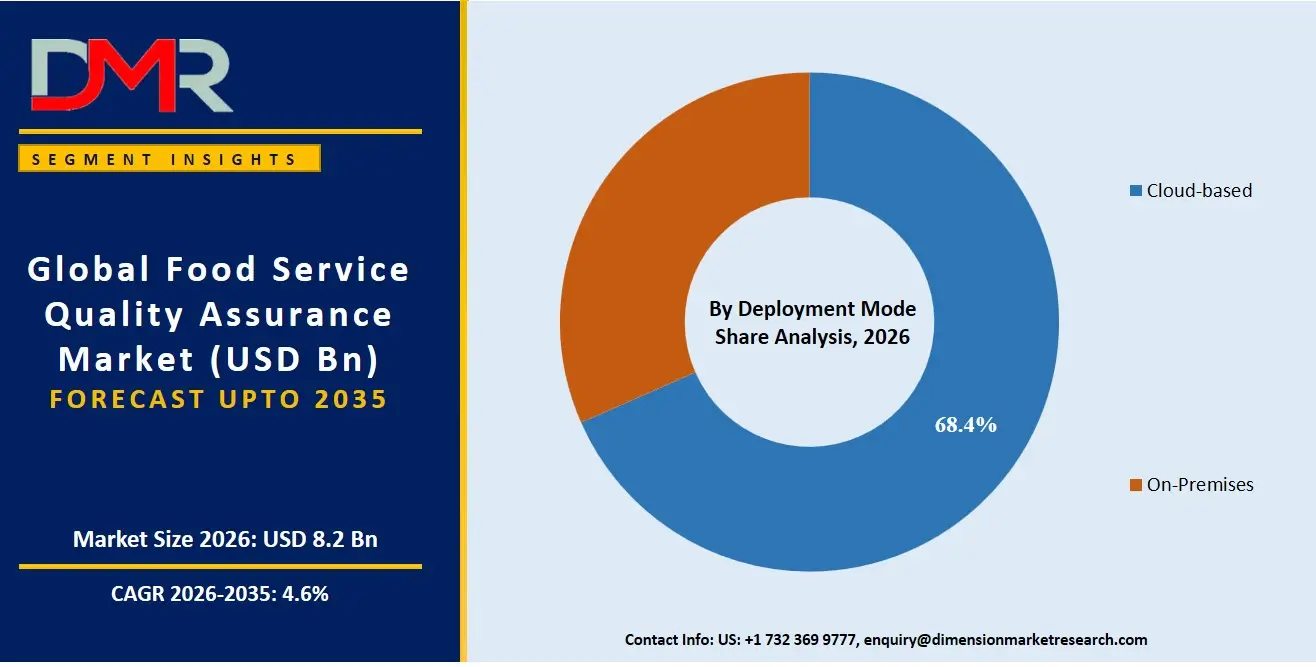
- By Deployment Mode Type: Cloud-based segment is anticipated to get the majority share of the Food Service Quality Assurance Market in 2026.
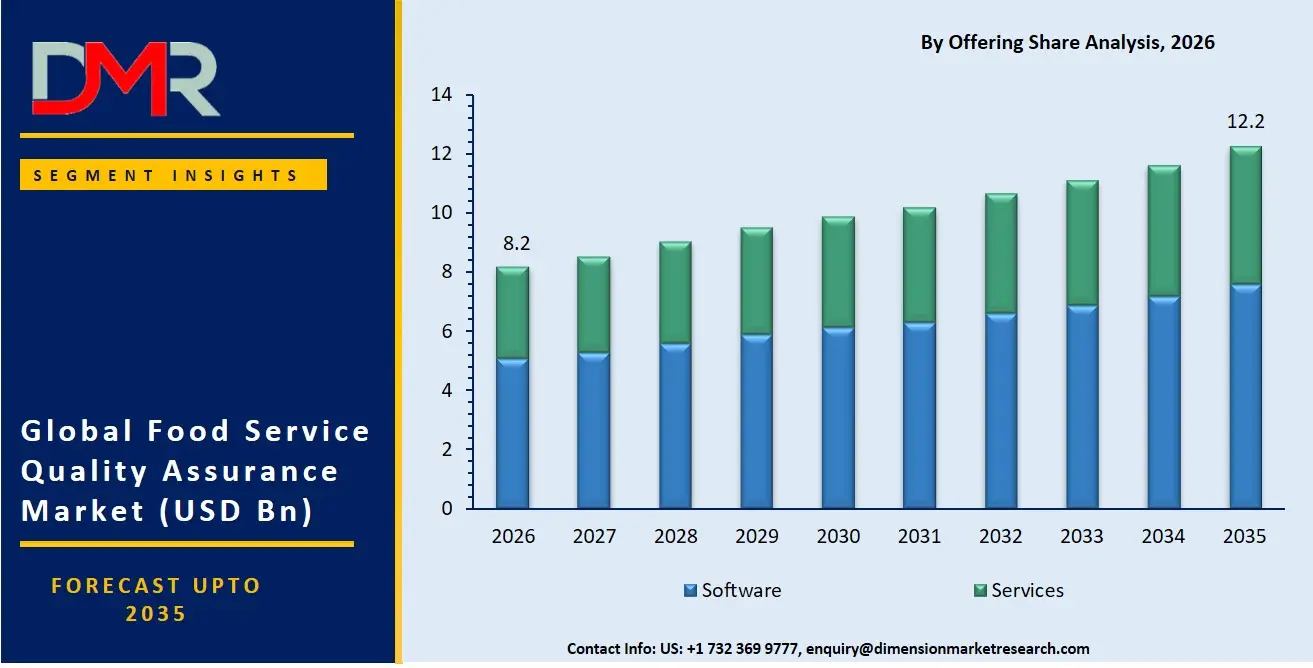
- By Offering Type: Software are expected to get the largest revenue share in 2026 in the Food Service Quality Assurance Market.
- Regional Leadership: North America is set to lead the Food Service Quality Assurance Market with an estimated 38.8% share in 2026.
What is the Food Service Quality Assurance?
Food Service Quality Assurance refers to the systematic processes, technologies, standards, inspections, testing procedures, and management practices used to ensure that food products and food service operations consistently meet established safety, hygiene, quality, and regulatory requirements. It includes supplier verification, sanitation monitoring, laboratory testing, compliance documentation, employee training, traceability systems, auditing, corrective actions, and continuous improvement initiatives designed to protect consumer health while maintaining operational excellence and regulatory compliance throughout the food service value chain.
Use Cases
- Restaurant Compliance Management: Restaurant chains utilize quality assurance platforms to automate food safety inspections, maintain regulatory documentation, schedule internal audits, monitor sanitation practices, and ensure consistent operational standards across multiple locations. These systems reduce compliance risks while improving inspection readiness and customer trust.
- Supplier Quality Verification: Food service organizations use supplier quality management solutions to evaluate vendor performance, verify certifications, monitor ingredient quality, maintain procurement compliance, and improve traceability throughout the supply chain. This minimizes contamination risks and enhances procurement transparency.
- Digital Hygiene Monitoring: Hotels, catering companies, and institutional kitchens deploy digital hygiene management systems to monitor cleaning schedules, temperature logs, employee hygiene practices, and corrective actions in real time. Automated reporting improves accountability while reducing manual administrative workloads.
- Food Recall & Traceability Management: Cloud-based traceability platforms enable food businesses to rapidly identify affected products, locate distribution points, communicate with suppliers, and execute targeted recalls. Faster response capabilities minimize financial losses, regulatory penalties, and reputational damage.
How AI Is Transforming the Food Service Quality Assurance Market
Artificial intelligence is transforming Food Service Quality Assurance by automating inspections, identifying food safety risks, analyzing supplier performance, and supporting predictive compliance management. AI-powered image recognition improves hygiene inspections, while machine learning algorithms evaluate operational trends to identify potential quality deviations before they become regulatory issues. Automated documentation also reduces administrative workloads and improves reporting accuracy.
AI additionally enhances customer confidence by improving food traceability, optimizing recall management, monitoring refrigeration conditions through connected sensors, and supporting real-time decision-making. Intelligent analytics help food service providers reduce waste, improve operational efficiency, strengthen regulatory compliance, and deliver consistent food quality across restaurants, hotels, catering operations, institutional kitchens, and cloud kitchen networks.
Market Dynamic
Driving Factors in the Food Service Quality Assurance Market
Increasing Food Safety Regulations
Governments worldwide continue strengthening food safety regulations, inspection standards, traceability requirements, and documentation obligations for food service businesses. Restaurants, hotels, cloud kitchens, and catering providers increasingly adopt digital quality assurance solutions to simplify compliance while reducing regulatory risks. Growing consumer expectations regarding food transparency and hygiene further encourage organizations to implement comprehensive quality management systems that improve operational consistency, reduce contamination incidents, and strengthen long-term brand reputation.
Restraints in the Food Service Quality Assurance Market
High Implementation and Integration Costs
Comprehensive quality assurance systems often require significant investment in software implementation, employee training, hardware infrastructure, laboratory services, and ongoing system maintenance. Small restaurants and independent food businesses may find these costs difficult to justify despite long-term operational benefits. Integration with existing enterprise systems can further increase deployment complexity and delay return on investment, particularly for organizations with limited digital capabilities.
Opportunities in the Food Service Quality Assurance Market
Expansion of Cloud Kitchens and Food Delivery Networks
Rapid expansion of cloud kitchens, online food delivery platforms, and centralized commercial kitchens creates substantial opportunities for quality assurance solution providers. These operations require standardized hygiene monitoring, digital inspections, supplier management, and traceability systems across multiple production facilities. Growing demand for operational consistency encourages broader investment in scalable cloud-based quality assurance technologies.
Trends in the Food Service Quality Assurance Market
AI and IoT Integration
Organizations increasingly integrate artificial intelligence with IoT sensors for continuous monitoring of refrigeration temperatures, humidity, sanitation schedules, food storage conditions, and equipment performance. Automated alerts and predictive maintenance capabilities improve operational efficiency while reducing food waste, contamination risks, and compliance failures. Smart monitoring technologies are becoming standard components of modern food service quality management systems.
Research Scope and Analysis
The research evaluates the Food Service Quality Assurance Market across offerings, deployment modes, food service types, applications, and end users. It examines market trends, growth drivers, regional performance, competitive dynamics, technological advancements, and adoption patterns while assessing future opportunities, regulatory influences, and strategic developments shaping industry expansion.
ℹ
To learn more about this report –
Download Your Free Sample Report Here
By Offering Analysis
The Software segment is expected to lead the Food Service Quality Assurance Market with an estimated 61.8% market share in 2026, primarily due to the increasing adoption of digital compliance management, automated audit workflows, supplier quality monitoring, and traceability platforms across food service establishments.
ℹ
To learn more about this report –
Download Your Free Sample Report Here
Restaurants and hospitality operators are prioritizing software solutions because they centralize documentation, simplify regulatory compliance, and integrate with enterprise management systems. Within software, Food Safety & Compliance Software remains the largest subsegment owing to stringent food safety regulations and continuous monitoring requirements. Meanwhile, the Services segment is projected to register the fastest growth during the forecast period as organizations increasingly outsource inspection, laboratory testing, certification, and staff training to specialized providers. Rising regulatory complexity, independent verification requirements, and growing demand for internationally recognized certifications are expected to accelerate service adoption across both developed and emerging food service markets.
By Deployment Mode Analysis
The Cloud-Based segment is projected to dominate the market with an estimated 68.4% share in 2026, supported by rapid digital transformation across restaurant chains, hotels, catering providers, and cloud kitchens. Cloud deployment enables centralized compliance management, remote audits, automatic software updates, lower implementation costs, and seamless scalability for multi-location food service operators. Organizations increasingly favor subscription-based cloud platforms because they reduce IT infrastructure requirements while enabling real-time access to inspection reports, supplier documentation, and operational dashboards. The On-Premise segment continues serving organizations with strict internal security policies and legacy IT environments but is expected to grow at a comparatively slower pace. Nevertheless, hybrid deployment models are gradually emerging as enterprises balance cybersecurity requirements with the operational flexibility offered by cloud-native quality assurance platforms.
By Food Service Analysis
Among food service types, Quick Service Restaurants (QSRs) are anticipated to account for the largest market share, reaching an estimated 35.9% in 2026, driven by standardized operating procedures, extensive outlet networks, high transaction volumes, and continuous regulatory oversight. QSR operators invest significantly in automated inspection software, digital hygiene monitoring, supplier quality verification, and temperature tracking systems to maintain consistent food quality across geographically dispersed locations. The rapid expansion of franchise operations further strengthens technology adoption. Meanwhile, Cloud Kitchens are expected to record the fastest growth during the forecast period as delivery-focused business models require highly efficient digital compliance systems, real-time operational visibility, centralized quality management, and end-to-end food traceability. Growing online food ordering continues to reinforce investment in advanced quality assurance technologies.
By Application Analysis
The Food Safety Compliance segment is forecast to remain the largest application category with an estimated 33.7% market share in 2026, reflecting the industry's primary focus on regulatory compliance, contamination prevention, hygiene management, and consumer protection. Organizations prioritize investments in food safety compliance because non-compliance can result in financial penalties, operational disruptions, and reputational damage. Digital compliance platforms simplify documentation, automate inspections, and facilitate continuous monitoring of critical control points. The Traceability & Recall Management segment is expected to experience the fastest growth owing to increasing regulatory expectations, supply chain transparency initiatives, and the need for rapid identification of affected food products during recall events. Enhanced traceability capabilities also improve supplier accountability and strengthen consumer confidence in food safety practices.
By End User Analysis
The Quick Service Restaurants (QSRs) segment is expected to hold the leading position among end users with an estimated 28.6% market share in 2026, supported by extensive global expansion, standardized operating procedures, frequent regulatory inspections, and continuous investments in digital quality management solutions. Large QSR operators increasingly deploy integrated quality assurance platforms covering food safety, supplier management, sanitation monitoring, employee compliance, and audit automation across thousands of outlets. The Food Delivery & Cloud Kitchens segment is anticipated to register the fastest growth during the forecast period, driven by expanding online food delivery ecosystems, centralized kitchen operations, increasing customer expectations regarding food safety, and rising adoption of cloud-based monitoring technologies. Digital-first operating models continue creating strong demand for scalable quality assurance solutions that improve operational consistency and regulatory compliance.
The Food Service Quality Assurance Market Report is segmented on the basis of the following:
By Offering
- Software
- Food Safety & Compliance Software
- Audit & Inspection Management Software
- Supplier Quality Management Software
- Traceability & Recall Management Software
- Services
- Inspection & Auditing Services
- Testing & Laboratory Services
- Certification Services
- Consulting & Training Services
By Deployment Mode
By Food Service Type
- Quick Service Restaurants (QSRs)
- Full-Service Restaurants
- Cafés & Coffee Chains
- Catering Services
- Cloud Kitchens
- Institutional Food Services
By Application
- Food Safety Compliance
- Quality Audits & Inspections
- Supplier Quality Assurance
- Hygiene & Sanitation Management
- Traceability & Recall Management
By End User
- Restaurants
- Quick Service Restaurants (QSRs)
- Hotels & Hospitality
- Catering Service Providers
- Institutional Food Services
- Food Delivery & Cloud Kitchens
- Food Processing & Manufacturing Companies
- Retail Food Chains & Supermarkets
Regional Analysis
Leading Region in the Food Service Quality Assurance Market
ℹ
To learn more about this report –
Download Your Free Sample Report Here
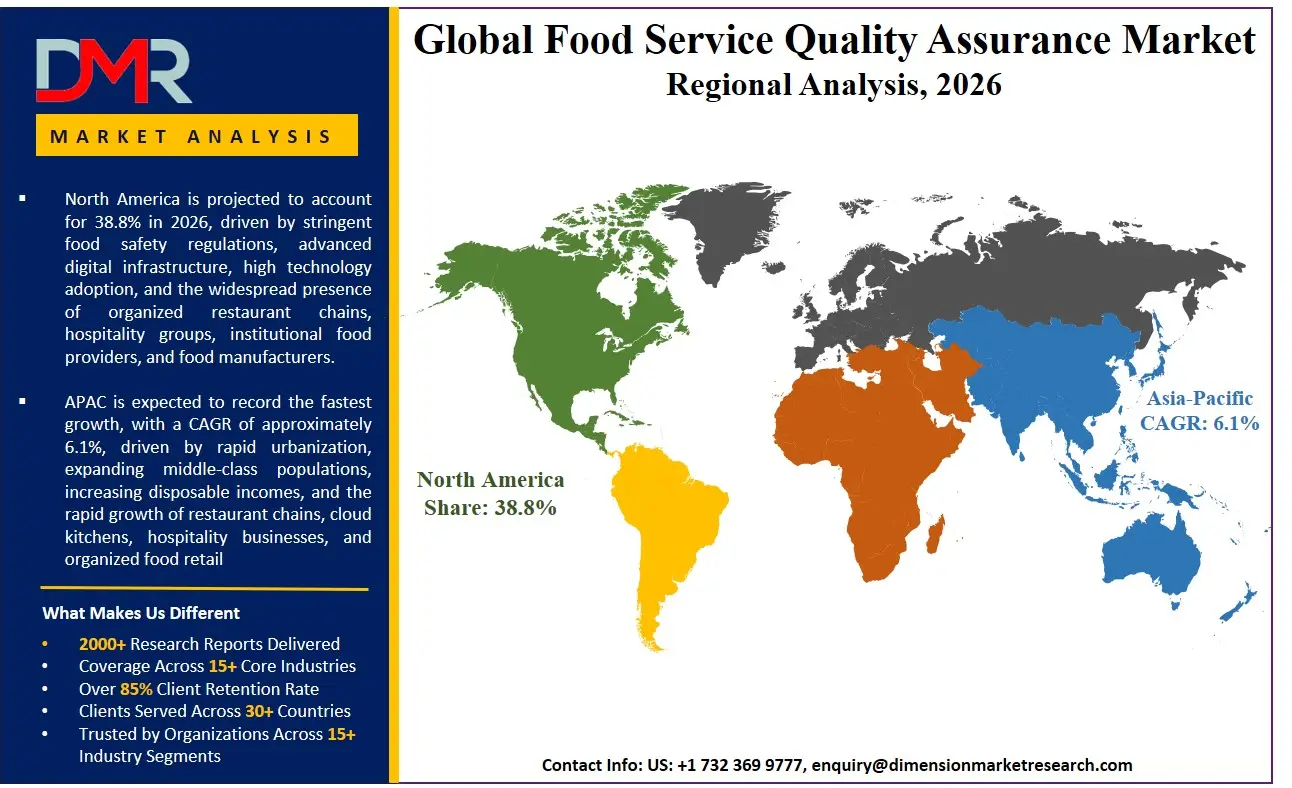
North America is projected to remain the leading regional market with an estimated 38.6% market share in 2026, supported by stringent food safety regulations, advanced digital infrastructure, high technology adoption, and the widespread presence of organized restaurant chains, hospitality groups, institutional food providers, and food manufacturers. Organizations across the region continue investing in cloud-based compliance platforms, AI-enabled inspection systems, supplier quality management, and automated traceability solutions to meet evolving regulatory requirements and consumer expectations. Continuous investments in food safety modernization, increasing adoption of predictive quality analytics, and strong demand for operational transparency further reinforce North America's leadership position. Mature enterprise IT ecosystems, higher compliance spending, and continuous innovation in food safety technologies also enable faster deployment of integrated quality assurance solutions across diverse food service operations.
Fastest Growing Region in the Food Service Quality Assurance Market
Asia-Pacific is expected to register the fastest growth throughout the forecast period due to rapid urbanization, expanding middle-class populations, increasing disposable incomes, and the rapid growth of restaurant chains, cloud kitchens, hospitality businesses, and organized food retail. Governments across the region continue strengthening food safety regulations while encouraging digital transformation throughout the food supply chain. Growing investments in smart kitchens, food testing laboratories, traceability technologies, and cloud-based compliance platforms are accelerating market expansion. Rising international tourism, increasing exports of processed food products, and expanding adoption of AI-enabled quality management systems further create substantial growth opportunities for technology providers and quality assurance service companies throughout emerging Asian economies.
By Region
North America
Europe
- Germany
- The U.K.
- France
- Italy
- Russia
- Spain
- Benelux
- Nordic
- Rest of Europe
Asia-Pacific
- China
- Japan
- South Korea
- India
- ANZ
- ASEAN
- Rest of Asia-Pacific
Latin America
- Brazil
- Mexico
- Argentina
- Colombia
- Rest of Latin America
Middle East & Africa
- Saudi Arabia
- UAE
- South Africa
- Israel
- Egypt
- Rest of MEA
Competitive Landscape
The Food Service Quality Assurance Market is characterized by intense competition driven by continuous innovation, product differentiation, regulatory expertise, and integrated digital capabilities rather than price alone. Market participants focus on expanding cloud-native platforms, incorporating artificial intelligence, strengthening supplier management capabilities, enhancing traceability features, and improving mobile inspection solutions. Strategic partnerships with food service operators, investments in research and development, acquisitions of complementary technology providers, and expansion into emerging markets remain common competitive strategies. High regulatory knowledge, extensive implementation experience, scalable software architecture, and comprehensive service portfolios continue to represent significant competitive advantages, while compliance expertise and long-term customer relationships create substantial barriers for new entrants.
Some of the prominent players in the global Food Service Quality Assurance are:
- SGS SA
- Bureau Veritas
- Eurofins Scientific
- Intertek Group plc
- TÜV SÜD
- NSF International
- Mérieux NutriSciences
- ALS Limited
- DEKRA SE
- TÜV Rheinland
- DNV
- UL Solutions
- Neogen Corporation
- Ecolab Inc.
- Hygiena LLC
- Safe Food Alliance
- LRQA (LRQA Group)
- AsureQuality Limited
- FoodChain ID
- Safe Quality Food Institute (SQFI)
- Other Key Players
Recent Developments
- In May 2025, NSF expanded its global food safety and quality assurance portfolio by strengthening digital certification, auditing, laboratory testing, and regulatory support services for food businesses. The expansion focuses on helping restaurants, food manufacturers, hospitality operators, and suppliers address increasingly complex regulatory requirements through integrated compliance solutions. The initiative includes enhanced digital reporting capabilities, greater support for supply chain verification, and improved risk management services. By combining technical expertise with digital technologies, NSF aims to help organizations improve operational consistency, accelerate certification processes, and strengthen consumer confidence in food safety programs.
- In March 2025, SGS expanded its digital food assurance portfolio by introducing enhanced AI-enabled capabilities within its food safety and compliance services. The new functionality is designed to improve audit efficiency, automate compliance documentation, strengthen supplier verification, and deliver predictive risk assessments for food manufacturers and food service operators. The enhancement also supports faster identification of non-conformities through advanced analytics and centralized digital reporting, enabling organizations to improve regulatory compliance while reducing manual administrative workloads. The initiative reflects the industry's growing shift toward intelligent, data-driven quality assurance and operational transparency.
- In January 2025, Bureau Veritas expanded its digital food assurance capabilities through additional investments in technology-driven inspection, traceability, supplier verification, and food safety compliance services. The initiative supports food service companies seeking greater visibility across complex supply chains while improving audit efficiency and regulatory preparedness. Enhanced digital platforms enable customers to monitor quality metrics in real time, automate compliance workflows, and manage corrective actions through centralized dashboards. The investment aligns with increasing global demand for cloud-based quality assurance solutions capable of supporting sustainable, transparent, and highly efficient food service operations.
Report Details
| Report Characteristics |
| Market Size (2026) |
USD 8.2 Bn |
| Forecast Value (2035) |
USD 12.2 Bn |
| CAGR (2026–2035) |
4.6% |
| Historical Period |
2021 – 2025 |
| Forecast Period |
2027 – 2035 |
| Base Year |
2025 |
| Estimate Year |
2026 |
| Segments Covered |
By Offering, By Deployment Mode, By Food Service Type, By Application, By End User |
| Regional Coverage |
North America – The US and Canada; Europe – Germany, The UK, France, Russia, Spain, Italy, Benelux, Nordic, & Rest of Europe; Asia-Pacific – China, Japan, South Korea, India, ANZ, ASEAN, Rest of APAC; Latin America – Brazil, Mexico, Argentina, Colombia, Rest of Latin America; Middle East & Africa – Saudi Arabia, UAE, South Africa, Turkey, Egypt, Israel, & Rest of MEA |
Frequently Asked Questions
How big is the Food Service Quality Assurance Market?
▾ The Food Service Quality Assurance Market size is expected to reach USD 8.2 billion by 2026 and is projected to reach USD 12.2 billion by the end of 2035.
What is the CAGR of the Food Service Quality Assurance Market from 2026 to 2035?
▾ The market is growing at a CAGR of 4.6 percent over the forecasted period.
What factors are driving the growth of the Food Service Quality Assurance Market?
▾ Increasing Food Safety Regulations, and more are the factors driving the growth of the Food Service Quality Assurance Market.
What are the major trends in the Food Service Quality Assurance Market?
▾ AI and IoT Integration, and more are some of the major trends in the market.
Who are the key players in the Food Service Quality Assurance Market?
▾ Some of the key players in the Food Service Quality Assurance Market include SGS, TUV, DNV and more
How is the Food Service Quality Assurance Market segmented?
▾ The Food Service Quality Assurance Market is segmented by offering, deployment mode, food service type, application, end user.
Which region held the largest share of the Food Service Quality Assurance Market in 2026?
▾ North America is set to lead the Food Service Quality Assurance Market with an estimated 38.8% share in 2026.
Which region is expected to grow the fastest in the Food Service Quality Assurance Market?
▾ Asia Pacific is the fastest-growing region in the Food Service Quality Assurance Market during the forecast period.