France Food Packaging Market Snapshot
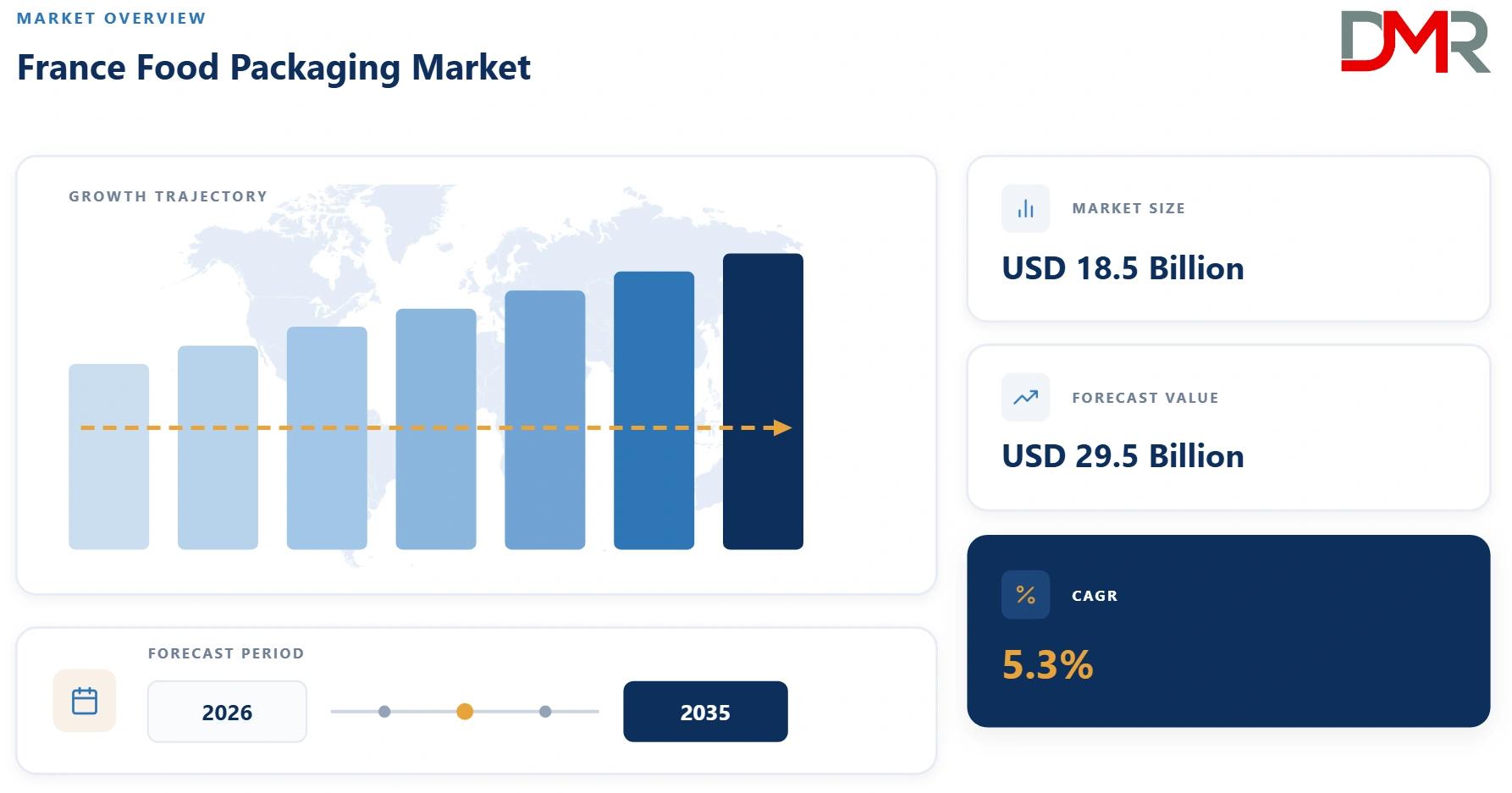
- France Food Packaging Market Size in 2026: USD 18.5 Billion
- France Food Packaging Market Size in 2035: USD 29.5 Billion
- France CAGR from 2026 to 2035: 5.3%
- Flexible is the leading packaging type segment in 2026: 42.3%
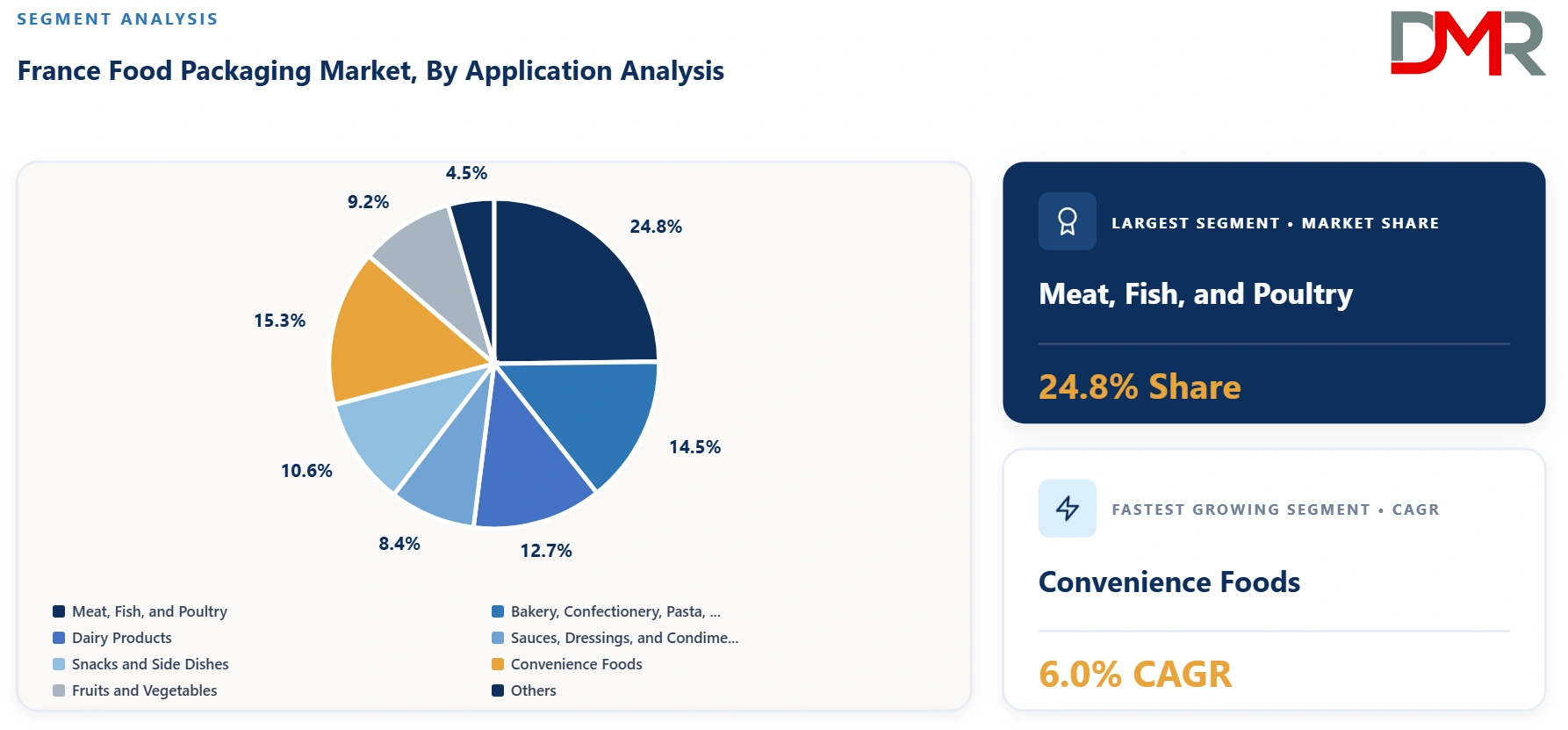
- Meat, Fish, and Poultry is the leading application segment in 2026: 24.8%
What is the France Food Packaging Market and its Market Size?
The France Food Packaging Market is projected to reach USD 18.5 billion in 2026 and grow at a compound annual growth rate of 5.3% through 2035 to reach USD 29.5 billion.
ℹ
To learn more about this report –
Download Your Free Sample Report Here
Food packaging includes flexible films, paperboard cartons, rigid plastic containers, glass bottles and jars, metal cans, trays, pouches, and other solutions used to protect food throughout processing, transportation, retailing, and consumption. The French market is supported by its established food-processing industry, high consumption of packaged foods, premium product positioning, strict food-safety requirements, and growing preference for convenient formats. Sustainability is reshaping material selection as manufacturers adopt recyclable, reusable, lightweight, fiber-based, and mono-material packaging.
Use Cases
- Food Preservation and Shelf-Life Extension: Food manufacturers use high-barrier films, modified-atmosphere packs, vacuum packaging, glass containers, and metal cans to protect products against oxygen, moisture, light, microorganisms, and physical damage. These formats extend product shelf life, reduce food waste, maintain flavor and nutritional quality, and support safe distribution of meat, seafood, dairy products, baked goods, sauces, prepared meals, and fresh produce.
- Convenience and Portion-Control Packaging: Pouches, resealable bags, single-serve cups, microwave-ready trays, portion packs, and easy-open containers support increasingly convenience-oriented French consumers. These solutions improve portability, storage, preparation, and consumption while helping brands serve smaller households, working professionals, and on-the-go customers. Convenience packaging is especially important for snacks, prepared meals, dairy desserts, sauces, bakery goods, and frozen food products.
- Sustainable and Circular Food Packaging: Food companies are replacing difficult-to-recycle multilayer structures with mono-material films, recyclable paperboard, lightweight glass, recycled plastic, molded fiber, and reusable containers. Such solutions help producers respond to French extended producer responsibility obligations, eco-modulated packaging fees, retailer sustainability commitments, and changing consumer expectations. Packaging redesign also reduces material consumption, transportation emissions, product waste, and exposure to future regulatory costs.
- Brand Communication and Product Traceability: Printed cartons, labels, sleeves, closures, and digitally enabled packs communicate product ingredients, nutritional information, allergens, origin, recycling instructions, and expiration dates. QR codes, serialization, smart labels, and freshness indicators can improve traceability and consumer engagement. Premium graphics and distinctive structural designs also help French food brands differentiate products, communicate authenticity, and strengthen visibility across physical stores and e-commerce channels.
Key Takeaways
- Market Size: The France Food Packaging Market is anticipated to be valued at USD 18.5 billion in 2026 and is forecast to reach USD 29.5 billion by 2035, expanding at a CAGR of 5.3%.
- Growth Rate and Outlook: Market expansion is supported by rising packaged-food consumption, demand for longer product shelf life, growth in convenience foods, expanding online grocery channels, premiumization, food-safety requirements, and rapid adoption of recyclable, lightweight, reusable, and fiber-based packaging.
- Primary Growth Drivers: Strong food-processing activity, changing household structures, demand for portion-controlled products, growth in ready-to-eat meals, sustainability commitments, packaging waste regulations, smart-packaging innovation, and retailer pressure to reduce virgin plastic consumption are accelerating investment.
- By Packaging Type Analysis: Flexible packaging is projected to lead with a 42.3% share in 2026 due to its low weight, high barrier performance, printing flexibility, cost efficiency, resealability, and suitability for snacks, dairy products, bakery goods, frozen foods, meat, and convenience meals. Paper and paperboard is expected to register the highest CAGR.
- By Application Analysis: Meat, Fish, and Poultry is expected to dominate with a 24.8% share in 2026, supported by strict hygiene requirements and demand for vacuum packs, trays, barrier films, and modified-atmosphere packaging. Convenience Foods is projected to record the highest CAGR as demand for ready meals and easy-preparation formats increases.
How AI and Generative AI are Transforming the France Food Packaging Market?
Artificial intelligence is helping French packaging manufacturers improve design, production, inspection, demand forecasting, and material efficiency. Machine-vision systems identify seal defects, contamination, incorrect labels, damaged containers, and printing inconsistencies at high production speeds. AI-enabled design platforms simulate barrier performance, package weight, transport durability, recyclability, and carbon impact before commercialization. Generative AI supports rapid development of structural concepts, graphics, labeling content, and personalized campaigns. Predictive maintenance reduces equipment downtime, while intelligent forecasting aligns packaging production with food demand, minimizing excess inventory, production scrap, material consumption, and operational costs across supply chains.
Key Drivers in the France Food Packaging Market
Expanding Consumption of Convenience and Packaged Foods
Urban lifestyles, smaller households, busy working schedules, food delivery, online grocery shopping, and demand for portion control are increasing the consumption of ready meals, snacks, frozen food, dairy desserts, and prepared ingredients. These categories require lightweight, resealable, microwave-compatible, easy-open, and high-barrier packaging. Manufacturers are consequently investing in pouches, trays, lidding films, single-serve containers, and modified-atmosphere solutions. France has an extensive food-processing base serving retail, foodservice, and export markets, creating recurring demand for packaging that improves shelf life, protects quality, reduces spoilage, and supports efficient distribution through traditional and digital channels.
Regulatory and Consumer Pressure for Sustainable Packaging
French food companies face increasing pressure to reduce unnecessary packaging, eliminate problematic materials, improve recyclability, and incorporate recycled content. EU packaging activities account for approximately 40% of plastic consumption, while packaging waste reached 186.5 kilograms per person in the EU in 2022. These conditions are pushing investment toward mono-material films, paperboard, molded fiber, lightweight containers, refillable systems, and recyclable barriers. Eco-modulated extended producer responsibility fees further influence design decisions by rewarding easily recyclable structures and penalizing disruptive materials. Sustainability is consequently becoming a commercial requirement and a product-development priority rather than an optional environmental feature.
Restraints in the France Food Packaging Market
High Cost and Performance Limitations of Sustainable Materials
Recyclable, bio-based, compostable, reusable, and high-recycled-content packaging can be more expensive than conventional formats, particularly during initial commercialization. Food packaging must satisfy demanding requirements for moisture, grease, oxygen, temperature, migration, sealing, and mechanical performance. Paper-based or mono-material alternatives may require specialized coatings and redesigned production lines to reproduce the barrier properties of multilayer structures. Smaller food manufacturers can face difficulties absorbing testing, machinery, certification, and material expenses. Inconsistent collection and recycling infrastructure can also limit the environmental value of technically recyclable packages, creating uncertainty concerning investment returns, customer acceptance, and compliance with future design standards.
Complex Regulations and Food-Contact Compliance Requirements
Food packaging suppliers must comply with European and French rules covering food-contact safety, chemical migration, labeling, traceability, extended producer responsibility, packaging waste, recycled materials, and environmental claims. Regulatory changes can require material reformulation, supplier documentation, testing, packaging redesign, and capital investment. Restrictions on substances such as PFAS and increasing recyclability requirements create additional technical challenges for grease-resistant and high-barrier formats. Producers selling different products across Europe must also coordinate national waste-management obligations and labeling practices. These compliance requirements increase development timelines and administrative costs, particularly for smaller companies with limited regulatory, testing, and sustainability resources.
Growth Opportunities in the France Food Packaging Market
Recyclable Flexible and Fiber-Based Packaging Solutions
A major opportunity exists in replacing complex multilayer packages and rigid plastics with recyclable mono-material films, paperboard trays, molded-fiber products, paper pouches, and functional barrier coatings. Flexible packaging can lower material consumption and transportation weight, while fiber-based formats benefit from established consumer familiarity and collection infrastructure. Suppliers that achieve food protection, sealability, machinability, attractive printing, and verified recyclability can secure partnerships with retailers and food processors. Opportunities are especially strong in bakery products, snacks, frozen foods, produce, dry foods, pet food, and convenience meals where brands are actively testing lower-plastic and recyclable alternatives without compromising shelf life.
Smart Packaging and Digital Traceability
Smart labels, QR codes, freshness indicators, time-temperature sensors, connected packaging, and digital watermarks can improve product traceability, consumer communication, sorting, food safety, and inventory management. French food manufacturers can use these technologies to authenticate premium products, communicate ingredient origin, provide recycling guidance, monitor cold-chain conditions, and reduce food waste. Digital packaging also allows brands to update multilingual information and marketing content without fundamentally changing the physical package. Suppliers integrating affordable sensors, printed electronics, cloud platforms, and data analytics can create new service-based revenue streams while helping food companies meet transparency, sustainability, recall-management, and consumer-engagement objectives.
Trends in the France Food Packaging Market
Shift Toward Mono-Material, Lightweight, and Reusable Formats
Packaging producers are simplifying structures to improve recyclability while reducing weight and virgin-material consumption. Mono-polyethylene and mono-polypropylene pouches are replacing selected multilayer laminates, while thinner walls, concentrated product formats, lightweight bottles, and optimized closures lower material requirements. Reuse is also receiving attention through refill systems, returnable foodservice containers, and standardized packaging pools. However, reusable packaging represented only around 1.82% of packaging placed on the French market in 2024, compared with France’s target of 10% by 2027. This gap demonstrates both implementation difficulty and considerable opportunity for scalable collection, cleaning, tracking, and redistribution systems.
Growing Adoption of Paperization and Functional Coatings
Food brands are increasingly adopting paperboard cartons, wraps, cups, trays, and pouches to reduce visible plastic and strengthen environmental positioning. Packaging companies are developing water-based, bio-based, dispersion, and thin polymer coatings to provide moisture, oxygen, grease, and heat resistance. Designs increasingly prioritize fiber recovery by limiting coatings and components that disrupt paper recycling. Paperization is particularly visible in bakery, confectionery, quick-service food, produce, frozen foods, and dry-product applications. Nevertheless, suppliers must balance recyclability with seal integrity, shelf life, food-contact safety, moisture resistance, production speed, and total lifecycle impact before replacing established plastic structures.
Research Scope and Analysis
This research evaluates France food packaging across flexible formats, paper and paperboard, rigid plastic, glass, metal, other packaging, bakery products, confectionery, pasta, noodles, dairy products, sauces, dressings, condiments, snacks, side dishes, convenience foods, meat, fish, poultry, fruits, vegetables, examining market demand, material innovation, sustainability, competition, regulation, technology, growth opportunities, industry risks, forecasts, company strategies.
ℹ
To learn more about this report –
Download Your Free Sample Report Here
By Packaging Type Analysis
Flexible packaging is projected to dominate the market with a 42.3% share in 2026, supported by lightweight construction, strong barrier performance, printing flexibility, and broad food compatibility. It is extensively used for snacks, bakery products, frozen foods, meat, dairy products, and prepared meals. Paper and paperboard is expected to register the highest CAGR of approximately 6.2%, exceeding the overall market CAGR, as brands replace selected plastic formats with recyclable fiber-based cartons, wraps, trays, and pouches.
By Application Analysis
Meat, Fish, and Poultry is anticipated to lead the market with a 24.8% share in 2026 because these products require high-barrier, leak-resistant, hygienic, and temperature-compatible packaging. Vacuum pouches, modified-atmosphere trays, lidding films, and rigid containers remain widely used. Convenience Foods is projected to achieve the highest CAGR of approximately 6.0%, supported by growing consumption of ready meals, single-serve products, frozen foods, meal kits, and microwave-compatible formats.
The France Food Packaging Market Report is Segmented Based on the Following
By Packaging Type
- Flexible
- Paper and Paperboard
- Rigid Plastic
- Glass
- Metal
- Others
By Application
- Bakery, Confectionery, Pasta, and Noodles
- Dairy Products
- Sauces, Dressings, and Condiments
- Snacks and Side Dishes
- Convenience Foods
- Meat, Fish, and Poultry
- Fruits and Vegetables
- Others
Regulatory Landscape
The France food packaging market is governed by European food-contact material rules, the EU Packaging and Packaging Waste Regulation, France’s Anti-Waste for a Circular Economy law, extended producer responsibility schemes, and Triman sorting-label requirements. Regulation increasingly focuses on recyclability, packaging reduction, recycled content, reuse, chemical safety, and accurate environmental claims. EU rules applying from August 2026 introduce PFAS limits for food-contact packaging and support recyclable packaging, waste reduction, and deposit-return systems. Regulatory changes create opportunities for compliant mono-material, fiber-based, reusable, and low-impact solutions but raise testing, documentation, redesign, and investment requirements. Suppliers unable to demonstrate material safety or recyclability face commercial and compliance risks.
Technology Analysis
Technology development is centered on recyclable barrier materials, bio-based polymers, water-based coatings, active packaging, intelligent labels, digital printing, automation, and artificial intelligence. High-barrier mono-material films are improving recyclability while maintaining protection against oxygen, moisture, grease, and aroma loss. Machine vision strengthens inspection of seals, labels, print quality, and contamination, while robotics and automated changeovers improve production flexibility. Digital printing supports shorter runs and customized packaging. Smart indicators and QR codes strengthen traceability and consumer engagement. Opportunities are expanding for technologies that reduce package weight, extend food shelf life, and improve sorting, although cost, scalability, food-contact approval, and compatibility with recycling systems remain important commercialization risks.
Competitive Landscape
The France Food Packaging Market includes multinational packaging corporations, European material specialists, French converters, glass and metal packaging producers, carton manufacturers, and sustainable-packaging innovators. Competition focuses on recyclability, barrier performance, lightweighting, recycled content, food safety, customization, production efficiency, and geographic service capabilities. Leading companies are investing in mono-material flexible packaging, fiber-based trays, lightweight glass, recyclable cartons, digital printing, and smart-packaging systems. Partnerships with food manufacturers, acquisitions, facility modernization, and regulatory-compliance expertise remain important competitive strategies. The market also provides opportunities for specialized companies developing functional coatings, biopolymers, reusable systems, and advanced recycling technologies.
Some of the Prominent Players in the France Food Packaging Market Are
- Amcor plc
- Berry Global Group, Inc.
- Mondi plc
- Smurfit WestRock plc
- Huhtamaki Oyj
- Sealed Air Corporation
- Sonoco Products Company
- Tetra Pak International S.A.
- SIG Group AG
- Graphic Packaging Holding Company
- International Paper Company
- DS Smith plc
- Coveris Management GmbH
- Constantia Flexibles Group GmbH
- ProAmpac Holdings Inc.
- UFlex Limited
- Winpak Ltd.
- Transcontinental Inc.
- Schur Flexibles Holding GmbH
- Wipak Group
- adapa Holding GesmbH
- Walki Group Oy
- Ahlstrom Oyj
- Sappi Limited
- Stora Enso Oyj
- AR Packaging Group AB
- Mayr-Melnhof Karton AG
- Seda International Packaging Group S.p.A.
- Sabert Corporation
- Faerch Group A/S
- PACCOR Packaging GmbH
- Groupe Guillin S.A.
- Klöckner Pentaplast Group
- ALPLA Group
- AptarGroup, Inc.
- Verallia S.A.
- O-I Glass, Inc.
- Ardagh Group S.A.
- Crown Holdings, Inc.
- Silgan Holdings Inc.
- Other Key Players
Recent Developments
- November 2025: Hinojosa Packaging Group completed its acquisition and integration of France-based ASV Packaging, strengthening its French presence with seven production facilities and expanding its sustainable packaging portfolio, including fiber-based food trays.
- July 2025: Huhtamaki introduced recyclable and compostable paperboard ice-cream cups incorporating a bio-based coating and less than 10% plastic, targeting food brands seeking reduced-plastic packaging formats.
- June 2025: Mondi announced its collaboration with French pet food manufacturer Saga Nutrition on recyclable mono-material FlexiBag packaging, replacing a difficult-to-recycle multilayer structure while maintaining moisture, fat, and odor barriers.
- April 2025: Amcor completed its combination with Berry Global, creating a substantially larger global packaging company with expanded flexible, rigid, healthcare, closure, and sustainability capabilities serving France and other European markets.
Report Details
| Report Characteristics |
| Market Size (2026) |
USD 18.5 Bn |
| Forecast Value (2035) |
USD 29.5 Bn |
| CAGR (2026–2035) |
5.3% |
| Historical Data |
2021 – 2025 |
| Forecast Data |
2026 – 2035 |
| Base Year |
2025 |
| Segments Covered |
By Packaging Type, By Application |
Frequently Asked Questions
How big is the France Food Packaging Market?
▾ The France Food Packaging Market is projected to be valued at USD 18.5 billion in 2026 and reach USD 29.5 billion by 2035.
What is the CAGR of the France Food Packaging Market from 2026 to 2035?
▾ The France Food Packaging Market is expected to expand at a CAGR of 5.3% during the forecast period from 2026 to 2035.
What factors are driving the growth of the France Food Packaging Market?
▾ Growth is driven by increasing consumption of packaged and convenience foods, demand for longer product shelf life, growth in online grocery retail, strict food-safety requirements, sustainability commitments, packaging innovation, and rising adoption of recyclable and lightweight materials.
What are the major trends in the France Food Packaging Market?
▾ Major trends include recyclable mono-material films, paperization, lightweight packaging, reusable containers, recycled-content integration, smart labels, digital printing, active packaging, artificial intelligence-based quality inspection, and the reduction of problematic chemicals and multilayer structures.
Who are the key players in the France Food Packaging Market?
▾ Key players include Amcor, Mondi, Smurfit WestRock, Huhtamaki, Sealed Air, Sonoco Products Company, Tetra Pak, SIG Group, Graphic Packaging, Coveris, Constantia Flexibles, Groupe Guillin, Verallia, Ardagh Group, and Crown Holdings.
How is the France Food Packaging Market segmented?
▾ The market is segmented by packaging type into Flexible, Paper and Paperboard, Rigid Plastic, Glass, Metal, and Others. By application, it includes Bakery, Confectionery, Pasta, and Noodles, Dairy Products, Sauces, Dressings, and Condiments, Snacks and Side Dishes, Convenience Foods, Meat, Fish, and Poultry, Fruits and Vegetables, and Others.