France Medical Devices Market Snapshot
- France Medical Devices Market Size in 2026: USD 17.3 Billion
- France Medical Devices Market Size in 2035: USD 28.3 Billion
- France CAGR from 2026 to 2035: 5.6%
- Diagnostic Devices is the leading product type segment in 2026: 33.7%
- Class II Medical Devices is the leading device class segment in 2026: 42.6%
- Conventional Medical Devices is the leading technology segment in 2026: 43.9%
- Cardiology is the leading application segment in 2026: 20.1%
- Hospitals is the leading end-user segment in 2026: 48.7%
What is the France Medical Devices and its Market Size?
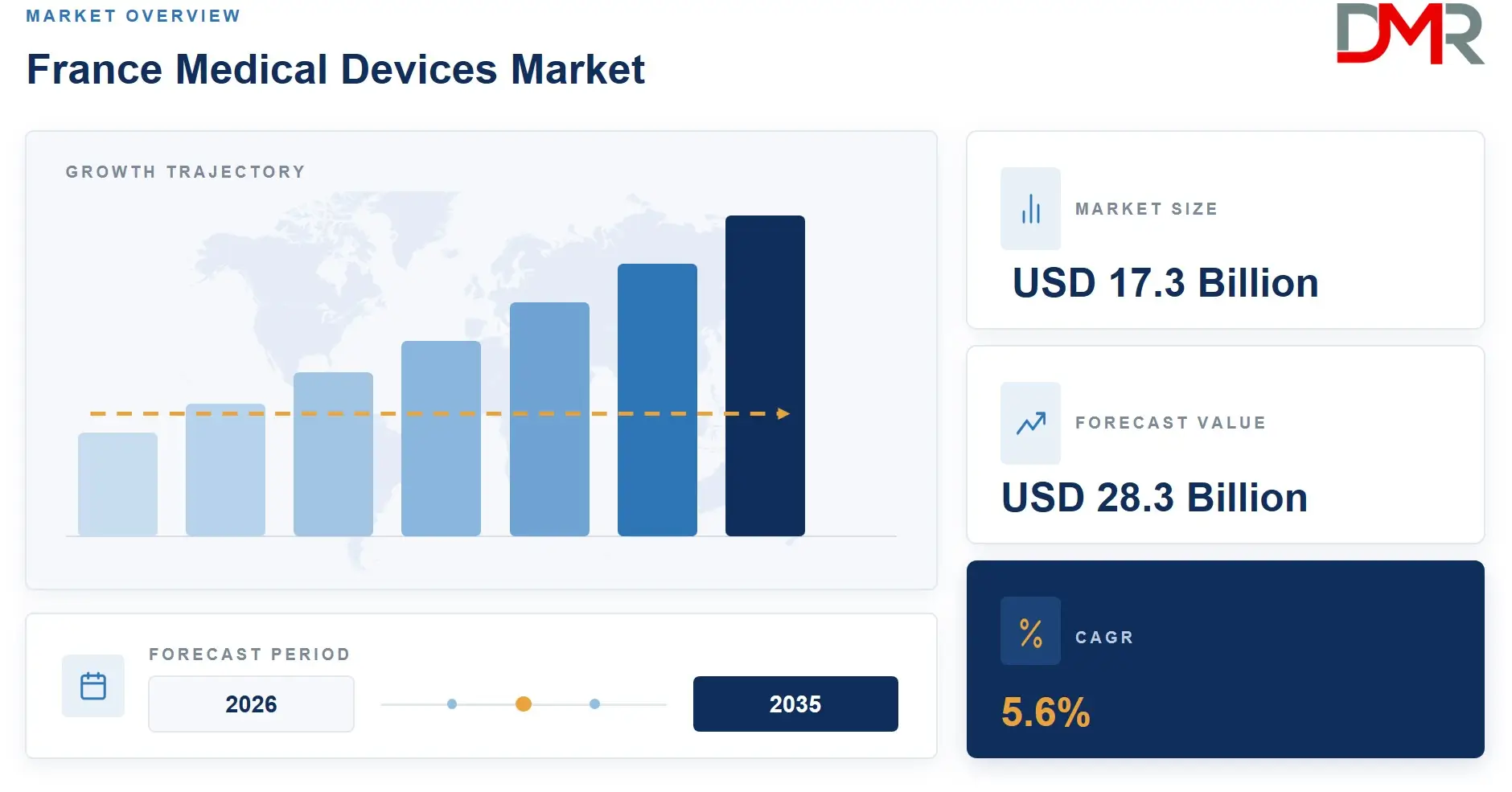
The France Medical Devices Market was valued at USD 17.3 billion in 2026 and is projected to reach USD 28.3 billion by 2035, expanding at a CAGR of 5.6% during the forecast period. Market expansion is underpinned by France's rapidly aging population, the rising burden of chronic non-communicable diseases within the national Assurance Maladie system, and sustained investment in hospital modernization under the Ségur de la Santé health investment plan.
ℹ
To learn more about this report –
Download Your Free Sample Report Here
The market is fundamentally reshaped by the full enforcement of the EU Medical Device Regulation (MDR) 2017/745, which is driving a quality-over-quantity paradigm shift, compelling both domestic manufacturers and multinationals to prioritize clinical evidence and post-market surveillance. Growth is further propelled by the digitization of clinical workflows through the Mon Espace Santé platform, the expansion of telehealth to serve rural and overseas territories, and increasing reliance on AI-enhanced imaging modalities and remote patient monitoring ecosystems within both public hospitals (CHU/CHR) and the expanding private clinic sector.
Use Cases
- Diabetic Retinopathy Screening in Primary Care Units: Portuguese family health units deploy portable, non-mydriatic fundus cameras integrated with AI-enabled diagnostic software for population-wide screening of diabetic retinopathy.
- Remote Cardiac Resynchronization Therapy (CRT) Monitoring in the Algarve: . Connected patient monitoring devices continuously transmit thoracic impedance, arrhythmia logs, and activity data, enabling proactive clinical intervention and reducing heart failure hospitalization rates without requiring elderly patients to travel long distances to specialist centers.
- Minimally Invasive Robotic-Assisted Colorectal Surgery: Major central hospitals in Lisbon and Porto, including the Champalimaud Foundation and Hospital de São João, are expanding general surgery programs using robotic-assisted surgical systems for colorectal resections.
- Point-of-Care Molecular Diagnostics for Tuberculosis Control: Pulmonology centers and chest disease hospitals utilize cartridge-based molecular diagnostic platforms for rapid detection of Mycobacterium tuberculosis and rifampicin resistance.
Key Takeaways
- Market Size: The France Medical Devices Market is projected to reach USD 17.3 billion in 2026 and expand to USD 28.3 billion by 2035, growing at a CAGR of 5.6% during 2026–2035.
- Growth Outlook: Market expansion is supported by France’s aging population, increasing prevalence of chronic and lifestyle-related diseases, rising surgical volumes, modernization of healthcare infrastructure, and growing adoption of digital health, minimally invasive procedures, remote monitoring, and advanced diagnostic technologies.
- Primary Growth Drivers: Increasing demand for early disease diagnosis, replacement and modernization of hospital equipment, implementation of the EU Medical Device Regulation, integration of AI into diagnostic workflows, expansion of outpatient care, and rising adoption of connected and home-based medical devices are expected to drive market growth.
- By Product Type Analysis: Diagnostic Devices is projected to lead the market with a 33.7% share in 2026, supported by extensive utilization of imaging, in-vitro diagnostic, and screening technologies for cardiovascular diseases, cancer, neurological disorders, and other chronic conditions.
- By Device Class Analysis: Class II Medical Devices is expected to dominate with a 42.6% share in 2026, reflecting widespread utilization of moderately regulated devices such as diagnostic equipment, monitoring systems, surgical instruments, and other technologies used across hospitals and outpatient facilities.
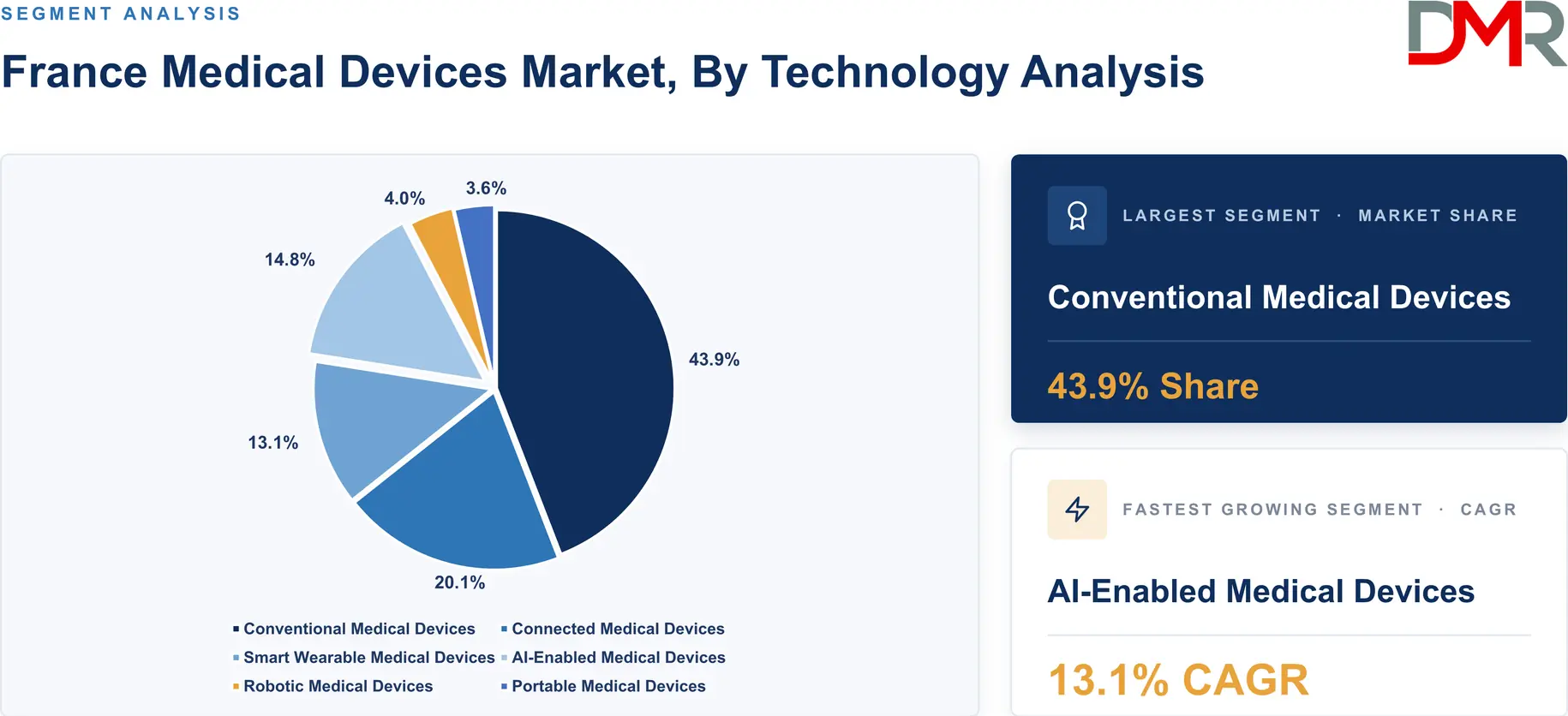
- By Technology Analysis: Conventional Medical Devices is poised to account for 43.9% of the market in 2026, supported by their established presence across hospitals, diagnostic centers, surgical facilities, and other healthcare settings, particularly for routine diagnosis, treatment, monitoring, and surgical procedures.
- By Application Analysis: Cardiology is forecast to lead with a 20.1% share in 2026, driven by the significant burden of cardiovascular diseases and sustained demand for cardiac imaging, monitoring, interventional cardiology, electrophysiology, and implantable cardiovascular devices.
- By End-User Analysis: Hospitals are projected to remain the leading end-user segment with a 48.7% share in 2026, owing to their concentration of advanced diagnostic systems, surgical technologies, patient monitoring equipment, therapeutic devices, and infrastructure required for complex and high-acuity medical procedures.
How AI/Gen AI is Transforming the Medical Devices Market?
AI's role in French medtech has moved well past pilot projects. It's showing up in three concrete ways. First, generative AI is being used to synthesize rare-pathology imaging data useful in a market where certain conditions simply don't generate enough real cases to train a robust algorithm and to anonymize patient records for multi-center research through channels like the Health Data Hub. Second, AI is automating the grunt work of radiology and pathology reporting, turning raw findings into structured reports and freeing up clinicians who are already stretched thin in public hospital departments. Third, and most visibly, AI-driven Software as a Medical Device (SaMD) is earning CE marks for triage functions stroke imaging is the clearest example, where algorithms flag large-vessel occlusions on CT angiography in near real time and route the case straight to an interventional neuroradiology team, shaving critical minutes off time-to-treatment.
Key Drivers in the France Medical Devices Market
An Aging Population That Needs More From the System
France's elderly population isn't just growing it's driving disproportionate demand across nearly every device category. Cardiovascular disease, diabetes, cancer, respiratory illness, and osteoarticular conditions cluster heavily in older patients, and each requires its own mix of diagnostic imaging, surgical intervention, ongoing monitoring, and mobility support. The push toward earlier diagnosis and tighter chronic-disease management partly a clinical priority, partly a cost-control measure for the national insurance budget is reinforcing demand for the full spectrum, from cardiac devices to home glucose monitoring.
A Shift Toward Doing More With Smaller Incisions
Hospitals and diagnostic centers are steadily replacing older equipment with advanced imaging, in vitro diagnostics, endoscopy, and robotic surgical platforms all in service of catching disease earlier and treating it with less trauma to the patient. Minimally invasive approaches mean shorter hospital stays and faster recovery, which matters to both public and private providers under pressure to improve bed turnover. Preventive screening programs for cancer and cardiovascular disease are reinforcing this shift from the demand side.
Restraints in the France Medical Devices Market
Regulatory Weight That Falls Hardest on Smaller Players
The MDR framework has raised the bar on clinical evidence, documentation, and post-market surveillance across the board a good thing for patient safety, but a genuine burden for the smaller manufacturers and SMEs that make up a meaningful slice of the French supplier base. Not every company has the balance sheet to absorb years-long certification timelines, and some will consolidate or exit rather than keep pace. Notified body capacity constraints compound the problem, occasionally pushing product launches back by months.
A Public System Watching Every Euro
Centralized purchasing through regional hospital groups (GHT) and pricing negotiations run through CEPS mean that cost, not just clinical merit, decides a lot of procurement outcomes. That dynamic tends to slow the uptake of premium imaging systems and robotic platforms outside the largest teaching hospitals, and it leaves smaller, regional facilities working with older equipment for longer. Reimbursement decisions that lag behind clinical innovation add another layer of friction for newer technologies trying to prove their economic case.
Growth Opportunities in the France Medical Devices Market
Care That Follows the Patient Home
The clearest white space is in connected and home-based devices remote monitors for vitals, cardiac status, glucose, and respiratory function that let clinicians keep tabs on patients without requiring a hospital bed. This matters especially for France's older population spread across rural areas and overseas departments (DOM-TOM), where distance to specialist care is a real barrier. Demand is concentrated among post-discharge patients and those managing long-term chronic conditions.
Diagnostics Built Around the Individual Patient
Personalized medicine is opening up a second growth lane like molecular diagnostics, genetic testing, digital pathology, and AI-supported clinical decision tools that help clinicians tailor treatment rather than apply a one-size-fits-all protocol. France's research infrastructure Institut Curie, Gustave Roussy, INSERM gives it a genuine edge here, particularly in oncology and rare disease work, and creates natural partnership opportunities between device makers, hospitals, and research institutes.
Trends in the France Medical Devices Market
AI Moving Deeper Into Imaging Workflows
AI's footprint in diagnostic imaging, clinical decision support, and monitoring keeps expanding, largely because it directly addresses a radiologist shortage that public hospitals can't easily solve by hiring. Beyond flagging abnormalities and prioritizing urgent cases, AI tools are increasingly used to manage workflow and resource allocation across departments. The Ma Santé 2026 digital investment program is accelerating adoption by funding the infrastructure that makes AI-integrated platforms viable at scale.
Robotic Surgery Becoming Standard Rather Than Novel
Robotic-assisted platforms are no longer confined to flagship academic centers urology, gynecology, general surgery, orthopedics, and cardiology programs at both public teaching hospitals and private groups like Ramsay Santé and Elsan are building out robotic capacity. The appeal is straight with smaller incisions, fewer complications, faster discharge all of which help hospitals manage rising surgical volumes without expanding bed capacity.
Research Scope and Analysis
The France Medical Devices Market is segmented by product type into diagnostic, therapeutic, surgical, patient monitoring devices, and medical consumables. It is analysed by device class, technology, application, and end user. Product coverage includes imaging, IVD, cardiovascular, orthopedic, respiratory, diabetes care, endoscopic, and consumable solutions across hospitals, clinics, diagnostic centers, ASCs, home healthcare, and research institutes.
ℹ
To learn more about this report –
Download Your Free Sample Report Here
By Product Type Analysis
Diagnostic Devices is projected to lead the market with a 33.7% share in 2026, powered by heavy and sustained use of imaging systems and in vitro diagnostics across both public and private care settings. Within that category, imaging equipment X-ray, MRI, CT, ultrasound, and nuclear imaging for oncology staging makes up the largest single slice. Patient Monitoring Devices, while smaller today, are growing fastest at 9.8% CAGR as telehealth and continuous chronic-care monitoring programs scale.
By Device Class Analysis
Class II devices is expected to hold the largest share at 42.6% in 2026 a category that spans infusion pumps, imaging equipment, monitoring systems, surgical instruments, and orthopedic devices, all workhorses of routine hospital and clinic care. Class III devices, covering implantables and other high-risk, life-sustaining technologies including next-generation pacemakers and neurostimulators, are expanding fastest at a 10.2% CAGR.
By Technology Analysis
Conventional (non-connected) devices sis projected to account for the largest technology share, at 43.9% in 2026, reflecting how much of France's existing hospital infrastructure remains built around standard, non-digital equipment. AI-enabled devices are the clear growth outlier, expanding at 13.1% CAGR as imaging interpretation, decision support, and predictive diagnostics tools gain traction across both public and private hospital networks.
By Application Analysis
Cardiology is expected to command the largest application share at 20.1% in 2026, unsurprising given how much cardiovascular disease drives hospital admissions in an aging population stents, pacemakers, defibrillators, and cardiac imaging all fall under this umbrella. Oncology is growing fastest at 10.7% CAGR, propelled by AI-assisted imaging and molecular diagnostics increasingly deployed at national reference centers.
By End User Analysis
Hospitals is poised to remain the dominant end user, accounting for 48.7% of device spend in 2026, given their role as the primary site for high-acuity procedures, complex imaging, and emergency care across major centers in Paris, Lyon, and Marseille. Home Healthcare Settings are the fastest-growing end-user category at 11.4% CAGR, a direct result of the Mon Espace Santé push to move chronic disease management out of hospital beds and into the home.
The France Medical Devices Market Report is segmented based on the following:
By Product Type
- Diagnostic Devices
- Imaging Devices
- X-ray Systems
- Magnetic Resonance Imaging (MRI) Systems
- Computed Tomography (CT) Scanners
- Ultrasound Systems
- Nuclear Imaging Systems
- Others
- In-Vitro Diagnostic (IVD) Devices
- Clinical Chemistry
- Immunoassay
- Molecular Diagnostics
- Hematology
- Microbiology
- Others
- Therapeutic Devices
- Cardiovascular Devices
- Orthopedic Devices
- Respiratory Devices
- Diabetes Care Devices
- Wound Care Devices
- Ophthalmic Devices
- Others
- Surgical Devices
- General Surgical Instruments
- Electrosurgical Devices
- Endoscopic Devices
- Robotic-Assisted Surgical Systems
- Minimally Invasive Surgical Devices
- Others
- Patient Monitoring Devices
- Vital Signs Monitoring
- Cardiac Monitoring
- Neurological Monitoring
- Fetal & Neonatal Monitoring
- Others
- Medical Consumables
- Syringes & Needles
- Catheters
- Bandages & Dressings
- Disposable Gloves
- Others
By Device Class
- Class I (low risk)
- Class II (moderate risk)
- Class III (high risk)
- Class IV (highest risk)
By Technology
- Conventional Medical Devices
- Connected Medical Devices
- Smart Wearable Medical Devices
- AI-Enabled Medical Devices
- Robotic Medical Devices
- Portable Medical Devices
By Application
- Cardiology
- Orthopedics
- Neurology
- Oncology
- Respiratory Care
- Gastroenterology
- Ophthalmology
- Obstetrics & Gynecology
- Others
By End User
- Hospitals
- Ambulatory Surgical Centers (ASCs)
- Diagnostic Centers
- Specialty Clinics
- Home Healthcare Settings
- Academic & Research Institutes
- Others
Regulatory Landscape
The Agence Nationale de Sécurité du Médicament et des Produits de Santé (ANSM) oversees medical device compliance in France under the EU MDR framework, which has tightened requirements around clinical evidence, post-market surveillance, UDI traceability, and quality management. The upside is stronger patient safety and market credibility; the downside is a heavier compliance load particularly on documentation, testing, and certification timelines that disproportionately affects smaller French manufacturers relative to large multinationals. This has opened a real niche for regulatory consulting and clinical-data service providers. Mandatory French-language labeling, limited notified-body throughput, and CEPS-negotiated reimbursement pathways remain the practical friction points slowing new-product entry.
Investment and White Space Analysis
The clearest investment white space runs through home healthcare, remote monitoring, and AI-supported diagnostics particularly solutions priced for rural and overseas markets that larger urban-focused vendors tend to underserve. Capital is increasingly flowing toward connected devices that reduce hospital dependency and support earlier intervention, in line with France's national digital health agenda. Specific gaps worth watching: interoperable monitoring platforms built for overseas departments, portable imaging for decentralized care settings, and devices purpose-built for long-term elderly care facilities. That said, investors should weight regulatory complexity, GHT-driven procurement consolidation, and long sales cycles into any market-entry plan this is not a fast-commercialization market, even where the clinical need is obvious.
Competitive Landscape
France's device market pairs a handful of dominant global conglomerates with a fragmented layer of domestic manufacturers, all operating under ANSM's MDR enforcement. Siemens Healthineers and GE HealthCare lead in public hospital imaging, largely on the strength of their existing installed base and AI-enterprise offerings. Philips holds a strong position in patient monitoring and telehealth infrastructure. Medtronic is broadly entrenched across cardiology, minimally invasive surgery, and diabetes care, while Abbott competes hard on cardiac rhythm management. Johnson & Johnson MedTech continues to build share in orthopedic reconstruction and robotic surgery within large private hospital networks.
Some of the prominent players in the France Medical Devices Market are:
- Medtronic
- Abbott Laboratories
- Boston Scientific Corporation
- GE HealthCare
- Siemens Healthineers
- Philips
- Becton, Dickinson and Company
- B. Braun
- Fresenius Medical Care
- Johnson & Johnson MedTech
- Stryker Corporation
- Zimmer Biomet
- Baxter International
- Edwards Lifesciences
- Terumo Corporation
- Smith+Nephew
- Roche Diagnostics
- Danaher Corporation
- Alcon
- EssilorLuxottica
- Carl Zeiss Meditec
- Canon Medical Systems
- Fujifilm Healthcare
- Olympus Corporation
- Drägerwerk
- Getinge
- ResMed
- Intuitive Surgical
- Cook Medical
- Teleflex
- Coloplast
- Convatec
- Mölnlycke Health Care
- Vygon
- bioMérieux
- Guerbet
- Thuasne
- Air Liquide Medical Systems
- Mauna Kea Technologies
- Balt Group
- Other Key Players
Recent Developments
- May 2026: Siemens Healthineers secured CE Mark approval for AI Contouring for Eclipse, an automated organ-at-risk contouring tool for radiation therapy planning, aimed at improving oncology workflow consistency across Europe.
- November 2025: France advanced measures to align its national medical devices framework more closely with EU MDR requirements, including updated rules on single-use device reprocessing and compliance obligations.
- April 2026: Medtronic received CE Mark approval for the Stealth AXiS Surgical System, an AI-enabled navigation and robotic guidance platform for spine, cranial, and ENT procedures, extending its surgical technology footprint in Europe.
Report Details
| Report Characteristics |
| Market Size (2026) |
USD 17.3 Bn |
| Forecast Value (2035) |
USD 28.3 Bn |
| CAGR (2026–2035) |
5.6% |
| Historical Data |
2021 – 2025 |
| Forecast Data |
2026 – 2035 |
| Base Year |
2025 |
| Segments Covered |
By Product Type, By Device Class, By Technology, By Application, and By End User |
| Country Coverage |
France |
Frequently Asked Questions
How big is the France Medical Devices Market?
▾ The France Medical Devices Market is valued at USD 17.3 billion in 2026 and is projected to reach USD 28.3 billion by 2035, reflecting robust demand for advanced diagnostic, therapeutic, and monitoring technologies within the national health system and private sector.
What is the CAGR of the France Medical Devices Market from 2026 to 2035?
▾ The market is projected to expand at a compound annual growth rate (CAGR) of 5.6% between 2026 and 2035, supported by an aging population, the transition to MDR, and the digitization of healthcare delivery via the National Telehealth Plan.
What factors are driving the growth of the France Medical Devices Market?
▾ Growth is driven by France’s aging demographic profile, the rising prevalence of chronic cardiovascular and oncological diseases, the shift toward home-based and minimally invasive care, and the integration of AI-enabled diagnostic platforms to address radiologist shortages.
What are the major trends in the France Medical Devices Market?
▾ Major trends include the rapid proliferation of AI-enabled SaMD for imaging triage, the expansion of robotic-assisted surgery in private hospital groups, the shift to decentralized point-of-care molecular testing, and the acceleration of remote monitoring to serve geographically dispersed populations.
Who are the key players in the France Medical Devices Market?
▾ Key market participants include global conglomerates like Siemens Healthineers, Royal Philips, Medtronic, Abbott, and Johnson & Johnson, alongside strong local distributors and private healthcare groups that facilitate market access and procurement.
How is the France Medical Devices Market segmented?
▾ The market is segmented by product type, device class, technology, application, and end user, with a focus on how these segments perform within France’s specific public-private healthcare economy.