What is the Global Healthcare Contact Center Market Size?
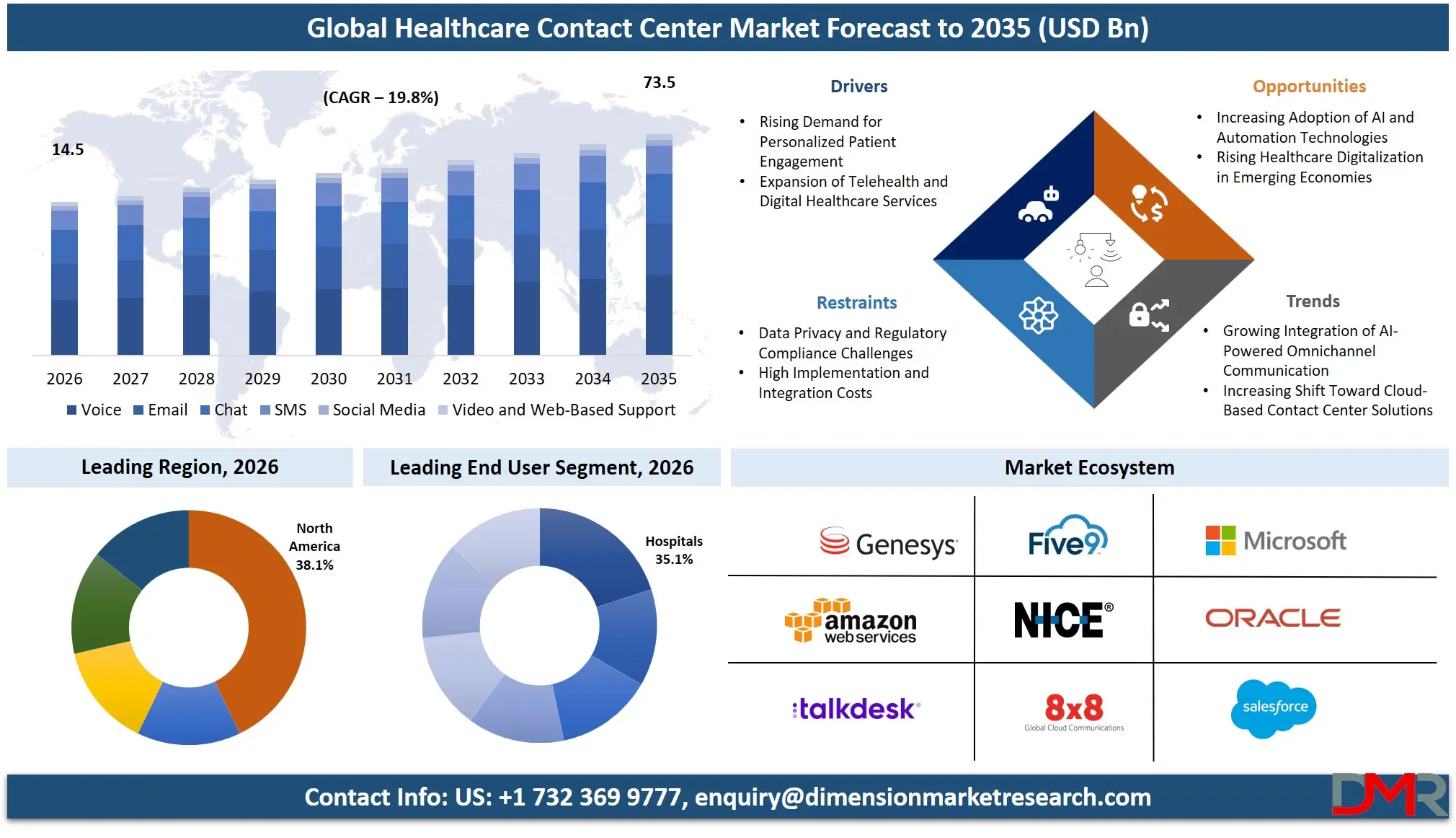
The Global Healthcare Contact Center Market is expected to reach a value of USD 14.5 billion in 2026, and it is further anticipated to surge to USD 73.5 billion by 2035, growing at a CAGR of 19.8% during the forecast period.
ℹ
To learn more about this report –
Download Your Free Sample Report Here
This market for healthcare contact centers has been growing exponentially, due to the emergence of patient consumerism and providers' transition from traditional transaction-oriented communications to orchestrating a holistic patient experience. This market includes omnichannel communications solutions, virtual assistants powered by AI technology, workforce optimization solutions, and managed services that help healthcare ecosystems manage patient access, clinical triage, and administration processes. The growing need for digital front door strategies, interoperable frameworks, and value-based care delivery has fueled the requirement for dedicated contact center solutions. Providers and payers are the most common users of these solutions, while cloud-based and AI-powered platforms continue to enjoy popularity due to their scalability and compliance with HIPAA security standards. Hospitals, telemedicine service providers, pharmaceutical companies, and insurers are among the most active players, as they require safe and empathic patient engagement ecosystems.
The US Healthcare Contact Center Market
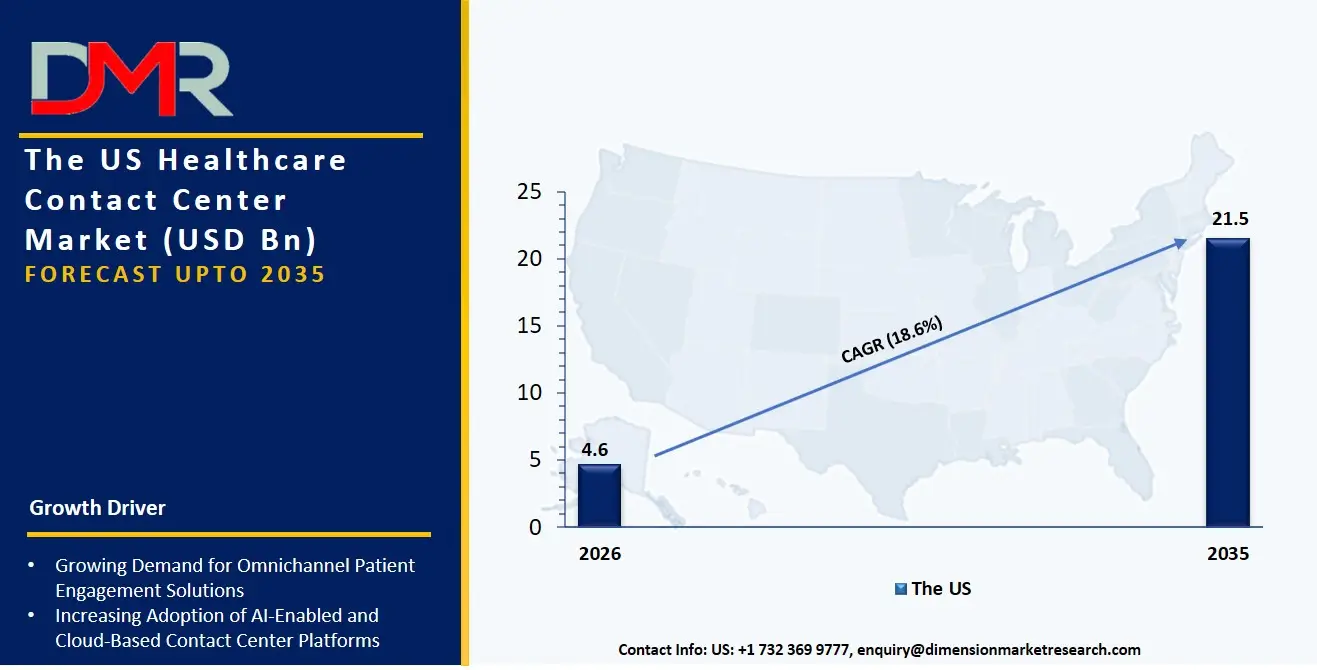
The US Healthcare Contact Center Market is projected to reach USD 4.6 billion in 2026 at a compound annual growth rate of 18.6% over its forecast period, culminating in a value of USD 21.5 billion by 2035.
ℹ
To learn more about this report –
Download Your Free Sample Report Here
However, the US remains the dominant player in the market owing to the aggressive consumerization approaches adopted by IDNs in addition to increasing complexities involved in payers-providers interaction. Demand for AI-Based Virtual Assistants and Chatbots in the market remains very high because firms have been trying to deflect low-acuity queries and automate the process of prior authorization status checks. In addition, use of generative AI technology in clinical contact centers is giving rise to similar requirements of solutions for analytics and reporting in order to control agent performance and ethical considerations around AI.
The Europe Healthcare Contact Center Market
The Europe Healthcare Contact Center Market is estimated to be valued at USD 4.2 billion in 2026 and is further anticipated to reach USD 20.1 billion by 2035 at a CAGR of 19.1%. The regulatory frameworks including GDPR, along with other regulations such as EU AI Act, plays an important role in the European market and creates the necessity of utilizing strict data residency measures and sovereignty clouds for contact centers. Another trend in the area is the accelerated growth of omnichannel communication solutions since national health organizations in Germany and the UK are attempting to harmonize their existing telephony solutions with modern patient portals and messaging services. Moreover, cross-border care efforts create a demand among vendors for developing integration and deployment services that would guarantee semantic interoperability and data sovereignty in Europe.
The Japan Healthcare Contact Center Market
The Japan Healthcare Contact Center Market is projected to be valued at USD 1.5 billion in 2026. It is further expected to witness robust growth, holding USD 5.1 billion in 2035 at a CAGR of 14.7%. The uniqueness of the Japanese market lies in the desire for digital transformation at the state level against the backdrop of an aging population and overloaded clinical staff. Solutions related to Patient Support Services and Appointment Scheduling constitute a significant portion of expenses associated with transferring large hospital corporations from the outdated PBX systems to modern cloud-based contact centers. In addition, there is a high demand for integration into the local market in order to connect the outdated EMR (Electronic Medical Record) system with the digital triage apps, which creates a niche in Computer Telephony Integration (CTI) and workflow automation.
Key Takeaways
- Market Size & Forecast: The Global Healthcare Contact Center market is projected to reach USD 14.5 billion in 2026, expanding dramatically to USD 73.5 billion by 2035, fueled by the dual drivers of AI-powered patient triage and the mandatory shift to value-based care engagement models.
- Growth Rate & Outlook: Global market growth is expected at a CAGR of 19.8%, driven by a critical shortage of clinical and administrative staff and the escalating complexity of managing multi-channel patient journeys and care coordination handoffs.
- Primary Growth Drivers: Some of the growth drivers are the increased migration from the CapEx model of telephony to the OpEx cloud telephony model, the need for virtual assistants enabled by AI technology that can help handle the large number of calls, and the need for CRM systems that require specialized professional services.
- Key Market Trends: Some of the trends in the market are the introduction of patient engagement pathways that focus on conditions, the use of predictive analytics for forecasting increases in patient inquiries during the flu seasons via workforce optimization services, and the trend of video and web-based customer support services.
- By Deployment Mode Analysis: The cloud deployment model is projected to be the dominant one within the enterprise segment owing to data gravity and compliance requirements of patients. Professional services are increasingly needed to provide a layer of API integration between cloud contact centers and on-premise EHRs and scheduling systems.
- By Application Analysis: Patient support services and telehealth & virtual care support are the two major applications due to high demand among patients for online services. Appointment Scheduling & Reminders is the fastest-growing category since providers want to eliminate patient nonattendance and increase clinic efficiency through automation.
- Regional Leadership: North America is poised to be the leading region with 38.1% of the market share in 2026 due to a well-established healthcare IT environment in the region that takes full advantage of cloud technology.
What is the Healthcare Contact Center Market?
Healthcare Contact Centers are the technology-enabled channels designed specifically to create seamless, multi-channel communication between patients, caregivers, payers, and life sciences companies along the continuum of care. This solution, unlike general customer service tools, is designed specifically to manage PHI (protected health information). It includes AI-Based Virtual Assistants and Chatbots capable of automating symptom checking and triaging; Omnichannel Communications Platforms that unite all communication channels, voice calls, emails, SMS messages, and video conversations; and a Workforce Optimization (WFO) solution to staff the contact centers with highly qualified nurses to perform triage at peak demand times. Since today, patient experience plays a key role in clinical outcomes and reimbursement programs, it requires professional and managed services to be provided in order to reach HIPAA compliance, clinical workflows integration, and tuning of the patient experience.
Use Cases
- Autonomous Patient Triage in Hospitals: AI-Based Virtual Assistants that come embedded with the logic for clinical decision making are used to triage patients into the right type of care level (such as primary care, urgent care, emergency room) based on the symptoms being exhibited, thus offloading non-emergency visits from overcrowded facilities.
- Proactive Adherence Management in Pharmaceuticals: Companies in life sciences industry employ Omnichannel Communications platforms and SMS channel to automate refill and therapy adherence checks, with any non-adherence being routed to pharmacists through CTI Pop-Ups.
- Payer Care Navigation: Insurers leverage Cloud-Based CRM and Interactive Voice Response (IVR) technology to assist members in locating their in-network specialists, checking the status of their prior authorizations and understanding their benefits; transactional interactions are taken care of through self-service, while complex case management is done through the live agent.
- Telehealth Front-Door in Home Healthcare: Home health care providers leverage Video and Web-based support that are integrated with scheduling technology for conducting virtual intake visit and remote monitoring check-ins, thereby facilitating aged-in-place care strategies and avoiding readmission penalties.
How AI is Transforming the Healthcare Contact Center Market?
The healthcare contact center is being transformed via AI through automated clinical triaging and empathy enhancement for agents. For instance, in Solutions, the chatbot now uses generative AI to ask dynamic symptom questions rather than decision tree symptom questions which considerably reduces the time to treatment and improves patient safety. In Analytics & Reporting, the system predicts surges in patient inquiries and identifies sentinel health events from conversation analytics while recommending workflow changes to balance agent workload and avoid agent burnout.
Both clinical governance and operational initiatives revolve around AI. For instance, under Professional Services, there are intelligent compliance monitoring agents that keep checking for potential HIPAA violations in call transcripts and chat logs while automatically redacting PHI before data warehousing. Further, AI-enabled tools assist agents by suggesting appropriate actions and responses as they handle sensitive topics such as cancer care and behavioral health.
Market Dynamics
Key Drivers in the Global Healthcare Contact Center Market
Rising Demand for Personalized Patient Engagement
Healthcare organizations are giving more emphasis on creating personalized and seamless experience for their patients in order to ensure customer satisfaction and loyalty. Traditional contact centers have now transformed into fully-fledged patient engagement centers which can be used not only to answer phone calls, but also manage appointments, send reminders about medications, hold consultations and use multiple means of communication. Due to the increase in chronic diseases and elderly patients, there is a demand for constant patient interaction, and that is why healthcare facilities started implementing more sophisticated contact center software solutions. Moreover, the demand for quick response and easy access to healthcare services is driving health organizations to implement cloud-based solutions.
Expansion of Telehealth and Digital Healthcare Services
The fast uptake of telehealth services and digital healthcare applications has made a major boost to the need for advanced healthcare contact centers. Teleconsultations, remote patient monitoring, and online appointments require effective communication channels capable of processing large numbers of transactions through various channels. Healthcare organizations use contact center solutions for better handling of patients' questions and providing instant assistance. Contact center solutions are becoming more efficient through the incorporation of AI chatbots, automation technology, and analytics. More money is being spent on IT infrastructure development in the healthcare industry and improving patient engagement.
Restraints in the Global Healthcare Contact Center Market
Data Privacy and Regulatory Compliance Challenges
Contact centers in healthcare have high demands for securing private data of patients since this information is very sensitive. It becomes crucial to be compliant with data security rules that include such strict legislation like HIPAA, GDPR, and regional laws on healthcare privacy. This entails making constant investments in cybersecurity measures, encryption methods, and staff training. Violations of patient privacy result in legal issues and financial fines. All these factors contribute to higher expenses, which prevent small healthcare providers from investing in new technologies for their contact centers. Thus, market development becomes limited by this issue in some areas.
High Implementation and Integration Costs
Implementation of contemporary healthcare contact center solutions calls for significant spending on software, technology, system integration, and training of staff. Most healthcare organizations still use outdated solutions, which makes the transition to cloud solutions or solutions powered by artificial intelligence highly complicated and costly. Compatibility with electronic health record solutions, telemedicine platforms, and customer relationship management systems requires additional effort and skills. Budget restrictions can prevent small and medium-sized healthcare facilities from implementing such innovative solutions. Maintenance costs, updates, and security issues also contribute to the high cost of adoption and inhibit the growth of the market.
Growth Opportunities in the Global Healthcare Contact Center Market
Increasing Adoption of AI and Automation Technologies
There are many possibilities for the use of artificial intelligence and automation in healthcare contact center services. Chatbots and virtual assistants powered by artificial intelligence are providing new tools for effective patient communication with shorter response times and lower administrative workload. They can help with automating appointment booking, billing, prescription refill requests, and patient follow-up questions. At the same time, machine learning can offer important data on patient behavior and operational effectiveness. Healthcare organizations aiming at improving patient experience and optimizing their resources are likely to make more investment in intelligent contact center services.
Rising Healthcare Digitalization in Emerging Economies
There is fast modernization taking place in the healthcare sector in emerging economies along with the increasing spending on digital health infrastructures. The government as well as private healthcare providers are now focusing more on delivering healthcare via telemedicine, cloud computing and integrated healthcare solutions. The increased usage of the internet and smartphones is helping patients connect with healthcare services using multiple modes of communication. Healthcare contact centers are playing an important role in facilitating appointments and consultations. Increased demands of effective healthcare services and improved healthcare access in various countries in the Asia-Pacific region, Latin America and Middle East provide lucrative opportunities for the players in the market.
Trends in the Global Healthcare Contact Center Market
Growing Integration of AI-Powered Omnichannel Communication
Healthcare providers are increasingly adopting omnichannel contact center solutions which allow them to combine calls, emails, chat sessions, messaging apps, and social media conversations within one platform. Chatbots, speech analytics, sentiment analysis – all these AI-based tools are helping improve communications and enriching patient experience. Such solutions are enabling health care providers to respond faster, offer personalized assistance and engage patients in seamless conversations via any channel. The trend towards customer-centric approach in health care industry is driving the development of intelligent communications. Vendors are additionally providing their customers with advanced analytics solutions for workforce optimization and improved patient satisfaction.
Increasing Shift Toward Cloud-Based Contact Center Solutions
There is an increasing interest in cloud-based healthcare contact center software because of its scalability, flexibility, and affordability. Healthcare companies are now switching to cloud solutions from legacy systems for remote work, telemedicine services, and omni-channel communications. Cloud platforms provide integration with EHRs, CRM, and analytics tools while decreasing infrastructure expenses. Increasing focus on business continuity and efficiency is driving the adoption of cloud architectures. In addition, innovations in the field of cybersecurity and data protection increase trust in cloud solutions.
Research Scope and Analysis
The Global Healthcare Contact Center Market Report is segmented by Component (solutions and services), Deployment Mode (cloud-based, on-premises, and hybrid), Communication Channel (voice, email, chat, SMS, social media, and video support), Enterprise Size, Application, and End User, including hospitals, clinics, payers, telemedicine providers, home healthcare agencies, and pharmaceutical companies.
ℹ
To learn more about this report –
Download Your Free Sample Report Here
By Component Analysis
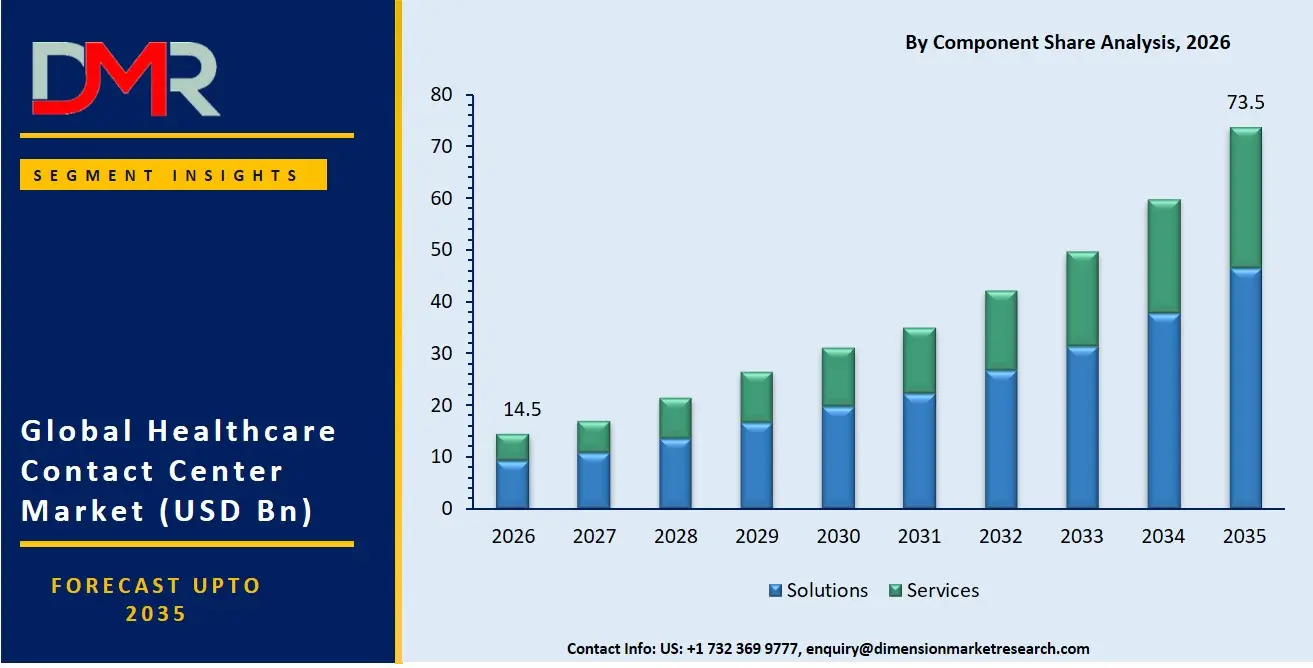
Solutions is expected to dominate the healthcare contact center market owing to the rising requirement for advanced communication solutions that can enhance engagement with the patients and improve efficiency.
ℹ
To learn more about this report –
Download Your Free Sample Report Here
There is a considerable amount of investment being made by healthcare companies in areas like IVR, CRM, workforce optimization, analytics, and AI-powered virtual assistants to improve the efficiency of the patient communication process and automate it. The adoption of omnichannel communications and cloud technology also drives the demand for contact center solutions. Healthcare organizations emphasize on scalable software solutions that can facilitate telehealth visits and appointments and provide an enhanced patient experience.
By Deployment Mode Analysis
The cloud-based deployment model is anticipated to dominate the market due to its flexible and scalable nature, as well as its cost-effectiveness when contrasted with the on-premises models. The use of cloud computing in healthcare facilities is growing because of the ease of remote functionality, telemedicine offerings, as well as smooth integration with the electronic health records and customer relationship management systems. Cloud computing allows for easy implementation, simpler maintenance, lower infrastructure costs, and availability. There is more emphasis on digital transformation and patient-oriented care that drives providers into adopting the cloud. The improvements in the field of cybersecurity and compliance have solidified the market leadership of cloud-based healthcare contact center platforms.
By Communication Channel Analysis
Voice will be expected to retain its dominance in the communication space owing to the fact that many healthcare encounters will need immediate and direct contact between patients and representatives from the health sector. In most cases, appointments, emergencies, prescriptions, insurance verifications, and coordination will be better served through voice calls. Patients, especially the older generation and those suffering from chronic illnesses, continue to favor voice communications because of their convenient nature and personal touch. Health professionals also use voice for handling large numbers of queries, offering quicker response and higher customer satisfaction.
By Enterprise Size Analysis
Large enterprises will be the leading segment in the healthcare contact centers market owing to their ability to afford and adopt technology in order to implement the most advanced communications infrastructure. Large chains of hospitals, healthcare systems, and insurance firms handle large numbers of patients and need advanced contact center technology in order to deliver smooth services. Their focus on complying with regulations, transforming their operations, and increasing customer engagement through new technology leads to the use of more advanced solutions. Large enterprises benefit from the scale effects in implementing advanced technologies for contact centers.
By Application Analysis
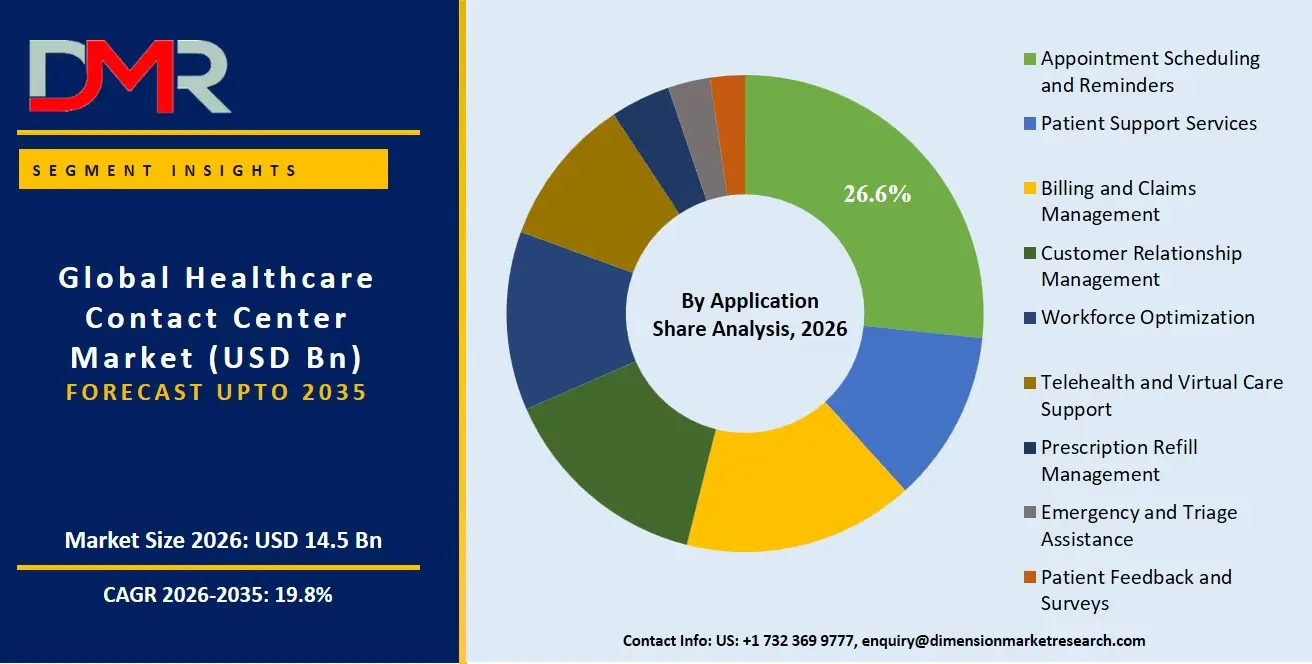
The patient support services are anticipated to be the leading application segment because there is increased focus on making the experience of the patients better and providing continuous care. Contact centers are important for answering queries from the patients, supplying them with medical information, organizing their care process, and communicating with them. There is an increase in chronic diseases and demand for customized healthcare services, which has led to the requirement for effective support services. Healthcare providers are using AI technology and omnichannel communication solutions to improve their responses and patient satisfaction levels.
By End User Analysis
Hospitals will be expected to hold their dominance in the healthcare contact center market due to the significant amount of patient contacts associated with appointment booking, bill payments, admissions, emergencies, and aftercare services. Hospitals with large numbers of branches tend to integrate sophisticated contact center software that can boost patient engagement as well as streamline internal processes within the organization. Contact centers integrated with electronic health records and telehealth platforms are able to offer more effective coordination and communications. Increasing demands from patients to get timely and personalized services are making hospitals implement AI-powered and cloud-based solutions.
The Global Healthcare Contact Center Market Report is segmented on the basis of the following:
By Component
- Solutions
- Automatic Call Distribution (ACD)
- Interactive Voice Response (IVR)
- Computer Telephony Integration (CTI)
- Customer Relationship Management (CRM)
- Workforce Optimization (WFO)
- Analytics & Reporting
- Omnichannel Communication Platforms
- AI-Based Virtual Assistants and Chatbots
- Services
- Professional Services
- Consulting
- Integration & Deployment
- Training & Support
- Managed Services
By Deployment Mode
- Cloud-Based
- On-Premises
- Hybrid
By Communication Channel
- Voice
- Email
- Chat
- SMS
- Social Media
- Video and Web-Based Support
By Enterprise Size
- Large Enterprises
- Small and Medium Enterprises (SMEs)
By Application
- Patient Support Services
- Appointment Scheduling and Reminders
- Billing and Claims Management
- Customer Relationship Management
- Workforce Optimization
- Telehealth and Virtual Care Support
- Prescription Refill Management
- Emergency and Triage Assistance
- Patient Feedback and Surveys
By End User
- Hospitals
- Clinics
- Ambulatory Surgical Centers (ASCs)
- Healthcare Payers and Insurance Companies
- Telemedicine Providers
- Home Healthcare Agencies
- Pharmaceutical and Life Sciences Companies
Regional Analysis
Leading Region by Market Share
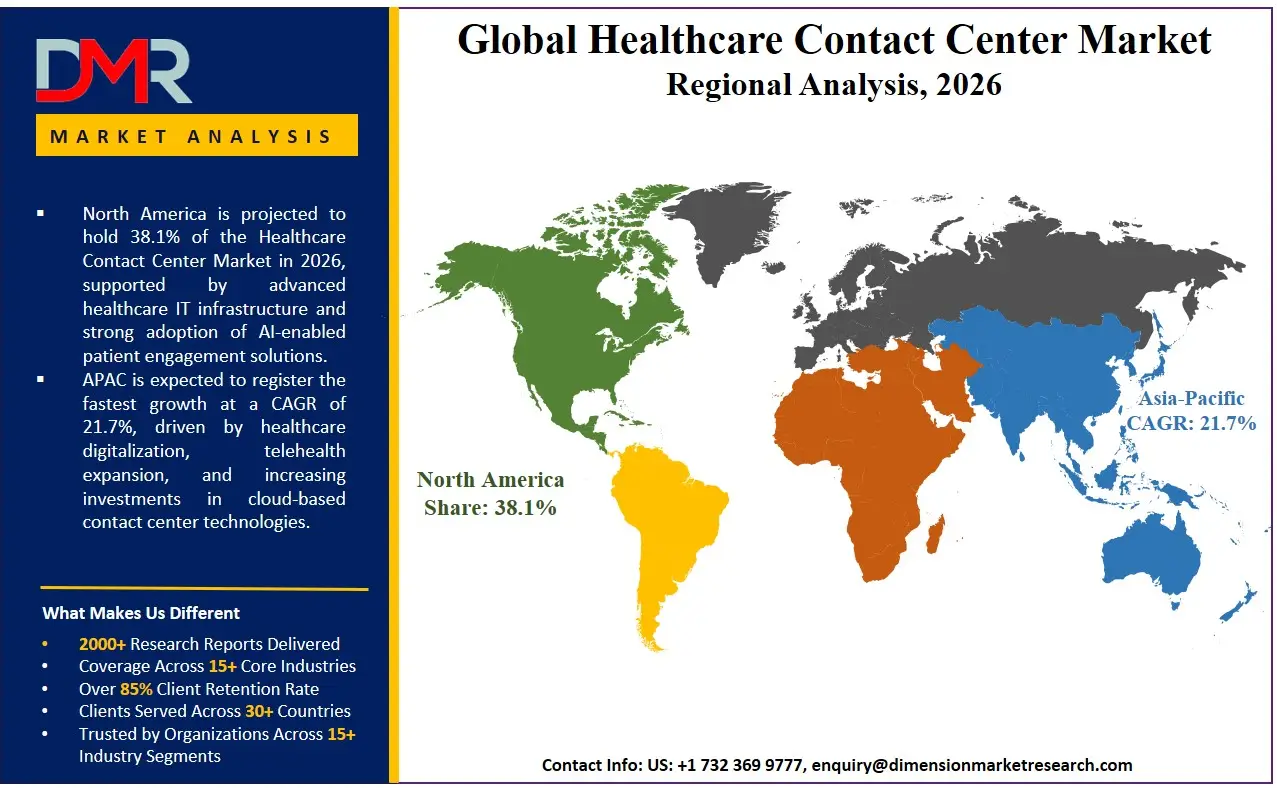
North America is poised to dominate the global healthcare contact center market, projected to hold a 38.1% of the market share by the end of 2026. The US leads North America because of the highly concentrated presence of health IT companies, aggressive agendas of the transition to value-based care among big IDNs, and strict regulations on patient experience tied to HCAHPS scoring and payment programs. This region features an already established environment consisting of global system integrators, specialized consultancies on healthcare IT, and strong resources of clinical informatics specialists. Corporate investments in AI, data analytics technologies, and migration from legacy ACD systems support the ongoing demand for implementation and deployment as well as managed services. In addition, there is a strong startup-friendly venture capital scene continuously investing in young digital health businesses requiring professional services for HIPAA compliance and patient acquisition.
ℹ
To learn more about this report –
Download Your Free Sample Report Here
Fastest-Growing Regional Market
The Asia Pacific will have the highest growth rate among all regions within the healthcare contact center market due to the national digital health programs that are being initiated by governments within India, China, Japan, and Singapore. Rapid economic development, a growing middle class demanding healthcare services, and the growing legislation regarding telemedicine make it necessary for well-established hospitals and public health institutions to do away with their non-productive legacy systems. Patient Support Services consulting is extremely popular, as it enables large institutions to create an omnichannel access approach in the cloud. There is also a shortage of skilled professionals within the field of health IT, thus forcing these institutions to outsource professional services.
By Region
North America
Europe
- Germany
- The U.K.
- France
- Italy
- Russia
- Spain
- Benelux
- Nordic
- Rest of Europe
Asia-Pacific
- China
- Japan
- South Korea
- India
- ANZ
- ASEAN
- Rest of Asia-Pacific
Latin America
- Brazil
- Mexico
- Argentina
- Colombia
- Rest of Latin America
Middle East & Africa
- Saudi Arabia
- UAE
- South Africa
- Israel
- Egypt
- Rest of MEA
Competitive Landscape
Today's competitive landscape in the global healthcare contact center market has transformed into an incredibly dynamic one, with various types of multinational CX providers, EHR-related communications players, and specialized artificial intelligence-powered triage firms competing against each other. It all boils down to forming strong strategic partnerships with such prominent EHR firms as Epic or Cerner, for the integration of CTI and clinical workflow will make co-selling opportunities and interoperability certification a reality. The trend of market consolidation is growing exponentially fast, with major CX platforms buying up niche clinical conversational AI start-ups in order to survive. Proprietary technology, which includes automated clinical summarization systems and industry-specific emergency triage acceleration capabilities, is more crucial today than automatic call distribution capability.
Some of the prominent players in the Global Healthcare Contact Center Market are:
- Cisco Systems
- Genesys
- NICE Ltd.
- Five9
- Talkdesk
- Amazon Web Services (AWS)
- Microsoft Corporation
- Oracle Corporation
- Salesforce
- 8x8 Inc.
- Avaya
- RingCentral
- Mitel Networks
- Alvaria
- Content Guru
- Vonage
- Twilio
- Verint Systems
- Zoom Communications
- Enghouse Interactive
- Other Key Players
Recent Developments
- February 2026: Epic Systems added further enhancements to its Cheers CRM integrations with the top CCaaS vendors, allowing agents' computer telephony integration screen-pops of the patient longitudinal record data into their workstations, catering specifically to hospital users.
- October 2025: NICE introduced its AI-Based Virtual Assistant product designed for Healthcare Payers, which is aimed at automating only the status check for insurance prior authorizations using natural language processing technology.
- July 2025: Talkdesk enhanced its partnership with Amazon Web Services (AWS) by integrating its Telehealth and Virtual Care Support feature module that includes video and web-based assistance as part of HIPAA compliant omnichannel communication solution specifically for telemedicine provider users.
Report Details
| Report Characteristics |
| Market Size (2026) |
USD 14.5 Bn |
| Forecast Value (2035) |
USD 73.5 Bn |
| CAGR (2026–2035) |
19.8% |
| The US Market Size (2026) |
USD 4.6 Bn |
| Historical Data |
2021 – 2025 |
| Forecast Data |
2027 – 2035 |
| Base Year |
2025 |
| Estimate Year |
2026 |
| Segments Covered |
By Component, By Deployment Mode, By Communication Channel, By Enterprise Size, By Application, and By End User |
| Regional Coverage |
North America – The US and Canada; Europe – Germany, The UK, France, Russia, Spain, Italy, Benelux, Nordic, & Rest of Europe; Asia-Pacific – China, Japan, South Korea, India, ANZ, ASEAN, Rest of APAC; Latin America – Brazil, Mexico, Argentina, Colombia, Rest of Latin America; Middle East & Africa – Saudi Arabia, UAE, South Africa, Turkey, Egypt, Israel, & Rest of MEA |
Frequently Asked Questions
What is the CAGR of the Global Healthcare Contact Center Market from 2026 to 2035?
▾ The market is expected to grow at a CAGR of 19.8% from 2026 to 2035, reflecting the accelerating consumerization of healthcare and the persistent shortage of clinical personnel to manage patient access lines.
What factors are driving the growth of the Global Healthcare Contact Center Market?
▾ Key drivers include the global clinical staffing crisis, the imperative to modernize legacy telephony ACD infrastructure, the management complexity of omnichannel and multi-site deployments, and the surge in demand for AI-Based Virtual Assistants amid evolving patient data privacy laws.
How big is the Global Healthcare Contact Center Market?
▾ The Global Healthcare Contact Center market is poised to be valued at USD 14.5 billion in 2026 and is projected to reach USD 73.5 billion by 2035, driven by the universal need for specialized solutions in omnichannel patient engagement, clinical triage automation, and workforce optimization.
Which region held the largest share of the Healthcare Contact Center Market in 2026?
▾ North America is poised to hold a 38.1% of market share in 2026, driven by a mature health IT ecosystem and aggressive enterprise investment in digital front door strategies and cloud-based contact center capabilities.
Which region is expected to grow the fastest in the Healthcare Contact Center Market?
▾ The Asia-Pacific region is expected to grow the fastest, fueled by rapid digital health transformation in India, China, and Japan, where Patient Support Services consulting is critical for transitioning large hospital conglomerates to cloud-native patient engagement operations.
What are the major trends in the Global Healthcare Contact Center Market?
▾ Major trends include the integration of Generative AI into nurse triage workflows, the rise of health equity analytics, the demand for secure video and web-based support, and the focus on Workforce Optimization within complex virtual care environments.
Who are the key players in the Global Healthcare Contact Center Market?
▾ Key players include Global CX Platform vendors like NICE, Genesys, and Five9, as well as CRM and EHR-adjacent communication providers like Salesforce Health Cloud and Epic Systems, alongside specialized pure-play healthcare conversational AI companies.
How is the Global Healthcare Contact Center Market segmented?
▾ The market is segmented by Component, Deployment Mode, Communication Channel, Enterprise Size, Application, and End User.