What is the Healthcare Digital Twins Market Size?
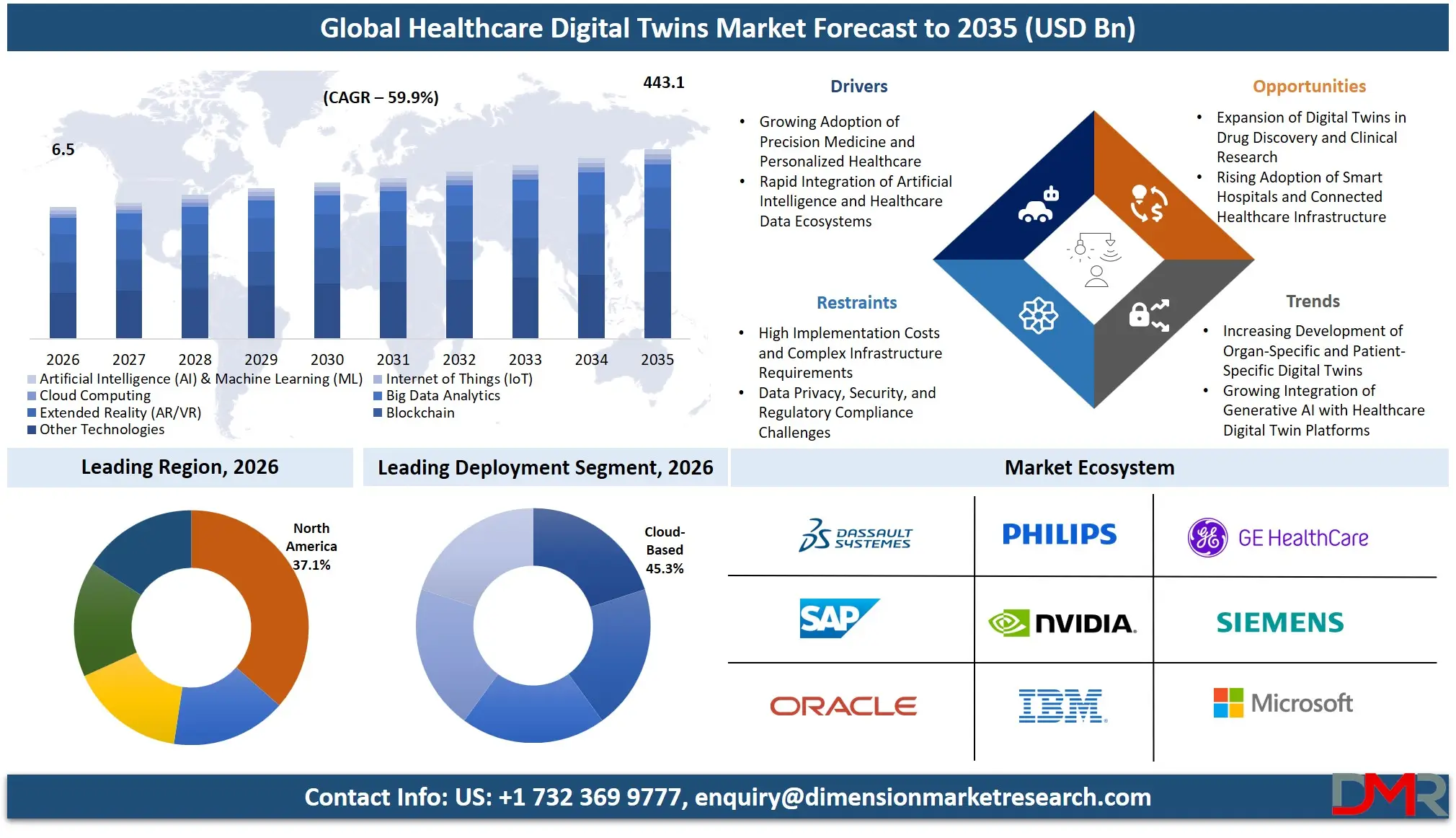
The Global Healthcare Digital Twins Market is expected to reach a value of USD 6.5 billion in 2026, and it is further anticipated to reach USD 443.1 billion by 2035, growing at a CAGR of 59.9% during the forecast period.
ℹ
To learn more about this report –
Download Your Free Sample Report Here
The healthcare digital twins market is experiencing exponential growth as the life sciences and provider sectors accelerate the shift toward precision medicine and virtualized care models, moving beyond traditional trial-and-error methodologies to predictive, personalized simulations. The market consists of virtual replicas of patients, organs, hospital operations, and medical devices that assist stakeholders in simulating therapies, optimizing clinical workflows, and predicting system failures. The increasing demand to implement in silico trials, connected biomanufacturing, and AI-driven diagnostics is driving the necessity of specialized digital twin platforms and services. Pharmaceutical companies and hospital networks are the most frequent adopters, with cloud-based deployment remaining the most popular because of its scalability and capacity for federated data sharing. The pharmaceutical & biotechnology, hospital & healthcare provider, and medical device manufacturing verticals are key players as they require validated, compliant, and highly available computational modeling ecosystems.
The US Healthcare Digital Twins Market
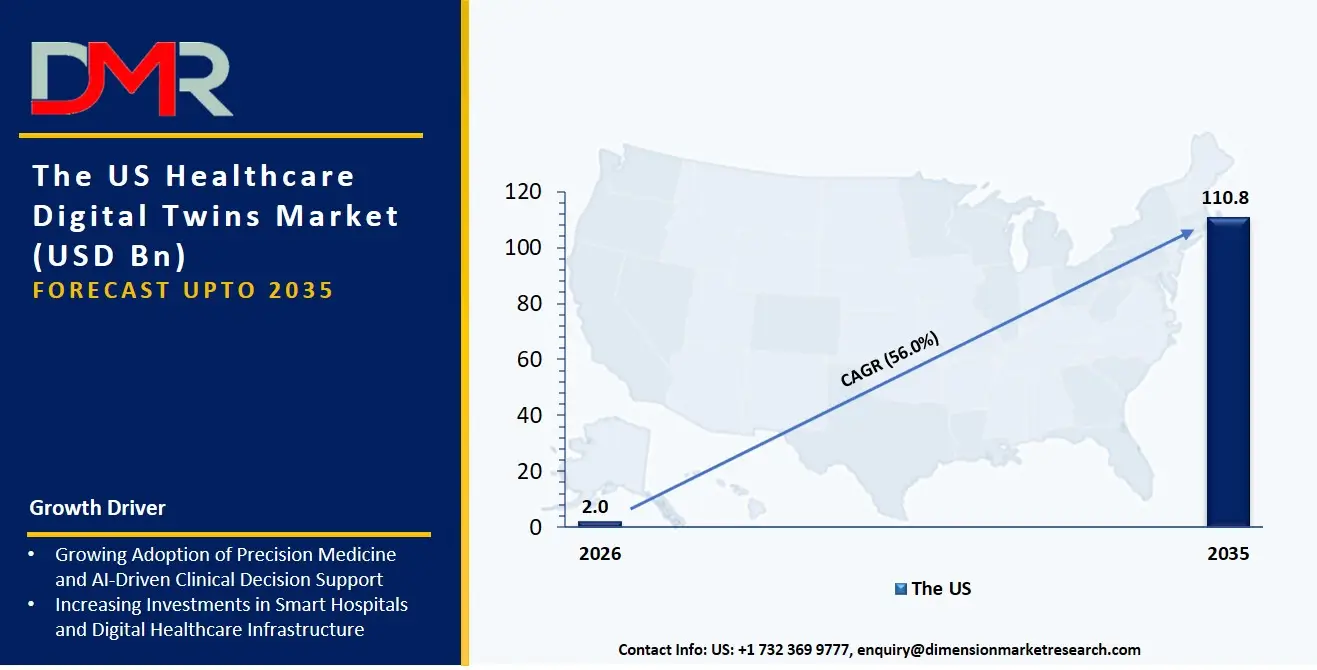
The US Healthcare Digital Twins Market is projected to reach USD 2.0 billion in 2026 at a compound annual growth rate of 56.0% over its forecast period, culminating in a value of USD 110.8 billion by 2035.
ℹ
To learn more about this report –
Download Your Free Sample Report Here
The US continues to be the largest and most advanced market in healthcare digital twins due to the aggressive R&D digitalization efforts of leading biopharma enterprises and the growing distribution of AI-driven research infrastructure. The market has been typified by high demand for Patient Digital Twins whereby organizations are aimed at creating virtual cardiovascular or metabolic models to predict individual drug response in silico. Besides, the implementation of generative AI in Organ Digital Twins is producing a similar need in Analytics & AI Software to regulate model validation and in silico regulatory evidence frameworks within the cloud.
The Europe Healthcare Digital Twins Market
The Europe Healthcare Digital Twins Market is estimated to be valued at USD 1.9 billion in 2026 and is further anticipated to reach USD 125.1 billion by 2035 at a CAGR of 58.7%. The regulatory frameworks including the European Health Data Space (EHDS) and the upcoming EU AI Act have a significant impact on the European market and drive the need to employ Implementation & Integration Services and sovereign data clouds for virtual physiological modeling. Accelerated growth of Hybrid Deployment services is also being experienced in the region as academic medical centers and university hospitals in Germany and France are trying to strike a balance in patient data residency with the need for multi-institutional federated learning on System Twins. In addition, initiatives such as the Virtual Human Twin are challenging software providers to create dedicated Simulation Software platforms to provide semantic interoperability and data altruism across European healthcare ecosystems.
The Japan Healthcare Digital Twins Market
The Japan Healthcare Digital Twins Market is projected to be valued at USD 0.65 billion in 2026. It is further expected to witness robust growth, holding USD 41.2 billion in 2035 at a CAGR of 54.5%. The Japanese market is unique, with a national drive to Society 5.0 in response to a super-aging population and the strain on healthcare infrastructure. Healthcare Infrastructure Twins and Hospital Operations Twins make up a large part of the spending as large hospital conglomerates migrate from static facility management to dynamic simulation of patient flow and resource allocation. There is also a strong need to integrate deeply in the local market to bridge the gaps between the old Electronic Medical Record (EMR) systems and robotic surgery devices to new cloud-based Surgical Planning & Simulation platforms, which forms a niche in Implementation & Integration Services and workflow automation.
Key Takeaways
- Market Size & Forecast: The Global Healthcare Digital Twins market is projected to reach USD 6.5 billion in 2026, expanding to USD 443.1 billion by 2035, fueled by the dual drivers of AI-driven drug discovery and the mandatory shift toward patient-centric, predictive care models.
- Growth Rate & Outlook: Global market growth is expected at an explosive CAGR of 59.9%, driven by a critical shortage of in-house computational biologists and the escalating complexity of managing multi-scale models that span from genomic data to whole-organ physiology.
- Primary Growth Drivers: Key forces include the widespread migration from physical prototyping in medical device design to virtual testing via Device Digital Twins, the need for Digital Twin Platforms to derisk clinical trials, and the integration of real-world data streams requiring specialized Analytics & AI Software.
- Key Market Trends: Major trends include the rise of indication-specific virtual organs (e.g., digital heart, digital lung), the use of AI-powered surrogates within Simulation Software to accelerate complex biophysical computations, and the shift toward "in silico first" regulatory evidence strategies.
- By Deployment Analysis: Cloud-Based models are expected to dominate due to the computational intensity of high-fidelity simulations and the need for collaborative, multi-stakeholder platforms. Professional services are increasingly required to build seamless cybersecurity layers that connect on-premise hospital edge devices with public cloud AI inference engines.
- By End User Analysis: Pharmaceutical & Biotechnology Companies and Hospitals & Healthcare Providers are the most lucrative end users due to the need to accelerate R&D pipelines and personalize care pathways. Medical Device Manufacturers are the fastest-growing segment as digital evidence becomes central to regulatory submissions.
- Regional Leadership: North America is poised to dominate this market with 37.1% of the market share in 2026 due to its well-developed ecosystem of life sciences innovation that utilizes this infrastructure to its fullest and makes it a leader in the in silico medicine revolution.
What is the Healthcare Digital Twins?
Healthcare Digital Twins are the specialized virtual representation and simulation services that are offered by third-party software vendors, systems integrators, and computational modeling consultancies to assist organizations across the entire healthcare value chain. These services, unlike static medical imaging or basic analytics, are related to the dynamic, predictive modeling of biological and operational systems. This involves Patient Digital Twins to forecast disease progression, Process Twins to optimize perioperative patient throughput, and System Twins to create a digital replica of a hospital's entire infrastructure. With 90% of top-tier pharma companies experimenting with in silico methods, digital twin platforms are needed to achieve model governance, regulatory-grade validation, and multi-scale integration, making digital investments translate into tangible clinical acceleration and operational resilience, as opposed to technical novelty.
Use Cases
- Virtual Heart Modeling for Cardiac Devices: Medical device manufacturers use Organ Digital Twins and Simulation Software to virtually implant novel pacemakers into a digital heart model, predicting electrophysiological response and reducing the size of costly human clinical trials.
- In Silico Oncology for Trial Optimization: Pharmaceutical companies use Patient Digital Twins and Analytics & AI Software to create virtual control arms, simulating placebo responses in cancer patients to accelerate enrollment and reduce the number of human subjects required for randomization.
- Hospital Capacity Planning for Pandemics: Government organizations use Hospital Operations Twins to deploy architectures that simulate infectious disease surges, ensuring that ICU bed capacity, staffing resources, and ventilator allocation are optimized without disrupting existing emergency department workflows.
- Predictive Maintenance of Imaging Equipment: Healthcare providers use Device Digital Twins and Cloud Computing to integrate real-time sensor data from MRI and CT scanners with cloud-based analytics, enabling the prediction of gradient coil failures and scheduling zero-downtime maintenance.
How AI is Transforming the Healthcare Digital Twins Market?
AI is fundamentally transforming healthcare digital twins by accelerating both model development and the clinical translation of simulation insights. In Analytics & AI Software, AI-based surrogate models have the potential to approximate complex, physics-based simulations in milliseconds, greatly minimizing the computational cost and enabling real-time clinical decision support, such as intraoperative Surgical Planning & Simulation. Meanwhile, generative AI features in Digital Twin Platforms allow researchers to synthesize high-fidelity virtual patient populations, creating diverse cohorts for Clinical Trials Optimization while protecting real patient privacy.
Governance and therapeutic discovery projects are also revolving around AI. In the area of Consulting Services, intelligent model validation agents are used to continuously check computational models against evolving clinical data and identify data drift, prediction bias, and compliance breaches to keep digital evidence packages aligned with frameworks like FDA's guidance on computational modeling. Moreover, large language models are complementing Drug Discovery & Development by simulating the binding affinity of a virtual molecule to a digital twin of a target protein, giving researchers a visualization of therapeutic potential before wet-lab synthesis.
Market Dynamics
Key Drivers in the Global Healthcare Digital Twins Market
Growing Adoption of Precision Medicine and Personalized Healthcare
The increasing emphasis on precision medicine is a major driver of the Healthcare Digital Twins market. Healthcare providers are leveraging digital twin technology to create individualized virtual models using patient-specific data, including genomics, medical imaging, clinical history, laboratory results, and wearable device information. These virtual replicas enable physicians to predict disease progression, evaluate treatment responses, and optimize therapies before clinical intervention. Rising investments in genomics, artificial intelligence, and digital health infrastructure are accelerating adoption worldwide. As healthcare systems transition toward patient-centric care, digital twins are becoming indispensable for improving diagnostic accuracy, treatment effectiveness, clinical outcomes, and overall healthcare efficiency across diverse medical specialties.
Rapid Integration of Artificial Intelligence and Healthcare Data Ecosystems
Artificial intelligence, machine learning, and connected healthcare systems are significantly accelerating the adoption of healthcare digital twins. Modern hospitals increasingly integrate electronic health records, IoT-enabled medical devices, imaging systems, and real-time patient monitoring platforms to generate comprehensive datasets for digital twin models. AI continuously analyzes these data streams to improve predictive accuracy, automate clinical decision-making, and optimize hospital operations. Growing deployment of cloud computing and interoperable healthcare platforms further enhances digital twin functionality across healthcare networks. Continuous technological advancements and increasing digital transformation initiatives are driving widespread implementation of intelligent digital twin solutions throughout the global healthcare ecosystem.
Restraints in the Global Healthcare Digital Twins Market
High Implementation Costs and Complex Infrastructure Requirements
Healthcare digital twin deployment requires significant investments in advanced software platforms, cloud infrastructure, artificial intelligence capabilities, high-performance computing, cybersecurity, and system integration. Healthcare organizations must also modernize legacy information systems while ensuring interoperability among electronic health records, imaging equipment, wearable devices, and laboratory platforms. These complex implementation requirements increase project costs and prolong deployment timelines. Small and medium-sized healthcare providers often face financial constraints that limit technology adoption. Additionally, continuous software upgrades, infrastructure maintenance, and specialized workforce requirements further increase operational expenses, making cost a significant restraint for broader market penetration globally.
Data Privacy, Security, and Regulatory Compliance Challenges
Healthcare digital twins rely on vast amounts of sensitive patient information, making cybersecurity, privacy protection, and regulatory compliance critical challenges. Healthcare organizations must comply with strict data protection regulations while securely integrating medical records, genomic information, wearable device data, and imaging results into digital twin platforms. Cybersecurity threats, data breaches, unauthorized access, and concerns regarding patient consent continue limiting adoption. Differences in regional healthcare regulations further complicate international implementation and data sharing initiatives. Ensuring secure, compliant, and ethical management of highly sensitive patient data remains a major obstacle affecting widespread commercialization of healthcare digital twin technologies.
Growth Opportunities in the Global Healthcare Digital Twins Market
Expansion of Digital Twins in Drug Discovery and Clinical Research
Healthcare digital twins present significant opportunities to transform pharmaceutical research and clinical development. Pharmaceutical and biotechnology companies increasingly utilize virtual patient models to simulate disease progression, evaluate drug efficacy, optimize dosing strategies, and predict adverse reactions before conducting expensive clinical trials. Digital twins reduce research costs, accelerate product development timelines, and improve clinical trial success rates by identifying suitable patient populations. Growing investments in precision medicine, computational biology, and AI-driven drug discovery further expand market opportunities. As pharmaceutical innovation accelerates globally, healthcare digital twins will become increasingly valuable throughout the drug development lifecycle.
Rising Adoption of Smart Hospitals and Connected Healthcare Infrastructure
The rapid development of smart hospitals creates substantial opportunities for healthcare digital twin technologies. Healthcare providers are investing in connected medical devices, Internet of Things platforms, artificial intelligence, cloud computing, and predictive analytics to improve patient care and operational efficiency. Digital twins enable hospitals to optimize patient flow, monitor critical medical equipment, predict maintenance requirements, manage healthcare resources, and enhance emergency preparedness. Government investments supporting healthcare digitalization and hospital modernization further strengthen market expansion. The increasing integration of intelligent healthcare infrastructure is expected to generate long-term growth opportunities for digital twin solution providers worldwide.
Trends in the Global Healthcare Digital Twins Market
Increasing Development of Organ-Specific and Patient-Specific Digital Twins
Healthcare organizations are increasingly developing highly specialized digital twins representing individual organs and entire patients to improve precision medicine capabilities. Advanced computational models replicate physiological behavior using medical imaging, genomic sequencing, biomarker analysis, and real-time physiological monitoring. These digital twins enable clinicians to simulate surgical procedures, predict disease progression, personalize treatment strategies, and improve long-term patient management. Continuous advances in computational modeling, artificial intelligence, and biomedical engineering are expanding the clinical applications of organ-specific digital twins. Their growing adoption is transforming personalized healthcare delivery across multiple medical specialties worldwide.
Growing Integration of Generative AI with Healthcare Digital Twin Platforms
Generative artificial intelligence is emerging as a transformative trend within healthcare digital twin platforms. AI models increasingly automate medical image interpretation, clinical documentation, predictive diagnostics, treatment optimization, and virtual patient simulation using continuously updated healthcare datasets. Combining generative AI with digital twins enables more accurate disease forecasting, real-time clinical decision support, and personalized therapeutic recommendations. Healthcare providers are investing heavily in AI-enabled digital platforms to improve patient outcomes while reducing operational complexity. As regulatory frameworks mature and computing capabilities advance, AI-powered digital twins are expected to become a core component of future intelligent healthcare systems.
Research Scope and Analysis
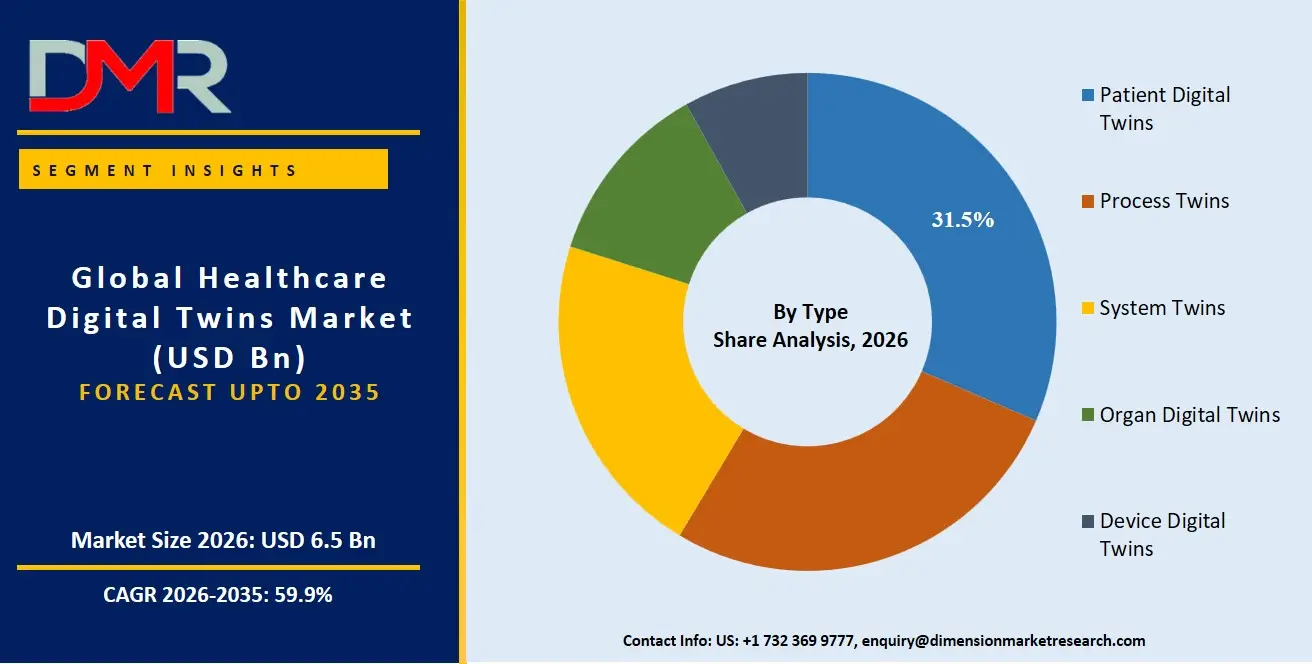
The Global Healthcare Digital Twins Market Report is segmented by Component, Type, Deployment, Technology, Application, and End User. The analysis evaluates software and services, digital twin models, deployment environments, enabling technologies, clinical and operational applications, and major end-user groups, providing comprehensive insights into market trends, adoption patterns, competitive dynamics, and future growth opportunities.
ℹ
To learn more about this report –
Download Your Free Sample Report Here
By Component Analysis
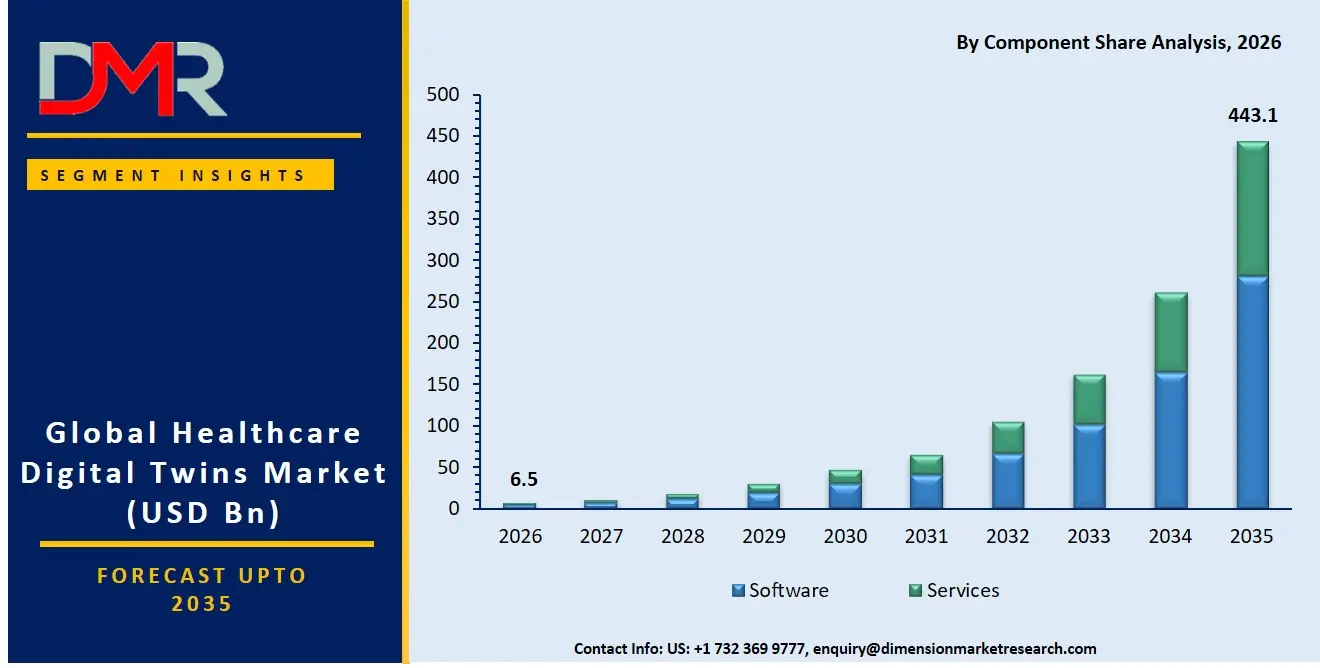
The Software segment is poised to dominates the Healthcare Digital Twins market because it forms the foundation for creating, simulating, analyzing, and managing digital twin models across healthcare environments.
ℹ
To learn more about this report –
Download Your Free Sample Report Here
Advanced software platforms integrate artificial intelligence, machine learning, cloud computing, and real-time patient data to generate dynamic virtual replicas that support clinical decision-making and operational optimization. Hospitals, pharmaceutical companies, and medical device manufacturers increasingly invest in digital twin software to enhance predictive analytics, treatment planning, and research efficiency. Continuous innovations in simulation, visualization, and AI-powered analytics have expanded software capabilities, while recurring licensing models and seamless interoperability with healthcare information systems further strengthen software's leading position in the global market.
By Type Analysis
Patient Digital Twins is expected to dominate the type segment due to their growing role in enabling personalized healthcare, precision medicine, and predictive disease management. These digital replicas integrate patient-specific clinical records, genomic information, medical imaging, wearable device data, and physiological parameters to simulate disease progression and treatment outcomes. Healthcare providers increasingly adopt patient digital twins to improve diagnosis, optimize therapies, reduce adverse events, and enhance long-term patient monitoring. Rising investments in artificial intelligence, precision medicine initiatives, and connected healthcare infrastructure continue supporting widespread adoption. Their ability to improve individualized care while reducing healthcare costs firmly establishes patient digital twins as the dominant segment.
By Technology Analysis
Artificial Intelligence (AI) and Machine Learning (ML) is anticipated to dominate the technology segment because they enable healthcare digital twins to continuously learn from vast clinical datasets and generate accurate predictive insights. AI algorithms analyze medical imaging, electronic health records, genomic profiles, wearable sensor data, and laboratory results to build dynamic virtual patient models. Machine learning continuously refines these models as new data becomes available, improving disease prediction, treatment optimization, and operational decision-making. Rapid advancements in generative AI, deep learning, and predictive analytics have significantly expanded digital twin capabilities. Growing investments in AI-powered healthcare transformation continue reinforcing this technology's market leadership globally.
By Deployment Analysis
The Cloud-Based Deployment is anticipated to dominate because it provides healthcare organizations with scalable computing resources, centralized data management, remote accessibility, and cost-effective infrastructure for deploying digital twin solutions. Cloud platforms facilitate integration of electronic health records, medical imaging, IoT devices, and AI analytics while supporting secure collaboration among clinicians, researchers, and healthcare institutions. Continuous improvements in cloud security, regulatory compliance, and interoperability have accelerated adoption across hospitals and pharmaceutical companies. The ability to process large healthcare datasets, rapidly deploy software updates, and support advanced analytics makes cloud-based deployment the preferred model for modern healthcare digital twin implementations.
By Application Analysis
Personalized Medicine is poised to dominate the application segment because healthcare digital twins enable individualized diagnosis, treatment planning, and disease prediction based on each patient's unique biological characteristics. By combining genomic data, medical imaging, clinical history, physiological measurements, and real-time monitoring, digital twins simulate patient-specific responses before therapies are administered. This significantly improves treatment effectiveness while reducing unnecessary procedures and adverse reactions. Growing investments in precision medicine, genomics, artificial intelligence, and digital healthcare ecosystems continue driving adoption across hospitals and research institutions. The increasing demand for patient-centric healthcare further reinforces personalized medicine as the leading application worldwide.
By End User Analysis
Hospitals & Healthcare Providers is projected to dominate the end-user segment because they generate the largest volume of patient data and directly utilize digital twin technologies for diagnosis, treatment planning, operational management, and patient monitoring. Large healthcare systems increasingly integrate digital twins with electronic health records, medical imaging platforms, and connected medical devices to improve clinical outcomes and optimize resource utilization. Rising patient volumes, growing demand for precision medicine, and investments in smart hospital infrastructure continue accelerating adoption. Strong government support for healthcare digitalization and continuous advancements in AI-driven clinical decision support further strengthen hospitals' dominant position in the Healthcare Digital Twins market.
The Global Healthcare Digital Twins Market Report is segmented on the basis of the following:
By Component
- Software
- Simulation Software
- Visualization Software
- Analytics & AI Software
- Digital Twin Platforms
- Services
- Consulting Services
- Implementation & Integration Services
- Support & Maintenance Services
By Type
- Patient Digital Twins
- Process Twins
- Clinical Workflow Twins
- Hospital Operations Twins
- System Twins
- Hospital System Twins
- Healthcare Infrastructure Twins
- Organ Digital Twins
- Device Digital Twins
By Deployment
- Cloud-Based
- On-Premises
- Hybrid
By Technology
- Artificial Intelligence (AI) & Machine Learning (ML)
- Internet of Things (IoT)
- Cloud Computing
- Big Data Analytics
- Extended Reality (AR/VR)
- Blockchain
- Other Technologies
By Application
- Personalized Medicine
- Drug Discovery & Development
- Clinical Trials Optimization
- Surgical Planning & Simulation
- Disease Monitoring & Management
- Medical Device Design & Monitoring
- Hospital Operations & Resource Optimization
- Predictive Maintenance of Medical Equipment
- Medical Education & Training
- Other Applications
By End User
- Hospitals & Healthcare Providers
- Pharmaceutical & Biotechnology Companies
- Medical Device Manufacturers
- Research & Academic Institutes
- Healthcare Payers
- Government & Regulatory Organizations
Regional Analysis
Leading Region by Market Share
ℹ
To learn more about this report –
Download Your Free Sample Report Here
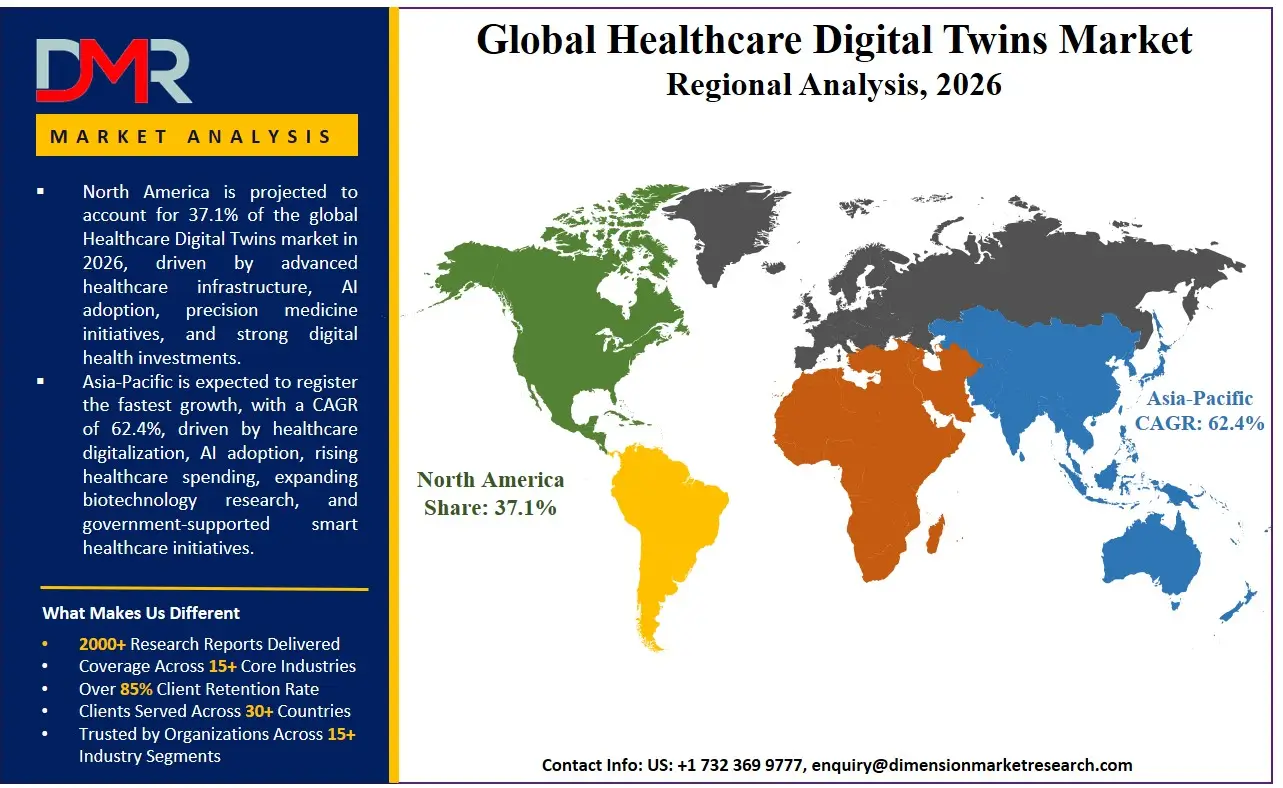
North America is poised to dominate the global healthcare digital twins market as it is projected to hold 37.1% of the market share by the end of 2026. The United States, which dominates North America, has the highest share in the healthcare digital twins market because of the unmatched concentration of cloud hyperscalers with life-sciences-specific offerings and the aggressive virtual clinical trial agendas of the top 20 global biopharma enterprises. The area has an established ecosystem of global systems integrators, boutique computational modeling firms, and a rich pool of talent in quantitative systems pharmacology and biomedical simulation engineering. Enterprise investment in generative AI for in silico protein design, advanced medical imaging analytics, and the overall retirement of legacy statistical programming environments contribute to the continued demand for Digital Twin Platforms and multi-scale Simulation Software along with continuous model validation and maintenance. Moreover, an optimistic venture capital climate persistently finances upcoming digital-native biotech startups that need expert consulting and implementation services to achieve rapid regulatory qualification and build trust with clinical end-users.
Fastest-Growing Regional Market
Asia-Pacific is expected to be the most rapidly expanding healthcare digital twins market, driven by the government-led sweeping digital health transformation initiatives in China, Japan, India, and Singapore. The fast-paced economic growth, the rise of a middle-income population demanding superior care, and the dynamic expansion of generic and innovative pharmaceutical manufacturing are compelling established hospital conglomerates and state research agencies to discard unproductive, paper-based operational processes. Business transformation consulting for virtual hospital command centers is in high demand to help these large organizations head in the direction of a predictive, resource-optimized operating model. There is also a severe lack of qualified computational modeling talent in the region, making it necessary to outsource Simulation Software and Support & Maintenance Services to implement, integrate, and manage security for Hospital Operations Twins, covering the skills gap and enabling faster investments in advanced digital health projects.
By Region
North America
Europe
- Germany
- The U.K.
- France
- Italy
- Russia
- Spain
- Benelux
- Nordic
- Rest of Europe
Asia-Pacific
- China
- Japan
- South Korea
- India
- ANZ
- ASEAN
- Rest of Asia-Pacific
Latin America
- Brazil
- Mexico
- Argentina
- Colombia
- Rest of Latin America
Middle East & Africa
- Saudi Arabia
- UAE
- South Africa
- Israel
- Egypt
- Rest of MEA
Competitive Landscape
The competitive environment of global healthcare digital twins has become highly dynamic with a heterogeneous array of multinational life-sciences-focused system integrators, the computational biology divisions of the large cloud hyperscalers, and niche in silico simulation startups. The key to success will be the profound strategic alliances with AWS, Microsoft Azure, or NVIDIA's Clara platform because they will open the necessary co-selling opportunities and early access to the new GPU-accelerated capabilities of the platforms. The movement towards market consolidation is rapidly progressing with the traditional Contract Research Organizations (CROs) acquiring quantitative systems pharmacology and AI-native biotech boutiques to build a one-stop in silico service offering. Proprietary intellectual property, including validated organ-specific model libraries and industry-specific solution accelerators (e.g., virtual control arms for oncology), is becoming a more important basis of competitive differentiation than just generic model-building or data management approaches.
Some of the prominent players in the Global Healthcare Digital Twins Market are:
- Dassault Systèmes
- Siemens Healthineers
- Philips
- GE HealthCare
- Microsoft
- Oracle
- IBM
- NVIDIA
- SAP SE
- Twin Health
- Unlearn
- The AnyBody Technology
- Ansys
- Medtronic
- Johnson & Johnson MedTech
- Abbott
- Nurocor
- Virtonomy GmbH
- PrediSurge
- Brainlab
- Other Key Players
Recent Developments
- September 2025: Siemens Healthineers announced a collaboration with the Mayo Clinic to develop AI-enhanced digital twins for cardiovascular care, leveraging medical imaging and patient data to improve disease prediction and personalized treatment planning.
- March 2025: Twin Health expanded deployment of its AI-powered metabolic digital twin platform through new healthcare provider and employer partnerships, strengthening its personalized chronic disease management solutions for diabetes and obesity care.
- February, 2025: Microsoft continued expanding its healthcare digital twin ecosystem by enhancing integration between Azure cloud, AI, IoT, and healthcare data platforms, enabling scalable patient modeling, predictive analytics, and precision medicine applications for healthcare organizations.
Report Details
| Report Characteristics |
| Market Size (2026) |
USD 6.5 Bn |
| Forecast Value (2035) |
USD 443.1 Bn |
| CAGR (2026–2035) |
59.9% |
| The US Market Size (2026) |
USD 2.0 Bn |
| Historical Data |
2021 – 2025 |
| Forecast Data |
2027 – 2035 |
| Base Year |
2025 |
| Estimate Year |
2026 |
| Segments Covered |
By Component, By Type, By Deployment, By Technology, By Application, and By End User |
| Regional Coverage |
North America – The US and Canada; Europe – Germany, The UK, France, Russia, Spain, Italy, Benelux, Nordic, & Rest of Europe; Asia-Pacific – China, Japan, South Korea, India, ANZ, ASEAN, Rest of APAC; Latin America – Brazil, Mexico, Argentina, Colombia, Rest of Latin America; Middle East & Africa – Saudi Arabia, UAE, South Africa, Turkey, Egypt, Israel, & Rest of MEA |
Frequently Asked Questions
How big is the Global Healthcare Digital Twins Market?
▾ The Global Healthcare Digital Twins market is poised to be valued at USD 6.5 billion in 2026 and is projected to reach USD 443.1 billion by 2035, driven by the universal need for specialized virtual simulation in personalized therapy development, clinical trials acceleration, and operational efficiency.
What is the CAGR of the Global Healthcare Digital Twins Market from 2026 to 2035?
▾ The market is expected to grow at a CAGR of 59.9% from 2026 to 2035, reflecting the accelerating adoption of in silico methods and the persistent shortage of internal biomedical simulation and computational modeling talent.
What factors are driving the growth of the Global Healthcare Digital Twins Market?
▾ Key drivers include the R&D productivity crisis in pharma, the imperative to personalize medicine through patient-specific modeling, the management complexity of multi-scale biological data, and the surge in demand for regulatory-grade computational evidence amid evolving FDA and EMA digital guidance.
Which region held the largest share of the Healthcare Digital Twins Market in 2026?
▾ North America is projected to hold 37.1% of the market share in 2026, driven by a mature biopharma and hyperscaler ecosystem and aggressive enterprise investment in Patient Digital Twins and AI-driven drug discovery capabilities.
Which region is expected to grow the fastest in the Healthcare Digital Twins Market?
▾ The Asia-Pacific region is expected to grow the fastest, fueled by rapid digital health transformation in China, Japan, and India, where Hospital Operations Twins are critical for transitioning large healthcare systems to predictive, AI-optimized resource management.
What are the major trends in the Global Healthcare Digital Twins Market?
▾ Major trends include the integration of Generative AI as model surrogates, the rise of Green Computing consulting for simulation workloads, the demand for digital-first regulatory evidence, and the focus on federated learning within Cloud-Based Digital Twin Platforms.
Who are the key players in the Global Healthcare Digital Twins Market?
▾ Key players include industrial simulation giants like Siemens Healthineers and Dassault Systèmes, AI infrastructure providers like NVIDIA, as well as cloud hyperscalers like Microsoft and Oracle, alongside specialized pure-play in silico biotech firms like Unlearn.AI and ELEM BioTech.
How is the Global Healthcare Digital Twins Market segmented?
▾ The market is segmented by Component, Type, Deployment, Technology, Application, and End User.