Market Overview
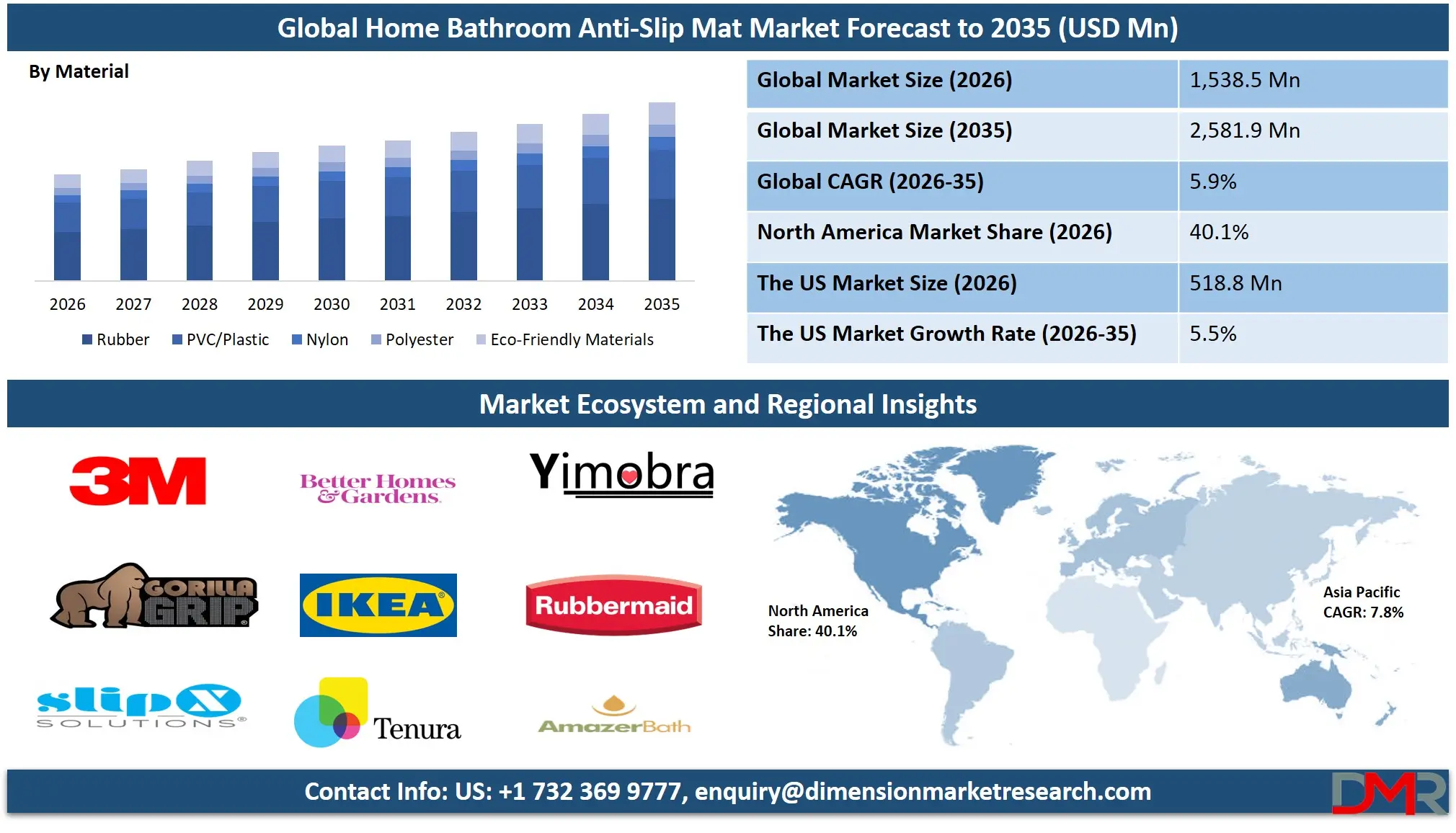
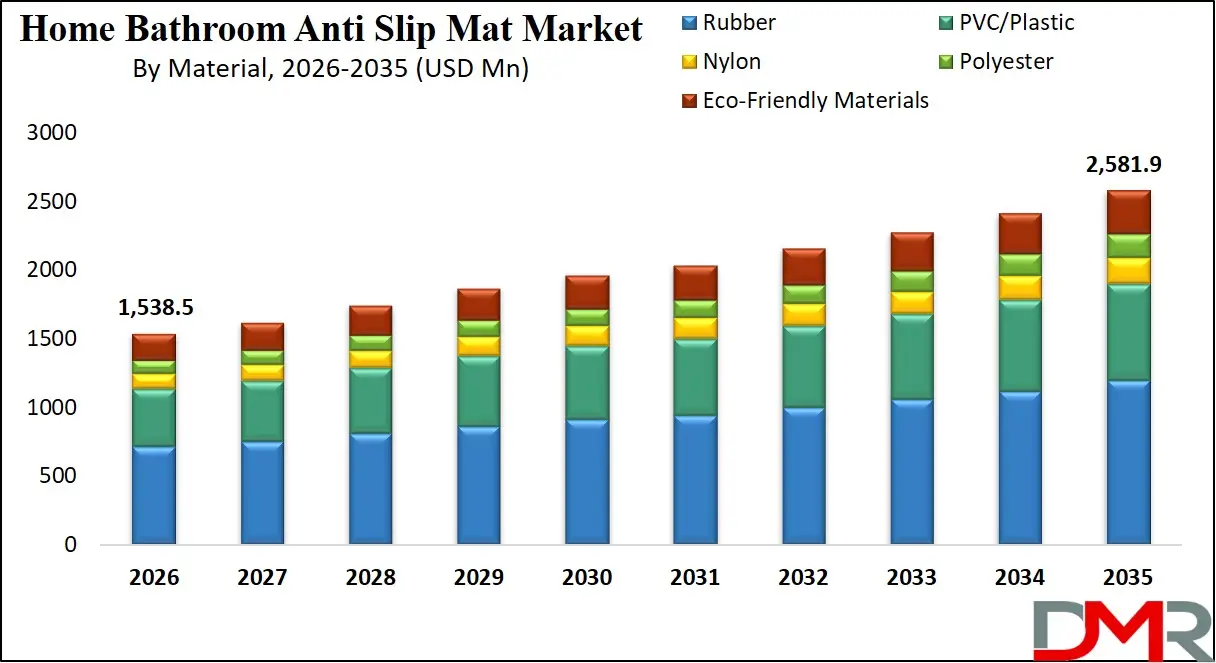
The Global Home Bathroom Anti Slip Mat Market is projected to reach USD 1,538.5 million in 2026 and grow at a compound annual growth rate of 5.9 % from there until 2035 to reach a value of USD 2,581.9 million. The market's steady growth is driven by the increasing emphasis on home safety, rising incidences of bathroom-related accidents among aging populations, stringent regulatory standards for residential safety, and the accelerated adoption of innovative materials and designs in home improvement.
ℹ
To learn more about this report –
Download Your Free Sample Report Here
Bathroom anti-slip mats enable precise, continuous, and proactive fall prevention through advanced suction cup technology, quick-drying materials, and ergonomic designs. The product addresses critical household challenges related to personal injury, slippery surfaces, water accumulation, and user confidence, supporting consumers in achieving higher bathroom safety and reduced accident risk.
Technological advancements, including high-grip rubber composites, antimicrobial fabric treatments, quick-dry foam technology, and machine-washable designs, are transforming the market into a scalable and highly consumer-centric ecosystem. Integration of smart features such as water temperature indicators and non-toxic, eco-friendly material certifications is reshaping consumer preferences and product lifecycle management.
ℹ
To learn more about this report –
Download Your Free Sample Report Here
Growing government and industry initiatives promoting home safety, universal design, and sustainable household products further accelerate global adoption. However, barriers such as price sensitivity in developing regions, lack of consumer awareness, competition from non-slip coatings and tiles, and concerns over mold and mildew remain. Despite these limitations, the convergence of material science, design innovation, and e-commerce positions the bathroom anti-slip mat as a central driver of global home safety transformation through 2035.
The US Home Bathroom Anti Slip Mat Market
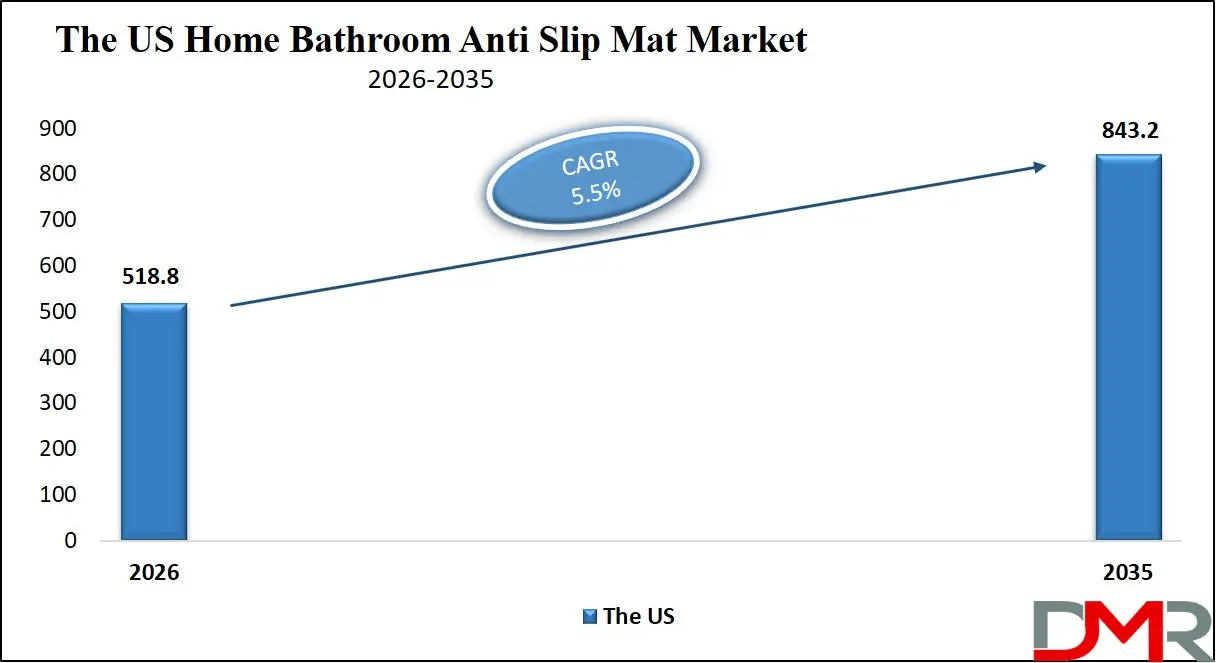
The US Home Bathroom Anti Slip Mat Market is projected to reach USD 518.8 million in 2026 at a compound annual growth rate of 5.5% over its forecast period. The U.S. leads global adoption due to its mature home improvement sector, high focus on senior living safety, and strong regulatory framework for consumer product safety and accessibility.
The pressing need to maximize bathroom safety in aging households, coupled with rising healthcare costs from fall-related injuries, fuels demand for advanced anti-slip solutions. Major retailers, home improvement chains, and online platforms are integrating a wide range of materials and price points to transition consumers from basic mats to performance-driven safety products. Companies such as 3M, Newell Brands, and Milliken & Company are piloting and deploying innovative, eco-friendly anti-slip mats across their home product lines.
ℹ
To learn more about this report –
Download Your Free Sample Report Here
U.S. regulatory support for Americans with Disabilities Act (ADA) compliance in residential settings, alongside consumer safety awareness campaigns under various home modernization initiatives, encourages investment. Training programs for retailers and partnerships with senior advocacy groups are emerging to develop consumer expertise, ensuring correct product selection and usage.
The rapid rise of e-commerce platforms, direct-to-consumer brands, and integration with smart home ecosystems continues to redefine the U.S. home safety landscape, positioning the country as a global leader in bathroom safety technologies.
The Europe Home Bathroom Anti Slip Mat Market
The Europe Home Bathroom Anti Slip Mat Market is estimated to be valued at USD 430.8 million in 2026 and is further anticipated to reach USD 723.0 million by 2035 at a CAGR of 6.2%. Europe's leadership is anchored by strong regulatory emphasis on consumer safety, universal design in housing, and environmental sustainability.
Countries such as Germany, the U.K., France, the Nordic region, and Italy are widely adopting bathroom anti-slip mats, driven by stringent building safety directives, high costs of fall-related healthcare, and government-backed initiatives like the EU's Green Deal and Age-Friendly Environments program. The German Mittelstand of specialized textile and polymer engineering firms is particularly active in developing and deploying advanced, eco-friendly anti-slip solutions.
Europe's aging residential infrastructure, demand for design-led safety products, and push for sustainable resource usage further drive adoption. Funding through Horizon Europe and national digital industry funds supports R&D in biodegradable materials, antimicrobial treatments, and circular economy designs.
Households, hospitality sectors, and public facilities increasingly deploy quick-dry, recyclable mats, automated drainage designs, and condition-based replacement via consumer education. With strong technical standards, universal design integration, and emphasis on chemical safety (REACH compliance), Europe remains one of the most advanced regions in bathroom anti-slip mat penetration.
The Japan Home Bathroom Anti Slip Mat Market
The Japan Home Bathroom Anti Slip Mat Market is projected to be valued at USD 92.3 million in 2026. It is further expected to witness subsequent growth in the upcoming period, holding USD 169.5 million in 2035 at a CAGR of 7.0%. Japan's focus on aging population safety, exceptional household cleanliness standards, and severe shortage of in-home caregivers drives high demand for automation in home safety products.
The Ministry of Health, Labour and Welfare actively supports home injury prevention through national safety campaigns, subsidies for senior household modifications, and integration of anti-slip products into public housing projects. Japan's leadership in material science, compact living design, and robotics accelerates innovation in ultra-thin, highly absorbent, and quick-dry anti-slip mats suitable for traditional Japanese bathing customs.
Japan's concept of "Society 5.0", driven by companies like Panasonic, Lixil, and Toto, integrates smart sensors and IoT into seamless home safety workflows. Bathroom anti-slip mats are being deployed in senior care facilities, compact urban apartments, and regional public bathhouses. Japan's cultural emphasis on zero-accident households and operational excellence, combined with advanced material diagnostics, positions the country as a high-growth innovator in home safety.
Global Home Bathroom Anti Slip Mat Market: Key Takeaways
- Steady Global Market Growth Outlook: The Global Home Bathroom Anti-Slip Mat Market is expected to be valued at USD 1,538.5 million in 2026 and is projected to reach USD 2,581.9 million by 2035, showcasing consistent expansion supported by rising demand for home safety and fall prevention.
- Healthy CAGR Driven by Consumer Awareness: The market is expected to grow at a CAGR of 5.9% from 2026 to 2035, fueled by accelerating aging demographics, innovative material development, increasing e-commerce penetration, and rising regulatory pressures worldwide.
- Strong Growth Trajectory in the United States: The U.S. Home Bathroom Anti-Slip Mat Market stands at USD 518.8 million in 2026 and is projected to reach USD 843.2 million by 2035, expanding at a CAGR of 5.5% due to robust home improvement activity, high healthcare costs from falls, and advanced product adoption.
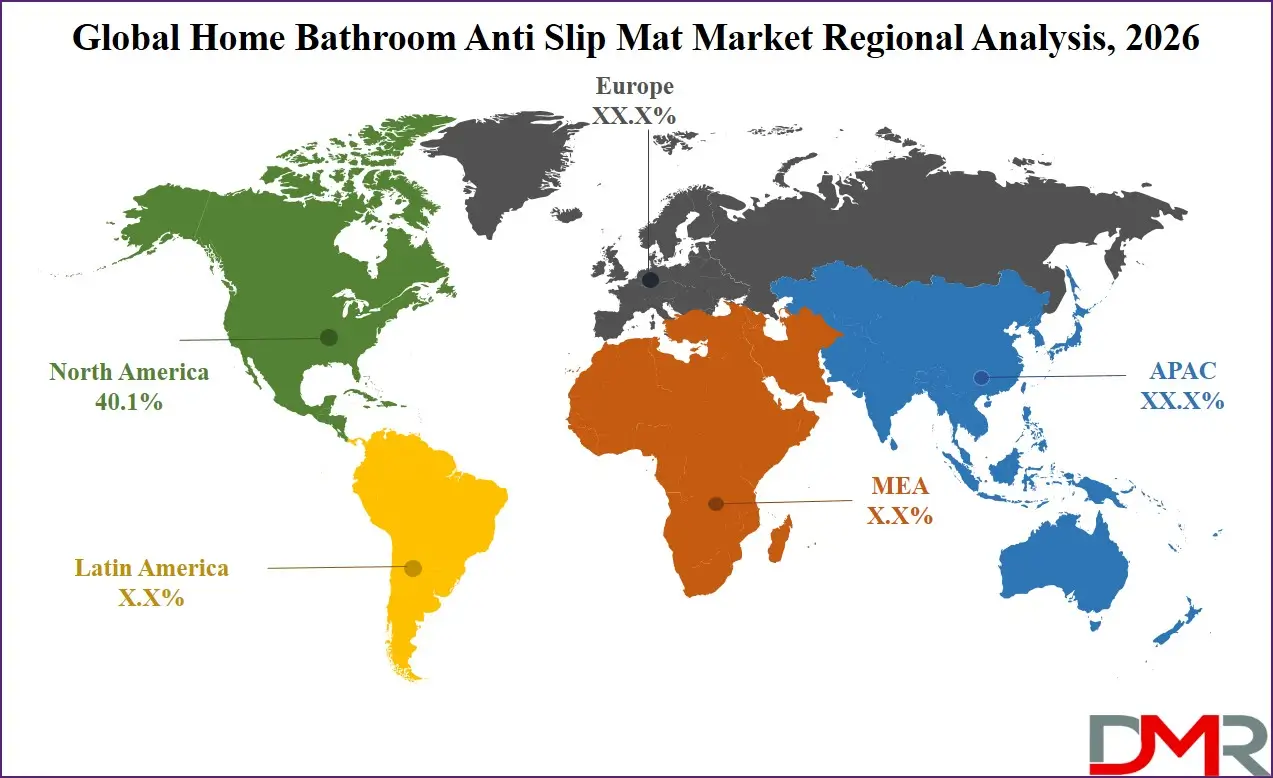
- North America Maintains Regional Dominance: North America is expected to capture approximately 40.1% of the global market share in 2026, supported by mature retail infrastructure, significant consumer safety awareness, and early adoption of eco-friendly and designer anti-slip mat products.
- Rapid Advancement in Material Technologies: Innovations including antimicrobial rubber compounds, ultra-absorbent microfiber polyester, quick-dry PVC formulations, and machine-washable nylon designs are significantly accelerating the comfort, durability, and hygiene of bathroom anti-slip mats.
- Growing Focus on Aging-in-Place Boosts Adoption: Rising global pressure to reduce fall-related injuries among seniors, coupled with aging housing stock and desire for independent living, is driving sustained demand for effective, aesthetically pleasing, and easy-to-clean bathroom safety solutions.
Global Home Bathroom Anti Slip Mat Market: Use Cases
- Households with Young Children: Soft, cushioned PVC and polyester mats with fun designs are placed in general bathroom areas to protect toddlers from slips and hard falls during bath time.
- Senior Living & Assisted Care Facilities: High-grip rubber mats with beveled edges are used in showers and bathtubs to prevent falls among elderly residents, ensuring safety and compliance with care home regulations.
- Luxury Hotels & Spas: Premium, quick-dry, and stain-resistant nylon or eco-friendly bamboo fiber mats are used in guest bathrooms and spa wet areas to enhance guest experience and maintain a pristine, mold-free appearance.
- Accessible Bathroom Modifications: Rectangle and large-format mats with high-traction surfaces are installed in homes undergoing modifications for wheelchair users or individuals with mobility challenges, ensuring safe transfers.
- Rental Apartments & Shared Housing: Durable, easy-to-clean PVC and polyester mats are used by landlords and tenants to provide a basic level of safety and hygiene in high-turnover rental properties.
Global Home Bathroom Anti Slip Mat Market: Stats & Facts
- The World Health Organization (WHO) reports that falls are the second leading cause of accidental injury deaths worldwide, with a significant percentage occurring in bathrooms, reinforcing the critical need for effective anti-slip solutions.
- The U.S. Centers for Disease Control and Prevention (CDC) projects that one in four Americans aged 65+ falls each year, and modifying homes with safety devices like anti-slip mats can reduce falls by up to 30%, validating the product's essential role in preventive care.
- National Safety Council data indicates that bathroom anti-slip mats can reduce slip-related accidents by over 50% in wet areas compared to untreated surfaces, confirming them as a cost-effective safety intervention for households.
- The European Consumer Safety Association notes that continuous use of anti-slip mats in bathtubs and showers reduces the risk of severe injury by up to 60%; bathroom accidents currently account for significant emergency room visits and healthcare costs across Europe.
- According to Global Home Improvement Surveys, adoption of eco-friendly and antimicrobial anti-slip mats is growing over 20% annually in developed markets, as consumers become more health-conscious and environmentally aware.
- The AARP reports over 75% of older adults wish to stay in their homes long-term ("aging in place"), driving investment in home modification products; anti-slip mats mitigate fall risks by providing secure footing, easy installation, and low-maintenance safety.
Global Home Bathroom Anti Slip Mat Market: Market Dynamic
Driving Factors in the Global Home Bathroom Anti Slip Mat Market
Rising Cost and Incidence of Fall-Related Injuries
The escalating financial and personal impact of slip-and-fall accidents in bathrooms across all age groups is a major driver for anti-slip mat adoption. The need to ensure household safety, reduce medical expenses, and prevent long-term disability significantly increases reliance on preventative products. Anti-slip mats provide immediate traction, enable safe usage of wet areas, and reduce dependency on costly home modifications. This allows families and caregivers to improve quality of life and maintain independence, especially in rapidly aging societies.
Technology Innovation and Material Science
Bathroom anti-slip mats benefit heavily from rapid progress in polymer engineering, textile manufacturing, and sustainable material development. Advanced products feature high-density suction cups, antimicrobial silver-ion treatments, quick-dry foam cores, and ergonomic drainage channels. These innovations enable effective grip in continuously wet environments, resist mold and bacteria growth, and maintain aesthetic appeal over time. The convergence of mat design with universal home safety standards and eco-conscious certifications further enhances product appeal and consumer trust, making anti-slip mats a cornerstone of modern home safety.
Restraints in the Global Home Bathroom Anti Slip Mat Market
Price Sensitivity and Consumer Awareness Gaps
The perceived high cost of premium, durable, and eco-friendly anti-slip mats limits adoption among price-sensitive consumers in developing economies. Many households opt for cheaper, low-quality alternatives that require frequent replacement, undermining long-term safety. Additionally, a lack of awareness about the specific benefits of different materials (e.g., rubber vs. nylon) and proper mat maintenance can lead to incorrect purchases and user dissatisfaction.
Competition from Alternative Safety Solutions and Hygiene Concerns
Alternative bathroom safety products, such as non-slip adhesive strips, spray-on coatings, and textured tiles, compete directly with mats. These alternatives are often perceived as more permanent or less obtrusive. Issues such as mold and mildew growth underneath mats, especially those with poor drainage or drying capabilities, can deter consumers. Furthermore, not all bathroom layouts, especially those with non-standard tub shapes or textured flooring, are easily adaptable to standard anti-slip mats without compromising grip or coverage.
Opportunities in the Global Home Bathroom Anti Slip Mat Market
Expansion into Emerging Economies and Senior Care Infrastructure
Emerging markets represent major growth opportunities due to rapid urbanization, expanding middle-class housing, and increasing government focus on public health. Countries in Asia-Pacific, the Middle East, and Latin America are launching affordable housing and senior care programs where anti-slip mats can ensure resident safety. Local manufacturing partnerships, micro-enterprise distribution models, and government safety mandates can improve accessibility. Furthermore, the growing network of assisted living and nursing homes presents new applications for institutional-grade, easy-to-clean anti-slip matting.
Design-Led Innovation and Smart Home Integration
The integration of design trends not only for safety but for bathroom aesthetics and personalization creates new value streams. Manufacturers can offer mats in diverse shapes, colors, and patterns that complement modern interior design, moving the product from a purely functional item to a decorative accessory. Potential integration with smart home systems for usage alerts or moisture detection, combined with subscription models for regular replacement, can transform anti-slip mats from simple commodities into intelligent, recurring-revenue health and wellness assets.
Trends in the Global Home Bathroom Anti Slip Mat Market
Shift to Eco-Friendly and Sustainable Materials
The rise of mats made from natural rubber, recycled polyester, bamboo fiber, and other biodegradable materials is gaining significant traction. Environmentally conscious consumers are willing to pay a premium for products that are free from harmful chemicals (like phthalates and BPA) and have a lower environmental footprint, driving innovation in sustainable textile and polymer production.
Premiumization and Spa-like Home Experiences
Consumers are increasingly seeking premium, luxurious bathroom accessories that replicate the spa experience at home. This trend fuels demand for mats with plush, quick-drying microfiber surfaces, memory foam cushioning, and elegant designs. This move up the price curve is empowering brands to offer higher-margin products that combine safety with indulgence and style.
Global Home Bathroom Anti Slip Mat Market: Research Scope and Analysis
By Material Analysis
Rubber is projected to dominate the Material segment of the Global Home Bathroom Anti-Slip Mat Market. This dominance is driven by rubber's inherent high-friction properties, durability, and excellent suction cup performance on wet surfaces, making it the ideal material for preventing slips in high-risk areas like showers and bathtubs. Natural rubber variants also appeal to the growing eco-conscious consumer segment. While PVC/Plastic mats address the need for affordability, lightweight design, and vibrant colors in general bathroom areas, their long-term durability and environmental profile are less favorable. Nylon and Polyester mats are prized for their softness, absorbency, and machine-washable convenience, catering to the demand for comfort and hygiene, particularly in front of sinks and vanities. Eco-Friendly Materials (bamboo, recycled content) represent the fastest-growing niche, driven by premium, sustainability-focused brands. Therefore, the critical requirement for maximum safety in the most hazardous zones, coupled with rubber's proven performance and longevity, secures its leading market position throughout the forecast period.
By Shape Analysis
Rectangle is projected to dominate the global market, as it represents the most versatile and universally compatible shape for standard bathroom layouts. Its dominance stems from its ability to fit efficiently in front of toilets, sinks, and within rectangular shower stalls and bathtubs, maximizing coverage and safety. The simple geometry allows for efficient manufacturing, packaging, and stacking, making it the most cost-effective shape for economy and mid-range products. The driving forces are the standardization of bathroom fixtures and the retail preference for easily stackable and displayable products. As the majority of global households feature rectangular bathroom spaces, the economic and practical case for the rectangular shape becomes compelling.
Oval remains a crucial and substantial segment, effectively serving the market for design-conscious consumers seeking a softer, more elegant aesthetic. This shape is popular for curved bathtubs, pedestal sinks, and as decorative accent mats. Its strength lies in enhancing the visual appeal of a bathroom, allowing it to function as both a safety device and a design element. By providing a stylish alternative to the standard rectangle, it commands a premium price point and caters to the growing trend of home personalization. This balance of aesthetics and functionality makes it a widespread and enduring choice, addressing the reality that many consumers view bathroom accessories as an extension of their interior design.
By Price Range Analysis
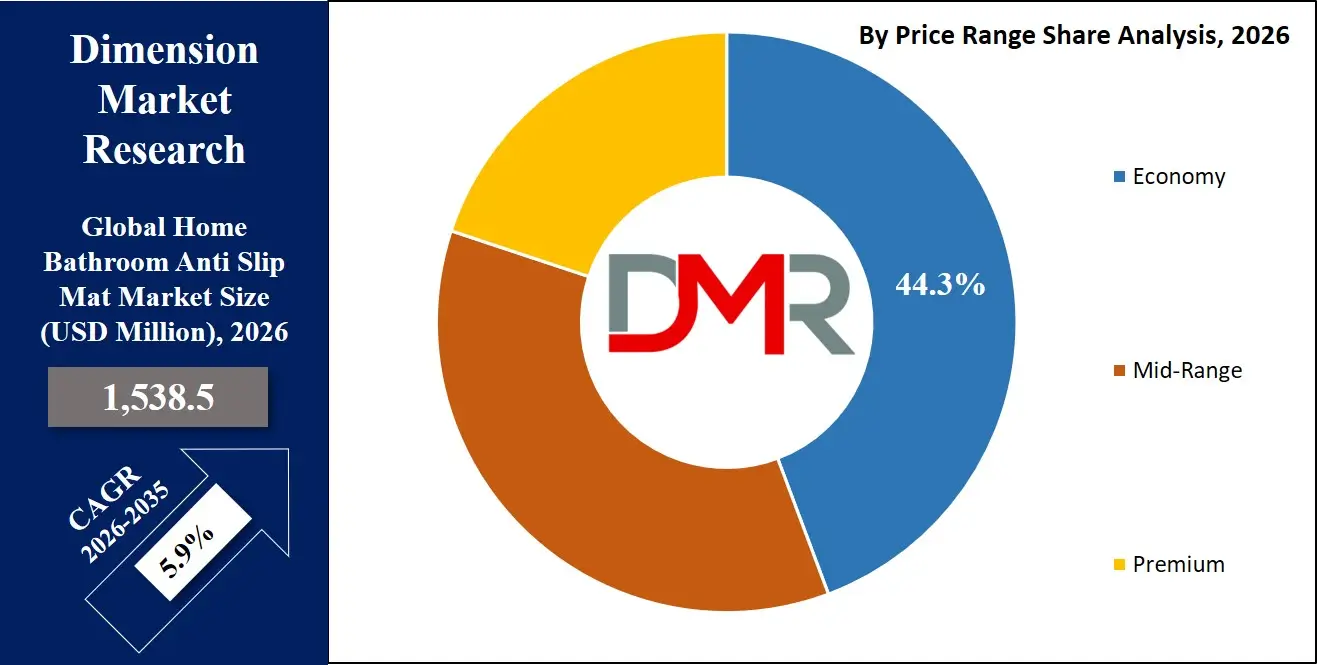
Economy price range forms a fundamental and dominant segment, as these products provide an accessible entry point for safety in cost-sensitive households, rental properties, and developing regions. Basic PVC and small-sized rubber mats fulfill the essential function of slip prevention at a minimal cost, ensuring widespread market penetration.
ℹ
To learn more about this report –
Download Your Free Sample Report Here
Mid-Range is another critical and high-growth segment, offering the best balance of quality, durability, and price. These mats often feature better materials (thicker rubber, higher-quality polyester), improved designs (better suction, faster drying), and longer warranties, appealing to the average homeowner seeking reliable, long-lasting safety without a premium outlay.
By Application Analysis
Shower Room is poised to be the largest and most dominant application, as this area presents the highest and most constant slip risk due to continuous water and soap exposure. The critical safety requirement for high-traction surfaces creates a non-negotiable use case for dedicated anti-slip mats.
Bathtub ranks as the second-largest application, fueled by the risk of slips during entry, exit, and standing in the tub. This is particularly critical for households with children and seniors, where the height and hard surface of the tub increase injury severity.
By Distribution Channel Analysis
Offline is poised to be the largest and most dominant channel, encompassing supermarkets, hypermarkets, home improvement stores, and specialty bedding and bath retailers. The dominance stems from the consumer's desire to physically touch and feel the material, test its softness or grip, and see its true color and size before purchase. This tactile evaluation is critical for a product where comfort and texture are key decision factors. The driving forces are the extensive retail networks of major chains and the immediate gratification of in-store purchase.
Online is the fastest-growing channel, driven by the convenience of home delivery, wider product selection, access to customer reviews, and competitive pricing. E-commerce platforms allow niche and D2C brands to reach a global audience with specialized products (e.g., eco-friendly, designer) that may not have shelf space in physical stores. This trend supports the scalable deployment of targeted marketing and subscription models, making it the key growth frontier for the market.
The Global Home Bathroom Anti Slip Mat Market Report is segmented on the basis of the following:
By Material
- Rubber
- PVC/Plastic
- Nylon
- Polyester
- Eco-Friendly Materials
By Shape
By Price Range
- Economy
- Mid-Range
- Premium
By Application
- Shower Room
- Bathtub
- General Bathroom
By Distribution Channel
Impact of Artificial Intelligence in the Global Home Bathroom Anti Slip Mat Market
- AI for Consumer Preference Analysis & Trend Prediction: AI analyzes online search data, customer reviews, and social media trends to identify emerging consumer preferences for materials, colors, and designs, enabling manufacturers to develop products with higher market success potential.
- AI-Driven Supply Chain & Inventory Optimization: Advanced algorithms forecast demand based on seasonal trends, regional demographics, and housing data to optimize raw material procurement, manufacturing schedules, and retail inventory, reducing waste and stockouts.
- Personalized Marketing & Product Recommendations: AI models use customer browsing and purchase history on e-commerce platforms to recommend the most suitable anti-slip mat based on bathroom type, household composition (e.g., seniors, kids), and style preferences, enhancing conversion rates.
- AI-Based Quality Control in Manufacturing: AI-powered visual inspection systems on production lines detect manufacturing defects in suction cups, fabric weaves, and edging in real-time, ensuring consistent product quality and reducing returns.
- Learning from Customer Feedback for Product Innovation: AI systems aggregate data from returns and online reviews to continuously improve product design, identifying common complaints (e.g., slow drying, losing grip) and guiding R&D for next-generation solutions.
Global Home Bathroom Anti Slip Mat Market: Regional Analysis
Region with the Largest Revenue Share
North America is projected to dominate the Global Home Bathroom Anti-Slip Mat Market with 40.1% of market share by the end of 2026, owing to a powerful combination of high consumer spending on home improvement, a rapidly aging population focused on aging-in-place, strong retail and e-commerce infrastructure, and the presence of leading consumer goods companies. The United States and Canada have rapidly integrated safety and wellness into home purchasing decisions, supported by a culture of preventative healthcare and risk mitigation. Major retailers and online platforms are institutionalizing a wide range of anti-slip mat offerings to maintain competitive advantage and meet consumer demand.
ℹ
To learn more about this report –
Download Your Free Sample Report Here
The region's stringent consumer product safety regulations, coupled with high healthcare costs from fall injuries, create a compelling economic case for quality anti-slip products. Supportive industry associations and a well-established network of home safety advocates further solidify North America's leadership position.
Region with the Highest CAGR
Asia-Pacific holds the highest CAGR and is poised to achieve rapid market share growth due to its massive urbanization, expanding middle-class housing, government-led infrastructure development, and growing awareness of home safety. Countries like China, India, Japan, and South Korea are investing heavily in modern housing and senior care facilities. China's focus on domestic consumption and India's push for affordable housing are creating fertile ground for adoption. The region's cost sensitivity is being addressed through local manufacturing of economy and mid-range products, and the explosive growth of e-commerce platforms like Alibaba and Shopee. This, combined with an immense and growing population of young families and seniors, positions APAC as the fastest-growing market for bathroom anti-slip mats.
By Region
North America
Europe
- Germany
- The U.K.
- France
- Italy
- Russia
- Spain
- Benelux
- Nordic
- Rest of Europe
Asia-Pacific
- China
- Japan
- South Korea
- India
- ANZ
- ASEAN
- Rest of Asia-Pacific
Latin America
- Brazil
- Mexico
- Argentina
- Colombia
- Rest of Latin America
Middle East & Africa
- Saudi Arabia
- UAE
- South Africa
- Israel
- Egypt
- Rest of MEA
Global Home Bathroom Anti Slip Mat Market: Competitive Landscape
The Global Home Bathroom Anti-Slip Mat Market is moderately fragmented, featuring a mix of established home textile and consumer goods conglomerates, specialized bathroom accessory manufacturers, and direct-to-consumer (D2C) brands disrupting the space. Leading consumer goods players 3M, Newell Brands (Martha Stewart, Yankee Candle), and Milliken & Company leverage their expertise in materials science and brand management. Specialized innovators such as Gorilla Grip and Yimobra are driving market dynamics with agile, e-commerce-optimized, and highly-rated product lines.
Home improvement retailers with private labels, like The Home Depot (Hampton Bay) and Lowe's, play increasingly influential roles as both distributors and competitors. Major e-commerce platforms like Amazon and Walmart are also shaping the market through private label programs and by dictating listing standards and consumer review aggregation.
Some of the prominent players in the Global Home Bathroom Anti Slip Mat Market are:
- 3M
- Gorilla Grip
- Yimobra
- SlipX Solutions
- AmazerBath
- Epica
- IKEA
- AmazonBasics
- Tenura
- Better Homes & Gardens
- Home+Solutions
- TIKE SMART
- Vive
- Room Essentials
- Style Selections
- Mainstays
- Project Source
- Glacier Bay
- Rubbermaid
- Genteele
- Other Key Players
Recent Developments in the Global Home Bathroom Anti Slip Mat Market
- January 2026: Yimobra featured its Memory Foam Bath Mat in Amazon promotions, highlighting non-slip backing, quick-dry properties, and strong consumer ratings, reinforcing market demand for safety and comfort in home bathrooms.
- December 2025: Gorilla Grip Polished non‑slip bath mats (e.g., Patented Bath Mat) recorded over 89,000+ consumer reviews on Amazon and were highlighted in shopping reports for being highly effective in preventing slips and falls in showers and bathtubs, reflecting strong market acceptance and continued consumer preference.
- October 2025: SlipX Solutions launched an innovative weighted safety bath mat designed for textured tubs and uneven surfaces, with antimicrobial protection and engineered drainage channels to enhance safety where traditional suction mats struggle, indicating product innovation within the anti‑slip category.
- September 2025: Gorilla Grip bath mats, including memory foam and premium variants, reported as actively available with high consumer demand in online and retail channels, reflecting sustained market relevance.
- April 2025: IKEA launched its BÄSINGEN accessible home collection, including bathroom mats and accessories with non-slip features and ergonomic safety designs, catering to safer home bathroom environments.
- March 2024: Yimobra Memory Foam Bath Mat recognized for strong Amazon sales, with over 30,800 five-star ratings, highlighting continued consumer preference for comfortable, non-slip bath mats.
Report Details
| Report Characteristics |
| Market Size (2026) |
USD 1,538.5 Mn |
| Forecast Value (2035) |
USD 2,581.9 Mn |
| CAGR (2026–2035) |
5.9% |
| The US Market Size (2026) |
USD 518.8 Mn |
| Historical Data |
2020 – 2025 |
| Forecast Data |
2027 – 2035 |
| Base Year |
2025 |
| Estimate Year |
2026 |
| Report Coverage |
Market Revenue Estimation, Market Dynamics, Competitive Landscape, Growth Factors and etc. |
| Segments Covered |
By Material (Rubber, PVC/Plastic, Nylon, Polyester, Eco-Friendly Materials), By Shape (Rectangle, Oval, Others), By Price Range (Economy, Mid-Range, Premium), By Application (Shower Room, Bathtub, General Bathroom Floor), By Distribution Channel (Offline, Online) |
| Regional Coverage |
North America – The US and Canada; Europe – Germany, The UK, France, Russia, Spain, Italy, Benelux, Nordic, & Rest of Europe; Asia-Pacific – China, Japan, South Korea, India, ANZ, ASEAN, Rest of APAC; Latin America – Brazil, Mexico, Argentina, Colombia, Rest of Latin America; Middle East & Africa – Saudi Arabia, UAE, South Africa, Turkey, Egypt, Israel, & Rest of MEA |
| Prominent Players |
3M, Gorilla Grip, Yimobra, SlipX Solutions, AmazerBath, Epica, IKEA, AmazonBasics, Tenura, Better Homes & Gardens, Home+Solutions, TIKE SMART, Vive, Room Essentials, Style Selections, Mainstays, Project Source, Glacier Bay, Rubbermaid, Genteele, and Other Key Players |
| Purchase Options |
We have three licenses to opt for: Single User License (Limited to 1 user), Multi-User License (Up to 5 Users) and Corporate Use License (Unlimited User) along with free report customization equivalent to 0 analyst working days, 3 analysts working days and 5 analysts working days respectively. |
Frequently Asked Questions
How big is the Global Home Bathroom Anti Slip Mat Market?
▾ The Global Home Bathroom Anti Slip Mat Market size is estimated to have a value of USD 1,538.5 million in 2026 and is expected to reach USD 2,581.9 million by the end of 2035.
What is the growth rate in the Global Home Bathroom Anti Slip Mat Market in 2026?
▾ The market is growing at a CAGR of 5.9% over the forecasted period of 2026.
What is the size of the US Home Bathroom Anti Slip Mat Market?
▾ The US Home Bathroom Anti Slip Mat Market is projected to be valued at USD 518.8 million in 2026. It is expected to witness subsequent growth in the upcoming period as it holds USD 843.2 million in 2035 at a CAGR of 5.5%.
Which region accounted for the largest Global Home Bathroom Anti Slip Mat Market?
▾ North America is expected to have the largest market share in the Global Home Bathroom Anti Slip Mat Market with a share of about 40.1% in 2026.
Who are the key players in the Global Home Bathroom Anti Slip Mat Market?
▾ Some of the major key players in the Global Home Bathroom Anti Slip Mat Market are 3M, Gorilla Grip, Yimobra, SlipX Solutions, IKEA, and many others.