What is the Hospital Information Systems Market Size?
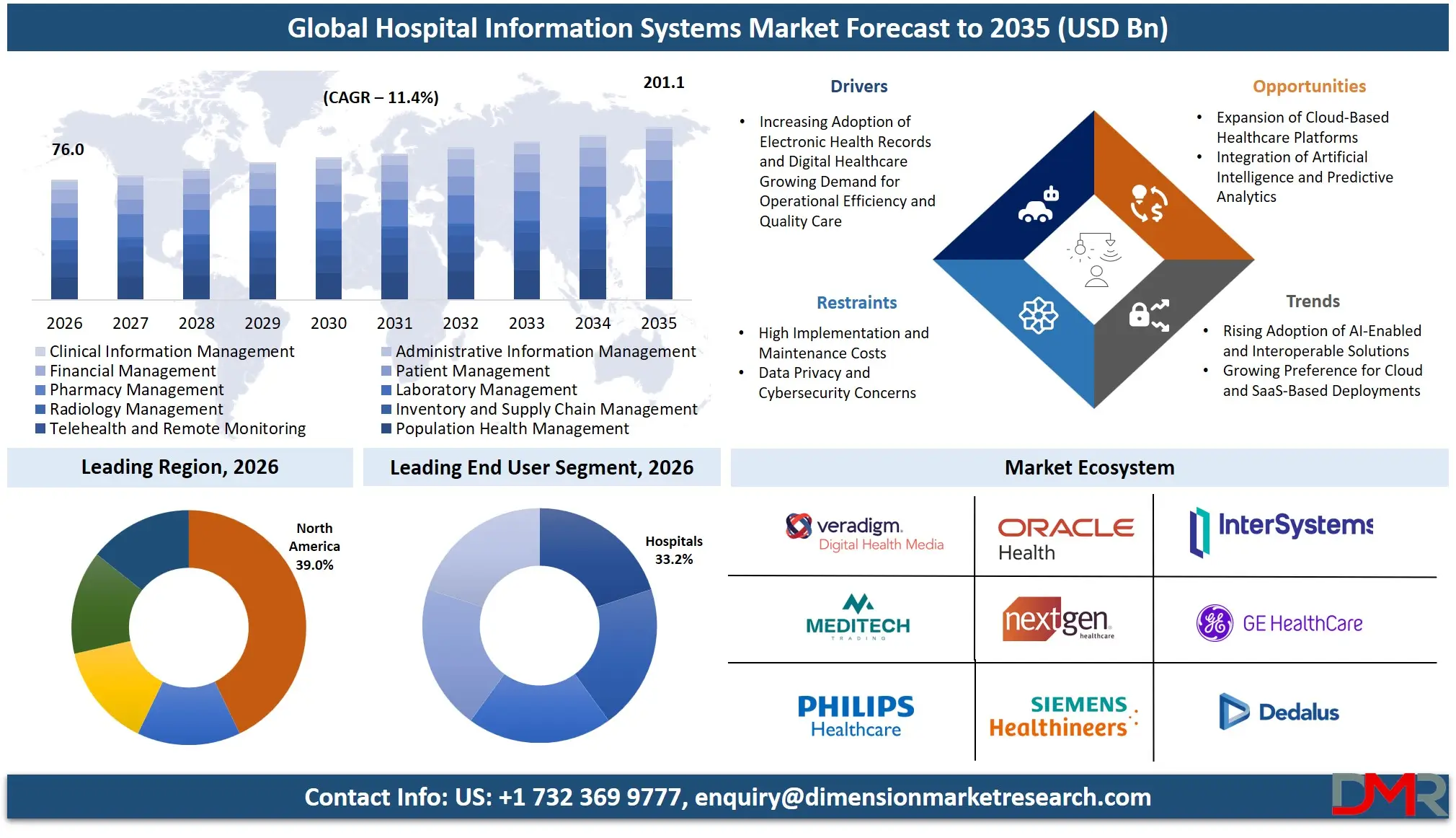
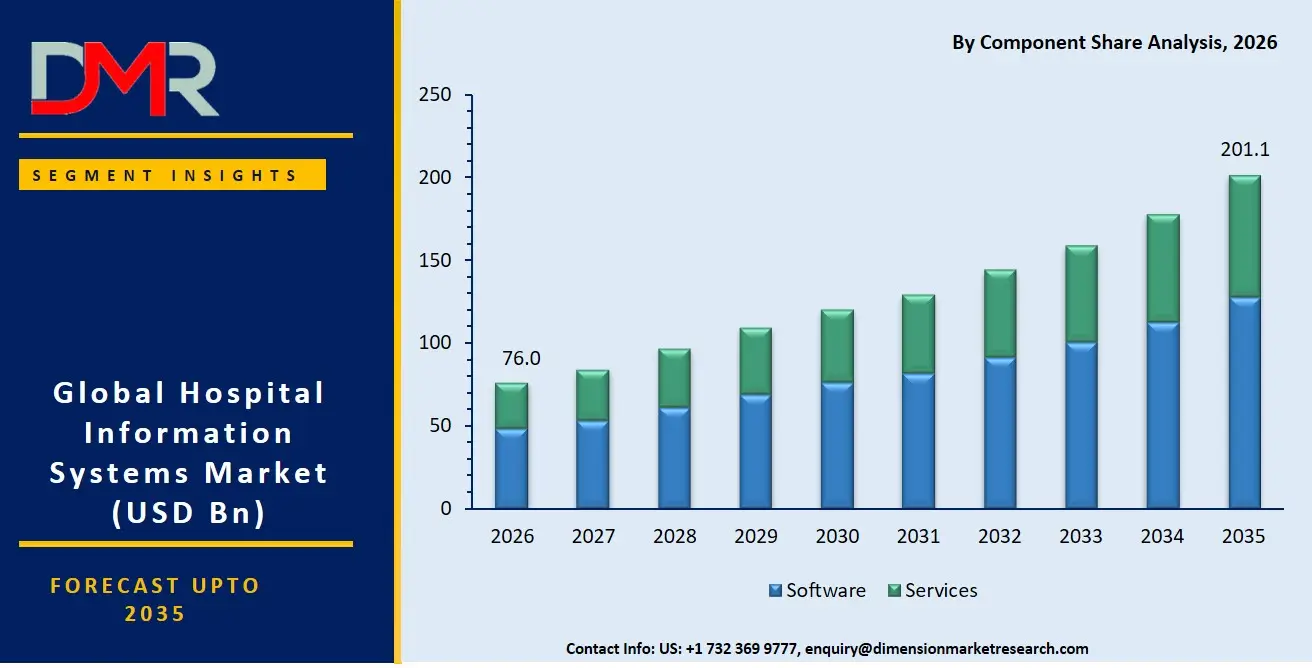
The Global Hospital Information Systems (HIS) Market is expected to reach a value of USD 76.0 billion in 2026, and it is further anticipated to reach USD 201.1 billion by 2035, growing at a CAGR of 11.4% during the forecast period.
ℹ
To learn more about this report –
Download Your Free Sample Report Here
The hospital information systems market has seen tremendous growth in recent years as organizations in the healthcare industry increasingly embrace digitalization to shift away from traditional systems of paper-based records. The market includes software products and services that enable the digitalization, management, and analysis of administrative, clinical, and financial workflows in healthcare organizations. The growing need for electronic health record systems (EHR), clinical decision support systems (CDSS), and revenue cycle management (RCM) systems has led to an increasing requirement for HIS. Hospitals, ambulatory surgery centers, and specialized clinics are some of the main users of these systems, while cloud-hosted and software as a service (SaaS)-based systems remain the most commonly used. Some of the verticals which have driven innovation in this market include the healthcare, finance, and IT industries.
The US Hospital Information Systems Market
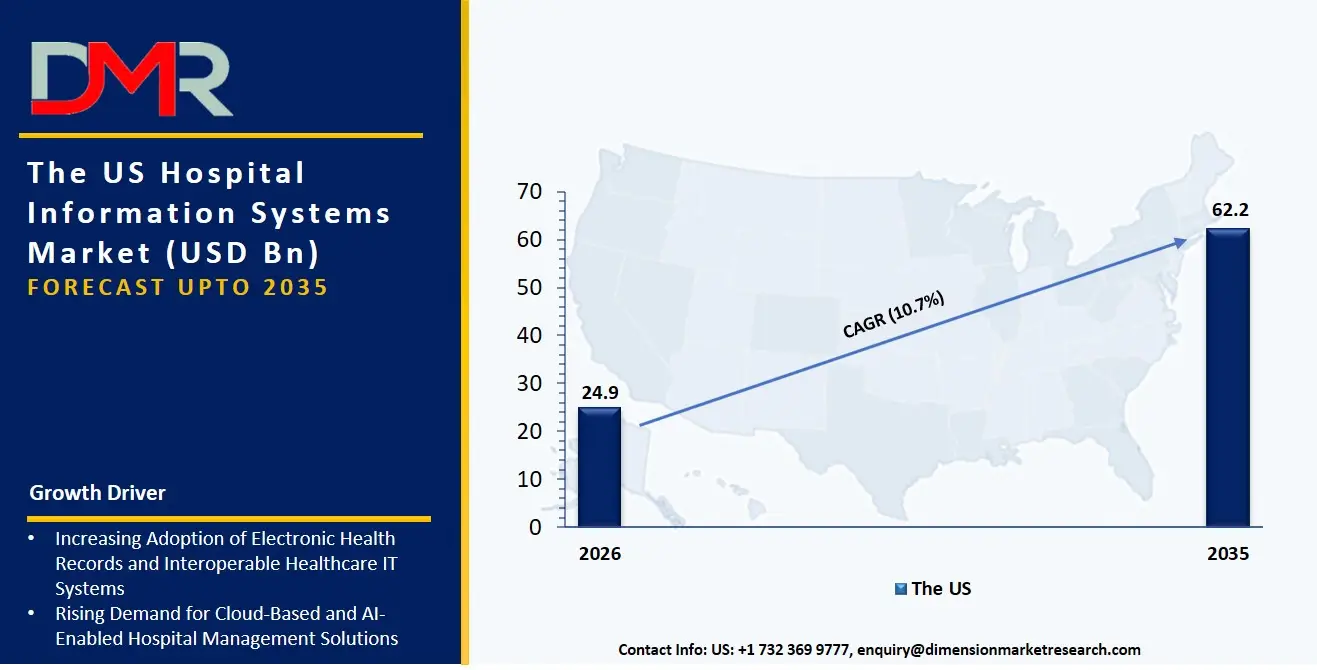
The US Hospital Information Systems Market is projected to reach USD 24.9 billion in 2026 at a compound annual growth rate of 10.7% over its forecast period, culminating in a value of USD 62.2 billion by 2035.
ℹ
To learn more about this report –
Download Your Free Sample Report Here
The United States has retained its position as the biggest and the most developed market for hospital management systems, due to stringent Meaningful Use criteria and rapid digitization processes in large-scale health care networks and IDNs. The market has been characterized by high adoption of CIS and EHR products, as the organizations seek to achieve semantic interoperability of disparate health IT ecosystems. In addition, implementation of AI diagnostics in the process of care delivery has led to the need for decision support systems and cloud-based PACS for handling medical images.
The Europe Hospital Information Systems Market
The Europe Hospital Information Systems Market is estimated to be valued at USD 22.6 billion in 2026 and is further anticipated to reach USD 58.3 billion by 2035 at a CAGR of 11.1%. The European market is profoundly shaped by strict regulatory frameworks, including the General Data Protection Regulation (GDPR) and the forthcoming European Health Data Space (EHDS), which drive the need for secure, compliant, and interoperable patient management and data-sharing solutions. The region is experiencing accelerated growth in hybrid deployment models as public hospitals in Germany, the UK, and the Nordics seek to balance sensitive patient data residency with the analytical power of cloud-based population health management tools. Additionally, cross-border healthcare initiatives are challenging HIS vendors to create dedicated integration services to ensure seamless continuity of care and data portability across European health systems.
The Japan Hospital Information Systems Market
The Japan Hospital Information Systems Market is projected to be valued at USD 4.5 billion in 2026. It is further expected to witness robust growth, holding USD 11.4 billion in 2035 at a CAGR of 10.8%. The Japanese market is unique in that there is a need in the country for transformation in the digital health space due to an increasingly aging society and increasing costs associated with healthcare. Clinical information management systems and administrative information management systems form a significant part of the spend due to the transition that large public hospitals and universities are making from mainframe infrastructure to cloud-based technology. There is also a requirement for deep market integration because of the difference that exists between traditional electronic medical records systems and modern pharmaceutical information systems or laboratory information systems.
Key Takeaways
- Market Size & Forecast: The Global Hospital Information Systems market is forecasted to be valued at USD 76.0 billion in 2026 and will increase significantly to be valued at USD 201.1 billion by 2035, spurred by the twin factors of adoption of value-based care and digitization of clinical processes.
- Growth Rate & Outlook: The global market is anticipated to grow at a CAGR of 11.4% owing to the imperative need for healthcare interoperability and increasing complexity in the management of patient-generated health data using telehealth platforms.
- Primary Growth Drivers: Important factors comprise the shift across the board from the FFS payment model to value-based systems, consulting to ensure no mistakes are made during the costly process of EHR installation, as well as AI/ML analytics necessitating CDSS and population health management.
- Key Market Trends: Some key trends include the development of specialty-based EHR systems, the employment of artificial intelligence-based software in radiology information systems (RIS) and picture archiving and communication system (PACS) for prioritizing important cases, and RCM optimization.
- By Deployment Mode Analysis: Cloud-based solutions will be in high demand within enterprise discussions due to the need for data disaster recovery and business continuity. There are more instances of hybrid deployments being seen, and therefore need for professional services to develop integration layers between on-premise clinical systems and cloud telehealth and patient engagement solutions.
- By Application Analysis: The clinical information management and financial management applications are the most lucrative solutions because of the compliance needs for documentation and revenue integrity. The telehealth and remote monitoring application is the fastest growing one as the asynchronous and synchronous virtual care models become part of regular care delivery models.
- Regional Leadership: North America is poised to dominate this market with 39.0% of the market share in 2026 owing to its advanced technological environment and presence of numerous Fortune 500 companies of healthcare organizations and electronic health record (EHR) vendors.
What is the Hospital Information Systems?
HIS is the tailored and integrated system of computing technologies responsible for the complete end-to-end cycle of the clinical, administrative, and financial operation of the health facility. HIS is different from stand-alone medical devices or enterprise IT solutions in terms of its focus on the delivery of care coordination. It includes Software such as the key clinical database (EHR), specialty systems (LIS/RIS), and Services, including Implementation and Integration as well as consulting which help these complicated IT systems to communicate. Nowadays, most health systems have multi-vendor IT ecosystems, which requires professional services to reach healthcare data liquidity, security, and usability, thus turning digital assets into tangible patient outcomes in terms of fewer medical mistakes and more effective collaboration within the care team.
Use Cases
- Unified Clinical Documentation at Public Hospitals: Huge public hospitals utilize CIS and EHR software to digitize the manual charting and create a unified source of patient information which allows for real-time clinical monitoring and medication reconciliation and hence prevents adverse drug events.
- Radiology Workflow Supported by AI: Radiology department uses cloud-based PACS and RIS systems which are supplemented by AI algorithms for automated image interpretation, triaging critical cases like stroke and handling high-volume radiological workflow of multiple specialty hospitals and diagnostic centers.
- Revenue Integrity in Ambulatory Surgical Centers: ASCs implement Revenue Cycle Management (RCM) and patient management software to automate the process of prior authorizations, medical coding and claims management in order to optimize the revenue stream from high volume elective surgery cases.
- Pharmacy Automation and Inventory Management: Large hospital networks implement PIS with inventory and supply chain modules to automate unit dose dispensing and track wastage of pharmaceuticals.
How AI is Transforming the Hospital Information Systems Market?
AI technology is bringing significant changes to the hospital information system environment through accelerated diagnosis and improved efficiency of operations. From the clinical standpoint, AI-based algorithms are incorporated into RIS and PACS to detect abnormalities in medical images and generate prioritized worklists that allow drastic reduction of report turnaround times and identification of urgent pathologies. At the same time, the implementation of AI-based functionality in administrative information systems allows predicting patient flows in order to forecast admission rates and necessary staffing.
In addition, the projects associated with governance and finance transformation are built on the base of AI. Specifically, in the field of decision support, intelligent agents are used for constant monitoring of patient vital signs in EHR in order to give early warnings about sepsis or deterioration of patient conditions. Generative AI assistants are also used to automate CDI and suggest medical codes as part of revenue cycle management transformation initiatives.
Market Dynamics
Key Drivers in the Global Hospital Information Systems Market
Increasing Adoption of Electronic Health Records and Digital Healthcare
The increasing shift from paper-based systems to electronic health record (EHR) systems represents one of the major factors that are propelling the growth of the market for hospital information systems. Increasing adoption of digital technologies by hospitals in order to streamline their workflows, ensure the safety of patients, and achieve smooth communication of information has become a trend. Regulatory standards that promote interoperability and the digitization of healthcare are further driving adoption. Integration within hospital information systems helps in effective management of patient information, diagnostics, pharmacology, and billing services. Increasing patient numbers and need for making clinically sound decisions have encouraged the use of advanced software solutions.
Growing Demand for Operational Efficiency and Quality Care
In today's healthcare industry, organizations are increasingly emphasizing the need for efficient operations while ensuring good patient experience. There is a role played by hospital information systems in achieving effective administration, avoiding medical mistakes, making the best use of resources, and improving communications among different units. The increase in spending in the field of healthcare and rising expectations from the patients are leading to greater investments in comprehensive systems that can coordinate both clinical and non-clinical operations. This is making hospital information systems indispensable in today's world of healthcare.
Restraints in the Global Hospital Information Systems Market
High Implementation and Maintenance Costs
The introduction of hospital information systems requires high expenditures associated with software, hardware, infrastructure, and training. Some hospitals, in particular smaller and midsize ones, face problems associated with financial constraints that prevent them from implementing advanced technologies. It can be challenging and expensive to implement the system within the existing technological setting due to the necessity of having specific skills and spending more time on the process. The costs also involve constant updates of the software and maintenance. The hospitals are required to spend extra money on the training of their employees to work with the system. All these challenges lead to problems in introducing hospital information systems.
Data Privacy and Cybersecurity Concerns
Information systems used in hospitals deal with vast amounts of private patient information, thereby becoming targets for cyberattacks and information leaks. Healthcare organizations have to adhere to a range of strict laws regulating the protection of patients' privacy and security of data. Breaches in system security may result in financial losses, fines, and damage to reputation. Growing trends related to ransomware attacks and other cybersecurity issues make healthcare organizations worried. Building secure IT networks, using encryption techniques, and constant monitoring become costly. Cybersecurity issues become barriers to adopting new technologies and innovations.
Growth Opportunities in the Global Hospital Information Systems Market
Expansion of Cloud-Based Healthcare Platforms
Hospital information systems that are based on the cloud are providing growth potential due to the benefits of scalability, flexibility, and decreased costs of the infrastructure. Hospitals are implementing cloud solutions to facilitate remote connectivity, interoperability, and sharing of data between departments and facilities. The implementation of cloud solutions is easier and cheaper and requires less maintenance than traditional systems. The increased use of telemedicine and demand for digital healthcare services add to the demand for cloud solutions. Countries that have growing economies are making significant investments in modernizing their healthcare industry. Improved security of the cloud solutions and compliance with regulations promote the move to the cloud.
Integration of Artificial Intelligence and Predictive Analytics
AI and predictive analytics are changing the way hospital information systems operate through better decision-making and higher efficiency. With the help of intelligent technologies, it is possible to automate processes and analyze big data about patients. In addition, with the help of predictive analytics, it is possible to allocate resources in the most effective way, prevent readmissions, and increase the effectiveness of treatment. Machine learning algorithms increase the quality of diagnostics and help physicians provide individual treatment. The rising demand for value-based healthcare and precision medicine drives the development of intelligent information systems. Vendors develop new products constantly, which creates growth prospects for the market.
Trends in the Global Hospital Information Systems Market
Rising Adoption of AI-Enabled and Interoperable Solutions
Healthcare practitioners have started using AI-based hospital information systems that allow for easy transfer of information and increased efficiency in clinical practice. Interoperability has become a necessary feature as the hospitals have started looking for systems which allow for the integration of electronic health records, laboratory management systems, imaging systems, and pharmacy management systems. AI enables automation, predictive analysis, and clinical decision-making in the field of healthcare. With the help of regulatory measures that encourage the standardization of data transfer, investments in interoperable solutions are being made by vendors.
Growing Preference for Cloud and SaaS-Based Deployments
Healthcare facilities are increasingly opting for cloud and software-as-a-service (SaaS) deployments to enhance scalability and lower infrastructure expenses. The solutions offer remote access, automatic software updates, and ease of maintenance, ensuring interoperability of healthcare data. Cloud computing is especially useful in handling telehealth facilities and multi-facility healthcare organizations. Subscription models help lower capital investment and allow for better use of advanced technology solutions. Cybersecurity and data protection measures are helping increase trust in cloud computing. Flexibility and efficiency are among the priorities for healthcare organizations that are driving the emerging trends in the market.
Research Scope and Analysis
The Global Hospital Information Systems Market Report is segmented by component including software and services, deployment mode, delivery mode, hospital type, applications spanning clinical, administrative, financial, and operational functions, and end users such as hospitals, clinics, ambulatory surgical centers, diagnostic centers, academic institutions, and research organizations across healthcare settings.
ℹ
To learn more about this report –
Download Your Free Sample Report Here
By Component Analysis
Software is poised to dominate the Global Hospital Information Systems Market because hospitals increasingly prioritize digital platforms that streamline clinical workflows, patient records, billing, diagnostics, and administrative operations. Electronic health records, clinical information systems, and PACS solutions have become essential for improving care quality and operational efficiency. Regulatory requirements for data management and interoperability further support software adoption.
ℹ
To learn more about this report –
Download Your Free Sample Report Here
Continuous advancements in AI, cloud computing, and analytics are expanding software capabilities, while healthcare organizations seek integrated solutions that reduce errors and enhance decision-making. Compared with services, software generates higher recurring revenues through licensing, subscriptions, upgrades, and maintenance, making it the leading component segment globally.
By Deployment Mode Analysis
Cloud-based deployment is anticipated to dominate the market due to its scalability, flexibility, and lower infrastructure costs compared with traditional on-premises systems. Healthcare providers increasingly prefer cloud solutions to support remote access, telehealth, data sharing, and interoperability among departments. Cloud platforms simplify upgrades, reduce maintenance requirements, and improve disaster recovery capabilities. Growing digital transformation initiatives and increasing investments in healthcare IT further strengthen demand. Enhanced cybersecurity features and compliance capabilities provided by major vendors are improving confidence in cloud adoption. Additionally, subscription-based models reduce capital expenditure, making cloud deployment attractive for hospitals seeking efficient and cost-effective information management solutions.
By Delivery Mode Analysis
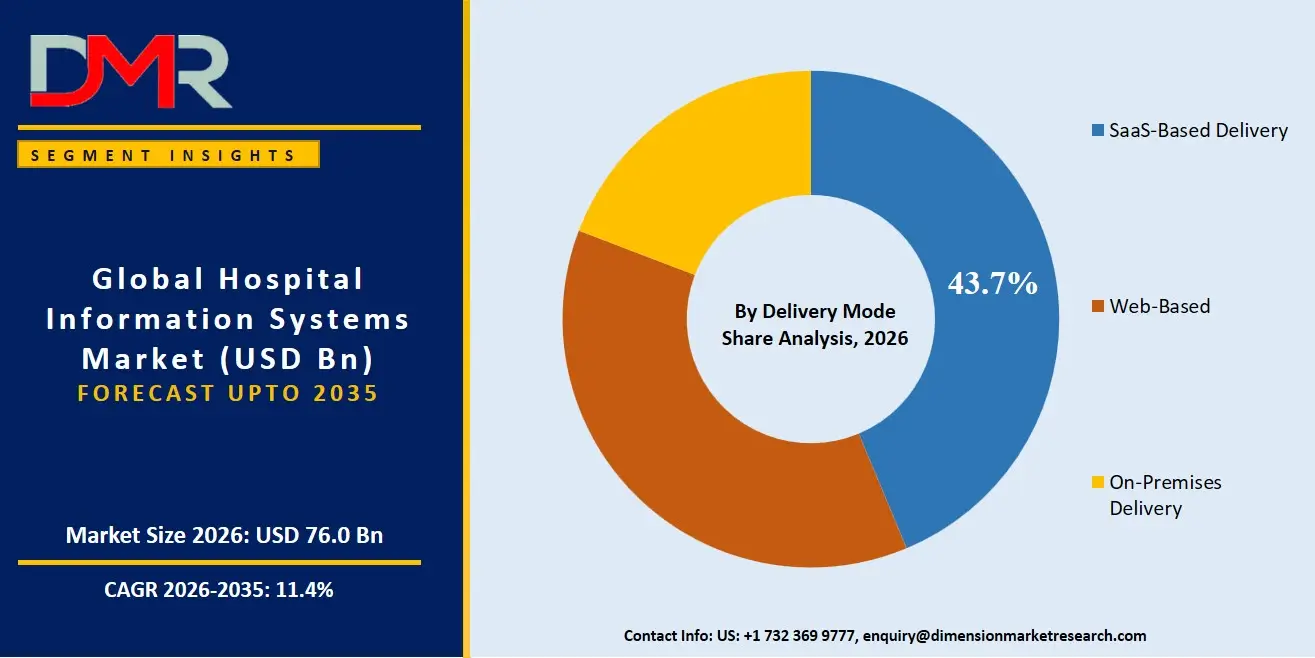
SaaS-based delivery is projected to hold the dominant share because healthcare organizations are shifting toward subscription-based platforms that provide easy implementation, lower upfront costs, and continuous software updates. SaaS solutions enable hospitals to access applications through secure internet connectivity without maintaining extensive hardware infrastructure. These platforms support interoperability, scalability, and remote access, which are increasingly important for modern healthcare operations. Vendors frequently incorporate AI, analytics, and automation capabilities into SaaS offerings, improving clinical and administrative efficiency. Rising demand for digital healthcare systems and the need to minimize operational complexity have made SaaS-based delivery the preferred model across hospitals worldwide.
By Hospital Type Analysis
Private hospitals is poised to dominate the market owing to higher investments in digital infrastructure and greater emphasis on operational efficiency and patient experience. These facilities rapidly adopt advanced hospital information systems to improve care coordination, optimize workflows, and enhance financial management. Competitive pressures encourage private healthcare providers to implement technologies that differentiate their services and increase patient satisfaction. Strong financial capabilities enable them to deploy integrated solutions including EHRs, PACS, and analytics platforms. Increasing demand for specialized healthcare services and expansion of private healthcare networks in emerging economies further contribute to the leading position of private hospitals in the market.
By Application Analysis
Clinical information management is expected to represent the dominant application segment because effective management of patient records and clinical workflows is fundamental to healthcare delivery. Hospitals rely on these systems to maintain electronic health records, support diagnostics, improve treatment accuracy, and ensure seamless communication among medical professionals. Growing regulatory requirements and the need for data-driven decision-making are accelerating adoption. Integration with laboratory, radiology, and pharmacy systems further enhances efficiency and patient safety. The increasing prevalence of chronic diseases and rising patient volumes require comprehensive clinical data management capabilities, making this application indispensable and the largest contributor to overall market revenue.
By End User Analysis
Hospitals is projected to dominate the Global Hospital Information Systems Market due to their extensive requirements for managing clinical, financial, and administrative operations. Large patient volumes and complex workflows necessitate integrated systems for electronic health records, diagnostics, pharmacy management, billing, and inventory control. Hospitals continuously invest in advanced technologies to improve care quality, reduce medical errors, and comply with regulatory standards. Increasing digital transformation initiatives and growing demand for interoperability further support adoption. Additionally, rising healthcare expenditures and expansion of hospital infrastructure worldwide contribute to strong demand for comprehensive information systems, making hospitals the largest end-user segment globally.
The Global Hospital Information Systems Market Report is segmented on the basis of the following:
By Component
- Software
- Electronic Health Records (EHR)
- Clinical Information Systems (CIS)
- Administrative Information Systems
- Revenue Cycle Management Systems
- Laboratory Information Systems (LIS)
- Pharmacy Information Systems (PIS)
- Radiology Information Systems (RIS)
- Picture Archiving and Communication Systems (PACS)
- Patient Management Systems
- Decision Support Systems
- Services
- Consulting Services
- Implementation and Integration Services
- Training and Education Services
- Maintenance and Support Services
By Deployment Mode
- Cloud-Based
- On-Premises
- Hybrid
By Delivery Mode
- SaaS-Based Delivery
- Web-Based
- On-Premises Delivery
By Hospital Type
- Private Hospitals
- Public Hospitals
- Specialty Hospitals
- Multi-Specialty Hospitals
By Application
- Clinical Information Management
- Administrative Information Management
- Financial Management
- Patient Management
- Pharmacy Management
- Laboratory Management
- Radiology Management
- Inventory and Supply Chain Management
- Telehealth and Remote Monitoring
- Population Health Management
By End User
- Hospitals
- Ambulatory Surgical Centers (ASCs)
- Clinics
- Diagnostic Centers
- Academic and Research Institutes
Regional Analysis
Leading Region by Market Share
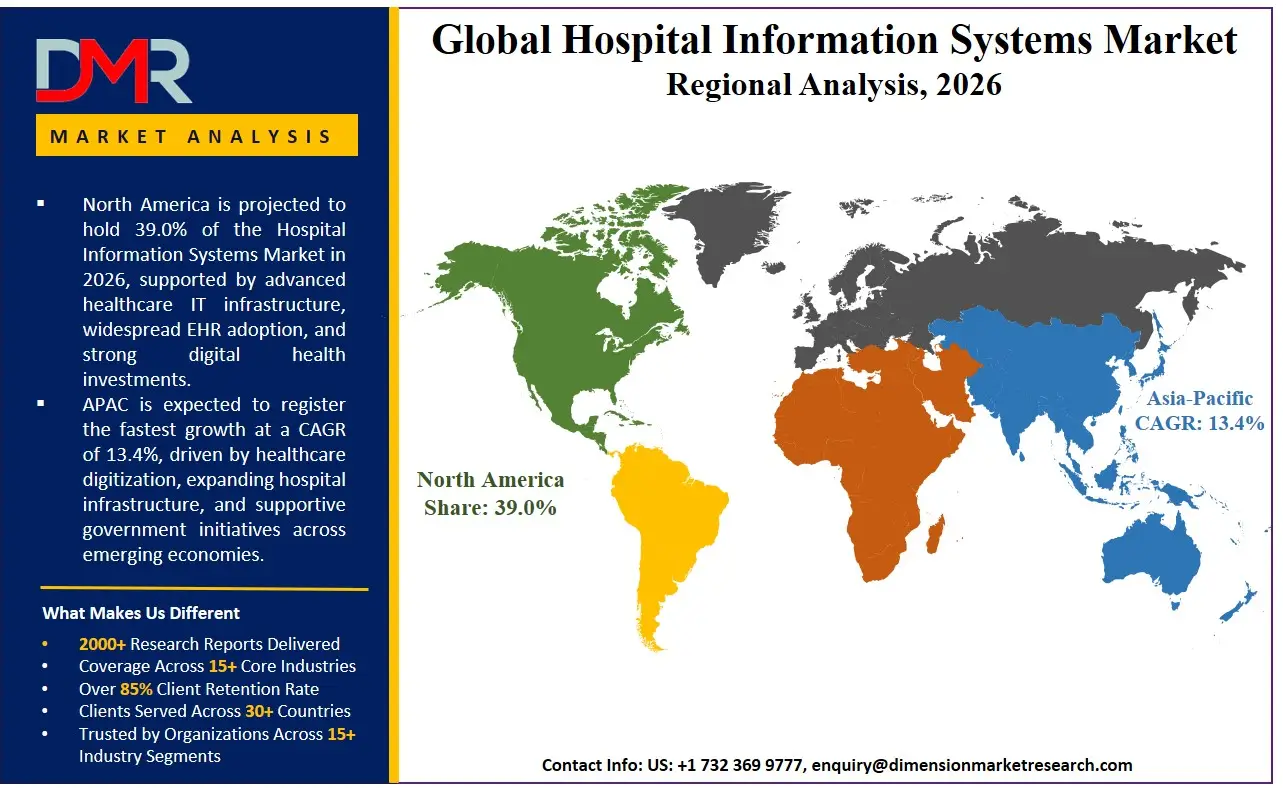
North America is poised to dominate the global hospital information systems market, holding a projected 39.0% of the market share in 2026. The United States, which anchors North America, possesses the highest share due to an unmatched concentration of large integrated delivery networks (IDNs) and aggressive federal mandates for digital health transformation. The region has an established ecosystem of global EHR vendors, boutique healthcare IT consulting firms, and a deep talent pool of clinical informaticists and health IT project managers. Enterprise investment in artificial intelligence for diagnostic analytics, cybersecurity modernization, and the comprehensive retirement of legacy mainframe clinical systems contributes to the sustained demand for implementation and integration services alongside continuous maintenance and support. Moreover, a highly active health-tech venture capital climate consistently funds innovative, cloud-native digital health startups that require expert professional services to integrate seamlessly into the established hospital IT fabric.
ℹ
To learn more about this report –
Download Your Free Sample Report Here
Fastest-Growing Regional Market
The Asia-Pacific region is expected to be the most rapidly expanding hospital information systems market, driven by sweeping government-led digital health initiatives in China, India, Japan, and South Korea. Rapid economic development, a growing middle-income population, and the dynamic expansion of private hospital chains are compelling both public and private healthcare providers to leapfrog paper-based systems directly to cloud-based, AI-enabled HIS platforms. Consulting services are in high demand to help these large, complex organizations design digital roadmaps toward digitally mature, interoperable clinical ecosystems. There is also a significant shortage of qualified health IT professionals in the region, necessitating the outsourcing of implementation, integration, and managed support services to bridge the skills gap and enable faster deployment of national and regional digital health projects.
By Region
North America
Europe
- Germany
- The U.K.
- France
- Italy
- Russia
- Spain
- Benelux
- Nordic
- Rest of Europe
Asia-Pacific
- China
- Japan
- South Korea
- India
- ANZ
- ASEAN
- Rest of Asia-Pacific
Latin America
- Brazil
- Mexico
- Argentina
- Colombia
- Rest of Latin America
Middle East & Africa
- Saudi Arabia
- UAE
- South Africa
- Israel
- Egypt
- Rest of MEA
Competitive Landscape
The competitive environment of the global hospital information systems market has become highly dynamic, featuring a heterogeneous array of multinational enterprise software giants, established pure-play EHR vendors, and the professional service divisions of large global system integrators (GSIs). The key to success lies in deep strategic alliances with leading cloud hyperscalers like AWS, Microsoft Azure, or Google Cloud, which unlock necessary co-selling opportunities and early access to cutting-edge AI and machine learning capabilities for healthcare. The movement towards market consolidation is rapidly progressing, with large technology firms acquiring niche, specialty-specific clinical workflow solution providers to round out their portfolios. Proprietary intellectual property, including automated EHR migration frameworks and industry-specific implementation accelerators (e.g., for oncology or cardiology workflows), is becoming a more important basis of competitive differentiation than just generic project management or staff augmentation.
Some of the prominent players in the Global Hospital Information Systems Market are:
- Oracle Health
- Epic Systems Corporation
- Veradigm
- MEDITECH
- GE HealthCare
- Philips Healthcare
- Siemens Healthineers
- Dedalus Group
- InterSystems Corporation
- NextGen Healthcare
- athenahealth
- eClinicalWorks
- Carestream Health
- Agfa HealthCare
- Fujifilm Healthcare
- Infor Healthcare
- Sectra AB
- Nexus AG
- CGM (CompuGroup Medical)
- IBM Corporation
- Other Key Players
Recent Developments
- January 2026: Oracle Health declared a major expansion of its cloud-native Clinical Information System, a professional services initiative to assist multi-specialty hospitals in migrating their on-premise EHR and financial management applications to Oracle Cloud Infrastructure (OCI), with a specific focus on integrating AI-driven clinical documentation improvement tools.
- November 2025: Deloitte strengthened its collaboration with a leading PACS vendor and introduced a dedicated practice focused on cloud migration consulting and integration for radiology management, aimed at supporting large academic medical centers in moving petabyte-scale imaging archives to the cloud while maintaining diagnostic-grade performance and HIPAA compliance.
- October 2025: Siemens Healthineers AG acquired a European healthcare cybersecurity and interoperability firm to bolster its consulting and implementation services portfolio, specifically to address the complex requirements of government and public hospital systems for secure, cross-border patient data exchange and ransomware resilience.
Report Details
| Report Characteristics |
| Market Size (2026) |
USD 76.0 Bn |
| Forecast Value (2035) |
USD 201.1 Bn |
| CAGR (2026–2035) |
11.4% |
| The US Market Size (2026) |
USD 24.9 Bn |
| Historical Data |
2021 – 2025 |
| Forecast Data |
2027 – 2035 |
| Base Year |
2025 |
| Estimate Year |
2026 |
| Segments Covered |
By Component, By Deployment Mode, By Delivery Mode, By Hospital Type, By Application, and By End User |
| Regional Coverage |
North America – The US and Canada; Europe – Germany, The UK, France, Russia, Spain, Italy, Benelux, Nordic, & Rest of Europe; Asia-Pacific – China, Japan, South Korea, India, ANZ, ASEAN, Rest of APAC; Latin America – Brazil, Mexico, Argentina, Colombia, Rest of Latin America; Middle East & Africa – Saudi Arabia, UAE, South Africa, Turkey, Egypt, Israel, & Rest of MEA |
Frequently Asked Questions
How big is the Global Hospital Information Systems Market?
▾ The Global Hospital Information Systems market is poised to be valued at USD 76.0 billion in 2026 and is projected to reach USD 201.1 billion by 2035, driven by the universal need for specialized software and services in clinical digitization, interoperability, and AI-powered analytics.
What is the CAGR of the Global Hospital Information Systems Market from 2026 to 2035?
▾ The market is expected to grow at a CAGR of 11.4% from 2026 to 2035, reflecting the accelerating complexity of healthcare IT ecosystems and the persistent need for healthcare data security and workflow optimization.
What factors are driving the growth of the Global Hospital Information Systems Market?
▾ Key drivers include the global mandate for healthcare data interoperability, the transition to value-based care, the complexity of managing multi-vendor clinical and administrative information systems, and the surge in demand for telehealth and remote monitoring solutions.
Which region held the largest share of the Hospital Information Systems Market in 2026?
▾ North America, specifically the United States, held 39.0% of the market share in 2026, driven by a mature ecosystem of large integrated delivery networks and aggressive enterprise investment in Clinical Information Systems and AI-driven diagnostic capabilities.
Which region is expected to grow the fastest in the Hospital Information Systems Market?
▾ The Asia-Pacific region is expected to grow the fastest, fueled by rapid digital health transformation in China, India, and Japan, where public and private hospitals are leapfrogging legacy systems to adopt cloud-based, AI-enabled HIS platforms.
What are the major trends in the Global Hospital Information Systems Market?
▾ Major trends include the integration of Generative AI for clinical documentation, the rise of GreenOps and sustainable IT consulting, the demand for specialty-specific EHR modules, and the focus on optimizing Patient Management Systems for a seamless digital front door experience.
Who are the key players in the Global Hospital Information Systems Market?
▾ Key players include EHR and healthcare IT leaders like Epic Systems, Oracle Health (Cerner), Meditech, and Siemens Healthineers, as well as global system integrators like Deloitte, Accenture, and Cognizant, alongside specialized clinical IT consultancies.
How is the Global Hospital Information Systems Market segmented?
▾ The market is segmented by Component, Deployment Mode, Delivery Mode, Hospital Type, Application, and End User.