What is the Immune Checkpoint Inhibitors Market Size?
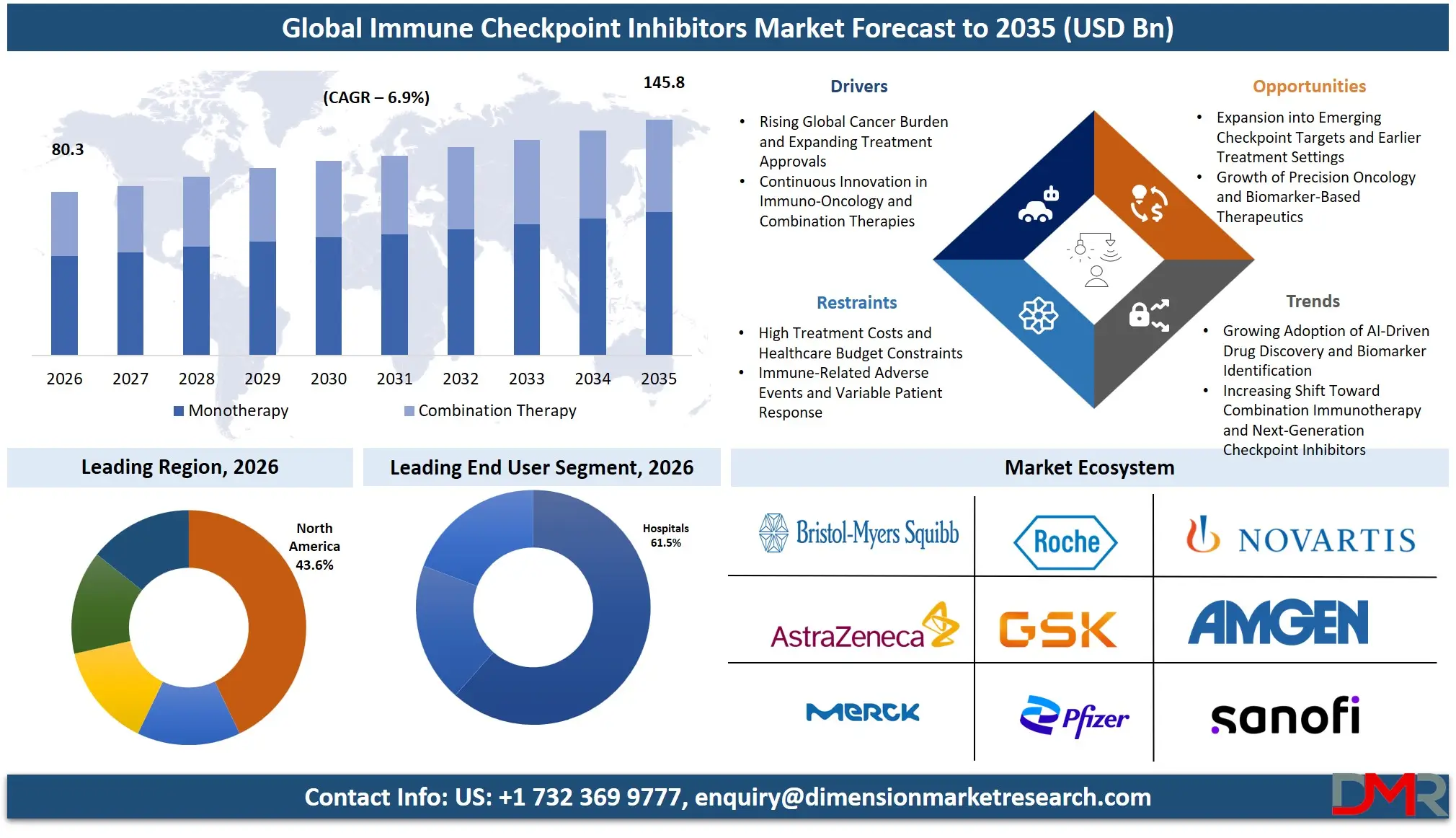
The Immune Checkpoint Inhibitors Market size is expected to be USD 80.3 billion in 2026 and increase at a compound annual growth rate of 6.9% to USD 145.8 billion in 2035 due to rising global cancer burden and expanding treatment approvals.
ℹ
To learn more about this report –
Download Your Free Sample Report Here
The Immune Checkpoint Inhibitors Market encompasses monoclonal antibodies and novel immunotherapeutic agents designed to restore the immune system's ability to identify and eliminate cancer cells by blocking inhibitory immune checkpoint pathways. The market includes approved PD-1, PD-L1, CTLA-4, and emerging checkpoint inhibitor therapies, companion diagnostics, combination treatment regimens, clinical research, and oncology support services. Rising cancer prevalence, expanding regulatory approvals across multiple tumor types, increasing adoption of personalized medicine, and continuous innovation in immuno-oncology are driving market expansion. Emerging trends include biomarker-guided treatment selection, next-generation checkpoint inhibitors, bispecific antibodies, and AI-assisted drug discovery that improve therapeutic effectiveness and broaden clinical applications.
The US Immune Checkpoint Inhibitors Market
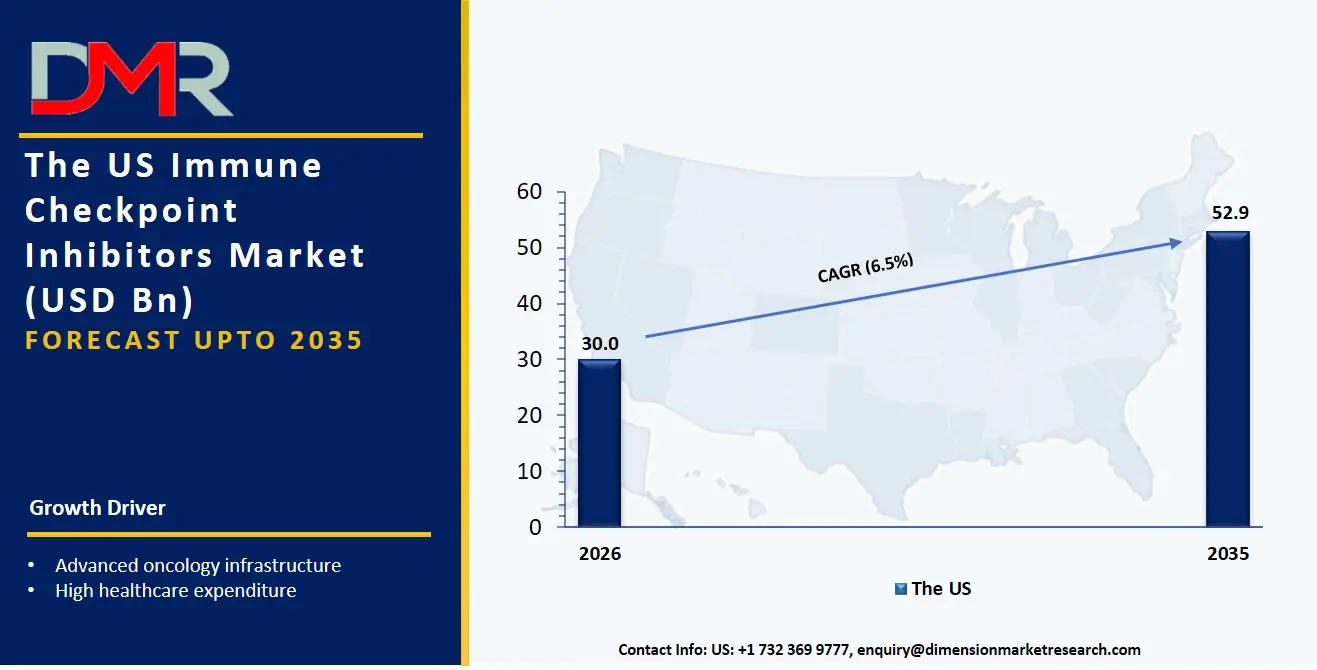
The US Immune Checkpoint Inhibitors Market size is estimated to be USD 30.0 billion in 2026 and is expected to increase at a CAGR of 6.5% over the forecast period.
ℹ
To learn more about this report –
Download Your Free Sample Report Here
The US Immune Checkpoint Inhibitors Market remains the largest globally due to advanced oncology infrastructure, high healthcare expenditure, widespread availability of immunotherapies, and strong clinical research activity. Continuous FDA approvals for new indications, extensive reimbursement coverage, and substantial investments in immuno-oncology research encourage rapid commercialization. Major pharmaceutical innovators actively expand clinical trials, while increasing adoption of precision medicine and biomarker testing further supports sustained market growth across multiple cancer indications.
Europe Immune Checkpoint Inhibitors Market
The Europe Immune Checkpoint Inhibitors Market size is estimated to be USD 19.7 billion in 2026 and is expected to increase at a CAGR of 6.7% over the forecast period.
The Europe Immune Checkpoint Inhibitors Market benefits from strong regulatory support, universal healthcare systems, and increasing adoption of innovative cancer therapies. The European Green Deal indirectly encourages sustainable pharmaceutical manufacturing practices, while collaborative cancer research initiatives accelerate innovation. Countries including Germany, France, Italy, and the United Kingdom lead regional adoption through established oncology networks, favorable reimbursement frameworks, and expanding clinical trial participation supporting next-generation immunotherapy development.
Japan Immune Checkpoint Inhibitors Market
The market size of Japan Immune Checkpoint Inhibitors will be USD 4.0 billion in 2026 and at a CAGR of 6.8% in the forecast period.
The Japan Immune Checkpoint Inhibitors Market is expanding steadily due to an aging population, rising cancer incidence, advanced healthcare infrastructure, and supportive regulatory pathways for innovative oncology drugs. Government initiatives promoting precision medicine and cancer screening improve early diagnosis and treatment adoption. Domestic pharmaceutical innovation, collaborative research partnerships, and increasing utilization of combination immunotherapies create significant opportunities despite challenges related to treatment costs and patient selection.
Key Takeaways
- Market Size & Forecast: The Immune Checkpoint Inhibitors Market size is projected to reach USD 80.3 billion in 2026 and is anticipated to have a value of USD 145.8 billion in 2035.
- Growth Rate & Outlook: The Immune Checkpoint Inhibitors Market size is set to grow at a compound annual growth rate of 6.9% during the forecast period of 2026 to 2035.
- Primary Growth Drivers: Some of the major growth drivers in the market are Rising Global Cancer Burden and Expanding Treatment Approvals, and more.
- Key Market Trends: Some of the major trends in the market are Growing Adoption of AI-Driven Drug Discovery and Biomarker Identification, and more.
- By Therapy Type: Monotherapy is anticipated to get the majority share of the Immune Checkpoint Inhibitors Market in 2026.
- By End User Type: Hospitals boilers are expected to get the largest revenue share in 2026 in the Immune Checkpoint Inhibitors Market.
- Regional Leadership: North America is set to lead the Immune Checkpoint Inhibitors Market with an estimated 43.6% share in 2026.
What is the Immune Checkpoint Inhibitors?
Immune checkpoint inhibitors are immunotherapy drugs that block proteins regulating immune responses, allowing T cells to recognize and destroy cancer cells more effectively. These therapies target inhibitory pathways such as PD-1, PD-L1, CTLA-4, and newer checkpoints including LAG-3, TIGIT, and TIM-3. By reversing immune suppression within the tumor microenvironment, they enhance anti-tumor immunity and are widely used to treat various advanced and metastatic cancers either alone or in combination with other therapies.
Use Cases
- Advanced Lung Cancer Treatment: Immune checkpoint inhibitors are extensively used for treating advanced and metastatic non-small cell lung cancer and small cell lung cancer. They improve overall survival, reduce disease progression, and are increasingly prescribed as first-line monotherapy or combination therapy based on biomarker expression and clinical guidelines.
- Melanoma Management: Checkpoint inhibitors have transformed melanoma treatment by providing durable clinical responses in advanced disease. Their use before and after surgery, as well as in metastatic settings, has significantly improved long-term survival outcomes while reducing recurrence risks in eligible patients.
- Combination Oncology Therapy: These therapies are increasingly combined with chemotherapy, targeted therapies, radiation therapy, and dual immunotherapy regimens to enhance treatment effectiveness. Combination approaches improve immune activation, broaden patient eligibility, and address resistance mechanisms associated with single-agent treatments.
- Personalized Cancer Immunotherapy: Companion diagnostics and biomarker testing enable clinicians to identify patients most likely to benefit from immune checkpoint inhibitors. Personalized treatment strategies optimize therapeutic outcomes, minimize unnecessary toxicity, and improve healthcare resource utilization across multiple oncology indications.
How AI Is Transforming the Immune Checkpoint Inhibitors Market
Artificial intelligence is transforming the immune checkpoint inhibitors market by accelerating drug discovery, optimizing biomarker identification, and improving patient stratification for immunotherapy. AI-powered analytics evaluate genomic, pathology, and clinical datasets to predict treatment responses, enabling more personalized therapeutic decisions. Pharmaceutical companies also utilize AI to streamline clinical trial design, reduce development timelines, and identify promising checkpoint targets with greater precision.
AI additionally enhances operational efficiency across manufacturing, pharmacovigilance, and post-market surveillance by automating data analysis and adverse event monitoring. Healthcare providers benefit from AI-assisted diagnostic imaging and decision-support systems that improve treatment planning, while predictive analytics help optimize healthcare resource allocation, strengthen clinical outcomes, and support continued innovation throughout the immuno-oncology ecosystem.
Market Dynamic
Driving Factors in the Immune Checkpoint Inhibitors Market
Rising Global Cancer Burden and Expanding Treatment Approvals
The increasing incidence of cancer worldwide remains one of the strongest growth drivers for the immune checkpoint inhibitors market. Growing diagnosis rates of lung cancer, melanoma, bladder cancer, renal cell carcinoma, and several other malignancies continue to expand the eligible patient population. Simultaneously, regulatory agencies are approving immune checkpoint inhibitors for additional cancer indications and earlier treatment lines. These expanding approvals improve patient access, encourage physician confidence, and stimulate pharmaceutical investments in innovative immunotherapy development, supporting long-term market expansion.
Restraints in the Immune Checkpoint Inhibitors Market
High Treatment Costs and Healthcare Budget Constraints
Immune checkpoint inhibitor therapies remain among the most expensive oncology treatments available. High acquisition costs, prolonged treatment durations, companion diagnostic requirements, and hospital administration expenses create financial burdens for healthcare providers, insurers, and patients. Limited reimbursement in several emerging economies further restricts market penetration. These economic challenges slow adoption, particularly in lower-income healthcare systems where access to innovative cancer therapies remains constrained.
Opportunities in the Immune Checkpoint Inhibitors Market
Expansion into Emerging Checkpoint Targets and Earlier Treatment Settings
Emerging checkpoint targets such as LAG-3, TIGIT, and TIM-3 offer substantial opportunities for pharmaceutical innovation. Clinical studies increasingly evaluate these therapies across multiple cancer types and earlier disease stages. As evidence supporting adjuvant and neoadjuvant immunotherapy continues to grow, manufacturers can significantly expand patient populations while addressing unmet clinical needs through differentiated treatment options.
Trends in the Immune Checkpoint Inhibitors Market
Growing Adoption of AI-Driven Drug Discovery and Biomarker Identification
Artificial intelligence is increasingly supporting immuno-oncology research by accelerating biomarker discovery, predicting treatment responses, and optimizing clinical trial design. Machine learning algorithms analyze complex genomic, proteomic, and clinical datasets to identify promising therapeutic targets. AI-assisted research shortens drug development timelines while improving the probability of successful clinical outcomes, making innovation more efficient throughout the pharmaceutical value chain.
Research Scope and Analysis
The research scope analyzes the Immune Checkpoint Inhibitors Market across drug class, therapy type, indication, distribution channel, end user, and regional performance. It evaluates market trends, growth drivers, competitive dynamics, technological advancements, regulatory developments, and future opportunities influencing industry expansion and investment strategies.
ℹ
To learn more about this report –
Download Your Free Sample Report Here
By Drug Class Analysis
Among drug classes, PD-1 inhibitors are projected to dominate the Immune Checkpoint Inhibitors Market, accounting for an estimated 46.8% market share in 2026. Their leadership is attributed to broad regulatory approvals across numerous cancer indications, proven long-term survival benefits, favorable efficacy compared with earlier immunotherapies, and expanding use in first-line treatment settings. Extensive clinical evidence, growing physician familiarity, and strong reimbursement support further reinforce their dominant position. Meanwhile, LAG-3 inhibitors are expected to be the fastest-growing segment as clinical validation continues and combination regimens demonstrate improved outcomes in patients resistant to conventional checkpoint inhibitors. Increasing investment in next-generation immune checkpoint pathways, expanding oncology pipelines, and biomarker-driven patient selection are expected to accelerate adoption, creating new therapeutic opportunities while diversifying the competitive landscape beyond traditional PD-1 and PD-L1 therapies.
By Therapy Type Analysis
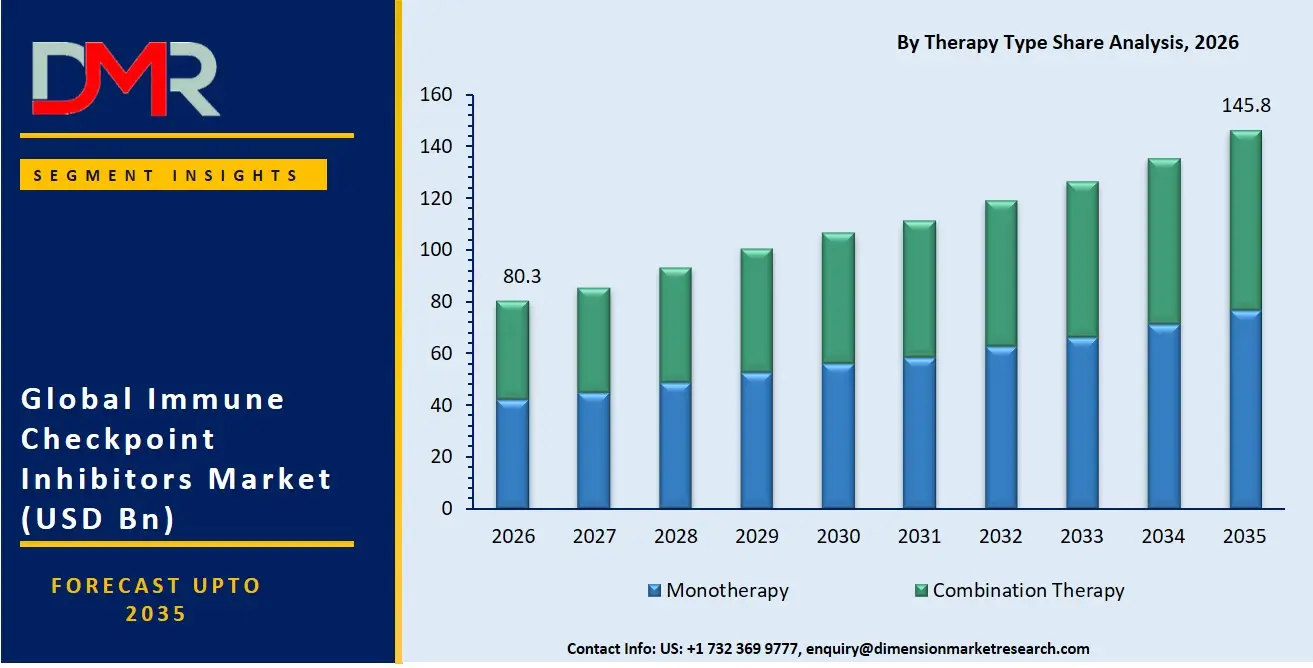
Monotherapy is anticipated to hold the largest share of the Immune Checkpoint Inhibitors Market with an estimated 52.4% market share in 2026. Its leadership stems from established clinical guidelines, simplified treatment administration, manageable toxicity profiles, and demonstrated effectiveness in biomarker-selected patient populations, particularly those with high PD-L1 expression.
ℹ
To learn more about this report –
Download Your Free Sample Report Here
Monotherapy also reduces treatment complexity and healthcare costs compared with multi-drug regimens. However, dual immunotherapy is forecast to be the fastest-growing therapy segment as clinical studies increasingly demonstrate improved progression-free survival and durable responses across advanced cancers. Simultaneously, immunotherapy combined with targeted therapy and chemotherapy continues to expand treatment options, supporting broader adoption of personalized combination strategies designed to overcome resistance mechanisms and improve long-term patient outcomes.
By Indication Analysis
By indication, lung cancer is expected to account for the largest portion of the Immune Checkpoint Inhibitors Market with an estimated 34.7% market share in 2026. The segment benefits from the high global incidence of non-small cell lung cancer, increasing use of immunotherapy in early and advanced disease, continuous label expansions, and routine biomarker testing supporting treatment selection. Strong clinical evidence has established checkpoint inhibitors as standard treatment across multiple stages of lung cancer. Meanwhile, hepatocellular carcinoma is projected to register the fastest growth owing to increasing diagnosis rates, improved screening initiatives, expanding clinical evidence supporting immunotherapy combinations, and continued regulatory approvals that broaden treatment availability for liver cancer patients.
By Distribution Channel Analysis
Hospital pharmacies are projected to maintain market leadership with an estimated 67.3% market share in 2026. Their dominance reflects the specialized administration requirements of immune checkpoint inhibitors, close physician supervision, oncology infusion infrastructure, and integrated multidisciplinary cancer care. Hospitals also manage high-value biologic inventories and coordinate reimbursement procedures more efficiently than alternative distribution channels. Nevertheless, specialty pharmacies are anticipated to experience the fastest growth due to expanding specialty drug management services, enhanced patient support programs, improved cold-chain logistics, and increasing collaboration between pharmaceutical manufacturers and specialty pharmacy providers. Digital prescription management and home-based oncology support services further contribute to rapid segment expansion while improving treatment accessibility and adherence.
By End User Analysis
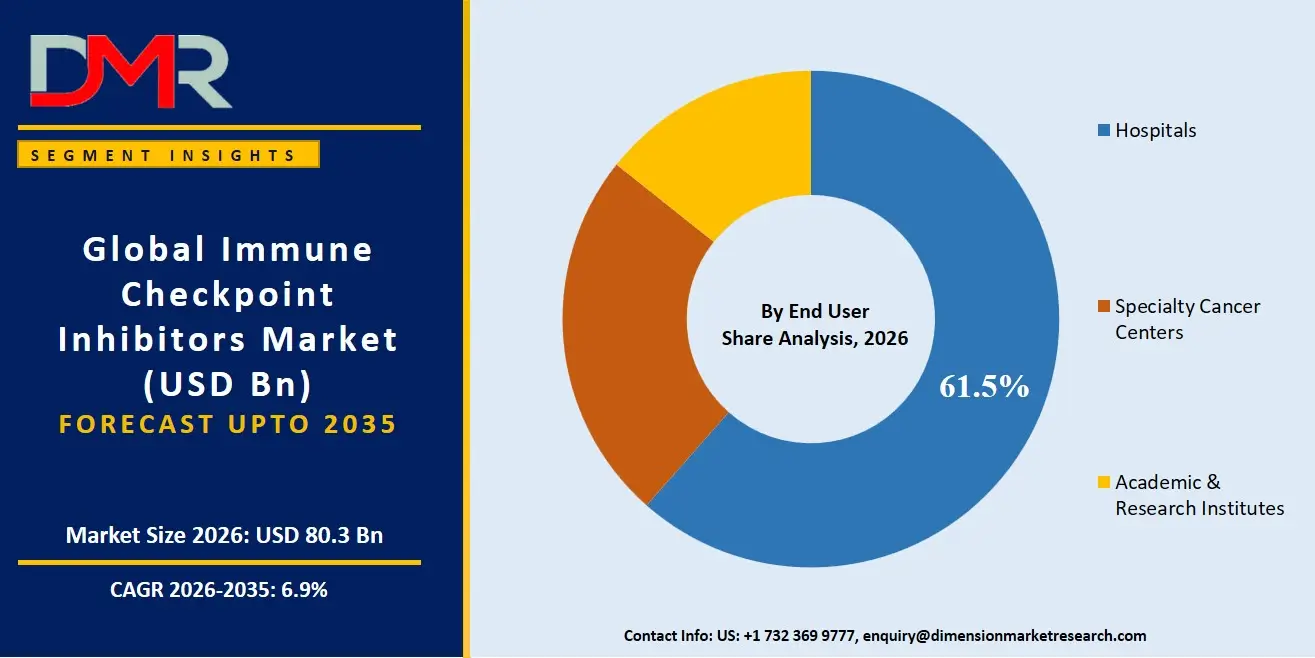
Among end users, Hospitals are expected to dominate the Immune Checkpoint Inhibitors Market, representing an estimated 61.5% market share in 2026. Their leading position is supported by comprehensive oncology departments, access to multidisciplinary cancer specialists, advanced diagnostic capabilities, and infrastructure for administering complex immunotherapies while monitoring immune-related adverse events. Hospitals also participate extensively in clinical research evaluating innovative checkpoint inhibitors. At the same time, Specialty Cancer Centers are forecast to be the fastest-growing end-user segment as increasing patient referrals, personalized treatment programs, precision oncology services, and participation in cutting-edge immunotherapy trials strengthen their role in delivering advanced cancer care across both developed and emerging healthcare systems.
The Immune Checkpoint Inhibitors Market Report is segmented on the basis of the following:
By Drug Class
- PD-1 Inhibitors
- PD-L1 Inhibitors
- CTLA-4 Inhibitors
- Emerging Checkpoint Inhibitors
- LAG-3 Inhibitors
- TIGIT Inhibitors
- TIM-3 Inhibitors
- Others
By Therapy Type
- Monotherapy
- Combination Therapy
- Immunotherapy + Chemotherapy
- Dual Immunotherapy
- Immunotherapy + Targeted Therapy
- Immunotherapy + Radiation Therapy
By Indication
- Lung Cancer
- Melanoma
- Renal Cell Carcinoma
- Urothelial (Bladder) Cancer
- Head and Neck Cancer
- Hodgkin Lymphoma
- Colorectal Cancer
- Hepatocellular Carcinoma
- Other Cancers
By Distribution Channel
- Hospital Pharmacies
- Specialty Pharmacies
- Retail & Online Pharmacies
By End User
- Hospitals
- Specialty Cancer Centers
- Academic & Research Institutes
Regional Analysis
Leading Region in the Immune Checkpoint Inhibitors Market
ℹ
To learn more about this report –
Download Your Free Sample Report Here
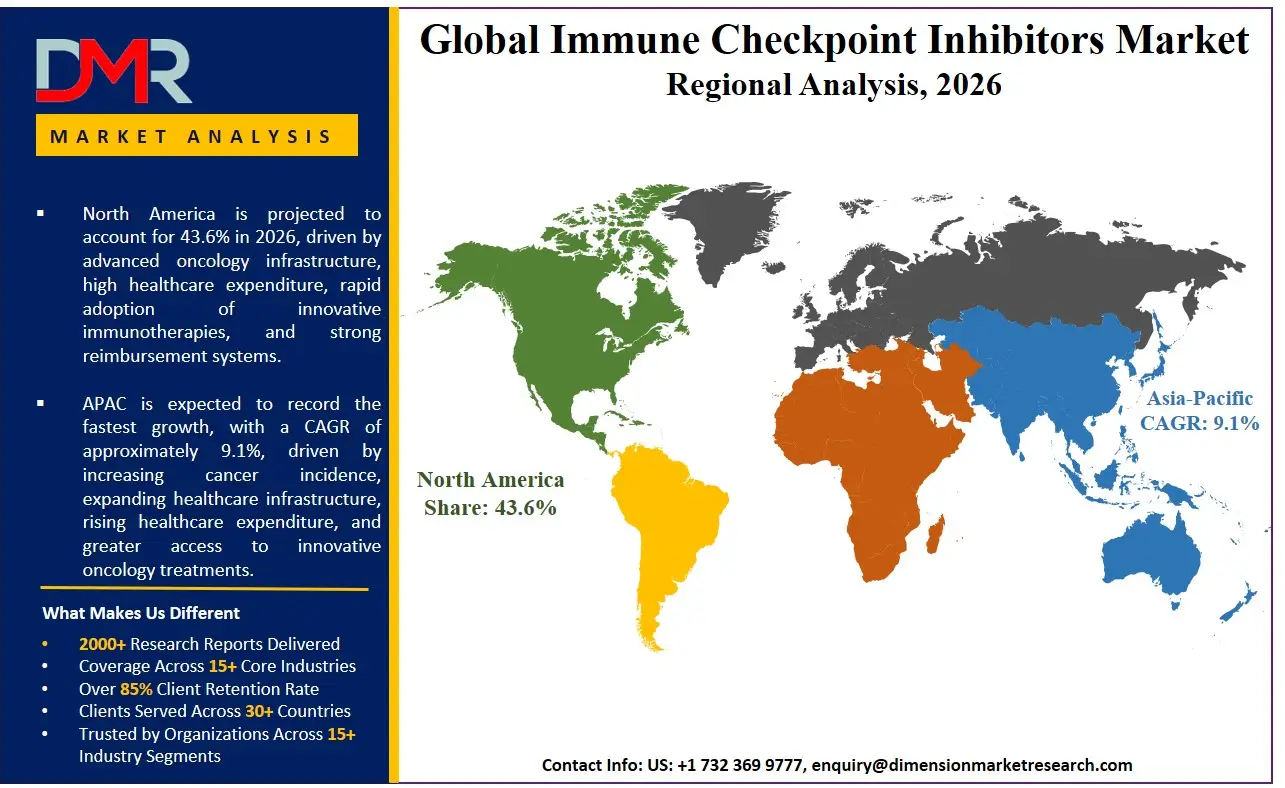
North America is expected to remain the leading region in the Immune Checkpoint Inhibitors Market, accounting for an estimated 43.6% market share in 2026. The region's leadership is supported by advanced oncology infrastructure, high healthcare expenditure, rapid adoption of innovative immunotherapies, and strong reimbursement systems. Continuous regulatory approvals for new indications, extensive biomarker testing, and a robust clinical trial ecosystem further strengthen market growth. Significant investments in immuno-oncology research, widespread availability of precision medicine, and collaborations between pharmaceutical companies, research institutes, and healthcare providers continue to reinforce North America's dominant position in the global market.
Fastest Growing Region in the Immune Checkpoint Inhibitors Market
Asia-Pacific is projected to be the fastest-growing regional market for immune checkpoint inhibitors during the forecast period. Rapid growth is supported by increasing cancer incidence, expanding healthcare infrastructure, rising healthcare expenditure, and greater access to innovative oncology treatments. Governments across China, Japan, South Korea, and India continue to promote cancer research, accelerate regulatory approvals, and encourage domestic biopharmaceutical innovation. Growing participation in multinational clinical trials, improving reimbursement policies, and expanding precision medicine initiatives are further driving regional adoption. The emergence of local biotechnology companies developing next-generation checkpoint inhibitors and biosimilars is expected to strengthen the region's long-term growth potential.
By Region
North America
Europe
- Germany
- The U.K.
- France
- Italy
- Russia
- Spain
- Benelux
- Nordic
- Rest of Europe
Asia-Pacific
- China
- Japan
- South Korea
- India
- ANZ
- ASEAN
- Rest of Asia-Pacific
Latin America
- Brazil
- Mexico
- Argentina
- Colombia
- Rest of Latin America
Middle East & Africa
- Saudi Arabia
- UAE
- South Africa
- Israel
- Egypt
- Rest of MEA
Competitive Landscape
The competitive landscape of the Immune Checkpoint Inhibitors Market is characterized by continuous innovation, extensive clinical development programs, and strategic portfolio expansion. Market participants primarily compete through investments in research and development, lifecycle management, combination therapy development, and expansion into new cancer indications. Companies are increasingly pursuing licensing agreements, strategic collaborations, co-development partnerships, and acquisitions to strengthen immuno-oncology pipelines. High regulatory standards, substantial clinical trial costs, complex manufacturing requirements, and strong intellectual property protection create significant barriers to entry, while advancements in biomarker-driven precision medicine and next-generation checkpoint inhibitors continue to intensify competition.
Some of the prominent players in the global Immune Checkpoint Inhibitors are:
- Merck & Co., Inc.
- Bristol Myers Squibb
- F. Hoffmann-La Roche Ltd.
- AstraZeneca PLC
- Pfizer Inc.
- Regeneron Pharmaceuticals, Inc.
- GSK plc
- Sanofi
- Novartis AG
- Amgen Inc.
- BeiGene, Ltd.
- Innovent Biologics, Inc.
- Jiangsu Hengrui Pharmaceuticals Co., Ltd.
- Shanghai Junshi Biosciences Co., Ltd.
- Akeso, Inc.
- Coherus BioSciences, Inc.
- MacroGenics, Inc.
- Agenus Inc.
- BioNTech SE
- Arcus Biosciences, Inc.
- Other Key Players
Recent Developments
- In October 2025, Merck & Co. announced that the final analysis of the Phase III KEYNOTE-B96 trial demonstrated a statistically significant improvement in overall survival for all enrolled patients with platinum-resistant recurrent ovarian cancer treated with KEYTRUDA® plus chemotherapy, regardless of PD-L1 status. This marked the first immune checkpoint inhibitor-based regimen to demonstrate such survival benefits in this patient population. Merck confirmed that the therapy maintained a safety profile consistent with previous studies and stated that detailed findings would be presented at a major international oncology congress while supporting future regulatory expansion efforts.
- In June 2025, Bristol Myers Squibb entered into a strategic collaboration with BioNTech valued at up to USD 11.1 billion to co-develop and commercialize BNT327, an investigational bispecific antibody targeting PD-L1 and VEGF-A. Bristol Myers Squibb agreed to pay an upfront amount of USD 1.5 billion, with additional milestone and anniversary payments linked to development and commercialization progress. The collaboration aims to accelerate clinical development across multiple solid tumors, including lung cancer, while strengthening both companies' immuno-oncology portfolios through next-generation checkpoint-based therapies.
- In May 2025, Merck & Co. announced that its Phase III KEYNOTE-B96 (ENGOT-ov65) trial evaluating KEYTRUDA® (pembrolizumab) in combination with paclitaxel chemotherapy, with or without bevacizumab, successfully met its primary endpoint of progression-free survival in patients with platinum-resistant recurrent ovarian cancer. The study also achieved the secondary endpoint of overall survival in patients whose tumors expressed PD-L1. The results represent one of the first demonstrations of significant clinical benefit for an immune checkpoint inhibitor-based regimen in this difficult-to-treat patient population and support potential future regulatory submissions for expanded indications.
Report Details
| Report Characteristics |
| Market Size (2026) |
USD 80.3 Bn |
| Forecast Value (2035) |
USD 145.8 Bn |
| CAGR (2026–2035) |
6.9% |
| Historical Period |
2021 – 2025 |
| Forecast Period |
2027 – 2035 |
| Base Year |
2025 |
| Estimate Year |
2026 |
| Segments Covered |
By Drug Class, By Therapy Type, By Indication, By Distribution Channel, By End User |
| Regional Coverage |
North America – The US and Canada; Europe – Germany, The UK, France, Russia, Spain, Italy, Benelux, Nordic, & Rest of Europe; Asia-Pacific – China, Japan, South Korea, India, ANZ, ASEAN, Rest of APAC; Latin America – Brazil, Mexico, Argentina, Colombia, Rest of Latin America; Middle East & Africa – Saudi Arabia, UAE, South Africa, Turkey, Egypt, Israel, & Rest of MEA |
Frequently Asked Questions
How big is the Immune Checkpoint Inhibitors Market?
▾ The Immune Checkpoint Inhibitors Market size is expected to reach USD 80.3 billion by 2026 and is projected to reach USD 145.8 billion by the end of 2035.
What is the CAGR of the Immune Checkpoint Inhibitors Market from 2026 to 2035?
▾ The market is growing at a CAGR of 6.9 percent over the forecasted period.
What factors are driving the growth of the Immune Checkpoint Inhibitors Market?
▾ Rising Global Cancer Burden and Expanding Treatment Approvals, and more are the factors driving the growth of the Immune Checkpoint Inhibitors Market.
What are the major trends in the Immune Checkpoint Inhibitors Market?
▾ Growing Adoption of AI-Driven Drug Discovery and Biomarker Identification, and more are some of the major trends in the market.
Who are the key players in the Immune Checkpoint Inhibitors Market?
▾ Some of the key players in the Immune Checkpoint Inhibitors Market include Pfizer, GSK, Roche, and more
How is the Immune Checkpoint Inhibitors Market segmented?
▾ The Immune Checkpoint Inhibitors Market is segmented by drug class, therapy type, indication, distribution channel, end user.
Which region held the largest share of the Immune Checkpoint Inhibitors Market in 2026?
▾ North America is set to lead the Immune Checkpoint Inhibitors Market with an estimated 43.6% share in 2026.
Which region is expected to grow the fastest in the Immune Checkpoint Inhibitors Market?
▾ Asia Pacific is the fastest-growing region in the Immune Checkpoint Inhibitors Market during the forecast period.