What is the Global Implantable Cardiac Monitor Market Size?
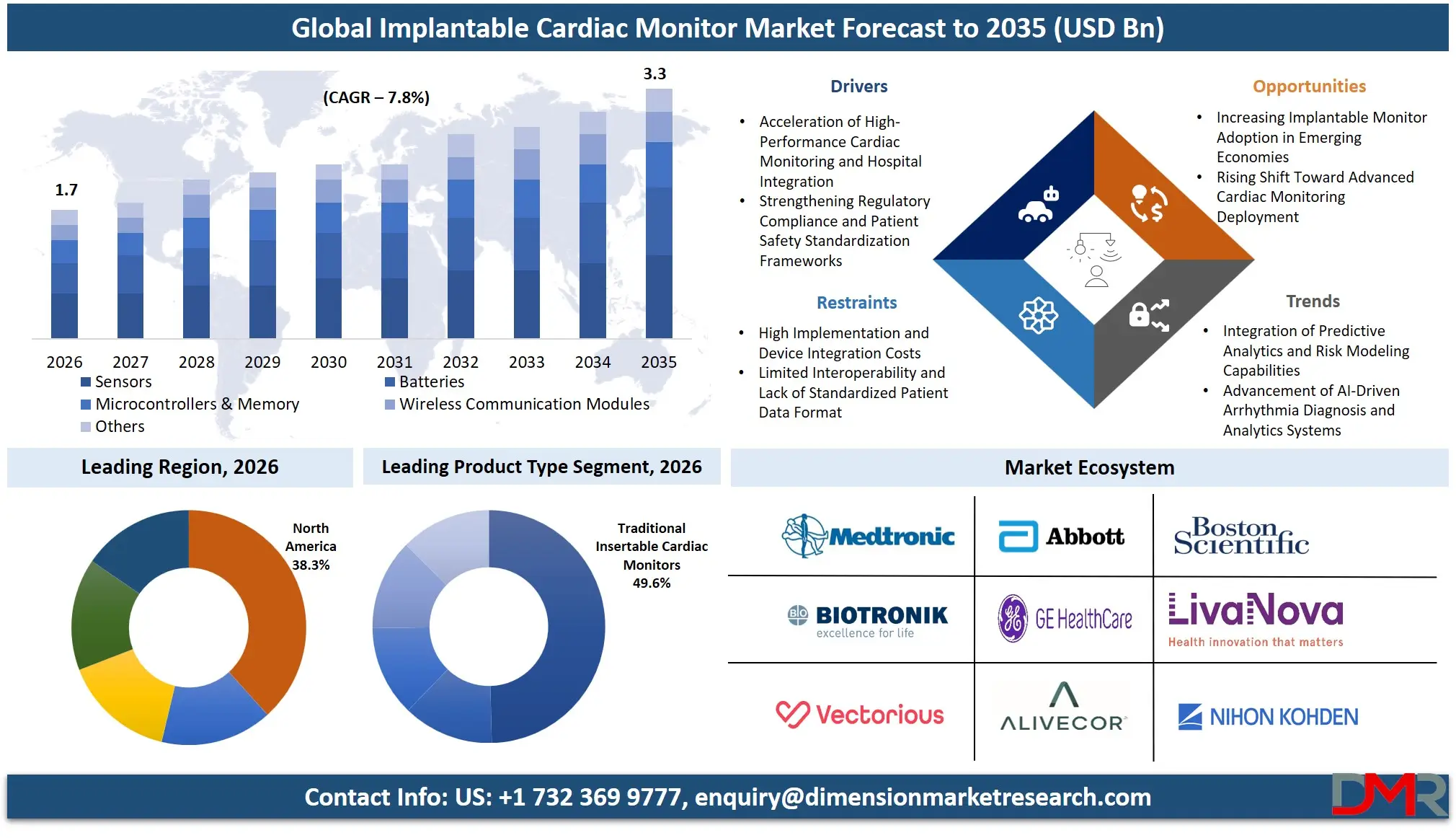
The Global Implantable Cardiac Monitor Market size is estimated at USD 1.7 billion in 2026 and is projected to reach USD 3.3 billion by 2035, exhibiting a CAGR of 7.8% during the forecast period, driven by the rising use of real-time arrhythmia detection and automated remote patient monitoring, decentralized cardiac data management in home-based care architectures, and connected digital governance and compliance management systems.
ℹ
To learn more about this report –
Download Your Free Sample Report Here
The global implantable cardiac monitor market is expanding because of increasing use of high-fidelity atrial fibrillation detection and P-wave analysis in diagnosing anomalous cardiac activity patterns, increasing regulatory mandates, which reduce the chance of stroke during undiagnosed arrhythmias and speed up compliance audits for new cardiac monitoring programs, and more funding in automating privacy-preserving patient data logging.
Some other reasons for expansion in this market include new technologies in long-term rhythm stability management, battery life degradation prediction through behavior analytics, automated data transmission handling, high-volume patient monitoring data platforms, and improved cross-device data-sharing rules. The digital shift in ambulatory cardiac care and remote monitoring has been helpful in speeding up diagnosis and making sensitive patient transaction management easier. This includes smartphone-integrated ICM data analytics research. In addition, government plans focusing on preventing sudden cardiac deaths and the secure cardiac data economy have ensured steady research in implantable monitor systems.
ℹ
To learn more about this report –
Download Your Free Sample Report Here
The US Implantable Cardiac Monitor Market
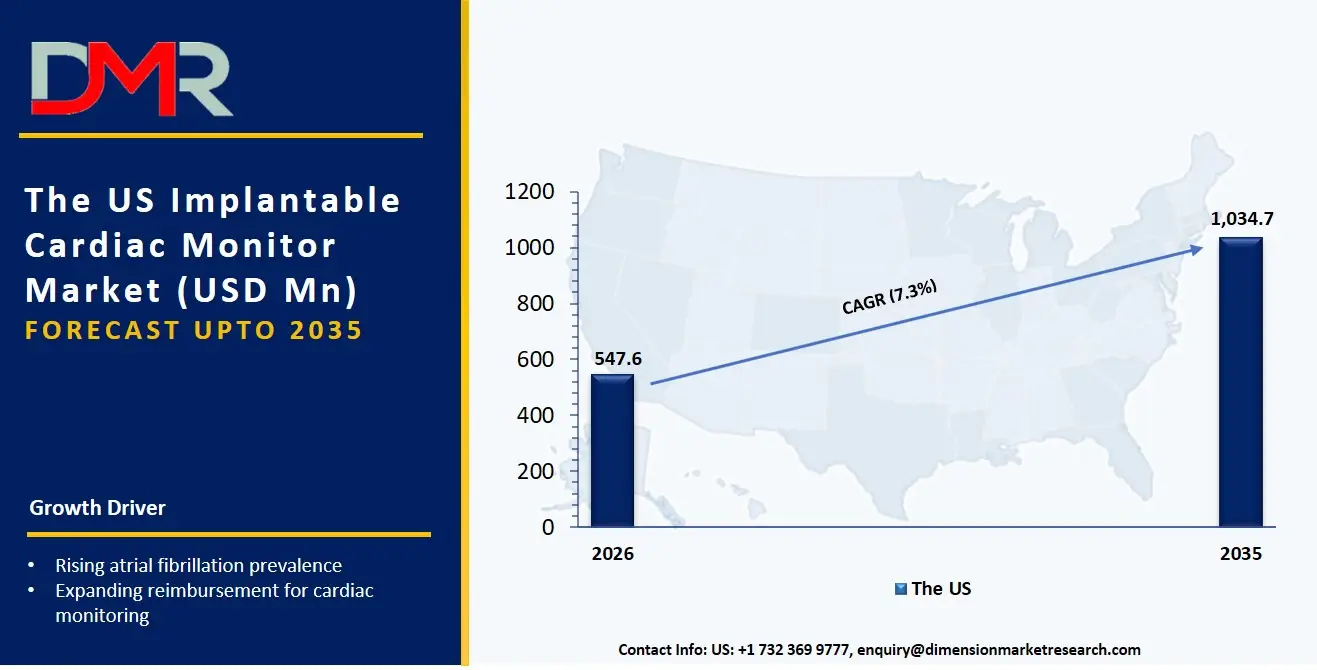
The US Implantable Cardiac Monitor Market is estimated to grow to USD 547.6 million in 2026 with a compound annual growth rate of 7.3% during the forecast period.
The US market is shaped by major federal and state-level programs promoting remote patient monitoring architectures, secure digital adoption supported by the FDA and CMS, and NIH-led cardiac health modernization initiatives. These programs encourage the use of high-precision arrhythmia detection, real-time AFib burden protection, and predictive compliance software for cardiac monitoring. Automated patient safety platforms are being rapidly adopted, and the US continues to invest in better data sharing between hospitals, encrypted patient audit systems, and reliable battery longevity detection tools for implantable monitor platforms. Service providers are also influenced by laws like HIPAA, FDA Class III device regulations, and national digital cardiac strategies to offer services that ensure data security, rule-following, and smooth integration across hospital and home-based monitoring environments.
ℹ
To learn more about this report –
Download Your Free Sample Report Here
Europe Implantable Cardiac Monitor Market
The European Implantable Cardiac Monitor Market is estimated to be valued at USD 476.0 million in 2026, witnessing growth at a CAGR of 7.4%, during the forecast period.
Europe's implantable cardiac monitor market is well-established, shaped by EU-wide policies such as MDR, REACH, and national policies to support sustainable digital health markets (e.g., Germany's remote cardiology digital plans and France's national cardiac health strategies). Countries are also making patient data management more flexible to align hospital operators and patient demands and enable the sharing of anonymized cardiac data across borders. The market grows due to new tools like software for real-time P-wave validation and risk scoring systems for arrhythmia stability. Use is made easier by teamwork between public and private groups and shared digital safety rules. Healthcare providers have access to technologies such as AI-based rhythm fine-tuning, patient-device interaction modeling, and secure remote audit logging, and Europe is at the forefront of the digitisation of safe and efficient cardiac monitoring operations.
Japan Implantable Cardiac Monitor Market
The Japan Implantable Cardiac Monitor Market is projected to be valued at USD 143.3 million in 2026, progressing at a CAGR of 9.6%, during the period spanning from 2026 to 2035.
Japan's implantable cardiac monitor market is well developed, with high-precision arrhythmia data platforms, connected remote patient management systems, and a wide array of device aging simulation software tools. National focus on automation, efficiency, and data integrity is delivered via AI-based rhythm models and smart device protection. Growth opportunities are helped by government measures under the Strategy for Next-Generation Medical Devices by Japan's Ministry of Health, Labour and Welfare (MHLW), and continued investment in cardiac cloud modernization. AI-driven arrhythmia research, multi-party analytics for patient data sharing, and virtualized remote monitoring environments all need effective implantable monitor software to keep pace with high-accuracy cardiac monitoring. Higher costs for validating new implantable monitor systems and connecting them with older hospital infrastructure are significant, but there are opportunities for the export of Japanese digital cardiac technologies to the Asian and Pacific markets.
Key Takeaways
- Market Size & Forecast: The Global Implantable Cardiac Monitor Market is estimated to be valued at USD 1.7 billion in 2026 and is expected to grow to USD 3.3 billion by 2035.
- Growth Rate & Outlook: The market is expected to witness growth at a compound annual growth rate of 7.8% in the forecast period.
- Primary Growth Drivers: The availability of new remote monitoring technologies that use real-time arrhythmia detection, the need to speed up compliance results and improve success rates of patient data sharing, and more government investment in a national secure cardiac data infrastructure are key growth drivers.
- Key Market Trends: The real-time profiling of arrhythmia stability risks, Bluetooth-enabled ICM data handling, and the shift to AI-driven diagnostic platforms and automated device inventory management are key market trends.
- By Component: The Sensors segment is expected to take the largest revenue share in the global implantable cardiac monitor market in 2026.
- By Product Type: Traditional Insertable Cardiac Monitors (ICMs) is expected to take the largest revenue share in 2026 in the implantable cardiac monitor market.
- By Application: The Atrial Fibrillation (AFib) segment is estimated to take the lead in 2026 with the largest share in the implantable cardiac monitor market.
- Regional Leadership: North America is estimated to take the lead in 2026 with 38.3% share in the implantable cardiac monitor market.
What is an Implantable Cardiac Monitor?
Implantable Cardiac Monitor refers to a combination of sensor-driven and real-time monitoring technologies that provide cardiologists, hospitals, and compliance entities with enhanced capabilities beyond basic Holter monitoring, including helping to protect patient arrhythmia data during transmission, preventing stroke via early AFib detection, and enabling secure multi-party cardiac data analytics. They include high-precision sensors, long-life batteries, microcontrollers, and wireless communication modules. These platforms use modern systems such as real-time P-wave validation, digital device inventory management software, and remote patient advisory to manage, verify, and track sensitive cardiac events and results. To improve cardiac safety outcomes, manage patient variability and application-specific programs, and expand protection into customized digital coverage to support individual patient anatomy and promote the development of safe cardiac monitoring products.
Use Cases
- Market Stability for Daily Operations: Implantable cardiac monitor platforms can provide market-balancing benefits through software (encrypted patient analytics, attestation) and control systems to reduce stroke risk and support settlement of safe monitoring transactions in minutes, compared to days that it would take with only manual patient data handling.
- Long-Term Cardiac Device Asset Management: Long-term data on ongoing battery stability issues, including signal intermittency, device replacement cost spikes, or sensor degradation, are studied to better understand market performance and to help plan long-term software-based cardiac care.
- Workload Load Balancing: Patient safety is handled through implantable monitor platforms and smart software in hospital and home-based settings to support market capacity balance for high-volume cardiac monitoring workloads.
- Government & Regulated Programs: Faster implantable monitor software development helps data innovation and development of targeted safe cardiac programs; government programs, through smart monitoring of national cardiac data, advance national cardiac protection strategies and help the adoption of operational standards.
How AI Is Transforming the Global Implantable Cardiac Monitor Market?
Artificial intelligence (AI) is being used progressively more often in implantable cardiac monitor platforms to improve arrhythmia demand forecasting, find safety quality trends in cardiac activity patterns, and automatically spot unusual degradation patterns in patient heart rhythm data. It also allows faster rhythm verification because it can handle digital patient submissions on a large scale. Encrypted patient audit logs are easier to study and help registries find integration issues, reduce mistakes, and improve the overall accuracy of cardiac diagnosis. This has resulted in operations being cost-effective, quicker, and more efficient than the old manual review method.
AI is also strengthening research and development by improving patient risk assessment and enabling more accurate capacity planning for remote monitoring. It helps cardiologists predict how many arrhythmia episodes will occur, find possible device transmission delays, and monitor the performance of patient safety networks more effectively. In addition, automation of routine compliance checks and performance tracking is reducing operational workload, lowering administrative costs, and improving overall efficiency. This is leading to better financial results and more stable operations across the implantable cardiac monitor production chain.
Market Dynamics
Key Drivers of the Global Implantable Cardiac Monitor Market
Acceleration of High-Performance Cardiac Monitoring and Hospital Integration
The market is growing with the rise of advanced digital diagnostics for cardiac patients, better management of sensitive arrhythmia data, and a closer connection between device performance monitoring and secure hospital integration. Implantable cardiac monitor platforms provide real-time data that allows monitoring of cardiac activity, helping to spot battery degradation early, and checking patient safety performance much faster. This has improved operational efficiency and reduced human errors and monitoring costs. At the same time, demand for more automated research and development is being helped by more activity in predictive analytics for the assessment of individual patient risks, as cardiac science further digitizes patient diagnosis and data processing tasks.
Strengthening Regulatory Compliance and Patient Safety Standardization Frameworks
There is increasing emphasis on cardiac safety, device purity, and rule-following within the implantable cardiac monitor system. Rules and frameworks such as FDA Class III regulations, EU MDR, HIPAA, and cardiac device modernization efforts in key markets are encouraging better patient handling practices and more structured cardiac safety processes. These advances are supporting the need for systems that can offer steady monitoring of sensitive patient data and standardized reporting. At the same time, active work to improve the sharing of device performance data and reduce verification issues is strengthening the need for more effective management systems in both government and private market participants.
Restraints in the Global Implantable Cardiac Monitor Market
High Implementation and Device Integration Costs
The rollout of implantable cardiac monitor systems remains costly, requiring significant investment in sensor validation technologies, system integration, testing, and alignment with existing hospital workflows. In addition, following data privacy regulations such as HIPAA and other regional laws adds to setup complexity. These factors increase upfront costs and can limit adoption, especially among smaller clinics and new market entrants.
Limited Interoperability and Lack of Standardized Patient Data Format
There is still fragmentation in the market in terms of patient data formats and data handling procedures. Although some areas have put in place organized digital management systems, many hospitals continue to work with both legacy patient records and modern automated monitoring systems. Lack of standardized device communication protocols limits the ability to share patient data between hospitals and device suppliers and results in inefficiencies in production, deployment, and system integration.
Growth Opportunities in the Global Implantable Cardiac Monitor Market
Increasing Implantable Monitor Adoption in Emerging Economies
Newly developing economies such as Brazil, Indonesia, Nigeria, the UAE, and Vietnam are slowly building their cardiac health and implantable monitor systems. These regions have long-term growth possibilities, with more people adopting remote cardiac care, and with more hospitals becoming aware of cardiac safety programs and slowly modernizing digital health infrastructure. These markets have few older cardiac monitoring systems and can be used with new, technology-driven implantable monitor platforms that can grow over time.
Rising Shift Toward Advanced Cardiac Monitoring Deployment
The move to safer cardiac systems, decentralized monitoring networks, and real-time arrhythmia performance checks is creating the adoption of advanced implantable monitor systems. These systems allow centralized patient data access, better coordination between hospitals and market participants, and faster digital device inventory management. Advanced digital setups are increasingly becoming a trend among modern cardiac monitoring providers as operational efficiency becomes one of the competitive factors.
Global Implantable Cardiac Monitor Market Trends
Integration of Predictive Analytics and Risk Modeling Capabilities
Implantable cardiac monitor platforms are gradually adding data-driven technology to find arrhythmia degradation trends and improve accuracy in digital device inventory management. These systems allow cardiologists and hospital operators to study their device units' cardiac sensing behavior better, simplify the management of their digital portfolios, and improve their overall patient monitoring performance. This move is slowly turning the industry more proactive and data-driven in cardiac safety instead of being purely reactive in market operations.
Advancement of AI-Driven Arrhythmia Diagnosis and Analytics Systems
The use of AI-based arrhythmia diagnosis systems is currently becoming a basic part of today's cardiac monitoring operations. These systems allow real-time rhythm stability monitoring, centralized digital device administration, and better network coordination among market participants. Advanced implantable monitor platforms are improving the efficiency and responsiveness of platform providers that operate in different regions by reducing dependence on manual data analysis and allowing operations to grow more easily.
Research Scope and Analysis
The global implantable cardiac monitor market is witnessing strong growth driven by rising adoption of remote cardiac monitoring, real-time arrhythmia detection, and increasing demand for high-safety and high-efficiency cardiac monitoring devices. The market is segmented based on product type, component, application, and end-user.
ℹ
To learn more about this report –
Download Your Free Sample Report Here
By Product Type Analysis
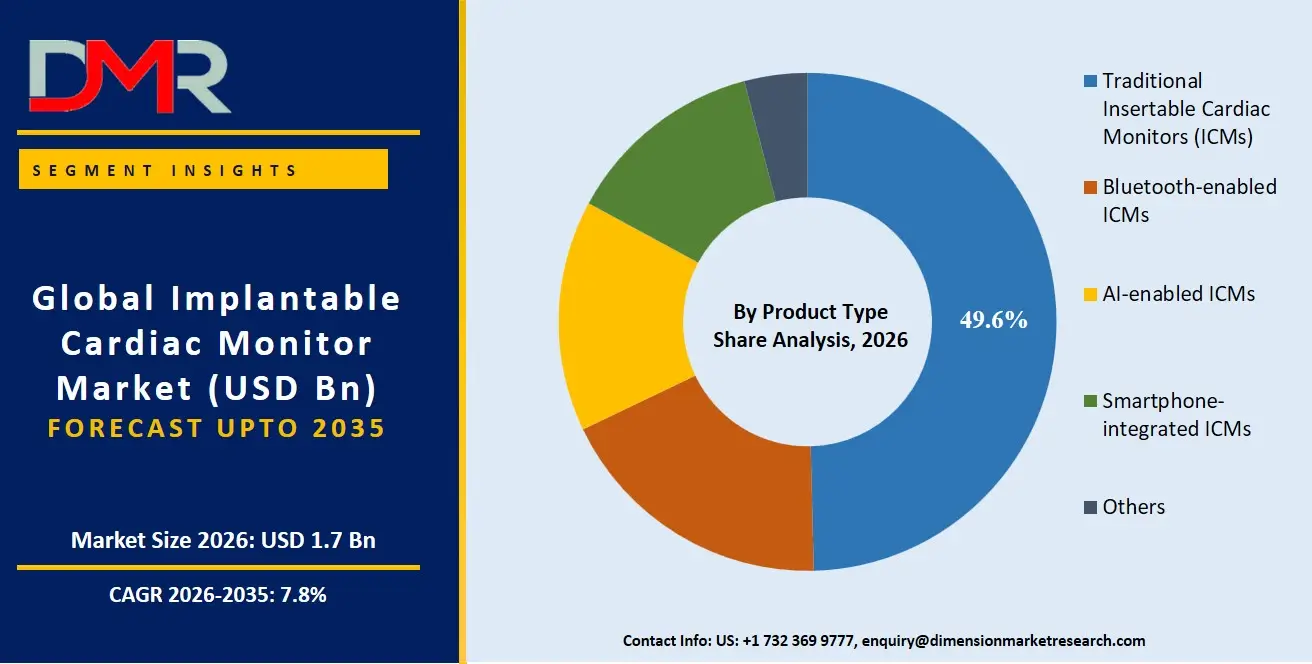
The Traditional Insertable Cardiac Monitors (ICMs) segment is likely to continue dominating the market in 2026, accounting for approximately 49.6% of the global implantable cardiac monitor market share. This is due to its long-established clinical evidence, favorable reimbursement policies, proven reliability for long-term rhythm monitoring, and its widespread use in various clinical settings where physicians prefer legacy device familiarity. Within Product Type, the Bluetooth-enabled ICMs sub-segment holds the fastest-growing share, driven by high patient demand for remote connectivity and automated data transmission. The AI-enabled ICMs segment is driven by its key role in enabling predictive arrhythmia diagnosis, while Smartphone-integrated ICMs are gaining traction among tech-savvy patient populations.
By Component Analysis
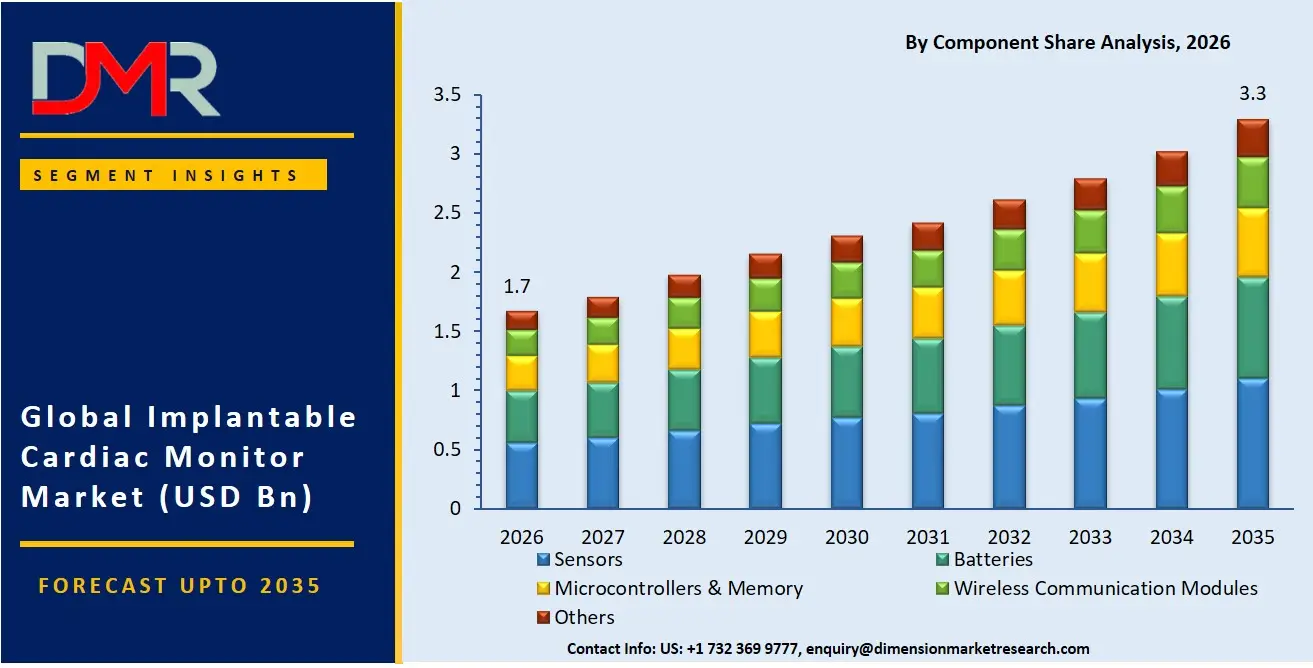
The Sensors segment is likely to continue holding the lead in 2026, accounting for approximately 34.5% of the global implantable cardiac monitor market share, driven by strong demand for high-precision signal detection, longer battery life, and lower device failure rates, as well as flexible integration across devices. This segment reflects the continued shift toward agile and data-driven cardiac operations. The Batteries segment is the second-largest, supported by large enterprises needing long-term device reliability for sensitive patient monitoring. Microcontrollers & Memory remains a mature segment focused on data processing and storage, where device integrity is critical.
By Application Analysis
The Atrial Fibrillation (AFib) segment is expected to dominate with around 48.7% market share in 2026, driven by its irreplaceable role in detecting irregular heartbeats, enabling real-time burden assessment, and stroke prevention. AFib monitoring supports customized patient monitoring plans because it can offer multiple levels of parameter tuning, capacity amounts, and yearly stability plans, delivering fast results while keeping patient data within secure registry systems. The Bradycardia segment is the second-largest, driven by demand for monitoring slow heart rates in elderly patients. The Tachycardia segment is the fastest-growing within Application, witnessing strong growth with increasing needs for real-time high-heart-rate detection and emergency response.
By End-User Analysis
The Hospitals & Clinics segment is the largest end-user in 2026, accounting for 45.3% share, driven by the need for enterprise-wide digital transformation, multi-department standardization, and significant IT budgets. Hospitals are adopting implantable monitor platforms to optimize patient monitoring networks and ensure operational excellence. The Specialized Cardiac Centers segment is the second-largest, supported by focused arrhythmia care and faster adoption of advanced ICMs. The Home-based & Remote Monitoring Settings segment is the fastest-growing, supported by cloud-based offerings, lower entry costs, and telehealth expansion. Patients are increasingly adopting remote monitoring solutions for specific cardiac conditions.
The Global Implantable Cardiac Monitor Market Report is segmented based on the following:
By Product Type
- Traditional Insertable Cardiac Monitors (ICMs)
- Bluetooth-enabled ICMs
- Smartphone-integrated ICMs
- AI-enabled ICMs
- Others
By Component
- Sensors
- Batteries
- Microcontrollers & Memory
- Wireless Communication Modules
- Others
By Application
- Atrial Fibrillation (AFib)
- Bradycardia
- Tachycardia
- Epilepsy & Unexplained Falls
- Other Arrhythmias
By End-User
- Hospitals & Clinics
- Specialized Cardiac Centers
- Ambulatory Surgical Centers (ASCs)
- Home-based & Remote Monitoring Settings
Regional Analysis
Largest Region in the Implantable Cardiac Monitor Market
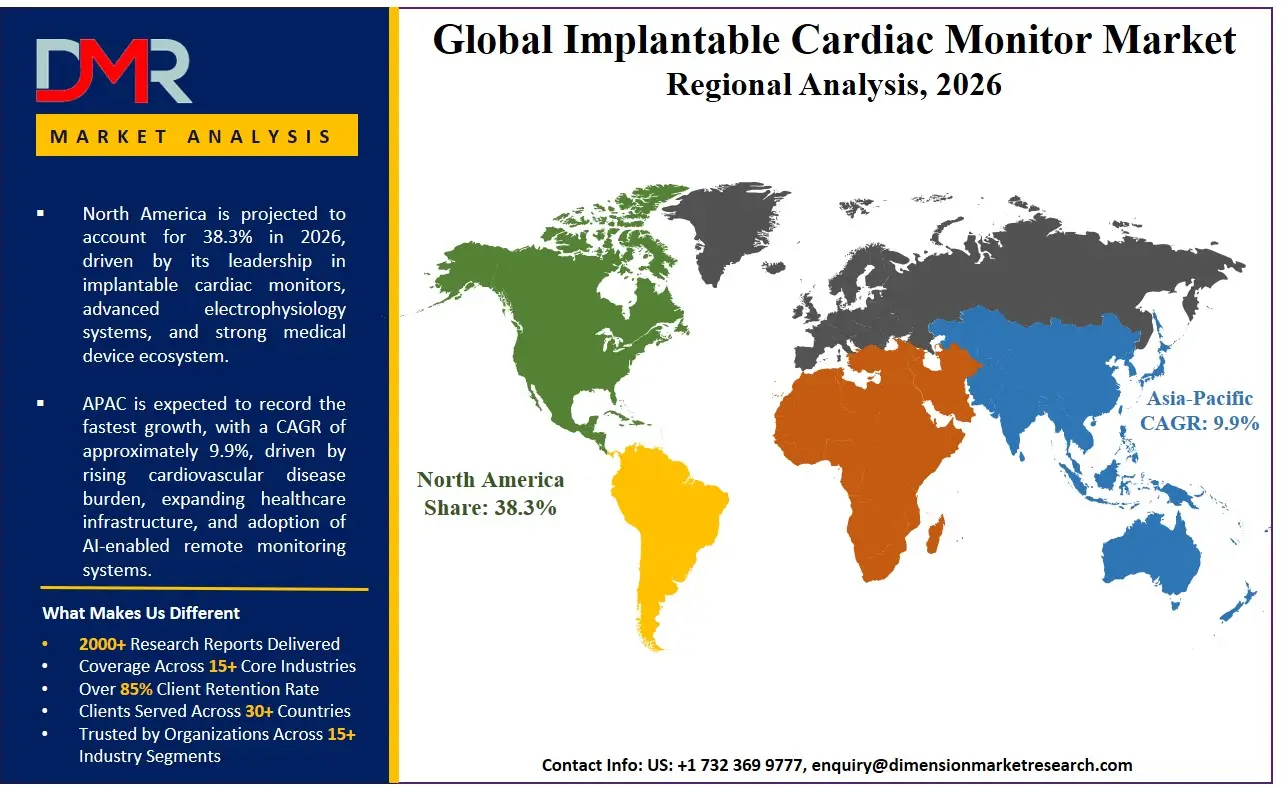
It is projected that North America will take the lead in the global implantable cardiac monitor market, covering a market share of about 38.3% in the year 2026. The region's dominance is driven by the presence of major implantable device vendors, strong regulatory frameworks such as FDA Class III and HIPAA mandating patient data safety, and early adoption of AI-driven arrhythmia detection and remote monitoring technologies across the hospital and cardiology sectors. North America benefits from significant investment in cardiac health digitalization, the highest concentration of new device implantation procedures, and strong government support through NIH funding for cardiovascular research. The region is also home to major cardiac device manufacturers and research hospitals, enabling rapid deployment of remote monitoring networks. Additionally, ongoing investments in workforce training using telemedicine and remote patient management further strengthen North America's leading position. The widespread adoption of traditional insertable cardiac monitors for AFib detection, post-stroke monitoring, and unexplained syncope continues to reinforce the region's market leadership.
ℹ
To learn more about this report –
Download Your Free Sample Report Here
Fastest-Growing Region in the Implantable Cardiac Monitor Market
Asia-Pacific is the fastest-growing region, supported by aggressive domestic healthcare infrastructure expansion in China and India, substantial government funding for smart hospital and digital health initiatives, and increasing investments in new cardiac facilities that integrate remote monitoring from the initial design phase. The region is witnessing rapid growth in home-based cardiac care, driving demand for cloud-based data transmission and AI-enabled diagnostic software. Asia-Pacific is also at the forefront of AI-driven arrhythmia deployment in high-growth sectors like telecardiology. The region benefits from lower labor costs, driving faster ROI on automation, along with rising corporate commitments to operational excellence and patient safety compliance. Growing focus on remote cardiac monitoring for export markets further accelerates market expansion. Moreover, increasing awareness of sudden cardiac death and the need to reduce undiagnosed arrhythmias in rapidly industrializing economies are expected to keep Asia-Pacific's growth momentum as the highest CAGR region during the forecast period.
By Region
North America
Europe
- Germany
- The U.K.
- France
- Italy
- Russia
- Spain
- Benelux
- Nordic
- Rest of Europe
Asia-Pacific
- China
- Japan
- South Korea
- India
- ANZ
- ASEAN
- Rest of Asia-Pacific
Latin America
- Brazil
- Mexico
- Argentina
- Colombia
- Rest of Latin America
Middle East & Africa
- Saudi Arabia
- UAE
- South Africa
- Israel
- Egypt
- Rest of MEA
Competitive Landscape
The implantable cardiac monitor market is highly competitive, with new ideas and strategic partnerships shaping the competitive environment. To gain an advantage, companies and providers are focused on developing better implantable monitor platforms (such as AI-powered arrhythmia detection, automated battery longevity systems, and software development kits for remote patient management), smart cardiac signal analytics, and cloud-based device degradation monitoring. There are high barriers to entering the market due to the large amount of money needed for regulatory approval, specialized cardiac device knowledge, and the need for mature software systems and rule-following.
Strategic approaches to increase market presence include partnerships with cardiac research groups and digital registries, mergers between implantable monitor software providers and device manufacturers, and long-term support contracts with customers and government institutions. Additionally, research and development in digital patient data-sharing rules and flexible device designs are important for staying competitive and meeting the changing needs of the implantable cardiac monitor community.
Some of the prominent players in the Global Implantable Cardiac Monitor Market are:
- Medtronic plc
- Abbott Laboratories
- Boston Scientific Corporation
- BIOTRONIK SE & Co. KG
- Koninklijke Philips N.V.
- GE HealthCare Technologies Inc.
- LivaNova PLC
- Nihon Kohden Corporation
- MicroPort Scientific Corporation
- Angel Medical Systems, Inc.
- Vectorious Medical Technologies Ltd.
- BioTelemetry, Inc.
- ZOLL Medical Corporation
- SCHILLER AG
- AliveCor, Inc.
- iRhythm Technologies, Inc.
- Implicity
- Lepu Medical Technology (Beijing) Co., Ltd.
- CardioComm Solutions, Inc.
- Osypka Medical GmbH
- Other Key Players
Recent Developments
- April 2026: Boston Scientific Corporation showcased its expanded Cardiac Diagnostic Solutions portfolio at Heart Rhythm 2026, highlighting the LUX-Dx II+ Insertable Cardiac Monitor System with advanced dual-stage arrhythmia detection algorithms and enhanced remote monitoring capabilities for long-term cardiac rhythm management.
- February 2026: Abbott Laboratories expanded commercialization and physician education efforts for its Assert-IQ Insertable Cardiac Monitor platform, highlighting advanced AI-powered arrhythmia classification, Bluetooth-enabled remote monitoring, and six-year continuous monitoring capabilities for long-term AF management.
- February 2026: BIOTRONIK SE & Co. KG launched the Acticor Sky and Rivacor Sky device family, the world's first CE-approved high-voltage cardiac rhythm management systems designed for left bundle branch area pacing (LBBAP), strengthening its advanced arrhythmia management and implantable cardiac monitoring ecosystem.
- January 2026: Medtronic plc announced plans to accelerate acquisitions across cardiology and cardiac rhythm management technologies during the J.P. Morgan Healthcare Conference 2026, aiming to strengthen its implantable cardiac monitoring and connected cardiac care portfolio.
Report Details
| Report Characteristics |
| Market Size (2026) |
USD 1.7 Bn |
| Forecast Value (2035) |
USD 3.3 Bn |
| CAGR (2026–2035) |
7.8% |
| The US Market Size (2026) |
USD 547.6 Mn |
| Historical Period |
2021 – 2025 |
| Forecast Period |
2027 – 2035 |
| Base Year |
2025 |
| Estimated Year |
2026 |
| Segments Covered |
By Product Type, By Component, By Application, By End-User |
| Regional Coverage |
North America – The US and Canada; Europe – Germany, The UK, France, Russia, Spain, Italy, Benelux, Nordic, & Rest of Europe; Asia-Pacific – China, Japan, South Korea, India, ANZ, ASEAN, Rest of APAC; Latin America – Brazil, Mexico, Argentina, Colombia, Rest of Latin America; Middle East & Africa – Saudi Arabia, UAE, South Africa, Turkey, Egypt, Israel, & Rest of MEA |
Frequently Asked Questions
How big is the Global Implantable Cardiac Monitor Market?
▾ The Global Implantable Cardiac Monitor Market is estimated to be valued at USD 1.7 billion in 2026 and is expected to reach USD 3.3 billion by the end of 2035.
What is the CAGR of the Global Implantable Cardiac Monitor Market from 2026 to 2035?
▾ The market is growing at a CAGR of 7.8% over the forecasted period.
What factors are driving the growth of the Global Implantable Cardiac Monitor Market?
▾ The market is driven by advances in real-time arrhythmia detection and automated patient safety enforcement, regulatory pressure to speed up cardiac compliance results and reduce stroke misdiagnosis, and increased government investment in a national safe cardiac data infrastructure.
What are the major trends in the Global Implantable Cardiac Monitor Market?
▾ The key market trends include the adoption of real-time arrhythmia stability tracking and Bluetooth-enabled ICM data analysis, along with a growing shift toward AI-driven diagnostic platforms and data-enabled digital device inventory management systems.
Which region held the largest share of the Global Implantable Cardiac Monitor Market in 2026?
▾ North America is expected to account for the largest market share in 2026, with a share of about 38.3%.
Which region is expected to grow the fastest in the Global Implantable Cardiac Monitor Market?
▾ Asia Pacific is the fastest-growing region in the market during the forecast period.
Who are the key players in the Global Implantable Cardiac Monitor Market?
▾ Some of the major key players in the Global Implantable Cardiac Monitor Market are Medtronic plc, Abbott Laboratories, Boston Scientific Corporation, BIOTRONIK SE & Co. KG, GE HealthCare, and many others.
How is the Global Implantable Cardiac Monitor Market segmented?
▾ The market is segmented by product type, component, application, and end-user.