Indication Covered
The report covers epilepsy as a chronic neurological disorder, with emphasis on its clinical burden, treatment patterns, therapeutic innovation, and commercial market development across India. Epilepsy is primarily characterized by a persistent predisposition to epileptic seizures resulting from abnormal, excessive, or synchronous electrical activity in the brain. The condition can range from infrequent seizures that are effectively controlled with medication to severe, drug-resistant epilepsy associated with substantial neurological, cognitive, developmental, and quality-of-life impairment, requiring long-term antiseizure medication, emergency seizure management, specialized neurological care, and, in selected cases, surgical or device-based interventions.
The indication scope includes major clinical manifestations and associated seizure conditions relevant to treatment demand, including:
- Focal-onset epilepsy
- Generalized-onset epilepsy
- Focal-to-bilateral tonic-clonic seizures
- Absence epilepsy
- Myoclonic epilepsy
- Drug-resistant epilepsy
Focal-onset and generalized-onset epilepsy remain the primary clinical focuses because of their contribution to the overall patient population and long-term antiseizure medication demand. The report also considers drug-resistant epilepsy because of its substantial treatment burden, requirement for specialist assessment, and potential need for combination therapy, epilepsy surgery, neuromodulation, or other advanced interventions. Other difficult-to-treat manifestations, including developmental and epileptic encephalopathies, status epilepticus, and epilepsy associated with structural or genetic abnormalities, are evaluated as areas of continuing clinical need.
The treatment landscape covers conventional antiseizure medications, newer-generation antiseizure medications, combination pharmacotherapy, emergency seizure-control treatments, and selected surgical or device-based interventions. Particular attention is given to therapies targeting sodium and calcium channels, synaptic vesicle protein 2A (SV2A), gamma-aminobutyric acid (GABA) signaling, and other neuronal excitability mechanisms, as well as emerging precision-medicine and next-generation treatment approaches.
Epidemiology Parameters
Epilepsy represents a significant chronic neurological disease burden across India. Epidemiological patterns vary substantially between states and population groups because of differences in genetic susceptibility, infectious and structural neurological conditions, perinatal risk factors, healthcare access, disease awareness, diagnostic practices, and the availability of neurologists, electroencephalography (EEG), neuroimaging, and specialized epilepsy services.
ℹ
To learn more about this report –
Download Your Free Sample Report Here
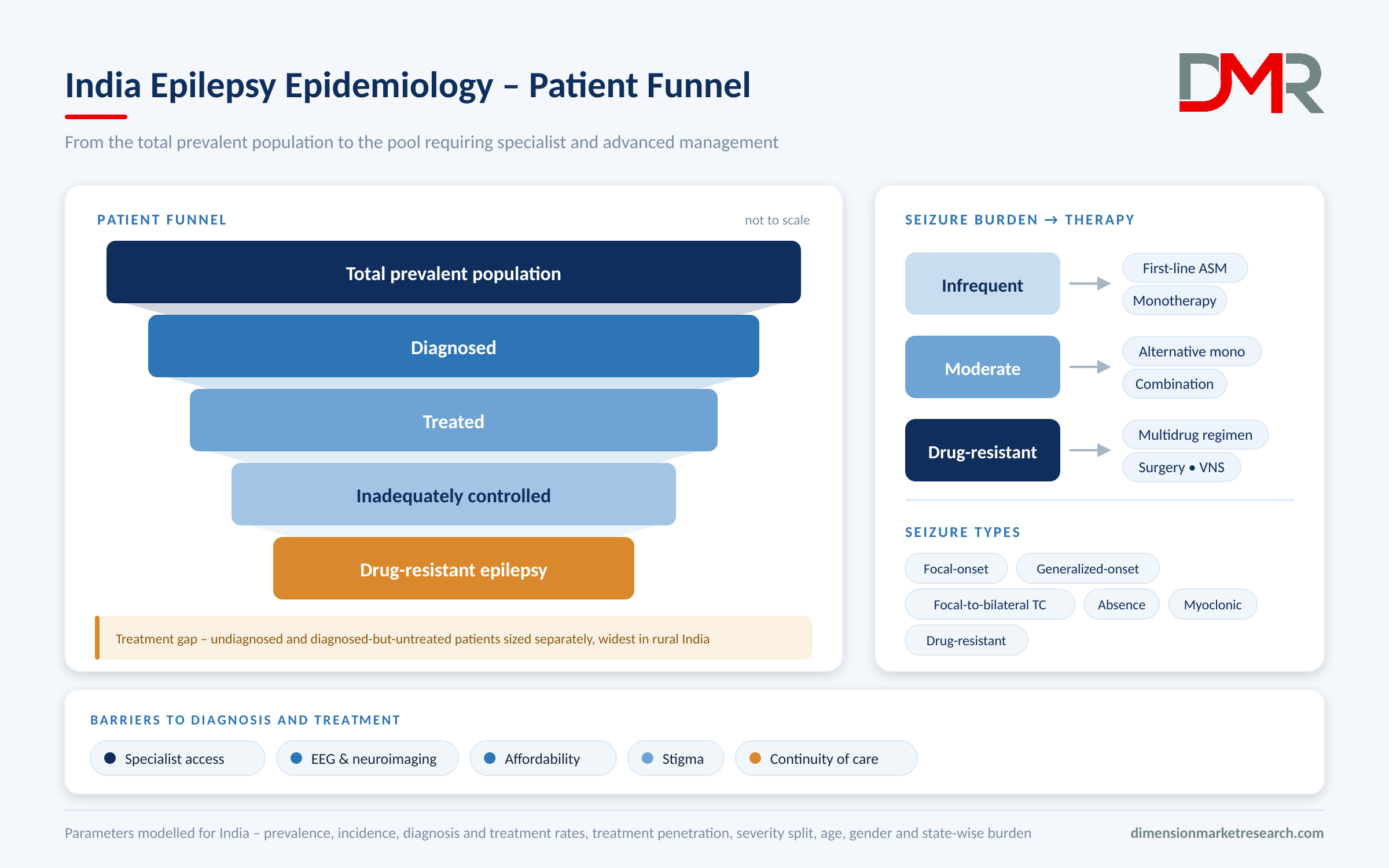
The epidemiology assessment provides a structured evaluation of the Indian epilepsy population from overall prevalence through diagnosis and treatment. Key parameters include:
- Total epilepsy patient population
- Prevalent population
- Incidence population, where reliable data are available
- Diagnosed patient population
- Treated patient population
- Untreated patient population
- Treatment-eligible population
- Disease severity distribution
- Mild epilepsy population
- Moderate epilepsy population
- Severe epilepsy population
- Focal epilepsy population
- Generalized epilepsy population
- Drug-resistant epilepsy population
- Age distribution
- Gender distribution, where available
- Diagnosis rate
- Treatment rate
- Treatment penetration
- State-wise and regional disease burden
- Epidemiological trends
The analysis distinguishes between the broader prevalent population and patients who are diagnosed and actively receiving treatment. This distinction is particularly important in India because barriers such as delayed specialist consultation, limited diagnostic infrastructure in underserved areas, treatment affordability, stigma, and inconsistent access to long-term care may leave some patients undiagnosed, untreated, or inadequately controlled with existing medication.
The report also evaluates the increasing recognition of epilepsy as a chronic neurological condition requiring sustained treatment, monitoring, and patient education. Associated complications such as seizure-related injuries, cognitive and behavioral difficulties, psychiatric comorbidities, developmental impairment, and the risks associated with prolonged seizures can influence treatment decisions, healthcare utilization, adherence, and long-term disease management strategies.
Patient Segmentation
The Indian epilepsy patient population is segmented according to disease severity, seizure manifestation, treatment status, and therapeutic requirements. This approach provides a clearer understanding of the population eligible for different treatment categories and helps assess the potential addressable population for established and advanced therapies.
By Disease Severity
Mild: Patients with infrequent seizures and limited functional impairment are generally managed through monotherapy with an appropriate antiseizure medication. Treatment decisions are influenced by seizure type, recurrence risk, underlying cause, age, comorbidities, previous treatment response, and patient preference.
Moderate: Patients with recurrent seizures, incomplete seizure control, or adverse effects from initial treatment may require medication adjustment, a change in antiseizure drug, or combination therapy. Increasing expectations for seizure freedom, improved daily functioning, and reduced treatment-related adverse effects can encourage movement toward newer-generation medications or specialist-led treatment optimization.
Severe: Patients with frequent seizures, substantial functional or quality-of-life impairment, complications, or inadequate response to appropriately selected antiseizure medications are more likely to require specialist assessment, multidrug treatment, and evaluation for drug-resistant epilepsy. This segment represents an important contributor to advanced epilepsy management demand, including surgical evaluation, neuromodulation, and therapies for selected severe epilepsy syndromes.
By Disease Type
- Focal-onset epilepsy
- Generalized-onset epilepsy
- Focal-to-bilateral tonic-clonic seizures
- Absence epilepsy
- Myoclonic epilepsy
- Drug-resistant epilepsy
By Treatment Status
- Diagnosed and Treated
- Diagnosed and Untreated
- Undiagnosed
The treatment-status segmentation helps identify the gap between the total disease population and the population actively participating in healthcare treatment. Improvements in disease awareness, primary-care recognition, specialist availability, EEG and neuroimaging access, affordability, and continuity of care can gradually increase the diagnosed and treated population in India.
By Treatment Requirement
- First-line Antiseizure Medication Candidates
- Conventional Antiseizure Therapy Candidates
- Newer-Generation Antiseizure Medication Candidates
- Combination Therapy Candidates
- Drug-Resistant Epilepsy Treatment Candidates
- Surgical or Neuromodulation Evaluation Candidates
This segmentation helps evaluate how changes in clinical guidelines, physician preferences, medicine availability, affordability, and treatment access can shift patients between initial pharmacological treatment, newer medication options, combination therapy, and specialist interventions.
Geographic Coverage
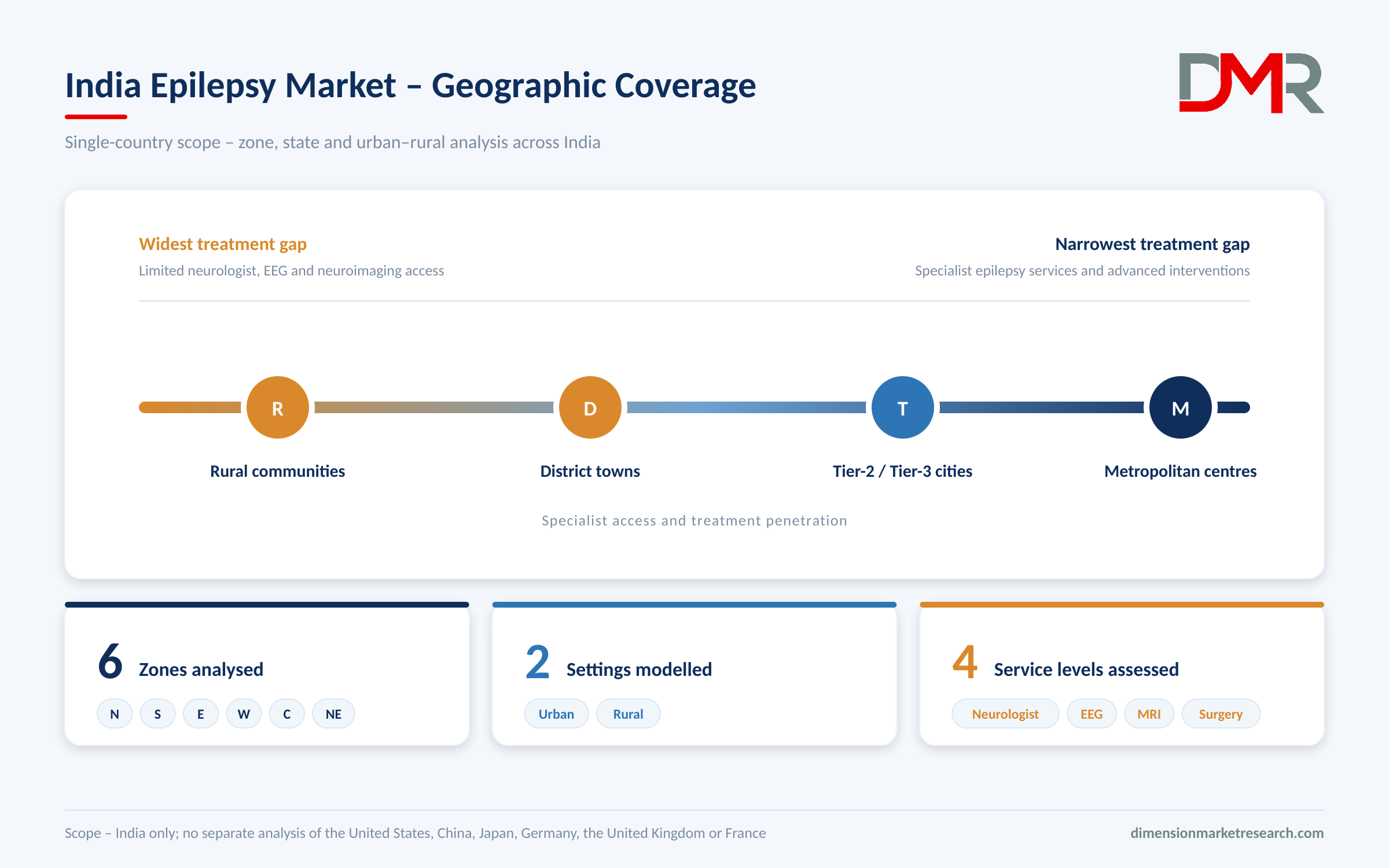
The report provides detailed market, epidemiology, treatment, and competitive analysis focused exclusively on India.
ℹ
To learn more about this report –
Download Your Free Sample Report Here
The geographic analysis considers differences in patient population, diagnosis rates, healthcare infrastructure, treatment accessibility, medicine affordability, reimbursement and public healthcare support, therapeutic penetration, regulatory environment, physician adoption, and competitive activity. These factors are particularly important because the commercial opportunity for epilepsy treatments varies across Indian states, metropolitan areas, smaller cities, and rural communities. Unlike a multi-country assessment, this report does not provide separate market analyses for the United States, China, Japan, Germany, the United Kingdom, or France.
India
India represents a significant epilepsy treatment market because of its large population, substantial neurological disease burden, expanding healthcare infrastructure, and continued need for accessible long-term seizure management. Greater awareness of epilepsy, improvements in diagnostic services, and wider availability of antiseizure medications are supporting opportunities to improve diagnosis, treatment initiation, and disease control.
The market is characterized by broad use of established generic medications alongside increasing utilization of newer-generation antiseizure drugs. Treatment selection is influenced by seizure classification, age, clinical efficacy, safety, drug interactions, dosing frequency, affordability, and prior treatment history. Access to neurologists and advanced epilepsy services remains uneven, particularly outside major urban centers.
Affordability is a particularly important factor in the Indian market because epilepsy often requires years of continuous medication use. The availability of lower-cost generic medicines supports treatment access, while newer therapies, specialized formulations, and advanced interventions may face financial and infrastructure-related constraints. Increasing diagnosis rates, improved adherence, wider specialist coverage, and appropriate use of newer medications are expected to remain important factors shaping future market development.
Market Segmentation
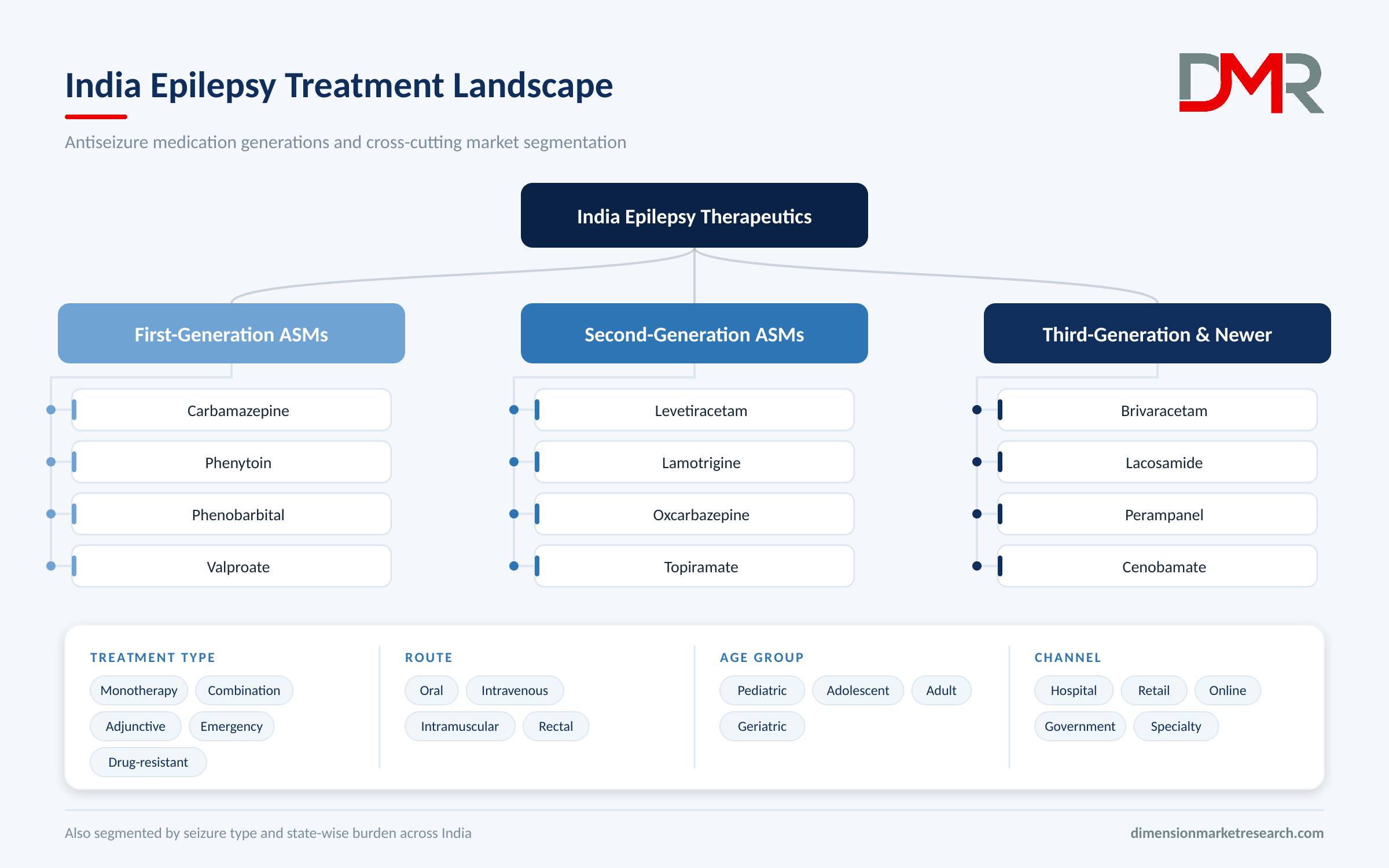
The India epilepsy market is segmented across drug class, treatment type, route of administration, patient age group, and distribution channel. The segmentation captures established antiseizure medications, newer therapeutic options, emergency seizure-management treatments, and differences in medicine access and utilization across the Indian healthcare system.
ℹ
To learn more about this report –
Download Your Free Sample Report Here
By Drug Class
First-Generation Antiseizure Drugs
First-generation antiseizure drugs represent an established segment of the Indian epilepsy market because of their long-standing clinical use, established efficacy, and broad availability as generic medicines. These therapies remain important in the management of several seizure types, particularly where affordability and familiarity with established treatment protocols influence prescribing decisions.
The segment includes carbamazepine, phenytoin, phenobarbital, valproate, and other established antiseizure medications. Their continued utilization is supported by widespread availability and comparatively low acquisition costs, although adverse-effect profiles, drug interactions, monitoring requirements, and suitability for specific patient groups influence treatment selection.
Second-Generation Antiseizure Drugs
Second-generation antiseizure drugs represent an important segment because of their efficacy across selected seizure types and, for some agents, more favorable tolerability or drug-interaction profiles. These medications are increasingly relevant for patients who require treatment optimization or experience inadequate seizure control or adverse effects with established therapies.
The segment includes levetiracetam, lamotrigine, oxcarbazepine, topiramate, and other newer-generation medications. Increasing physician familiarity, expanded clinical experience, and demand for individualized treatment approaches continue to support their utilization, although affordability and patient-specific safety considerations influence uptake.
Third-Generation and Newer Antiseizure Drugs
Third-generation and newer antiseizure drugs represent an evolving segment of the Indian market, particularly for patients with focal seizures, persistent seizures despite previous treatment, or a need for alternative pharmacological options.
The segment includes brivaracetam, lacosamide, perampanel, cenobamate, and other newer agents, subject to local approval and availability. Continued product development, the introduction of additional formulations, and greater clinical experience may expand the role of these therapies, particularly in patients requiring treatment beyond established first-line options.
By Treatment Type
- Monotherapy
- Combination Therapy
- Adjunctive Therapy
- Emergency Seizure Treatment
- Treatment for Drug-Resistant Epilepsy
Monotherapy remains an important treatment approach for patients whose seizures can be controlled with a single appropriately selected antiseizure medication. Combination and adjunctive therapies are particularly relevant for patients with persistent seizures or inadequate response to initial treatment. Emergency treatments are important for prolonged seizures and status epilepticus, while drug-resistant epilepsy may require multidrug regimens and assessment for surgery or neuromodulation in eligible patients.
By Route of Administration
- Oral
- Intravenous
- Intramuscular
- Rectal
- Other Routes
Oral administration remains the primary route for long-term epilepsy management because most maintenance antiseizure medications are available as tablets, capsules, or liquid formulations. Intravenous administration is particularly important in emergency settings involving prolonged seizures, status epilepticus, or patients unable to take oral medication. Intramuscular and rectal formulations may be relevant in selected emergency or rescue-treatment situations, depending on the medicine, clinical circumstances, and availability in India.
By Patient Age Group
- Pediatric Patients
- Adolescent Patients
- Adult Patients
- Geriatric Patients
Adult patients represent an important segment because epilepsy frequently requires sustained pharmacological treatment and long-term monitoring. Pediatric patients represent a clinically important population because seizure classification, developmental considerations, weight-based dosing, and treatment-related cognitive or behavioral effects influence medicine selection. Adolescents may require additional attention to adherence and treatment continuity, while geriatric patients may need individualized regimens because of comorbidities, polypharmacy, altered drug handling, and increased sensitivity to adverse effects.
By Distribution Channel
- Hospital Pharmacies
- Retail Pharmacies
- Online Pharmacies
- Government Healthcare Facilities
- Specialty and Institutional Pharmacies
Distribution patterns vary by medicine type, patient age, prescription requirements, location, and healthcare access. Retail pharmacies are particularly important for recurring outpatient prescriptions, while hospital pharmacies support treatment initiation, inpatient seizure management, and specialist-led care. Government healthcare facilities contribute to access through public-sector treatment services and medicine procurement, while online pharmacies and specialty or institutional channels may support continuity of therapy where legally permitted and operationally available.
Market Dynamics
Growth Drivers
Increasing Demand for Antiseizure Medications
Antiseizure medications remain the strongest foundation of the Indian epilepsy market because most patients require pharmacological treatment to achieve seizure control and reduce recurrence risk. Long-term treatment requirements create continuing demand for established medicines as well as newer options for patients whose seizures remain inadequately controlled.
The growing use of levetiracetam, lamotrigine, lacosamide, brivaracetam, and other appropriate newer-generation medications is particularly important as physicians consider seizure-control outcomes, tolerability, dosing convenience, drug interactions, and patient adherence. Expanded clinical experience and improved availability of multiple formulations are also supporting treatment optimization.
Advancement in Neurological Diagnosis and Treatment
Advances in understanding epilepsy classification, seizure mechanisms, genetic conditions, and treatment response have created opportunities for more individualized therapeutic intervention. Physicians increasingly consider seizure type, underlying etiology, age, comorbidities, and previous medication response when selecting treatment.
Development activity includes newer antiseizure medications, modified-release formulations, therapies for difficult-to-treat epilepsy, and selected precision-medicine approaches for specific genetic epilepsy syndromes. These developments may increase therapeutic choice and encourage treatment optimization in patients who do not achieve adequate control with conventional medication.
Increasing Healthcare Access Across India
Improving healthcare infrastructure, expanding neurological services, and greater awareness of epilepsy are increasing opportunities for diagnosis and treatment across India. Wider availability of generic antiseizure medicines and improvements in primary-care recognition can help identify patients who previously remained undiagnosed or received inconsistent treatment.
Smaller cities and underserved communities represent important opportunities for improving treatment penetration because access to neurologists, EEG services, and specialized epilepsy centers remains uneven. Greater medicine affordability, stronger referral pathways, and improved continuity of care could support market expansion.
Growing Recognition of Epilepsy-Related Clinical Burden
The increasing understanding of epilepsy as a chronic neurological condition is encouraging more comprehensive disease management. Recognition of seizure-related injuries, cognitive and behavioral complications, developmental difficulties, psychiatric comorbidities, and the risks associated with prolonged seizures can encourage earlier diagnosis and sustained treatment monitoring.
This shift can increase demand for therapies that provide reliable seizure control while minimizing adverse effects and supporting adherence. Better patient education and family involvement can also contribute to improved treatment continuity and reduced avoidable healthcare utilization.
Market Restraints
High Cost of Newer Antiseizure Treatments
Newer antiseizure medications and specialized formulations may carry higher treatment costs than established generic medicines. Because epilepsy frequently requires prolonged or lifelong management, recurring expenditure can create affordability challenges for patients and households.
Out-of-pocket payment remains an important consideration in India, particularly for patients without comprehensive medicine coverage. Cost considerations may influence the selection of newer therapies, delay treatment optimization, and limit access to advanced interventions for drug-resistant epilepsy.
Treatment Accessibility Gap
Unequal access to neurologists, EEG facilities, neuroimaging, specialist clinics, and emergency neurological services remains a major challenge. Patients in rural and underserved areas may experience diagnostic delays, inconsistent follow-up, and limited opportunities for specialist assessment.
Differences in healthcare infrastructure between metropolitan centers and less-served regions can therefore result in substantial variations in diagnosis, treatment penetration, adherence, and clinical outcomes.
Variable Patient Response and Treatment Adherence
Although antiseizure medications have substantially improved epilepsy management, treatment response is not uniform across patients. Some individuals experience inadequate initial response, breakthrough seizures, adverse effects, drug interactions, or loss of treatment effectiveness.
Missed doses, medication discontinuation, affordability constraints, and limited follow-up can further compromise seizure control. The need to adjust or switch medications creates continuing demand for effective, tolerable, and affordable treatment options, while drug-resistant epilepsy remains an important area of unmet clinical need.
Competitive Landscape
The Indian epilepsy market is characterized by competition among pharmaceutical companies with established antiseizure medication portfolios, generic drug manufacturers, and developers introducing newer therapeutic options and differentiated formulations.
Leading companies covered in the competitive assessment include:
- Sun Pharmaceutical Industries
- Torrent Pharmaceuticals
- Intas Pharmaceuticals
- Zydus Lifesciences
- Cipla
- Dr. Reddy's Laboratories
- Lupin
- Abbott India
- Sanofi
- UCB
Competition is increasingly focused on product availability, clinical efficacy, safety, affordability, and treatment convenience. Companies are investing in established antiseizure drug portfolios, newer-generation medications, extended-release formulations, and broader distribution networks to address the needs of patients requiring long-term seizure management.
The competitive environment is also influenced by generic competition, pricing pressure, physician familiarity, medicine availability, and patients' ability to sustain treatment over extended periods. Newer antiseizure medications, including brivaracetam, lacosamide, and cenobamate, represent important areas of therapeutic development and commercial differentiation. Indian manufacturers' ability to supply these medicines at accessible prices may influence their adoption among eligible patients.
Pipeline innovation and formulation development are additional competitive factors. Companies with established manufacturing capabilities, regulatory expertise, strong distribution networks, and diversified neurological medicine portfolios may be better positioned to respond to changing prescribing preferences and unmet treatment needs. However, commercial performance will continue to depend on clinical suitability, local regulatory status, affordability, and actual market availability.
Recent Developments
- October 2026 – PGIMER reports promising results for nitrazepam in resistant infantile epileptic spasms
Researchers at the Postgraduate Institute of Medical Education and Research (PGIMER), Chandigarh, reported results from a clinical trial evaluating nitrazepam in children with treatment-resistant infantile epileptic spasms syndrome. The study involved 40 children aged 6–30 months and reported cessation of spasms in 55% of participants receiving nitrazepam, compared with 15% receiving topiramate. The findings highlight interest in accessible treatment alternatives for difficult-to-treat pediatric epilepsy, although larger and longer-term studies are needed to establish the results more conclusively.
- August 2026 – MSN Laboratories receives CDSCO approval for cenobamate tablets
MSN Laboratories received regulatory approval in India for cenobamate tablets indicated for partial-onset seizures in adults. The approval covers multiple tablet strengths and represents an additional treatment option for eligible patients requiring management of focal seizures. The development highlights increasing availability of newer-generation antiseizure medications in India and the potential to broaden pharmacological treatment choices for patients with inadequately controlled epilepsy.
Report Coverage
The report provides a comprehensive assessment of the India epilepsy market, integrating epidemiological analysis with commercial market assessment to provide a broader understanding of the current and future treatment landscape.
The study covers:
- Indication Covered
- Epidemiology Parameters
- Patient Segmentation
- Geographic Coverage — India only
- Market Segmentation by Drug Class
- Market Segmentation by Treatment Type
- Market Segmentation by Route of Administration
- Market Segmentation by Patient Age Group
- Market Segmentation by Distribution Channel
- Units of Measurement
- Study Period
- Data Sources
- Companies Covered
- Report Deliverables
- Out of Scope
- Customization