Indication Covered
The report covers food allergy as an immune-mediated adverse reaction to specific food proteins, with emphasis on its clinical burden, treatment patterns, therapeutic innovation, and commercial market development exclusively within India. Food allergy is primarily characterized by an abnormal immune response to food proteins, involving immunoglobulin E (IgE)-mediated, non-IgE-mediated, or mixed immune mechanisms. The condition can range from mild skin or gastrointestinal symptoms to severe systemic reactions, including anaphylaxis, requiring allergen avoidance, emergency medications, dietary management, and, in selected patients, specialist-supervised immunotherapy or biologic treatment.
The indication scope includes major clinical manifestations and associated disease conditions relevant to treatment demand in India, including:
- IgE-mediated food allergy
- Non-IgE-mediated food allergy
- Cow's milk protein allergy
- Peanut and tree nut allergy
- Egg allergy
- Multiple food allergy
IgE-mediated food allergy remains the primary focus because of its potential to cause rapid, severe allergic reactions, its impact on quality of life, and the need for emergency preparedness. The report also considers cow's milk protein allergy because of its clinical relevance in infants and children, nutritional management requirements, and contribution to pediatric consultations. Other difficult-to-treat manifestations, complications, or advanced forms, including multiple food allergies, recurrent anaphylaxis, and persistent food allergy into adulthood, are evaluated as areas of continuing clinical need in India.
The treatment landscape covers allergen avoidance, emergency management with adrenaline (epinephrine), antihistamines and other symptom-directed medications, dietary and nutritional management, and allergen-specific immunotherapy. Particular attention is given to advanced therapies targeting immunoglobulin E and allergen-specific immune responses, as well as emerging oral immunotherapy, anti-IgE biologics, and next-generation treatment approaches. Their commercial relevance is assessed in the context of Indian regulatory availability, affordability, specialist capacity, and access to treatment.
Epidemiology Parameters
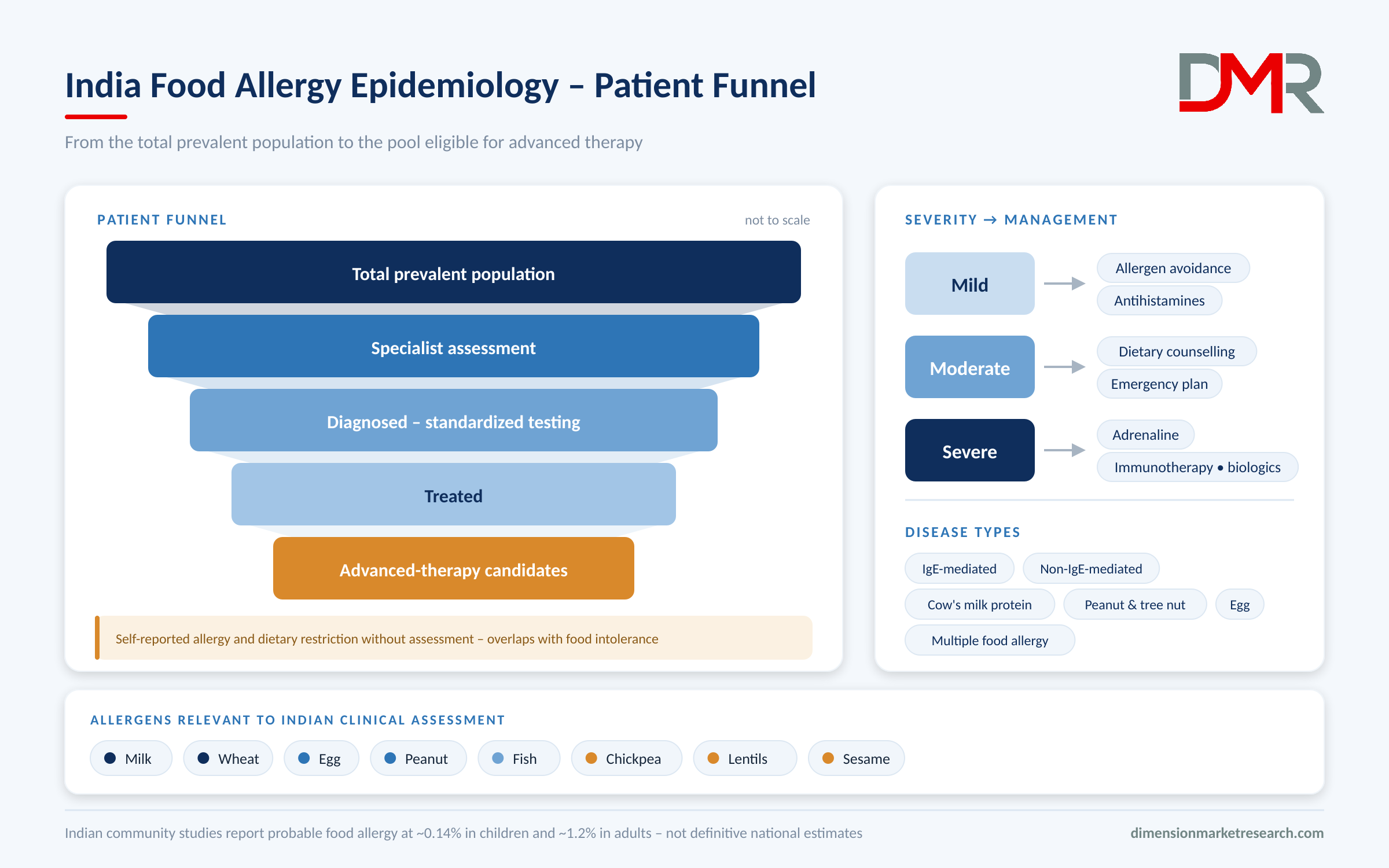
Food allergy represents an emerging clinical and public health concern in India, although reliable national prevalence estimates remain limited. Epidemiological patterns vary across states and population groups because of differences in dietary habits, genetic susceptibility, environmental factors, healthcare access, disease awareness, diagnostic practices, and availability of allergists and specialist diagnostic services. Indian research has identified milk, wheat, egg, peanut, fish, chickpea, lentils, and sesame among the relevant food allergens requiring consideration in clinical assessment.
ℹ
To learn more about this report –
Download Your Free Sample Report Here
The epidemiology assessment provides a structured evaluation of the Indian food allergy population from overall prevalence through diagnosis and treatment. Key parameters include:
- Total food allergy patient population
- Prevalent population
- Incidence population, where reliable data are available
- Diagnosed patient population
- Treated patient population
- Untreated patient population
- Treatment-eligible population
- Disease severity distribution
- Mild food allergy population
- Moderate food allergy population
- Severe food allergy population
- IgE-mediated food allergy population
- Multiple food allergy population
- Age distribution
- Gender distribution, where available
- Diagnosis rate
- Treatment rate
- Treatment penetration
- Regional disease burden across Indian states
- Epidemiological trends
The analysis distinguishes between the broader prevalent population and patients who are diagnosed and actively receiving treatment. This distinction is particularly important because a considerable proportion of patients may remain undiagnosed, receive an incorrect diagnosis, or manage symptoms through dietary restriction without specialist assessment. Published Indian community-based studies have reported probable food allergy prevalence estimates of approximately 0.14% in children and 1.2% in adults, but these findings should not be interpreted as definitive national estimates.
The report also evaluates the increasing recognition of food allergy as a potentially serious, persistent immune-mediated disease in India. Associated manifestations such as anaphylaxis, nutritional deficiencies, impaired growth in children, and psychosocial distress related to accidental food exposure can influence treatment decisions, disease monitoring, healthcare utilization, and long-term management strategies.
Patient Segmentation
The Indian food allergy patient population is segmented according to disease severity, disease manifestation, treatment status, and therapeutic requirements. This approach provides a clearer understanding of the population eligible for different treatment categories and helps assess the potential addressable population for advanced therapies within the Indian healthcare system.
By Disease Severity
Mild: Patients with limited symptoms, such as localized skin reactions or mild gastrointestinal manifestations, are generally managed through allergen avoidance, dietary counselling, and symptom-directed medications where appropriate. Treatment decisions are influenced by the suspected allergen, reaction history, age, nutritional requirements, previous treatment response, and patient preference.
Moderate: Patients with recurrent reactions, persistent symptoms, multiple food sensitivities, or substantial dietary restrictions may require structured allergy assessment, nutritional support, emergency preparedness, and specialist-supervised treatment where appropriate. Increasing awareness of food allergy and its effects on quality of life can encourage movement toward more comprehensive disease management.
Severe: Patients with previous anaphylaxis, reactions to small quantities of allergens, multiple food allergies, or inadequate protection from conventional management are more likely to require specialist-led treatment, emergency medication planning, and consideration of advanced therapies. This segment represents an important potential contributor to advanced food allergy treatment demand in India, although affordability and treatment availability influence access.
By Disease Type
- IgE-mediated food allergy
- Non-IgE-mediated food allergy
- Cow's milk protein allergy
- Peanut and tree nut allergy
- Egg allergy
- Multiple food allergy
By Treatment Status
- Diagnosed and Treated
- Diagnosed and Untreated
- Undiagnosed
The treatment-status segmentation helps identify the gap between the total disease population and the population actively participating in healthcare treatment. Improvements in awareness, specialist availability, diagnostic capabilities, and healthcare access can gradually increase the diagnosed and treated population. In India, standardization of allergy diagnosis and wider access to appropriate testing remain important opportunities for improving treatment identification.
By Treatment Requirement
- Allergen Avoidance and Dietary Management Candidates
- Emergency Medication Candidates
- Conventional Symptomatic Therapy Candidates
- Oral Immunotherapy Candidates
- Biologic Therapy Candidates, where applicable
- Other Advanced Therapy Candidates
This segmentation helps evaluate how changes in Indian treatment guidelines, physician preferences, affordability, regulatory approvals, reimbursement arrangements, and therapy availability can shift patients between conventional and advanced treatment categories.
Geographic Coverage
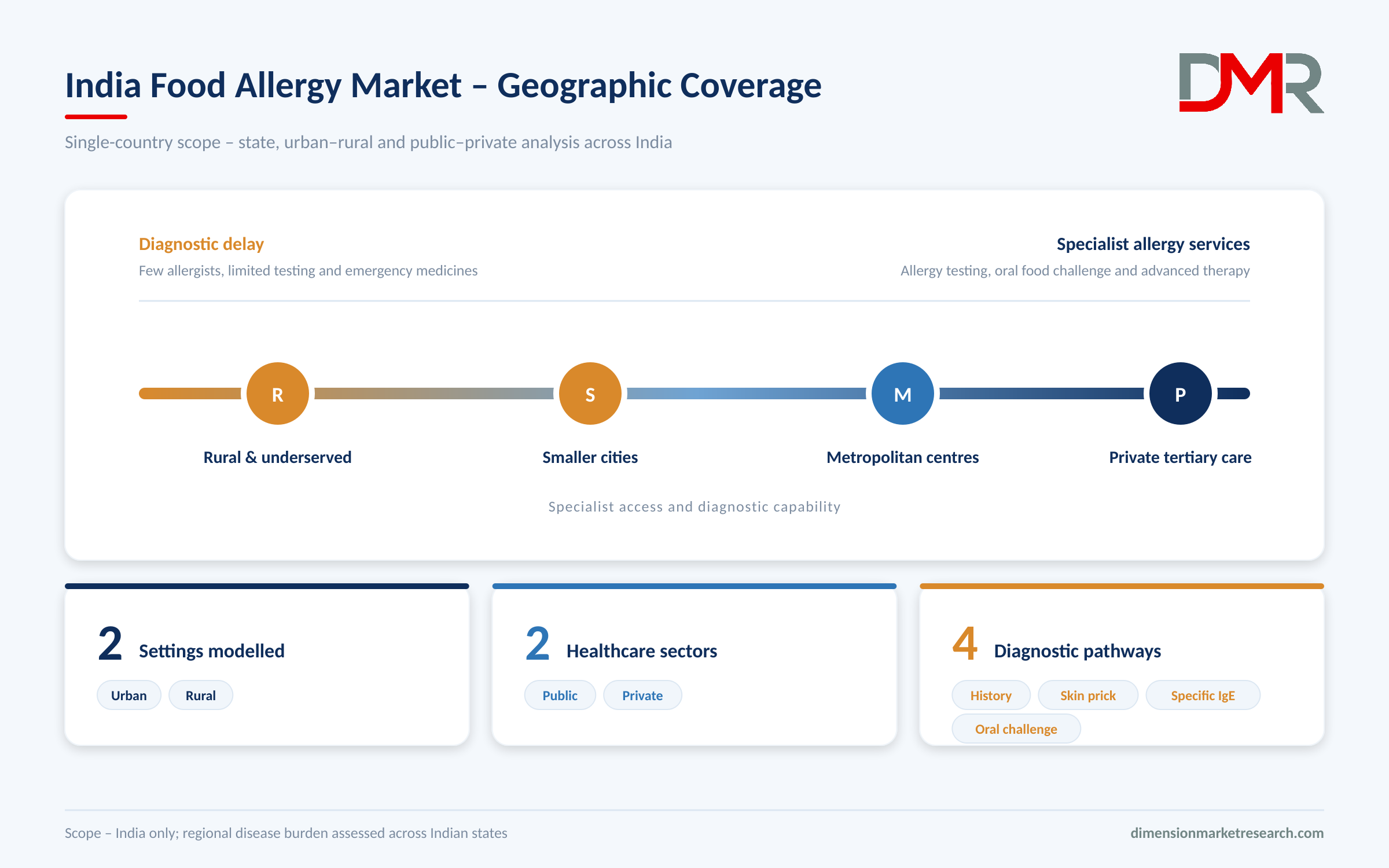
The report provides detailed market, epidemiology, treatment, and competitive analysis exclusively across India, with assessment of differences between states, urban and rural populations, and public and private healthcare settings.
ℹ
To learn more about this report –
Download Your Free Sample Report Here
The geographic analysis considers differences in patient population, diagnosis rates, healthcare infrastructure, treatment accessibility, affordability, therapeutic penetration, regulatory environment, physician adoption, and competitive activity. These factors are particularly important because the commercial opportunity for food allergy therapies differs considerably between metropolitan healthcare centres with specialist services and underserved areas where diagnosis and access to advanced treatment may be limited.
India
India represents a high-potential food allergy market because of its large population, expanding healthcare infrastructure, increasing awareness of allergic diseases, and gradual development of specialist allergy services. Diagnosis and treatment rates have potential for expansion as healthcare professionals increasingly recognize food allergy and adopt more standardized diagnostic practices. The country's diverse dietary patterns also create a need for assessment strategies that account for region-specific food allergens and culturally appropriate dietary counselling.
The market is characterized by substantial reliance on conventional management, including allergen avoidance, symptom-directed medications, emergency treatment, and nutritional support. Advanced treatment options remain an emerging area of interest, with adoption influenced by clinical eligibility, regulatory availability, treatment costs, specialist supervision, and patient preference. Improvements in diagnostic capabilities and greater physician familiarity with food allergy management can support more appropriate treatment selection.
The commercial opportunity is also influenced by differences in healthcare access between metropolitan areas and smaller cities or rural communities. Patients accessing private tertiary hospitals may have greater availability of specialist consultations and allergy testing, while underserved populations may experience diagnostic delays and limited access to emergency medicines or advanced therapies. Expansion of specialist networks, standardized clinical guidance, patient education, and cost-effective treatment options could improve market development.
Affordability remains an important factor influencing treatment selection, particularly for biologics, repeated diagnostic procedures, and specialist-supervised immunotherapy. Greater availability of accessible treatment options, improved food allergen labelling, and increased awareness among families, schools, and healthcare professionals can support future market expansion.
Market Segmentation
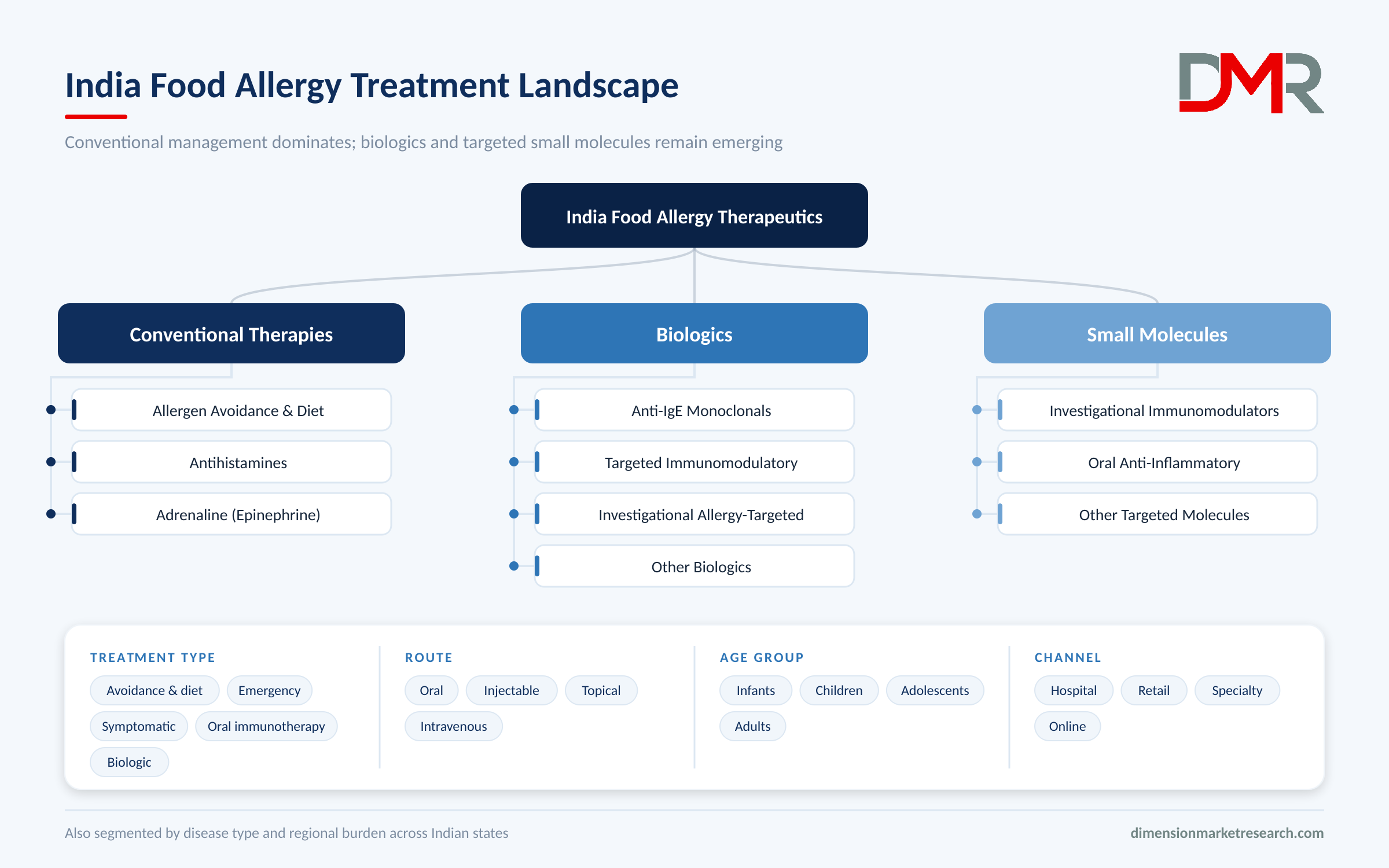
The India food allergy market is segmented across drug class, biologic class, small-molecule class where applicable, conventional therapy, disease type, route of administration, distribution channel, and end user. The segmentation captures established treatment categories and emerging therapeutic approaches, while distinguishing between treatments routinely used in Indian clinical practice and advanced therapies whose availability or adoption may remain limited.
ℹ
To learn more about this report –
Download Your Free Sample Report Here
By Drug Class
Biologics
Biologics represent an emerging segment of the Indian food allergy market because of their targeted mechanisms and potential role in reducing allergic reactions among selected patients. These therapies selectively target specific immunological pathways involved in food allergy, particularly IgE-mediated allergic responses.
The biologic segment includes anti-IgE monoclonal antibodies, other targeted immunomodulatory biologics under investigation, and emerging antibody-based approaches where applicable. Increasing clinical evidence, specialist familiarity, and improvements in patient selection may support biologic utilization. However, the segment's commercial development in India depends on indication-specific regulatory approvals, affordability, access to specialist care, and evidence supporting use in the Indian patient population.
Small Molecules
Small molecules represent a comparatively limited segment of the Indian food allergy market because established management primarily relies on allergen avoidance, emergency medications, symptom-directed treatment, and selected immunotherapy approaches. Nevertheless, small molecules may offer opportunities for controlling specific inflammatory or allergic pathways as pharmaceutical research advances.
The segment includes investigational targeted immunomodulators, oral agents under clinical evaluation, and other potential small-molecule approaches relevant to allergic disease. Continued pipeline development and clinical differentiation could increase the future role of these therapies, although their contribution to the Indian food allergy market remains dependent on demonstrated efficacy, safety, regulatory approval, and commercial availability.
Conventional Therapies
Conventional therapies continue to represent the principal component of food allergy management in India, particularly among patients receiving routine outpatient care and in settings where advanced therapy access remains limited.
This category includes allergen avoidance and dietary management, antihistamines for appropriate mild symptoms, and adrenaline (epinephrine) for emergency treatment of anaphylaxis. Although advanced therapies are attracting increasing clinical interest, conventional treatment remains important because of its established role, accessibility, and relevance to routine disease management. Appropriate nutritional counselling is particularly important for children who require exclusion of milk, wheat, egg, or other nutritionally significant foods.
By Biologic Class
- Anti-IgE Monoclonal Antibodies
- Other Targeted Immunomodulatory Biologics
- Investigational Allergy-Targeted Biologics
- Other Biologics
Anti-IgE therapy is increasingly important because of its potential to reduce allergic reactions following accidental exposure to certain food allergens in eligible patients. Other investigational biologic classes may provide future treatment opportunities through their potential to modify allergic immune responses, improve treatment outcomes, or complement allergen-specific immunotherapy. Indian market adoption will depend on approved indications, clinical suitability, cost, and specialist availability.
By Small-Molecule Class
- Investigational Targeted Immunomodulators
- Oral Anti-Inflammatory Approaches
- Other Targeted Small Molecules
The development of targeted oral therapies is potentially significant because these treatments could provide a convenient approach to food allergy management if adequate efficacy and safety are demonstrated. Continued clinical development may broaden the future role of small molecules in India, although this segment remains less established than conventional treatment and biologic development.
By Conventional Therapy
- Allergen Avoidance and Dietary Management
- Antihistamines and Symptomatic Medications
- Adrenaline (Epinephrine) and Emergency Management
Allergen avoidance remains central to food allergy management in India, while antihistamines provide symptom relief for selected mild reactions and adrenaline remains the essential first-line emergency treatment for anaphylaxis. These approaches provide the foundation for management across healthcare settings and remain particularly relevant where advanced treatment access is limited.
By Disease Type
- IgE-mediated Food Allergy
- Non-IgE-mediated Food Allergy
- Cow's Milk Protein Allergy
- Peanut and Tree Nut Allergy
- Egg Allergy
- Multiple Food Allergy
IgE-mediated food allergy represents an important focus for advanced treatment demand because of the potential for rapid systemic reactions and anaphylaxis. Multiple food allergy represents an important adjacent treatment population because avoidance becomes more complex, nutritional restrictions may increase, and the need for specialist management or therapies that reduce sensitivity to accidental exposure may be greater.
By Route of Administration
- Oral
- Injectable
- Topical
- Intravenous
- Other Routes
Oral administration remains important within allergen-specific immunotherapy and conventional symptomatic treatment, while injectable administration is relevant to biologic therapies. Other routes may contribute to future development through alternative allergen delivery methods, although their commercial relevance in India depends on clinical evidence, regulatory approval, specialist capacity, and patient affordability.
By Distribution Channel
- Hospital Pharmacies
- Retail Pharmacies
- Specialty Pharmacies
- Online Pharmacies
Distribution patterns in India vary by treatment type, affordability, healthcare setting, and product availability. Hospital pharmacies are relevant for specialist-managed treatment and hospital-based emergency care, while retail pharmacies remain important for commonly used symptomatic medications and emergency medicines. Specialty pharmacies may support access to high-cost biologic treatments where available, while online channels may provide access to selected non-prescription products subject to applicable regulations.
Market Dynamics
Growth Drivers
Increasing Adoption of Advanced Therapies
Advanced therapies represent an emerging growth opportunity in the India food allergy market. Their ability to target specific immune responses has expanded treatment possibilities for patients with significant allergic reactions and multiple food allergies, particularly where conventional management alone does not adequately address treatment needs.
The growing clinical interest in anti-IgE biologics and allergen-specific oral immunotherapy is particularly important as physicians increasingly consider reaction thresholds, treatment safety, long-term management requirements, and patient preferences when evaluating treatment options. Expanded clinical evidence and improved physician familiarity may support adoption. However, commercial growth in India will depend on regulatory availability, affordability, specialist supervision, and the ability of patients to sustain treatment.
Advancement in Disease Biology-Based Drug Development
Advances in understanding the biological mechanisms underlying food allergy have created opportunities for more precise therapeutic intervention. Pharmaceutical companies and clinical researchers are increasingly investigating therapies designed to target IgE-mediated immune responses, allergen-specific sensitization, and other immunological mechanisms rather than relying exclusively on allergen avoidance and emergency treatment.
Development activity includes anti-IgE antibodies, improved oral immunotherapy protocols, multi-allergen treatment approaches, alternative allergen delivery methods, and more individualized treatment strategies. India's growing clinical research capabilities and increasing recognition of the need for standardized allergy management may support further research and treatment development. These developments could increase therapeutic competition as more evidence becomes available.
Increasing Healthcare Access Within India
Improving healthcare infrastructure and rising healthcare expenditure are increasing opportunities for food allergy diagnosis and treatment in India. Expansion of specialist networks, greater awareness of allergic diseases, and improved diagnostic capabilities can help identify patients who previously remained undiagnosed or received inconsistent management.
Metropolitan areas and major tertiary-care centres are important for the development of specialist-led food allergy services, while smaller cities and rural regions represent opportunities for improving access. Wider availability of diagnostic services, better access to emergency medicines, and development of cost-effective treatment options could improve treatment penetration. Standardized clinical guidance and increased training for healthcare professionals are also expected to support market development.
Growing Recognition of Food Allergy-Related Clinical Burden
The increasing understanding of food allergy as a potentially serious and persistent immune-mediated disease is encouraging more comprehensive management in India. Recognition of anaphylaxis, nutritional deficiencies, impaired growth, dietary restrictions, and psychosocial consequences can encourage earlier diagnosis, specialist management, and continued treatment monitoring.
This shift can increase demand for appropriate diagnostic testing, emergency preparedness, nutritional counselling, and treatments capable of reducing reactions to accidental allergen exposure. Greater awareness among families, schools, food businesses, and healthcare professionals may also improve disease recognition and support more consistent management practices.
Market Restraints
High Cost of Advanced Therapies
Biologics and other targeted therapies often carry substantially higher treatment costs than conventional management approaches. High costs can create affordability challenges for Indian patients and limit the ability of healthcare providers to offer advanced treatments to a broader population.
Limited reimbursement coverage and substantial out-of-pocket expenditure can restrict access to biologics, specialist-supervised immunotherapy, and repeated diagnostic procedures. Cost considerations may therefore continue to influence treatment selection and delay adoption of innovative therapies, particularly among households with limited financial resources.
Treatment Accessibility Gap
Unequal access to allergists, specialist clinics, diagnostic services, and advanced medicines remains a major challenge in India. Rural and underserved populations may experience longer diagnostic delays, limited access to supervised oral food challenges, and fewer treatment options.
Differences in healthcare infrastructure between metropolitan centres, smaller cities, and rural communities can therefore result in significant variations in diagnosis, treatment penetration, emergency preparedness, and disease outcomes. Limited awareness and the difficulty of distinguishing food allergy from food intolerance can further complicate appropriate treatment.
Variable Patient Response
Although advanced therapies have expanded food allergy management options, treatment response is not uniform across patients. Some individuals may experience inadequate increases in reaction thresholds, adverse effects during immunotherapy, treatment intolerance, or discontinuation. Allergen-specific immunotherapy also requires careful patient selection, adherence, and ongoing clinical supervision.
The need to maintain allergen avoidance and emergency preparedness even when receiving advanced treatment can increase healthcare utilization and creates continuing demand for therapies offering durable and predictable protection with acceptable safety profiles. In India, the cost and availability of ongoing specialist monitoring may further influence treatment continuity.
Competitive Landscape
The India food allergy market is characterized by competition among pharmaceutical companies with established allergy and immunology portfolios, manufacturers of conventional allergy medications, diagnostic service providers, and emerging developers focused on differentiated treatment approaches. The market remains predominantly shaped by conventional disease management, while advanced biologics and allergen-specific immunotherapy represent developing opportunities.
Companies and organizations relevant to the competitive assessment include:
- Novartis
- Roche and Genentech
- DBV Technologies
- ALK-Abelló
- Stallergenes Greer
- Aquestive Therapeutics
- Intrommune Therapeutics
- Aravax
- Prota Therapeutics
These companies differ in their roles across biologic development, allergen-specific immunotherapy, investigational treatment development, and established allergy products. Their inclusion reflects relevance to the therapeutic landscape rather than confirmation that every company markets an approved food allergy-specific treatment in India.
Competition is increasingly focused on demonstrating differentiated clinical outcomes rather than simply introducing additional products within existing treatment categories. Companies are investing in novel mechanisms, improved immunotherapy protocols, multi-allergen treatment approaches, treatment durability, safety profiles, and more convenient administration.
The competitive environment in India is also influenced by regulatory requirements, pricing pressure, reimbursement limitations, physician familiarity, and the availability of specialist-led treatment. Conventional medications and emergency management products remain important components of routine care, while biologics and targeted approaches may offer opportunities in selected patients as local availability and clinical adoption develop.
Pipeline innovation is another competitive factor. Companies with strong clinical-development capabilities and diversified allergy and immunology portfolios may be better positioned to respond to changing treatment preferences and emerging unmet needs. In India, companies capable of combining evidence-based treatment, accessible pricing, local clinical expertise, and specialist education may be particularly well positioned to support future market development.
Recent Developments
- February 2026 – Indian Academy of Pediatrics advances food allergy management guidance: The Indian Academy of Pediatrics' Allergy and Applied Immunology Chapter published a Delphi consensus statement on food allergy in India. The guidance emphasizes standardized diagnosis using clinical history, skin prick testing, serum-specific IgE estimation, and supervised oral food challenges where appropriate. It also highlights region-specific allergens, nutritional management, and specialist-supervised advanced treatment for selected patients. The development highlights India's increasing focus on consistent diagnosis and evidence-based management, with potential benefits for patient identification, treatment selection, and clinical outcomes.
- April 2026 – Indian Academy of Pediatrics advances standardized allergy practice guidelines: The Indian Academy of Pediatrics and its Allergy and Applied Immunology Chapter published evidence-based guidance addressing the rational diagnosis and management of allergic diseases, including food allergy. The guidelines emphasize standardized assessment, appropriate diagnostic testing, timely referral, patient education, and resource considerations relevant to Indian clinical practice. The development reflects continued efforts to strengthen specialist care and improve consistency in allergy management across India's healthcare system.
Report Coverage
The report provides a comprehensive assessment of the India food allergy market. It integrates epidemiological analysis with commercial market assessment to provide a broader understanding of the current and future treatment landscape, including patient identification, diagnostic practices, conventional management, advanced therapeutic opportunities, competitive activity, and barriers to treatment access within India.
The study covers:
- Indication Covered
- Epidemiology Parameters
- Patient Segmentation
- Geographic Coverage — India only
- Market Segmentation by Drug Class
- Market Segmentation by Treatment Type
- Market Segmentation by Route of Administration
- Market Segmentation by Patient Age Group
- Market Segmentation by Distribution Channel
- Units of Measurement
- Study Period
- Data Sources
- Companies Covered
- Report Deliverables
- Out of Scope
- Customization