Indication Covered
The report covers Hemophilia B as a rare, inherited X-linked bleeding disorder, with emphasis on its clinical burden, treatment patterns, therapeutic innovation, and commercial market development in India. Hemophilia B is primarily characterized by a deficiency or absence of coagulation Factor IX (FIX), resulting from pathogenic variants in the F9 gene. The condition impairs normal blood clot formation and can cause prolonged bleeding following injuries, spontaneous bleeding episodes, and recurrent bleeding into joints and muscles. Disease severity can range from mild bleeding manifestations to severe disease characterized by spontaneous internal bleeding, recurrent hemarthrosis, chronic joint damage, and potentially life-threatening hemorrhages, requiring factor replacement, prophylactic treatment, and advanced non-factor or gene-based therapeutic approaches.
The indication scope includes major clinical manifestations and associated disease conditions relevant to treatment demand, including:
- Severe Hemophilia B
- Moderate Hemophilia B
- Mild Hemophilia B
- Congenital Factor IX Deficiency
- Hemophilia B with Factor IX Inhibitors
- Hemophilic Arthropathy and Recurrent Joint Bleeding
Severe Hemophilia B remains the primary focus because of its substantial clinical burden, recurrent bleeding complications, and greater requirement for regular prophylactic Factor IX replacement. The report also considers moderate Hemophilia B because patients with this condition can experience clinically significant bleeding episodes and may require long-term prophylactic or on-demand treatment. Other difficult-to-treat manifestations and complications, including Factor IX inhibitor development, recurrent hemarthrosis, intracranial hemorrhage, muscle bleeding, and chronic musculoskeletal damage, are evaluated as areas of continuing clinical need.
The treatment landscape covers plasma-derived Factor IX concentrates, recombinant Factor IX concentrates, extended half-life Factor IX products, non-factor replacement therapies, and gene therapy approaches. Particular attention is given to advanced therapies targeting Factor IX replacement, tissue factor pathway inhibitor (TFPI), antithrombin regulation, and hepatic Factor IX expression, as well as emerging subcutaneous and next-generation gene therapy treatment approaches.
Epidemiology Parameters
Hemophilia B represents a significant lifelong bleeding disorder burden across India. Epidemiological patterns vary substantially between states and regions because of differences in genetic susceptibility, family history, healthcare access, disease awareness, diagnostic practices, availability of coagulation-factor testing, and access to hematology specialists.
ℹ
To learn more about this report –
Download Your Free Sample Report Here
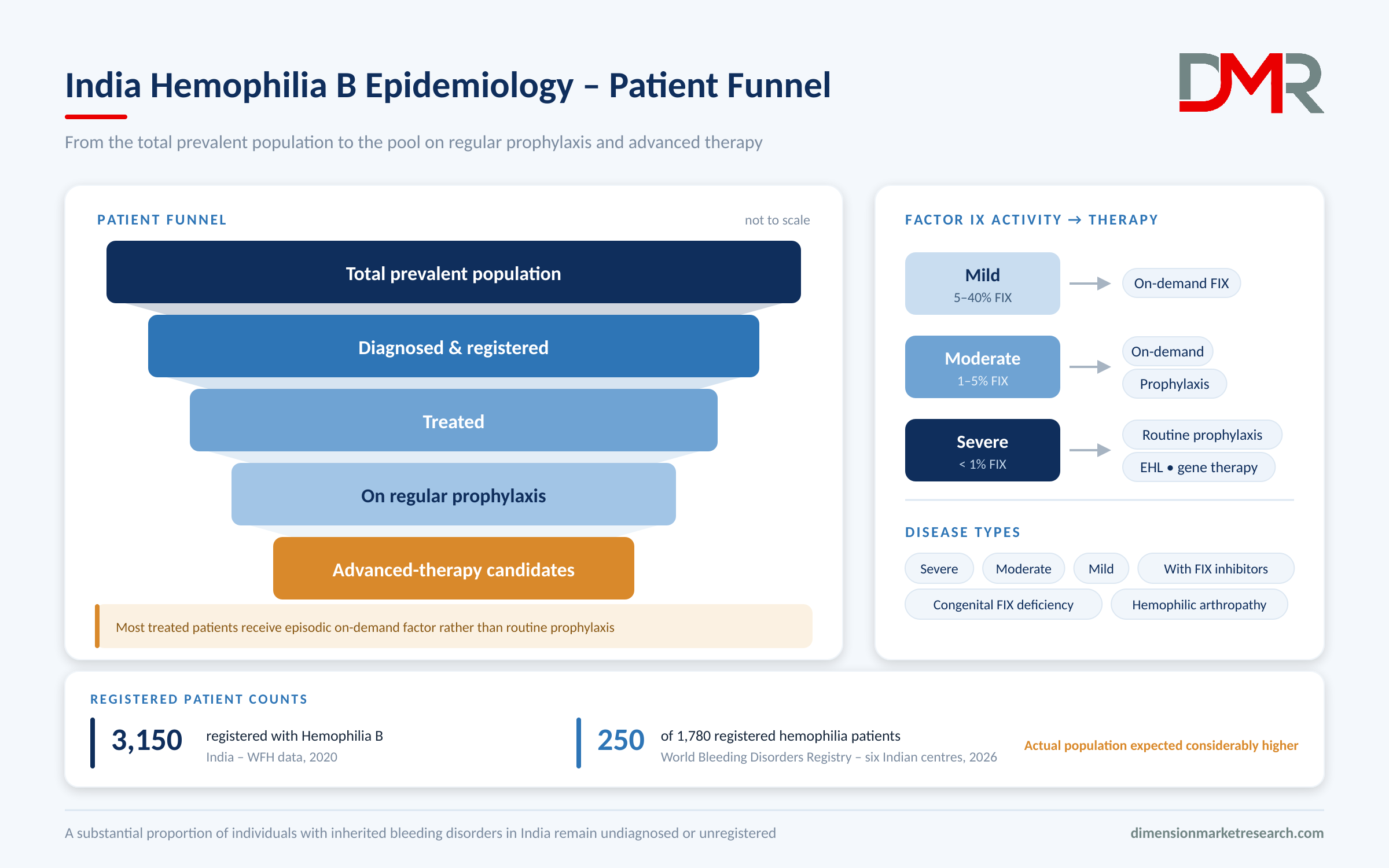
According to World Federation of Hemophilia data cited in an Indian clinical study, approximately 3,150 individuals with Hemophilia B were registered in India in 2020. However, the actual patient population is expected to be considerably higher because a substantial proportion of individuals with inherited bleeding disorders remain undiagnosed or unregistered. A multicentre Indian World Bleeding Disorders Registry analysis published in 2026 identified 250 Hemophilia B patients among 1,780 registered individuals with hemophilia across six treatment centres, highlighting the importance of improving diagnosis and patient identification.
The epidemiology assessment provides a structured evaluation of the Hemophilia B population from overall prevalence through diagnosis and treatment. Key parameters include:
- Total Hemophilia B patient population
- Prevalent population
- Incidence population, where reliable data are available
- Diagnosed patient population
- Treated patient population
- Untreated patient population
- Treatment-eligible population
- Disease severity distribution
- Mild Hemophilia B population
- Moderate Hemophilia B population
- Severe Hemophilia B population
- Congenital Factor IX deficiency population
- Hemophilia B with Factor IX inhibitors population
- Age distribution
- Gender distribution
- Diagnosis rate
- Treatment rate
- Treatment penetration
- Regional disease burden
- Epidemiological trends
The analysis distinguishes between the broader prevalent population and patients who are diagnosed and actively receiving treatment. This distinction is particularly important because a considerable proportion of patients may remain undiagnosed, undertreated, or managed through episodic factor replacement rather than regular prophylactic treatment. Limited access to specialized coagulation testing and the relatively high cost of advanced therapies can further restrict treatment penetration.
The report also evaluates the increasing recognition of Hemophilia B as a lifelong genetic bleeding disorder requiring continuous disease management. Associated manifestations such as recurrent joint bleeding, hemophilic arthropathy, chronic pain, muscle hematomas, and intracranial hemorrhage can influence treatment decisions, disease monitoring, healthcare utilization, and long-term management strategies.
Patient Segmentation
The Hemophilia B patient population is segmented according to disease severity, disease manifestation, treatment status, and therapeutic requirements. This approach provides a clearer understanding of the population eligible for different treatment categories and helps assess the potential addressable population for advanced therapies.
ℹ
To learn more about this report –
Download Your Free Sample Report Here
By Disease Severity
Mild: Patients with mild Hemophilia B generally have Factor IX activity between 5% and 40% of normal levels. These individuals may experience prolonged bleeding following surgery, dental procedures, or significant injuries, while spontaneous bleeding is relatively uncommon. Treatment decisions are influenced by bleeding history, planned surgical procedures, Factor IX activity, and previous treatment response. On-demand Factor IX replacement is commonly considered when clinically significant bleeding occurs.
Moderate: Patients with moderate Hemophilia B generally have Factor IX activity between 1% and 5% of normal levels. These individuals may experience prolonged bleeding following minor injuries and occasional spontaneous bleeding episodes. Increasing bleeding frequency, joint involvement, and functional impairment can encourage movement toward regular prophylactic Factor IX replacement or other appropriate preventive treatment approaches.
Severe: Patients with severe Hemophilia B generally have Factor IX activity below 1% of normal levels and are more likely to experience spontaneous bleeding into joints, muscles, and internal organs. Recurrent hemarthrosis, chronic joint damage, and potentially life-threatening hemorrhages create substantial treatment requirements. This segment represents a major contributor to advanced Hemophilia B treatment demand, particularly for recombinant Factor IX, extended half-life concentrates, and emerging gene therapies.
By Disease Type
- Severe Hemophilia B
- Moderate Hemophilia B
- Mild Hemophilia B
- Hemophilia B with Factor IX Inhibitors
- Congenital Factor IX Deficiency
- Hemophilic Arthropathy and Complicated Hemophilia B
By Treatment Status
- Diagnosed and Treated
- Diagnosed and Untreated
- Undiagnosed
The treatment-status segmentation helps identify the gap between the total disease population and the population actively participating in healthcare treatment. Improvements in awareness, family screening, genetic testing, specialist availability, diagnostic capabilities, and healthcare access can gradually increase the diagnosed and treated population.
By Treatment Requirement
- On-Demand Factor IX Replacement Candidates
- Routine Factor IX Prophylaxis Candidates
- Extended Half-Life Factor IX Therapy Candidates
- Non-Factor Therapy Candidates
- Gene Therapy Candidates
- Inhibitor Management and Specialized Treatment Candidates
This segmentation helps evaluate how changes in treatment guidelines, physician preferences, reimbursement, and therapy availability can shift patients between conventional and advanced treatment categories.
Geographic Coverage
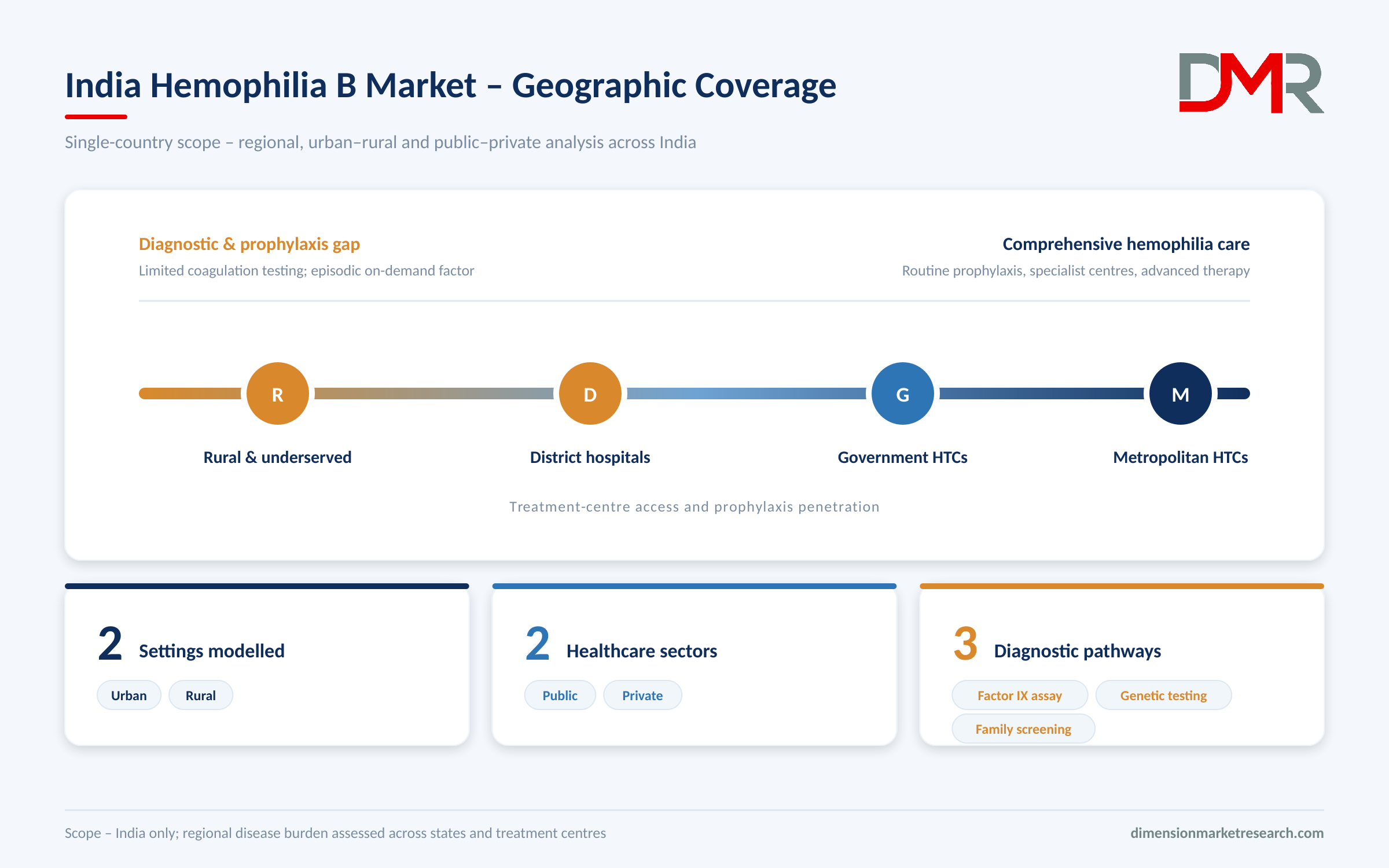
The report provides detailed market, epidemiology, treatment, and competitive analysis of the India Hemophilia B market, with consideration of regional differences across the country's major healthcare markets.
ℹ
To learn more about this report –
Download Your Free Sample Report Here
The geographic analysis considers differences in patient population, diagnosis rates, healthcare infrastructure, treatment accessibility, reimbursement, therapeutic penetration, regulatory environment, physician adoption, and competitive activity. These factors are particularly important because the commercial opportunity for Hemophilia B therapies differs considerably between metropolitan healthcare centres and underserved rural regions.
India
India represents a high-potential Hemophilia B market because of its large population, substantial undiagnosed patient burden, expanding healthcare infrastructure, and increasing recognition of inherited bleeding disorders. The country has an established network of hemophilia treatment centres and patient-support organizations, including Hemophilia Federation (India), which contribute to disease awareness, patient registration, treatment access, and coordination of care.
The market is primarily supported by Factor IX replacement therapies, including plasma-derived and recombinant Factor IX concentrates. Products such as BeneFIX and Rixubis provide established treatment options for managing bleeding episodes and supporting prophylactic treatment. However, access to regular prophylaxis remains uneven, particularly among patients who depend on public healthcare facilities and government-supported treatment programmes.
The Indian market is gradually experiencing greater adoption of recombinant coagulation factors and preventive treatment approaches. Nevertheless, affordability, reimbursement coverage, availability of Factor IX concentrates, limited diagnostic infrastructure, and differences between urban and rural healthcare services remain important considerations. The relatively low utilization of regular prophylaxis creates substantial opportunities for improving treatment penetration and reducing long-term disease complications.
Increasing awareness of early diagnosis, genetic counselling, family screening, and comprehensive hemophilia management is expected to support future market development. Expansion of government-supported treatment programmes, greater availability of recombinant products, and the potential introduction of non-factor therapies and gene-based treatment approaches may further transform the competitive landscape.
Market Segmentation
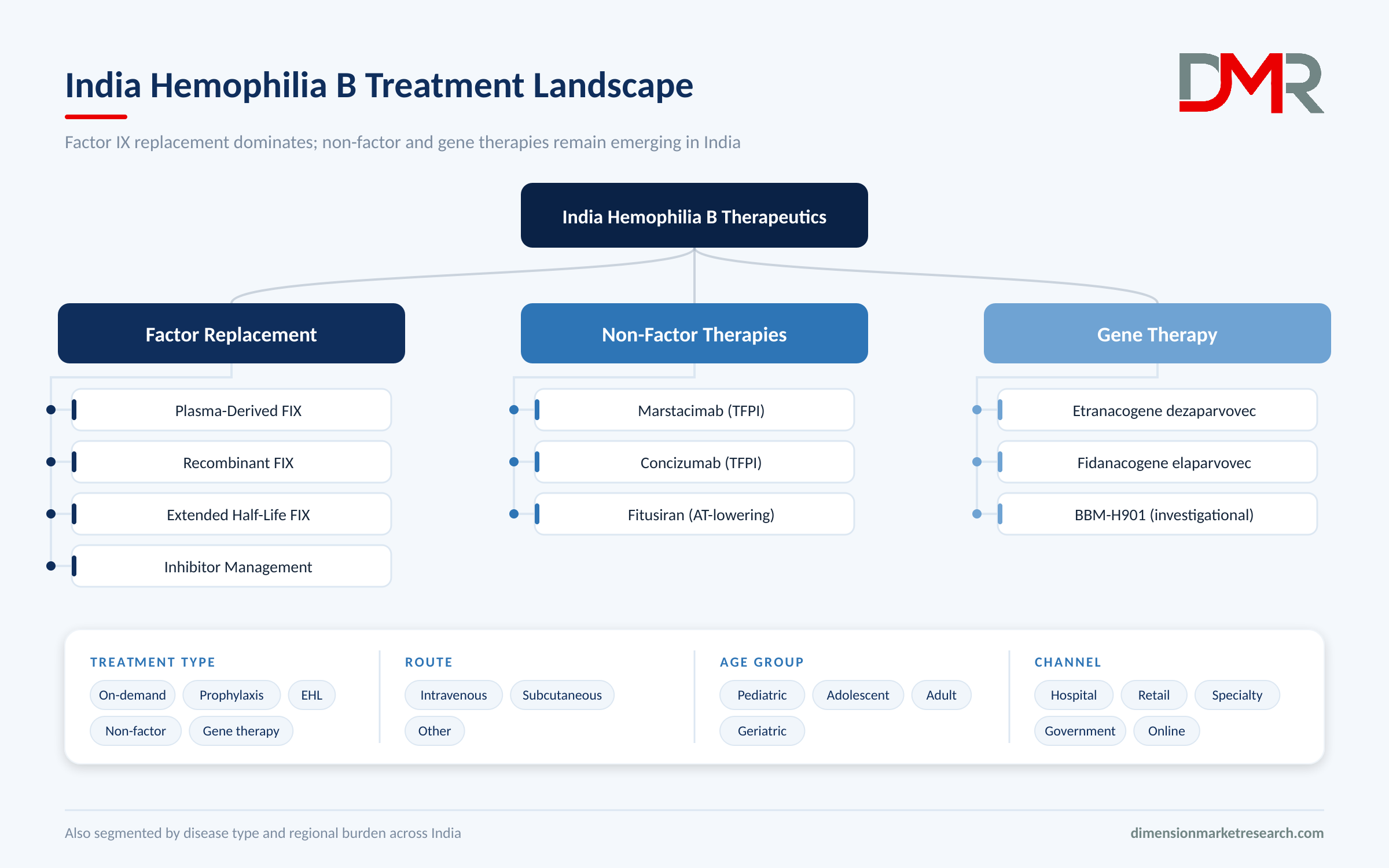
The India Hemophilia B market is segmented across drug class, treatment type, route of administration, patient age group, and distribution channel. The segmentation captures both established Factor IX replacement treatments and emerging therapeutic approaches, while reflecting differences in treatment requirements, patient characteristics, and healthcare delivery channels.
By Drug Class
Plasma-Derived Factor IX Concentrates
Plasma-derived Factor IX concentrates represent an established segment of the Hemophilia B market because of their ability to replace the deficient coagulation factor and support the management of bleeding episodes. These products are manufactured from pooled human plasma and undergo purification and viral-inactivation processes to improve product safety.
The segment includes human plasma-derived Factor IX concentrates and other purified coagulation-factor preparations. Their utilization is influenced by product availability, procurement arrangements, cost considerations, and physician familiarity. Plasma-derived concentrates continue to maintain relevance in healthcare settings where recombinant products may be less accessible or affordable.
Recombinant Factor IX Concentrates
Recombinant Factor IX concentrates represent an important segment of the Indian Hemophilia B market because of their established efficacy and reduced dependence on human plasma sourcing. These therapies replace the missing Factor IX protein and support both on-demand bleeding control and routine prophylaxis.
The segment includes standard half-life recombinant Factor IX products such as nonacog alfa, marketed as BeneFIX, and other recombinant Factor IX preparations, including Rixubis. Increasing physician familiarity, clinical evidence, improvements in product availability, and growing emphasis on treatment safety continue to support recombinant Factor IX utilization.
Extended Half-Life Factor IX Therapies
Extended half-life Factor IX therapies represent an emerging opportunity because of their ability to maintain circulating Factor IX activity for longer periods than conventional standard half-life products. These therapies are designed to reduce infusion frequency and improve treatment convenience, particularly among patients requiring long-term prophylaxis.
The segment includes Fc-fusion Factor IX products, albumin-fusion Factor IX products, and PEGylated Factor IX formulations. Examples of internationally developed products include Alprolix, Idelvion, and Rebinyn. Their broader market opportunity in India will depend on regulatory availability, affordability, physician adoption, and access to specialized treatment centres.
Non-Factor Replacement Therapies
Non-factor therapies represent an emerging treatment category designed to reduce bleeding through mechanisms that do not directly replace Factor IX. These approaches can provide alternative preventive treatment strategies for selected patients, including those with inhibitors or difficulties associated with conventional factor replacement.
The segment includes TFPI inhibitors such as marstacimab and concizumab, as well as antithrombin-lowering therapies such as fitusiran. These treatments may offer less frequent or subcutaneous administration compared with conventional intravenous Factor IX replacement. Their commercial development in India will depend on regulatory approvals, clinical suitability, pricing, and reimbursement accessibility.
Gene Therapy
Gene therapy represents an emerging advanced treatment segment for Hemophilia B, designed to introduce genetic material that enables liver cells to produce functional Factor IX. This approach aims to achieve sustained endogenous Factor IX expression following a single administration.
The segment includes adeno-associated virus (AAV)-based gene therapy approaches, including etranacogene dezaparvovec and fidanacogene elaparvovec. Although these treatments have demonstrated significant clinical potential internationally, their commercial opportunity in India remains dependent on regulatory approval, patient eligibility, long-term safety monitoring, affordability, and specialist infrastructure.
By Treatment Type
- On-Demand Treatment
- Routine Prophylactic Treatment
- Extended Half-Life Factor IX Treatment
- Non-Factor Prophylactic Treatment
- Gene Therapy
On-demand treatment remains an important component of the Indian market because it provides immediate Factor IX replacement following bleeding episodes. However, routine prophylaxis is increasingly important for patients with severe disease because it helps reduce spontaneous bleeding, recurrent joint damage, and long-term disability. Extended half-life and non-factor preventive approaches may improve treatment convenience, while gene therapy represents a potential longer-term alternative for appropriately selected patients.
By Route of Administration
- Intravenous
- Subcutaneous
- Other Routes
Intravenous administration remains the dominant route within the Indian Hemophilia B market because conventional plasma-derived and recombinant Factor IX concentrates require intravenous infusion. Extended half-life Factor IX products also generally use intravenous administration, although their longer duration of activity can reduce infusion frequency.
Subcutaneous administration is becoming increasingly relevant as non-factor therapies expand. This route may improve treatment convenience and reduce dependence on repeated intravenous access. Gene therapies such as AAV-based Factor IX treatments are generally administered through a single intravenous infusion, requiring specialized administration and post-treatment monitoring.
By Patient Age Group
- Pediatric Patients
- Adolescent Patients
- Adult Patients
- Geriatric Patients
Pediatric patients represent an important segment because early diagnosis and prophylactic treatment can reduce recurrent bleeding and prevent long-term joint damage. Treatment decisions in children are influenced by disease severity, bleeding frequency, developmental requirements, venous access, and family support.
Adolescent patients represent an important treatment population because increasing physical activity, mobility, and independence can influence bleeding risk and treatment adherence. Adult patients account for substantial treatment demand because of established disease management requirements, recurrent bleeding complications, and the need for long-term prophylaxis.
Geriatric patients represent a smaller but clinically relevant population, particularly because accumulated joint damage, reduced mobility, and age-associated comorbidities can complicate disease management.
By Distribution Channel
- Hospital Pharmacies
- Retail Pharmacies
- Specialty Pharmacies
- Government Healthcare Facilities
- Online Pharmacies
Distribution patterns vary by treatment type, procurement arrangements, healthcare system, and availability of specialized medicines. Hospital pharmacies and government healthcare facilities are particularly relevant for Factor IX replacement because treatment frequently requires specialist supervision, hospital-based administration, and coordinated management of bleeding episodes.
Specialty pharmacies are relevant for high-cost recombinant and advanced therapies, particularly where temperature-controlled storage and specialized distribution are required. Retail pharmacies may support selected outpatient treatment requirements, while online channels can facilitate access to certain medicines and patient-support services, subject to applicable prescription and distribution regulations.
Market Dynamics
Growth Drivers
Increasing Adoption of Advanced Therapies
Advanced therapies continue to represent an important growth opportunity in the Indian Hemophilia B market. Their ability to provide more effective and sustained bleeding prevention has increased interest in recombinant Factor IX concentrates, extended half-life products, and emerging non-factor therapies.
The growing use of recombinant Factor IX is particularly important as physicians increasingly consider treatment safety, product consistency, prophylactic effectiveness, and patient convenience when selecting therapies. Expanded clinical experience and improvements in treatment availability are also supporting adoption.
The development of extended half-life Factor IX products is another important growth driver because these therapies can reduce infusion frequency and improve treatment adherence. In addition, emerging gene therapies are attracting significant clinical and commercial interest because of their potential to provide sustained Factor IX production and reduce dependence on regular replacement therapy.
Advancement in Disease Biology-Based Drug Development
Advances in understanding the biological mechanisms underlying Hemophilia B have created opportunities for more precise therapeutic intervention. Pharmaceutical companies are increasingly investing in therapies designed to restore Factor IX activity, regulate coagulation pathways, or introduce functional genetic material rather than relying exclusively on conventional replacement approaches.
Development activity is focused on next-generation recombinant Factor IX products, extended half-life formulations, TFPI inhibition, antithrombin regulation, and AAV-mediated gene transfer. These developments are expected to increase therapeutic competition and expand treatment options for patients with different disease severities and treatment requirements.
Increasing Healthcare Access and Disease Awareness in India
Improving healthcare infrastructure and rising healthcare expenditure are increasing access to hemophilia diagnosis and treatment in India. Expansion of specialist networks, patient-support organizations, and government-supported treatment programmes is also helping identify patients who previously remained undiagnosed or untreated.
Greater availability of coagulation-factor testing, genetic counselling, and specialized hematology services can improve early diagnosis and treatment initiation. Increasing awareness among healthcare professionals and families can further support patient registration and treatment adherence.
Government-supported treatment initiatives and the activities of Hemophilia Federation (India) are particularly important in improving access to Factor IX replacement. Wider availability of recombinant therapies, expanded public procurement, and development of cost-effective treatment options could accelerate market penetration.
Growing Recognition of Hemophilia B-Associated Clinical Burden
The increasing understanding of Hemophilia B as a lifelong genetic bleeding disorder requiring preventive management is encouraging more comprehensive disease management. Recognition of complications such as recurrent hemarthrosis, hemophilic arthropathy, chronic pain, muscle bleeding, and intracranial hemorrhage can encourage earlier diagnosis, specialist management, and continued treatment monitoring.
This shift can increase treatment intensity and create demand for therapies capable of achieving broader and more sustained bleeding prevention. Greater emphasis on prophylaxis, joint-health preservation, physiotherapy, and multidisciplinary care is expected to support long-term treatment demand.
Market Restraints
High Cost of Advanced Therapies
Recombinant Factor IX concentrates, extended half-life products, non-factor therapies, and gene therapies often carry substantially higher treatment costs than conventional blood-derived products. High costs can create affordability challenges for patients and increase pressure on healthcare payers.
In India, limited reimbursement coverage and high out-of-pocket expenditure can restrict access to advanced treatment. The cost of regular prophylaxis is particularly important because patients with severe Hemophilia B may require lifelong treatment. Gene therapy presents an additional affordability challenge because of its high upfront treatment cost and requirements for long-term monitoring.
Cost considerations may therefore continue to influence treatment selection and delay the adoption of innovative therapies.
Treatment Accessibility Gap
Unequal access to hematologists, hemophilia treatment centres, coagulation-factor testing, and advanced medicines remains a major challenge. Rural and underserved populations may experience longer diagnostic delays and fewer treatment options.
Differences in healthcare infrastructure between states and regions can result in significant variations in diagnosis, treatment penetration, and disease outcomes. Limited availability of specialized treatment centres can also affect timely management of acute bleeding episodes and regular prophylactic treatment.
Variable Patient Response and Treatment Complications
Although Factor IX replacement and advanced therapies have significantly improved Hemophilia B management, treatment response and clinical outcomes are not uniform across patients. Some individuals may experience inadequate bleeding control, development of Factor IX inhibitors, allergic reactions, treatment complications, or difficulties associated with repeated intravenous administration.
The development of inhibitors can complicate conventional replacement therapy and increase the need for specialized treatment approaches. In addition, treatment adherence, venous access challenges, and variations in prophylactic dosing can influence long-term outcomes.
The need for alternative treatment strategies creates continuing demand for therapies offering durable, predictable, and convenient bleeding prevention.
Competitive Landscape
The India Hemophilia B market is characterized by competition among multinational pharmaceutical companies with established coagulation-factor portfolios and emerging developers focused on extended half-life Factor IX products, non-factor therapies, and gene-based treatment approaches.
Leading companies covered in the competitive assessment include:
- Pfizer
- Takeda
- CSL Behring
- Sanofi
- Novo Nordisk
- Bayer
- Octapharma
- Grifols
- Swedish Orphan Biovitrum (Sobi)
- Roche
Competition is increasingly focused on demonstrating differentiated clinical outcomes rather than simply introducing additional Factor IX replacement products. Companies are investing in recombinant Factor IX development, extended half-life formulations, improved prophylactic treatment schedules, subcutaneous administration, and gene therapy approaches.
The competitive environment is also being influenced by product affordability, plasma-derived and recombinant factor availability, government procurement, reimbursement restrictions, and physician familiarity with established products. Standard half-life recombinant Factor IX therapies remain important to the Indian treatment landscape, while extended half-life concentrates and emerging non-factor approaches are expected to become increasingly relevant as access improves.
Pipeline innovation is another major competitive factor. Companies with strong clinical-development capabilities and diversified hematology portfolios may be better positioned to respond to changing treatment preferences and emerging unmet needs. The development of gene therapies and therapies targeting alternative coagulation pathways could substantially influence the long-term competitive positioning of established Factor IX replacement products.
Recent Developments
- November 2025 – Novo Nordisk advances marstacimab's regulatory development in India: Novo Nordisk progressed the regulatory assessment of marstacimab through recommendations issued by India's Central Drugs Standard Control Organisation (CDSCO) Subject Expert Committee on Haematology. The committee recommended approval of the proposed additional indication for routine bleeding prophylaxis in patients aged 12 years and above with moderate-to-severe Hemophilia B without Factor IX inhibitors, subject to post-marketing surveillance requirements. The development highlights increasing interest in non-factor therapies targeting the tissue factor pathway inhibitor mechanism and their potential to provide an alternative prophylactic treatment approach for eligible patients.
- November 2025 – BBM-H901 advances Factor IX gene therapy development: Researchers reported further clinical development of BBM-H901, an investigational AAV-based gene therapy incorporating the high-activity Factor IX-Padua variant. The programme included Phase 1/2 and Phase 3 clinical studies involving patients with Hemophilia B in China. The Phase 3 study demonstrated significant reductions in annualized bleeding rates and Factor IX concentrate requirements following treatment. The development reflects continued investment in gene-based approaches designed to provide sustained Factor IX expression and reduce dependence on conventional replacement therapy.
Report Coverage
The report provides a comprehensive assessment of the India Hemophilia B market. It integrates epidemiological analysis with commercial market assessment to provide a broader understanding of the current and future treatment landscape.
The study covers:
- Indication Covered
- Epidemiology Parameters
- Patient Segmentation
- Geographic Coverage
- Market Segmentation
- Units of Measurement
- Study Period
- Data Sources
- Companies Covered
- Report Deliverables
- Out of Scope
- Customization