What is the Intracranial Hemorrhage Diagnosis & Treatment Market Size?
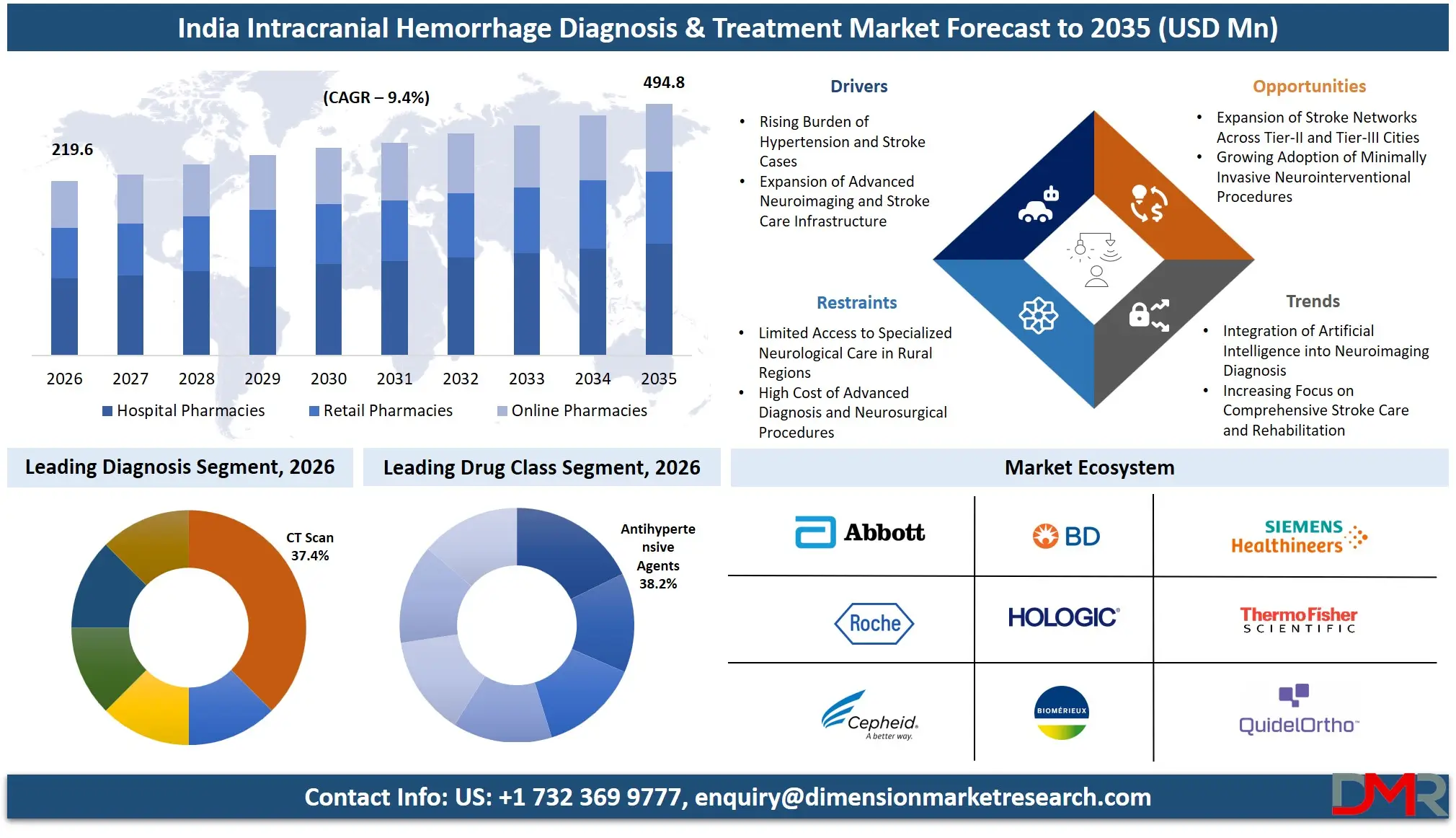
The India Intracranial Hemorrhage Diagnosis & Treatment Market is expected to reach a value of USD 219.6 million in 2026, and it is further anticipated to reach USD 494.8 million by 2035, growing at a CAGR of 9.4% during the forecast period.
ℹ
To learn more about this report –
Download Your Free Sample Report Here
The intracranial hemorrhage (ICH) management market in India has witnessed significant evolution, driven by the rising incidence of hypertension, traumatic brain injuries, and an aging population susceptible to cerebrovascular accidents. This market encompasses the emergency diagnosis and acute management of bleeding within the skull, including intracerebral, subarachnoid, subdural, and epidural hematomas. The escalating demand for rapid, precise neuroimaging and advanced minimally invasive surgical interventions in India's tertiary care ecosystem is a primary growth catalyst. Diagnostic imaging centers and stroke-ready hospitals are the major demand drivers, with non-contrast CT scans and endovascular coiling remaining the dominant modalities due to their speed and life-saving precision.
Key Takeaways
- Market Size & Forecast: Based on forecasts, the size of the market for India's intracranial hemorrhage diagnosis and treatment will experience growth and will attain a value of USD 219.6 million by 2026, expanding substantially to USD 494.8 million by 2035 due to two crucial factors: the proliferating network of comprehensive stroke centers and a robust pipeline of advanced neuro-interventional devices and minimally invasive surgical techniques.
- Growth Rate & Outlook: It is predicted that the market will register a CAGR of 9.4% , which will be attributed to the presence of important growth factors, such as the escalating burden of traumatic brain injuries from road traffic accidents and the increased need for rapid anticoagulation reversal agents for a growing cardiac patient pool on blood thinners.
- Primary Growth Drivers: Important growth factors will include the rapid expansion of government-backed health insurance schemes covering neuro-trauma care, an increase in healthcare infrastructure investment in Tier-2 and Tier-3 cities, and a large number of domestic medical device companies innovating in cost-effective cranial access and drainage systems.
- Key Market Trends: The market trends are mainly related to minimally invasive hematoma evacuation techniques to improve functional outcomes in intracerebral hemorrhage; usage of flow-diverting stents and advanced coils in endovascular coiling for aneurysmal subarachnoid hemorrhage; and increased interest in AI-assisted diagnostic triaging for faster CT interpretation in emergency settings, crucial for India's high-volume radiology workload.
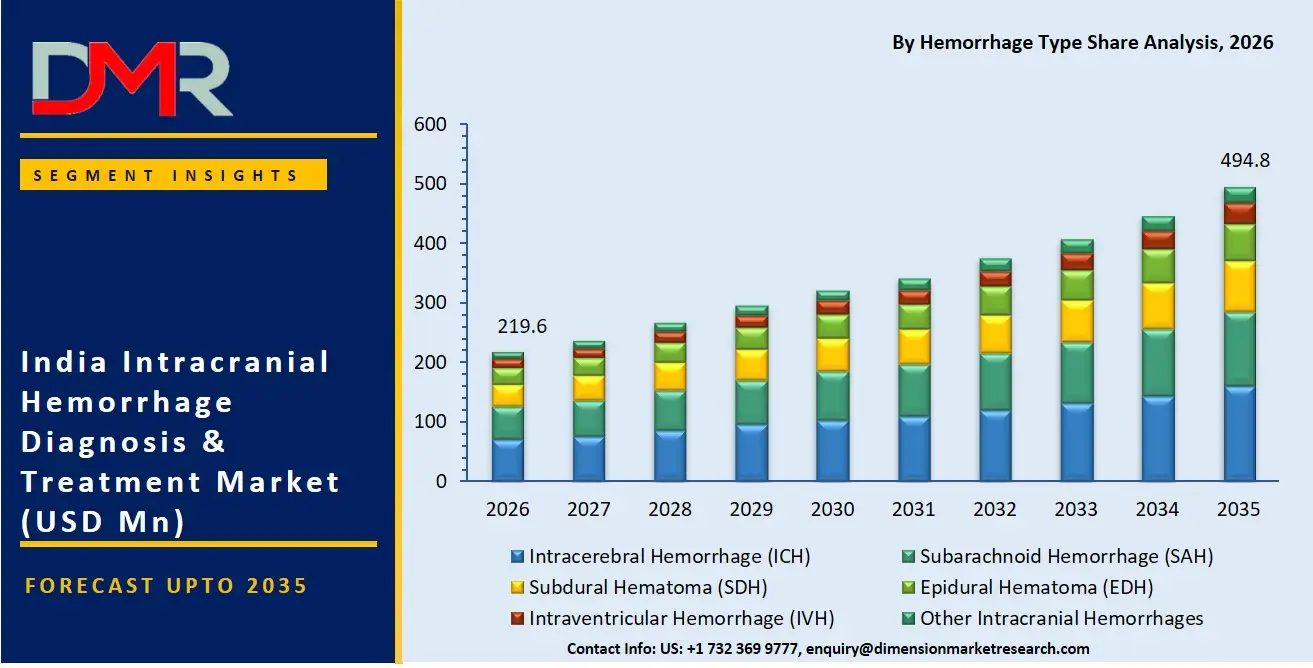
- By Hemorrhage Type Analysis: The intracranial hemorrhage management market in India is driven by cases of intracerebral hemorrhage (ICH) due to the high prevalence of uncontrolled hypertension in the population. Subarachnoid hemorrhage (SAH) and subdural hematoma (SDH) follow closely, with SDH witnessing substantial growth among the elderly on anticoagulant therapy, requiring specialized acute and chronic management protocols.
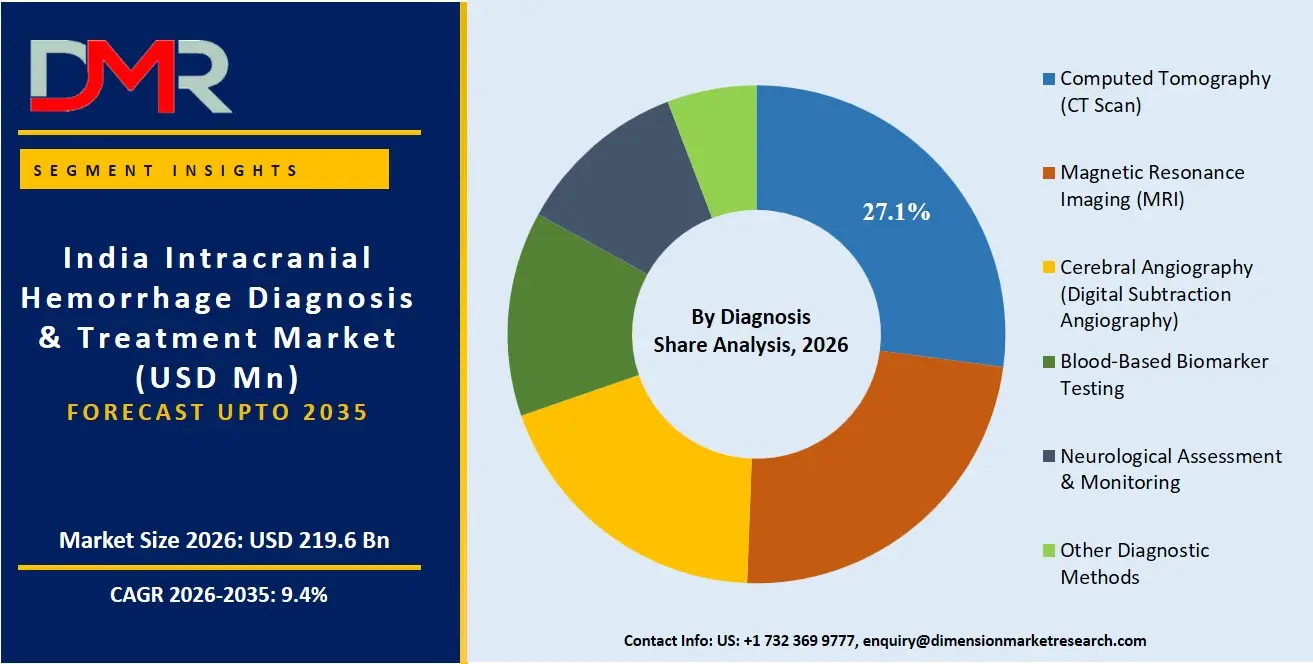
- By Diagnosis Analysis: The India intracranial hemorrhage diagnosis market is projected to be dominated by Computed Tomography (CT Scan), specifically Non-Contrast CT, as it remains the gold standard for emergency room diagnosis due to its speed, widespread availability even in smaller cities, and ability to rapidly differentiate hemorrhagic from ischemic stroke.
What is the Intracranial Hemorrhage Diagnosis & Treatment?
Intracranial hemorrhage diagnosis and treatment can be described as the specialized emergency medicine and neurosurgical protocols involved in detecting and managing spontaneous or traumatic bleeding within the cranial vault. Unlike ischemic strokes, the management of hemorrhagic stroke focuses on rapidly identifying the bleed and its underlying vascular pathology. This is done through two primary approaches: diagnostic imaging, primarily involving non-contrast CT for immediate bleed detection and CT Angiography (CTA) or Digital Subtraction Angiography (DSA) to pinpoint aneurysms or arteriovenous malformations; and therapeutic intervention, which ranges from aggressive medical blood pressure management and anticoagulation reversal to surgical evacuation via craniotomy or minimally invasive endoscopic surgery, and endovascular coiling for aneurysm repair. Considering the time-sensitive nature of the "golden hour" in stroke care, India's stroke-ready hospitals require seamless integration of rapid diagnostics and therapeutic capabilities.
Use Cases
- Hypertensive Intracerebral Hemorrhage Management: A secondary or tertiary care hospital in an urban center employs a protocol of immediate non-contrast CT scanning followed by aggressive antihypertensive therapy and, if indicated, minimally invasive stereotactic hematoma aspiration to treat a patient with a basal ganglia bleed caused by chronic hypertension.
- Traumatic Subdural Hematoma Evacuation: In a Level-1 trauma center, a patient with a severe head injury from a road traffic accident is diagnosed with an acute subdural hematoma via emergency CT imaging and rapidly transferred for a decompressive craniectomy to relieve elevated intracranial pressure.
- Aneurysmal Subarachnoid Hemorrhage Treatment: A comprehensive stroke center uses CT Angiography and Digital Subtraction Angiography (DSA) to identify a ruptured cerebral aneurysm, followed by an endovascular coiling procedure performed by an interventional neuroradiologist to prevent re-bleeding.
- Anticoagulation Reversal in the Elderly: A multispecialty hospital manages an elderly patient presenting with a chronic subdural hematoma by immediately administering specific reversal agents to correct their anticoagulant therapy, followed by burr hole drainage to evacuate the accumulated blood.
How AI is Transforming the Intracranial Hemorrhage Diagnosis & Treatment Market?
The impact of AI on the Indian intracranial hemorrhage market centers on accelerating the time-to-diagnosis and streamlining triage in high-volume emergency departments. In radiology, AI-driven computer-aided detection (CAD) tools are being deployed to analyze CT scans immediately upon acquisition, flagging critical findings like intracerebral hemorrhages, mass effect, and midline shift, and alerting on-call neurosurgeons and radiologists. This prioritization is vital in settings with heavy caseloads and limited specialist availability, especially during night shifts.
Furthermore, AI is playing an increasingly important role in clinical outcome prediction. Machine learning algorithms analyze initial imaging, clinical scores, and vital signs to predict the risk of hematoma expansion, functional recovery potential, and the development of secondary complications like hydrocephalus. AI-based clinical decision support systems assist neurocritical care teams in optimizing cerebral perfusion pressure and anticipating the need for invasive interventions, thereby personalizing the management of this life-threatening condition.
Market Dynamics
Key Drivers in the India Intracranial Hemorrhage Diagnosis & Treatment Market
Rising Burden of Hypertension and Stroke Cases
India's increasing prevalence of uncontrolled hypertension, diabetes, obesity, and cardiovascular disorders is significantly driving intracranial hemorrhage incidence. Hypertension remains the leading cause of spontaneous intracerebral hemorrhage, particularly among middle-aged and elderly populations. Urbanization, sedentary lifestyles, poor dietary habits, and inadequate disease management contribute to rising stroke admissions across hospitals. Growing awareness regarding stroke symptoms and government initiatives promoting early diagnosis have increased patient referrals to specialized neurological centers. Consequently, demand for advanced neuroimaging, emergency interventions, intensive care services, and evidence-based pharmacological therapies continues expanding, strengthening the overall intracranial hemorrhage diagnosis and treatment market.
Expansion of Advanced Neuroimaging and Stroke Care Infrastructure
India has witnessed substantial investments in healthcare infrastructure, particularly in tertiary hospitals, trauma centers, and comprehensive stroke units. The installation of modern CT scanners, MRI systems, digital angiography suites, and neurocritical care facilities enables rapid diagnosis and timely treatment of intracranial hemorrhage. Government healthcare programs and private hospital expansion have improved emergency neurological care across metropolitan and Tier-II cities. Increasing availability of trained neurologists, neurosurgeons, and interventional neuroradiologists further enhances treatment accessibility. These developments are improving clinical outcomes while driving greater adoption of advanced diagnostic technologies and specialized treatment solutions nationwide.
Restraints in the India Intracranial Hemorrhage Diagnosis & Treatment Market
Limited Access to Specialized Neurological Care in Rural Regions
Despite improvements in urban healthcare infrastructure, access to specialized neurological services remains limited across rural and remote regions of India. Many district hospitals lack advanced CT imaging, MRI facilities, neurosurgical expertise, and neurocritical care units required for timely intracranial hemorrhage management. Delayed patient referrals and transportation challenges often reduce treatment effectiveness and increase mortality. The uneven distribution of stroke centers and trained specialists restricts access to evidence-based interventions for a large population. These healthcare disparities continue to limit market penetration and reduce overall adoption of advanced diagnosis and treatment technologies.
High Cost of Advanced Diagnosis and Neurosurgical Procedures
The financial burden associated with intracranial hemorrhage management remains a significant challenge for many Indian patients. Advanced diagnostic imaging, neurointerventional procedures, intensive care admission, prolonged hospitalization, and rehabilitation services involve considerable healthcare expenditure. Although government insurance schemes are expanding, coverage remains inconsistent for several specialized neurological procedures in many regions. Out-of-pocket spending continues to discourage timely treatment among economically vulnerable populations. High equipment acquisition costs for hospitals also slow investments in advanced neuroimaging technologies and minimally invasive surgical systems, limiting wider adoption across smaller healthcare institutions.
Growth Opportunities in the India Intracranial Hemorrhage Diagnosis & Treatment Market
Expansion of Stroke Networks Across Tier-II and Tier-III Cities
India's ongoing healthcare expansion into Tier-II and Tier-III cities presents significant growth opportunities for intracranial hemorrhage diagnosis and treatment providers. Public and private healthcare organizations are investing in new multispecialty hospitals, stroke centers, advanced imaging facilities, and emergency medical services to improve regional healthcare accessibility. Increased installation of CT scanners, tele-neurology platforms, and specialized neurocritical care units will enhance early diagnosis and treatment capacity. Medical device manufacturers, pharmaceutical companies, and healthcare providers can capitalize on this expanding infrastructure by introducing cost-effective technologies tailored to emerging regional healthcare markets.
Growing Adoption of Minimally Invasive Neurointerventional Procedures
Technological advancements in neurointerventional surgery are creating substantial opportunities within India's intracranial hemorrhage treatment landscape. Increasing availability of endovascular coiling, minimally invasive hematoma evacuation, catheter-based interventions, and image-guided neurosurgical procedures is improving patient outcomes while reducing recovery times. Healthcare providers are investing in hybrid operating rooms and advanced angiography systems to expand neurovascular treatment capabilities. Rising physician training programs and greater awareness of minimally invasive techniques are expected to accelerate clinical adoption. These innovations support improved treatment efficiency while generating sustained demand for specialized medical devices and interventional technologies.
Trends in the India Intracranial Hemorrhage Diagnosis & Treatment Market
Integration of Artificial Intelligence into Neuroimaging Diagnosis
Artificial intelligence is increasingly being integrated into neuroimaging workflows to improve rapid identification of intracranial hemorrhage. AI-powered software assists radiologists by automatically detecting hemorrhage location, estimating hematoma volume, prioritizing emergency scans, and reducing reporting time. Leading hospitals are adopting AI-enabled CT interpretation systems to support faster clinical decision-making during acute stroke management. The technology improves workflow efficiency while enhancing diagnostic accuracy, particularly in high-volume emergency departments. Continued investment in digital healthcare transformation and AI-supported radiology solutions is expected to significantly influence India's future neurodiagnostic landscape.
Increasing Focus on Comprehensive Stroke Care and Rehabilitation
Healthcare providers across India are increasingly adopting integrated stroke care models that combine emergency diagnosis, neurosurgical intervention, intensive care, rehabilitation, and long-term neurological follow-up. Multidisciplinary stroke teams comprising neurologists, neurosurgeons, physiotherapists, rehabilitation specialists, and speech therapists are becoming standard practice in leading hospitals. Early rehabilitation programs are receiving greater emphasis to improve functional recovery and reduce disability following intracranial hemorrhage. Simultaneously, digital rehabilitation platforms, remote patient monitoring, and telemedicine consultations are expanding access to post-discharge care, improving patient outcomes while supporting long-term market growth.
Research Scope and Analysis
The India Intracranial Hemorrhage Diagnosis & Treatment Market is segmented by hemorrhage type, diagnosis, treatment, drug class, distribution channel, and end user. These segments comprehensively evaluate disease prevalence, diagnostic imaging technologies, therapeutic approaches, pharmaceutical utilization, healthcare delivery channels, and treatment settings, reflecting evolving clinical practices, infrastructure development, and patient management across India's neurovascular care ecosystem.
ℹ
To learn more about this report –
Download Your Free Sample Report Here
By Hemorrhage Type Analysis
Intracerebral Hemorrhage (ICH) is poised to dominates the India Intracranial Hemorrhage Diagnosis & Treatment Market due to its high incidence among the country's growing hypertensive and aging population. Uncontrolled hypertension remains the leading cause of spontaneous ICH, making it the most frequently diagnosed hemorrhagic stroke in tertiary hospitals.
ℹ
To learn more about this report –
Download Your Free Sample Report Here
The condition requires immediate neuroimaging, intensive care, and specialized neurosurgical intervention, resulting in higher healthcare expenditure than other hemorrhage types. Government stroke awareness initiatives, increasing availability of CT imaging, and expansion of comprehensive stroke centers further contribute to the segment's leadership. The rising burden of diabetes and cardiovascular diseases also continues to increase ICH cases across India.
By Diagnosis Analysis
Computed Tomography (CT Scan), particularly Non-Contrast CT, is poised to dominate the diagnosis segment because it is the first-line imaging modality for suspected intracranial hemorrhage. CT scanners are widely available across government hospitals, private multispecialty hospitals, emergency departments, and trauma centers throughout India. The technology delivers rapid diagnosis within minutes, enabling timely clinical decisions for emergency neurosurgical intervention. Compared with MRI, CT offers lower examination costs, broader accessibility, and faster workflow, making it the preferred choice in acute stroke management. Increasing investments in district-level imaging infrastructure, emergency care networks, and trauma services continue to strengthen CT's position as the standard diagnostic tool.
By Treatment Analysis
Medical management is expected to dominate the treatment segment as the majority of intracranial hemorrhage patients initially require stabilization before surgical intervention is considered. Blood pressure control, reversal of anticoagulant effects, intracranial pressure management, seizure prevention, and intensive monitoring form the cornerstone of acute clinical care. Many patients with smaller hemorrhages or those unsuitable for surgery are managed conservatively, increasing demand for pharmacological therapies. India's growing network of stroke units and intensive care facilities has further expanded access to evidence-based medical management. Clinical guidelines emphasizing early stabilization and supportive care continue to reinforce this segment's leading market position across healthcare institutions.
By Drug Class Analysis
Antihypertensive agents is poised to dominate the drug class segment because elevated blood pressure is the most common modifiable risk factor associated with spontaneous intracerebral hemorrhage. Rapid blood pressure reduction is recommended during acute management to minimize hematoma expansion and improve neurological outcomes. Consequently, antihypertensive medications are routinely administered in emergency departments, intensive care units, and stroke centers across India. The country's large hypertensive population, increasing awareness regarding cardiovascular disease management, and broader availability of affordable generic medications support high prescription volumes. Continuous adoption of updated stroke treatment protocols further strengthens the dominance of antihypertensive therapies in clinical practice.
By Distribution Channel Analysis
Hospital pharmacies is projected to dominate the distribution channel segment because intracranial hemorrhage represents a medical emergency requiring immediate access to specialized medicines, reversal agents, intensive care medications, and neurosurgical consumables. Most patients receive diagnosis and treatment in tertiary hospitals where medications are dispensed directly through institutional pharmacies. Hospital pharmacies also ensure uninterrupted availability of critical drugs, standardized treatment protocols, and integrated patient management. Increasing admissions for stroke and traumatic brain injuries, combined with expansion of multispecialty hospitals and government medical colleges, continues to drive demand through this channel. Retail and online pharmacies mainly support post-discharge medication requirements.
By End User Analysis
Tertiary care hospitals is expected to dominate the end-user segment because they possess the advanced infrastructure required for comprehensive intracranial hemorrhage management, including 24/7 emergency departments, CT and MRI imaging, neurocritical care units, neurosurgery departments, and interventional neuroradiology services. These hospitals receive the majority of referrals for severe stroke and traumatic brain injury cases from secondary healthcare facilities. Government institutes and leading private hospital chains continue investing in stroke centers equipped with multidisciplinary teams to improve patient outcomes. Their ability to provide diagnosis, surgery, intensive care, rehabilitation, and long-term follow-up within a single facility reinforces their market leadership.
The India Intracranial Hemorrhage Diagnosis & Treatment Market Report is segmented on the basis of the following:
By Hemorrhage Type
- Intracerebral Hemorrhage (ICH)
- Subarachnoid Hemorrhage (SAH)
- Subdural Hematoma (SDH)
- Acute Subdural Hematoma
- Chronic Subdural Hematoma
- Epidural Hematoma (EDH)
- Intraventricular Hemorrhage (IVH)
- Other Intracranial Hemorrhages
By Diagnosis
- Computed Tomography (CT Scan)
- Non-Contrast CT
- CT Angiography (CTA)
- CT Perfusion
- Magnetic Resonance Imaging (MRI)
- Conventional MRI
- MR Angiography (MRA)
- Cerebral Angiography (Digital Subtraction Angiography)
- Blood-Based Biomarker Testing
- Neurological Assessment & Monitoring
- Other Diagnostic Methods
By Treatment
- Medical Management
- Blood Pressure Management
- Anticoagulation Reversal Therapy
- Osmotherapy
- Anticonvulsants
- Other Pharmacological Therapies
- Surgical Treatment
- Craniotomy
- Minimally Invasive Hematoma Evacuation
- Decompressive Craniectomy
- Endoscopic Surgery
- Ventricular Drainage (EVD)
- Aneurysm Clipping
- Endovascular Coiling
- Rehabilitation Therapy
By Drug Class
- Antihypertensive Agents
- Hemostatic Agents
- Reversal Agents for Anticoagulants
- Antiepileptic Drugs
- Osmotic Diuretics
- Neuroprotective Agents
- Other Drug Classes
By Distribution Channel
- Hospital Pharmacies
- Retail Pharmacies
- Online Pharmacies
By End User
- Tertiary Care Hospitals
- Multispecialty Hospitals
- Neurology & Neurosurgery Centers
- Trauma Centers
- Diagnostic Imaging Centers
- Rehabilitation Centers
- Other End Users
Competitive Landscape
The competitive landscape of the India intracranial hemorrhage diagnosis and treatment market is a dynamic mix of global medical technology giants, fast-growing domestic Indian device manufacturers, and large pharmaceutical companies focused on neurocritical care. The market for diagnostic equipment is led by multinationals like Siemens Healthineers, GE HealthCare, and Philips, whose advanced CT and angiography systems are the backbone of emergency stroke diagnosis. In the treatment space, competition is intense between global leaders in neuro-interventional devices, such as Medtronic and Stryker, and emerging Indian companies offering cost-competitive cranial shunts, drainage catheters, and endoscopic systems. Strategic alliances with leading neuroscience institutes like NIMHANS and AIIMS are crucial for companies to gain clinical validation, train neurosurgeons, and build brand credibility in this highly specialized field.
Some of the prominent players in the India Intracranial Hemorrhage Diagnosis & Treatment Market are:
- Roche Diagnostics
- Abbott Laboratories
- Siemens Healthineers
- Danaher Corporation (Cepheid, Beckman Coulter)
- Becton, Dickinson and Company (BD)
- bioMérieux SA
- QuidelOrtho Corporation
- Hologic, Inc.
- Thermo Fisher Scientific Inc.
- OraSure Technologies, Inc.
- SD Biosensor, Inc.
- Sekisui Diagnostics LLC
- Trinity Biotech plc
- EKF Diagnostics Holdings plc
- ACON Laboratories, Inc.
- bioLytical Laboratories Inc.
- Cardinal Health, Inc.
- Procter & Gamble (Clearblue)
- NOWDiagnostics, Inc.
- Visby Medical, Inc.
- Other Key Players
Recent Developments
- June 2026: Apollo Hospitals expanded its comprehensive stroke care network by introducing AI-assisted stroke imaging and tele-stroke services across multiple hospitals in India, enabling faster diagnosis and treatment of intracranial hemorrhage patients.
- February 2026: Siemens Healthineers India introduced advanced AI-enabled CT imaging workflow enhancements for emergency neuroimaging, supporting quicker detection of intracranial hemorrhage and improved clinical decision-making in high-volume hospitals.
- September 2025: All India Institute of Medical Sciences (AIIMS), New Delhi, strengthened its neurovascular and stroke care capabilities by expanding minimally invasive neurointerventional procedures for managing aneurysmal hemorrhage and acute intracranial bleeding.
- April 2025: Medtronic India expanded access to its neurovascular portfolio by increasing physician training programs focused on minimally invasive stroke and intracranial hemorrhage interventions, supporting wider adoption of advanced endovascular treatment techniques across India.
Report Details
| Report Characteristics |
| Market Size (2026) |
USD 219.6 Mn |
| Forecast Value (2035) |
USD 494.8 Mn |
| CAGR (2026–2035) |
9.4% |
| Historical Data |
2021 – 2025 |
| Forecast Data |
2027 – 2035 |
| Base Year |
2025 |
| Estimate Year |
2026 |
| Segments Covered |
By Hemorrhage Type, By Diagnosis, By Treatment, By Drug Class, By Distribution Channel, and By End User |
| Country Coverage |
India |
Frequently Asked Questions
How big is the India Intracranial Hemorrhage Diagnosis & Treatment Market?
▾ The India Intracranial Hemorrhage Diagnosis & Treatment market is poised to be valued at USD 219.6 million in 2026 and is projected to reach USD 494.8 million by 2035, driven by the universal need for acute, life-saving interventions for a large patient population burdened by hypertension, traumatic injuries, and an aging demographic.
What is the CAGR of the India Intracranial Hemorrhage Diagnosis & Treatment Market from 2026 to 2035?
▾ The market is expected to grow at a CAGR of 9.4% from 2026 to 2035, reflecting the accelerating establishment of stroke-ready hospitals, rapid adoption of minimally invasive neurosurgical techniques, and the nation’s expanding health insurance coverage for neuro-trauma.
What factors are driving the growth of the India Intracranial Hemorrhage Diagnosis & Treatment Market?
▾ Key drivers include the high prevalence of uncontrolled hypertension leading to ICH, a rising rate of road traffic accidents causing traumatic bleeds, government initiatives to expand tertiary neurocare access, and the increasing availability of advanced neuroimaging in Tier-2 cities.
What are the major trends in the India Intracranial Hemorrhage Diagnosis & Treatment Market?
▾ Major trends include the development and adoption of low-cost, indigenous minimally invasive evacuation devices, the shift toward hub-and-spoke tele-stroke networks for 24/7 diagnostic coverage, and a growing focus on integrated neuro-rehabilitation programs to improve long-term functional recovery.
Who are the key players in the India Intracranial Hemorrhage Diagnosis & Treatment Market?
▾ Key players in the India Intracranial Hemorrhage Diagnosis & Treatment Market include Medtronic, Stryker, Penumbra, GE HealthCare, Apollo Hospitals, Sun Pharma, and Terumo, driving innovation through next-generation neuro-interventional devices, pharmaceutical therapies, and comprehensive stroke center operations.
How is the India Intracranial Hemorrhage Diagnosis & Treatment Market segmented?
▾ The market is segmented by Hemorrhage Type, Diagnosis, Treatment, Drug Class, Distribution Channel, and End User.