Indication Covered
The report covers Paroxysmal Nocturnal Hemoglobinuria (PNH) as a rare, acquired, life-threatening hematological disorder, with emphasis on its clinical burden, treatment patterns, therapeutic innovation, and commercial market development in India. PNH is primarily characterized by a somatic mutation in the PIGA gene, resulting in deficient glycosylphosphatidylinositol (GPI)-anchored proteins, including CD55 and CD59, on blood cells.
This deficiency makes red blood cells susceptible to uncontrolled complement-mediated destruction, resulting in chronic intravascular hemolysis, anemia, thrombosis, and bone marrow dysfunction. The condition can range from subclinical disease with a small PNH clone to severe disease associated with persistent hemolysis, transfusion dependence, and life-threatening thrombotic complications, requiring supportive care, immunosuppressive treatment, complement inhibition, and potentially hematopoietic stem cell transplantation.
The indication scope includes major clinical manifestations and associated disease conditions relevant to treatment demand, including:
- Classical Paroxysmal Nocturnal Hemoglobinuria
- PNH with Bone Marrow Failure
- Subclinical PNH
- PNH-associated Aplastic Anemia
- PNH-associated Hemolytic Anemia
- PNH-associated Thrombosis
Classical PNH remains the primary focus because of its significant hemolytic burden, risk of thrombosis, and requirement for targeted complement-inhibiting therapies. The report also considers PNH associated with aplastic anemia because of its clinical relevance, overlapping hematological complications, and additional treatment requirements. Other difficult-to-treat manifestations, including persistent intravascular hemolysis, extravascular hemolysis, chronic kidney impairment, pulmonary hypertension, and recurrent thrombosis, are evaluated as areas of continuing clinical need.
The treatment landscape covers complement inhibitors, supportive therapies, immunosuppressive therapies, anticoagulants, and hematopoietic stem cell transplantation. Particular attention is given to advanced therapies targeting terminal complement component C5, proximal complement pathways such as C3 and factor B, and emerging oral complement-inhibiting treatment approaches.
Epidemiology Parameters
PNH represents a significant rare hematological disease burden in India, with considerable clinical challenges associated with delayed diagnosis, limited disease awareness, and unequal access to specialized hematological treatment. Epidemiological patterns vary across states because of differences in healthcare infrastructure, diagnostic capabilities, genetic and acquired hematological conditions, availability of flow cytometry, specialist access, and availability of advanced complement-inhibiting therapies.
ℹ
To learn more about this report –
Download Your Free Sample Report Here
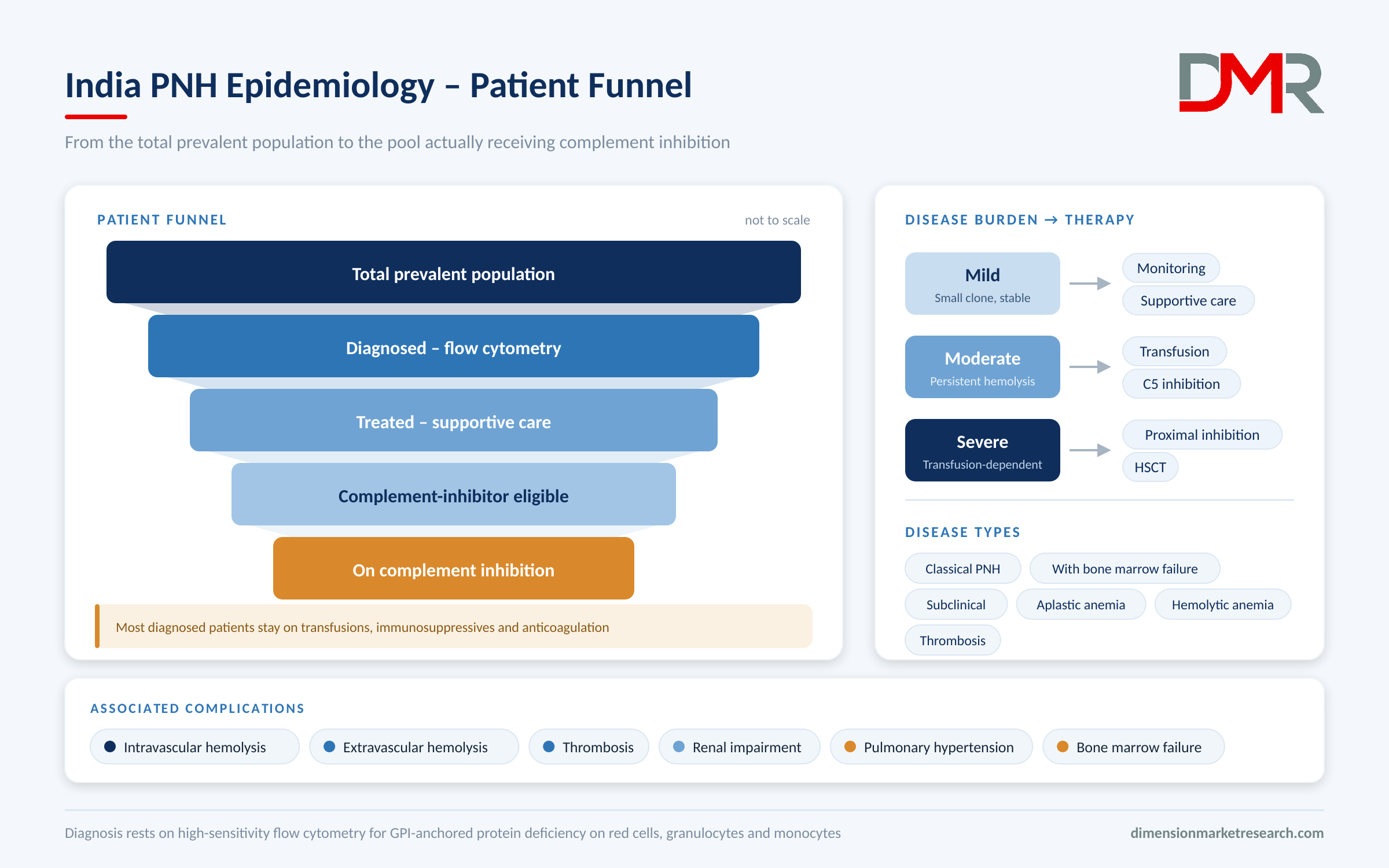
The epidemiology assessment provides a structured evaluation of the PNH population from overall prevalence through diagnosis and treatment. Key parameters include:
- Total PNH patient population
- Prevalent population
- Incidence population, where reliable data are available
- Diagnosed patient population
- Treated patient population
- Untreated patient population
- Treatment-eligible population
- Disease severity distribution
- Mild PNH population
- Moderate PNH population
- Severe PNH population
- Classical PNH population
- PNH with Bone Marrow Failure population
- Subclinical PNH population
- Age distribution
- Gender distribution, where available
- Diagnosis rate
- Treatment rate
- Treatment penetration
- Regional disease burden
- Epidemiological trends
The analysis distinguishes between the broader prevalent population and patients who are diagnosed and actively receiving treatment. This distinction is particularly important because a considerable proportion of patients may remain undiagnosed or receive supportive hematological management without access to complement-inhibiting therapies. Flow cytometry remains essential for identifying PNH clones through the assessment of GPI-anchored protein deficiency.
The report also evaluates the increasing recognition of PNH as a chronic, complement-mediated hematological disease requiring long-term management. Associated manifestations such as hemolytic anemia, aplastic anemia, thrombosis, renal impairment, and bone marrow failure can influence treatment decisions, disease monitoring, healthcare utilization, and long-term management strategies.
Patient Segmentation
The PNH patient population is segmented according to disease severity, disease manifestation, treatment status, and therapeutic requirements. This approach provides a clearer understanding of the population eligible for different treatment categories and helps assess the potential addressable population for advanced therapies.
By Disease Severity
Mild: Patients with limited hemolytic activity, smaller PNH clones, and relatively stable hematological parameters are generally managed through regular monitoring, supportive care, and treatment of associated bone marrow disorders. Treatment decisions are influenced by hemoglobin levels, lactate dehydrogenase (LDH), clone size, symptoms, previous treatment response, and thrombotic risk.
Moderate: Patients with persistent hemolysis, symptomatic anemia, recurrent fatigue, or increasing transfusion requirements may require more intensive supportive and disease-directed treatment approaches. Increasing treatment expectations and quality-of-life considerations can encourage movement toward complement-inhibiting therapies where clinically appropriate and accessible.
Severe: Patients with extensive hemolysis, transfusion dependence, significant thrombosis, organ impairment, or inadequate response to conventional treatment are more likely to require advanced complement inhibition or hematopoietic stem cell transplantation in selected cases. This segment represents a major contributor to advanced PNH treatment demand.
By Disease Type
- Classical PNH
- PNH with Bone Marrow Failure
- Subclinical PNH
- PNH-associated Aplastic Anemia
- PNH-associated Hemolytic Anemia
- PNH-associated Thrombosis
By Treatment Status
- Diagnosed and Treated
- Diagnosed and Untreated
- Undiagnosed
The treatment-status segmentation helps identify the gap between the total disease population and the population actively participating in healthcare treatment. Improvements in disease awareness, hematological screening, specialist availability, flow cytometry capabilities, and healthcare access can gradually increase the diagnosed and treated population.
By Treatment Requirement
- Supportive Therapy Candidates
- Immunosuppressive Therapy Candidates
- Complement Inhibitor Therapy Candidates
- Anticoagulant Therapy Candidates
- Hematopoietic Stem Cell Transplantation Candidates
- Advanced Targeted Therapy Candidates
This segmentation helps evaluate how changes in treatment guidelines, physician preferences, reimbursement, affordability, and therapy availability can shift patients between supportive and advanced treatment categories.
Geographic Coverage
The report provides detailed market, epidemiology, treatment, and competitive analysis specifically for India.
India
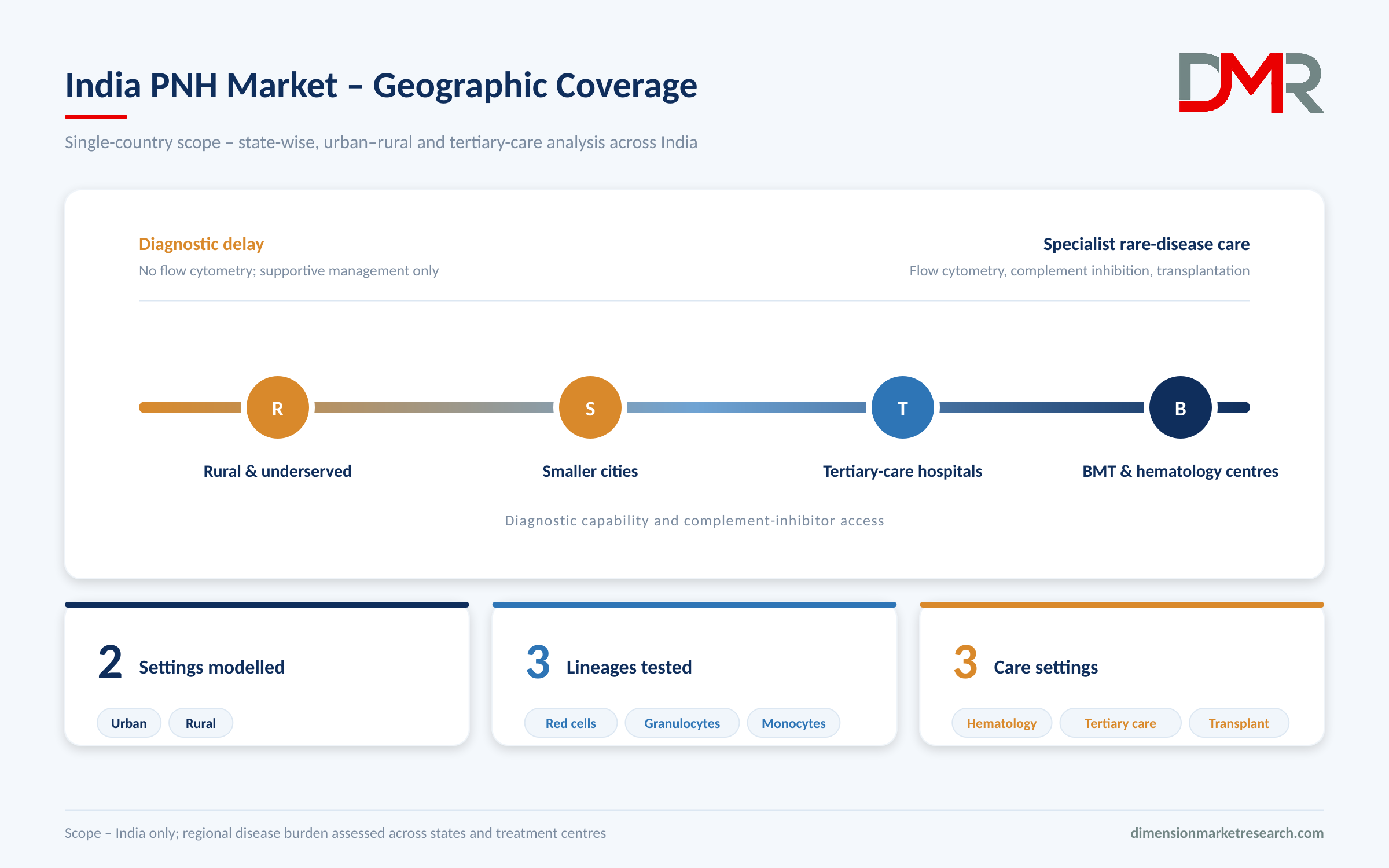
India represents an important emerging PNH market because of its large population, increasing recognition of rare hematological disorders, expanding tertiary-care infrastructure, and improving availability of advanced pharmaceutical treatments. The disease is primarily managed through specialized hematology departments, tertiary-care hospitals, and bone marrow transplantation centers.
ℹ
To learn more about this report –
Download Your Free Sample Report Here
The geographic analysis considers differences in patient population, diagnosis rates, healthcare infrastructure, treatment accessibility, reimbursement, therapeutic penetration, regulatory environment, physician adoption, and competitive activity. Major metropolitan healthcare centers have relatively better access to flow cytometry, specialized hematological assessment, and advanced treatment facilities compared with several smaller cities and rural regions.
The Indian PNH market has historically been characterized by significant reliance on supportive treatment, including blood transfusions, corticosteroids, immunosuppressive agents, and anticoagulants where indicated. However, the regulatory approval and subsequent launch of eculizumab in India in 2025 represented an important development in the availability of targeted complement inhibition.
India
India represents a high-potential PNH market supported by increasing awareness of rare blood disorders, improving diagnostic capabilities, and growing access to specialized hematological services. PNH diagnosis is primarily established through high-sensitivity flow cytometry, which identifies deficient GPI-anchored proteins on red blood cells, granulocytes, and monocytes.
The market is characterized by considerable unmet medical need because many patients continue to receive supportive treatment rather than disease-specific complement inhibition. Blood transfusions, immunosuppressive treatment, iron management, and anticoagulation in selected patients remain important components of clinical management. The availability of eculizumab following its 2025 CDSCO approval has introduced an important targeted treatment option for eligible adult and pediatric patients.
Market development is influenced by treatment affordability, limited reimbursement coverage, specialist availability, diagnostic delays, and access to tertiary-care facilities. The high cost of biologic therapies remains a major barrier to widespread treatment penetration. Increasing awareness, improved diagnosis, expansion of rare-disease treatment initiatives, and greater availability of advanced complement inhibitors are expected to support the long-term development of the Indian PNH market.
Market Segmentation
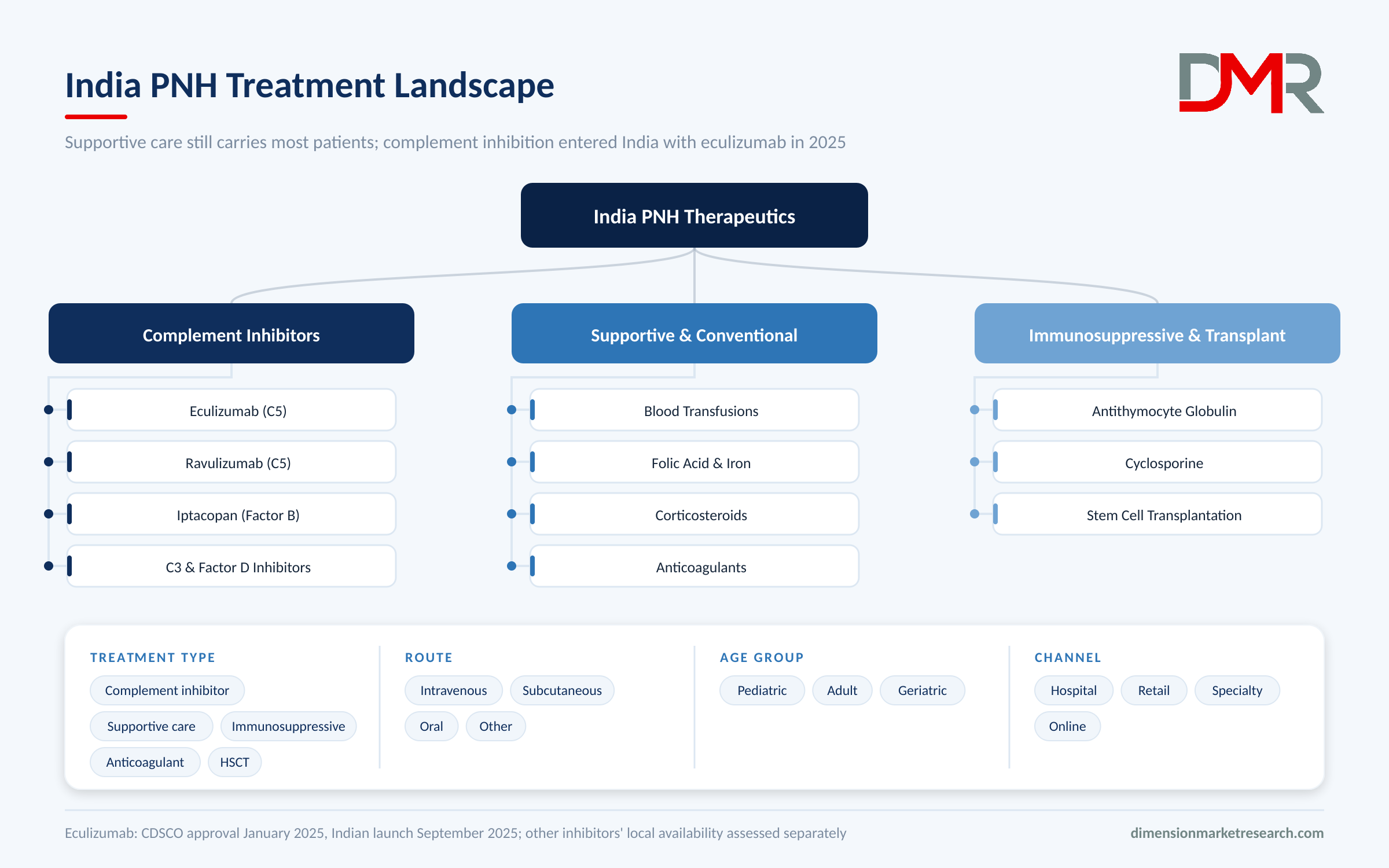
The India PNH market is segmented across drug class, treatment type, route of administration, patient age group, and distribution channel. The segmentation captures established supportive treatment categories, approved complement-inhibiting therapies, and emerging therapeutic approaches relevant to the Indian healthcare environment.
ℹ
To learn more about this report –
Download Your Free Sample Report Here
By Drug Class
Complement Inhibitors
Complement inhibitors represent the most important advanced pharmaceutical segment of the PNH market because of their ability to directly address complement-mediated red blood cell destruction. These therapies selectively interfere with specific complement pathways involved in PNH pathogenesis and can substantially reduce hemolysis and associated complications.
The complement inhibitor segment includes C5 inhibitors, proximal complement inhibitors targeting factor B or C3, and other emerging complement-directed therapies. Eculizumab represents an important commercially relevant therapy in India following its CDSCO approval and subsequent market launch. Other internationally established therapies, including ravulizumab and iptacopan, represent important therapeutic developments, although their Indian regulatory and commercial availability should be assessed separately.
Increasing physician familiarity, clinical evidence, treatment experience, and improvements in dosing convenience continue to support the development of complement inhibition as a major treatment category.
Immunosuppressive Agents
Immunosuppressive agents represent an important segment, particularly among patients with PNH associated with aplastic anemia or underlying bone marrow failure. These therapies primarily address associated bone marrow dysfunction rather than directly correcting complement-mediated hemolysis.
The segment includes antithymocyte globulin (ATG), cyclosporine, corticosteroids, and other immunosuppressive agents. Their utilization is influenced by underlying hematological abnormalities, treatment response, disease severity, and physician assessment.
Supportive and Conventional Therapies
Supportive and conventional therapies continue to represent an important component of the Indian PNH market, particularly among patients who are not eligible for advanced therapies or cannot access high-cost complement inhibitors.
This category includes blood transfusions, folic acid, iron supplementation where indicated, corticosteroids in selected circumstances, and other supportive hematological treatments. Although advanced therapies are gaining clinical importance, supportive treatment remains essential because of its accessibility, established clinical use, and relatively lower treatment cost.
By Treatment Type
- Complement Inhibitor Therapy
- Supportive Care
- Immunosuppressive Therapy
- Anticoagulant Therapy
- Hematopoietic Stem Cell Transplantation
- Other Treatment Approaches
Complement inhibitor therapy is increasingly important because it directly targets the underlying complement-mediated hemolysis responsible for PNH complications. Supportive care remains central to the management of anemia and transfusion requirements, while immunosuppressive treatment is particularly relevant in patients with associated aplastic anemia or bone marrow failure.
Hematopoietic stem cell transplantation represents a potentially curative treatment approach for selected patients, particularly those with severe bone marrow failure or associated aplastic anemia. However, its application is limited by transplant-related risks, donor availability, patient eligibility, and treatment costs.
By Route of Administration
- Intravenous
- Subcutaneous
- Oral
- Other Routes
Intravenous administration remains important within the complement inhibitor segment, particularly for eculizumab, which requires repeated infusion-based treatment. Oral administration is becoming increasingly attractive as the development of targeted small-molecule complement inhibitors expands. Subcutaneous administration also represents an important emerging approach because it can improve treatment convenience and potentially reduce the burden associated with hospital-based infusions.
Supportive therapies are administered through different routes depending on the treatment category, including oral supplementation, intravenous transfusions, and injectable medications.
By Patient Age Group
- Pediatric Patients
- Adult Patients
- Geriatric Patients
Adult patients represent the principal treatment population because PNH is predominantly diagnosed during adulthood. Treatment requirements are influenced by disease severity, hemolytic activity, associated bone marrow disorders, and thrombotic complications.
Pediatric PNH represents a smaller but clinically important segment requiring specialized hematological assessment and age-appropriate treatment decisions. Geriatric patients may require additional consideration because of associated comorbidities, organ impairment, thrombotic risk, and treatment tolerability.
By Distribution Channel
- Hospital Pharmacies
- Retail Pharmacies
- Specialty Pharmacies
- Online Pharmacies
Distribution patterns vary by treatment type, affordability, reimbursement environment, and healthcare system. Hospital pharmacies represent the most important distribution channel for advanced PNH treatments because complement inhibitors generally require specialist prescription, hospital-based administration, and clinical monitoring.
Specialty pharmacies are relevant for high-cost and specialized pharmaceutical products, while retail pharmacies have greater relevance for supportive medications, including oral supplements and conventional therapies. Online pharmacies may support access to selected supportive medications, subject to prescription and applicable regulatory requirements.
Market Dynamics
Growth Drivers
Increasing Adoption of Advanced Complement Inhibitors
Advanced complement inhibitors continue to represent one of the strongest potential growth drivers in the Indian PNH market. Their ability to selectively interfere with complement activation has significantly improved disease management for patients with clinically significant hemolysis and associated complications.
The introduction of eculizumab in India is particularly important because it provides access to targeted C5 inhibition for eligible PNH patients. The growing clinical recognition of complement inhibition is expected to increase physician interest in advanced treatment approaches. Treatment selection is influenced by clinical efficacy, safety, dosing frequency, affordability, and patient eligibility.
Advancement in Complement Biology-Based Drug Development
Advances in understanding the complement pathways underlying PNH have created opportunities for more precise therapeutic intervention. Pharmaceutical companies are increasingly investing in therapies designed to selectively target terminal and proximal complement activation rather than relying solely on supportive hematological treatment.
Development activity is focused on C5 inhibitors, factor B inhibitors, C3 inhibitors, factor D inhibitors, improved treatment durability, oral targeted therapies, and alternative administration approaches. These developments are expected to increase therapeutic competition and potentially broaden treatment options for patients with persistent hemolysis or inadequate response to existing therapies.
Increasing Healthcare Access and Rare Disease Awareness
Improving healthcare infrastructure and rising awareness of rare hematological disorders are increasing access to PNH diagnosis and treatment in India. Expansion of tertiary-care hospitals, specialist hematology networks, and advanced diagnostic capabilities is also helping identify patients who previously remained undiagnosed.
Government initiatives addressing rare diseases and increasing awareness among healthcare professionals are particularly important for the Indian market. Greater access to flow cytometry, improved diagnostic pathways, and availability of cost-effective treatment options could accelerate market development.
Growing Recognition of PNH-Associated Clinical Burden
The increasing understanding of PNH as a chronic, potentially life-threatening complement-mediated hematological disease is encouraging more comprehensive disease management. Recognition of complications such as thrombosis, chronic hemolytic anemia, renal impairment, pulmonary hypertension, and bone marrow failure can encourage earlier diagnosis, specialist management, and continued treatment monitoring.
This shift can increase treatment intensity and create demand for therapies capable of achieving broader and more sustained control of intravascular and extravascular hemolysis.
Market Restraints
High Cost of Advanced Therapies
Biologics and other targeted complement inhibitors often carry substantially higher treatment costs than conventional therapies. High costs can create significant affordability challenges for Indian patients and increase pressure on healthcare providers and payers.
Limited reimbursement coverage and substantial out-of-pocket expenditure can restrict access to advanced treatment, particularly among patients from lower-income households and those outside major metropolitan healthcare centers. Cost considerations may therefore continue to influence treatment selection and delay the adoption of innovative therapies.
Treatment Accessibility Gap
Unequal access to hematologists, specialty clinics, flow cytometry services, advanced medicines, and bone marrow transplantation facilities remains a major challenge. Rural and underserved populations may experience longer diagnostic delays and fewer treatment options.
Differences in healthcare infrastructure between states and regions can therefore result in significant variations in diagnosis, treatment penetration, and disease outcomes. Limited availability of specialized rare-disease services can further restrict early identification and treatment initiation.
Variable Patient Response
Although complement inhibitors have significantly improved PNH management, treatment response is not uniform across patients. Some individuals may experience persistent anemia, extravascular hemolysis, breakthrough hemolysis, inadequate initial response, treatment intolerance, or treatment discontinuation.
The need for additional supportive treatment or changes in therapeutic management can increase healthcare utilization and creates continuing demand for treatments offering durable and predictable disease control.
Competitive Landscape
The Indian PNH market is characterized by a developing competitive environment involving multinational pharmaceutical companies with established complement inhibitor portfolios and emerging developers focused on differentiated complement-targeting mechanisms.
The commercial market remains relatively concentrated because of the limited number of advanced therapies with established regulatory access in India. AstraZeneca has an important position following the CDSCO approval and launch of eculizumab. Other global pharmaceutical companies are relevant through their development of alternative complement inhibitors and next-generation treatment approaches.
Leading companies covered in the competitive assessment include:
- AstraZeneca
- Alexion Pharmaceuticals
- Novartis
- Roche
- Apellis Pharmaceuticals
- Sobi
- Amgen
- Regeneron Pharmaceuticals
- Chugai Pharmaceutical
- Samsung Bioepis
Competition is increasingly focused on demonstrating superior or differentiated clinical outcomes rather than simply introducing additional therapies within existing drug classes. Companies are investing in novel complement targets, improved dosing schedules, oral administration, treatment durability, safety profiles, and lifecycle expansion.
The competitive environment is also being influenced by treatment affordability, regulatory approvals, reimbursement restrictions, physician familiarity, and the availability of alternative treatment approaches. C5 inhibitors remain important in the advanced PNH treatment landscape, while proximal complement inhibitors targeting factor B and C3 represent important areas of therapeutic development.
Pipeline innovation is another major competitive factor. Companies with strong clinical-development capabilities and diversified hematology and immunology portfolios may be better positioned to respond to changing treatment preferences and emerging unmet needs in India. However, international product approvals and clinical-development progress should not be interpreted as confirmation of Indian regulatory approval or commercial availability.
Recent Developments
- January 2025 – AstraZeneca receives CDSCO approval for eculizumab in India: AstraZeneca Pharma India received Central Drugs Standard Control Organisation (CDSCO) permission for the import, sale, and distribution of eculizumab concentrate solution for infusion 300 mg. The approval established eculizumab as the first anti-complement therapy approved in India for PNH and atypical hemolytic uremic syndrome (aHUS), covering adult and pediatric patients. The development highlights the increasing importance of targeted complement inhibition in India and its potential to improve treatment options for patients with rare complement-mediated disorders.
- September 2025 – AstraZeneca launches eculizumab in India: AstraZeneca India announced the commercial launch of eculizumab concentrate solution for infusion following its regulatory approval earlier in 2025. The product became an important addition to the Indian rare-disease treatment landscape, providing access to a targeted C5 complement inhibitor for eligible PNH patients. The development reflects increasing pharmaceutical investment in rare hematological disorders and the potential to improve access to disease-specific treatment beyond conventional supportive management.
Report Coverage
The report provides a comprehensive assessment of the Paroxysmal Nocturnal Hemoglobinuria (PNH) market specifically in India. It integrates epidemiological analysis with commercial market assessment to provide a broader understanding of the current and future treatment landscape. The study evaluates the impact of disease prevalence, diagnostic capabilities, treatment accessibility, pharmaceutical innovation, regulatory developments, and affordability on the Indian PNH market.
The study covers:
- Indication Covered
- Epidemiology Parameters
- Patient Segmentation
- Geographic Coverage – India
- Market Segmentation
- Units of Measurement
- Study Period
- Data Sources
- Companies Covered
- Report Deliverables
- Out of Scope
- Customization