India Sickle Cell Anaemia Market Snapshot
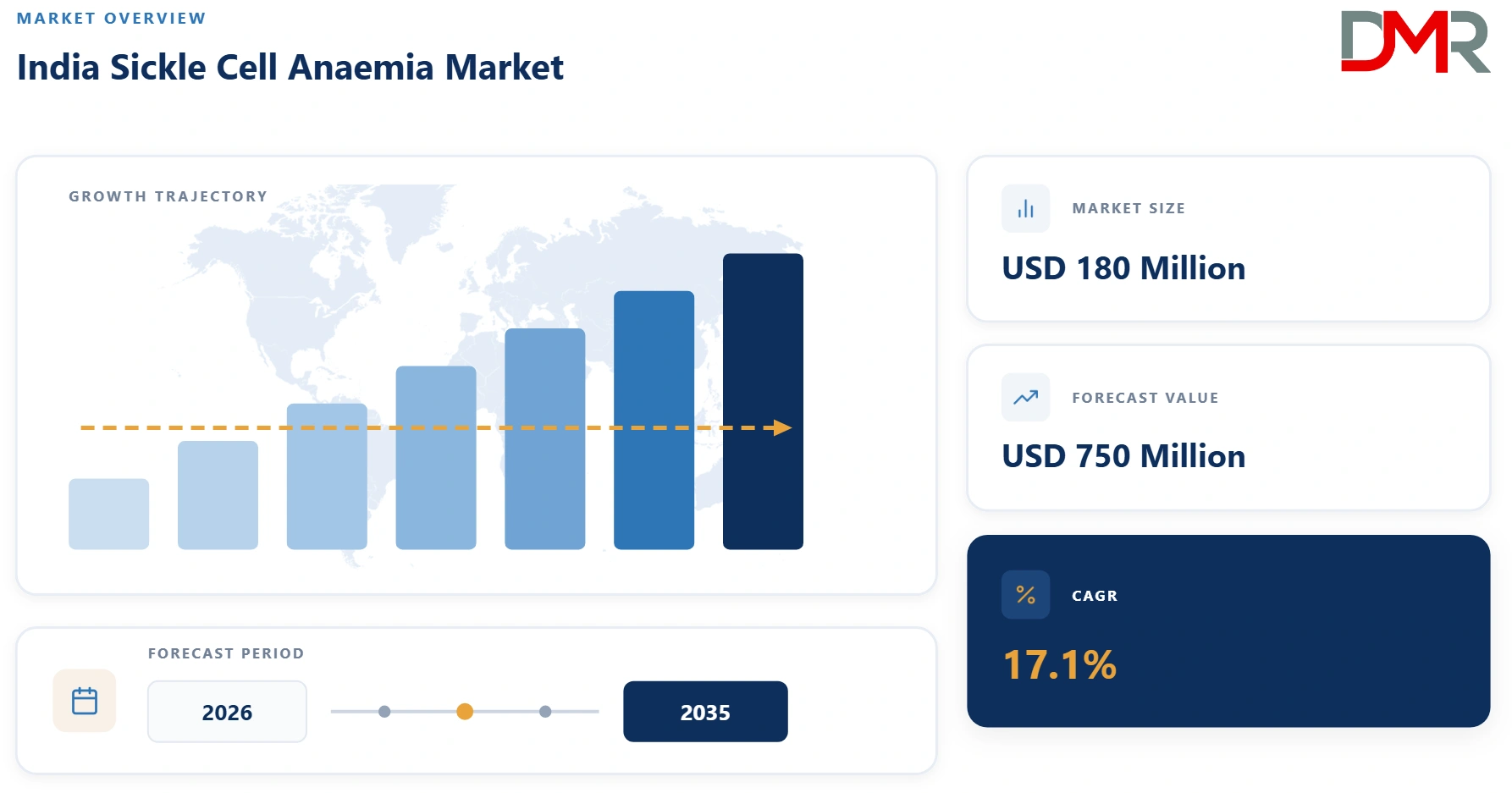
- Market Size 2026: USD 180 million
- Market Size 2035: USD 750 million
- CAGR, 2026–2035: 17.1%
- Disease-Modifying Therapies: 43% share
- HbSS Disease Type: 62% share
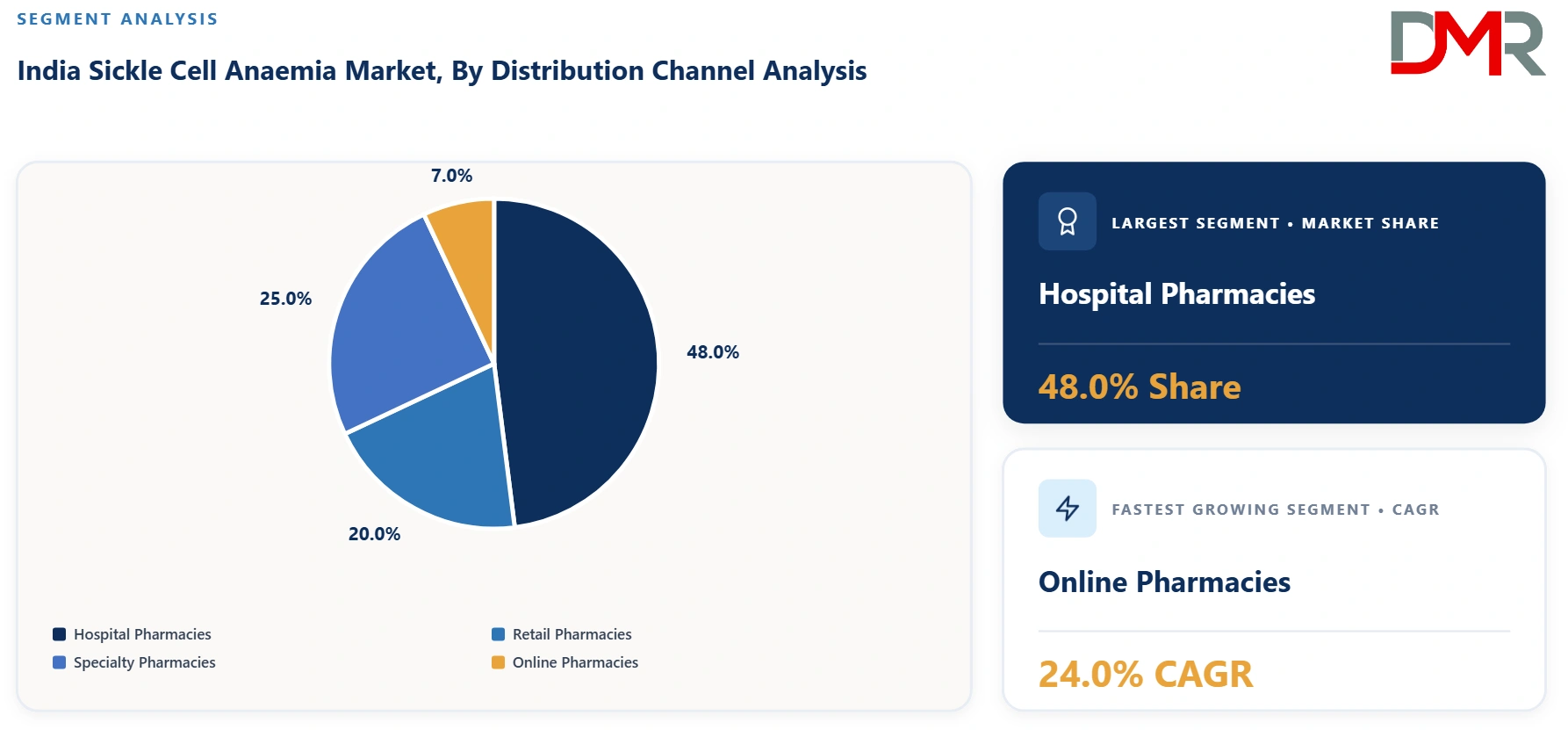
- Hospital Pharmacies: 48% share
- Fastest-Growing Segment: Gene Therapy, 39% CAGR
What is the India Sickle Cell Anaemia and its Market Size?
India's market is estimated at USD 180 million in 2026, increasing to approximately USD 750 million by 2035, representing a 17.1% CAGR.
ℹ
To learn more about this report –
Download Your Free Sample Report Here
The India Sickle Cell Anaemia market comprises pharmaceutical, transfusion, cellular and gene-based therapies, supportive-care services and associated treatment infrastructure used to diagnose, manage, prevent and potentially cure sickle cell disease (SCD), particularly sickle cell anaemia (SCA). SCD is an inherited haemoglobin disorder in which abnormal haemoglobin S can cause red blood cells to become rigid and sickle-shaped, producing anaemia, vaso-occlusive crises and progressive organ complications. The commercial ecosystem spans hydroxyurea and other disease-modifying therapies, blood transfusions, iron chelation, pain and infection management, stem-cell transplantation and emerging gene-editing treatments.
Use Cases
- Disease modification: Hydroxyurea reduces vaso-occlusive events, transfusion requirements and disease-related hospitalisation.
- Acute crisis management: Analgesia, hydration, oxygenation and transfusion manage severe vaso-occlusive and acute complications.
- Chronic transfusion: Scheduled transfusions help prevent stroke and manage severe anaemia in selected high-risk patients.
- Curative treatment: Stem-cell transplantation and emerging gene-editing therapies offer potentially curative approaches.
- Complication prevention: Infection prophylaxis, iron chelation and organ monitoring reduce long-term morbidity.
- Paediatric management: Early diagnosis and treatment enable preventive care and reduce childhood complications.
Key Takeaways
- Market Size: India Sickle Cell Anaemia market is estimated at USD 180 million in 2026, reaching USD 750 million by 2035.
- Growth: The market is projected to expand at approximately 17.1% CAGR during 2026–2035.
- Primary Driver: Government-backed mass screening and disease-management programmes are substantially expanding the diagnosed and treatable patient pool.
- Segment Dominance: Disease-modifying therapies lead treatment revenues, while HbSS represents the largest disease genotype segment.
- Fastest Growth: Gene therapy is expected to be the fastest-growing segment as Indian manufacturing and clinical infrastructure develop.
- Structural Shift: The market is moving from low-cost symptomatic management toward preventive, disease-modifying and potentially curative therapies.
How CRISPR, Genomics and Digital Health are Transforming the India Sickle Cell Anaemia Market?
CRISPR gene editing is emerging as the most consequential technology in India's SCA market. CSIR-IGIB has developed BIRSA 101, an indigenous ex-vivo CRISPR-based therapy, with technology transferred to Serum Institute of India for collaborative development and manufacturing. The programme is designed around affordability and scalability for India's high-burden populations. CSIR-IGIB currently indicates that a Phase I trial is expected in 2027.
Technology is also improving screening through validated point-of-care tests, digital health records and population-level registries. These tools reduce diagnostic delays and facilitate longitudinal monitoring. India's National Mission has validated 30 point-of-care tests and five non-rapid diagnostic assays, supporting decentralized screening.
Key Drivers in the India Sickle Cell Anaemia Market
Government-Led Screening and Disease-Elimination Initiatives
The National Sickle Cell Anaemia Elimination Mission is a major catalyst for the India Sickle Cell Anaemia Market. The programme focuses on awareness, population-level screening, early diagnosis, genetic counselling and continuous management across primary, secondary and tertiary healthcare facilities. Large-scale screening is expanding the pool of diagnosed patients who require long-term disease management, pharmaceuticals, transfusion services and specialist care. The programme has also encouraged the deployment of point-of-care testing and strengthened healthcare linkages in high-prevalence and tribal regions.
Increasing Adoption of Disease-Modifying Therapies
Growing awareness of the benefits of early disease management is supporting adoption of disease-modifying treatments, particularly hydroxyurea. Hydroxyurea remains a cornerstone of Sickle Cell Disease management because it can reduce complications such as vaso-occlusive crises and the need for transfusions in appropriate patients. The inclusion of hydroxyurea within India's essential-drug framework at multiple public healthcare levels is improving availability and supporting broader treatment access. Increasing physician awareness, improved diagnosis among children and stronger follow-up systems are also encouraging earlier initiation and continuation of therapy.
Restraints in the India Sickle Cell Anaemia Market
Limited Access to Specialized Healthcare Infrastructure
Limited availability of specialized healthcare infrastructure remains a significant constraint on the India Sickle Cell Anaemia Market. Sickle cell disease is concentrated disproportionately in several tribal and geographically remote communities, where access to haematologists, diagnostic laboratories, blood banks and tertiary-care facilities can be limited. Patients may need to travel considerable distances for confirmatory testing, specialist consultations, transfusions and management of severe complications. Healthcare workforce shortages and fragmented referral systems can further interrupt continuity of care.
Treatment Accessibility, Adherence and Affordability Challenges
Treatment affordability and adherence represent additional restraints for the India Sickle Cell Anaemia Market. While generic hydroxyurea is comparatively affordable, long-term treatment requires regular monitoring and sustained patient adherence. Studies in India have identified barriers including limited provider confidence, inadequate availability of suitable low-dose formulations, socioeconomic constraints, geographical accessibility and inconsistent follow-up. More advanced treatments, including biologics, stem-cell transplantation and future gene therapies, involve considerably greater clinical complexity and infrastructure requirements.
Growth Opportunities in the India Sickle Cell Anaemia Market
Expansion of Decentralized Screening and Integrated Care
The expansion of decentralized screening creates substantial opportunities across the India Sickle Cell Anaemia Market. Point-of-care testing can identify potentially affected individuals closer to their communities, while confirmatory laboratories and specialist centres can manage more complex cases. This creates opportunities for diagnostic companies, pharmaceutical manufacturers, digital-health providers and healthcare institutions to develop integrated screening-to-treatment models. Linking screening records with treatment follow-up can improve patient retention and enable healthcare providers to monitor disease progression more effectively.
Development of Affordable Indigenous Advanced Therapies
The development of indigenous gene and cell therapies represents a major long-term opportunity for the India Sickle Cell Anaemia Market. India's scientific and pharmaceutical ecosystem provides an opportunity to develop advanced therapies at potentially lower costs than imported treatments. Indigenous research programmes involving CRISPR-based approaches could eventually expand access to potentially curative treatment for eligible patients with severe disease. Successful development would also create opportunities for domestic manufacturing, specialized treatment centres, clinical research organizations and healthcare providers.
Trends in the India Sickle Cell Anaemia Market
Shift Toward Early Diagnosis and Preventive Disease Management
The India Sickle Cell Anaemia Market is increasingly moving toward early diagnosis, preventive treatment and continuous disease management rather than relying primarily on treatment during acute complications. Large-scale screening initiatives are identifying affected individuals and carriers earlier, particularly in high-prevalence communities. Greater awareness of hydroxyurea and preventive care is encouraging earlier treatment initiation, while genetic counselling is becoming an important component of long-term disease prevention.
Growing Focus on Precision Medicine and Gene Therapy
Another important trend in the India Sickle Cell Anaemia Market is the emergence of precision medicine, genomic technologies and gene therapy. Advances in genetic characterization are improving understanding of disease variants and supporting more individualized treatment strategies. India's research institutions and pharmaceutical companies are increasingly exploring gene-editing technologies designed to address the underlying genetic mechanisms of Sickle Cell Disease.
Research Scope and Analysis
The market is segmented by treatment, disease type, distribution channel and end user. These dimensions capture differences in therapeutic intensity, genotype burden, purchasing pathways and healthcare utilization across India's SCA ecosystem.
ℹ
To learn more about this report –
Download Your Free Sample Report Here
By Treatment Analysis
Disease-modifying therapies dominate the treatment segment with an estimated 43% market share in 2026, primarily because hydroxyurea is inexpensive, widely available and increasingly incorporated into government-supported care. Hydroxyurea alone represents the largest treatment sub-segment, supported by extensive Indian clinical evidence and regulatory availability; Indian studies have demonstrated reductions in vaso-occlusive events, hospitalizations and transfusion requirements.Blood transfusion is the second-largest category at approximately 29%, reflecting chronic transfusion and acute transfusion requirements for severe anaemia and stroke prevention. Supportive and symptomatic care accounts for roughly 20%, encompassing pain management, infection prevention and iron chelation. Hematopoietic stem-cell transplantation contributes approximately 5%, while gene therapy remains below 3% in 2026 because BIRSA 101 is still progressing toward clinical development rather than established mass-market commercialization. Nevertheless, gene therapy is projected to be the fastest-growing treatment category at approximately 39% CAGR, driven by India's indigenous CRISPR programme and anticipated clinical development.
By Disease Type Analysis
HbSS is the dominant genotype, estimated to account for approximately 62% of the 2026 market, because it generally produces the most severe clinical phenotype and consequently generates higher treatment utilization, hospitalization and disease-management requirements. HbSC is the second-largest category at approximately 18%, followed by HbSβ⁰-thalassemia at 11%, HbSβ⁺-thalassemia at 6%, and other variants at 3%. The fastest-growing disease-type segment is expected to be HbSβ⁰-thalassemia, at approximately 18.5% CAGR, as improved screening increasingly identifies patients who historically remained undiagnosed or were misclassified. HbSC should also experience increased treatment penetration as clinical evidence expands. The market remains heavily influenced by the high prevalence of HbSS among clinically severe patients, while the growing sophistication of genetic testing should gradually increase recognition of compound heterozygous variants.
By Distribution Channel Analysis
Hospital pharmacies are projected to lead with approximately 48% share in 2026, reflecting the concentration of SCA diagnosis and treatment within government hospitals, tertiary-care centres and specialty haematology departments. Specialty pharmacies represent the second-largest channel at approximately 25%, particularly for higher-value biologics and advanced therapies requiring specialist oversight. Retail pharmacies account for approximately 20%, driven largely by inexpensive oral hydroxyurea and supportive medicines. Online pharmacies remain comparatively small at around 7%, although this is the fastest-growing distribution channel at approximately 24% CAGR because digital purchasing can improve medicine access for patients in underserved regions. The channel mix should increasingly diversify as chronic outpatient management expands, but hospital pharmacies are expected to remain dominant because government procurement and specialist supervision remain central to India's SCA care model.
By End User Analysis
Hospitals and specialty clinics account for an estimated 58% share in 2026, making them the largest end-user category because they provide diagnosis, specialist consultations, transfusion, acute crisis management, chronic monitoring and advanced treatments. Blood transfusion centres contribute approximately 20%, reflecting the continuing importance of transfusion in severe anaemia and stroke-risk management. Home healthcare represents around 15% and is expected to be the fastest-growing end-user segment at approximately 21% CAGR, supported by increasing chronic disease management, telemedicine and home-based monitoring. Research and academic institutions account for approximately 7% and are disproportionately important for clinical trials, genomic research and translational development. The growth of home-based services should be particularly important for patients living far from tertiary hospitals, although severe complications will continue to require hospital-level care.
The India Sickle Cell Anaemia Market Report is segmented on the basis of the following:
By Treatment
- Disease-Modifying Therapies
- Hydroxyurea
- L-glutamine
- Crizanlizumab
- Other disease-modifying therapies
- Blood Transfusion
- Simple transfusion
- Exchange transfusion
- Chronic transfusion
- Hematopoietic Stem Cell Transplantation
- Gene Therapy
- Gene addition therapy
- Gene-editing therapy
- Supportive & Symptomatic Care
- Pain management
- Infection prevention
- Iron chelation
By Disease Type
- HbSS
- HbSC
- HbSβ⁰-Thalassemia
- HbSβ⁺-Thalassemia
- Other Sickle Cell Variants
By Distribution Channel
- Hospital Pharmacies
- Retail Pharmacies
- Specialty Pharmacies
- Online Pharmacies
By End User
- Hospitals & Specialty Clinics
- Blood Transfusion Centers
- Home Healthcare
- Research & Academic Institutions
Regulatory Landscape
India's SCA regulatory environment is becoming progressively more innovation-oriented while remaining strongly influenced by public-health affordability. CDSCO (Central Drugs Standard Control Organisation) has established pathways for new drugs and clinical trials under the New Drugs and Clinical Trials Rules, 2019. Hydroxyurea has moved from historical off-label use to approved SCA indications, while newer products such as crizanlizumab and L-glutamine have undergone Indian regulatory evaluation. The most consequential future regulatory issue is gene therapy: BIRSA 101 remains in development, with Phase I expected in 2027. Regulatory success could create a domestic advanced-therapy market, but requirements for long-term follow-up, specialized manufacturing and patient selection will constrain rapid commercialization.
Investment and White Space Analysis
The largest investment white spaces are paediatric formulations, decentralized diagnostics, specialty treatment centres, transfusion infrastructure, digital adherence platforms and affordable advanced therapies. Hydroxyurea's low price means pharmaceutical growth depends heavily on volume and government procurement rather than premium pricing. By contrast, gene and cellular therapies could create substantially larger revenue per treated patient but require extensive capital and clinical infrastructure. BIRSA 101's technology-transfer model illustrates the potential for public research to be commercialized through Indian manufacturing partnerships.
Competitive Landscape
India's SCA market is moderately fragmented at the pharmaceutical and service level but increasingly concentrated around a small number of strategic innovators. Low-cost generic manufacturers compete primarily through affordability, availability, government procurement and physician reach, while multinational companies compete through biologics, clinical evidence and specialty-care capabilities. Key competitive strategies include product-line expansion, paediatric formulation development, clinical collaborations, technology licensing and public–private partnerships. Differentiation is increasingly shifting from price alone toward clinical evidence, treatment convenience, specialist infrastructure, genomic technology and affordability at scale. The emergence of indigenous gene therapy could create a new competitive tier in which manufacturing capability and regulatory execution become as important as traditional pharmaceutical marketing.
Some of the prominent players in the India Sickle Cell Anaemia Market are:
- Cipla
- Novartis
- Pfizer
- Bristol Myers Squibb
- Roche
- Amgen
- Taj Pharmaceuticals
- Celon Laboratories
- Salius Pharma
- United Biotech
- Neon Laboratories
- Emmaus Life Sciences
- Teva Pharmaceuticals
- Dr. Reddy’s Laboratories
- Sun Pharmaceutical Industries
- Lupin
- Zydus Lifesciences
- Torrent Pharmaceuticals
- Intas Pharmaceuticals
- Emcure Pharmaceuticals
- Natco Pharma
- Alembic Pharmaceuticals
- Alkem Laboratories
- Aurobindo Pharma
- Glenmark Pharmaceuticals
- Wockhardt
- Strides Pharma Science
- Granules India
- Laurus Labs
- Biocon
- Bharat Serums and Vaccines
- Hetero
- Eris Lifesciences
- Macleods Pharmaceuticals
- Lincoln Pharmaceuticals
- Meril Life Sciences
- Lords Mark Industries
- Lab-Care Diagnostics
- Avience Biomedicals
- Sidak Lifecare
- Other Key Players
Recent Developments
- November 2025: CSIR-IGIB unveiled BIRSA 101, India's indigenous CRISPR-based gene therapy for SCA, alongside a technology-transfer agreement with Serum Institute of India to support scalable and affordable development.
- August 2025: CDSCO reviewed Indian Phase IV safety evidence for crizanlizumab, while noting international regulatory developments and the product's availability and marketing transition in India.
- July 2025: The National Sickle Cell Anaemia Elimination Mission reported that six crore people had been screened, identifying 2.15 lakh individuals with SCD and 16.7 lakh carriers, substantially expanding India's diagnosed population.
- March 2025: CDSCO's expert committee considered L-glutamine oral powder for reducing acute SCD complications in adults and children aged five years and older, reflecting expansion beyond hydroxyurea.
Report Details
| Report Characteristics |
| Market Size (2026) |
USD 180 Mn |
| Forecast Value (2035) |
USD 750 Mn |
| CAGR (2026–2035) |
17.1% |
| Historical Data |
2021 – 2025 |
| Forecast Data |
2026 – 2035 |
| Base Year |
2025 |
| Segments Covered |
By Treatment, By Disease Type, By Distribution Channel, By End User |
| Country Coverage |
India |
Frequently Asked Questions
What is the size of the India Sickle Cell Anaemia Market in 2026?
▾ The India Sickle Cell Anaemia Market is estimated at USD 180 million in 2026, covering disease-modifying therapies, transfusions, transplantation, gene therapy and supportive care.
What will the India Sickle Cell Anaemia Market reach by 2035?
▾ The India Sickle Cell Anaemia Market is projected to reach approximately USD 750 million by 2035, driven by expanding diagnosis, treatment adoption and advanced therapies.
What is the CAGR of the India Sickle Cell Anaemia Market from 2026 to 2035?
▾ The India Sickle Cell Anaemia Market is expected to expand at approximately 17.1% CAGR between 2026 and 2035.
What is the largest segment in the India Sickle Cell Anaemia Market?
▾ Disease-modifying therapies are the largest segment in the India Sickle Cell Anaemia Market, accounting for approximately 43% share in 2026, led by hydroxyurea.
What are the key drivers of the India Sickle Cell Anaemia Market?
▾ The India Sickle Cell Anaemia Market is driven by government screening initiatives, increasing diagnosis, hydroxyurea adoption, specialist-care expansion and development of indigenous gene therapies.
Which is the fastest-growing segment in the India Sickle Cell Anaemia Market?
▾ Gene therapy is projected to be the fastest-growing segment in the India Sickle Cell Anaemia Market, with an estimated 39% CAGR, supported by India's emerging CRISPR programmes.
Which disease type dominates the India Sickle Cell Anaemia Market?
▾ HbSS dominates the India Sickle Cell Anaemia Market, accounting for approximately 62% of the market in 2026, owing to its severe clinical burden and treatment requirements.
Who are the key players in the India Sickle Cell Anaemia Market?
▾ Key participants in the India Sickle Cell Anaemia Market include Cipla, Novartis/Sandoz, Serum Institute of India, CSIR-IGIB, hospitals, blood centres and government healthcare systems.