Market Snapshot
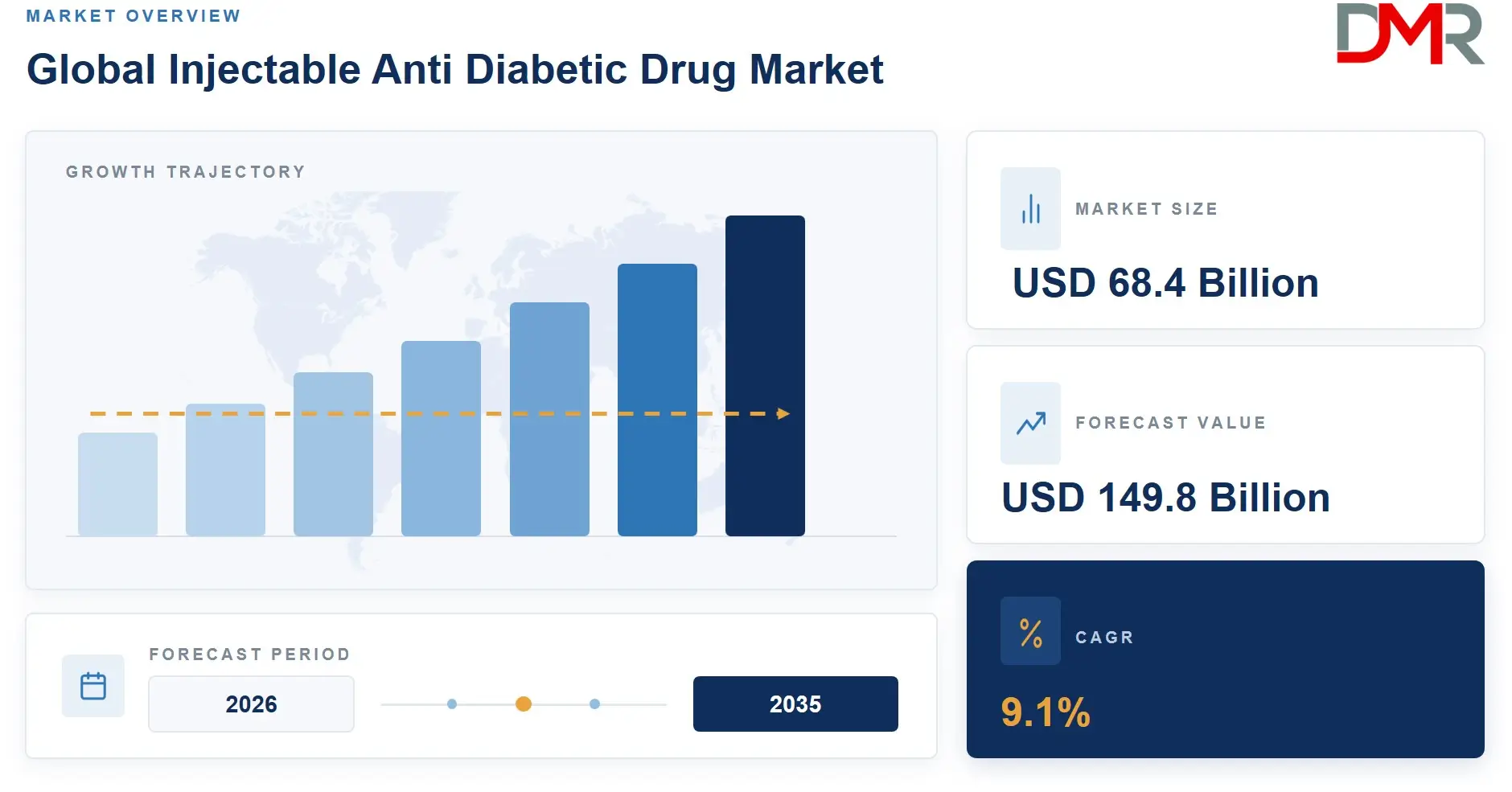
- Market Size (2026): USD 68.4 Bn
- Forecast Value (2035): USD 149.8 Bn
- CAGR (2026-2035): 9.1%
- Largest Region (2026): North America, approximately 42%
- Fastest-Growing Region: Asia-Pacific
- Leading Drug Class (2026): Insulin, around 49%
- Leading Indication (2026): Type 2 Diabetes, close to 88%
- Key Players: Novo Nordisk A/S, Eli Lilly and Company, Sanofi and others
What is Injectable Anti Diabetic Drug Market and its Market Size?
Global Injectable Anti Diabetic Drug Market size is estimated to reach USD 68.4 Bn in 2026 and is further anticipated to reach USD 149.8 Bn by 2035, at a CAGR of 9.1%.
ℹ
To learn more about this report –
Download Your Free Sample Report Here
Injectable anti diabetic drugs are prescription medicines administered principally by subcutaneous injection to lower blood glucose, improve glycemic control, or support broader metabolic management in people with diabetes. The commercial boundary includes human and analog insulins, GLP-1 receptor agonists used for diabetes, dual incretin agonists indicated for diabetes, amylin analogs, and related injectable glucose-lowering therapies. It excludes oral antidiabetic medicines and excludes injectable obesity use where the product is prescribed solely for weight management rather than diabetes.
Demand combines a large recurring insulin base with rapidly expanding incretin use. Insulin remains indispensable for type 1 diabetes and for many patients with advanced type 2 diabetes, while weekly GLP-1 and dual GIP/GLP-1 therapies are shifting treatment earlier in the type 2 pathway because they can address glycemic control together with weight and cardiometabolic considerations. This creates a market in which mature biologics and higher-growth branded incretins coexist.
Commercial performance is shaped by reimbursement, formulary access, injection convenience, supply capacity, device usability, biosimilar entry, and evidence beyond HbA1c reduction. Once-weekly basal insulin, prefilled pens, autoinjectors, and fixed-dose combinations are reducing treatment burden, while manufacturing constraints for peptides and biologics remain material. Buyers include hospitals, specialist clinics, retail pharmacy networks, public health systems, insurers, and patients using chronic outpatient therapy.
Use Cases
- Basal Insulin Initiation: Endocrinologists and primary care teams deploy long-acting injectable insulin when oral therapy or non-insulin combinations no longer provide adequate fasting glucose control. The treatment establishes a controllable basal glucose-lowering foundation and can delay the need for more complex multiple-injection regimens.
- Mealtime Glycemic Control: Hospitals and diabetes clinics prescribe rapid-acting insulin around meals for people requiring tighter postprandial management, including many patients with type 1 diabetes. Fast onset allows dosing to track carbohydrate intake more closely and supports individualized correction strategies during routine care or acute treatment.
- Weekly Incretin Therapy: Outpatient clinicians use weekly GLP-1 or dual incretin injections for eligible adults with type 2 diabetes who need additional glycemic control and may benefit from reduced injection frequency. Longer dosing intervals can improve regimen convenience and simplify chronic treatment compared with daily injections.
- Pregnancy-Related Diabetes Management: Obstetric and diabetes care teams use injectable insulin when pharmacologic treatment is required for gestational diabetes or pre-existing diabetes during pregnancy. Insulin provides titratable glucose control without relying on oral agents whose suitability may be more limited across pregnancy care pathways.
Key Takeaways
- Market Size & Share: The market is projected to expand at 9.1% annually from 2026 through 2035, reflecting recurring biologic demand and faster incretin adoption.
- Drug Class Analysis: Dual GIP/GLP-1 agonists are forecast to record the fastest class expansion at a CAGR of 16.8% through 2035.
- Regional Analysis: Asia-Pacific is expected to post the highest regional CAGR of 11.5% through 2035 as diagnosis, reimbursement, and access broaden.
- Delivery Device Shift: Autoinjectors are projected to grow at a CAGR of 13.6%, supported by simplified self-administration and weekly dosing formats.
- Dosing Trend: Once-weekly injections are anticipated to expand at a CAGR of 14.8% as incretin therapies and longer-acting insulins reduce dosing burden.
- Channel Evolution: Online pharmacies are forecast to grow at a CAGR of 14.2%, reflecting refill digitization and home-delivery models for chronic therapy.
How AI/Gen AI is Transforming the Injectable Anti Diabetic Drug Market?
AI is affecting injectable diabetes therapeutics primarily through development, evidence generation, supply planning, and treatment support rather than by replacing the medicines themselves. Machine learning models can screen peptide structures, support dose-response modeling, identify trial subpopulations, and improve manufacturing forecasts for high-volume biologics. In commercial operations, demand forecasting helps manufacturers balance fill-finish capacity, cold-chain requirements, device components, and region-specific inventory while reducing stock-outs during fast adoption cycles.
Generative AI is also being applied to regulatory documentation, medical information workflows, and structured review of clinical or pharmacovigilance records. Its practical value depends on validation because diabetes therapies are regulated products and patient-specific dosing decisions require clinical oversight. High-impact applications include:
- Clinical Trial Analytics: Predictive models identify recruitment bottlenecks and patient cohorts likely to meet protocol criteria.
- Biologic Manufacturing Forecasting: AI models anticipate demand by dose, device, and geography to improve production scheduling.
- Regulatory Document Processing: LLM-based systems organize evidence packages, safety narratives, and submission content under controlled review.
- Adherence Risk Identification: Analytics flag refill gaps or persistence risks so care programs can target support without automating clinical judgment.
Key Drivers in the Global Injectable Anti Diabetic Drug Market
Growth is being pulled by two different mechanisms: rising treatment intensity across a large diabetes population and a shift toward higher-value injectable incretin therapies that are moving earlier into type 2 care.
- Expansion of Injectable Therapy Across Progressive Type 2 Diabetes: Type 2 diabetes is expected to account for approximately 88% of injectable anti diabetic drug revenue in 2026. As beta-cell function declines over time, many patients progress from lifestyle modification and oral therapy to injectable regimens, creating durable repeat demand. Earlier use of GLP-1 receptor agonists and dual incretin agents broadens the injectable addressable population beyond patients already dependent on insulin. The resulting treatment pathway supports both volume growth and mix improvement because newer weekly agents generally carry higher value per treated patient than established human insulin.
- Convenience Gains from Weekly Dosing and Modern Delivery Systems: Once-weekly injections are projected to grow at a CAGR of 14.8% through 2035. Longer dosing intervals directly reduce injection frequency, a practical burden that can limit persistence with chronic injectable treatment. Prefilled pens, fixed-dose devices, and autoinjectors further reduce preparation steps and dosing complexity. These improvements matter commercially because convenience can influence physician choice, patient acceptance, and refill persistence. As once-weekly basal insulin and incretin formats expand across more countries, manufacturers gain room to differentiate on device design and adherence as well as molecule-level efficacy.
Restraints in the Global Injectable Anti Diabetic Drug Market
Despite strong demand, access and manufacturing economics remain significant brakes. Injectable therapies require biologic production, device supply, distribution control, and payer acceptance that are more complex than many oral generics.
- Affordability and Reimbursement Pressure: Retail pharmacies are expected to represent around 38% of 2026 revenue, placing a large portion of demand close to payer formularies and patient out-of-pocket exposure. Newer branded incretins can face prior authorization, reimbursement restrictions, or uneven public coverage, while insulin pricing remains politically sensitive in several markets. Manufacturers must therefore balance list pricing, rebates, patient assistance, and geographic affordability. These constraints can slow uptake even where clinical demand is strong, particularly in lower-income markets where injectable devices and recurring prescriptions compete with lower-cost oral alternatives.
- Complex Biologic and Device Supply Chains: Prefilled pens are projected to hold close to 57% of delivery-device revenue in 2026, which makes cartridge, pen, needle, fill-finish, and cold-chain capacity commercially important. Peptide synthesis, sterile manufacturing, biologic quality control, and device assembly require specialized infrastructure and lengthy validation. A bottleneck at any step can constrain product availability across multiple markets. The risk is amplified for fast-growing therapies because demand can outpace planned capacity, while switching manufacturing sites or components may require regulatory work before supply can be redirected.
Growth Opportunities in the Global Injectable Anti Diabetic Drug Market
White space is emerging where treatment burden remains high or access remains incomplete. The strongest opportunities combine differentiated dosing with channels that can support chronic refill behavior.
- Once-Weekly Basal Insulin and Combination Regimens: Long-acting innovation creates an opportunity to reposition insulin around convenience rather than only glycemic potency. Multiple-daily injection regimens are expected to represent approximately 18% of 2026 revenue, leaving a meaningful patient pool for simplified basal schedules and fixed combinations where clinically appropriate. Once-weekly basal products can reduce routine injections and may improve acceptance among insulin-naive adults who delay initiation because of treatment burden. Commercial upside is strongest where payers recognize adherence value and providers have clear titration protocols for transitioning from daily basal treatment.
- Asia-Pacific Access Expansion: Asia-Pacific is projected to grow at a CAGR of 11.5% through 2035, creating room for both multinational brands and regional biosimilar manufacturers. Growth can come from broader diagnosis, rising specialist capacity, public reimbursement expansion, and localization of insulin and device manufacturing. The opportunity is not limited to premium incretins. Lower-cost analog insulin, biosimilars, reusable pens, and differentiated packaging can address affordability-sensitive segments, while digital pharmacy channels can improve repeat access in urban populations. Companies able to combine local manufacturing economics with reliable quality systems can compete across a wider patient base.
Trends in the Global Injectable Anti Diabetic Drug Market
Market behavior is shifting toward fewer injections, more device-led differentiation, and wider competition around established biologics. These changes alter both product design and the economics of patient acquisition.
- Movement Toward Incretin-Led Injectable Portfolios: GLP-1 receptor agonists are expected to account for roughly 36% of market revenue in 2026, while dual GIP/GLP-1 agonists add another fast-growing layer. Their expansion is changing portfolio priorities because manufacturers can compete on glycemic outcomes, weight effects, dosing frequency, cardiovascular evidence, and device convenience. This also raises the strategic value of peptide capacity and injection-device partnerships. As more incretin candidates advance, competitive differentiation is likely to depend increasingly on tolerability, persistence, supply reliability, and evidence across broader metabolic risk profiles.
- Biosimilar and Generic Competition in Established Injectables: Vials and syringes are expected to retain around 20% of delivery-device revenue in 2026, particularly in cost-sensitive and institutional settings. Biosimilar insulin and generic injectable GLP-1 entry can widen access while compressing pricing around mature molecules. This creates a two-speed market: newer protected therapies carry innovation-driven pricing, while established products face stronger tender and substitution pressure. Manufacturers are responding through device upgrades, contracting, local production, and portfolio bundling rather than relying only on molecule exclusivity.
Research Scope and Analysis
Segment performance is assessed across five axes: drug class, indication, delivery device, injection frequency and distribution channel. Each axis shows where 2026 revenue is concentrated and where growth is moving through 2035, linking share leadership to treatment pathways, usability, reimbursement, and channel behavior.
ℹ
To learn more about this report –
Download Your Free Sample Report Here
By Drug Class
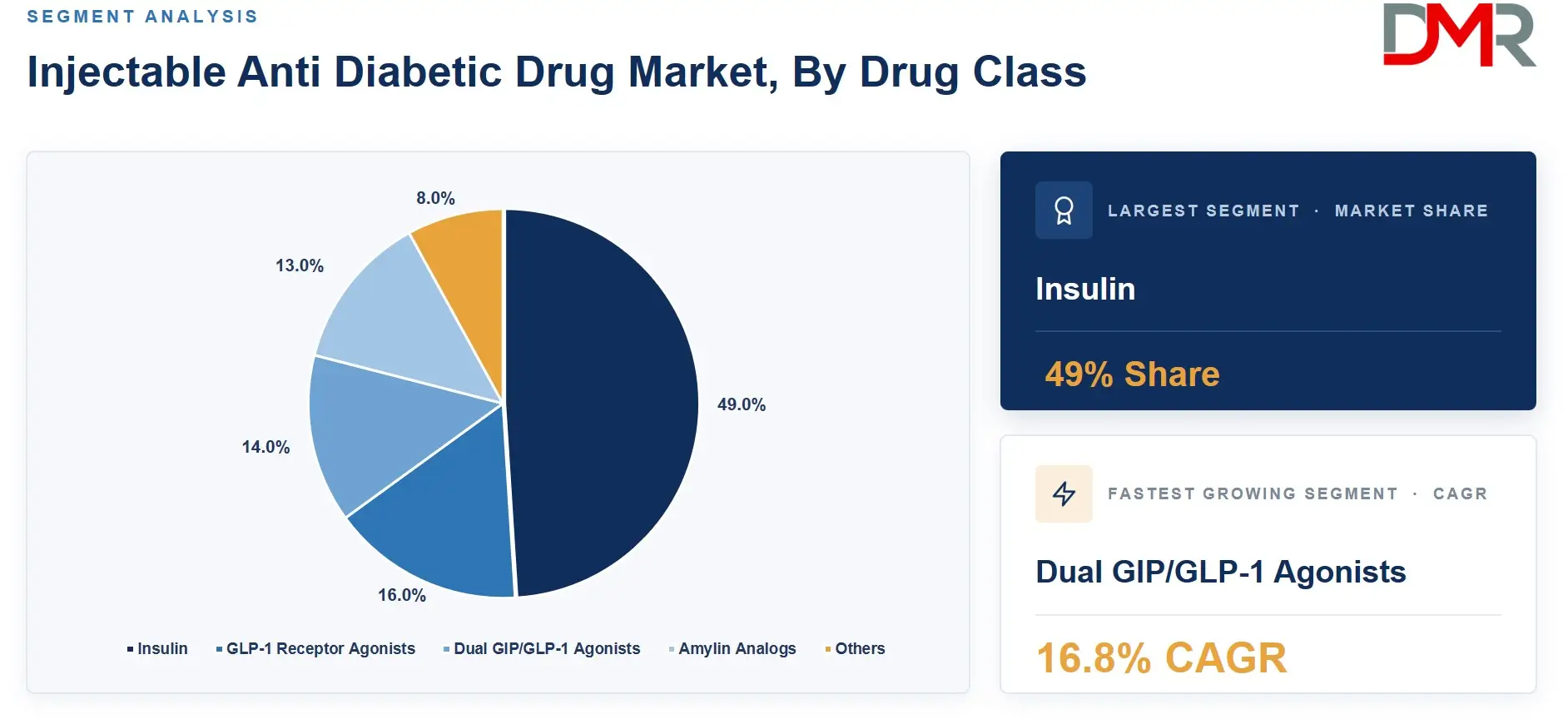
Insulin is projected to hold the largest share by drug class in 2026, accounting for approximately 49% of revenue because it remains essential in type 1 diabetes and widely used as type 2 disease progresses. Its installed patient base, broad global availability, multiple analog profiles, and established payer coverage support recurring demand. Growth, however, is concentrated in dual GIP/GLP-1 agonists, which are forecast to expand at a CAGR of 16.8% between 2026 and 2035. Their trajectory is supported by strong glucose lowering, weight-related benefits, weekly administration, and earlier use in type 2 treatment. GLP-1 receptor agonists remain a major intermediate category, while amylin analogs and other injectable classes occupy narrower clinical roles.
By Indication
Type 2 diabetes is expected to represent close to 88% of injectable drug revenue in 2026 because it combines the world's largest treated diabetes population with growing use of insulin, GLP-1 receptor agonists, and dual incretin therapies. Rising disease duration and treatment intensification preserve insulin demand even as newer non-insulin injectables move earlier in care. Growth, however, is fastest within gestational diabetes-related injectable use at a CAGR of 10.7% through 2035, supported by improved screening, maternal glucose management, and specialist follow-up where insulin is clinically indicated. Type 1 diabetes remains structurally dependent on insulin but grows more steadily because prevalence expansion is slower and treatment is already highly injectable-intensive.
By Delivery Device
Prefilled pens are set to represent around 57% of delivery-device revenue in 2026, supported by dose accuracy, portability, reduced preparation, and broad adoption across insulin and incretin products. The format also gives manufacturers control over the user experience and supports premium differentiation beyond the active pharmaceutical ingredient. The steeper trajectory sits with autoinjectors, expanding at a CAGR of 13.6% from 2026 to 2035 as weekly therapies and patient self-administration gain share. Autoinjectors can reduce visible needle handling and simplify fixed-dose delivery, which is particularly relevant for incretin therapy. Vials and syringes retain an important role in institutional and affordability-sensitive settings, while reusable pens and cartridges remain relevant where device reuse lowers recurring hardware cost.
By Injection Frequency
Once-daily therapy is projected to account for approximately 42% of revenue in 2026, reflecting the continuing use of daily basal insulin and several established injectable regimens. Its position is supported by long clinical familiarity and wide formulary presence, although some patients require additional mealtime injections. Growth, however, is concentrated in once-weekly therapy, which is forecast to increase at a CAGR of 14.8% through 2035. Weekly GLP-1 and dual incretin products have already established the commercial appeal of reduced dosing frequency, while emerging weekly basal insulin extends the same proposition into insulin care. Multiple-daily injection regimens remain essential for many people with type 1 diabetes and intensive insulin users but expand more slowly because convenience innovation is moving in the opposite direction.
By Distribution Channel
Retail pharmacies are expected to lead distribution in 2026 with roughly 38% of revenue as chronic injectable diabetes therapy is predominantly dispensed for outpatient use and repeat refills. Their role is reinforced by insurer networks, pharmacist counseling, cold-chain handling, and established access to pens, vials, and branded incretin products. Growth, however, is strongest in online pharmacies, which are forecast to expand at a CAGR of 14.2% through 2035 as e-prescribing, home delivery, refill reminders, and digital benefit management become more common. Hospital pharmacies continue to serve inpatient initiation, acute glycemic management, and specialist prescribing, while other channels include clinics, specialty pharmacy arrangements, and public distribution programs.
The Global Injectable Anti Diabetic Drug Market Report is Segmented Based on the Following
By Drug Class
- Insulin
- GLP-1 Receptor Agonists
- Dual GIP/GLP-1 Agonists
- Amylin Analogs
- Others
By Indication
- Type 2 Diabetes
- Type 1 Diabetes
- Gestational Diabetes
- Others
By Delivery Device
- Prefilled Pens
- Vials and Syringes
- Reusable Pens and Cartridges
- Autoinjectors
- Others
By Injection Frequency
- Once Daily
- Once Weekly
- Multiple Daily
- Others
By Distribution Channel
- Retail Pharmacies
- Hospital Pharmacies
- Online Pharmacies
- Others
Regional Analysis
Region with the Largest Revenue Share
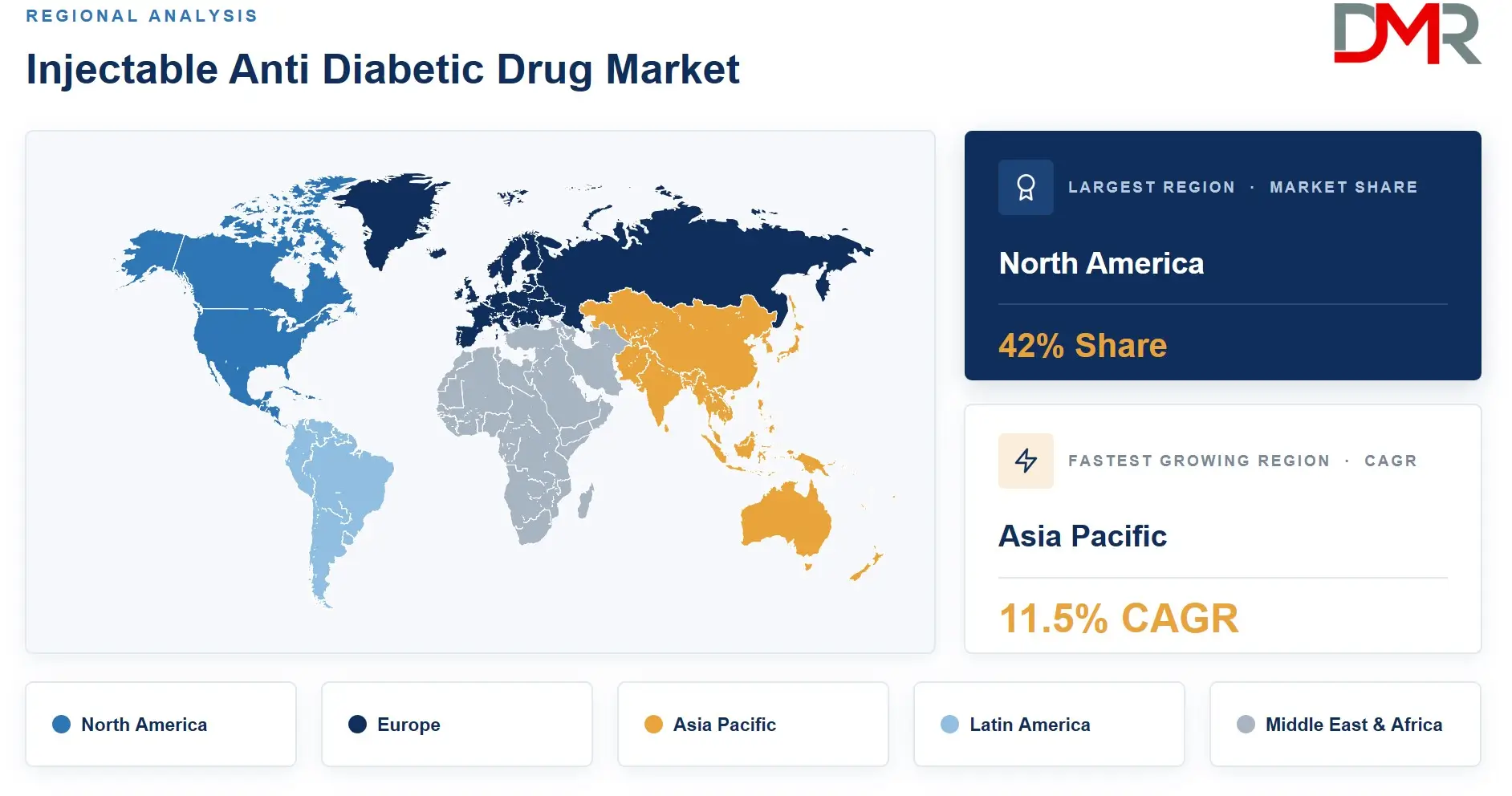
North America is expected to remain the largest regional market in 2026, accounting for approximately 42% of global revenue. The concentration reflects high use of analog insulin, rapid uptake of branded GLP-1 and dual incretin therapies, broad prescribing infrastructure, and higher drug spending per treated patient. The US represents most regional value because commercial insurance, Medicare-related coverage, specialist care, and direct availability of newly approved injectables support rapid adoption. Price pressure and access controls remain material, but the region continues to set an important commercial benchmark for injectable diabetes launches, contracting strategies, and device-based differentiation.
ℹ
To learn more about this report –
Download Your Free Sample Report Here
Region with the Highest CAGR
Asia-Pacific is forecast to record the highest regional CAGR of 11.5% between 2026 and 2035. Growth is being pulled by a large diabetes burden, improving diagnosis, broader health coverage, rising use of analog insulin, and expanding access to GLP-1 therapies across major urban markets. China, India, Japan, South Korea, and Australia present different reimbursement structures, creating opportunities for premium brands, biosimilars, local manufacturers, and reusable device formats. Regional production of insulin and biosimilars can also moderate supply and affordability constraints. The main brake is uneven access outside major cities and the need to align pricing with public procurement and household affordability.
By Region
North America
Europe
- Germany
- France
- The UK
- Italy
- Spain
- Rest of Europe
Asia-Pacific
- China
- Japan
- India
- Australia
- South Korea
- Rest of APAC
Latin America
- Mexico
- Brazil
- Colombia
- Argentina
- Rest of LATAM
Middle East & Africa
- Saudi Arabia
- The UAE
- South Africa
- Rest of MEA
Regulatory Landscape
Injectable diabetes medicines sit under biologic or drug approval pathways that require clinical evidence, manufacturing controls, pharmacovigilance, device compatibility, and post-approval change management. Regulators are increasingly dealing with long-acting insulin formats, complex peptide products, biosimilars, generic injectables, and combination products that blur traditional boundaries between molecule and delivery device. The commercial opening lies in products that can demonstrate comparable quality with lower treatment burden or improved access, especially where biosimilar pathways support competition. Risk remains concentrated in immunogenicity, dosing safety, manufacturing comparability, labeling, and device-human-factor requirements. These controls raise development cost but also reward companies with validated biologic production and regulatory execution.
Epidemiology
Diabetes epidemiology provides the recurring demand base for injectable therapy because type 1 diabetes requires insulin and many people with type 2 diabetes eventually need injectable treatment as disease duration increases. The commercial mix is changing as injectables are used earlier in type 2 care, particularly incretin-based therapies, rather than only after failure of multiple oral agents. White space is strongest among diagnosed but insufficiently controlled patients, populations with obesity-linked metabolic risk, and health systems expanding access to modern insulin. The principal brake is that prevalence does not translate directly into treated revenue where diagnosis, reimbursement, specialist capacity, or affordability are weak. Epidemiology therefore supports volume, while access determines monetization.
Competitive Landscape
Competition combines a small group of global innovators with insulin specialists, biosimilar manufacturers, peptide developers, and device suppliers. Novo Nordisk, Eli Lilly, and Sanofi hold substantial positions through insulin, incretin, or combination portfolios, while Biocon Biologics, Gan & Lee, Tonghua Dongbao, and other regional producers intensify competition in established insulin categories. Differentiation increasingly depends on dosing frequency, clinical outcomes, device usability, manufacturing scale, reimbursement access, and supply reliability. Companies are expanding peptide and fill-finish capacity, pursuing biosimilars where exclusivity has weakened, and using pen or autoinjector platforms to improve persistence. Partnerships with device manufacturers and contract producers are also important as injectable volumes rise and product formats become more specialized.
Some of the Prominent Players in the Global Injectable Anti Diabetic Drug Market Are
- Novo Nordisk A/S
- Eli Lilly and Company
- Sanofi
- Biocon Biologics Ltd.
- Boehringer Ingelheim International GmbH
- AstraZeneca plc
- Merck & Co., Inc.
- Pfizer Inc.
- Teva Pharmaceutical Industries Ltd.
- Viatris Inc.
- Gan & Lee Pharmaceuticals Co., Ltd.
- Tonghua Dongbao Pharmaceutical Co., Ltd.
- Yichang HEC Changjiang Pharmaceutical Co., Ltd.
- Jiangsu Hengrui Pharmaceuticals Co., Ltd.
- Sun Pharmaceutical Industries Ltd.
- Dr. Reddy's Laboratories Ltd.
- Lupin Limited
- Wockhardt Limited
- Ypsomed Holding AG
- Zealand Pharma A/S
- Adocia SA
- MannKind Corporation
- Xeris Biopharma Holdings, Inc.
- Hanmi Pharm. Co., Ltd.
- Dong-A ST Co., Ltd.
- Julphar
- Sedico Pharmaceutical Co.
- Getz Pharma
- Square Pharmaceuticals PLC
- Popular Pharmaceuticals PLC
- Laboratorios Silanes, S.A. de C.V.
- Eurofarma Laboratórios S.A.
- EMS S/A
- Aspen Pharmacare Holdings Limited
- Siegfried Holding AG
- B. Braun SE
- Terumo Corporation
- Nipro Corporation
- West Pharmaceutical Services, Inc.
- SHL Medical AG
- Other Key Players
Recent Developments
- In March 2026, Novo Nordisk announced US FDA approval of Awiqli, a once-weekly basal insulin for adults with type 2 diabetes, extending reduced-frequency dosing from incretin therapy into basal insulin treatment.
- In September 2025, Novo Nordisk resubmitted the US application for once-weekly insulin icodec after addressing issues from the prior regulatory review, keeping a major long-acting insulin launch opportunity active.
- In February 2025, the US FDA approved Merilog, insulin-aspart-szjj, as the first rapid-acting insulin biosimilar in the country, adding a new competitive route in mealtime insulin and potentially widening lower-cost access.
- In early 2025, Novo Nordisk continued international rollout of once-weekly insulin icodec following approvals outside the US, giving providers in multiple markets an alternative to daily basal injections.
- In December 2024, the US FDA approved the first generic liraglutide injection referencing Victoza, introducing direct generic competition into an established injectable GLP-1 therapy and broadening the access pathway for this class.
Report Details
| Report Characteristics |
| Market Size (2026) |
USD 68.4 Bn |
| Forecast Value (2035) |
USD 149.8 Bn |
| CAGR (2026-2035) |
9.1% |
| The US Market Size (2026) |
USD 21.8 Bn |
| Historical Data |
2021 - 2025 |
| Forecast Data |
2026 - 2035 |
| Base Year |
2025 |
| Segments Covered |
By Drug Class, By Indication, By Delivery Device, By Injection Frequency and By Distribution Channel |
| Regional Coverage |
North America - The US and Canada; Europe - Germany, France, The UK, Italy, Spain, Rest of Europe; Asia-Pacific - China, Japan, India, Australia, South Korea, Rest of APAC; Latin America - Mexico, Brazil, Colombia, Argentina, Rest of LATAM; Middle East & Africa - Saudi Arabia, The UAE, South Africa, Rest of MEA |
Frequently Asked Questions
How big is the Global Injectable Anti Diabetic Drug Market?
▾ The Global Injectable Anti Diabetic Drug Market is estimated at USD 68.4 Bn in 2026. The category includes injectable insulin, GLP-1 receptor agonists used for diabetes, dual incretin therapies, amylin analogs, and other prescription glucose-lowering injections, while excluding oral antidiabetic products and obesity-only injectable use.
What is the growth rate of the Global Injectable Anti Diabetic Drug Market?
▾ Industry revenue is projected to rise at a CAGR of 9.1% between 2026 and 2035. Growth reflects expansion of weekly incretin therapies, continued insulin dependence in type 1 diabetes, treatment intensification in type 2 diabetes, improving access in emerging markets, and wider adoption of patient-friendly injection devices.
Which region holds the largest share in the Global Injectable Anti Diabetic Drug Market?
▾ North America is expected to hold the largest position in 2026 with approximately 42% of global revenue. High adoption of modern insulin and incretin therapies, substantial healthcare spending, rapid access to new launches, broad specialist coverage, and a large treated type 2 diabetes population support the region's revenue concentration.
Who are the key players in the Global Injectable Anti Diabetic Drug Market?
▾ Key participants include Novo Nordisk A/S, Eli Lilly and Company, Sanofi, Biocon Biologics Ltd., Gan & Lee Pharmaceuticals Co., Ltd., Tonghua Dongbao Pharmaceutical Co., Ltd., and Ypsomed Holding AG. Competition spans proprietary incretins, basal and mealtime insulin, biosimilars, injection devices, and supporting manufacturing capabilities.
Which drug class holds the largest share of injectable anti diabetic drug revenue?
▾ Insulin is projected to remain the largest drug class in 2026 with around 49% of revenue. Its position reflects mandatory use in type 1 diabetes, continued dependence among advanced type 2 patients, broad global availability, multiple duration profiles, and deep integration into hospital and outpatient treatment protocols.
Which injectable anti diabetic segment is growing fastest?
▾ Dual GIP/GLP-1 agonists are forecast to be the fastest-growing drug-class segment at a CAGR of 16.8% through 2035. Their expansion is supported by strong glucose lowering, weight-related metabolic benefits, convenient weekly administration, and increasing physician use among eligible adults with type 2 diabetes.
What will shape the Injectable Anti Diabetic Drug Market through 2035?
▾ The Injectable Anti Diabetic Drug Market will be shaped by weekly dosing, incretin competition, biosimilar entry, reimbursement policy, peptide and biologic manufacturing capacity, and device-led differentiation. Companies that can combine clinical evidence, reliable supply, usable injection systems, and broader payer access are positioned to capture a larger share of future demand.