Global Islamic Clothing Market Snapshot
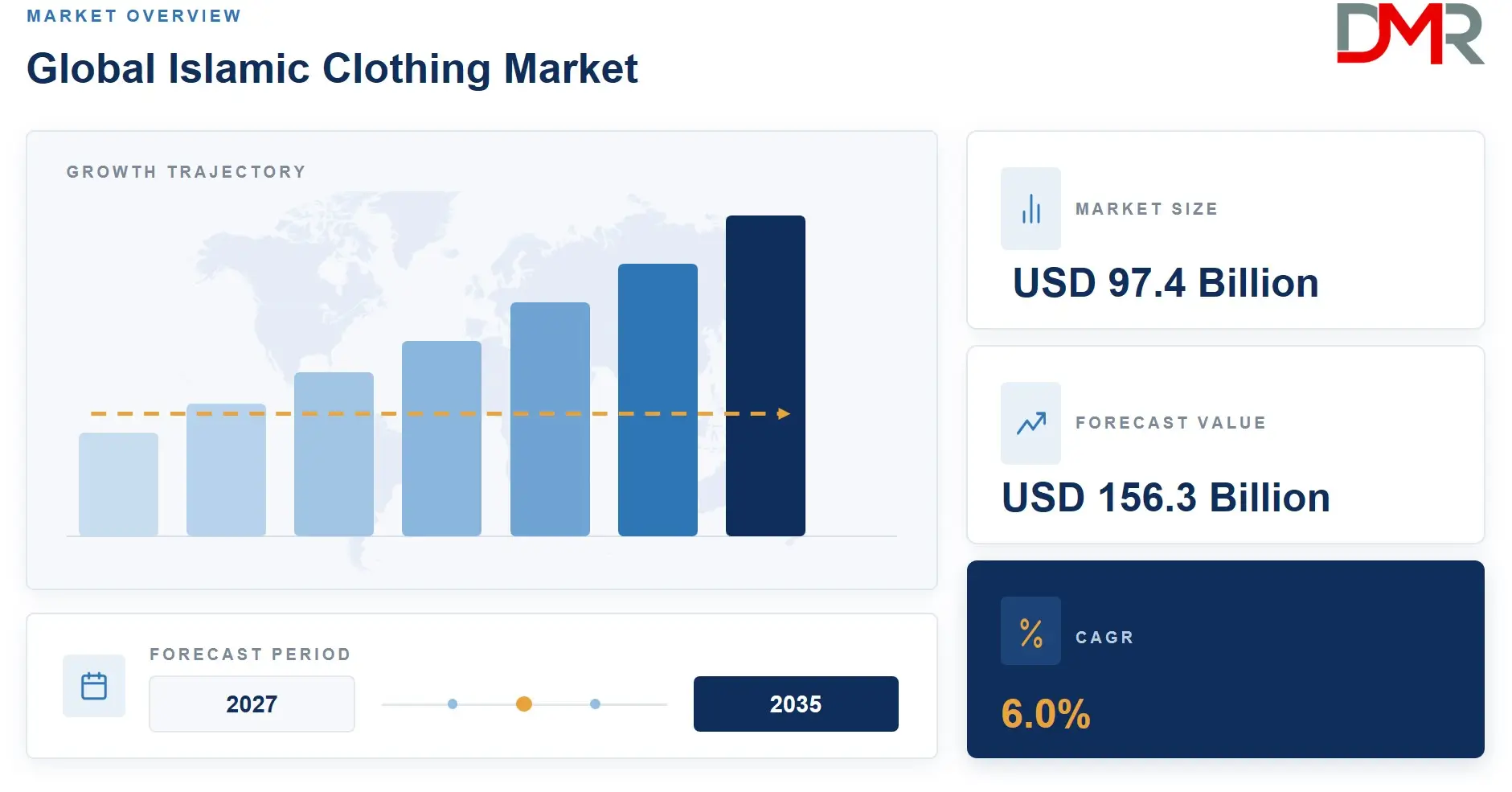
- Global Islamic Clothing Market Size in 2026: USD 97.4 billion
- Global Islamic Clothing Market Size in 2035: USD 156.3 billion
- Global CAGR from 2027 to 2035: 6.0%
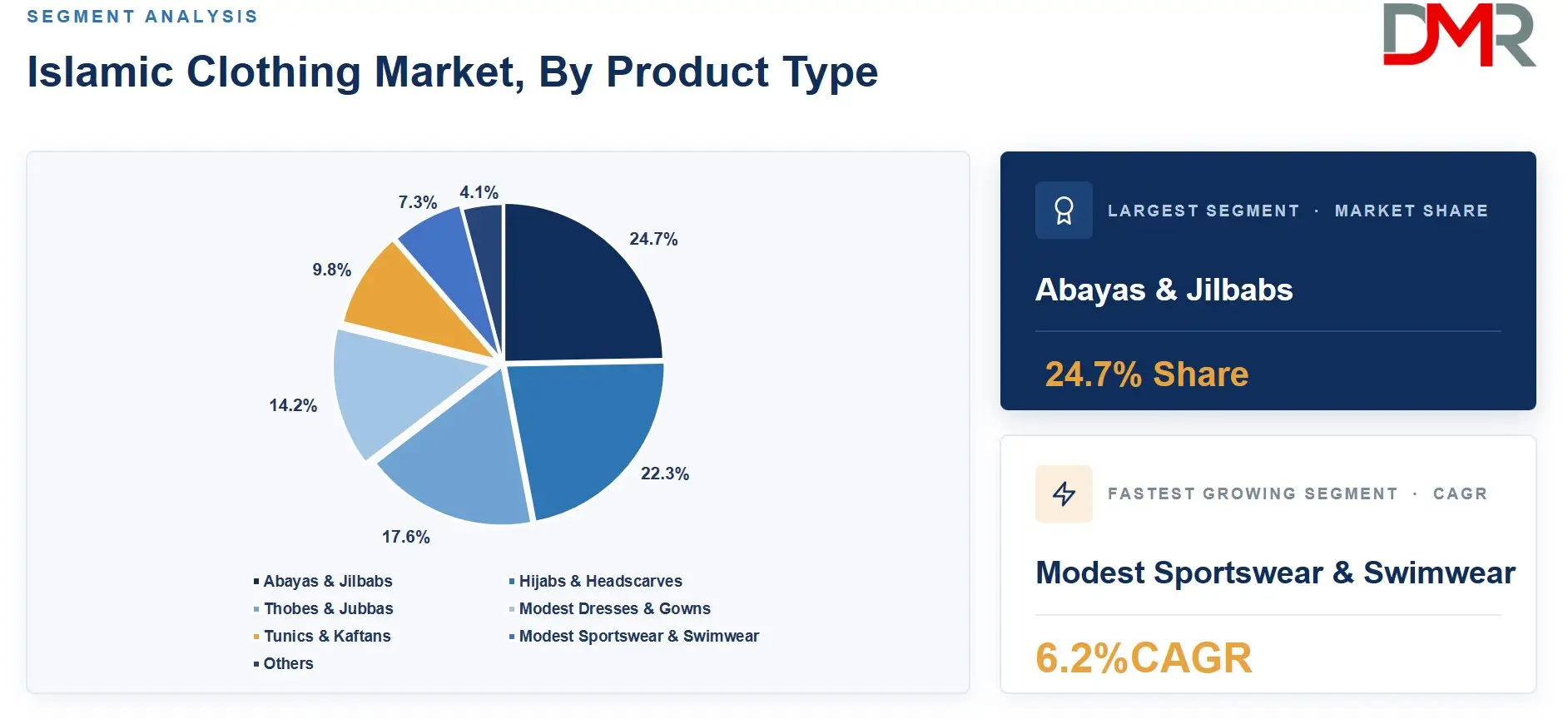
- Abayas & Jilbabs is the leading Product Type segment in 2026: 24.7%
- Women is the leading Gender segment in 2026: 59.7%
- Modest Sportswear & Swimwear is the fastest-growing Product Type segment: 6.2% CAGR
- Children is the fastest-growing Gender segment: 6.4% CAGR
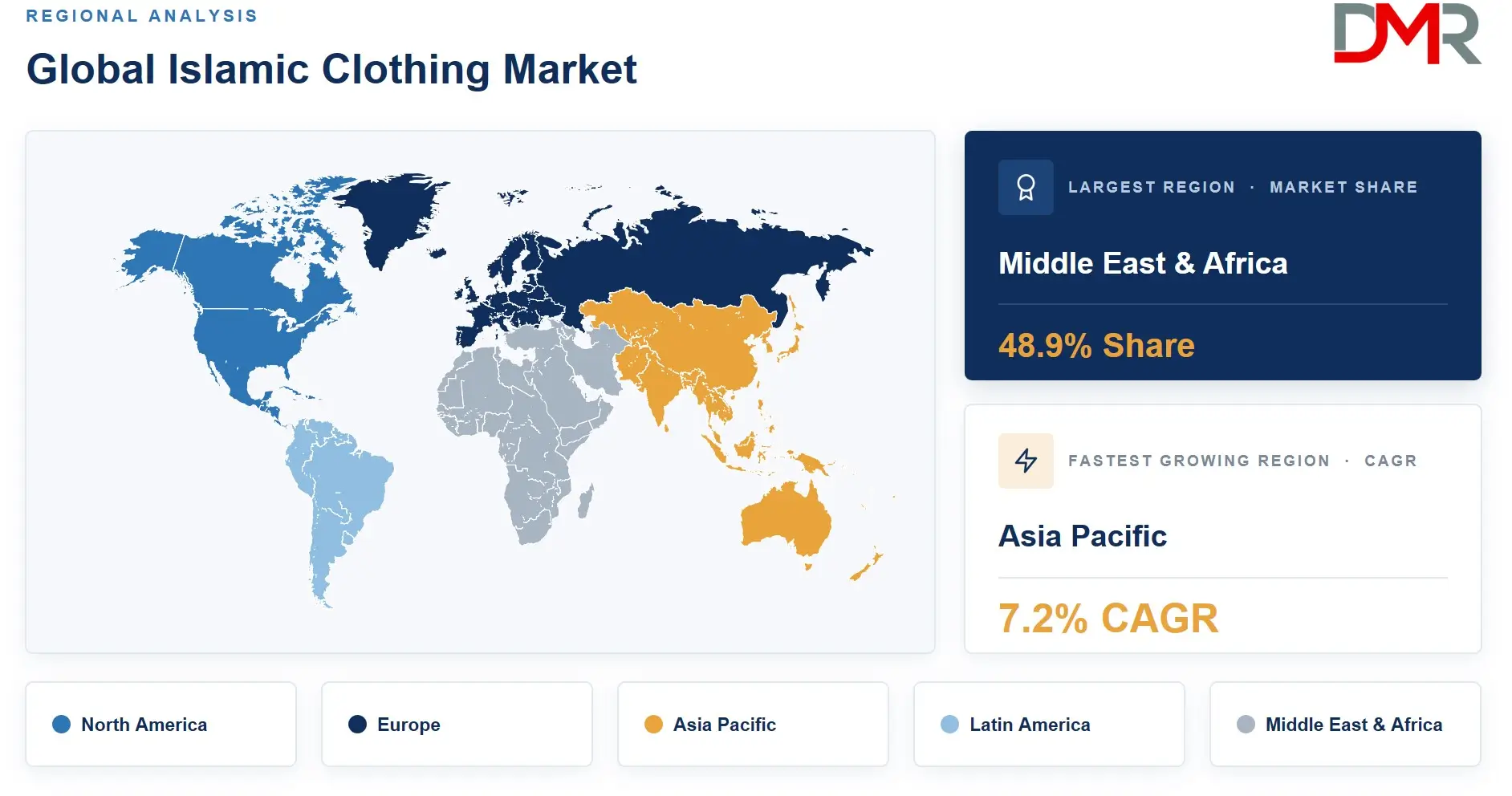
- Middle East & Africa is the leading Region in 2026: 48.9%
- Asia Pacific is the fastest-growing Region: 7.2% CAGR
What is the Global Islamic Clothing Market Size?
The Global Islamic Clothing Market size is projected to be valued at USD 97.4 billion in 2026, and it is further anticipated to reach a market value of USD 156.3 billion by 2035 at a CAGR of 6.0%.
ℹ
To learn more about this report –
Download Your Free Sample Report Here
The Global Islamic Clothing Market includes all apparel products designed to meet Islamic modesty requirements, cultural preferences, religious practices, and contemporary fashion needs. Islamic clothing emphasizes appropriate body coverage, comfortable fabrics, functional designs, and styles aligned with religious and cultural values. Such garments can be used for everyday activities, religious gatherings, professional environments, festive celebrations, wedding ceremonies, and sporting activities. Abayas, hijabs, jilbabs, thobes, kaftans, modest dresses, and specialized sportswear are offered by fashion brands and clothing manufacturers to address diverse consumer preferences and lifestyle requirements. Some of the consumer categories where Islamic clothing is gaining momentum include working women, young adults, children, religious consumers, and fitness enthusiasts. Market growth is being driven by an expanding Muslim population, increasing disposable income, growing acceptance of modest fashion, and expanding online retail platforms. However, the primary challenges for clothing manufacturers are fluctuating raw material costs, regional differences in consumer preferences, pricing pressures, and competition from unorganized apparel retailers.
Use Cases
- Everyday and Casual Dressing: Consumers use Islamic clothing to maintain modesty, ensure personal comfort, and accommodate daily lifestyle requirements. Casual abayas, hijabs, tunics, and modest dresses support everyday dressing across residential, educational, and social environments.
- Religious and Cultural Activities: Muslim consumers purchase traditional garments to participate in religious ceremonies, mosque visits, and pilgrimage activities. Islamic apparel supports appropriate body coverage, cultural expression, and adherence to religious dressing preferences during spiritual gatherings.
- Professional and Formal Dressing: Consumers utilize modest clothing to maintain an appropriate appearance within workplaces, business meetings, and formal gatherings. These garments support professional presentation, personal comfort, cultural identity, and compliance with individual modesty preferences.
- Sports and Recreational Activities: Physically active consumers employ modest sportswear to participate in exercise, swimming, and outdoor recreational activities. Specialized performance apparel supports freedom of movement, breathability, comfortable body coverage, and participation in various sporting environments.
Key Takeaways
- Global Market Value: The Global Islamic Clothing Market is generating revenue of USD 97.4 billion in 2026 and is further anticipated to reach USD 156.3 billion by 2035.
- Global Growth Rate: The Global Islamic Clothing Market is expected to have a CAGR of 6.0% during the forecast period from 2027 to 2035.
- Technology Trends: Increasing integration of artificial intelligence, virtual fitting tools, digital textile printing, sustainable fabrics, and personalized shopping platforms is supporting the development of Islamic clothing products.
- Market Drivers: Factors supporting market growth include an increasing Muslim population, growing demand for contemporary modest fashion, rising disposable income, and increasing availability of Islamic clothing through online platforms.
- Product Type Segment Analysis: The Abayas & Jilbabs segment is anticipated to be the largest Product Type segment, having a market share of 24.7% by the end of 2026. The Modest Sportswear & Swimwear segment is expected to be the fastest-growing segment, with a CAGR of 6.2%.
- Gender Segment Analysis: The Women segment is the major Gender segment, representing the highest market share of 59.7% in 2026, while the Children segment is projected to have the highest growth rate with a CAGR of 6.4% during the forecast period.
- Regional Analysis: The Middle East & Africa region is poised to hold the largest market share of 48.9% in the global market in 2026. The Asia Pacific region is expected to be the fastest-growing region with a CAGR of 7.2%.
How AI/Gen AI is Transforming the Islamic Clothing Market?
Artificial Intelligence (AI) and Generative AI (Gen AI) are reshaping the Global Islamic Clothing Market by providing personalized recommendations, automated fashion design, and enhanced shopping experiences. AI-based retail systems can analyze purchasing behavior, identify consumer preferences, emerging fashion trends, and offer personalized product suggestions. These functions help to improve customer satisfaction and enhance the efficiency of apparel retail operations. Using generative AI, clothing designs can be automatically created, along with customized textile patterns, virtual fashion collections, and digital product presentations. AI-powered computer vision also helps retailers enhance virtual garment fitting, product identification, and visual search capabilities. AI, predictive analytics, and digital inventory management systems enable more efficient apparel supply chains. Agentic AI technologies are transforming fashion retail by facilitating automated customer assistance and intelligent product recommendations.
Key Drivers
Increasing Muslim Population and Growing Adoption of Modest Fashion
The Global Islamic Clothing Market is growing due to the rise in the adoption of modest fashion. Traditional garments, contemporary Islamic apparel, religious clothing, and culturally appropriate fashion products are being purchased by consumers to accommodate personal preferences and religious requirements. Islamic clothing can be used for everyday dressing, professional activities, religious gatherings, and festive celebrations across different consumer groups. Women, men, and children are embracing these garments to maintain modesty and accommodate changing lifestyle preferences. The expansion of the global Muslim population and the increasing demand for fashionable clothing are encouraging investments in Islamic apparel collections. The availability of contemporary designs also contributes to market expansion by enhancing the appeal of modest clothing across younger consumers and fashion-conscious individuals.
Growing Disposable Income and Expanding Online Retail Platforms
Increasing disposable income is driving the adoption of premium and contemporary Islamic clothing across global consumer markets. Consumers are transitioning from conventional clothing purchases toward branded apparel offering modern designs, comfortable fabrics, and customized garment options. Online retail platforms support consumer access to Islamic clothing without requiring visits to physical retail outlets. Customers can explore diverse clothing collections, compare product prices, and purchase specialized garments through digital shopping platforms. E-commerce solutions also support personalized product recommendations, convenient payment options, and international product delivery. Islamic clothing manufacturers, fashion designers, traditional apparel retailers, and specialized modest fashion brands are increasingly investing in digital distribution channels. Growing demand for convenient shopping, fashionable apparel, and wider product accessibility is strengthening market adoption.
Restraints
High Production Costs and Pricing Pressures
Islamic clothing manufacturers require investment in quality fabrics, specialized garment designs, textile processing, and supporting production infrastructure. The manufacturing and distribution of premium modest clothing can create financial challenges, particularly for businesses operating with limited production budgets. Manufacturers producing Islamic apparel must allocate resources for fabric procurement, garment customization, skilled labor, and quality maintenance. Premium textiles, intricate embroidery, and specialized manufacturing requirements can increase overall production expenses. Additional costs associated with transportation, inventory management, and international distribution may affect long-term investment decisions. Concerns regarding product affordability and fluctuating raw material prices can also influence consumer purchasing behavior.
Regional Preference Differences and Unorganized Market Competition
The commercialization of Islamic clothing can involve operational complexity and marketing challenges, particularly across markets with diverse cultural traditions. Islamic apparel collections often require adaptation to regional dressing practices, climatic conditions, consumer preferences, religious interpretations, and existing fashion trends. Differences in garment styles, fabric requirements, and purchasing behavior can increase product development complexity. Manufacturers may also incur additional expenses associated with design customization, regional marketing, inventory modification, and distribution support. Organizations operating across multiple geographical markets can face challenges involving standardized product offerings and competition from local unorganized clothing retailers.
Growth Opportunities
Expansion of Modest Sportswear and Functional Apparel
The increasing adoption of modest sportswear is creating significant opportunities in the Global Islamic Clothing Market. Manufacturers are investing in performance-oriented clothing, breathable textile materials, and specialized sportswear collections to improve consumer comfort and functional performance. Advanced fabric technologies enable organizations to develop lightweight garments, improve moisture management, and provide appropriate body coverage during physical activities. Modest sportswear also supports swimming, fitness training, outdoor recreation, and competitive sporting activities across diverse consumer groups. Islamic clothing providers can develop integrated sportswear collections to address religious dressing preferences and improve physical mobility. Growing demand for functional clothing across fitness, recreational, and professional sporting activities is creating opportunities for specialized modest apparel manufacturers.
Growing Adoption Among Non-Muslim Fashion Consumers
Non-Muslim fashion consumers represent an important opportunity for the expansion of Islamic clothing across global apparel markets. Contemporary modest fashion collections enable consumers to access comfortable clothing, elegant designs, and versatile apparel without compromising individual fashion preferences. Increasing cultural awareness, fashionable garment availability, and growing demand for inclusive clothing are encouraging fashion brands to diversify apparel collections. Contemporary Islamic clothing provides flexible styling options, extended body coverage, comfortable fabrics, and versatile designs. Fashion retailers can develop affordable collections and inclusive garment offerings to meet different consumer requirements. Expanding modest fashion awareness across emerging markets in Asia Pacific, Europe, and North America is also creating opportunities for specialized clothing manufacturers and retailers.
Trends
Increasing Adoption of Sustainable and Ethical Fashion
Sustainable and ethical fashion solutions are becoming an important trend in the Global Islamic Clothing Market. Clothing manufacturers are introducing environmentally responsible textile materials to reduce environmental impact, improve garment durability, and support sustainable production practices. Sustainable apparel collections can incorporate organic cotton, recycled polyester, natural fibers, and responsibly sourced materials. Ethical sourcing also supports responsible manufacturing practices and improved supply chain transparency. Fashion retailers can use sustainability-focused product collections to address environmental concerns, consumer preferences, and changing purchasing behavior. The integration of sustainable production technologies enables responsible textile processing and environmentally conscious Islamic clothing development.
Growing Adoption of Contemporary and Functional Modest Clothing
Fashion retailers are increasingly adopting contemporary modest clothing designs that combine traditional silhouettes, modern styling, comfortable fabrics, and functional garment features. Conventional Islamic clothing designs can restrict styling flexibility and limit appeal across younger consumer groups. Modern abayas, hijabs, dresses, and modest sportswear help manufacturers integrate contemporary fashion elements into everyday clothing, professional apparel, festive garments, and recreational wear. Improvements in fabric breathability, garment flexibility, textile quality, and moisture management are supporting consumer comfort. Fashion brands are expanding garment designs, size inclusivity, and customized clothing collections to address consumer requirements. Growing emphasis on personal expression, clothing versatility, and functional comfort is strengthening demand for contemporary Islamic apparel.
Research Scope and Analysis
On the basis of Product Type, the Global Islamic Clothing Market is segmented into Abayas & Jilbabs, Hijabs & Headscarves, Thobes & Jubbas, Modest Dresses & Gowns, Tunics & Kaftans, Modest Sportswear & Swimwear, and Others. The market can be segmented on the basis of Gender into Men, Women, and Children. On the basis of Occasion, the market includes Casual Wear, Formal Wear, Religious Wear, Festive & Wedding Wear, and Sportswear. By Distribution Channel, the market includes Online and Offline.
ℹ
To learn more about this report –
Download Your Free Sample Report Here
By Product Type
Abayas & Jilbabs is projected to dominate the Product Type segment in the Global Islamic Clothing Market, accounting for 24.7% of the total market share in 2026. The dominance is supported by widespread religious acceptance, traditional dressing practices, everyday garment usage, and increasing availability of contemporary designs. Modest Sportswear & Swimwear is anticipated to register the highest CAGR of 6.2% during the forecast period from 2027–2035, driven by increasing participation in fitness activities, growing health awareness, and demand for functional modest apparel.
By Gender
Women is projected to dominate the Gender segment in the Global Islamic Clothing Market, accounting for 59.7% of the total market share in 2026. The dominance is supported by increasing demand for abayas, hijabs, modest dresses, contemporary fashion collections, and specialized Islamic clothing. Women's Islamic clothing offers diverse garment designs suitable for everyday activities, professional environments, religious gatherings, and festive occasions. Children is anticipated to register the highest CAGR of 6.4% during the forecast period from 2027–2035, supported by increasing demand for age-appropriate modest clothing, growing parental preference for culturally appropriate apparel, expanding children's fashion collections, and rising household expenditure.
By Occasion
Casual Wear is projected to dominate the Occasion segment in the Global Islamic Clothing Market, accounting for 38.6% of the total market share in 2026. The dominance is attributed to increasing demand for comfortable everyday clothing, versatile garment designs, affordable modest apparel, and frequent clothing purchases. Growing availability of contemporary casual collections further supports consumer demand. Sportswear is anticipated to register the highest CAGR of 6.1% during the forecast period from 2027–2035, driven by increasing participation in physical activities, growing health awareness, demand for breathable fabrics, improved garment functionality, and expanding availability of specialized modest fitness apparel.
By Distribution Channel
Offline is projected to dominate the Distribution Channel segment in the Global Islamic Clothing Market, accounting for 63.3% of the total market share in 2026. The dominance is attributed to established traditional clothing stores, consumer preference for physical garment evaluation, personalized shopping assistance, and widespread availability of Islamic apparel across retail outlets. Online is anticipated to register the highest CAGR of 7.0% during the forecast period from 2027–2035, driven by increasing internet penetration, convenient shopping options, expanding e-commerce platforms, growing digital payment adoption, and rising demand for internationally accessible Islamic clothing collections.
The Global Islamic Clothing Market Report is segmented based on the following:
By Product Type
- Abayas & Jilbabs
- Hijabs & Headscarves
- Thobes & Jubbas
- Modest Dresses & Gowns
- Tunics & Kaftans
- Modest Sportswear & Swimwear
- Others
By Gender
By Occasion
- Casual Wear
- Formal Wear
- Religious Wear
- Festive & Wedding Wear
- Sportswear
By Distribution Channel
Regional Analysis
Middle East & Africa is the Leading Region in the Global Islamic Clothing Market
Middle East & Africa is expected to become the dominant force within the Global Islamic Clothing Market as it will hold a market share of 48.9% in 2026. The dominance of the market is supported by a substantial Muslim population, established religious dressing practices, increasing disposable income, and the strong presence of Islamic clothing manufacturers across Saudi Arabia and the United Arab Emirates. Growing demand for traditional abayas, contemporary modest fashion, and premium religious garments is supporting regional market development.
ℹ
To learn more about this report –
Download Your Free Sample Report Here
Asia Pacific is the Fastest-Growing Region in the Global Islamic Clothing Market
Asia Pacific is expected to witness the fastest-growing regional market with a compound annual growth rate of 7.2% during the forecast period from 2027–2035, due to expanding Muslim populations, rising disposable income, increasing adoption of modest fashion, and growing e-commerce penetration across Malaysia, Bangladesh, Pakistan, and India. Manufacturers are increasingly introducing contemporary Islamic clothing collections, affordable modest garments, and specialized fashion products to improve consumer accessibility.
North America Islamic Clothing Market
The North America Islamic Clothing Market is supported by expanding Muslim communities, increasing acceptance of modest fashion, and growing demand for culturally appropriate clothing. Fashion retailers across the United States and Canada are introducing contemporary abayas, hijabs, modest dresses, and specialized sportswear to address diverse consumer requirements. Increasing disposable income, cultural diversity, and changing fashion preferences are encouraging demand for premium Islamic apparel. Manufacturers and retailers are increasingly expanding inclusive clothing collections, online shopping platforms, and specialized distribution channels to improve product accessibility and strengthen regional market growth.
Europe Islamic Clothing Market
The Europe Islamic Clothing Market is supported by growing demand for modest fashion, increasing cultural diversity, and rising availability of contemporary Islamic apparel. Fashion retailers across Germany, France, the United Kingdom, Italy, and Spain are introducing inclusive clothing collections and specialized modest fashion products to address diverse consumer requirements. Traditional Islamic clothing, contemporary dresses, headscarves, and modest sportswear represent important product categories. Organizations are increasingly integrating sustainable textile materials with modern garment designs and digital retail platforms to improve consumer accessibility and expand regional market penetration.
Latin America Islamic Clothing Market
The Latin America Islamic Clothing Market is supported by growing cultural diversity, increasing awareness of modest fashion, and expanding access to international clothing brands. Brazil, Mexico, Argentina, and Chile represent potential markets as retailers diversify apparel collections and expand digital shopping capabilities. Islamic clothing manufacturers, independent fashion designers, traditional apparel retailers, and international clothing brands are introducing modest garments to address specialized consumer preferences. Online Islamic clothing platforms provide convenient purchasing options and reduce dependence on limited physical retail infrastructure. Increasing availability of affordable modest apparel and expanding digital connectivity are supporting demand for culturally appropriate clothing.
Major Countries Analysis
Saudi Arabia Islamic Clothing Market
The Saudi Arabia Islamic Clothing Market is supported by established religious dressing traditions, increasing investment in fashion retail, and growing adoption of contemporary modest clothing. Saudi manufacturers are introducing diversified apparel collections to support everyday dressing, professional activities, religious gatherings, and festive celebrations. Abayas, jilbabs, thobes, headscarves, and premium modest dresses represent important categories within the Islamic clothing market. Sustainable fabrics, contemporary garment designs, and digital shopping platforms are gaining importance as organizations seek to improve consumer accessibility, strengthen domestic fashion capabilities, and accommodate changing clothing preferences among younger consumers.
Mexico Islamic Clothing Market
The Mexico Islamic Clothing Market is supported by a growing interest in modest fashion, increasing cultural diversity, and demand for religiously appropriate apparel among Muslim communities. Domestic retailers and international brands are offering diversified clothing collections to support everyday dressing, religious activities, and festive celebrations. Hijabs, abayas, modest dresses, tunics, and loose-fitting garments represent important categories within the Islamic clothing market. Online retail platforms, imported Islamic apparel, and contemporary modest fashion designs are gaining importance as retailers seek to improve product accessibility, expand their consumer base, and address evolving clothing preferences.
United States Islamic Clothing Market
The US Islamic Clothing Market is supported by increasing cultural diversity, growing acceptance of modest fashion, and expanding online retail platforms. American fashion retailers are introducing diversified Islamic clothing collections to address religious requirements, contemporary fashion preferences, and everyday dressing needs. Rising demand for contemporary hijabs, modest dresses, Islamic sportswear, and culturally appropriate clothing is encouraging investment across specialized fashion brands and apparel manufacturers. Increasing consumer preference for comfortable fabrics, inclusive designs, and convenient shopping experiences is further supporting market growth throughout the country.
Regulatory Landscape
Textile Labeling Regulations, Consumer Protection Requirements, Product Safety Laws, and Environmental Standards are important factors influencing the Global Islamic Clothing Market. Clothing manufacturers supplying Islamic apparel must consider applicable textile safety requirements, particularly when garments contain specialized fabrics, chemical dyes, and decorative materials. In the United States, Federal Trade Commission requirements influence textile fiber disclosure, country-of-origin labeling, and garment care instructions. In the European Union, Regulation (EU) No. 1007/2011 introduces requirements concerning textile fiber names and fiber composition labeling. International textile certification frameworks, including OEKO-TEX standards, provide guidance for evaluating textile products for harmful substances.
Investment and White Space Analysis
The Global Islamic Clothing Market presents investment opportunities in modest sportswear, sustainable textile materials, customized Islamic garments, and digital fashion retail technologies. Manufacturers are increasingly seeking innovative clothing solutions capable of improving garment comfort, strengthening product differentiation, and supporting contemporary fashion preferences. Fashion brands can expand offerings through AI-powered personalized recommendations, automated garment design, virtual fitting applications, and intelligent inventory management. Growing demand for integration with e-commerce platforms, digital payment applications, and international distribution infrastructure is creating opportunities for online retail development and logistics services. Children represent an expanding market for affordable and culturally appropriate Islamic clothing with comfortable materials and flexible garment designs. Emerging economies across Asia Pacific, Latin America, and the Middle East and Africa offer opportunities as disposable income, modest fashion awareness, and organized apparel retail penetration increase.
By Region
North America
Europe
- Germany
- France
- The U.K.
- Italy
- Spain
- Rest of Europe
Asia Pacific
- China
- Japan
- India
- Australia
- South Korea
- Rest of APAC
Latin America
- Mexico
- Brazil
- Rest of LATAM
Middle East & Africa
- Saudi Arabia
- The UAE
- South Africa
- Rest of MEA
Competitive Landscape
The Global Islamic Clothing Market is characterized by competition among traditional Islamic clothing manufacturers, contemporary modest fashion brands, international apparel retailers, and specialized online fashion platforms. Major participants include Modanisa, Aab Collection, Haute Hijab, SHUKR Islamic Clothing, H&M, Fast Retailing Co., Ltd, Nike, Inc., and other Islamic apparel providers. Competition is influenced by garment quality, fashion innovation, fabric performance, cultural suitability, distribution accessibility, and product pricing. Some companies focus on traditional Islamic clothing, religious garments, and everyday modest apparel, while others provide contemporary fashion collections, specialized modest sportswear, and premium occasion-based clothing. Consumers increasingly require garments capable of combining religious modesty preferences with modern styling and functional comfort. Fashion manufacturers are investing in sustainable fabrics, digital retail technologies, customized garment designs, and inclusive clothing collections to strengthen product portfolios. Strategic partnerships, product development, and distribution expansion are influencing the competitive environment as clothing manufacturers seek broader market accessibility and improved brand recognition.
Some of the prominent players in the Global Islamic Clothing Market are:
- Modanisa
- Aab Collection
- Haute Hijab
- SHUKR Islamic Clothing
- Inayah
- AbayaAddict
- SUKAINA
- An-Nahar
- Haf & Haf
- The WRDS Clothing
- Siti Khadijah
- Zoya
- Shafira
- Dian Pelangi
- RiaMiranda
- Buttonscarves
- Wearing Klamby
- Elzatta
- Alhannah Islamic Clothing
- EastEssence
- Islamic Design House
- The Hijab Company
- Veiled Collection
- Niswa Fashion
- Bella Hijabs
- Bokitta
- Louella
- Modest Swim Co.
- LYRA Swim
- Ahiida
- Merrachi
- H&M
- Fast Retailing Co., Ltd.
- Nike, Inc.
- Adidas AG
- Mango
- Dolce & Gabbana
- Inditex
- Landmark Group
- BMA International
- Glowmode
Recent Developments
- In August 2026, Uniqlo launched its first standalone hijab collection in Malaysia. The collection incorporates AIRism UV Protection, Georgette, and Satin Hijabs, combining functional textile technologies with contemporary designs to address different modest clothing preferences and everyday dressing requirements.
- In February 2026, Glowmode introduced its Modest Activewear Collection at an event in Dubai. The collection focuses on combining functional sportswear, modest garment coverage, and contemporary styling to support fitness activities and address specialized clothing requirements among Middle Eastern consumers.
- In February 2025, H&M introduced its Spring/Summer Limited Edition collection targeting seasonal modest fashion requirements. The offering includes contemporary clothing designs, dresses, and coordinated garments, combining traditional fashion influences with modern styling to support Ramadan dressing preferences.
Report Details
| Report Characteristics |
| Market Size (2026) |
USD 97.4 Bn |
| Forecast Value (2035) |
USD 156.3 Bn |
| CAGR (2027–2035) |
6.0% |
| Historical Data |
2021 – 2025 |
| Forecast Data |
2027 – 2035 |
| Base Year |
2026 |
| Segments Covered |
By Product Type, By Gender, By Occasion, By Distribution Channel, By Region |
| Regional Coverage |
North America – The US and Canada; Europe – Germany, France, The UK, Italy, Spain, Rest of Europe; Asia-Pacific – China, Japan, India, Australia, South Korea, Rest of APAC; Latin America – Mexico, Brazil, Colombia, Argentina, Rest of LATAM; Middle East & Africa – Saudi Arabia, The UAE, South Africa, Rest of MEA |
Frequently Asked Questions
How big is the Islamic Clothing Market?
▾ The Global Islamic Clothing Market is projected to be valued at USD 97.4 billion in 2026 and is expected to reach USD 156.3 billion by 2035.
What is the CAGR of the Islamic Clothing Market from 2027 to 2035?
▾ The Global Islamic Clothing Market is anticipated to grow at a compound annual growth rate (CAGR) of 6.0% during the forecast period from 2027 to 2035.
What factors are driving the growth of the Islamic Clothing Market?
▾ The market is supported by an increasing Muslim population, rising demand for contemporary modest fashion, growing disposable income, and expanding online retail platforms. Manufacturers are introducing diversified Islamic clothing collections to improve consumer accessibility, strengthen product differentiation, and support changing fashion preferences.
What are the major trends in the Islamic Clothing Market?
▾ Major trends include increasing adoption of sustainable fabrics, contemporary modest clothing, personalized fashion collections, and digital retail platforms. Clothing manufacturers are also focusing on functional sportswear, virtual fitting technologies, customized garment designs, and environmentally responsible textile materials.
Which region is expected to hold the largest share of the Islamic Clothing Market in 2026?
▾ The Middle East & Africa is expected to hold the largest share of the Global Islamic Clothing Market in 2026, accounting for 48.9% of the total market.
Which region is expected to grow the fastest in the Islamic Clothing Market?
▾ Asia Pacific is projected to be the fastest-growing regional market during the forecast period, registering a CAGR of 7.2%.
Who are the key players in the Islamic Clothing Market?
▾ Companies relevant to the market include Modanisa, Aab Collection, Haute Hijab, SHUKR Islamic Clothing, Inayah, Siti Khadijah, H&M, Fast Retailing Co., Ltd., Nike, Inc. These companies offer traditional Islamic garments, contemporary modest clothing, headscarves, functional sportswear, and related apparel products.
How is the Islamic Clothing Market segmented?
▾ The market is segmented by Product Type into Abayas & Jilbabs, Hijabs & Headscarves, Thobes & Jubbas, Modest Dresses & Gowns, Tunics & Kaftans, Modest Sportswear & Swimwear, and Others. By Gender, the market includes Men, Women, and Children. By Occasion, the market includes Casual Wear, Formal Wear, Religious Wear, Festive & Wedding Wear, and Sportswear. By Distribution Channel, the market covers Online and Offline. Geographically, the market covers North America, Europe, Asia Pacific, Latin America, and the Middle East and Africa.