Market Overview
The global IVD raw material market supplies the biological, chemical, and synthetic inputs that power every in vitro diagnostic test. Antibodies, enzymes, oligonucleotides, buffers, membranes, and detection labels sit upstream of finished test kits sold to hospitals, clinical laboratories, and point-of-care settings. Without consistent, high-performance raw materials, no diagnostic manufacturer can sustain assay sensitivity, lot-to-lot reproducibility, or regulatory compliance.
Demand for these inputs ties directly to IVD test volumes, which follow disease burden, population growth, and government investment in health screening programs. Pharmaceutical and biotech companies source raw materials to develop companion diagnostics alongside therapeutic pipelines. IVD manufacturers procure at scale to maintain production continuity. Contract research organizations require smaller, highly specialized batches for assay development work. Each buyer group imposes distinct quality, quantity, and documentation requirements on suppliers.
Technology choices by end-use manufacturers reshape raw material specifications faster than most supply contracts can adapt. Immunoassay platforms demand high-affinity, low-cross-reactivity antibodies. Molecular diagnostics require enzymes and oligonucleotides with narrow tolerance for lot variation. Point-of-care platforms push membranes and lateral-flow components toward tighter environmental performance windows. Suppliers that invest in recombinant and synthetic production methods gain an edge over those still dependent on animal-derived biological sources, where batch variability and supply disruption remain structural risks.
Key Takeaways
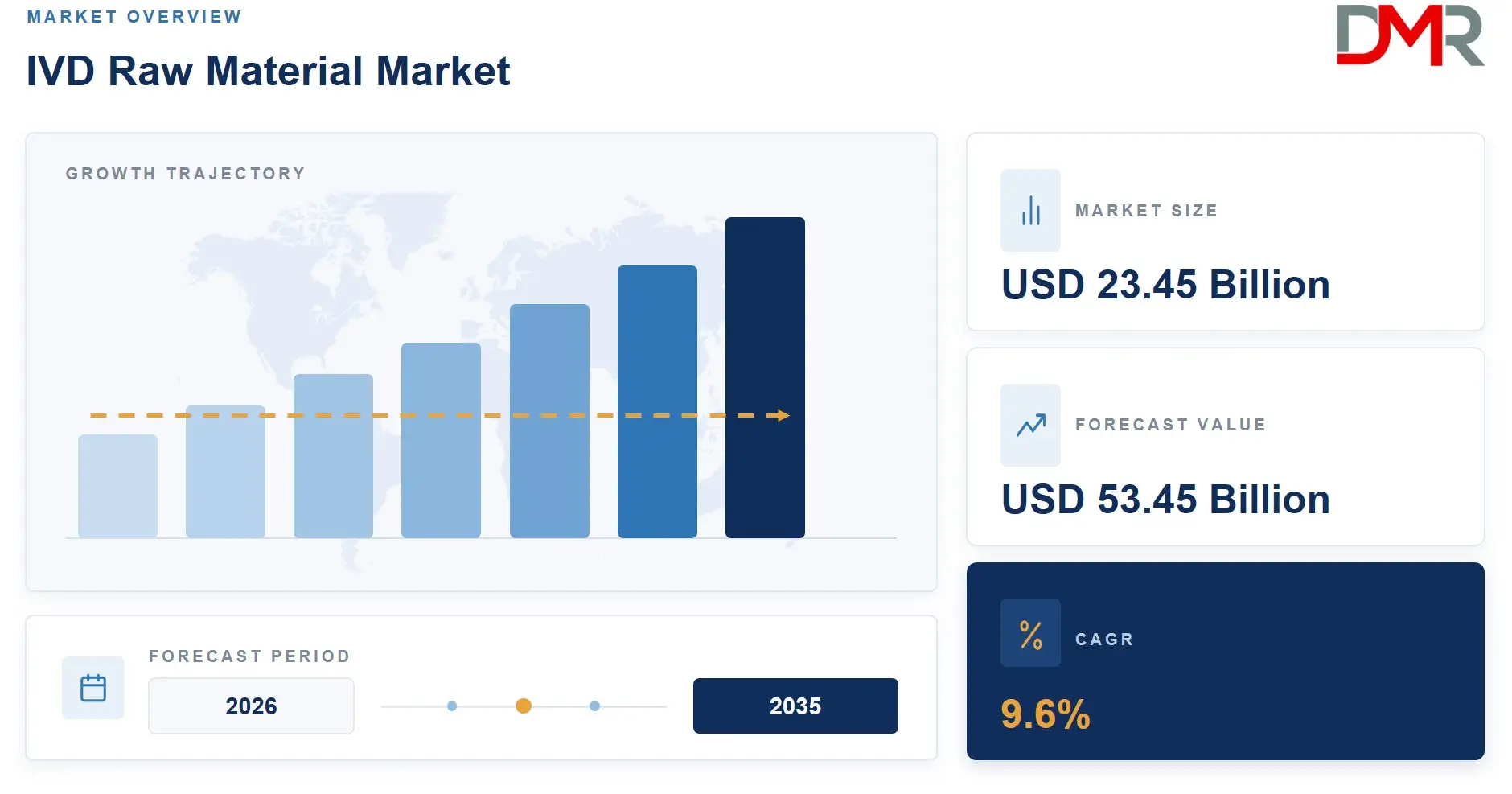
- The market size is USD 23.45 Billion in 2026, and is projected to hit USD 53.45 Billion by 2035 at a CAGR of 9.6%.
- By Product Type: Antibodies led with a 34.5% share in 2026.
- By Technology: Immunoassay led with a 36.2% share in 2026.
- By Application: Infectious Disease Testing led with a 26.4% share in 2026.
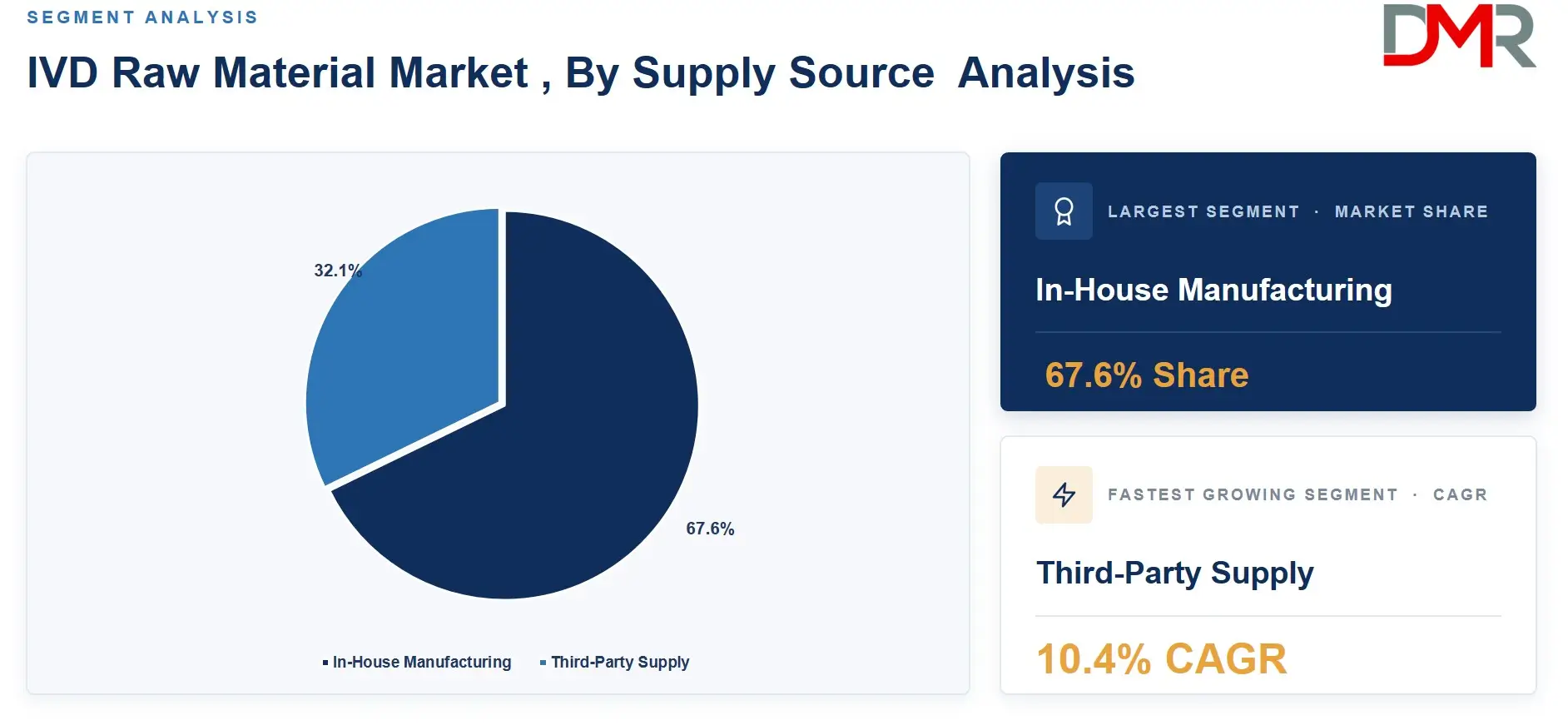
- By Supply Source: In-House Manufacturing led with a 67.6% share in 2026.
- By Source/Origin: Biological/Natural Source led as the largest category in 2026.
- By End User: Pharmaceutical & Biotech Companies led with a 42.6% share in 2026.
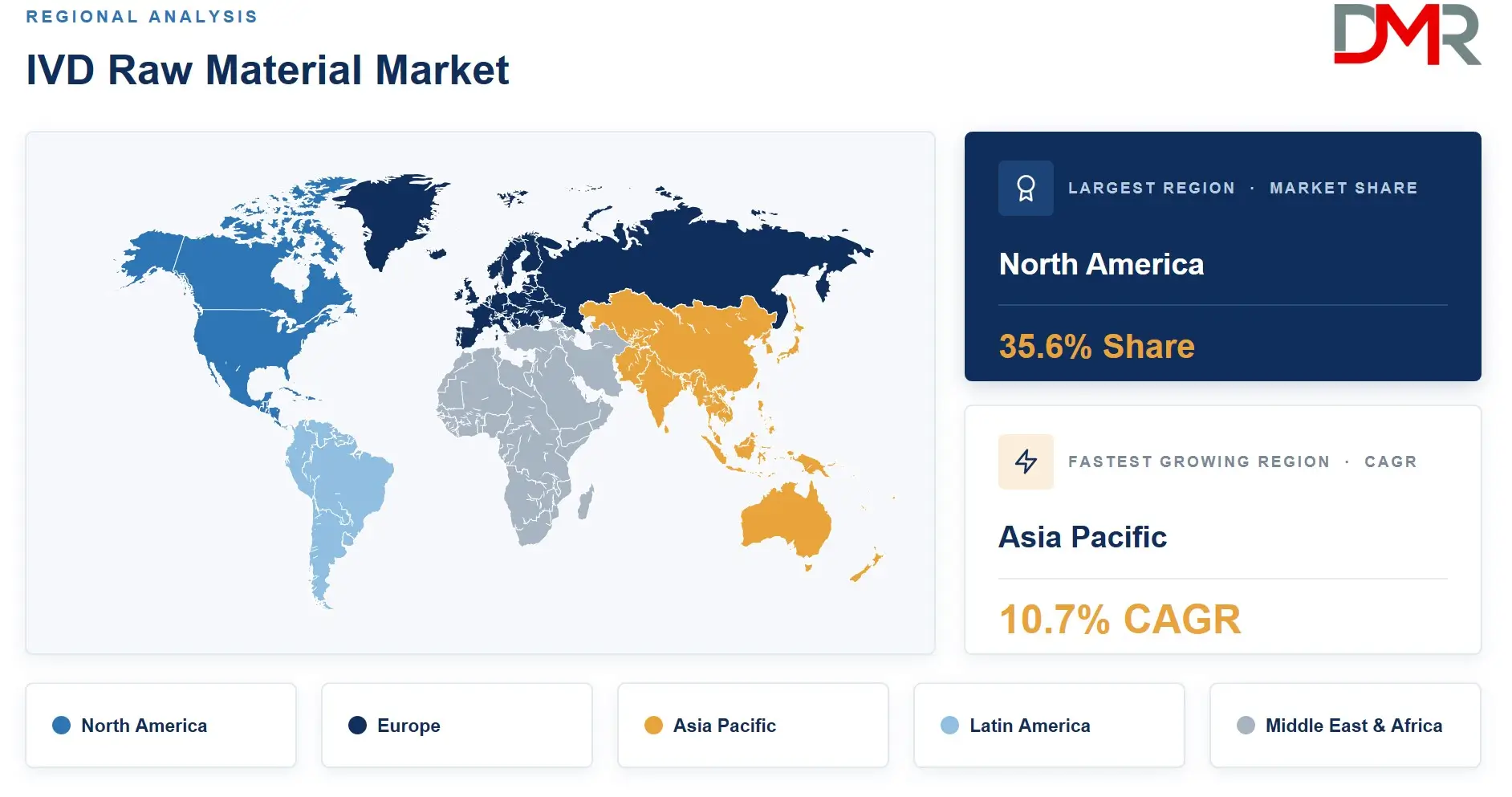
- By Region: North America led with a 35.6% share in 2026.
- Asia Pacific is the fastest growing region across the forecast period.
Market Size and Forecast
The Global IVD Raw Material Market size is estimated at USD 23.45 Billion in 2026, and is projected to reach USD 53.45 Billion by 2035, exhibiting a CAGR of 9.6% during the forecast period.
Growth between 2020 and 2024 was anchored by pandemic-era expansion in molecular diagnostic capacity, which pulled forward raw material procurement cycles by two to three years. Post-pandemic normalization slowed volume growth in PCR reagents and enzymes through 2023. Demand then rebalanced toward immunoassay components and lateral-flow materials as infectious disease screening programs broadened beyond COVID-19. Forecast assumptions rest on continued expansion of oncology biomarker panels, chronic disease monitoring, and government-mandated newborn screening programs across Asia Pacific and Latin America.
ℹ
To learn more about this report –
Download Your Free Sample Report Here
In July 2024, Roche completed its acquisition of LumiraDx's point-of-care technology, adding a multi-assay platform covering immunoassays and clinical chemistry. The move signals that vertically integrated diagnostic companies are pulling raw material sourcing decisions in-house, compressing the addressable market for independent suppliers of immunoassay components while simultaneously validating high-volume lateral-flow material demand.
Product Type Analysis
Antibodies led the Product Type segment with a 34.5% share in 2026.
Antibodies command the largest share because they are the functional recognition element in most immunoassay and lateral-flow platforms. Every ELISA kit, rapid antigen test, and immunohistochemistry panel requires capture and detection antibodies that meet narrow specificity and binding-affinity thresholds. Manufacturers pay significant premiums for monoclonal antibodies produced under GMP conditions, making antibodies the highest-value raw material category per unit.
Antigens and proteins serve as calibrators, controls, and target molecules across both immunoassay and molecular platforms, generating stable procurement volumes tied to kit lot releases. Enzymes and substrates dominate molecular diagnostic workflows where polymerase quality governs amplification efficiency. Oligonucleotides and nucleic acids are the fastest-growing sub-segment, driven by expanded multiplex panel designs that require custom primer and probe sets for each pathogen target. Beads and particles, membranes, labels, and buffers round out the portfolio as enabling materials whose performance constrains the upper limit of finished-test accuracy.
Technology Analysis
With a 36.2% share in 2026, Immunoassay outpaced all other Technology categories.
Immunoassay platforms hold the largest technology share because they cover the widest range of clinical applications, from cardiac markers to hormone panels to infectious disease serology, using a single raw material supply chain built around antibodies, labels, and buffers. Manufacturers scale immunoassay production more efficiently than any other platform, concentrating procurement volumes and deepening supplier dependency.
Molecular diagnostics ranks second and carries the highest raw material complexity per test. Clinical chemistry commands steady, high-volume enzyme and substrate consumption tied to routine blood panels. Point-of-care testing creates distinct membrane and lateral-flow component demand, growing as healthcare systems push diagnostics closer to the patient. Flow cytometry, hematology, microbiology, and coagulation each represent specialized raw material niches where smaller, application-specific suppliers maintain pricing power by serving markets too narrow for global distributors to prioritize.
Application Analysis
Infectious Disease Testing accounted for 26.4% of Application demand in 2026, the highest of any category.
Infectious disease testing commands the largest application share because it spans hospital laboratories, reference labs, point-of-care networks, and home testing, each requiring distinct raw material formats. Public health emergencies and endemic disease monitoring sustain baseline procurement volumes that other application areas cannot match. Raw material suppliers serving this segment must demonstrate cross-reactivity performance against a wide and shifting pathogen landscape.
Oncology and cancer marker testing drives the strongest growth trajectory among remaining applications, as multi-analyte biomarker panels replace single-marker assays in early detection programs. Cardiac marker testing maintains high and predictable volume tied to emergency department throughput. Diabetes and metabolic disorder monitoring generates large-scale, repeat-purchase demand for glucose assay components. Autoimmune disease, blood screening, women's health, and genetic disease testing each represent smaller but structurally protected niches where specialized antibodies and proprietary detection materials create durable supplier advantages.
Supply Source Analysis
In-House Manufacturing captured 67.6% of the Supply Source segment in 2026, ahead of all rivals.
In-house manufacturing dominates because large IVD companies prioritize supply security and quality control over the cost savings available through third-party sourcing. Producing critical antibodies, enzymes, and buffers internally shields manufacturers from the lot-variation risk and single-source dependency that third-party supply introduces at scale. Regulatory agencies expect manufacturers to demonstrate full traceability over every material entering a finished diagnostic device, raising the burden of proof for externally sourced inputs.
ℹ
To learn more about this report –
Download Your Free Sample Report Here
Third-party supply captures the remaining share and serves a structurally important function for smaller IVD developers and contract manufacturers that lack the capital or volume to justify internal production lines. Outsourcing raw material production to specialized suppliers accelerates assay development timelines for emerging diagnostic companies. As recombinant and synthetic production platforms mature, third-party suppliers are closing the quality gap with in-house operations, putting pressure on the cost justification for vertical integration at the mid-market tier.
Source/Origin Analysis
Biological/Natural Source led the Source/Origin segment as the largest category in 2026.
Biological and natural sources retain the largest share because decades of assay development and regulatory validation have been built around animal-derived antibodies, serum proteins, and tissue-extracted enzymes. Switching costs are high. Re-validation of an assay after a raw material source change can require months of analytical testing and regulatory notification, discouraging manufacturers from abandoning proven biological inputs even when synthetic alternatives become available.
Recombinant and synthetic sources are gaining ground by removing the batch variability, zoonotic risk, and animal welfare complications inherent in biological production. Recombinant antibodies produced in cell lines offer identical structure across lots, a property that simplifies regulatory submissions and reduces quality control rejection rates. Synthetic oligonucleotides and chemically modified nucleic acids now meet or exceed the performance of naturally derived equivalents in most molecular assay formats. The transition from biological to recombinant sources is not yet complete, but the directional shift is structural and accelerating.
End User Analysis
A 42.6% share made Pharmaceutical & Biotech Companies the clear leader across End User categories in 2026.
Pharmaceutical and biotech companies hold the largest end-user share because companion diagnostic development, drug discovery, and clinical trial testing all require large volumes of high-specification raw materials across multiple assay platforms simultaneously. A single late-stage drug trial can consume months of raw material production from a dedicated supplier. Procurement teams at major pharma companies negotiate long-term, specification-locked supply agreements that give preferred suppliers stable revenue but limit volume flexibility for other buyer categories.
IVD manufacturers rank second as consistent high-volume buyers whose procurement cycles follow production plans rather than project timelines. Contract research organizations drive demand for smaller, highly customized raw material batches used in assay development and feasibility work. Academic and research institutes remain price-sensitive buyers that source smaller volumes but introduce raw materials into early-stage research that later becomes the basis for commercial assay development, creating a pipeline-feeding role that raw material suppliers increasingly recognize and support through dedicated research-grade product lines.
Key Market Segments
By Product Type
- Antibodies
- Antigens & Proteins
- Enzymes & Substrates
- Oligonucleotides & Nucleic Acids
- Beads & Particles
- Membranes
- Labels & Detection Materials
- Buffers & Diluents
- Others
By Technology
- Immunoassay
- Molecular Diagnostics
- Clinical Chemistry
- Hematology
- Microbiology & Culture
- Coagulation
- Point-of-Care Testing
- Flow Cytometry
- Others
By Application
- Infectious Disease Testing
- Oncology/Cancer Markers
- Cardiac Markers
- Diabetes & Metabolic Disorders
- Autoimmune Disease
- Blood Screening
- Women's Health & Fertility
- Genetic & Rare Disease Testing
- Others
By Supply Source
- In-House Manufacturing
- Third-Party Supply
By Source/Origin
- Biological/Natural Source
- Recombinant/Synthetic
- Others
By End User
- Pharmaceutical & Biotech Companies
- IVD Manufacturers
- Contract Research Organizations
- Academic & Research Institutes
- Others
Regional Analysis
North America led the IVD Raw Material Market with a 35.6% share in 2026, reflecting the region's concentration of major IVD manufacturers, pharmaceutical companies, and reference laboratory networks.
ℹ
To learn more about this report –
Download Your Free Sample Report Here
North America
North America's lead rests on four structural advantages: the highest density of large IVD manufacturers, the deepest pharmaceutical R&D spending, the most mature regulatory infrastructure, and the largest installed base of automated laboratory analyzers. Procurement volumes from US-based pharmaceutical and biotech companies alone sustain a supplier base that no other single regional market can match. FDA validation requirements drive sustained demand for high-specification raw materials, as manufacturers must demonstrate lot-to-lot consistency at volumes that smaller regional suppliers cannot reliably provide.
Asia Pacific
Asia Pacific is the fastest-growing region across the forecast period, driven by government investment in domestic diagnostic manufacturing capacity in China, India, South Korea, and Australia. China's push to reduce import dependency for critical diagnostic inputs has created procurement volume for local antibody and enzyme producers while simultaneously pressuring multinational suppliers to establish in-country production. WHO's 2025 generic IVD profile specifies optimal operating conditions of 10–45°C and ≤75% humidity at altitudes up to 3,000 m, a performance envelope designed to cover tropical and high-altitude settings common across South and Southeast Asia, requiring raw materials that perform under conditions North American formulations were not originally designed to meet. A 2026 peer-reviewed review reports that India's IVD regulatory framework expects assay acceptance ranges of 80–95% sensitivity and 90–98% specificity, setting a quantified performance floor that raw material suppliers must engineer toward for every product entering the Indian market.
Europe
Europe combines strong in-vitro diagnostic manufacturing output with stringent IVDR regulatory requirements that raised the technical documentation burden for all raw material inputs after 2022. Germany anchors European supply with the highest concentration of diagnostic component producers on the continent. Roche CustomBiotech's December 2024 announcement of a new Penzberg production center, backed by more than €600 million, confirms that Europe retains strategic importance for high-volume raw material production even as cost pressures push some manufacturing toward lower-cost regions.
Latin America
Latin America presents a growing procurement base as Brazil and Mexico expand domestic health screening programs and reduce dependence on imported finished test kits. Local IVD manufacturers are scaling assay production, pulling forward raw material demand from regional distributors. Pricing sensitivity remains higher than in North America or Europe, giving suppliers with recombinant production efficiencies a structural cost advantage over those relying on higher-cost biological source materials.
Middle East & Africa
Middle East and Africa represent the earliest stage of regional raw material market development. GCC countries are investing in diagnostic capacity as part of broader healthcare infrastructure programs. Sub-Saharan African markets rely heavily on donor-funded disease screening programs for HIV, tuberculosis, and malaria, creating demand for lateral-flow component materials at price points that require simplified formulations and extended stability profiles.
Key Regions and Countries
North America
Europe
- Germany
- France
- The UK
- Spain
- Italy
- Rest of Europe
Asia Pacific
- China
- Japan
- South Korea
- India
- Australia
- Rest of APAC
Latin America
- Brazil
- Mexico
- Rest of Latin America
Middle East & Africa
- GCC
- South Africa
- Rest of MEA
Macroeconomic Impact
Healthcare spending across OECD economies remained broadly resilient through 2024 and 2025 despite elevated interest rates, with diagnostic infrastructure classified as non-discretionary by most government payers. Raw material suppliers benefit from this spending floor, but input cost inflation for biological production media, cold-chain logistics, and specialized chemical precursors compressed margins across mid-tier producers. A 2026 peer-reviewed review confirms that a standard 12-month IVD shelf-life claim requires stability assessments at four time points over 13 months, with documentation retained for at least 1 year beyond expiry, adding direct compliance costs that scale with production volume and amplify the financial burden during inflationary periods.
Currency movements create asymmetric pressure on globally sourced raw material portfolios. A strong US dollar raises import costs for buyers in Asia Pacific and Latin America, shrinking procurement budgets without reducing test volume requirements. Trade policy uncertainty in semiconductor and biotech supply chains has pushed IVD manufacturers to dual-source critical raw material categories, a structural shift that benefits suppliers with manufacturing presence in multiple geographies.
Market Dynamics
Driver: Analytical Performance Requirements Raise Raw Material Specifications
Regulatory agencies and health organizations are setting quantified performance floors for IVD tests that force raw material quality upward across every product category. FDA's 2025 validation guidance specifies that in-use reagent evaluation after kit opening requires storage at 2–8°C for 7 days, a condition that stabilizer formulations in antibody and buffer products must demonstrably support. Suppliers that cannot meet documented in-use stability specifications face disqualification from procurement lists, regardless of base-price competitiveness.
WHO's 2025 yellow-fever IVD target product profile sets analytical sensitivity at ≤25 RNA copies per reaction as the minimum and ≤10 RNA copies per reaction as the optimal limit of detection. Reaching these thresholds requires primers, probes, enzymes, and master-mix components to perform at the edge of their technical envelope. Raw material producers that invest in tighter synthesis and purification controls now command premium pricing from molecular diagnostic manufacturers racing to meet WHO's published benchmarks. In October 2024, Roche launched its cobas Respiratory flex test using TAGS technology for simultaneous detection of up to 12 respiratory viruses, a format that concentrates specialized reagent and raw material demand among a small number of capable suppliers.
Restraint: Stability Claim Limits Compress Inventory Planning Windows
FDA guidance states that, when real-time stability data are unavailable, initial IVD reagent stability claims typically do not exceed 4–6 months. Short shelf-life windows force IVD manufacturers to order raw materials in smaller, more frequent batches, raising unit logistics costs and reducing the inventory buffer available to absorb supply disruptions. Suppliers carrying perishable biological or enzyme-based products face write-off risk on unsold stock, compressing working capital efficiency.
Analytical acceptance criteria further tighten the barrier to entry for new raw material suppliers. A 2026 peer-reviewed review reports that a single Chikungunya IgM ELISA submission requires ≥90% sensitivity, ≥95% specificity, and an invalid-test rate of no more than 5%, with lot-to-lot testing across 3 lots using defined sample sets. Meeting these criteria demands manufacturing consistency that takes years to establish, protecting incumbent suppliers while slowing market entry for challengers.
Opportunity: Extended Environmental Stability Opens Low- and Middle-Income Market Access
WHO's 2025 generic IVD profile sets a minimum shelf-stability target of 18 months at 10–40°C and ≤70% relative humidity for instrument-free disposable tests, with an optimal target exceeding 24 months at broader temperature and humidity ranges. Suppliers that engineer raw materials to these specifications unlock procurement from national health programs in Africa, South Asia, and Latin America, where cold-chain infrastructure is unreliable. A validated claim against the WHO profile operates as a pre-competitive credential that shortens procurement cycles with multilateral health buyers.
Porter's Five Forces
The IVD raw material market carries moderate-to-high competitive intensity overall, shaped by asymmetric force intensities across its five structural dimensions. Barriers to new entry are high: GMP certification, regulatory documentation requirements, and the analytical validation burden described in WHO's 2025 generic IVD profile, which mandates 100% analytical specificity against competing pathogen panels, mean that new suppliers require years of capital investment before winning their first major procurement contract. Supplier power among producers of specialized monoclonal antibodies, high-fidelity polymerases, and custom oligonucleotides is strong, because substitution requires assay re-validation that IVD manufacturers cannot execute quickly. Buyer power is concentrated among large pharmaceutical and IVD companies, which negotiate multi-year agreements at scale and impose specification changes that smaller suppliers must absorb or exit. Substitution threats are moderate and growing, as recombinant production methods systematically replace biological-derived materials for antibodies and enzymes, compressing the pricing power of suppliers still operating on animal-sourced inputs. Competitive rivalry among established global suppliers is intense in high-volume commodity categories such as buffers and membranes, but fragmented and relationship-driven in premium categories such as research-grade monoclonals and custom oligonucleotide synthesis.
AI and Gen AI Impact
Artificial intelligence is reshaping IVD raw material development most visibly at the formulation and quality control stages. AI-driven protein structure prediction tools have shortened monoclonal antibody discovery timelines from years to months, reducing the cost of generating novel capture and detection antibody candidates for new assay formats. FDA's 2025 validation guidance specifies specimen stability evaluation at 2 hours at room temperature and requires 3 replicates per flex study condition, a data-generation workload that automated AI-assisted laboratory platforms can process at throughputs human operators cannot replicate manually. Suppliers using AI to automate stability and performance testing will compress validation timelines and reduce the cost of meeting regulatory documentation standards. Laggards relying on manual quality assurance workflows face rising per-unit documentation costs as regulatory agencies demand more data per submission cycle.
Market Trends
Recombinant and Synthetic Materials Displace Biological Sources
Recombinant antibodies, synthetic oligonucleotides, and engineered enzymes are systematically replacing animal-derived and naturally extracted equivalents across both immunoassay and molecular diagnostic platforms. FDA's 2025 validation guidance recommends determining preliminary limits of detection using a 2–3-fold dilution series with 3 replicates per concentration, a protocol that favors raw materials with narrow lot-to-lot variation. Recombinant production delivers that consistency by design. Suppliers that build recombinant capabilities now position themselves ahead of regulatory tightening that will make biological-source batch documentation progressively more burdensome.
Market Competition Overview
The IVD raw material market is moderately consolidated at the top, with a small group of global life science companies holding substantial share across multiple product categories simultaneously. Scale gives leaders cost advantages in biological production, regulatory affairs, and global distribution that smaller specialists cannot replicate. FDA's 2025 guidance requires at least 30 positive and 30 negative specimens for clinical performance evaluation, a validation workload that large suppliers can support by providing verified reference material panels as a bundled service, deepening customer dependency beyond simple product transactions.
Consolidation is accelerating through acquisition. In March 2026, Agilent Technologies announced an agreement to acquire Biocare Medical for $950 million, adding more than 300 specialized antibodies and complementary IHC, ISH, and FISH reagent capabilities to its portfolio. Deals of this scale shrink the universe of independent specialized suppliers, raising barriers for smaller IVD developers that previously relied on multiple independent raw material sources to avoid single-supplier dependency.
Pricing Analysis
Raw material prices vary sharply by product category, production method, and specification tier. Monoclonal antibodies produced under GMP conditions carry the highest unit prices in the market, reflecting the capital intensity of cell culture production and the analytical validation required for every lot release. Commodity categories such as standard buffers, diluents, and generic membranes compete on price and logistics, with margins compressed by multiple qualified suppliers operating across regions. FDA's 2025 guidance specifies validation protocols requiring 30 replicates at less than 2-fold of the LoD and 10 replicates at less than 5-fold of the LoD, a testing volume that translates directly into per-lot qualification costs that suppliers must price into supply agreements.
Recombinant production is shifting pricing dynamics in the antibody and enzyme categories. As synthetic yields improve, recombinant products approach price parity with biological equivalents while delivering superior consistency, eroding the historical price premium that biological-source suppliers charged. Regional price differences persist, with Asia Pacific buyers accessing lower-cost domestic supply for standard materials while paying import premiums for high-specification monoclonals and specialty enzymes still produced primarily in North America and Europe.
Company Profiles
Merck KGaA operates across antibodies, antigens, enzymes, buffers, and detection reagents, covering more product categories within IVD raw materials than any other single supplier. Merck's strategic position rests on breadth: a buyer sourcing five different raw material categories can consolidate procurement with one supplier, reducing vendor qualification costs and simplifying supply chain documentation. The risk in this strategy is margin dilution across commodity categories where Chinese and Indian producers compete aggressively on price for standard materials.
Agilent Technologies has shifted from a peripheral life sciences tool provider to a central IVD raw material player through targeted acquisition. In September 2024, Agilent completed the acquisition of BIOVECTRA, expanding its biologics and specialized molecule development and manufacturing capabilities, directly strengthening the biological material supply chain for diagnostic applications. The subsequent Biocare Medical acquisition in 2026 added pathology-specific antibodies and reagents, creating an integrated antibody portfolio spanning clinical pathology and molecular diagnostics that few competitors can match on scope.
Key Players
- Merck KGaA
- Thermo Fisher Scientific Inc.
- Medix Biochemica
- Bio-Techne Corporation
- Fapon Biotech Inc.
- Meridian Bioscience, Inc.
- BBI Solutions
- Toyobo Co., Ltd.
- Roche CustomBiotech
- Integrated DNA Technologies, Inc.
- Cytiva
- Sartorius AG
- LGC Biosearch Technologies
- Bangs Laboratories, Inc.
- Fitzgerald Industries International, Inc.
- Danaher
- Bio-Rad Laboratories
- Agilent Technologies
- QIAGEN
- Promega
Supply Chain and Value Chain Analysis
The IVD raw material supply chain flows from upstream biological and chemical producers through formulation and finishing operations, quality control and lot release, packaging, cold-chain distribution, and finally to IVD manufacturer production floors. Maximum value is created at the formulation and lot-release stages, where proprietary stabilization chemistry and analytical validation data generate the pricing premium that separates GMP-grade raw materials from research-grade equivalents. WHO's 2025 generic IVD profile specifies that once an instrument-free test kit is opened, a minimum of 1 hour of in-use stability is required, with an optimal target of more than 2 hours, a constraint that places direct performance obligations on buffer, membrane, and conjugate pad formulators at the raw material level.
Cold-chain integrity between formulation and IVD manufacturer receipt is the largest operational bottleneck in the value chain. Biological materials including antibodies and enzymes require storage at defined temperature ranges throughout transit, and a single cold-chain breach can invalidate an entire lot. Suppliers investing in temperature-controlled packaging and real-time shipment monitoring reduce rejection rates and strengthen their position with buyers who face strict regulatory consequences for using out-of-specification raw materials.
Regulatory Landscape
Regulatory requirements for IVD raw materials differ by region but converge on shared performance and documentation principles. In the US, FDA's framework places the documentation burden for raw material consistency on IVD manufacturers, who must demonstrate that every lot of incoming material meets performance specifications before release into production. WHO's 2025 yellow-fever IVD target product profile specifies that unopened test kits must achieve a minimum stability of 15 months from manufacture, with 24 months as the optimal target, and that opened kits must sustain at least 3 months of stability, with 12 months as the optimal level. These WHO-published targets function as de facto procurement specifications for multilateral health program tenders across Africa, Asia, and Latin America.
Europe's IVDR framework, fully applied from 2022, increased the technical documentation requirements for raw materials used in Class C and D devices, effectively raising the regulatory barrier for suppliers without established traceability systems. China's NMPA has moved toward stricter domestic production standards, creating a parallel regulatory path that multinationals must navigate separately from US and EU filings. Compliance across three major regulatory jurisdictions simultaneously now represents a fixed cost of market access for any supplier serving global IVD manufacturers.
Investment and White Space Analysis
Investment in IVD raw material supply is concentrating at two ends of the value chain. At the upstream end, large diagnostic companies are building or acquiring GMP-certified antibody and enzyme production capacity, as Roche CustomBiotech's planned Penzberg facility and Agilent's acquisition strategy both demonstrate. At the downstream end, formulation specialists focused on stabilizers, buffers, and lateral-flow components for point-of-care applications are attracting capital from investors betting on the continued shift of testing toward decentralized settings. Mid-tier commodity raw material production, particularly standard buffers and generic membranes, represents the most price-compressed segment and the weakest investment case without a differentiated production cost or logistics advantage.
White space exists in two underserved areas. Suppliers engineering raw materials specifically to meet WHO's published environmental performance targets for low- and middle-income country deployment have no dominant incumbent. Recombinant antibody producers capable of GMP lot release for clinical diagnostic applications at Asian cost structures occupy a second underserved position, as most GMP-grade monoclonal antibody supply still originates from North American and European facilities carrying higher overhead structures.
Recent Developments
- December 2024: Roche CustomBiotech began construction of a new diagnostics production center in Penzberg, Germany, investing more than €600 million. The facility is expected to manufacture around 450 different raw materials and ingredients used in diagnostic tests.
- April 2024: Roche Diagnostics introduced the rebranded and improved cobas eplex system, enhancing its syndromic molecular diagnostics platform and supporting product improvements across workflow, raw materials, manufacturing, and quality control.
- July 2024: Danaher announced two new Centers of Innovation in Diagnostics, covering immunohistochemistry, PCR, and immunoassay technologies through Cepheid, Beckman Coulter Diagnostics, and Leica Biosystems.
- August 2025: Agilent Technologies expanded its Dako Omnis family with three new models designed for pathology laboratories, supporting simultaneous IHC and ISH workflows and shared reagent processing.
- June 2026: Agilent completed its acquisition of Biocare Medical, integrating more than 300 specialized pathology antibodies, reagents, and diagnostic solutions into Agilent's Life Sciences and Diagnostics Markets Group.
- February 2026: Danaher announced an agreement to acquire Masimo Corporation, strengthening its Diagnostics segment with Masimo's sensor technologies and expanding capabilities across patient monitoring and diagnostic technologies.
Report Details
| Report Characteristics |
| Market Value (2026) |
USD 23.45 Billion |
| Forecast Revenue (2035) |
USD 53.45 Billion |
| CAGR (2026–2035) |
9.6% |
| Historical Data |
2020 – 2024 |
| Forecast Data |
2026 – 2035 |
| Base Year |
2025 |
| Estimate Year |
2026 |
| Report Coverage |
Revenue Forecast, Market Dynamics, Competitive Landscape, Recent Developments
|
| Segments Covered |
By Product Type (Antibodies, Antigens & Proteins, Enzymes & Substrates,
Oligonucleotides & Nucleic Acids, Beads & Particles, Membranes,
Labels & Detection Materials, Buffers & Diluents, Others);
By Technology (Immunoassay, Molecular Diagnostics, Clinical Chemistry,
Hematology, Microbiology & Culture, Coagulation, Point-of-Care Testing,
Flow Cytometry, Others); By Application (Infectious Disease Testing,
Oncology/Cancer Markers, Cardiac Markers, Diabetes & Metabolic Disorders,
Autoimmune Disease, Blood Screening, Women's Health & Fertility,
Genetic & Rare Disease Testing, Others); By Supply Source
(In-House Manufacturing, Third-Party Supply); By Source/Origin
(Biological/Natural Source, Recombinant/Synthetic, Others);
By End User (Pharmaceutical & Biotech Companies, IVD Manufacturers,
Contract Research Organizations, Academic & Research Institutes, Others)
|
| Regional Coverage |
North America – US, Canada;
Europe – Germany, France, UK, Spain, Italy, Rest of Europe;
Asia-Pacific – China, Japan, South Korea, India, Australia, Rest of APAC;
Latin America – Brazil, Mexico, Rest of Latin America;
Middle East & Africa – GCC, South Africa, Rest of MEA
|
| Prominent Players |
Merck KGaA, Thermo Fisher Scientific Inc., Medix Biochemica,
Bio-Techne Corporation, Fapon Biotech Inc., Meridian Bioscience, Inc.,
BBI Solutions, Toyobo Co., Ltd., Roche CustomBiotech,
Integrated DNA Technologies, Inc., Cytiva, Sartorius AG,
LGC Biosearch Technologies, Bangs Laboratories, Inc.,
Fitzgerald Industries International, Inc., Danaher,
Bio-Rad Laboratories, Agilent Technologies, QIAGEN, Promega,
and Other Key Players
|
| Customization Scope |
Customization for segments and region or country level will be provided.
Additional customization can be done based on requirements.
|
| Purchase Options |
Three license options: Single User License,
Multi-User License (Up to 5 Users), and
Corporate Use License (Unlimited Users and Printable PDF)
|
Frequently Asked Questions
What is the biggest investment opportunity in the IVD Raw Material market?
▾ The clearest investment opportunity lies in engineering raw materials to meet WHO's published environmental performance targets for instrument-free IVD tests, a specification set covering extended shelf life and broad operating temperature ranges that no dominant supplier currently owns. Winning multilateral health program tenders across Africa and South Asia requires meeting these targets, and the procurement volumes attached to national disease-screening contracts are large. Recombinant GMP-grade antibody production at Asian cost structures represents a second high-return entry point.
Who are the top companies in the IVD Raw Material market?
▾ Leading companies include Merck KGaA, Thermo Fisher Scientific Inc., Roche CustomBiotech, Agilent Technologies, Danaher, Bio-Rad Laboratories, QIAGEN, Sartorius AG, Cytiva, and Bio-Techne Corporation. These suppliers combine broad product portfolios with GMP manufacturing credentials and global distribution infrastructure, making single-supplier consolidation attractive to large IVD manufacturers seeking to reduce vendor qualification costs.
Which segment is growing fastest in the IVD Raw Material market and why?
▾ Oligonucleotides and nucleic acids represent the fastest-growing product type segment, driven by the expansion of multiplex molecular diagnostic panels that require custom primer and probe sets for each pathogen or genetic target. Oncology biomarker testing is the fastest-growing application, as multi-analyte panels replace single-marker assays in cancer screening programs across North America, Europe, and Asia Pacific. Both trends concentrate demand on suppliers with synthesis and purification capabilities at narrow lot-variation tolerances.
Which region is growing fastest in the IVD Raw Material market and why?
▾ Asia Pacific is the fastest-growing region, as China, India, South Korea, and Australia all invest in domestic diagnostic manufacturing capacity to reduce import dependency. Government-mandated disease screening programs and rising private laboratory networks pull raw material procurement volumes ahead of population-based demand projections. India's regulatory framework now enforces assay acceptance ranges of 80–95% sensitivity and 90–98% specificity, raising the performance bar that raw material suppliers must meet to access one of the world's largest diagnostic growth markets.
What is the biggest challenge holding IVD Raw Material Market back?
▾ Short stability claim windows are the most immediate operational constraint. FDA guidance indicates that IVD reagent stability claims in the absence of real-time data typically do not exceed 4–6 months, forcing manufacturers to manage compressed inventory cycles and absorb higher per-unit logistics costs for frequent small-batch replenishment. Analytical validation requirements add a second layer of restraint, as lot-to-lot testing protocols require documented performance consistency across multiple sample sets before any new raw material batch enters a production line.