Market Overview
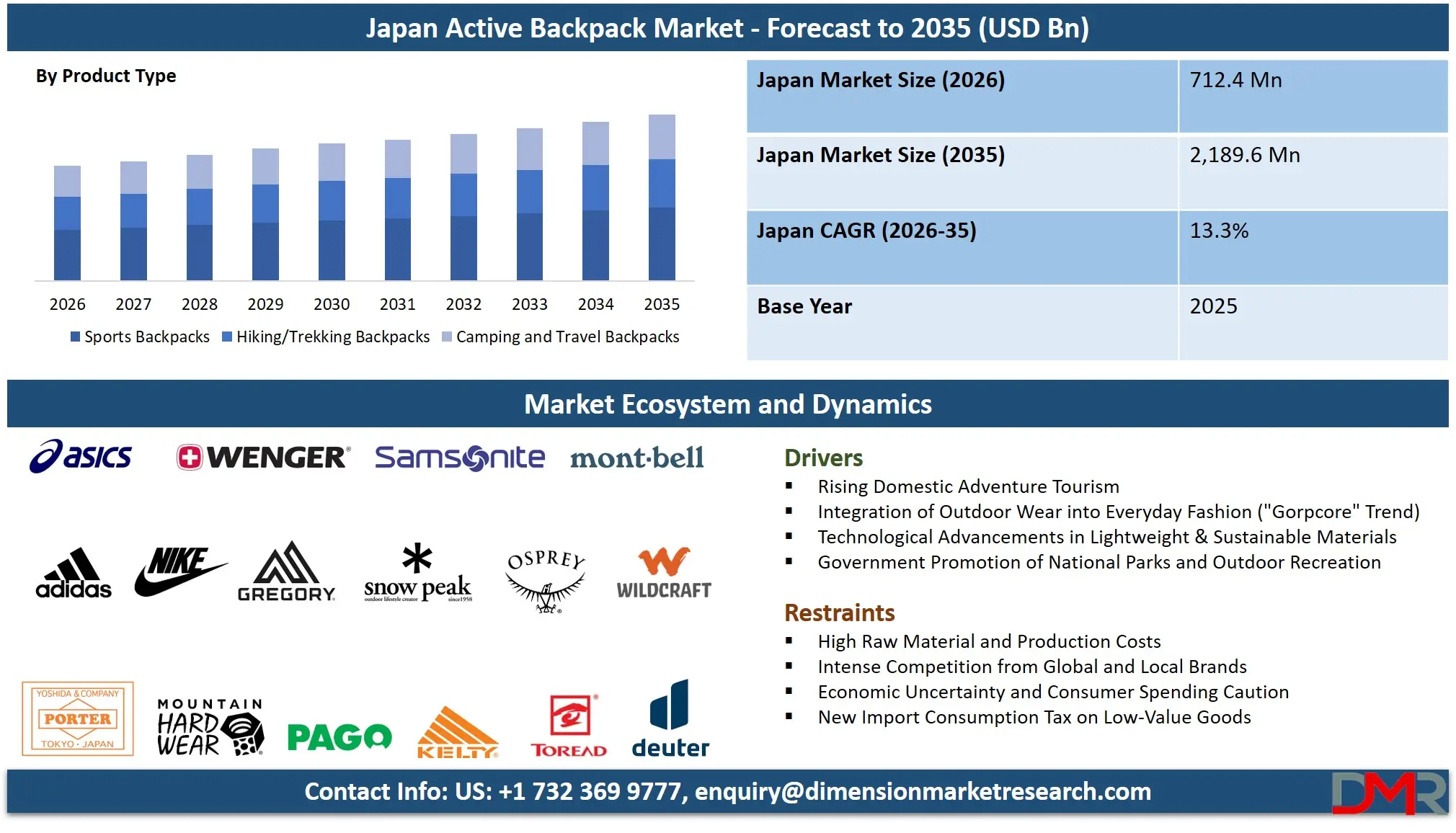
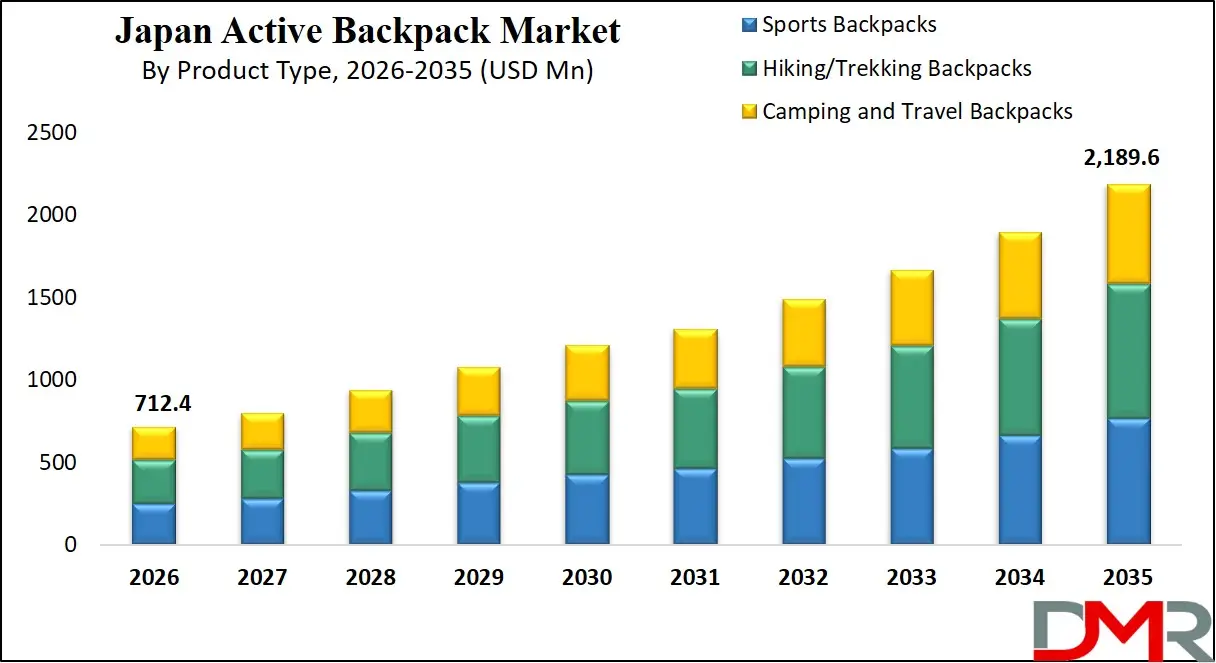
The Japan active backpack market is projected to reach USD 712.4 million in 2026 and which is further forecasted to expand significantly to USD 2,189.6 million by 2035, registering a strong CAGR of 13.3%. This growth reflects the country’s dynamic outdoor recreation ecosystem, increasing consumer inclination toward wellness-oriented lifestyles, and the seamless integration of functionality with premium design aesthetics. As a technologically advanced and design-focused economy, Japan offers a distinctive environment where innovation, durability, and minimalistic craftsmanship converge, positioning the active backpack segment as a vital component of both the sports gear and urban mobility markets.
ℹ
To learn more about this report –
Download Your Free Sample Report Here
The market is being propelled by rising participation in outdoor activities such as hiking, trekking, and cycling, alongside the growing trend of "active commuting" in densely populated urban centers like Tokyo and Osaka. Consumers are increasingly seeking lightweight, weather-resistant, and ergonomically optimized backpacks that cater to both professional and recreational needs. This has led to widespread adoption of advanced materials such as high-performance nylon, waterproof coatings, and breathable mesh systems, enhancing durability, load distribution, and comfort. Additionally, the shift toward hybrid work models has amplified demand for versatile backpacks that seamlessly transition between office, travel, and outdoor environments.
Key industry trends include the rapid digitalization of retail channels, with brands leveraging artificial intelligence for demand forecasting and personalized recommendations, as well as augmented reality for immersive product visualization. Sustainability remains a central focus, with increasing use of recycled fabrics, eco-friendly dyes, and circular production practices aligned with Japan’s environmental goals. Furthermore, the rise of micro-adventures and short-duration travel experiences is influencing product innovation, encouraging the development of compact, multifunctional, and stylish backpacks.
ℹ
To learn more about this report –
Download Your Free Sample Report Here
From a strategic perspective, the market is benefiting from strong investments in brand positioning, experiential retail, and tourism-driven demand. Flagship stores, outdoor festivals, and government-backed tourism initiatives are strengthening consumer engagement and expanding market reach. However, challenges such as currency fluctuations, high import regulations, and a shortage of technically skilled retail professionals may impact growth momentum. Overall, the Japan active backpack market is poised for sustained expansion, supported by innovation in materials, smart features, and consumer-centric design, reinforcing its role as a key contributor to the country’s evolving lifestyle and outdoor economy.
Japan Active Backpack Market: Key Takeaways
- Market Value: The Japan Active Backpack Market size is estimated to have a value of USD 712.4 million in 2026 and is expected to reach USD 2,189.6 million by the end of 2035.
- By Product Type Segment Analysis: Hiking/Trekking Backpacks is anticipated to dominate this segment in this market as it will hold 38.5% of market share in 2026.
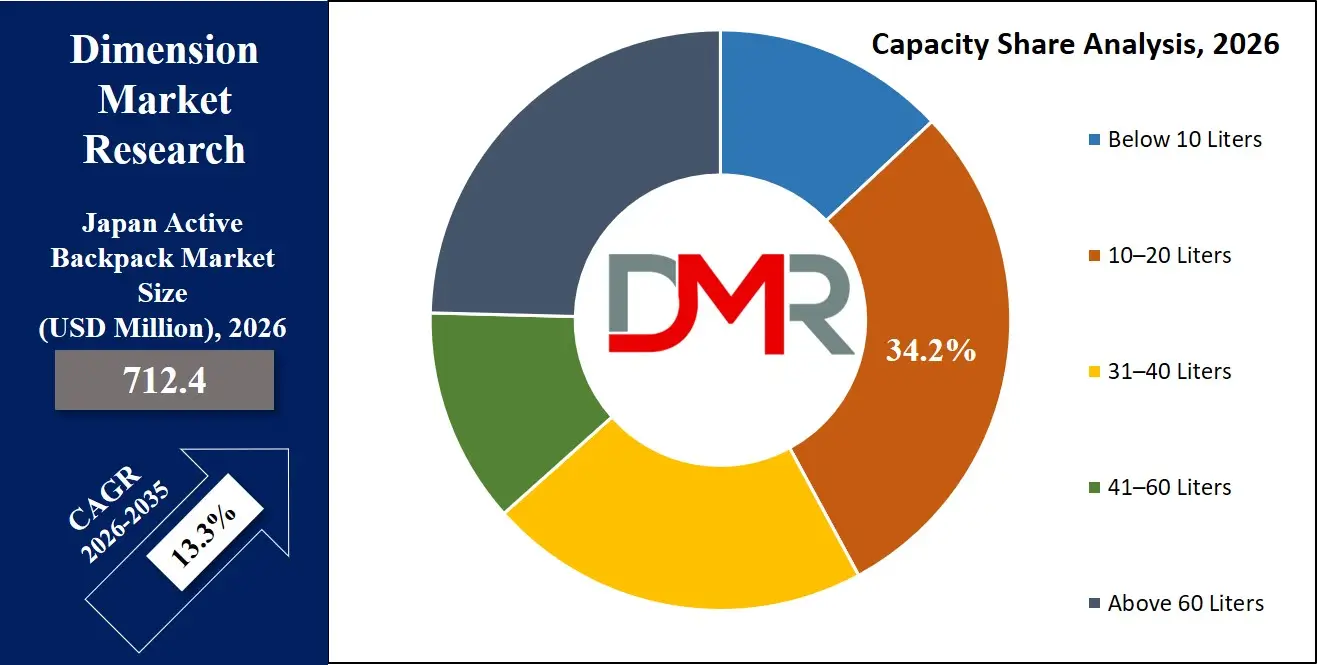
- By Capacity Segment Analysis: The 31–40 liters capacity is projected to dominate the capacity segment in the Japan Active Backpack Market with the highest market share in 2026.
- By Price Range Segment Analysis: The mid-range price segment ($35–$85) is anticipated to dominate the Japan active backpack market with a major market share in 2026.
- By Distribution Channel Segment Analysis: Specialty outdoor retail stores are projected to hold the leading position in the distribution channel segment of this market in 2026.
- Key Players: Some of the major key players in the Japan Active Backpack Market are The North Face, Arc'teryx, Osprey, Patagonia, Snow Peak, Montbell, Gregory, and many others.
- Market Growth Rate: The market is growing at a CAGR of 13.3 percent over the forecasted period.
Japan Active Backpack Market: Use Cases
- Urban Commuting & Work: This is about lightweight, stylish backpacks with laptop compartments and organizational features, designed for the modern professional who cycles or walks to work, blending functionality with city aesthetics.
- Day Hiking & Trekking: Backpacks designed for single-day outdoor excursions, featuring hydration system compatibility, ergonomic support, and sufficient capacity for food, water, and layers, ensuring comfort on the trail.
- Weekend Camping & Travel: Larger capacity backpacks used for multi-day camping trips or as carry-on travel luggage, requiring durable materials, multiple compartments, and versatile carrying options.
- Specialized Sports Activities: Backpacks tailored for specific sports like climbing, skiing, or cycling, featuring dedicated gear attachment points, impact protection, and aerodynamic designs to enhance performance and safety.
Japan Active Backpack Market: Stats & Facts
- Japan’s outdoor industry generated approximately USD 12–13 billion, according to the Japan Productivity Center.
- Outdoor tourism contributed around USD 5.5–6 billion to GDP, as reported by the Japan Tourism Agency.
- The sector supports approximately 2.1 million jobs, as per the Ministry of Economy, Trade and Industry (METI).
- The outdoor industry recorded a growth rate of about 5.2% year-on-year, according to the Japan Productivity Center.
- The industry has expanded at a CAGR of around 6.1%, as stated by the Japan Productivity Center.
- Average profit margins in the sector reached approximately 8.3%, according to METI.
- Outdoor apparel accounts for about 42% of total outdoor industry sales, as per the Japan Productivity Center.
- Outdoor footwear contributes around 28% of total sales, according to the Japan Productivity Center.
- Outdoor equipment, including backpacks, represents approximately 30% of total sales, as reported by METI.
- Around 60% of outdoor equipment sales are driven by hiking-related products, according to the Japan Mountaineering Association.
- Camping contributes roughly 25% of outdoor equipment demand, as per the Japan Camping Association.
- Mountaineering accounts for about 15% of equipment sales, according to the Japan Mountaineering Association.
- The outdoor accessories market, including backpacks, reached approximately USD 700–750 million, as stated by METI.
- The accessories segment recorded a CAGR of around 5.8%, according to the Japan Productivity Center.
- Lightweight and compact gear categories are among the fastest-growing segments, as per the Japan Outdoor Equipment Association.
- Approximately 38% of outdoor industry revenue is generated through online channels, according to METI.
- Around 40% of outdoor purchases occur through omnichannel retail, as reported by the Japan Retailers Association.
- Online sales share increased significantly from about 29% in 2019, according to METI.
- Around 42% of consumers planned to increase outdoor-related spending, as per the Japan Tourism Agency.
- The Japanese government allocated approximately USD 330–350 million under the "Cool Japan" initiative, according to the Government of Japan.
- Outdoor equipment rental services generated approximately USD 230–250 million in revenue, as reported by the Japan Tourism Agency.
Impact of Iran Conflict on Japan Active Backpack Market
- Logistics and Shipping Costs: Disruptions in Red Sea shipping lanes force cargo diversions around Africa. This increases freight durations and fuel surcharges, raising the landed cost of imported backpacks in Japan.
- Rising Material Expenses: Geopolitical instability frequently spikes global oil prices. Since many technical backpacks rely on petroleum-based synthetics like nylon and polyester, manufacturers face higher raw material costs and reduced margins.
- Currency and Consumer Spending: Middle East tensions often trigger "safe-haven" buying of the U.S. dollar over the yen. A weaker yen makes high-end international backpack brands more expensive for Japanese outdoor enthusiasts.
Japan Active Backpack Market: Market Dynamic
Driving Factors in Japan Active Backpack Market
Health and Wellness Consciousness
Japan's growing focus on health and wellness underlines the promotion of outdoor activities and makes the active backpack industry one of the mainstays of the economy. Huge interest in activities like hiking, camping, and cycling has been driving growth. In addition, it also comprises government campaigns encouraging outdoor exercise, which also attracts consumers of all ages. This helps strengthen the nation's standing as a leading market for outdoor gear in Asia.
Increasing Inbound Tourism
Japan is also developing its tourism sector actively, with record numbers of international visitors participating in outdoor activities, increasing the demand for high-quality rental and retail backpacks. The upgrading of national park facilities, expansion of trekking guides, and the development of better tourist infrastructure are easing the way for outdoor exploration. All these growth drivers increase the global connectivity of Japan in tourism and ensure the prosperity of the active backpack sector in the globalized world economy.
Restraints in Japan Active Backpack Market
High Raw Material Costs
Advanced materials and sustainable production processes require huge capital investment, although consumer demand is very supportive. Smaller enterprises can hardly afford certified eco-friendly fabrics or high-end hardware. This may impede market growth and further widen the gap between large corporations and SMEs in access to premium product development.
Intense Market Competition
The active backpack industry faces a saturation of brands, from global giants to local artisans, making it difficult for new entrants to establish a foothold. While product differentiation is key, the pace of innovation and marketing spend required outpaces the resources of smaller players. Getting over this restraint will involve considerable investments in niche marketing and unique value propositions.
Opportunities in Japan Active Backpack Market
Integration of Smart Features
The adoption of technologies such as solar-powered charging panels, integrated tracking devices, and smart fabric presents an excellent opportunity for product differentiation. RFID-blocking pockets and anti-theft designs cut down security risks, while app-connected features enhance the user experience. Startups and established firms alike are testing such integrations, which offers an excellent opportunity for technology providers and investors to reach the Japanese active backpack market.
Expansion of Direct-to-Consumer (DTC) Channels
With growing demand for personalized shopping experiences, DTC channels are developing at a very fast pace. There is also more inflow of investments into brand-owned e-commerce platforms and exclusive stores. Additionally, the use of data analytics for personalized marketing in Japan will further contribute to this segment and open doors for value-added service providers through innovative solution design.
Trends in Japan Active Backpack Market
Sustainability and Eco-Friendly Materials
The active backpack sector in Japan is becoming a hub of sustainable innovation due to the initiatives laid down by both government policy and consumer demand for environmentally friendly products. Companies are leveraging technologies such as recycled fabrics, plant-based nylons, and PFC-free water-repellent coatings. For example, brands are using materials derived from recycled ocean plastics, reducing environmental impact. This trend significantly improves brand perception, besides being in tune with global circular economy practices, and cements Japan's status as a leader in sustainable design.
Rise of "Gorpcore" and Outdoor Aesthetics in Fashion
This rapid growth of the "gorpcore" trend has produced high demand in Japan for the sector to implement stylish yet functional backpacks. Outdoor brands have partnered with fashion designers to try to meet today's demanding expectations around urban style. The number of technical backpacks being used as everyday fashion items has been on the rise; there is an increasing level of crossover between outdoor performance and streetwear aesthetics. As outdoor-inspired fashion is increasingly integral to consumer behavior, this trend is producing real investment in design innovation and brand collaborations.
Japan Active Backpack Market: Research Scope and Analysis
By Product Type Analysis
Hiking and trekking backpacks are projected to dominate the product type segment in the Japan Active Backpack Market, holding 38.5% of market share in 2026. This leadership is closely tied to Japan’s diverse natural landscapes, ranging from the volcanic peaks of Mount Fuji to the lush valleys of the Japanese Alps, which have cultivated a deeply rooted hiking culture over centuries. Japanese consumers are increasingly participating in both casual day hikes along historic routes like the Nakasendo Trail and more challenging multi-day expeditions. Such activities demand backpacks designed for performance, durability, and comfort, prompting strong consumer preference for lightweight daypacks as well as fully equipped trekking packs. Modern backpacks incorporate advanced suspension systems, ergonomic load distribution, hydration compatibility, and weather-resistant features, all designed to enhance comfort and safety during long treks.
The growing focus on health, wellness, and outdoor recreation further strengthens demand for high-quality backpacks, as consumers view outdoor activity as an essential lifestyle component. Technical innovation plays a crucial role, with premium materials such as Dyneema and Cordura providing both lightweight portability and exceptional durability. The rise of adventure tourism, including domestic travelers exploring rural trails and international visitors seeking authentic Japanese trekking experiences, also drives demand. Government-led initiatives to maintain trails and promote safe hiking practices encourage the adoption of advanced gear, reducing physical strain and enhancing overall trekking experiences. In this context, hiking and trekking backpacks remain an indispensable product segment, combining functionality, innovation, and cultural relevance to cater to both seasoned outdoor enthusiasts and casual adventurers across Japan.
By Capacity Analysis
The 31–40 liters capacity segment is expected to dominate the Japan Active Backpack Market due to its ideal versatility for day trips and short overnight excursions. Japanese consumers prioritize multifunctionality, and this mid-range size strikes a balance between carrying essential items such as extra layers, water, food, and camera gear without being excessively heavy or bulky. The capacity is particularly suited for Japan’s popular trekking destinations, including the Japanese Alps, the Kumano Kodo pilgrimage routes, and regional nature parks, which attract both casual hikers and serious outdoor enthusiasts. Its adaptable design allows hikers to enjoy spontaneous trips or planned excursions, supporting the growing "micro-adventurer" trend among urban residents who seek short escapes from city life.
ℹ
To learn more about this report –
Download Your Free Sample Report Here
Government investment in trail infrastructure, campsites, and multi-day trekking facilities further fuels the segment's dominance, positioning this size as the most practical option for Japan’s diverse topography. Proximity to urban centers allows weekend adventurers to optimize their excursions with this versatile capacity. Compared with smaller or larger alternatives, 31–40 liter backpacks provide optimal flexibility, accommodating a wide range of outdoor activities while maintaining comfort and functionality. Lightweight materials, including advanced synthetics and reinforced fabrics, allow for increased storage without additional burden, making this segment highly attractive to consumers who value efficiency, durability, and ease of use. This combination of versatility, convenience, and technical innovation ensures that the 31–40 liter capacity remains the leading choice for active outdoor participants across Japan.
By Price Range Analysis
The mid-range price segment ($35–$85) is projected to dominate the Japan Active Backpack Market, appealing to consumers who are quality-conscious yet value-driven. Japanese buyers tend to prioritize durability, performance, and smart investment over purely luxury purchases, making mid-range products a sweet spot for balancing quality with affordability. This price range is especially popular among students, young professionals, and urban adventurers, who seek reliable backpacks suitable for casual hiking, commuting, and occasional longer excursions. The segment successfully combines durable construction, functional features, and competitive pricing, ensuring accessibility for a broad spectrum of consumers while maintaining high usability standards.
Products in this price range often include advanced features such as water-resistant zippers, padded laptop compartments, ergonomic straps, hydration compatibility, and modular storage systems, providing many of the benefits of high-end backpacks without the luxury price tag. Efficient production processes, economies of scale, and brand strategies further enable manufacturers to meet dynamic consumer demand while maintaining affordability. In a mature market like Japan, where rational consumption and long-term value are key, mid-range backpacks appeal to a broad demographic while addressing practical requirements for outdoor and daily activities. By offering a balanced combination of value, quality, and functionality, the mid-range segment has become the dominant choice for both emerging outdoor enthusiasts and seasoned trekkers, solidifying its position as the preferred price category in Japan's active backpack market.
By Distribution Channel Analysis
Specialty outdoor retail stores dominate the distribution segment of the Japan Active Backpack Market, leveraging their expertise in curated product offerings, personalized service, and hands-on experience. In a market where Japanese consumers highly value gear performance, safety, and ergonomic design, these stores play a critical role in helping customers select the most suitable backpacks for specific activities, whether casual day hikes, multi-day treks, or urban commuting. Staff expertise allows for personalized fittings, technical guidance, and demonstration of advanced features, creating high levels of consumer trust and loyalty. Many specialty stores also host workshops, community events, and gear clinics, fostering a sense of community and engagement among outdoor enthusiasts.
Specialty retailers carry premium and niche brands often unavailable in general sports stores, catering to the growing demand for high-quality, technically advanced backpacks. Collaborations with national park authorities and local trail organizations enable them to offer rental services at trailheads, promoting safe and sustainable outdoor activity while extending their market reach. By combining innovative product offerings with high-touch customer service, these stores continue to set industry standards, educate consumers, and drive market growth. Their dominance reflects a culture where knowledgeable guidance, tailored experiences, and community involvement are key decision-making factors for Japanese consumers seeking the best backpacks for their adventures. Specialty outdoor retail stores therefore remain the cornerstone of Japan's active backpack ecosystem.
Japan Active Backpack Market Report is segmented on the basis of the following:
By Product Type
- Sports Backpacks
- Hiking/Trekking Backpacks
- Camping and Travel Backpacks
By Capacity
- Below 10 Liters
- 10–20 Liters
- 31–40 Liters
- 41–60 Liters
- Above 60 Liters
By Price Range
- Budget (Below <$35)
- Mid-range ($35–$85)
- Premium ($85–$145)
- Luxury (Above >$145)
By Distribution Channel
- E-commerce Platforms
- Specialty Outdoor Retail Stores
- Multi-brand Sports & Lifestyle Store
- Hypermarkets & Supermarkets
- Brand Exclusive Stores
Impact of Artificial Intelligence in Japan Active Backpack Market
- Product Design Optimization: AI enables manufacturers in Japan to analyze consumer preferences, trekking patterns, and ergonomic data to design backpacks that maximize comfort and efficiency. Advanced AI-driven simulations allow companies to optimize load distribution, strap tension, and ventilation, ensuring backpacks are lightweight yet durable for varied terrains like the Japanese Alps or Kumano Kodo trails.
- Smart Features Integration: AI contributes to the development of smart backpacks that include GPS tracking, activity monitoring, and adaptive load adjustment. These innovations enhance safety and convenience for both domestic and international hikers, aligning with Japan's tech-forward consumer expectations.
- Supply Chain & Inventory Efficiency: Japanese backpack brands leverage AI for demand forecasting, inventory management, and logistics optimization, ensuring the right stock of backpacks in specialty stores and online channels. This reduces overproduction, supports just-in-time delivery, and meets seasonal spikes in hiking and tourism activities efficiently.
- Personalized Consumer Experience: AI-powered e-commerce platforms and in-store kiosks allow consumers to receive personalized recommendations based on hiking preferences, body dimensions, and past purchases. This enhances the buying experience, drives customer satisfaction, and encourages adoption of advanced backpack models in Japan's competitive active gear market.
Japan Active Backpack Market: Competitive Landscape
The Japan Active Backpack Market is highly competitive, driven by both domestic and international brands offering diverse capabilities in design, materials, and distribution channels. Japanese consumers increasingly demand backpacks that combine technical performance with lifestyle versatility, reflecting their strong hiking culture, outdoor recreation trends, and urban commuting needs. Leading global brands such as The North Face, Osprey, and Gregory dominate the technical outdoor segment, offering backpacks designed for trekking, multi-day hikes, and alpine adventures. In contrast, lifestyle-focused segments are led by Nike, Adidas, and Under Armour, which blend functionality with fashion, appealing to younger consumers and urban adventurers.
ℹ
To learn more about this report –
Download Your Free Sample Report Here
Innovation is a key differentiator in Japan's market. Companies are incorporating ergonomic suspension systems, lightweight yet durable materials like Dyneema and Cordura, and hydration compatibility to enhance user comfort and performance. AI-driven design, predictive analytics, and modular features are increasingly being applied to tailor backpacks to consumer preferences and local terrain demands. Direct-to-consumer and e-commerce brands are gaining traction by offering customizable backpacks in terms of size, color, and storage configuration, responding to the Japanese consumer's focus on personalization and efficiency.
Strategic collaborations and partnerships also play an important role. Partnerships with material science firms and outdoor organizations allow brands to develop sustainable and performance-oriented solutions while expanding their retail presence. Overall, competition in Japan is shaped by the interplay of innovation, quality, and cultural alignment, making the market dynamic and challenging for both established players and new entrants seeking to capture market share.
Some of the prominent players in Japan Active Backpack Market are:
- Snow Peak
- Montbell
- Osprey Packs
- The North Face
- Gregory Mountain Products
- Adidas
- Nike
- Toread
- Deuter Sports
- Kelty
- Wildcraft
- Samsonite
- WENGER
- Mountain Hardwear
- Master-Piece
- Porter (Yoshida & Co.)
- anello
- ASICS
- Paago Works
- Yamatomichi
- Other Key Players
Recent Developments in Japan Active Backpack Market
- February 2026: The North Face Japan collaborated with Japanese denim brand FDMTL on a limited-edition backpack collection, blending technical outdoor performance with traditional Japanese sashiko stitching.
- January 2026: Osprey Packs partnered with logistics firm Yamato Holdings to launch a backpack rental service at major trailheads in the Japanese Alps, targeting inbound tourists.
- November 2025: Snow Peak opened its largest flagship store in Tokyo's Shibuya district, featuring a dedicated backpack customization studio and repair workshop.
- October 2025: The Japan Outdoor Week 2025 trade expo in Yokohama attracted over 45,000 visitors, with major backpack launches from Gregory, Deuter, and Patagonia.
- September 2025: Master-Piece collaborated with German luggage brand Rimowa on a premium travel backpack collection, combining Master-Piece's technical fabrics with Rimowa's aluminum accent details.
- June 2025: Porter (Yoshida & Co.) celebrated its 90th anniversary with a special exhibition at the Tokyo National Museum, showcasing the brand's backpack design evolution since 1935.
- April 2025: ASICS acquired Tokyo-based backpack accessory startup Paago Works to integrate smart hydration systems into its running backpack line.
- March 2025: The International Outdoor Sports Expo in Osaka featured 120 exhibitors, with sustainable backpack materials as the central theme.
- December 2024: anello parent company Kabushikigaisha Rosco entered a licensing agreement with a South Korean distribution firm to expand backpack sales across Southeast Asia.
- October 2024: Snow Peak and Toyota Motor Corporation announced a joint research initiative to develop backpacks with integrated flexible solar panels for off-grid charging.
- September 2024: Montbell launched its "Circular Backpack" recycling program, allowing customers to return old backpacks for material recovery in exchange for purchase discounts.
- August 2024: The Japan Sports & Outdoor Summit in Sapporo brought together 300 industry leaders to discuss supply chain resilience and material innovation.
Report Details
| Report Characteristics |
| Market Size (2026) |
USD 712.4 Mn |
| Forecast Value (2035) |
USD 2,189.6 Mn |
| CAGR (2026–2035) |
13.3% |
| Historical Data |
2021 – 2025 |
| Forecast Data |
2027 – 2035 |
| Base Year |
2025 |
| Estimate Year |
2026 |
| Report Coverage |
Market Revenue Estimation, Market Dynamics, Competitive Landscape, Growth Factors and etc. |
| Segments Covered |
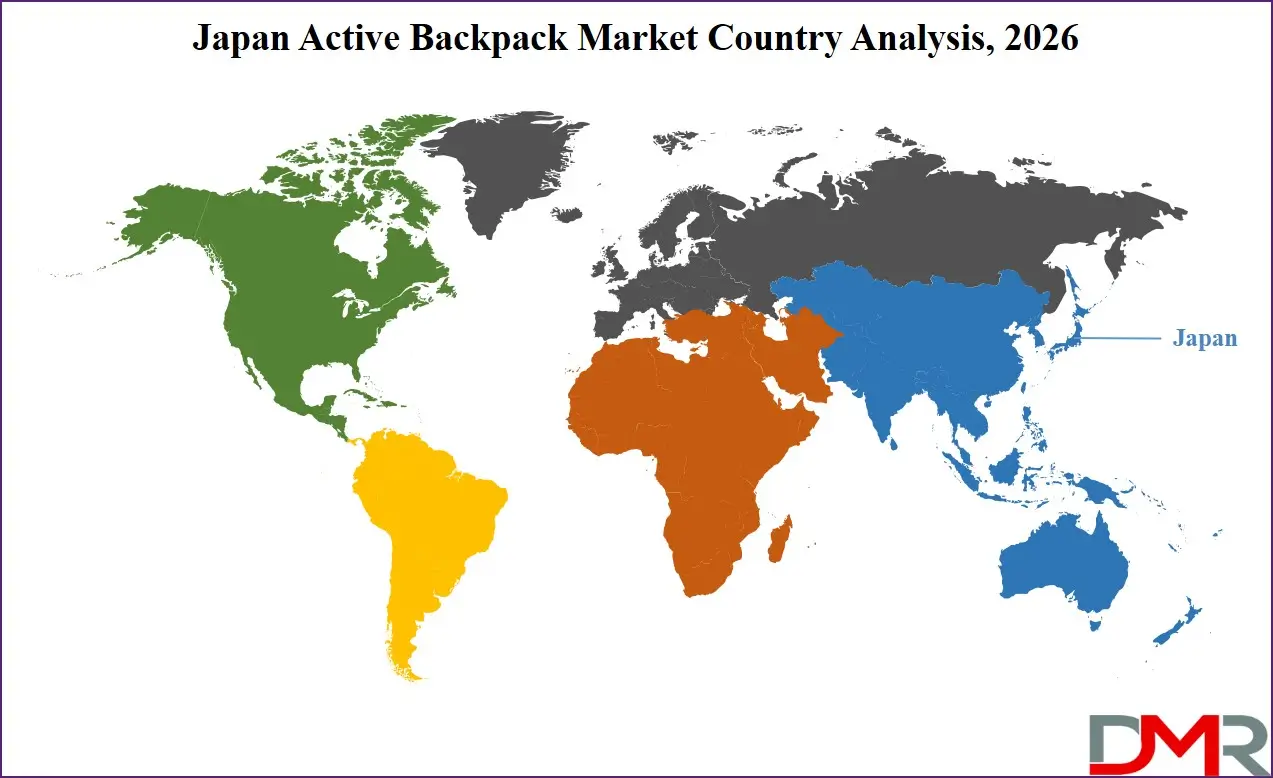
By Product Type (Sports Backpacks, Hiking/Trekking Backpacks, Camping and Travel Backpacks), By Capacity (Below 10 Liters, 10–20 Liters, 31–40 Liters, 41–60 Liters, Above 60 Liters), By Price Range (Budget [Below <$35], Mid-range [$35–$85], Premium [$85–$145], Luxury [Above >$145]), and By Distribution Channel (E-commerce Platforms, Specialty Outdoor Retail Stores, Multi-brand Sports & Lifestyle Store, Hypermarkets & Supermarkets, Brand Exclusive Stores) |
| Country Coverage |
Japan |
| Prominent Players |
Snow Peak, Montbell, Osprey Packs, The North Face, Gregory Mountain Products, Adidas, Nike, Toread, Deuter Sports, Kelty, Wildcraft, Samsonite, WENGER, Mountain Hardwear, Master-Piece, Porter (Yoshida & Co.), anello, ASICS, Paago Works, and Other Key Players |
| Purchase Options |
We have three licenses to opt for: Single User License (Limited to 1 user), Multi-User License (Up to 5 Users) and Corporate Use License (Unlimited User) along with free report customization equivalent to 0 analyst working days, 3 analysts working days and 5 analysts working days respectively. |
Frequently Asked Questions
How big is the Japan Active Backpack Market?
▾ The Japan Active Backpack Market size is estimated to have a value of USD 712.4 million in 2026 and is expected to reach USD 2,189.6 million by the end of 2035.
Who are the key players in the Japan Active Backpack Market?
▾ Some of the major key players in the Japan Active Backpack Market are The North Face, Arc'teryx, Osprey, Patagonia, Snow Peak, Montbell, Gregory, and many others.
What is the growth rate in the Japan Active Backpack Market?
▾ The market is growing at a CAGR of 13.3 percent over the forecasted period.