Market Overview
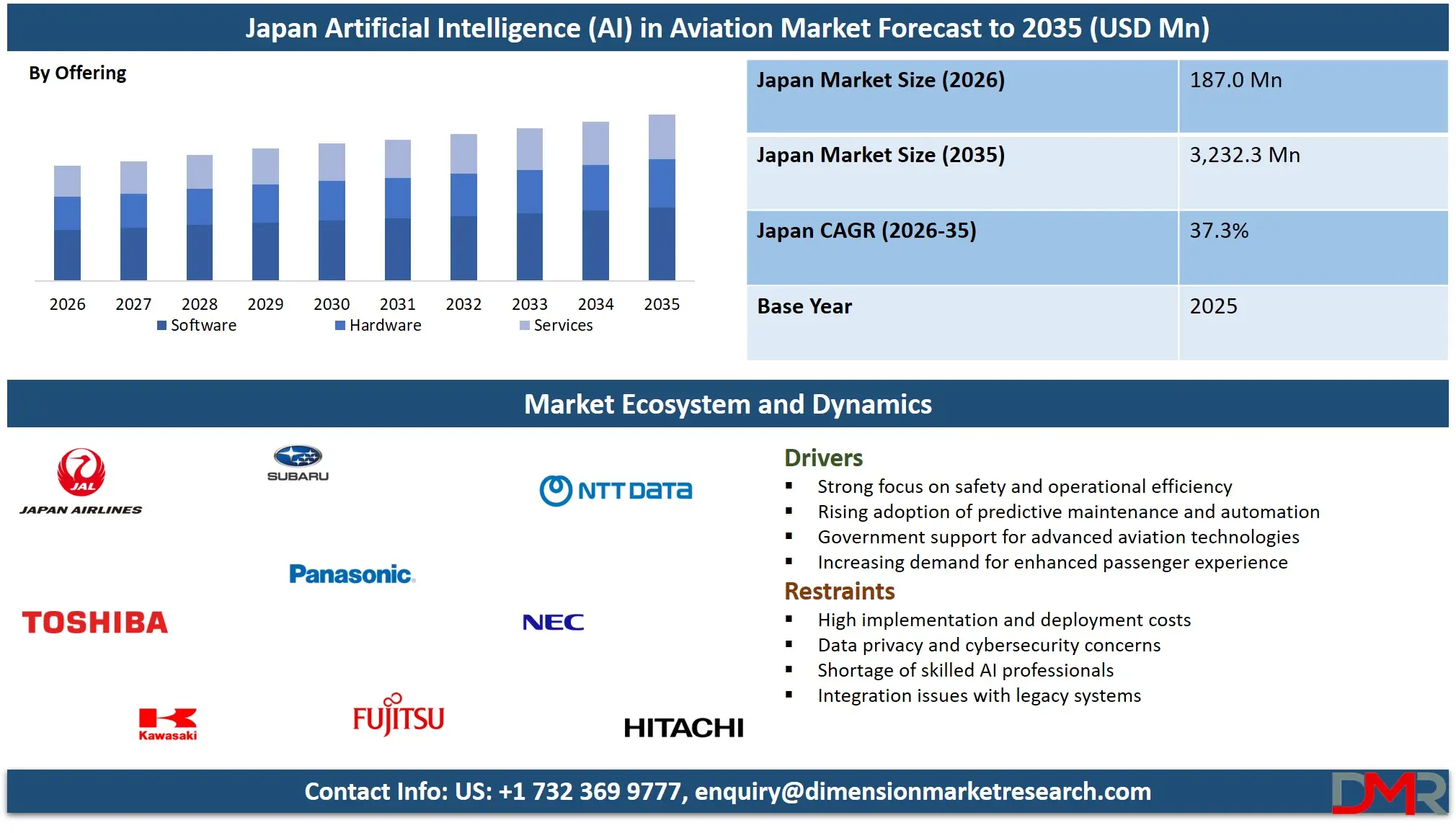
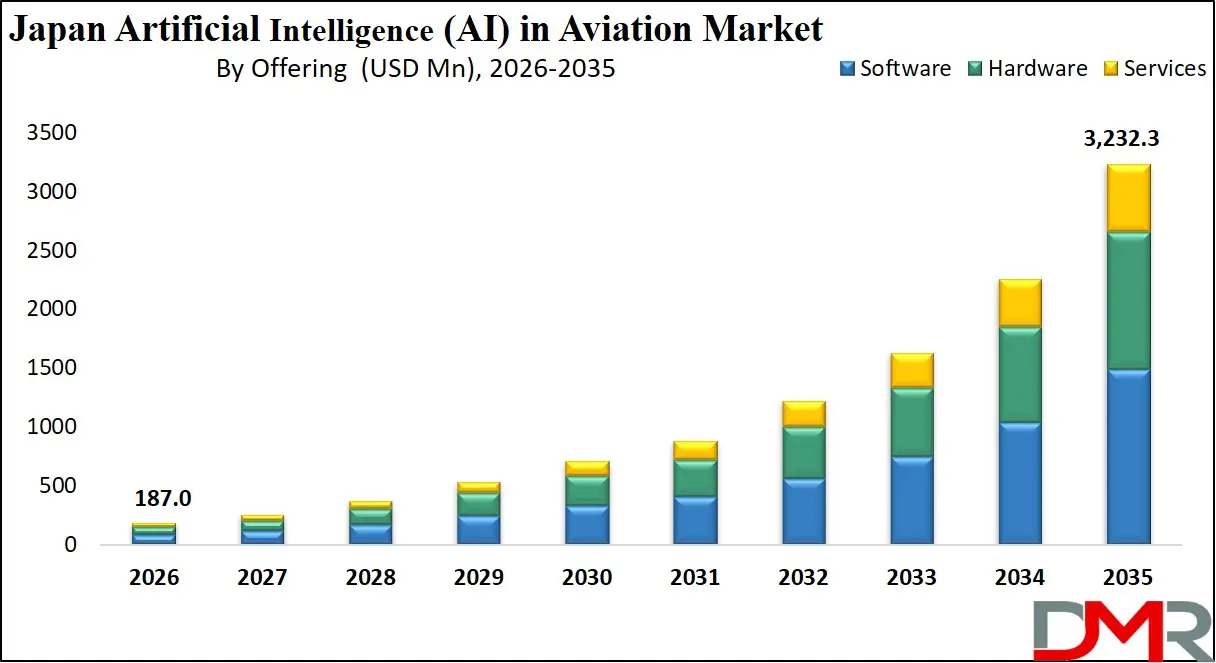
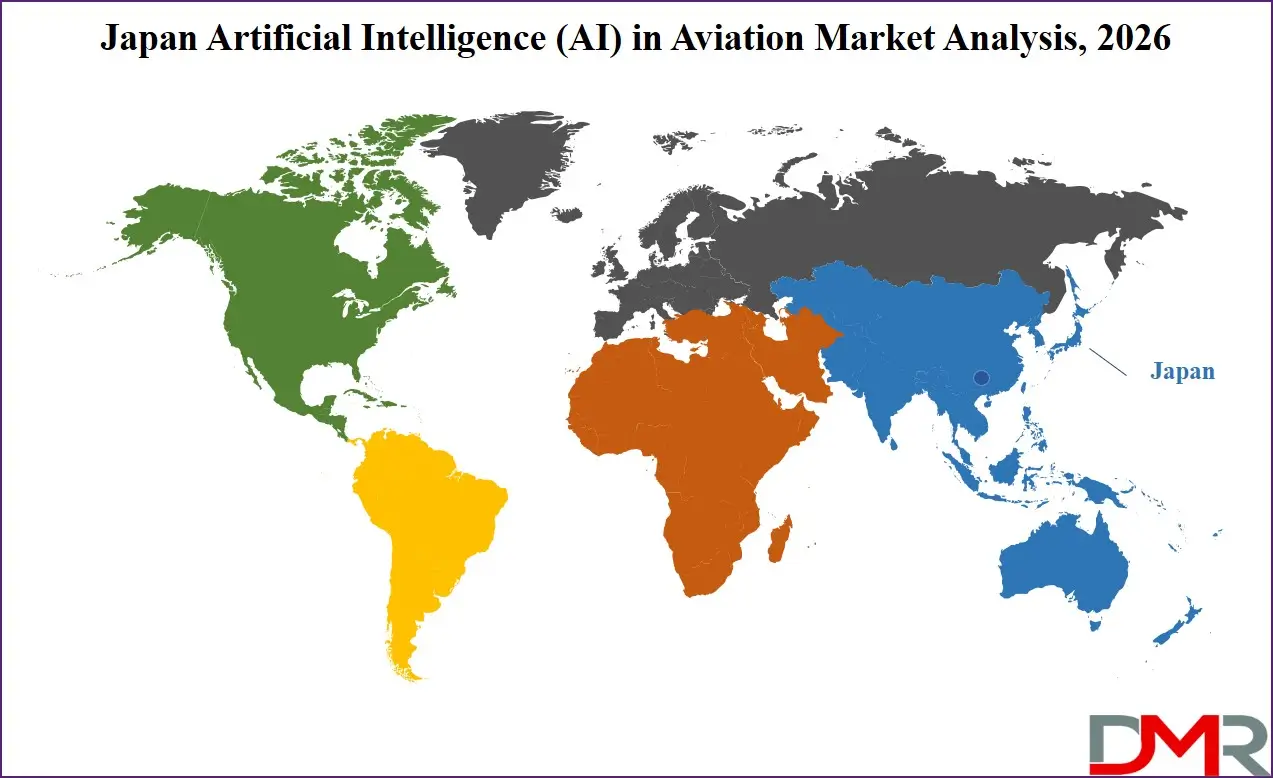
The Japan Artificial Intelligence (AI) in Aviation Market size is projected to reach USD 187.0 million in 2026 and grow at a compound annual growth rate of 37.3 to reach a value of USD 3,232.3 million in 2035.
ℹ
To learn more about this report –
Download Your Free Sample Report Here
Japan Artificial Intelligence (AI) in Aviation encompasses the integration of advanced computational systems, machine learning algorithms, computer vision, and natural language processing into aviation operations, including air traffic management, predictive maintenance, passenger services, and autonomous systems.
It plays a vital role in enhancing safety, efficiency, and operational optimization across airlines and airports. The market is gaining momentum due to increased digital transformation, rising demand for automation, and Japan's focus on smart mobility. Emerging trends such as AI-driven air traffic control, real-time analytics, and autonomous ground operations are reshaping aviation infrastructure and enabling data-driven decision-making across the ecosystem.
ℹ
To learn more about this report –
Download Your Free Sample Report Here
Japan Artificial Intelligence (AI) in Aviation Market: Key Takeaways & Influencing Factors
- Market Growth: The Japan Artificial Intelligence (AI) in Aviation Market size is expected to grow by USD 2,982.7 million, at a CAGR of 37.3%, during the forecasted period of 2027 to 2035.
- By Offering: The software segment is anticipated to get the majority share of the Japan Artificial Intelligence (AI) in Aviation market in 2026.
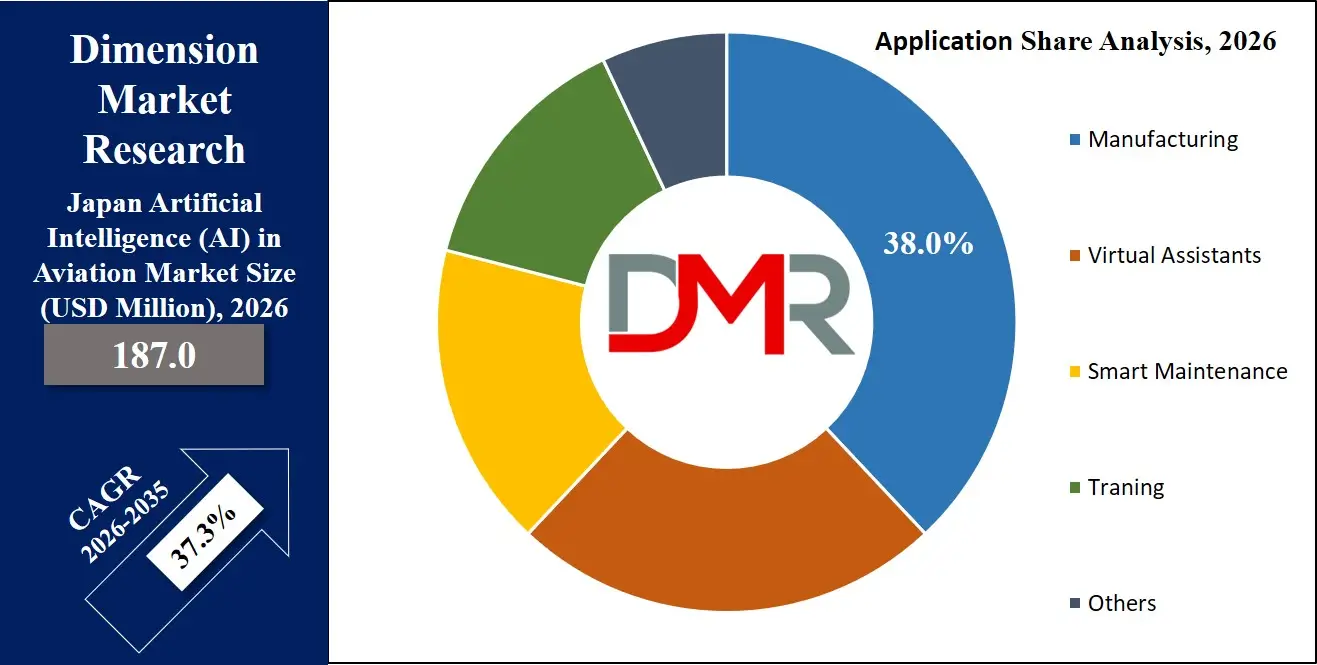
- By Application: The manufacturing segment is expected to get the largest revenue share in 2026 in the Japan Artificial Intelligence (AI) in Aviation market.
- Use Cases: Some of the use cases of Artificial Intelligence (AI) in Aviation include predictive maintenance, passenger experience enhancement, and more.
- Ministry of Land, Infrastructure, Transport and Tourism Japan reported in 2025 that over 65% of major Japanese airports have initiated AI-based operational efficiency programs.
- Japan Civil Aviation Bureau stated in 2024 that AI-assisted air traffic systems reduced flight delays by approximately 18% across major hubs.
- International Civil Aviation Organization noted in 2025 that AI-based predictive maintenance adoption in advanced aviation markets, including Japan, improved aircraft uptime by over 25%.
- Ministry of Economy, Trade and Industry Japan highlighted in 2026 that investments in AI aviation technologies grew by 22% year-on-year.
Japan Artificial Intelligence (AI) in Aviation Market: Use Cases:
- Predictive Maintenance: AI-driven analytics monitor aircraft components in real time, identifying potential failures before they occur. This minimizes downtime, reduces maintenance costs, and improves fleet reliability while ensuring higher safety standards across aviation operations.
- Air Traffic Management Optimization: AI systems enhance route planning, congestion management, and fuel efficiency by analyzing real-time weather and traffic data. This leads to reduced delays and optimized airspace utilization in increasingly busy Japanese aviation corridors.
- Passenger Experience Enhancement: AI-powered chatbots, biometric systems, and personalized recommendations streamline airport processes and improve customer satisfaction through faster check-ins, security clearances, and tailored travel services.
- Autonomous Ground Operations: AI supports automation in baggage handling, aircraft towing, and runway inspections, improving operational efficiency and reducing human error in airport ground handling activities.
Market Dynamic
Driving Factors in the Japan Artificial Intelligence (AI) in Aviation Market
Rising Demand for Operational Efficiency and Safety
The aviation sector in Japan is increasingly adopting AI to enhance operational efficiency and safety standards. AI systems enable real-time monitoring, predictive analytics, and automated decision-making, significantly reducing human errors. With growing passenger traffic and complex airspace, AI helps streamline operations, optimize flight schedules, and ensure compliance with stringent safety regulations, making it a critical growth driver.
Government Support and Smart Aviation Initiatives
Japan's government actively promotes digital transformation in aviation through smart airport initiatives and funding for AI innovation. Policies encouraging automation and advanced technologies are accelerating adoption across airports and airlines. Investments in AI-driven infrastructure and collaborations between public and private sectors are fostering innovation, strengthening Japan's position as a leader in intelligent aviation systems.
Restraints in the Japan Artificial Intelligence (AI) in Aviation Market
High Implementation and Integration Costs
The deployment of AI technologies in aviation requires substantial investment in infrastructure, data systems, and skilled workforce. Integration with legacy systems further increases complexity and costs. Smaller airlines and regional airports may struggle to adopt these technologies, limiting widespread implementation and slowing overall market growth.
Data Privacy and Regulatory Challenges
AI applications in aviation rely heavily on large datasets, raising concerns around data security and privacy. Strict aviation regulations and compliance requirements in Japan can delay AI adoption. Ensuring transparency, accountability, and ethical use of AI remains a challenge for market participants.
Opportunities in the Japan Artificial Intelligence (AI) in Aviation Market
Expansion of Smart Airports and Autonomous Systems
The development of smart airports in Japan presents significant opportunities for AI integration. Autonomous systems for security, baggage handling, and passenger flow management are gaining traction. These advancements offer untapped potential for improving efficiency and reducing operational costs while enhancing passenger experiences.
Growth in AI-Driven Sustainability Solutions
AI technologies are increasingly being used to optimize fuel consumption and reduce emissions in aviation. With Japan's strong focus on sustainability, AI-driven solutions for eco-efficient flight operations and carbon footprint reduction present a promising growth avenue for market players.
Trends in the Japan Artificial Intelligence (AI) in Aviation Market
Integration of AI with IoT and Big Data Analytics
The convergence of AI with IoT and big data is transforming aviation operations. Sensors and connected devices generate vast amounts of data, which AI systems analyze to provide actionable insights. This trend is enhancing predictive maintenance, operational efficiency, and real-time decision-making across airports and airlines.
Adoption of AI-Powered Computer Vision Systems
Computer vision is gaining prominence in aviation for applications such as security screening, runway inspection, and facial recognition. These systems improve accuracy and speed while reducing reliance on manual processes, making them a key trend shaping the market landscape.
Impact of Iran War on Japan Artificial Intelligence (AI) in Aviation Market
The Iran war has had an indirect effect on the aviation AI market in Japan due to variations in the price of fuels and supply chain disruptions worldwide. With rising geopolitical risks, airline companies have been forced to incur higher costs in their operations, leading to increased use of AI technology in reducing fuel usage and costs.
Research Scope and Analysis
By Offering Analysis
Software is expected to have a leading position in the industry, representing roughly 46% market share in 2026. The rising adoption of artificial intelligence platforms and custom artificial intelligence is behind the rise in the software category. Software helps in performing complex analysis and decision-making processes, thus making it critical for airlines and airports. The services category, especially integration and development services, is the fastest growing. The need for skilled personnel in implementing artificial intelligence systems has triggered growth in this sector.
By Technology Analysis
Machine learning would take the lead with a market share of 41% in 2026 since machine learning algorithms are commonly used in predictive maintenance, demand forecasting, and operation optimization. Both deep learning and supervised learning are commonly used in aviation data analysis. The fastest growing segment would be natural language processing since natural language processing technology is being used to improve customer interaction using chatbots and virtual assistants.
By Equipment Analysis
Co-Ordinate Measuring Machines (CMM) will likely have the largest market share at 34% by 2026 due to their significance in the process of precise measuring and quality control within the production and maintenance of airplanes. They play an important role within the aircraft engineering process owing to their level of accuracy and reliability. Vision Measuring Machines (VMM) is the most rapidly growing segment thanks to its adoption of AI-based computer vision technology.
By Application Analysis
Manufacturing is estimated to hold the largest market share of around 38% in 2026 due to the growing adoption of AI in aircraft manufacturing, quality checking, and optimizing processes.
ℹ
To learn more about this report –
Download Your Free Sample Report Here
AI increases accuracy, minimizes errors, and boosts efficiency. The smart maintenance application is expected to have the highest growth rate as a result of the growing requirement for predictive maintenance solutions.
The Japan Artificial Intelligence (AI) in Aviation Market Report is segmented on the basis of the following:
By Offering
- Hardware
- Software
- Services
- Integration & Development
- Support & Maintenance
By Technology
- Machine Learning
- Deep Learning
- Supervised Learning
- Semi-supervised Learning
- Unsupervised Learning
- Reinforcement Learning
- Natural Language Processing
- Context Awareness Computing
- Computer Vision
By Equipment
- Autocollimator
- Profile Projector
- Measuring Microscope
- Optical Digitizers & Scanners (ODS)
- Co-ordinate Measuring Machine (CMM)
- Vision Measuring Machine (VMM)
By Application
- Virtual Assistants
- Smart Maintenance
- Manufacturing
- Training
- Others
Competitive Landscape
In the Japan AI in Aviation Market, intense competition can be observed because of the innovation, technological developments, and collaboration that prevail in the market.
ℹ
To learn more about this report –
Download Your Free Sample Report Here
The companies strive to make AI algorithms more advanced, offer diverse ranges of products, and invest greatly in R&D in order to secure a competitive advantage. Entry barriers for the industry are high because of the amount of capital needed and regulatory compliance requirements.
Some of the prominent players in the Japan Artificial Intelligence (AI) in Aviation are:
- Mitsubishi Electric Corporation
- Kawasaki Heavy Industries
- Subaru Corporation
- Fujitsu Limited
- NEC Corporation
- Hitachi Ltd.
- Toshiba Corporation
- NTT Data Corporation
- SoftBank Group Corp.
- Sony Group Corporation
- Panasonic Holdings Corporation
- Japan Airlines (JAL)
- All Nippon Airways (ANA)
- SKY Perfect JSAT Corporation
- Rakuten Group, Inc.
- Yamaha Motor Co., Ltd.
- Preferred Networks
- PKSHA Technology
- Abeja Inc.
- Cinnamon AI
- Other Key Players
Recent Developments
- In November 2025, Emirates Airlines and Japan Airlines have advanced their operations by integrating AI-driven safety systems. This development highlights a major shift in global aviation, where digital technologies enhance safety, efficiency, and passenger experience. Both airlines are leveraging AI to improve operational reliability and service quality, setting new industry benchmarks.
- In October 2025, All Nippon Airways announced the rollout of ‘neoAI Chat,’ a generative AI platform by neoAI Corporation, across its operational departments. The system enhances efficiency and decision-making in aircraft operations. Following successful trials at Narita Airport, it will improve information retrieval from complex regulations and support safer, more efficient services.
- In June 2025, IFS announced that Japan Airlines has begun implementing IFS Cloud for Aviation Maintenance to modernize its long-standing maintenance system. The solution integrates maintenance, supply chain, inventory, and finance functions. This cloud transition aims to improve aircraft quality, operational availability, and scalability, supported by close collaboration between IFS experts and JAL teams.
Report Details
| Report Characteristics |
| Market Size (2026) |
USD 187.0 Mn |
| Forecast Value (2035) |
USD 3,234.3 Mn |
| CAGR (2026–2035) |
37.3% |
| Historical Data |
2021 – 2025 |
| Forecast Data |
2027 – 2035 |
| Base Year |
2025 |
| Estimate Year |
2026 |
| Report Coverage |
Market Revenue Estimation, Market Dynamics, Competitive Landscape, Growth Factors and etc. |
| Segments Covered |
By Offering (Hardware, Software, Services), By Technology (Machine Learning, Natural Language Processing, Context Awareness Computing, Computer Vision), By Equipment (Autocollimator, Profile Projector, Measuring Microscope, Optical Digitizers & Scanners (ODS), Co-ordinate Measuring Machine (CMM), Vision Measuring Machine (VMM)), By Application (Virtual Assistants, Smart Maintenance, Manufacturing, Training, Others) |
| Country Coverage |
Japan |
| Prominent Players |
Mitsubishi Electric Corporation, Kawasaki Heavy Industries, Subaru Corporation, Fujitsu Limited, NEC Corporation, Hitachi Ltd., Toshiba Corporation, NTT Data Corporation, SoftBank Group Corp., Sony Group Corporation, Panasonic Holdings Corporation, Japan Airlines (JAL), All Nippon Airways (ANA), SKY Perfect JSAT Corporation, Rakuten Group, Inc., Yamaha Motor Co., Ltd., Preferred Networks, PKSHA Technology, Abeja Inc., Cinnamon AI, and Other Key Players |
| Purchase Options |
We have three licenses to opt for: Single User License (Limited to 1 user), Multi-User License (Up to 5 Users) and Corporate Use License (Unlimited User) along with free report customization equivalent to 0 analyst working days, 3 analysts working days and 5 analysts working days respectively. |
Frequently Asked Questions
How big is the Japan Artificial Intelligence (AI) in Aviation Market?
▾ The Japan Artificial Intelligence (AI) in Aviation Market size is expected to reach USD 187.0 million by 2026 and is projected to reach USD 3,232.3 million by the end of 2035.
Who are the key players in the Japan Artificial Intelligence (AI) in Aviation Market?
▾ Some of the major key players in the Japan Artificial Intelligence (AI) in Aviation Market include NEC, Hitachi, Fujitsu, and others.
What is the growth rate in the Japan Artificial Intelligence (AI) in Aviation Market?
▾ The market is growing at a CAGR of 37.3 percent over the forecasted period.