Market Overview
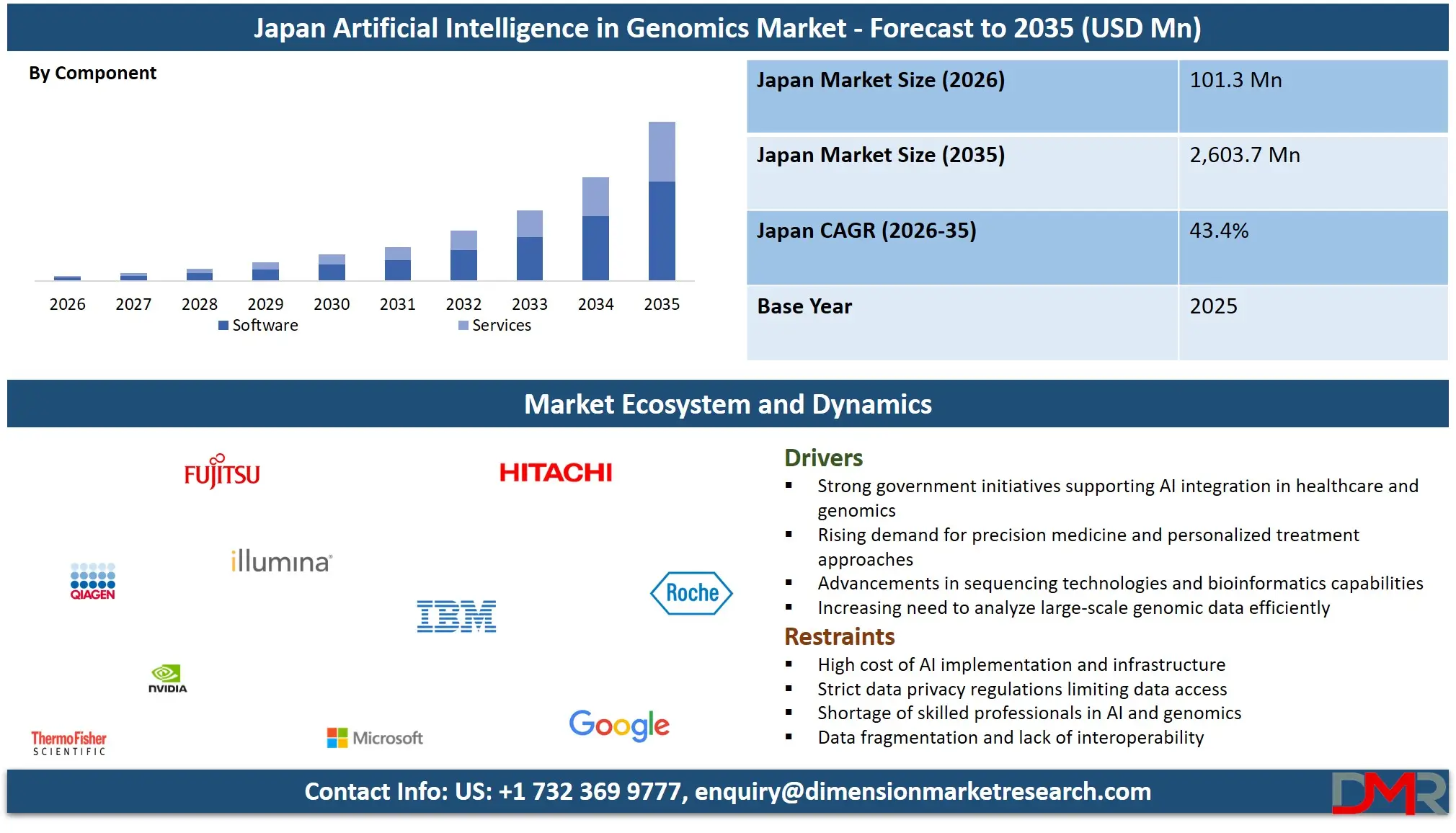
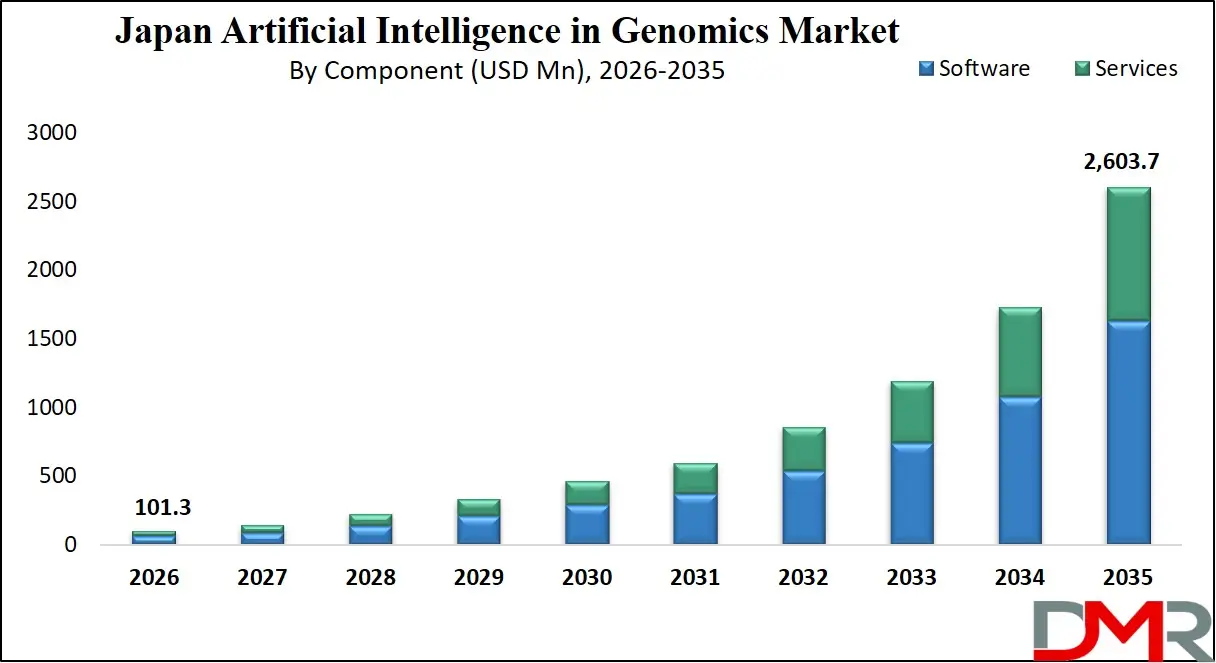
Japan Artificial Intelligence in Genomics Market size is projected to reach USD 101.3 million in 2026 and grow at a compound annual growth rate of 43.4% to reach a value of USD 2,603.7 million in 2035.
ℹ
To learn more about this report –
Download Your Free Sample Report Here
Artificial Intelligence in genomics refers to the application of advanced computational algorithms, including machine learning and deep learning models, to analyze, interpret, and derive insights from complex genomic data. This domain integrates bioinformatics, data science, and genetic research to accelerate processes such as genome sequencing, gene editing, and disease prediction. It plays a crucial role in enabling precision medicine, improving diagnostics, and enhancing drug discovery pipelines by identifying genetic patterns that are otherwise difficult to detect with traditional methods.
The significance of this field within the broader healthcare and biotechnology ecosystem is growing rapidly, particularly as genomic data generation continues to expand exponentially. AI-driven tools are helping researchers process massive datasets efficiently, uncovering actionable insights that support personalized treatment approaches. In Japan, the convergence of strong healthcare infrastructure, advanced research capabilities, and government-backed innovation initiatives is fostering the development of AI-based genomic solutions across academic and commercial sectors.
Recent shifts include the increasing adoption of cloud-based genomic platforms, integration of multi-omics data, and the use of AI for real-time clinical decision-making. Additionally, ethical AI deployment and data privacy regulations are influencing development strategies. The market is also witnessing a transition from research-centric applications toward clinical implementation, reflecting growing maturity and broader acceptance of AI-driven genomics in mainstream healthcare.
ℹ
To learn more about this report –
Download Your Free Sample Report Here
Technological advancements in deep learning, natural language processing, and high-throughput sequencing are significantly transforming genomic analysis capabilities. Increased computational power and improved algorithms enable faster and more accurate interpretation of genetic data, facilitating early disease detection and targeted therapies. Government initiatives supporting precision medicine and genomic research are also accelerating adoption, particularly in Japan where national programs emphasize digital healthcare transformation.
Japan Artificial Intelligence in Genomics Market: Key Takeaways
- Market Growth: Japan Artificial Intelligence in Genomics Market size is expected to grow by USD 2,462.8 million, at a CAGR of 43.4%, during the forecasted period of 2027 to 2035.
- By Component: The software segment is anticipated to get the majority share of the Japan Artificial Intelligence in Genomics market in 2026.
- By Application: The drug discovery & development segment is expected to get the largest revenue share in 2026 in the Japan Artificial Intelligence in Genomics market.
- Use Cases: Some of the use cases of artificial intelligence in genomics include precision medicine, clinical diagnostics, and more.
Japan Artificial Intelligence in Genomics Market: Use Cases
- Precision Medicine: AI enables personalized treatment plans by analyzing individual genetic profiles, helping clinicians tailor therapies based on specific mutations and improving patient outcomes significantly.
- Drug Discovery & Development: AI accelerates identification of drug targets and predicts molecular interactions, reducing time and cost in developing new therapies while increasing success rates in clinical trials.
- Disease Risk Prediction: Advanced algorithms analyze genomic data to identify individuals at risk of hereditary diseases, enabling early intervention and preventive healthcare strategies.
- Clinical Diagnostics: AI enhances diagnostic accuracy by detecting genetic abnormalities and rare diseases through automated genomic data interpretation, supporting clinicians in decision-making.
- Agricultural Genomics: AI-driven genomics is used to improve crop yield and disease resistance by analyzing plant genetics, contributing to food security and sustainable agriculture.
- Gene Editing Optimization: AI supports technologies like CRISPR by predicting gene-editing outcomes and minimizing off-target effects, improving precision and safety in genetic modifications.
- Population Genomics Research: AI helps analyze large-scale genomic datasets to study population health trends, genetic diversity, and epidemiological patterns, aiding public health planning.
Stats & Facts
- Ministry of Health, Labour and Welfare Japan reported in 2025 that over 10 million genomic datasets have been integrated into national research initiatives.
- Japan Agency for Medical Research and Development stated in 2024 that funding for AI-driven genomics projects increased by 18% year-over-year.
- Cabinet Office of Japan highlighted in 2025 that precision medicine adoption in hospitals rose by 22% compared to 2023 levels.
- World Health Organization reported in 2024 that genomic data usage in clinical diagnostics in developed countries, including Japan, grew by 25%.
- Organisation for Economic Co-operation and Development noted in 2025 that Japan ranks among the top 5 countries in genomic research investment.
- Ministry of Internal Affairs and Communications Japan recorded in 2024 that healthcare AI adoption reached 35% across major institutions.
- National Institutes of Biomedical Innovation Japan stated in 2025 that AI reduced genome sequencing analysis time by nearly 40%.
- World Bank reported in 2024 that biotechnology sector growth in Japan exceeded 12% annually, supported by AI integration.
- Japan Science and Technology Agency noted in 2025 that collaborative AI-genomics research projects increased by 30%.
- International Monetary Fund highlighted in 2024 that digital healthcare investments in Japan grew by 20% year-over-year.
- United Nations reported in 2025 that AI-driven healthcare technologies could improve diagnostic accuracy by up to 50%.
- Ministry of Economy, Trade and Industry Japan stated in 2024 that over 60% of biotech firms are integrating AI into research workflows.
Market Dynamic
Driving Factors in the Japan Artificial Intelligence in Genomics Market
Advancements in AI and Genomic Sequencing Technologies
Rapid improvements in artificial intelligence algorithms and next-generation sequencing technologies are significantly driving the growth of this market. AI enables faster processing and interpretation of complex genomic datasets, which traditionally required extensive time and manual effort. In Japan, the integration of high-performance computing with genomic platforms is enhancing research efficiency and clinical applications. These advancements allow for accurate disease prediction, identification of genetic mutations, and improved therapeutic targeting. As computational costs decline and accessibility improves, more institutions are adopting AI-driven genomics, accelerating innovation and expanding its role across healthcare and biotechnology sectors.
Government Support and Healthcare Digitization Initiatives
Strong government backing and national strategies promoting digital healthcare transformation are key growth drivers. Japan has implemented policies encouraging the adoption of AI and big data in healthcare, including genomics research. Funding programs and public-private partnerships are fostering innovation and infrastructure development. Additionally, initiatives focused on precision medicine and population health management are increasing demand for AI-powered genomic tools. These efforts are creating a favorable ecosystem for market expansion, enabling companies and research institutions to develop advanced solutions while ensuring regulatory compliance and ethical data usage.
Restraints in the Japan Artificial Intelligence in Genomics Market
High Implementation Costs and Infrastructure Requirements
The adoption of AI in genomics requires significant investment in advanced computing infrastructure, data storage, and skilled workforce. High costs associated with sequencing technologies and AI integration can limit accessibility, particularly for smaller research institutions and healthcare providers. In Japan, despite strong technological capabilities, budget constraints and resource allocation challenges can slow adoption. Additionally, maintaining and upgrading systems to keep pace with rapid technological advancements adds to operational expenses. These financial barriers can hinder widespread implementation and limit the scalability of AI-driven genomic solutions.
Data Privacy and Ethical Concerns
Genomic data is highly sensitive, and its use raises concerns related to privacy, security, and ethical considerations. Strict regulations governing data sharing and patient consent in Japan can create challenges for organizations aiming to leverage large datasets for AI training. Ensuring compliance with data protection laws while maintaining data accessibility is a complex task. Furthermore, ethical concerns regarding genetic discrimination and misuse of data can impact public trust. These factors may slow down research collaborations and limit the full potential of AI applications in genomics.
Opportunities in the Japan Artificial Intelligence in Genomics Market
Expansion of Precision Medicine Applications
The growing emphasis on personalized healthcare presents significant opportunities for AI in genomics. As Japan continues to focus on improving patient outcomes through tailored treatments, the demand for AI-driven genomic analysis is expected to rise. This includes applications in oncology, rare diseases, and chronic condition management. The integration of genomic data with electronic health records further enhances clinical decision-making. Companies investing in precision medicine solutions can tap into a rapidly expanding market, driven by increasing awareness and adoption among healthcare providers.
Collaborations and Global Research Partnerships
Increasing collaborations between Japanese institutions and global organizations are creating new growth avenues. Joint research initiatives, data-sharing agreements, and cross-border partnerships are accelerating innovation in AI-driven genomics. These collaborations enable access to diverse datasets and advanced technologies, enhancing research capabilities. Additionally, partnerships with technology companies are facilitating the development of scalable and efficient AI solutions. This trend is expected to strengthen Japan’s position as a leader in genomic research and expand its influence in the global market.
Trends in the Japan Artificial Intelligence in Genomics Market
Integration of Multi-Omics Data with AI
A key trend shaping the market is the integration of genomics with other omics data such as proteomics and metabolomics. AI algorithms are increasingly being used to analyze these complex datasets collectively, providing a more comprehensive understanding of biological systems. This holistic approach improves disease diagnosis, drug discovery, and therapeutic development. In Japan, research institutions are actively investing in multi-omics platforms, enabling deeper insights into disease mechanisms and enhancing the effectiveness of precision medicine strategies.
Adoption of Cloud-Based Genomic Platforms
Cloud computing is transforming the way genomic data is stored, processed, and analyzed. AI-powered cloud platforms offer scalability, flexibility, and cost efficiency, making them attractive for research institutions and healthcare providers. In Japan, the adoption of cloud-based solutions is growing rapidly, supported by advancements in data security and regulatory frameworks. These platforms facilitate real-time collaboration, remote data access, and integration with AI tools, enabling faster and more efficient genomic analysis while reducing infrastructure costs.
Research Scope and Analysis
By Component Analysis
The software segment continues to dominate the Japan Artificial Intelligence in Genomics market, projected to hold approximately 62.4% share in 2026. Its leadership is primarily driven by the increasing demand for advanced analytics platforms, genome interpretation tools, and AI-enabled sequencing software. These software solutions enable the automation of complex genomic workflows, significantly reducing human intervention while improving accuracy and reproducibility in research and clinical applications. Japanese healthcare institutions, research centers, and biotechnology firms are actively adopting AI-powered software to enhance diagnostic capabilities and accelerate scientific discovery. Continuous advancements in machine learning algorithms, cloud-based deployment models, and scalable architecture are further increasing the accessibility of these solutions. Moreover, software platforms are evolving to provide integrated functionalities, such as multi-omics analysis, predictive modeling, and real-time clinical decision support, which strengthens their position as the preferred choice for organizations aiming to modernize genomic research and healthcare operations. This trend highlights the critical role of software in shaping AI-driven genomic advancements.
The services segment is emerging as one of the fastest-growing areas within the market due to the increasing need for specialized implementation, consulting, and ongoing maintenance of AI-driven genomic solutions. Organizations, including hospitals, research institutions, and biotech companies, often require expert support to integrate AI tools seamlessly into their existing workflows while ensuring compliance with regulatory and ethical standards. In Japan, collaborations between service providers and academic or clinical institutions are intensifying, creating demand for training, deployment, and customization services. These services include cloud integration, AI model optimization, data management, and analytics support, all of which help organizations extract actionable insights from complex genomic datasets. As healthcare providers adopt AI technologies to support precision medicine, early diagnostics, and drug discovery initiatives, demand for service-oriented support is expected to grow substantially. The services segment benefits from the technical complexity of AI-driven genomics, creating opportunities for specialized providers to capture market share while facilitating broader adoption across the industry.
By Technology Analysis
Machine learning remains the leading technology segment in the Japan Artificial Intelligence in Genomics market, with an estimated 48.7% share in 2026. Its dominance is fueled by its versatility in processing structured genomic data and delivering predictive insights for research and clinical applications. Machine learning models are widely used for disease risk assessment, variant analysis, and identification of potential drug targets, making them foundational tools for genomic research and personalized medicine. In Japan, strong government support for healthcare innovation and data-driven research, combined with extensive investment in high-quality genomic datasets, underpins widespread adoption. The technology allows institutions to efficiently manage large-scale genomic projects, automate data interpretation, and reduce errors, significantly accelerating research timelines. Moreover, machine learning supports integration with other AI technologies, such as natural language processing and predictive modeling, enhancing overall performance. Its proven reliability, scalability, and adaptability position machine learning as the dominant driver of AI applications in genomics.
Deep learning is the fastest-growing technology segment due to its superior capacity to analyze complex, high-dimensional, and unstructured genomic data. It enables advanced applications such as image-based genomic analysis, pattern recognition, and predictive modeling of molecular interactions. The segment’s growth in Japan is supported by the increasing availability of large-scale datasets, high-performance computing infrastructure, and investments in AI research by both private and public institutions. Deep learning is particularly critical in drug discovery, oncology, and precision medicine, where intricate genomic and phenotypic patterns must be identified for accurate decision-making. Its ability to learn hierarchical features automatically makes it highly effective for tasks that were previously difficult or impossible using traditional algorithms. Additionally, the integration of deep learning with multi-omics datasets is opening new possibilities in biomarker discovery and personalized treatment planning. Japan’s focus on leveraging AI to improve healthcare outcomes further fuels adoption, positioning deep learning as a transformative technology in genomics research and clinical implementation.
By Functionality Analysis
Genome sequencing is the dominant functionality segment, with a projected 55.2% share in 2026, driven by the growing need for comprehensive genetic analysis in both research and clinical settings. AI technologies have revolutionized sequencing processes, improving accuracy, reducing analysis time, and automating interpretation of massive genomic datasets. In Japan, substantial investment in national sequencing initiatives and genomic research infrastructure is supporting the widespread adoption of AI-powered sequencing platforms. These solutions are increasingly being deployed in hospitals, biotech firms, and academic institutions to identify genetic variations, support early disease detection, and optimize treatment strategies. AI-enhanced genome sequencing also enables integration with other omics datasets, providing deeper insights into disease mechanisms and personalized medicine applications. The combination of automation, scalability, and predictive analytics has established genome sequencing as a cornerstone of AI-driven genomics, solidifying its leadership in the market and ensuring its continued expansion in the coming years.
Gene editing is emerging as a fast-growing segment, fueled by advancements in CRISPR technology and AI-driven prediction tools. AI supports precise targeting and optimization of gene edits, reducing off-target effects and improving overall efficacy, which is critical for both therapeutic and agricultural applications. In Japan, increasing research in genetic therapies, regenerative medicine, and crop improvement programs is driving demand for AI-enhanced gene editing platforms. These solutions are enabling more efficient design of experiments, predictive analysis of outcomes, and risk mitigation, accelerating the pace of innovation. The segment benefits from global interest in gene therapy and personalized medicine, where precision is paramount. Furthermore, AI’s role in streamlining laboratory workflows and providing actionable insights is making gene editing more accessible and safer, contributing to its rapid growth trajectory and signaling strong long-term potential within the Japanese genomics market.
By Application Analysis
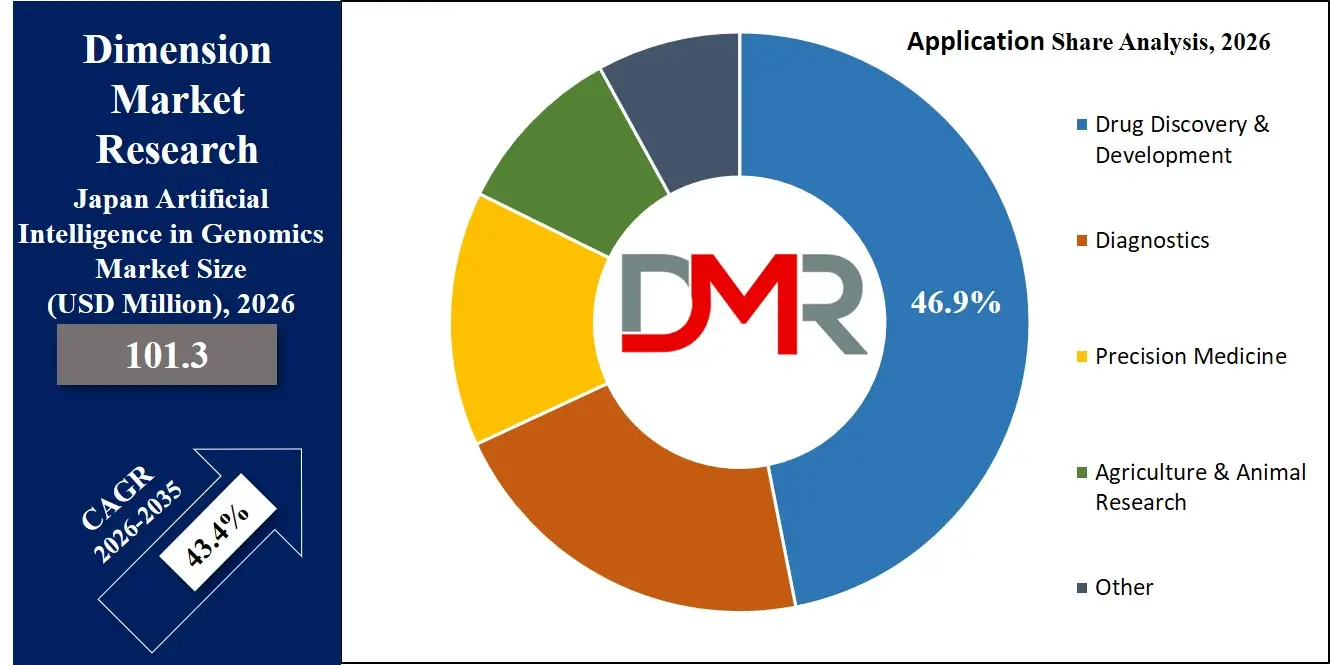
The drug discovery and development segment holds the largest share, projected at 46.9% in 2026, reflecting AI’s critical role in accelerating pharmaceutical research. AI platforms enable rapid identification of drug targets, predictive modeling of molecular interactions, and simulation of therapeutic responses, significantly reducing R&D timelines and costs. In Japan, pharmaceutical companies are increasingly adopting AI-driven genomics solutions to enhance the efficiency and accuracy of drug development pipelines. These tools support both early-stage discovery and clinical trial optimization, improving success rates for new therapies. Integration with other AI technologies, such as deep learning and natural language processing, allows for better interpretation of scientific literature and biological data. Additionally, AI facilitates personalized drug discovery approaches by analyzing patient-specific genomic data, helping companies design therapies that are more effective and targeted. The segment’s growth underscores the importance of AI in transforming pharmaceutical innovation and positioning Japan as a leader in precision medicine.
ℹ
To learn more about this report –
Download Your Free Sample Report Here
Diagnostics is the fastest-growing application segment, driven by increasing demand for early, accurate, and personalized disease detection. AI-powered genomic diagnostics platforms analyze complex datasets to detect genetic disorders, rare diseases, and cancer mutations, supporting clinicians in making informed treatment decisions. In Japan, hospitals and clinical laboratories are increasingly adopting AI-based diagnostic tools to improve efficiency, reduce manual errors, and enhance patient outcomes. These solutions also enable integration with electronic health records, allowing for a more comprehensive understanding of patient history and personalized risk assessment. The growth of this segment is fueled by government initiatives promoting precision medicine and healthcare digitization, as well as rising awareness among clinicians and patients about the benefits of genomics-based diagnostics. As a result, AI-powered diagnostics is poised to transform clinical workflows and become a critical component of modern healthcare in Japan.
By End User Analysis
Pharmaceutical and biotech companies dominate the Japan Artificial Intelligence in Genomics market, projected to hold 51.6% share in 2026, due to their significant investments in AI-driven research and development. These organizations have the financial resources and strategic focus to adopt advanced genomic technologies, supporting drug discovery, biomarker identification, and personalized medicine initiatives. In Japan, partnerships with research institutions, academic centers, and technology providers further strengthen their capabilities, enabling access to diverse datasets and advanced AI solutions. Companies are leveraging AI platforms to streamline workflows, improve predictive analytics, and reduce R&D costs. The sector also emphasizes continuous innovation, integrating emerging AI technologies such as deep learning and multi-omics analysis into core operations. This leadership role highlights the critical influence of pharmaceutical and biotech firms in driving AI adoption and shaping the future of genomics research in Japan.
Healthcare providers represent the fastest-growing segment in Japan’s AI genomics market, reflecting increasing adoption of AI-powered diagnostic, predictive, and treatment planning tools. Hospitals, clinics, and specialized healthcare centers are integrating genomic insights into patient care, improving early disease detection, treatment personalization, and overall patient outcomes. The segment’s growth is supported by government initiatives promoting healthcare digitization, precision medicine programs, and investment in AI infrastructure. As genomic technologies become more accessible and affordable, healthcare providers are increasingly relying on AI to manage complex patient data and optimize clinical workflows. Collaboration with software vendors and research institutions further accelerates adoption. The segment’s rapid expansion reflects a broader trend toward data-driven healthcare in Japan, where AI-powered genomic solutions are enhancing clinical decision-making, supporting preventive care, and enabling more effective treatment strategies.
The Japan Artificial Intelligence in Genomics Market Report is segmented on the basis of the following:
By Component
By Technology
- Machine Learning
- Deep Learning
- Natural Language Processing (NLP)
- Computer Vision
- Others
By Functionality
- Genome Sequencing
- Gene Editing
- Clinical Workflow
- Predictive Gene Testing
By Application
- Drug Discovery & Development
- Diagnostics
- Precision Medicine
- Agriculture & Animal Research
- Other
By End User
- Pharmaceutical and Biotech Companies
- Healthcare Providers
- Research Centers
- Others
Competitive Landscape
The Japan Artificial Intelligence in Genomics market is characterized by intense competition driven by rapid technological innovation and strong research capabilities. Market participants focus on continuous R&D investments to enhance AI algorithms and genomic analysis tools. Strategic collaborations with academic institutions and healthcare providers are commonly used to expand capabilities and access diverse datasets.
ℹ
To learn more about this report –
Download Your Free Sample Report Here
High entry barriers exist due to the need for advanced infrastructure, regulatory compliance, and specialized expertise. Companies also emphasize cloud integration and scalable solutions to maintain competitiveness. Additionally, partnerships and joint ventures are key strategies to accelerate innovation and strengthen market presence.
Some of the prominent players in the Japan Artificial Intelligence in Genomics are:
- Illumina
- Thermo Fisher Scientific
- Roche
- QIAGEN
- SOPHiA GENETICS
- IBM
- Microsoft
- Google
- NVIDIA Corporation
- Fujitsu Limited
- NEC Corporation
- Hitachi, Ltd.
- NTT Data Corporation
- RIKEN
- Takara Bio Inc.
- Sysmex Corporation
- Astellas Pharma Inc.
- Daiichi Sankyo Company
- Eisai Co., Ltd.
- Preferred Networks, Inc.
- Other Key Players
Recent Developments
- In June 2025, Fujitsu made a strategic investment in a genomics-focused AI startup to expand its capabilities in healthcare analytics. The partnership focuses on developing AI-driven solutions for disease prediction and personalized treatment planning. Fujitsu plans to integrate the startup’s technology into its existing healthcare platforms, enhancing data analysis capabilities. This move aligns with Japan’s broader digital health strategy and highlights the growing importance of AI-genomics integration.
- In February 2025, Illumina announced the launch of an advanced AI-powered genome analysis platform designed to significantly enhance sequencing accuracy and speed. The platform integrates deep learning algorithms to interpret complex genomic data in real time, enabling faster clinical decision-making. The company collaborated with Japanese research institutions to tailor the solution for local healthcare needs. This launch aims to strengthen Illumina’s presence in Japan’s genomics sector and support precision medicine initiatives by providing scalable and efficient genomic analysis tools for research and clinical applications.
Report Details
| Report Characteristics |
| Market Size (2026) |
USD 101.3 Mn |
| Forecast Value (2035) |
USD 2,603.7 Mn |
| CAGR (2026–2035) |
43.3% |
| Historical Data |
2021 – 2025 |
| Forecast Data |
2027 – 2035 |
| Base Year |
2025 |
| Estimate Year |
2026 |
| Report Coverage |
Market Revenue Estimation, Market Dynamics, Competitive Landscape, Growth Factors and etc. |
| Segments Covered |
By Component (Software, Services), By Technology (Machine Learning, Deep Learning, Natural Language Processing (NLP), Computer Vision, Others), By Functionality (Genome Sequencing, Gene Editing, Clinical Workflow, Predictive Gene Testing), By Application (Drug Discovery & Development, Diagnostics, Precision Medicine, Agriculture & Animal Research, Other), By End User (Pharmaceutical and Biotech Companies, Healthcare Providers, Research Centers, Others) |
| Country Coverage |
Japan |
| Prominent Players |
Illumina, Thermo Fisher Scientific, Roche, QIAGEN, SOPHiA GENETICS, IBM, Microsoft, Google, NVIDIA Corporation, Fujitsu Limited, NEC Corporation, Hitachi, Ltd., NTT Data Corporation, RIKEN, Takara Bio Inc., Sysmex Corporation, Astellas Pharma Inc., Daiichi Sankyo Company, Eisai Co., Ltd., Preferred Networks, Inc., and Other Key Players |
| Purchase Options |
We have three licenses to opt for: Single User License (Limited to 1 user), Multi-User License (Up to 5 Users) and Corporate Use License (Unlimited User) along with free report customization equivalent to 0 analyst working days, 3 analysts working days and 5 analysts working days respectively. |
Frequently Asked Questions
How big is the Japan Artificial Intelligence in Genomics Market?
▾ Japan Artificial Intelligence in Genomics Market size is expected to reach USD 101.3 million by 2026 and is projected to reach USD 2,603.7 million by the end of 2035.
Who are the key players in the Japan Artificial Intelligence in Genomics Market?
▾ Some of the major key players in the Japan Artificial Intelligence in Genomics Market include Roche, IBM, Google and others.
What is the growth rate in the Japan Artificial Intelligence in Genomics Market?
▾ The market is growing at a CAGR of 43.4 percent over the forecasted period.