Market Overview
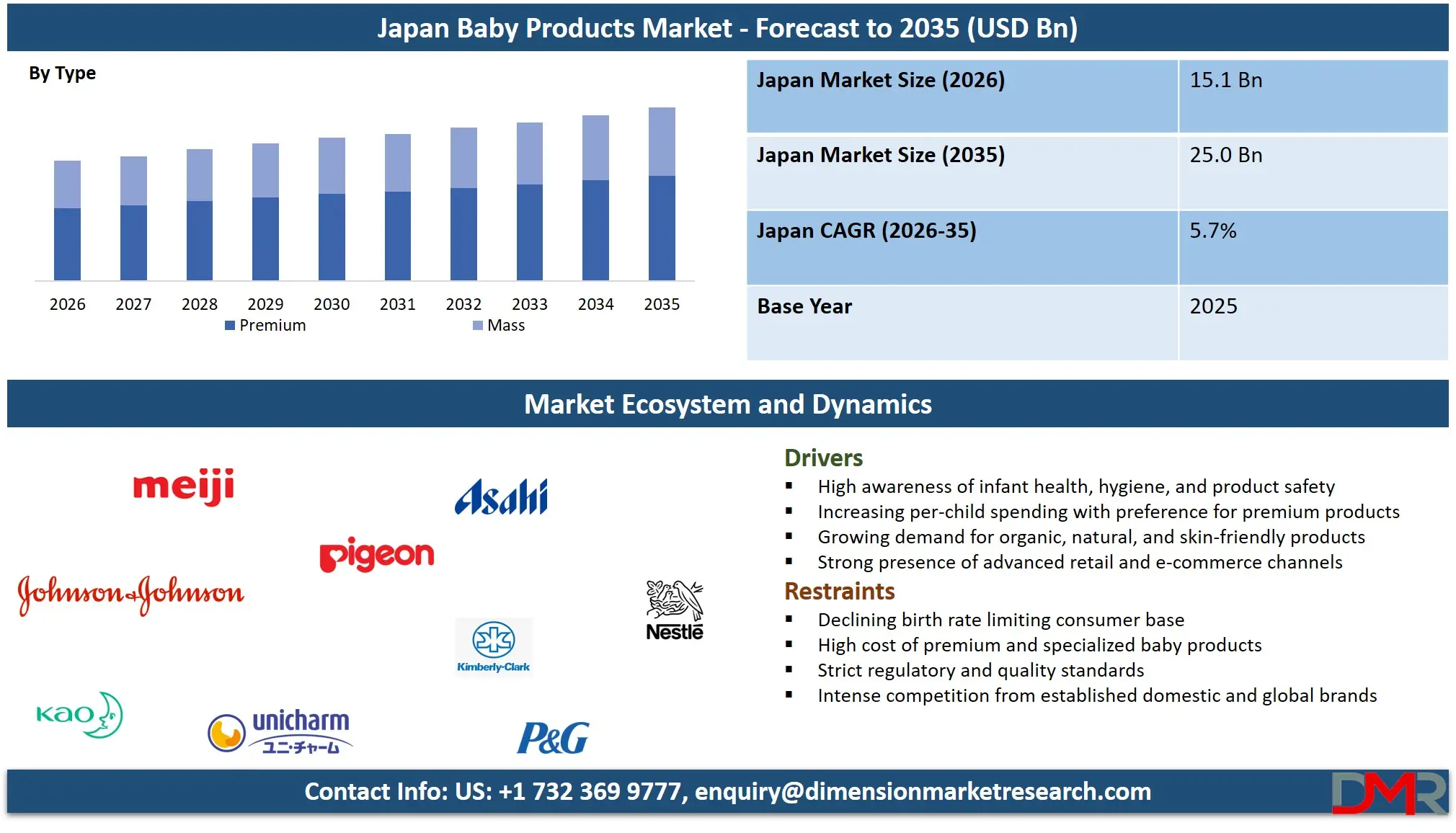
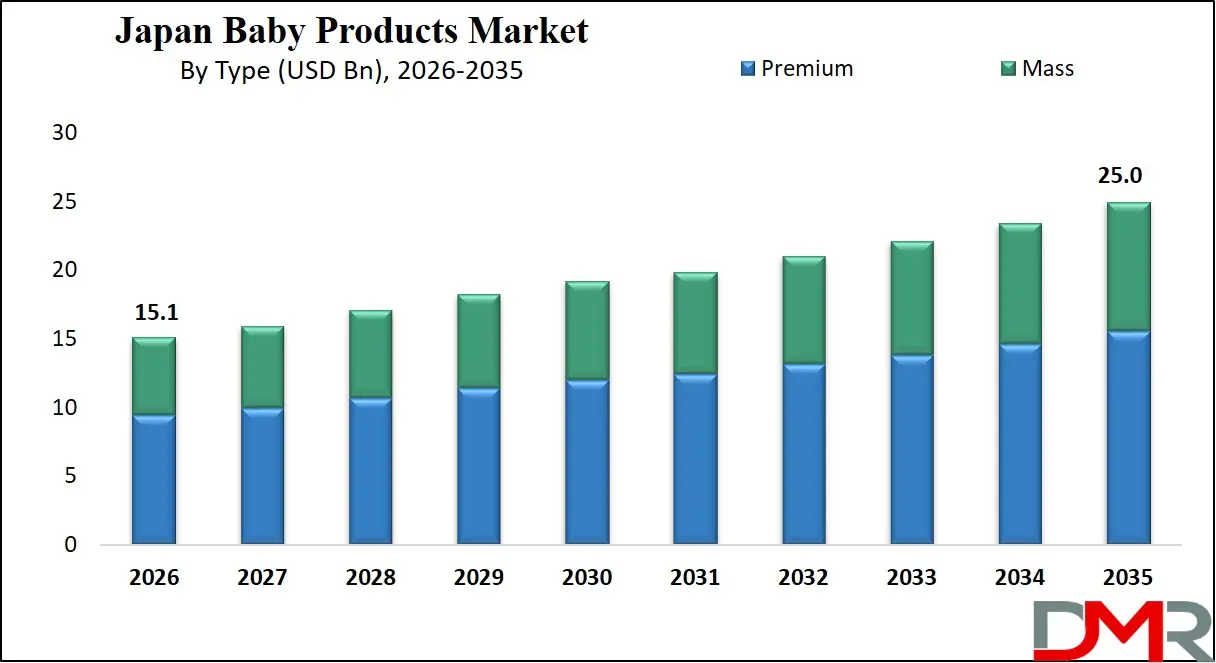
The Japan Baby Products Market size is projected to reach USD 15.1 billion in 2026 and grow at a compound annual growth rate of 5.7% to reach a value of USD 25.0 billion in 2035.
ℹ
To learn more about this report –
Download Your Free Sample Report Here
Baby products refer to a broad category of goods and solutions designed to support infant care, growth, and safety, including feeding products, hygiene items, clothing, toys, furniture, and monitoring devices. These products integrate advanced materials, ergonomic designs, and safety standards tailored to infants’ developmental needs. The sector is an essential component of the broader consumer goods and healthcare ecosystem, reflecting demographic patterns, parental preferences, and innovation in childcare technologies.
In Japan, the market is characterized by a strong emphasis on product quality, safety compliance, and premiumization. Consumers typically prioritize reliability, non-toxic materials, and technologically enhanced features such as smart monitoring and eco-friendly formulations. The integration of digital technologies, including connected baby devices and AI-enabled monitoring tools, is gradually reshaping product offerings. Additionally, declining birth rates in Japan have shifted focus toward high-value, premium products rather than volume-driven sales.
ℹ
To learn more about this report –
Download Your Free Sample Report Here
Growth in Japan is influenced by changing family structures, rising disposable incomes among dual-income households, and increased awareness of infant health and hygiene. Sustainability trends are also playing a significant role, with demand rising for organic, biodegradable, and reusable baby products. The market continues evolving with innovation in product design, e-commerce expansion, and personalized childcare solutions that align with modern parenting lifestyles.
Japan Baby Products Market: Key Takeaways
- Market Growth: The Japan Baby Products Market size is expected to grow by USD 9.1 billion, at a CAGR of 5.7%, during the forecasted period of 2027 to 2035.
- By Type: Premium segment is anticipated to get the majority share of the Japan Baby Products market in 2026.
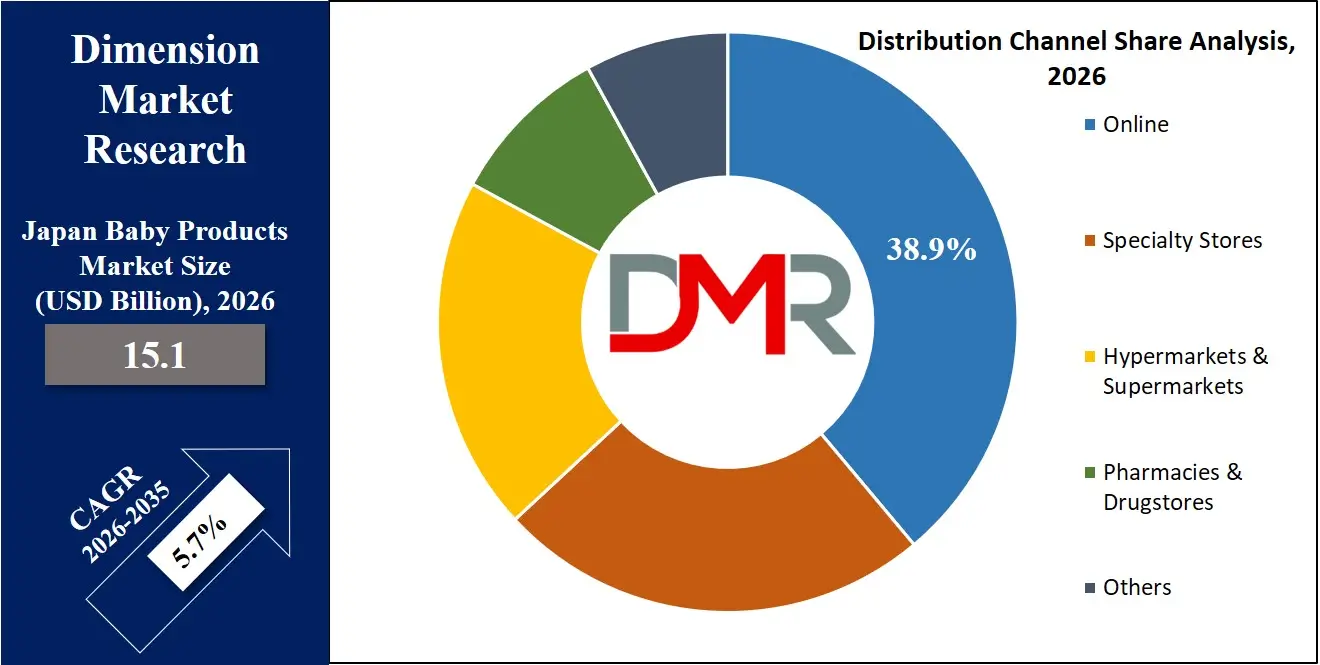
- By Distribution Channel: The online segment is expected to get the largest revenue share in 2026 in the Japan Baby Products market.
- Use Cases: Some of the use cases of Baby Products include early childhood development, comfort & clothing and more.
Japan Baby Products Market: Use Cases
- Infant Nutrition Support: Baby food and feeding products ensure proper nutrition through age-specific formulations, easy digestion, and fortified ingredients tailored to developmental stages.
- Hygiene and Skincare Management: Baby cosmetics and toiletries are used for maintaining infant hygiene with hypoallergenic and dermatologically tested formulations suitable for sensitive skin.
- Early Childhood Development: Toys and play equipment promote cognitive, sensory, and motor skill development using safe and educational designs.
- Safety and Monitoring: Baby safety and convenience products, such as monitors and strollers, help parents ensure real-time supervision and protection.
- Comfort and Clothing: Baby clothing products provide comfort, temperature regulation, and skin-friendly fabrics designed for delicate infant skin.
- Nursery Setup and Sleep Care: Furniture and nursery products create safe sleeping and resting environments with ergonomic and space-efficient designs.
- Feeding and Nursing Assistance: Nursing accessories, bottles, and sterilization tools support mothers in safe and efficient feeding practices.
Stats & Facts
- Ministry of Health, Labour and Welfare Japan reported that Japan’s total fertility rate remained around 1.20 in 2024, indicating continued demographic pressure.
- Statistics Bureau of Japan stated that the number of births declined to approximately 750,000 in 2024.
- Ministry of Economy, Trade and Industry Japan noted that household spending on childcare products increased by nearly 3.5% in 2024.
- Japan External Trade Organization highlighted that premium baby product imports grew by over 6% in 2025.
- Cabinet Office Japan reported that dual-income households accounted for more than 70% of families with children in 2024.
- Ministry of Internal Affairs and Communications indicated that e-commerce penetration for childcare goods exceeded 35% in 2025.
- Consumer Affairs Agency Japan stated that over 85% of baby products sold meet stringent safety certification standards as of 2024.
- Ministry of Environment Japan reported a 12% increase in eco-friendly baby product adoption in 2025.
- Japan Hygiene Products Industry Association recorded a 4% rise in demand for biodegradable diapers in 2024.
- OECD reported that Japan’s parental spending per child remains among the highest in Asia in 2025.
- World Bank indicated Japan’s urban population share reached 92% in 2024, influencing compact and multifunctional baby products demand.
- UNICEF noted that Japan maintains one of the lowest infant mortality rates globally in 2025, supported by high-quality childcare products.
Market Dynamic
Driving Factors in the Japan Baby Products Market
Premiumization and Quality Conscious Consumer Behavior
Japanese consumers place exceptional importance on quality, safety, and brand reliability when purchasing baby products. This has driven a strong shift toward premium offerings, including organic baby food, hypoallergenic skincare, and technologically enhanced devices. Parents are willing to spend more on fewer children, prioritizing superior materials and trusted certifications. The aging population and declining birth rates further intensify this trend, as families invest more resources per child. This premiumization not only boosts revenue margins but also encourages manufacturers to innovate continuously, reinforcing Japan’s reputation for high-quality baby care solutions.
Growth of E-commerce and Digital Retail Channels
The rapid expansion of online retail platforms has significantly transformed how baby products are marketed and sold in Japan. Busy parents increasingly prefer the convenience of home delivery, subscription services for essentials like diapers, and access to a broader product range online. Digital platforms also enable detailed product comparisons, reviews, and personalized recommendations, influencing purchasing decisions. Companies are investing in omnichannel strategies, integrating physical stores with online platforms. This shift enhances accessibility and supports the growth of niche and premium brands that may not have extensive physical retail networks.
Restraints in the Japan Baby Products Market
Declining Birth Rate and Shrinking Consumer Base
Japan’s persistently low birth rate presents a structural challenge for the baby products market. With fewer infants born each year, the overall demand for baby-related goods faces long-term contraction. This demographic shift forces companies to compete more aggressively for a smaller customer base while also exploring diversification strategies. Manufacturers are increasingly targeting overseas markets or expanding into adjacent categories such as toddler and maternal care. Despite higher per-child spending, the declining population limits volume growth and creates uncertainties for long-term market expansion.
High Product Costs and Regulatory Compliance
Strict safety regulations and high manufacturing standards in Japan contribute to elevated production costs for baby products. Compliance with rigorous quality checks, certifications, and testing requirements increases time-to-market and operational expenses. These costs are often passed on to consumers, making products more expensive compared to other regions. Additionally, smaller companies may struggle to meet these regulatory demands, limiting market entry and innovation diversity. This creates a barrier for new entrants and restricts price competitiveness, particularly in mass-market segments.
Opportunities in the Japan Baby Products Market
Expansion of Eco-Friendly and Sustainable Products
Sustainability is becoming a major growth avenue in Japan’s baby products market. Increasing environmental awareness among parents is driving demand for biodegradable diapers, organic textiles, and reusable feeding products. Companies investing in sustainable materials and eco-conscious packaging can capture a growing segment of environmentally aware consumers. Government initiatives promoting waste reduction further support this trend. This opportunity also extends to innovation in circular economy models, such as recycling programs and refillable product systems, enhancing long-term market potential.
Technological Integration and Smart Baby Care Solutions
The integration of advanced technologies such as IoT-enabled monitors, wearable health trackers, and AI-driven parenting apps presents significant growth opportunities. These innovations cater to modern parents seeking convenience, real-time insights, and enhanced safety for their children. Smart baby products that monitor sleep patterns, temperature, and movement are gaining popularity. As Japan continues to lead in technological innovation, companies leveraging these capabilities can create differentiated offerings and establish strong competitive advantages in the evolving market landscape.
Trends in the Japan Baby Products Market
Increasing Adoption of Smart and Connected Devices|
The rise of smart baby care devices is transforming the market, with products offering features such as remote monitoring, data tracking, and mobile app integration. Parents are increasingly relying on technology to ensure safety and optimize childcare routines. This trend is supported by Japan’s advanced digital infrastructure and high consumer acceptance of technology. Manufacturers are focusing on user-friendly designs and seamless connectivity, making these devices an integral part of modern parenting ecosystems.
Shift Toward Compact and Multifunctional Products
Urban living constraints and smaller housing spaces in Japan are driving demand for compact, multifunctional baby products. Items such as convertible cribs, foldable strollers, and all-in-one feeding systems are gaining traction. These products offer space efficiency and cost-effectiveness, appealing to urban families. The trend also reflects a broader shift toward minimalism and practicality, influencing product design and innovation strategies across the market.
Impact of Artificial Intelligence in Japan Baby Products Market
- Smart Monitoring Systems: AI-powered baby monitors analyze sleep patterns, breathing, and movement, providing real-time alerts and insights to parents.
- Personalized Nutrition Recommendations: AI tools help suggest age-appropriate diets and feeding schedules based on infant health data.
- Predictive Health Insights: AI algorithms detect potential health issues early by analyzing behavioral and physiological patterns.
- Enhanced Product Design: AI-driven simulations improve ergonomics and safety in product development.
- Inventory and Demand Forecasting: Retailers use AI to optimize stock levels and reduce supply chain inefficiencies.
- Customer Experience Optimization: AI chatbots and virtual assistants provide instant support and product recommendations.
- Quality Control Automation: AI systems identify defects in manufacturing processes, ensuring high product standards.
- Marketing Personalization: AI analyzes consumer data to deliver targeted promotions and product suggestions.
- Voice-Enabled Parenting Tools: Integration with voice assistants enables hands-free operation of baby devices.
Impact of Iran War in Japan Baby Products Market
The Iran war is expected to create inflationary pressure and supply disruptions in the Japan baby products market. Rising crude oil prices increase transportation and logistics costs, leading to higher prices for essential items such as diapers, baby food, and hygiene products. At the same time, higher petrochemical costs raise the prices of plastics and packaging materials widely used in baby care manufacturing, squeezing producer margins. Supply chain disruptions and shipping delays may further limit product availability, particularly for imported raw materials. These factors can reduce consumer purchasing power and shift demand toward more affordable or private-label baby products, while also encouraging manufacturers to focus on cost optimization and local sourcing strategies.
Research Scope and Analysis
By Product Analysis
Baby feeding and nursing products hold a significant position in the Japan baby products market, accounting for 28.6% share in 2026. This dominance is driven by their essential role in infant nutrition and daily caregiving routines. The segment includes bottles, sterilizers, breast pumps, and feeding accessories that are used frequently and require regular replacement. Strong consumer emphasis on hygiene and safety encourages demand for BPA-free materials and advanced sterilization technologies. Additionally, the rising number of working mothers has increased the need for convenient and portable feeding solutions. Continuous product innovation, including anti-colic bottle designs and smart breast pumps, further reinforces the segment’s leadership in the market.
Baby toys and play equipment represent the fastest-growing segment in the Japan baby products market, driven by increasing awareness of early childhood development and cognitive growth. Parents are placing greater importance on toys that support motor skills, creativity, and sensory development. This segment includes educational toys, interactive devices, and activity-based play equipment designed to enhance learning outcomes. Technological integration, such as AI-enabled and sensor-based toys, is further accelerating demand. Additionally, the preference for safe, non-toxic, and premium-quality materials is influencing purchasing decisions. As a result, manufacturers are focusing on innovation and product differentiation, making this segment highly dynamic and growth-oriented.
By Type Analysis
The premium segment leads the Japan baby products market with a 62.4% share in 2026, reflecting strong consumer preference for high-quality and reliable products. Japanese parents prioritize safety, brand trust, and superior materials, particularly in a low birth rate environment where spending per child is relatively high. Premium products often feature organic ingredients, hypoallergenic formulations, and advanced safety certifications. Additionally, innovation plays a key role, with companies offering technologically enhanced solutions such as smart baby monitors and ergonomic designs. The growing inclination toward sustainable and eco-friendly products further supports this segment’s expansion, ensuring its continued dominance in the market.
The mass segment is emerging as the fastest-growing category in the Japan baby products market, supported by increasing demand for affordable yet reliable solutions. Manufacturers are focusing on delivering cost-effective products without compromising on essential safety and quality standards. Improvements in production efficiency and supply chain management have enabled companies to offer competitive pricing. This segment appeals particularly to younger families and budget-conscious consumers who seek value-driven options. Additionally, the availability of mass products across multiple retail channels, including online platforms, enhances accessibility and convenience. As competition intensifies, the mass segment continues to expand steadily within the overall market landscape.
By Distribution Channel Analysis
Online distribution channels dominate the Japan baby products market, capturing 38.9% share in 2026 due to their convenience and accessibility. E-commerce platforms enable parents to browse a wide variety of products, compare features, and read reviews before making purchases. The availability of subscription services for essential items such as diapers and feeding products further enhances customer loyalty. Additionally, digital platforms provide personalized recommendations and promotional offers, influencing buying behavior. The increasing penetration of smartphones and internet connectivity in Japan has accelerated the shift toward online shopping. As logistics and delivery systems continue to improve, the online segment is expected to maintain its leading position.
ℹ
To learn more about this report –
Download Your Free Sample Report Here
Specialty stores are the fastest-growing distribution channel in the Japan baby products market, driven by their ability to offer curated selections and personalized customer experiences. These stores focus on premium and niche products, catering to parents who prioritize quality and expert guidance. Unlike general retail outlets, specialty stores provide in-depth product knowledge, demonstrations, and consultations, helping consumers make informed decisions. The emphasis on trust and brand authenticity further strengthens their appeal. Additionally, many specialty retailers are integrating online and offline experiences to enhance convenience. This hybrid approach is contributing to their rapid growth and increasing relevance in the market.
The Japan Baby Products Market Report is segmented on the basis of the following:
By Product
- Baby Food
- Baby Cosmetics & Toiletries
- Baby Toys & Play Equipment
- Baby Safety & Convenience
- Baby Clothing
- Baby Nursery & Furniture
- Baby Feeding & Nursing
By Type
By Distribution Channel
- Hypermarkets & Supermarkets
- Specialty Stores
- Online
- Pharmacies & Drugstores
- Others
Competitive Landscape
The Japan baby products market is characterized by intense competition driven by innovation, quality differentiation, and brand trust. Companies focus on research and development to introduce advanced, safe, and user-friendly products that meet stringent regulatory standards. Strategic collaborations, partnerships with healthcare institutions, and expansion into digital platforms are common approaches to strengthen market presence.
ℹ
To learn more about this report –
Download Your Free Sample Report Here
High entry barriers due to regulatory compliance and consumer expectations favor established players with strong reputations. Additionally, firms are investing in sustainable product lines and leveraging e-commerce to reach a wider audience while maintaining customer loyalty through premium offerings and consistent quality.
Some of the prominent players in the Japan Baby Products are:
- Unicharm Corporation
- Pigeon Corporation
- Kao Corporation
- Johnson & Johnson K.K.
- Procter & Gamble Company
- Kimberly-Clark Corporation
- Asahi Group Foods, Ltd.
- Meiji Holdings Co., Ltd.
- Morinaga Milk Industry Co., Ltd.
- Oji Holdings Corporation
- Wakodo Co., Ltd. (Asahi Group)
- Lion Corporation
- Kracie Holdings, Ltd.
- Rohto Pharmaceutical Co., Ltd.
- Mandom Corporation
- Kenvue Brands LLC
- Himalaya Wellness Company
- Miki Shoko Co., Ltd.
- Daio Paper Corporation
- Nestlé Japan Ltd.
- Other Key Players
Recent Developments
- In June 2025, a major baby care manufacturer announced a strategic acquisition of a domestic organic baby skincare brand to expand its sustainable product portfolio. This move aimed to strengthen its presence in the premium segment and cater to rising demand for eco-friendly products. The acquisition included integrating biodegradable packaging solutions and expanding distribution through online channels.
- In February 2025, a leading Japanese consumer goods company launched a new line of AI-enabled baby monitoring devices designed to track infant sleep patterns, breathing, and room conditions in real time. The product integrates with a mobile application, allowing parents to receive alerts and insights. The launch reflects growing demand for smart parenting solutions and highlights the company’s investment in advanced technology to enhance child safety and convenience.
Report Details
| Report Characteristics |
| Market Size (2026) |
USD 15.1 Bn |
| Forecast Value (2035) |
USD 25.0 Bn |
| CAGR (2026–2035) |
5.7% |
| Historical Data |
2021 – 2025 |
| Forecast Data |
2027 – 2035 |
| Base Year |
2025 |
| Estimate Year |
2026 |
| Report Coverage |
Market Revenue Estimation, Market Dynamics, Competitive Landscape, Growth Factors and etc. |
| Segments Covered |
By Product (Baby Food, Baby Cosmetics & Toiletries, Baby Toys & Play Equipment, Baby Safety & Convenience, Baby Clothing, Baby Nursery & Furniture, Baby Feeding & Nursing), By Type (Mass, Premium), By Distribution Channel (Hypermarkets & Supermarkets, Specialty Stores, Online, Pharmacies & Drugstores, Others) |
| Country Coverage |
Japan |
| Prominent Players |
Unicharm Corporation, Pigeon Corporation, Kao Corporation, Johnson & Johnson K.K., Procter & Gamble Company, Kimberly-Clark Corporation, Asahi Group Foods, Ltd., Meiji Holdings Co., Ltd., Morinaga Milk Industry Co., Ltd., Oji Holdings Corporation, Wakodo Co., Ltd. (Asahi Group), Lion Corporation, Kracie Holdings, Ltd., Rohto Pharmaceutical Co., Ltd., Mandom Corporation, Kenvue Brands LLC, Himalaya Wellness Company, Miki Shoko Co., Ltd., Daio Paper Corporation, Nestlé Japan Ltd, and Other Key Players |
| Purchase Options |
We have three licenses to opt for: Single User License (Limited to 1 user), Multi-User License (Up to 5 Users) and Corporate Use License (Unlimited User) along with free report customization equivalent to 0 analyst working days, 3 analysts working days and 5 analysts working days respectively. |
Frequently Asked Questions
How big is the Japan Baby Products Market?
▾ The Japan Baby Products Market size is expected to reach USD 15.1 billion by 2026 and is projected to reach USD 25.0 billion by the end of 2035.
Who are the key players in the Japan Baby Products Market?
▾ Some of the major key players in the Japan Baby Products Market include Nestle, Johnson & Johnson, P&G and others.
What is the growth rate in the Japan Baby Products Market?
▾ The market is growing at a CAGR of 5.7 percent over the forecasted period.