What is the Japan Biomaterial Market Size?
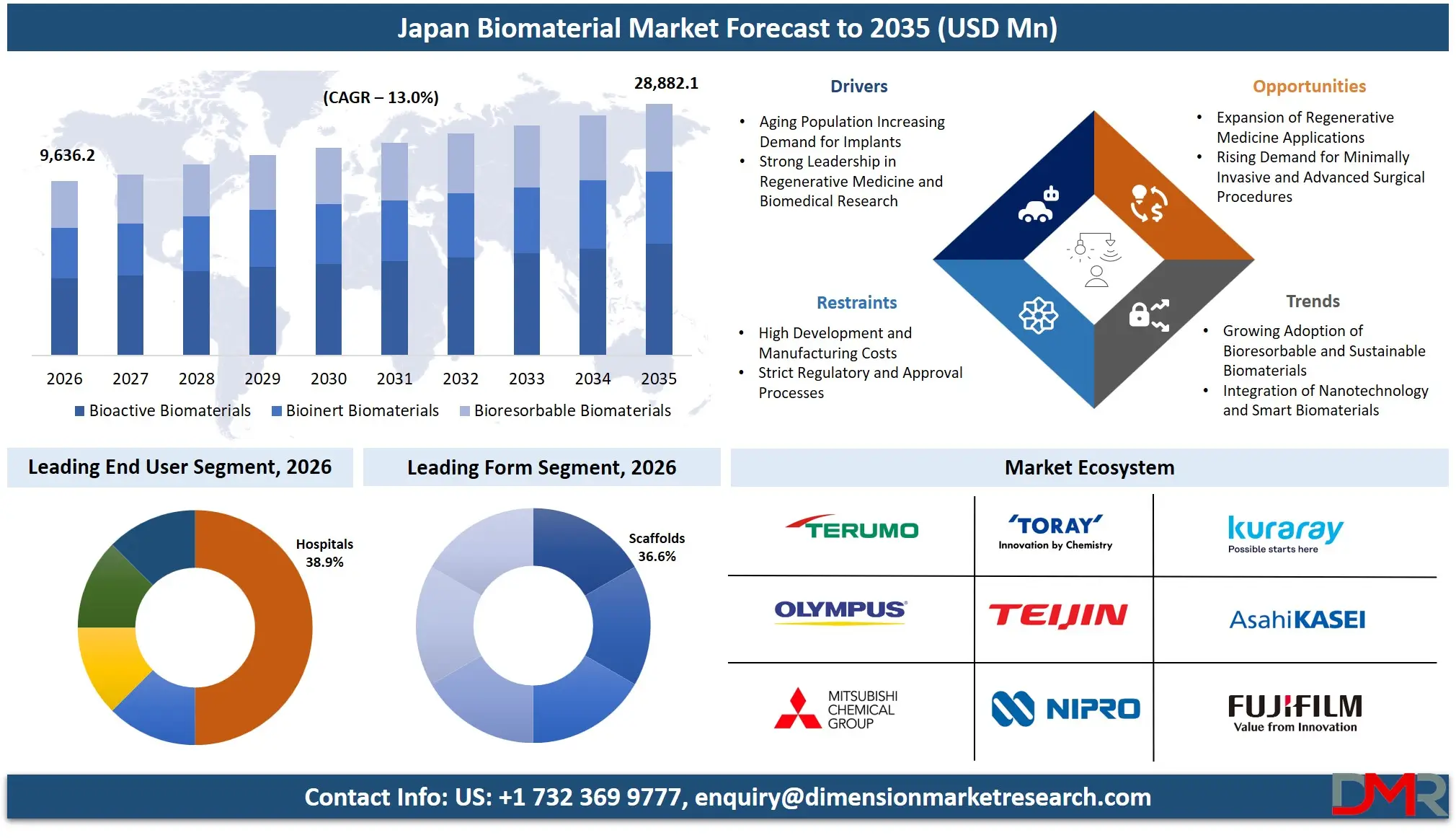
The Japan Biomaterial Market is expected to reach a value of USD 9,636.2 million in 2026, and it is further anticipated to reach USD 28,882.1 million by 2035, growing at a CAGR of 13.0% during the forecast period.
ℹ
To learn more about this report –
Download Your Free Sample Report Here
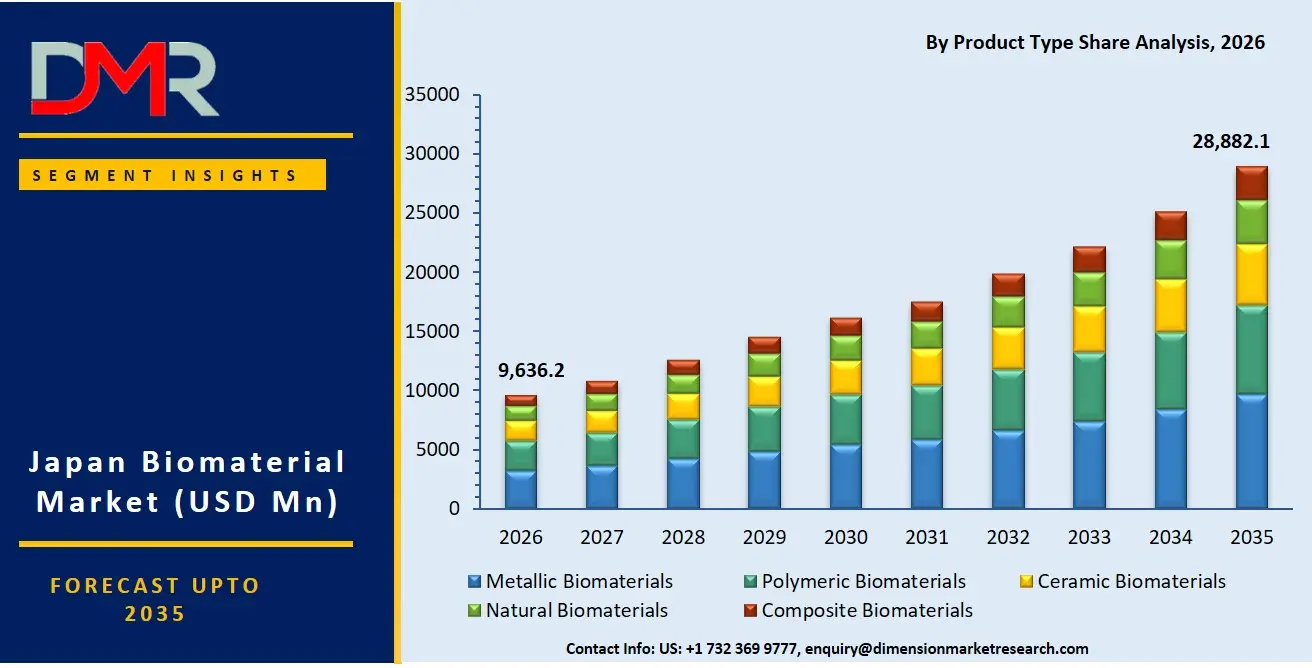
The Japanese biomaterials market has been exhibiting steady growth trends because of various factors such as an aging population in Japan, increasing cases of lifestyle-related diseases, and the country's focus on regenerative medicine. The biomaterials market is made up of metallic biomaterials, polymeric biomaterials, ceramics biomaterials, natural biomaterials, and composite biomaterials that find applications in orthopedics, cardiovascular disorders, dentistry, wounds, and tissue engineering.
There has been increased interest in minimally-invasive surgery, biocompatible implants, and devices for delivering drugs. As a result, there has been the need for the development of new biomaterials that will cater to these demands. Hospitals and specialized clinics are the principal purchasers of the products with non-biodegradable and bioactive materials preferred because of durability.
ℹ
To learn more about this report –
Download Your Free Sample Report Here
Key Takeaways
- Market Size & Forecast: The Japan Biomaterial market is estimated to reach a market size of USD 9,636.2 million by 2026, growing further to USD 28,882.1 million by 2035, owing to the combined effects of aging super-society and a regulatory shift toward using tissue-engineered materials as opposed to conventional implants.
- Growth Rate & Outlook: Market growth will be propelled at the rate of CAGR 13.0%, due to a scarcity of donor organs and the increasing difficulty associated with handling 3D printed scaffolds and individualized implants.
- Primary Growth Drivers: Main contributing factors to growth in the biomaterial market are a trend towards moving away from permanent metal implants to biodegradable materials, the requirement of Bioactive Biomaterials to improve osseointegration, and tissue engineering applications in regenerative medicine.
- Key Market Trends: The major market trends include the increase in the use of patient-specific 3D-printed scaffolds, the utilization of artificial intelligence-driven design in Composite Biomaterials to enhance mechanical strength, and the adoption of Injectable Biomaterials for minimal incision orthopedics and plastic surgery operations.
- By Functionality Analysis: Bioactive Biomaterials will be the preferred choice among clinical physicians owing to their capability to bind with living bone. Resorbable Biomaterials will be in high demand for the delivery of medicines and creating vascular scaffolds, making secondary surgeries redundant.
- By Application Analysis: Orthopedic Applications and Cardiovascular Applications are expected to be the two leading revenue sources because of the high occurrence of osteoarthritis and coronary artery disease in Japan. Tissue Engineering Applications are forecast to register rapid growth due to the need for Scaffolds and Injectable Biomaterials in iPSC treatments.
What is the Biomaterial?
Biomaterials can either be natural or artificial materials developed for specific uses in the interaction with biological systems for therapeutic purposes. Biomaterials find applications in healthcare areas like implants, artificial body parts, tissue engineering, wound healing, pharmaceutical devices, and medical devices. Biomaterials may be based on metals, polymers, ceramics, or any natural material that is suitable to a specific purpose. The biomaterials are developed with the consideration that they can act in the body system without adverse effects and are biologically compatible materials. Some examples include metals used in orthopedic implants, bio-degradable polymers used in sutures, and ceramic materials used in dental applications. Biomaterials form an important part of healthcare and medical advancement, providing solutions to several health challenges.
Use Cases
- Fixation of Aging Spine: Orthopedic surgeons rely on Bioresorbable Polymeric Biomaterials to create cages used for spinal fusion in order to progressively transfer loads onto healing bone and then degrade safely to avoid revision surgeries for elderly patients.
- iPSC-Derived Cardiac Patch: Researchers make use of Natural Biomaterials (such as collagen/gelatin) and Injectable Biomaterials for the administration of iPSC-derived cardiomyocytes in patients with heart failure and their subsequent remuscularization without arrhythmia.
- Dental Implant Osseointegration: Dentists rely on Ceramic Biomaterials (coating zirconia with hydroxyapatite) in order to bond the material to bone quickly and replace a patient's teeth while avoiding metal allergy problems in older people.
- Post-Surgical Adhesion Barrier: Surgeons utilize biodegradable films & gels when performing abdominal or gynecological surgeries in order to physically separate tissues during healing.
How AI is Transforming the Biomaterial Market?
AI is revolutionizing the Japan biomaterial market through its fast-tracking effect on the development of innovative materials, as well as increasing the efficacy of preclinical validation. In relation to the creation of Composite Biomaterials, it is possible that AI-based generative design software can automatically estimate the best ratios of polymers to ceramics in bone scaffolds, significantly decreasing the need for physical testing and animal experimentation. On the other hand, Tissue Engineering Applications involving the use of AI-powered image analysis can help identify changes in microscopic scaffold structure and the growth of new tissue through histology slides.
In addition, clinical and manufacturing methods revolve around AI technologies. As far as Dental Applications are concerned, intelligent design agents are being employed to consistently improve the microarchitecture of 3D-printed dental implants by pinpointing vulnerable geometrical structures and recommending pore size modifications to meet load-bearing demands. Also, Drug Delivery Applications are benefiting from generative AI assistants that simulate the degradation of polymers and calculate the resulting drug release profile, providing visualization of therapeutic windows prior to GMP production.
Market Dynamics
Key Drivers in the Japan Biomaterial Market
Aging Population Increasing Demand for Implants
The Japanese population is one of the oldest in the world, which makes a major contribution towards the consumption of biomaterials, which are applied in orthopedics, cardiology, dentistry, and ophthalmology operations. Increasing occurrences of bone disorders such as osteoporosis, arthritis, back disorders, and cardiovascular disease have led to rising numbers of joint replacement surgeries, bone grafts, and implant operations in Japan. Older patients often need medical devices that are capable of functioning over a long period of time and which provide better mobility and compatibility to patients. This creates demand for metal, ceramic, and polymer biomaterials. Furthermore, Japan has an advanced health care system and thus enjoys widespread use of medical implant procedures using technologically advanced equipment.
Strong Leadership in Regenerative Medicine and Biomedical Research
The country holds the highest place in the world when it comes to the research of regenerative medicine, stem cell therapy, and tissue engineering, and actively promotes the growth of the biomaterials market. Research in the field has been significantly boosted by innovations and favorable regulations concerning the use of scaffolding structures, bioabsorbable materials, and tissue engineering technologies. There are universities, biotech companies, and manufacturing businesses in Japan that have invested a considerable amount of money in the development of advanced biomaterials suitable for cellular culture, wound treatment, and tissue repair. Additionally, Japanese skills in precise engineering and material science make the innovation process even more efficient.
Restraints in the Japan Biomaterial Market
High Development and Manufacturing Costs
High costs in research, testing, production, and regulatory compliance represent a major constraint in the development of biomaterials in Japan. It is costly to produce advanced biomaterials, as there needs to be substantial financing for clinical testing and precision manufacturing equipment. The use of quality raw materials like titanium alloys, bioactive ceramics, and polymer resins is equally costly in the production process. In addition, there are operational costs that come from the quality demands set by the Japanese regulators in the manufacturing of devices. This makes it difficult for small-scale enterprises to engage in this business. Finally, it is costly to conduct an advanced implant procedure.
Strict Regulatory and Approval Processes
Japan has very strict regulatory standards with respect to biomaterials and implantable medical devices that contribute to safety and dependability of products. Although such regulations are useful in enhancing the quality of health care services, they tend to hinder the approval process and entry into the market of novel biomaterials. The manufacturer of the novel biomaterial must undertake comprehensive preclinical trials, clinical trials, and performance testing before obtaining the necessary regulatory approvals. Such an extended period raises costs and delays in bringing products to the market. Additionally, for applications involving regenerative medicine and tissue engineering, there is extra emphasis on biological safety and ethical compliance. This poses a challenge to smaller firms trying to enter the market.
Growth Opportunities in the Japan Biomaterial Market
Expansion of Regenerative Medicine Applications
The increasing interest in regenerative medicine in Japan creates ample opportunities for biomaterial companies. Indeed, Japan has implemented policies that encourage stem cell therapy, tissue engineering, and the development of therapies based on cells, which have led to an increase in demand for scaffold biomaterials, hydrogels, and bioabsorbable biomaterials. Biomaterials that can aid in tissue regeneration and repair processes, such as wound healing and organ repair, are becoming more popular among research organizations and biotechnology firms. Japan has also introduced a fast-track process for the development of regenerative medicines, thus making the use of innovations in the medical field very appealing. Considering that medical professionals are searching for new solutions apart from implants, regenerative biomaterials become more sought after.
Rising Demand for Minimally Invasive and Advanced Surgical Procedures
There is an emerging trend towards minimally invasive surgeries being carried out in Japan which makes great business potential for specialized biomaterials. Doctors now tend to use sophisticated types of biomaterials that promote quick recuperation, greater comfort of the patients, and faster healing process. Biomaterials such as injectable biomaterials, bioactive coating, lightweight composites, and flexible polymers play an increasingly significant role in surgeries involving the cardiovascular system, orthopedic diseases, and cosmetic operations. Japanese hospitals equipped with the latest technologies adopt robotic surgery and other innovations that require high-quality biomaterials. Moreover, patients' desire for undergoing minimally invasive surgeries drives the need for innovative biomaterials that make medical devices.
Trends in the Japan Biomaterial Market
Growing Adoption of Bioresorbable and Sustainable Biomaterials
One of the significant trends in the Japan biomaterial market includes the increased use of bioresorbable materials that break down in the body once their biological role has been served. The use of such biomaterials by health professionals has increased due to the ability of such materials to decrease the number of subsequent procedures required to remove them. Some areas where rapid growth is being seen include orthopedic fixation systems, cardiovascular stents, and tissue engineering. In Japan, significant investment has been made in developing biodegradable polymers, magnesium-based devices, and other sustainable biomaterial innovations. Sustainability and environmentally-friendly manufacturing practices are also having an impact on biomaterial innovation in Japan.
Integration of Nanotechnology and Smart Biomaterials
Increasing use of nanotechnology and smart biomaterials in medicine is observed in Japan today. Biomaterials that are created using nanostructures in order to enhance their biocompatibility, effectiveness in drug delivery, antimicrobial properties, or integration within tissues have been widely employed recently. There is also a rising demand for smart biomaterials which can respond to biological, thermal, or chemical factors. Such developments fit into Japan's strategy concerning advanced technologies in healthcare services. Nanocomposite scaffold materials, intelligent wound dressing materials, and responsive coatings for implants are some examples of such developments that are actively researched by Japanese companies and universities. Given the global trend toward efficiency and personalized treatment, it is likely that smart biomaterials and nano-enabled solutions will become future technological trends of the Japanese biomaterial market.
Research Scope and Analysis
The Japan Biomaterial Market is segmented by product type into metallic, polymeric, ceramic, natural, and composite biomaterials; by material type into biodegradable and non-biodegradable biomaterials; by functionality, form, application, and end user, covering hospitals, specialty clinics, research institutes, biotechnology companies, regenerative medicine, orthopedic, cardiovascular, and tissue engineering applications.
ℹ
To learn more about this report –
Download Your Free Sample Report Here
By Product Type Analysis
Metallic biomaterials is projected to be dominating the market for Japan biomaterial due to their wide application in orthopedic implants, cardiovascular stents, trauma fixation implants, and dental implants. There have been a lot of joint replacement surgeries and spinal surgeries conducted due to an aging population of Japan, which has fueled the demand for metals such as titanium, stainless steel, and cobalt-chromium for medical implants. Japan's manufacturers have made huge advancements in the field of metallurgy and biocompatible implant development, which makes them more durable and less prone to corrosion. This sector is also boosted by the presence of a very developed healthcare system and high adoption rate for surgery, making metallic biomaterials the dominant product type.
By Material Type Analysis
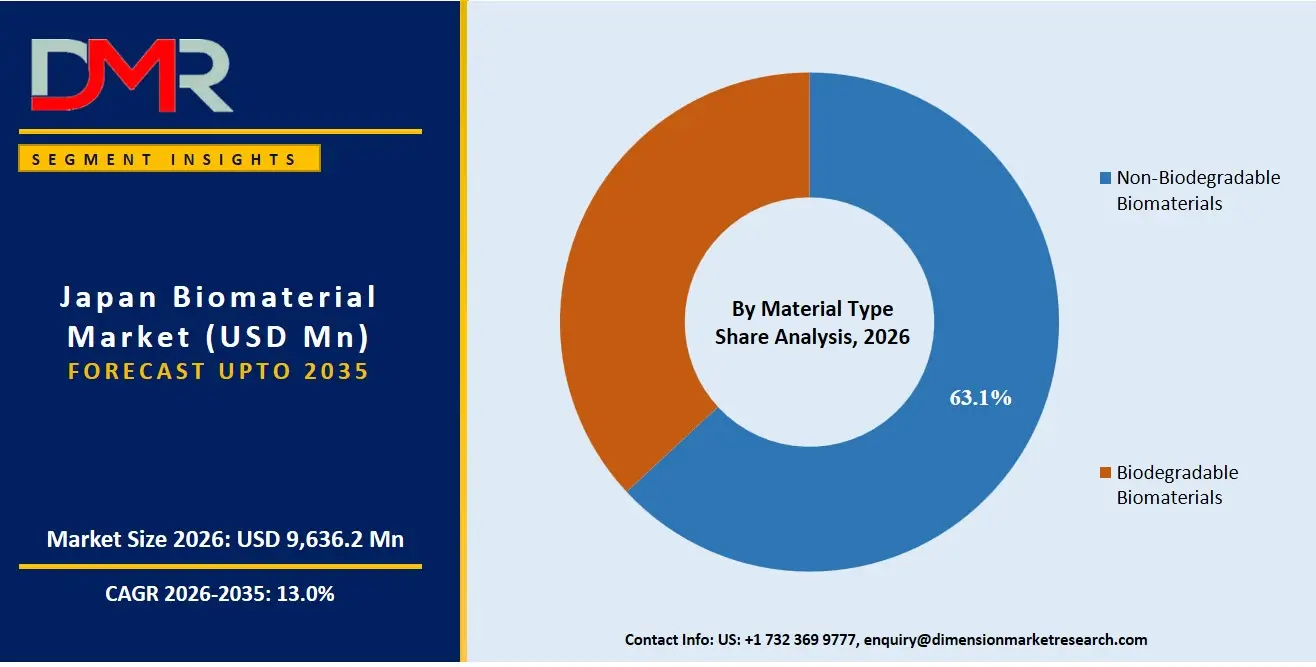
Non-degradable biomaterials are expected to take precedence in the material type category due to the fact that these materials have long service life potential, as well as being widely used in the manufacture of permanent implants and medical devices. In Japan, there is the requirement of durable materials that would be able to function effectively within decades in orthopedic prosthetics, cardiovascular implants, dental implants, and ophthalmological devices. Japanese healthcare system has the goal of providing highly effective solutions for long periods of time; thus, non-degradable biomaterials such as polymers, ceramics, and metals have higher demand in Japan. Additionally, a rising number of elderly people that need chronic illness treatments, along with implants, create higher demands for non-degradable biomaterials.
By Functionality Analysis
The most common biomaterials that belong to the functionality category are bioinert biomaterials, which provide outstanding chemical stability and low biological activity after their implantation in the body. The Japanese healthcare system attaches great importance to the safety and quality of implants and also prefers biomaterials that do not provoke inflammation. For example, there is a wide application of alumina ceramics, titanium alloys, and some types of medical polymers because they are inert to the surrounding environment. Moreover, high technological development of implant production contributes to this trend. Growing demands for implants among elderly people and strict quality requirements make bioinert biomaterials the dominant group in Japan.
By Form Analysis
Scaffolds are projected to hold most of the form category due to their increasing relevance in tissue engineering, regenerative medicine, and stem cell technology; Japan is ahead of other nations technologically in those fields. There has been extensive investment by Japan in programs of regenerative medicine and biomaterial studies owing to government policies encouraging innovations. Scaffolds act as biomaterials for the growth of cells, tissue, and organs. Scaffold structure design for future uses is carried out by Japanese universities, biotechnology companies, and research institutions. Increasing interest in wound healing and orthopedic tissue regenerations has also spurred the use of scaffolds.
By Application Analysis
Orthopedic applications is poised to dominate the biomaterial market in Japan primarily because of the fast-aging demographic trend and the high incidence of musculoskeletal conditions in the country. The rising number of cases of osteoporosis, osteoarthritis, vertebral deterioration, and bone fractures have contributed greatly to an upsurge in the demand for joint implants, bone grafting materials, and fixation equipment. Orthopedic biomaterials, including titanium alloys, ceramics, and plastic compounds, find many applications in the construction of hip, knee, and vertebral joint implants. The life expectancy in Japan is amongst the highest globally, meaning that the need for regaining lost mobility will be higher among the elderly.
By End User Analysis
The end-user category is projected to dominate by hospitals due to the fact that they are involved in executing most of the surgical procedures that need biomaterials such as orthopedic surgeries, cardiovascular surgeries, dental surgeries, and surgery for repairing tissues. Japan has an extremely well-developed hospital system which is technologically superior and has the ability to execute highly complicated biomaterial implantation and regenerative medicine operations. Hospitals also have the infrastructure for specialized surgeries as well as access to premium biomaterial products. Moreover, due to the aging population and chronic disease burden, the number of patients needing biomaterial products is constantly increasing. Hospitals are important hubs for executing clinical researches and advanced surgical methods as well.
The Japan Biomaterial Market Report is segmented on the basis of the following:
By Product Type
- Metallic Biomaterials
- Polymeric Biomaterials
- Ceramic Biomaterials
- Natural Biomaterials
- Composite Biomaterials
By Material Type
- Non-Biodegradable Biomaterials
- Biodegradable Biomaterials
By Functionality
- Bioinert Biomaterials
- Bioactive Biomaterials
- Bioresorbable Biomaterials
By Form
- Scaffolds
- Films
- Gels
- Fibers
- Powders
- Injectable Biomaterials
By Application
- Orthopedic Applications
- Cardiovascular Applications
- Dental Applications
- Plastic Surgery Applications
- Wound Healing Applications
- Ophthalmology Applications
- Neurological Applications
- Tissue Engineering Applications
- Drug Delivery Applications
- Other Medical Applications
By End User
- Hospitals
- Specialty Clinics
- Ambulatory Surgical Centers (ASCs)
- Research & Academic Institutes
- Biotechnology & Pharmaceutical Companies
Competitive Landscape
The competitive nature of the Japanese market for biomaterials has become very dynamic indeed, with a wide variety of international players in medical devices (Zimmer Biomet, Stryker, Medtronic), local material conglomerates (Mitsubishi Chemical, Toray Industries, Kyocera), and start-ups specializing in regenerative medicine. The core of success will be in forming strategic partnerships with top-tier Japanese university hospitals and consultants from PMDA, since they are essential in creating a pathway towards successful clinical trials and proper regulation. Consolidation in the market is rapidly gaining traction, with metal implant producers purchasing tissue engineering and Injectable Biomaterials providers in order to survive. Unique IP in the form of proprietary degradation rate databases and growth factor stabilization technologies is playing an increasingly important role in determining competitive advantage over standard polymer development capabilities and contract manufacturing alone.
Some of the prominent players in the Japan Biomaterial Market are:
- Terumo Corporation
- Nipro Corporation
- Olympus Corporation
- Asahi Kasei Corporation
- Mitsubishi Chemical Group
- Toray Industries
- Kuraray Co., Ltd.
- Teijin Limited
- FUJIFILM Holdings Corporation
- JMS Co., Ltd.
- GC Corporation
- Kyocera Corporation
- Sekisui Medical Co., Ltd.
- Nitta Gelatin Inc.
- Ajinomoto Co., Inc.
- Sumitomo Bakelite Co., Ltd.
- JSR Corporation
- Hitachi High-Tech Corporation
- Canon Medical Systems Corporation
- Shin-Etsu Chemical Co., Ltd.
- Other Key Players
Recent Developments
- January 2026: Kyocera Corporation expanded its bioactive ceramic factory in Kagoshima, a professional manufacturing project that will enable customers in orthopedic applications and dental applications to customize their own hydroxyapatite-coated implants with AI-driven plasma spraying and experience in composite biomaterials.
- November 2025: Mitsubishi Chemical enhanced their cooperation with Kyoto University's CiRA center and launched Tissue Engineering Applications and Injectable Biomaterials practice in order to facilitate the scale-up production process of iPSC-derived cartilage patches for knee osteoarthritis in line with the PMDA guidelines for regenerative medicine manufacturing.
- October 2025: Toray Industries purchased a Japanese biomedical scaffolds startup company in order to improve their scaffolds and fibers solution for neural tissues regeneration to address complex neurological applications.
Report Details
| Report Characteristics |
| Market Size (2026) |
USD 9,636.2 Mn |
| Forecast Value (2035) |
USD 28,882.1 Mn |
| CAGR (2026–2035) |
13.0% |
| Historical Data |
2021 – 2025 |
| Forecast Data |
2027 – 2035 |
| Base Year |
2025 |
| Estimate Year |
2026 |
| Segments Covered |
By Product Type, By Material Type, By Functionality, By Form, By Application, and By End User |
| Country Coverage |
Japan |
Frequently Asked Questions
How big is the Japan Biomaterial Market?
▾ The Japan Biomaterial market is poised to be valued at USD 9,636.2 million in 2026 and is projected to reach USD 28,882.1 million by 2035, driven by the universal need for advanced materials in orthopedic, cardiovascular, and tissue engineering applications.
What is the CAGR of the Japan Biomaterial Market from 2026 to 2035?
▾ The market is expected to grow at a CAGR of 13.0% from 2026 to 2035, reflecting the accelerating complexity of regenerative medicine and the persistent shortage of donor organs for transplantation.
What factors are driving the growth of the Japan Biomaterial Market?
▾ Key drivers include Japan’s super-aged society (29% over 65), the imperative to develop alternatives to permanent metal implants, the management complexity of tissue engineering scaffolds, and the surge in demand for Bioresorbable Biomaterials amid evolving PMDA fast-track regulations for regenerative medicine.
What are the major trends in the Japan Biomaterial Market?
▾ Major trends include the integration of 3D bioprinting into clinical workflows, the rise of combination products (biomaterial + drug), the demand for patient-specific Injectable Biomaterials, and the focus on Bioresorbable Scaffolds within complex orthopedic and neurological environments.
Who are the key players in the Japan Biomaterial Market?
▾ Key players include domestic material conglomerates (Kyocera, Mitsubishi Chemical, Toray) as well as the medical device divisions of multinationals (Medtronic Japan, Zimmer Biomet Japan), alongside specialized regenerative medicine startups.
How is the Japan Biomaterial Market segmented?
▾ The market is segmented by Product Type, Material Type, Functionality, Form, Application, and End User.