Market Overview
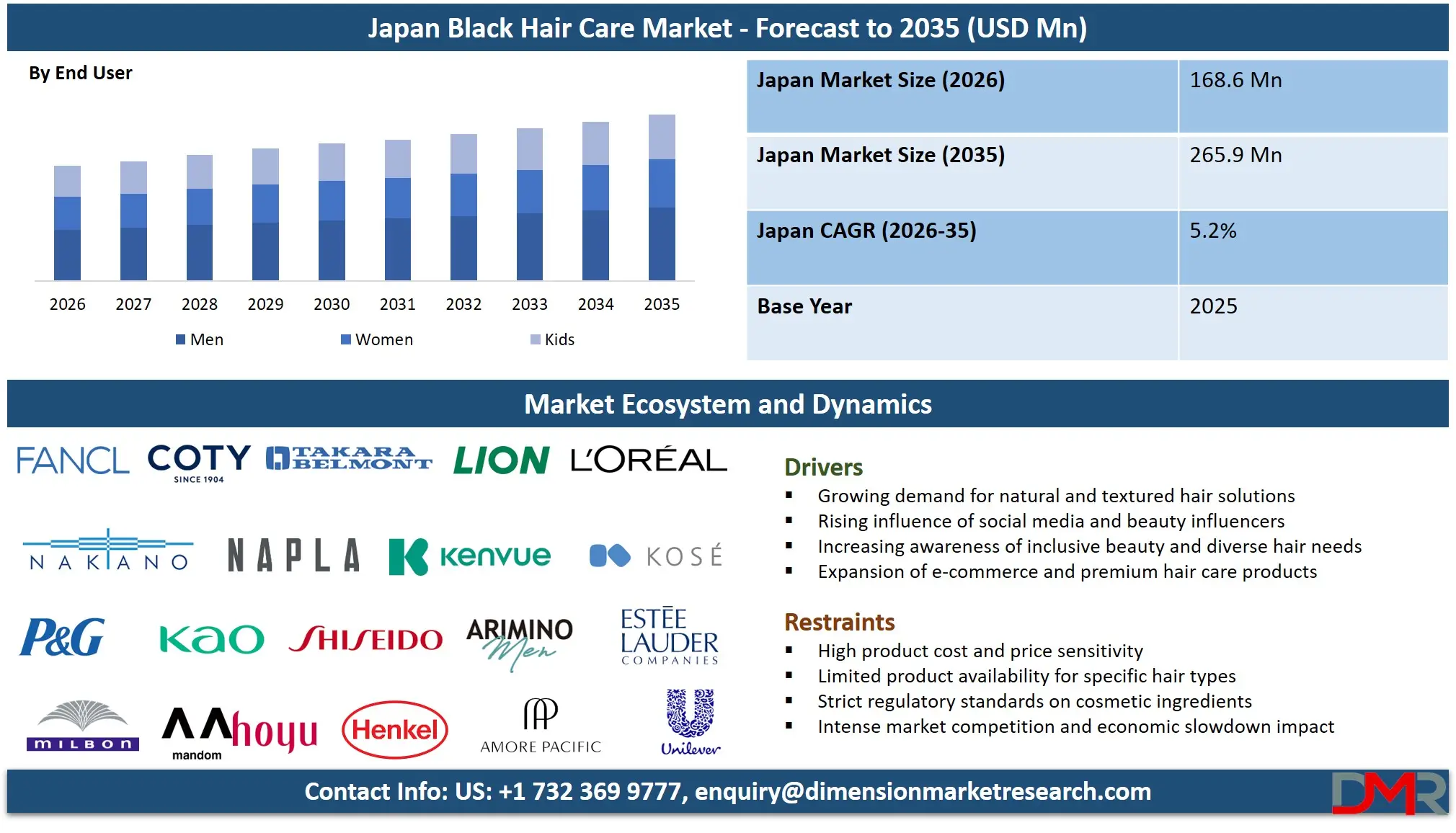
The Japan Black Haircare market size is expected to reach a value of USD 168.6 million in 2026, and it is further anticipated to reach a market value of USD 265.9 million by 2035 at a CAGR of 5.2%.
ℹ
To learn more about this report –
Download Your Free Sample Report Here
The black haircare market in Japan represents a dynamic and increasingly important niche within the country's broader beauty and personal care sector. Driven by a growing multicultural population, rising global awareness of textured hair needs, and the influence of social media, this market is evolving from a specialized segment to a more recognized category. It encompasses a range of products specifically formulated to cater to the unique needs of naturally curly, coily, and tightly textured hair types, focusing on moisture retention, scalp health, and protective styling.
Over recent years, the Japanese market has seen a significant shift in consumer behavior, with greater emphasis on ingredient transparency, clean beauty, and products that address specific concerns like dryness, breakage, and damage from chemical treatments. The influence of global haircare trends, particularly from the United States and Europe, has accelerated the demand for high quality, specialized black haircare products. This growing awareness, coupled with the increasing availability of these products through both traditional and digital channels, is shaping a promising future for the market.
Key trends currently evident in Japan's black haircare sector include a strong move towards natural and organic formulations, with consumers actively seeking products free from sulfates, parabens, and silicones. The "curl journey" movement, popularized on platforms like Instagram and YouTube, is empowering consumers with knowledge about their hair type and the best routines, from co washing to deep conditioning and protective styling. Furthermore, there is a rising demand for multi functional products that offer convenience without compromising on efficacy, such as leave in conditioners with heat protection or hair oils that promote both shine and scalp health.
The market is consequently witnessing significant opportunities, driven by the increasing visibility of mixed race and Afro Japanese individuals in media and fashion. This visibility is fostering a greater sense of cultural acceptance and encouraging brands to create products that resonate with this specific demographic. The strong Japanese focus on quality and precision in manufacturing presents an opportunity for both international and domestic brands to gain a competitive edge by developing highly effective, technologically advanced formulations that meet the exacting standards of Japanese consumers.
Despite its growth potential, the market faces some challenges. A primary restraint is the limited availability of dedicated black haircare products in mainstream retail channels, with consumers often relying on specialty stores or online platforms. Furthermore, there is a lack of widespread professional expertise in Japanese salons regarding textured hair, which can deter consumers from seeking professional styling and treatment services. Price sensitivity also plays a role, as many specialized products are imported and command a premium price point, potentially limiting accessibility for a broader consumer base.
ℹ
To learn more about this report –
Download Your Free Sample Report Here
The black haircare market, while still a niche, is a growing contributor to Japan's overall beauty industry. The increasing number of e commerce platforms specializing in ethnic beauty products, the expansion of curated sections in select brick and mortar stores, and the launch of localized marketing campaigns by international brands are all indicators of its rising significance. The sector's growth is increasingly driven by a digitally native, informed consumer base that values education, community, and authentic brand engagement.
The growth prospects for the Japanese black haircare market are positive, with an expected shift from niche to more mainstream availability over the forecast period. With a continued focus on product innovation, education, and strategic expansion into broader distribution networks, the market is poised for sustained growth. While challenges related to accessibility and professional expertise remain, the opportunities for brands that can authentically engage with and serve this underserved community are substantial. As Japan's cultural landscape continues to diversify, the black haircare market is set to become an increasingly important segment within the nation's beauty industry.
Japan Black Hair Care Market: Key Takeaways
- Market Value: The Japan Black Haircare market size is estimated to have a value of USD 168.6 million in 2026 and is expected to reach USD 265.9 million by the end of 2035.
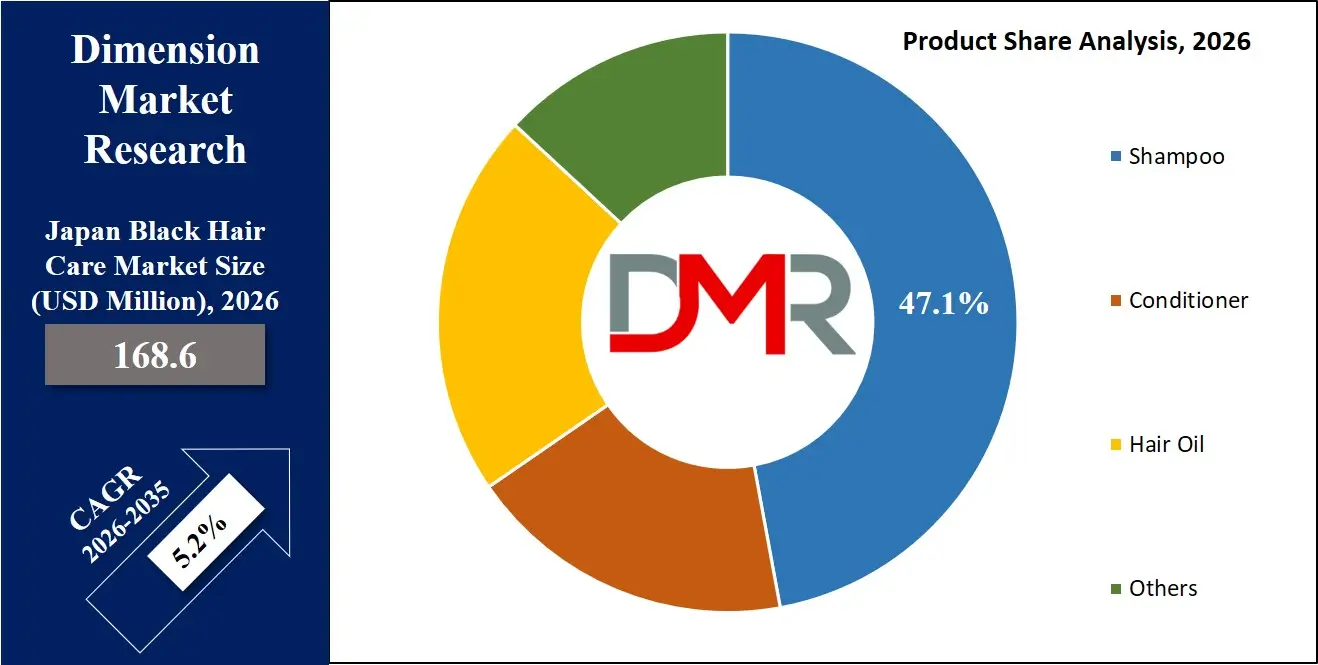
- By Product Segment Analysis: Shampoo is anticipated to dominate this segment, holding the largest market share in 2026.
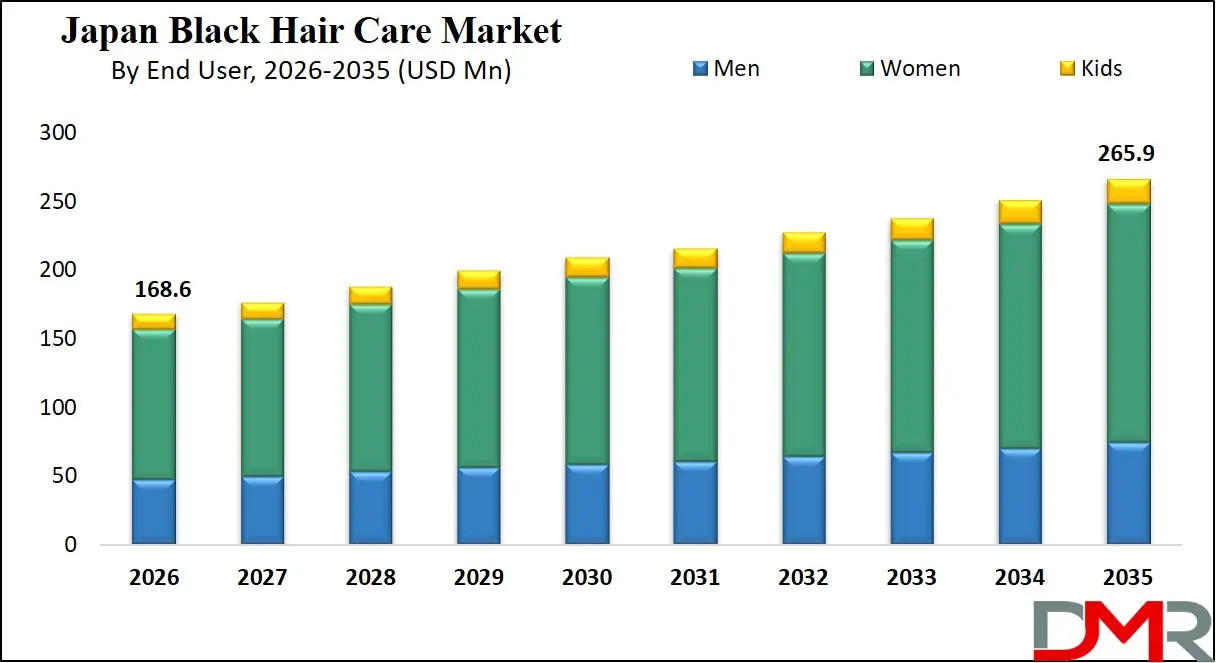
- By End User Segment Analysis: The women segment is projected to dominate the end user segment in the Japan Black Haircare Market with the highest market share in 2026.
- By Distribution Channel Segment Analysis: The online platform is projected to dominate the distribution channel segment in this market with the largest market share in 2026.
- Key Players: Some of the major key players in the Japan Black Haircare Market are Shiseido Company, Limited, Kao Corporation, Mandom Corporation, L'Oréal Japan, Unilever Japan, and many others.
- Market Growth Rate: The market is growing at a CAGR of 5.2% over the forecasted period.
Japan Black Hair Care Market: Use Cases
- Curl Definition and Moisture Retention: Utilizing specialized conditioners and leave in products to define natural curl patterns, combat dryness, and maintain hydration for curly and coily hair types.
- Protective Styling and Scalp Care: Employing hair oils and gentle cleansing shampoos to maintain a healthy scalp and protect hair during protective styles like braids, twists, and wigs.
- Post Chemical Treatment Repair: Using intensive conditioners and restorative hair oils to repair and strengthen hair that has undergone chemical processing such as relaxing, perming, or coloring.
- Daily Styling for Active Lifestyles: Leveraging versatile shampoos and styling products that offer frizz control, heat protection, and hold to maintain polished looks suitable for professional and active lifestyles.
Japan Black Hair Care Market: Stats & Facts
Ministry of Economy, Trade and Industry (METI) / Japan Cosmetic Industry Association (JCIA)
- Cosmetic shipments in Japan reached ~USD 8.6 billion in 2023.
- Cosmetic shipments recorded 2.9% growth in 2023.
- Japan tracks cosmetics production through official METI industrial production statistics.
- National cosmetic consumption is monitored using government household expenditure surveys.
- Import/export of cosmetics is recorded through official national trade statistics systems.
U.S. Department of Commerce (Trade.gov) / METI
- Japan's cosmetics and personal care market size is ~USD 35 billion.
- Japan is the third largest cosmetics market globally.
- The country has ~3,000 beauty and personal care companies.
- Skincare accounts for ~53% of the total cosmetics market.
- Japan imports cosmetics mainly from France, South Korea, and the United States.
Japan Black Hair Care Market: Market Dynamic
Driving Factors in the Japan Black Hair Care Market
Increasing Multicultural Population and Cultural Acceptance
The growth of Japan's multicultural population, including a rising number of individuals of mixed African and Japanese heritage, is a primary driver for this market. Alongside this demographic shift is a growing cultural acceptance and celebration of diverse beauty standards. This combination is creating a larger, more visible consumer base with specific haircare needs, encouraging both local and international brands to invest in and cater to this segment more seriously.
Expansion of E-Commerce and Specialty Retail
The proliferation of e-commerce platforms and the emergence of specialty beauty retailers are making black haircare products more accessible to Japanese consumers. Online channels offer a wider selection of international brands, detailed product information, and customer reviews, overcoming the limitations of physical retail space. This accessibility empowers consumers to find products that specifically meet their needs, fueling market expansion beyond major urban centers.
Restraints in the Japan Black Hair Care Market
Limited Mainstream Retail Presence
One of the primary restraints is the lack of dedicated shelf space for black haircare products in major hypermarkets, supermarkets, and conventional retail stores. This forces consumers to seek out specialty shops or online retailers, which can be less convenient and may deter potential new customers who are unfamiliar with the category, thus limiting overall market reach.
High Price Point and Affordability Concerns
Many specialized black haircare products are imported, resulting in a higher price point compared to mainstream haircare alternatives. This premium pricing can be a significant barrier for many consumers, particularly students and younger demographics, thereby restricting the market's potential for mass adoption and limiting growth to a more niche, higher-income consumer base.
Opportunities in the Japan Black Hair Care Market
Innovation in Product Formats and Hybrid Products
There is a significant opportunity for brands to innovate by developing multi-functional products that cater to the Japanese consumer's desire for efficiency and quality. Examples include hybrid products like "hair oil serums" that combine the benefits of a styling oil with heat protection, or "treatment conditioners" that provide both deep conditioning and scalp care. Such innovations can meet the specific needs of the market for effective, streamlined haircare routines.
Expansion of Professional Salon Services and Education
A major opportunity lies in bridging the gap in professional expertise. Brands can partner with salons to provide specialized training for stylists on cutting, styling, and caring for textured hair. Establishing salons or dedicating floors in existing salons as "textured hair specialists" would create a new service category, build consumer confidence, and open a new channel for product sales and brand loyalty, driving further market penetration.
Trends in the Japan Black Hair Care Market
The Rise of "Clean" and "Curl Friendly" Formulations
The Japanese black haircare sector is seeing a decisive shift towards products with simplified, natural ingredient lists. Consumers are increasingly educated about ingredients like sulfates and silicones, which can be harsh on textured hair, and are actively seeking sulfate free shampoos, silicone free conditioners, and products enriched with natural butters and oils. This trend aligns with the global "clean beauty" movement and is driving brands to reformulate existing products or launch new lines that prioritize ingredient integrity and hair health.
Social Media and the "Curl Journey" Community
Social media platforms, particularly Instagram and YouTube, are playing a crucial role in market growth. Japanese influencers and consumers with textured hair are sharing their "curl journeys," providing product reviews, styling tutorials, and fostering a supportive community. This user generated content is a powerful driver of consumer education and purchasing decisions, often highlighting niche and imported products that are not yet widely available in mainstream stores, thus creating demand that brands are increasingly looking to meet.
Japan Black Hair Care Market: Research Scope and Analysis
By Product Analysis
Shampoo is projected to dominate the product segment in the Japanese Black Hair Care Market in 2026, holding the largest market share due to its fundamental role as the first and most essential step in any hair care routine. Cleansing is critical for maintaining scalp health, removing product buildup, excess oils, and environmental impurities, especially for individuals with textured hair who often use multiple styling products such as oils, creams, and gels. As a result, shampoos are the most frequently purchased and regularly used product category, driving consistent demand.
In the context of Black hair care, there is a growing preference for specialized shampoos that are sulfate free, moisturizing, and gentle on the scalp. Traditional shampoos can strip natural oils, leading to dryness and breakage, which is a major concern for curly and coily hair types. This has led to increased demand for formulations enriched with hydrating ingredients such as natural oils, botanical extracts, and proteins that cleanse without compromising moisture balance. Additionally, co-washing products and low-lather cleansing conditioners are gaining traction, further expanding the shampoo category.
ℹ
To learn more about this report –
Download Your Free Sample Report Here
In Japan, rising awareness of scalp care and hygiene, combined with the influence of global beauty trends, is supporting the adoption of advanced shampoo formulations tailored to diverse hair needs. Consumers are increasingly prioritizing scalp health as the foundation of healthy hair growth, further reinforcing the importance of shampoos. Moreover, frequent washing habits and the availability of a wide range of products across price segments from mass market to premium contribute to higher volume sales.
Overall, the shampoo segment's necessity, high usage frequency, and continuous innovation in formulation ensure its dominant position in the market.
By Distribution Channel Analysis
Online platforms are projected to dominate the distribution channel segment in the Japan Black Hair Care Market in 2026, driven by accessibility, variety, and consumer education. E-commerce has become the preferred purchasing channel, particularly for niche categories like Black hair care, where product availability in traditional retail stores is limited. Online platforms provide access to a wide range of international and specialized brands that are otherwise difficult to find in Japan's offline retail landscape.
One of the key advantages of online channels is the ability to offer detailed product information, including ingredient lists, usage instructions, and customer reviews. This transparency is especially important for consumers seeking solutions tailored to specific hair textures and concerns. Educational content such as tutorials, influencer reviews, and styling guides further supports informed purchasing decisions, helping consumers build trust in unfamiliar or imported brands.
Convenience is another major factor driving online dominance. Consumers can easily compare products, prices, and reviews from multiple brands without geographical limitations. The availability of subscription models and fast delivery options enhances the overall customer experience. In addition, social media integration and targeted digital marketing campaigns enable brands to directly engage with their audience, increasing visibility and conversion rates.
While physical stores, including salons and specialty beauty retailers, continue to play a role in product discovery and professional recommendations, their limited assortment restricts growth. As digital adoption continues to rise in Japan, online platforms are expected to remain the leading distribution channel, shaping purchasing behavior and market expansion.
By End User Analysis
The women segment is expected to dominate the end user category in the Japan Black Hair Care Market in 2026, driven by higher engagement in hair care routines and greater demand for specialized products. Women represent the primary consumer base due to their strong focus on hair health, styling versatility, and personal expression. Hair plays a significant cultural and aesthetic role, particularly within communities that embrace natural textures, making it a key aspect of identity and confidence. This has led to the widespread adoption of structured routines that include cleansing, conditioning, moisturizing, and styling.
A major trend influencing this segment is the "curl journey," where individuals transition from chemically treated or heat damaged hair to embracing their natural texture. This movement is largely led by women and has fueled demand for products that support curl definition, hydration, and damage repair. In Japan, exposure to global beauty standards through social media platforms has increased awareness and acceptance of textured hairstyles, further boosting female consumer participation in this niche market.
Women also tend to invest more in premium and multifunctional hair care products, including treatments, masks, and leave-in conditioners, contributing to higher average spending per consumer. While men's grooming and children's hair care segments are gradually expanding, they remain comparatively smaller due to limited product variety and lower routine complexity. The established product ecosystem tailored to women's needs, combined with higher brand engagement and purchasing frequency, ensures that the women's segment continues to lead the market.
The Japan Black Hair Care Market Report is segmented on the basis of the following:
By Product
- Shampoo
- Conditioner
- Hair Oil
- Others
By Distribution Channel
- Hypermarket/Supermarket
- Online Platform
- Retail Stores
By End User
Impact of Artificial Intelligence in the Japan Black Hair Care Market
- Personalized Product Recommendations: AI powered tools analyze individual hair type, scalp condition, and environmental factors to recommend customized products for textured and Black hair. This is particularly valuable in Japan, where consumers seek precise, high quality solutions tailored to specific needs such as moisture retention, curl definition, and scalp sensitivity.
- Advanced Hair and Scalp Diagnostics: AI enabled imaging and diagnostic applications allow users to assess scalp health, dryness levels, and hair damage through smartphones or in store devices. This improves product selection accuracy and supports the adoption of specialized Black hair care solutions in a market where awareness is still developing.
- Enhanced E commerce Experience: Online platforms leverage AI for virtual consultations, chatbots, and smart search features, helping consumers discover niche Black hair care brands that are not widely available in physical stores. AI also improves product discovery through behavior based recommendations and personalized shopping journeys.
- Product Innovation and R&D Optimization: Manufacturers use AI to analyze ingredient effectiveness, consumer feedback, and global trends to develop better formulations for textured hair. This accelerates the creation of sulfate free shampoos, moisture rich conditioners, and scalp treatments suited for diverse hair textures in Japan.
- Demand Forecasting and Inventory Management: AI helps companies predict demand for niche segments like Black hair care, enabling efficient inventory planning and reducing stock shortages. This is particularly important in Japan, where supply chains must adapt to growing but still specialized consumer demand for diverse hair care products.
Japan Black Hair Care Market: Competitive Landscape
The Japan Black Hair Care Market is characterized by a highly fragmented and niche competitive landscape, shaped by the presence of established global players alongside a limited but growing number of specialized textured hair brands. Multinational companies such as L'Oréal S.A., Procter & Gamble, Unilever, and Henkel play a significant role by offering broad product portfolios and leveraging strong distribution networks across Japan. Their ability to invest in innovation, branding, and digital engagement provides them with a competitive advantage in reaching diverse consumer segments.
Domestic leaders including Shiseido Company Limited, Kao Corporation, and KOSÉ Corporation dominate the overall hair care market through strong brand loyalty, advanced research and development capabilities, and deep understanding of Japanese consumer preferences. These companies are increasingly focusing on product innovation, including scalp focused solutions, natural ingredient formulations, and technology driven personalization to maintain their market position.
ℹ
To learn more about this report –
Download Your Free Sample Report Here
However, within the Black hair care niche, the market remains underdeveloped and reliant on imports, as locally tailored products for textured hair are still limited. Consumers often depend on international brands and online platforms to access specialized products, creating opportunities for new entrants and niche players. Digital channels play a crucial role in enabling these brands to reach target audiences effectively.
The competitive landscape is further evolving with the growth of premium and salon grade products, as well as increasing multicultural influence. Overall, the market presents significant growth potential, driven by rising awareness, product innovation, and expanding accessibility.
Some of the prominent players in the Japan Black Hair Care Market are:
- L'Oréal S.A.
- Procter & Gamble Company
- Unilever PLC
- Shiseido Company Limited
- Kao Corporation
- Kosé Corporation
- Mandom Corporation
- Milbon Co. Ltd.
- Hoyu Co. Ltd.
- Henkel AG & Co. KGaA
- Kenvue Inc.
- Coty Inc.
- Amorepacific Corporation
- The Estée Lauder Companies Inc.
- Napla Co. Ltd.
- Lion Corporation
- Fancl Corporation
- Arimino Co. Ltd.
- Nakano Seiyaku Co. Ltd.
- Takara Belmont Corporation
- Other Key Players
Recent Developments in the Japan Black Hair Care Market
- February 2026: Marubeni Corporation acquired ETVOS to expand its cosmetics and hair care portfolio in Japan. The move strengthens its presence in premium beauty segments and supports growth in specialized categories, including emerging textured and Black hair care demand.
- February 2026: Bain Capital advanced its involvement with FineToday Holdings, enhancing strategic positioning in Japan's hair care market. This investment supports brand expansion, innovation, and improved distribution across Asia's evolving and niche hair care segments.
- January 2026: Cosme Tokyo 2026, held at Tokyo Big Sight, attracted thousands of industry participants, highlighting innovations in cosmetics and hair care. The event showcased advanced formulations and niche products, including solutions catering to textured and diverse hair needs.
- January 2026: Kao Corporation introduced advanced scalp and hair care technologies focusing on comfort, hydration, and performance. These innovations align with rising demand for specialized products, including those suitable for textured and moisture sensitive hair types in Japan.
- May 2025: DKSH partnered with TRI K Industries to distribute specialty cosmetic ingredients in Japan. This collaboration supports innovation in formulation development, enabling brands to create more effective and diverse hair care products, including solutions for textured hair segments.
- October 2025: L'Oréal Group acquired Color Wow, a premium hair care brand, strengthening its global portfolio. This acquisition enhances product diversity and innovation potential, supporting expansion into markets like Japan with increasing demand for specialized hair care solutions.
Report Details
| Report Characteristics |
| Market Size (2026) |
USD 168.6 Mn |
| Forecast Value (2035) |
USD 265.9 Mn |
| CAGR (2026–2035) |
5.2% |
| Historical Data |
2021 – 2025 |
| Forecast Data |
2027 – 2035 |
| Base Year |
2025 |
| Estimate Year |
2026 |
| Report Coverage |
Market Revenue Estimation, Market Dynamics, Competitive Landscape, Growth Factors and etc. |
| Segments Covered |
By Product (Shampoo, Conditioner, Hair Oil, and Others), By Distribution Channel (Hypermarket/Supermarket, Online Platform, and Retail Stores), By End User (Men, Women, and Kids) |
| Regional Coverage |
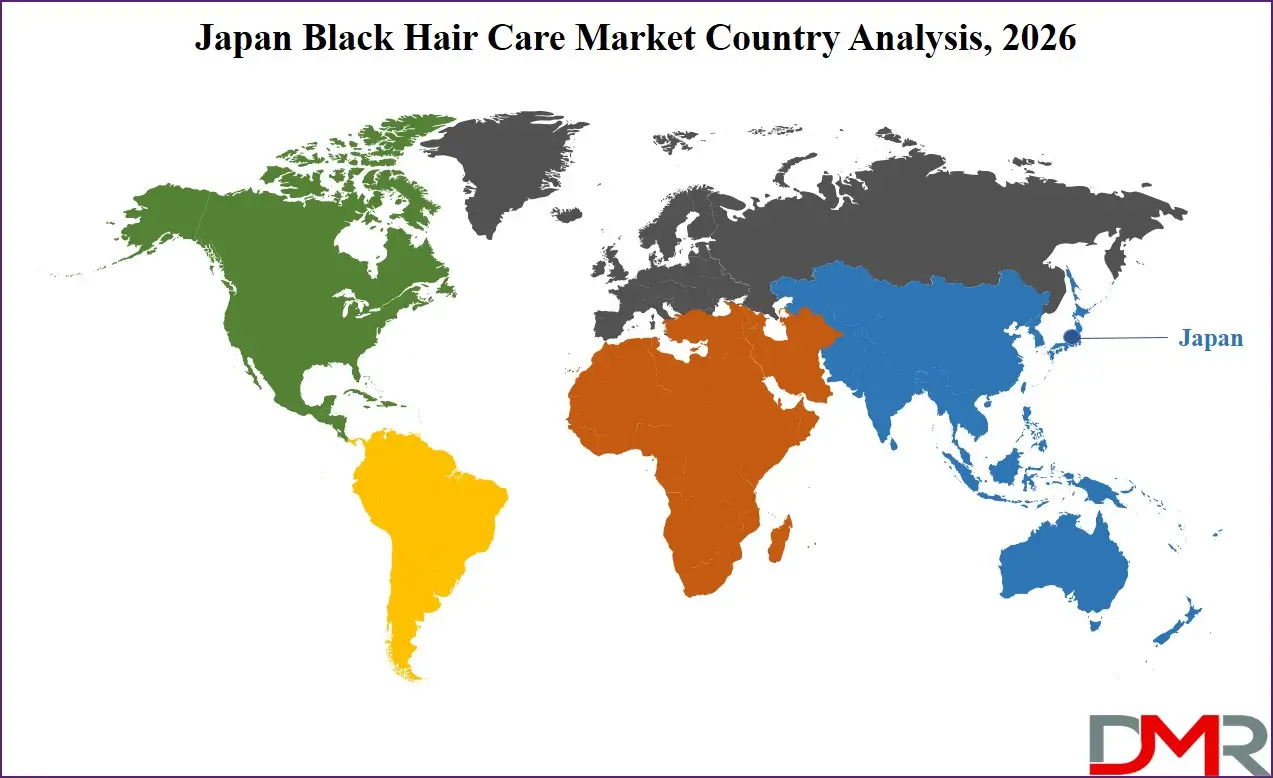
Japan |
| Prominent Players |
L’Oréal S.A., Procter & Gamble Company, Unilever PLC, Shiseido Company Limited, Kao Corporation, Kosé Corporation, Mandom Corporation, Milbon Co. Ltd., Hoyu Co. Ltd., Henkel AG & Co. KGaA, Kenvue Inc., Coty Inc., Amorepacific Corporation, The Estée Lauder Companies Inc., Napla Co. Ltd., Lion Corporation, Fancl Corporation, Arimino Co. Ltd., Nakano Seiyaku Co. Ltd., Takara Belmont Corporation, and Other Key Players |
| Purchase Options |
We have three licenses to opt for: Single User License (Limited to 1 user), Multi-User License (Up to 5 Users) and Corporate Use License (Unlimited User) along with free report customization equivalent to 0 analyst working days, 3 analysts working days and 5 analysts working days respectively. |
Frequently Asked Questions
How big is the Japan Black Haircare Market?
▾ The Japan Black Haircare Market size is estimated to have a value of USD 168.6 million in 2026 and is expected to reach USD 265.9 million by the end of 2035.
Who are the key players in the Japan Black Haircare Market?
▾ Some of the major key players in the Japan Black Haircare Market are Shiseido Company, Limited, Kao Corporation, Mandom Corporation, L'Oréal Japan, Unilever Japan, and many others.
What is the growth rate in the Japan Black Haircare Market?
▾ The market is growing at a CAGR of 5.2% over the forecasted period.