Market Overview
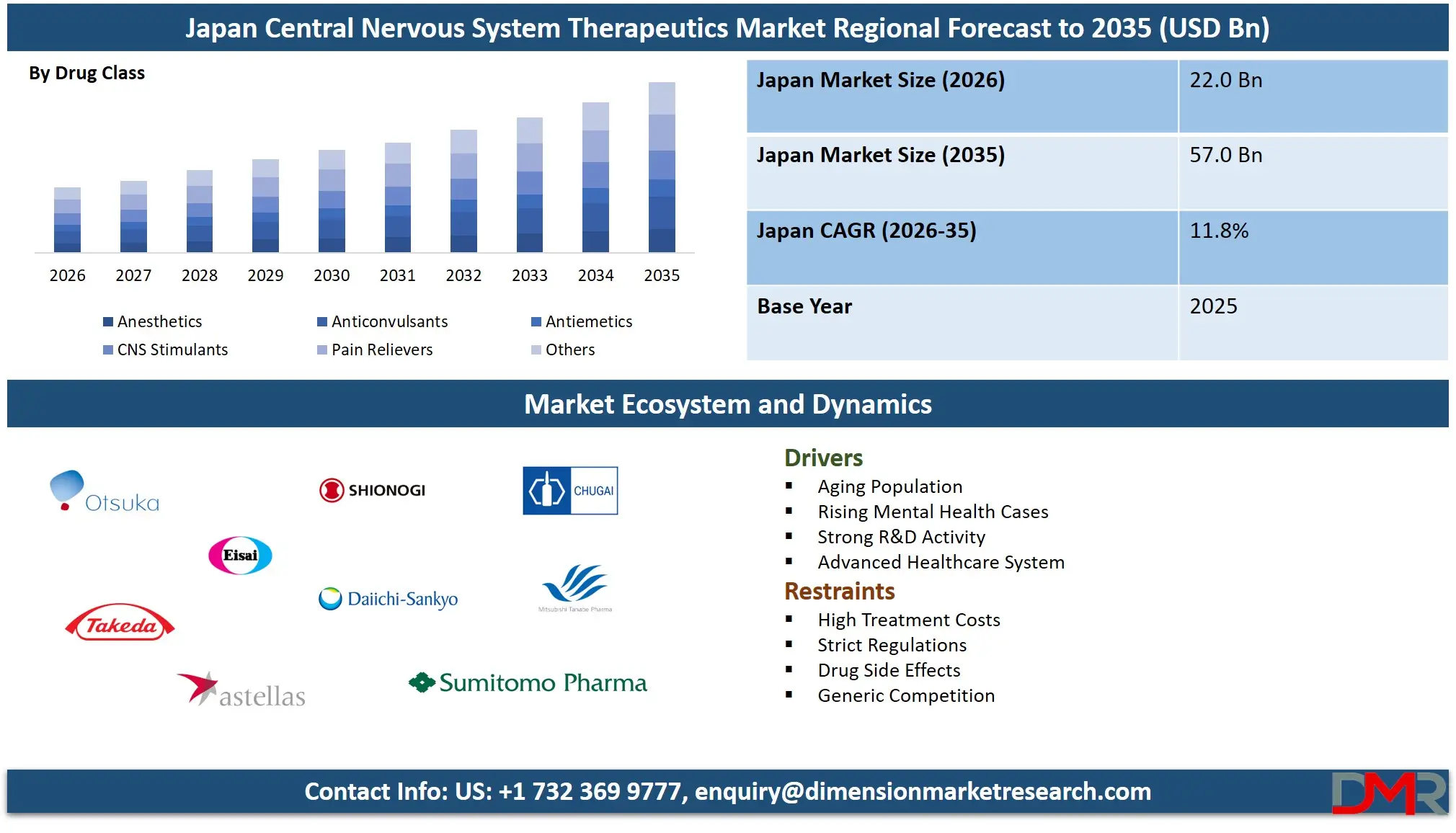
The Japan Central Nervous System therapeutics market size is estimated to be valued at USD 22.0 billion in 2026 and is projected to grow at a CAGR of 11.8%, reaching approximately USD 57.0 billion by 2035, driven by increasing prevalence of neurological disorders, rising demand for neurodegenerative disease treatments, growth in psychiatric drug therapies, and advancements in neuropharmaceutical innovation and brain disorder management.
ℹ
To learn more about this report –
Download Your Free Sample Report Here
Central Nervous System therapeutics refers to a broad class of pharmaceutical treatments designed to manage, prevent, and alleviate disorders affecting the brain and spinal cord. These therapies target neurological and psychiatric conditions such as Alzheimer’s disease, Parkinson’s disease, epilepsy, depression, anxiety, and multiple sclerosis by modulating neurotransmitter activity, reducing inflammation, or protecting neural pathways. The segment includes various drug classes such as anticonvulsants, antidepressants, antipsychotics, anesthetics, and neuroprotective agents, along with emerging biologics and gene based therapies. Advancements in neuropharmacology, precision medicine, and brain imaging technologies are enhancing treatment outcomes, improving patient quality of life, and enabling early diagnosis and intervention in complex central nervous system disorders.
The Japan Central Nervous System therapeutics market represents a highly mature and innovation driven healthcare segment shaped by the country’s aging population and increasing prevalence of neurological diseases. Japan has one of the highest proportions of elderly individuals globally, which significantly contributes to the rising incidence of neurodegenerative conditions such as dementia and Parkinsonism. The market is characterized by strong domestic pharmaceutical companies, continuous clinical research, and widespread adoption of advanced treatment protocols. Growing awareness regarding mental health disorders and improved diagnostic capabilities are further driving demand for psychiatric medications and long term neurological care solutions.
ℹ
To learn more about this report –
Download Your Free Sample Report Here
In addition, the market is influenced by supportive government healthcare policies, universal insurance coverage, and increasing investment in drug discovery and regenerative medicine. Japan’s focus on precision therapeutics, digital health integration, and novel drug delivery systems is fostering innovation in central nervous system treatment approaches. However, challenges such as high drug development costs, regulatory complexities, and the need for safer and more effective therapies continue to shape competitive dynamics. The expansion of specialty care centers, coupled with rising collaborations between global and local pharmaceutical players, is expected to sustain steady growth in the Japan central nervous system therapeutics market.
Japan Central Nervous System Therapeutics Market: Key Takeaways
- Strong Market Expansion Outlook: The market is projected to grow from USD 22.0 billion in 2026 to USD 57.0 billion by 2035, reflecting significant long term growth potential.
- High Growth Rate Momentum: A CAGR of 11.8% indicates rapid expansion driven by rising neurological disorder prevalence and increasing neuropharmaceutical demand.
- Aging Population Driving Demand: Over 29% of Japan’s population is aged 65+, directly supporting higher demand for neurodegenerative disease treatments.
- Dominance of Neurodegenerative Segment: Neurodegenerative diseases account for approximately 33.0% of total market share, making it the leading disease segment.
- Hospital Channel Leadership: Hospital pharmacies hold around 48.0% share, highlighting strong dependence on institutional healthcare for CNS treatments.
Japan Central Nervous System Therapeutics Market: Use Cases
- Neurodegenerative Treatment: Used for Alzheimer’s and Parkinson’s management, driven by aging population and demand for neuroprotective therapies.
- Mental Health Management: Supports treatment of depression, anxiety, and psychotic disorders through psychiatric drugs and brain health therapies.
- Epilepsy Control: Anticonvulsants help in seizure management, improving neurological care and patient outcomes.
- Pain and Anesthesia Use: Applied in chronic pain management and surgical anesthesia using central acting analgesics and anesthetics.
Impact of Iran Conflict on the Japan Central Nervous System Therapeutics Market
- Supply Chain Disruptions and Drug Availability: The Iran conflict has disrupted global pharmaceutical logistics and transit routes, causing delays in drug shipments and shortages of active pharmaceutical ingredients, impacting CNS drug availability in Japan.
- Rising Energy Costs Increasing Treatment Expenses: Increased oil and LNG prices due to supply disruptions are raising manufacturing and transportation costs for neuropharmaceuticals, leading to higher CNS treatment expenses in Japan.
- Inflationary Pressure on Healthcare System: Economic instability and inflation triggered by the conflict are increasing healthcare expenditure, putting pressure on Japan’s reimbursement system and pricing of CNS therapeutics.
Japan Central Nervous System Therapeutics Market: Stats & Facts
- Ministry of Internal Affairs and Communications (Japan Government)
- Japan’s population aged 65+ reached 36.25 million in 2024
- Elderly population share stood at 29.3% in 2024
- Elderly workforce reached 9.14 million in 2023
- Total population declined to around 124 million in 2024
- Annual population decline recorded at ~595,000 in 2024
- Cabinet Office of Japan (Annual Report on Ageing Society 2024)
- Aging rate reached 29.1% in 2023
- Japan has the highest aging rate globally among large economies
- Share of elderly living alone continues to increase annually
- Aging population expected to rise further beyond 30% in coming years
- Elderly housing demand is increasing due to demographic shifts
Japan Central Nervous System Therapeutics Market: Market Dynamic
Driving Factors in the Japan Central Nervous System Therapeutics Market
Rising Burden of Neurological Disorders
The increasing prevalence of neurological disorders such as Alzheimer’s disease, Parkinson’s disease, and epilepsy is a major growth driver in Japan. The aging population is accelerating demand for neurodegenerative disease treatments, cognitive enhancers, and long term brain disorder management solutions, boosting the overall neuropharmaceutical market.
Advancements in Neuropharmaceutical Innovation
Continuous investment in drug discovery, biologics, and precision medicine is enhancing treatment efficacy. Innovations in targeted therapies, neuroprotective drugs, and advanced CNS drug delivery systems are improving clinical outcomes and expanding the scope of central nervous system therapeutics.
Restraints in the Japan Central Nervous System Therapeutics Market
High Cost of CNS Drug Development
Developing central nervous system drugs involves complex clinical trials, high failure rates, and significant R and D expenditure. These factors increase drug pricing and limit accessibility, creating challenges for market growth and healthcare affordability.
Stringent Regulatory and Approval Framework
Strict regulatory requirements for safety and efficacy in Japan delay product approvals and market entry. The lengthy approval timelines for neuropharmaceuticals can hinder innovation and slow the introduction of advanced brain disorder treatments.
Opportunities in the Japan Central Nervous System Therapeutics Market
Growth in Regenerative Medicine and Gene Therapy
Japan is actively investing in regenerative medicine and gene based therapies for neurological disorders. Emerging treatments targeting neural repair, stem cell therapy, and disease modifying approaches present strong opportunities for next generation CNS therapeutics.
Expansion of Digital Health and AI Integration
The integration of digital health platforms, artificial intelligence, and neurodiagnostics is enabling early detection and personalized treatment of brain disorders. This is creating opportunities for improved patient monitoring, precision therapeutics, and data driven clinical decision making.
Trends in the Japan Central Nervous System Therapeutics Market
Shift toward Personalized and Precision Medicine
There is a growing trend toward personalized CNS therapeutics based on genetic profiling and patient specific treatment plans. Precision medicine is enhancing drug effectiveness and reducing adverse effects in neurological and psychiatric treatments.
Increasing Focus on Mental Health Therapies
Rising awareness of mental health is driving demand for psychiatric drugs, including antidepressants and antipsychotics. There is a notable shift toward long term mental health management, improved diagnosis rates, and broader adoption of brain health therapies in Japan.
Japan Central Nervous System Therapeutics Market: Research Scope and Analysis
By Disease Analysis
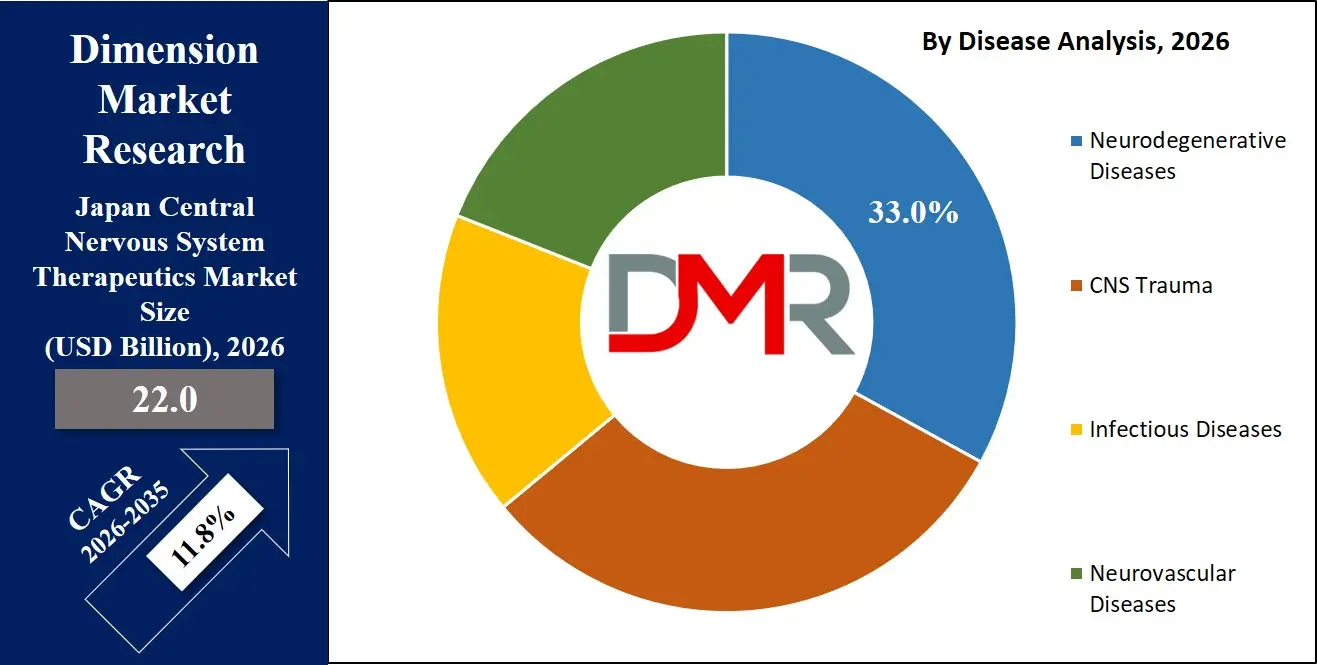
Neurodegenerative diseases are expected to dominate the disease segment in the Japan central nervous system therapeutics market, accounting for around 33.0% of the total market share in 2026. This dominance is primarily driven by the country’s rapidly aging population, which has led to a higher incidence of conditions such as Alzheimer’s disease, Parkinson’s disease, and amyotrophic lateral sclerosis. The growing burden of cognitive decline and memory related disorders is increasing demand for neurodegenerative disease treatments, including disease modifying therapies, neuroprotective drugs, and cognitive enhancers. In addition, advancements in neuropharmaceutical research, early diagnosis through improved neuroimaging, and rising healthcare expenditure are further supporting segment growth, making it a key revenue contributor within the brain disorder treatment landscape.
ℹ
To learn more about this report –
Download Your Free Sample Report Here
CNS trauma represents a smaller but important segment within the market, driven by cases of traumatic brain injuries and spinal cord injuries resulting from accidents, falls, and other physical impacts. The demand in this segment is supported by the need for immediate medical intervention, including the use of anesthetics, pain management drugs, and neuroprotective therapies to minimize long term neurological damage. While the prevalence is lower compared to chronic neurological disorders, ongoing improvements in emergency care infrastructure, rehabilitation therapies, and advanced treatment protocols are enhancing patient outcomes. Increasing awareness around trauma care and the integration of specialized neurological treatment approaches are contributing to steady growth in this segment within Japan’s central nervous system therapeutics market.
By Drug Class Analysis
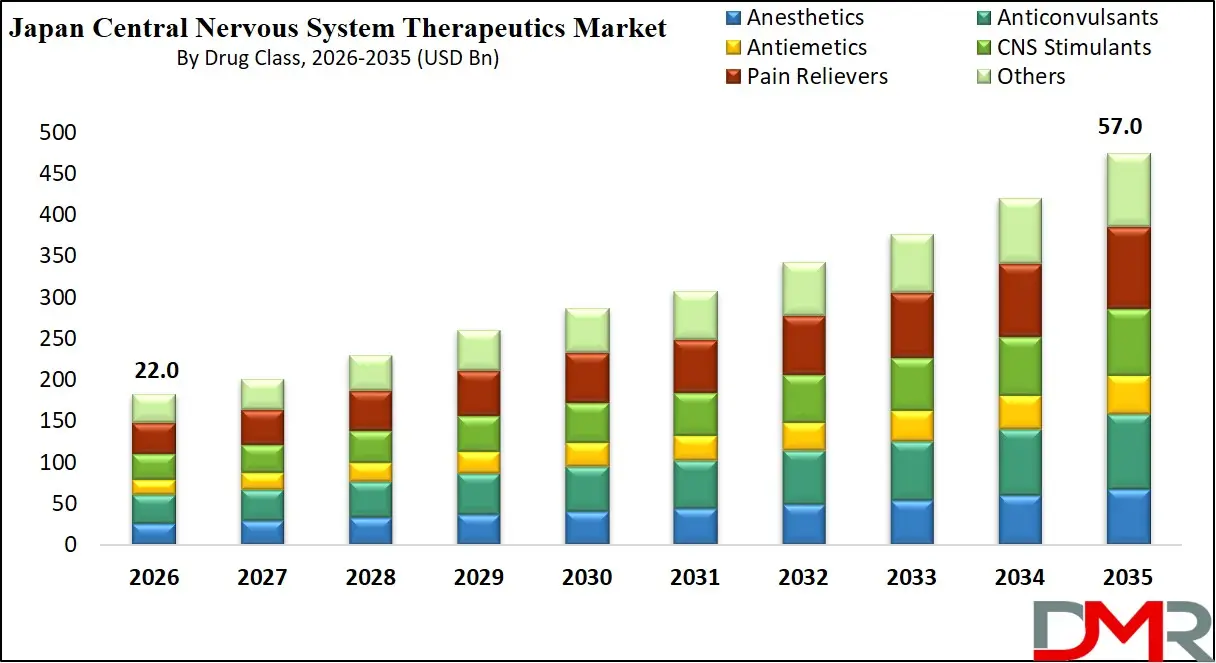
Pain relievers are anticipated to dominate the drug class segment in the Japan central nervous system therapeutics market, capturing around 21.0% of the total market share in 2026. This dominance is largely driven by the high prevalence of chronic pain conditions, postoperative pain management needs, and neurological disorders that require central acting analgesics. The growing elderly population further contributes to increased demand for pain management therapies, as age related conditions often involve persistent pain and reduced mobility. In addition, the widespread use of anesthetics and analgesics in hospital settings, along with advancements in pain control formulations and targeted drug delivery systems, is strengthening the position of this segment within the neuropharmaceutical landscape.
The others category, which includes antidepressants, antipsychotics, and other psychiatric medications, also represents a significant share of the market due to the rising burden of mental health disorders in Japan. Increasing diagnosis rates of depression, anxiety disorders, and psychotic conditions are driving the demand for these therapies, supported by growing awareness and improved access to mental healthcare services. These drugs play a crucial role in long term brain health management by regulating neurotransmitter activity and stabilizing mood and behavior. Continuous innovation in psychiatric drug development, along with a shift toward personalized treatment approaches, is further contributing to the steady growth of this segment within the central nervous system therapeutics market.
By Distribution Channel Analysis
Hospital pharmacies are anticipated to dominate the distribution channel segment in the Japan central nervous system therapeutics market, capturing around 48.0% of the total market share in 2026. This dominance is driven by the high volume of inpatient and outpatient treatments for neurological disorders that require specialized supervision, accurate dosing, and immediate access to advanced neuropharmaceuticals. Hospital settings are the primary point of care for conditions such as neurodegenerative diseases, CNS trauma, and severe psychiatric disorders, where medications like anesthetics, anticonvulsants, and central acting drugs are administered under clinical guidance. In addition, Japan’s well established healthcare infrastructure, universal insurance coverage, and strong presence of specialty care centers further support the growth of hospital pharmacy distribution for brain disorder treatments.
Retail pharmacies also play a significant role in the market by supporting the ongoing management of chronic neurological and psychiatric conditions. These pharmacies are widely used for dispensing maintenance medications such as antidepressants, antipsychotics, and anticonvulsants, enabling convenient access for patients outside hospital settings. The increasing prevalence of long term mental health conditions and neurological disorders is driving repeat prescriptions through retail channels, contributing to steady demand. Furthermore, improved accessibility, expansion of pharmacy networks, and growing adoption of community based healthcare services are enhancing the role of retail pharmacies in ensuring continuity of care within Japan’s central nervous system therapeutics market.
The Japan Central Nervous System Therapeutics Market Report is segmented on the basis of the following:
By Disease
- Neurovascular Diseases
- CNS Trauma
- Mental Health
- Anxiety Disorders
- Epilepsy
- Mood Disorders
- Psychotic Disorders
- Others
- Neurodegenerative Diseases
- Alzheimer’s Disease
- Parkinson’s Disease
- Multiple Sclerosis
- Huntington’s Disease
- Amytrophic Lateral Sclerosis
- Others
- Infectious Diseases
- CNS Cancer
- Others
By Drug Class
- Anesthetics
- Anticonvulsants
- Antiemetics
- CNS Stimulants
- Pain Relievers
- Others
By Distribution Channel
- Hospital Pharmacies
- Retail Pharmacies
- Others
Impact of Artificial Intelligence in the Japan Central Nervous System Therapeutics Market
Artificial intelligence is playing a transformative role in the Japan central nervous system therapeutics market by accelerating drug discovery and improving diagnostic accuracy for neurological disorders. AI driven algorithms are being used to analyze complex brain imaging data, identify early signs of conditions such as Alzheimer’s disease and Parkinson’s disease, and support precision diagnostics. In neuropharmaceutical research, machine learning models help in target identification, biomarker discovery, and optimization of clinical trials, significantly reducing development timelines and costs. This is enabling pharmaceutical companies in Japan to enhance the efficiency of CNS drug development and bring innovative brain disorder treatments to market faster.
In addition, AI is enhancing patient care and treatment outcomes through personalized medicine and digital health integration. Advanced data analytics and predictive modeling are being used to tailor treatment plans based on individual patient profiles, improving the effectiveness of psychiatric drugs and neurotherapeutics. AI powered monitoring tools and wearable technologies support real time tracking of neurological conditions, enabling proactive intervention and better disease management. The integration of artificial intelligence in healthcare systems is also improving clinical decision making, optimizing hospital workflows, and strengthening long term management of central nervous system disorders across Japan.
Japan Central Nervous System Therapeutics Market: Competitive Landscape
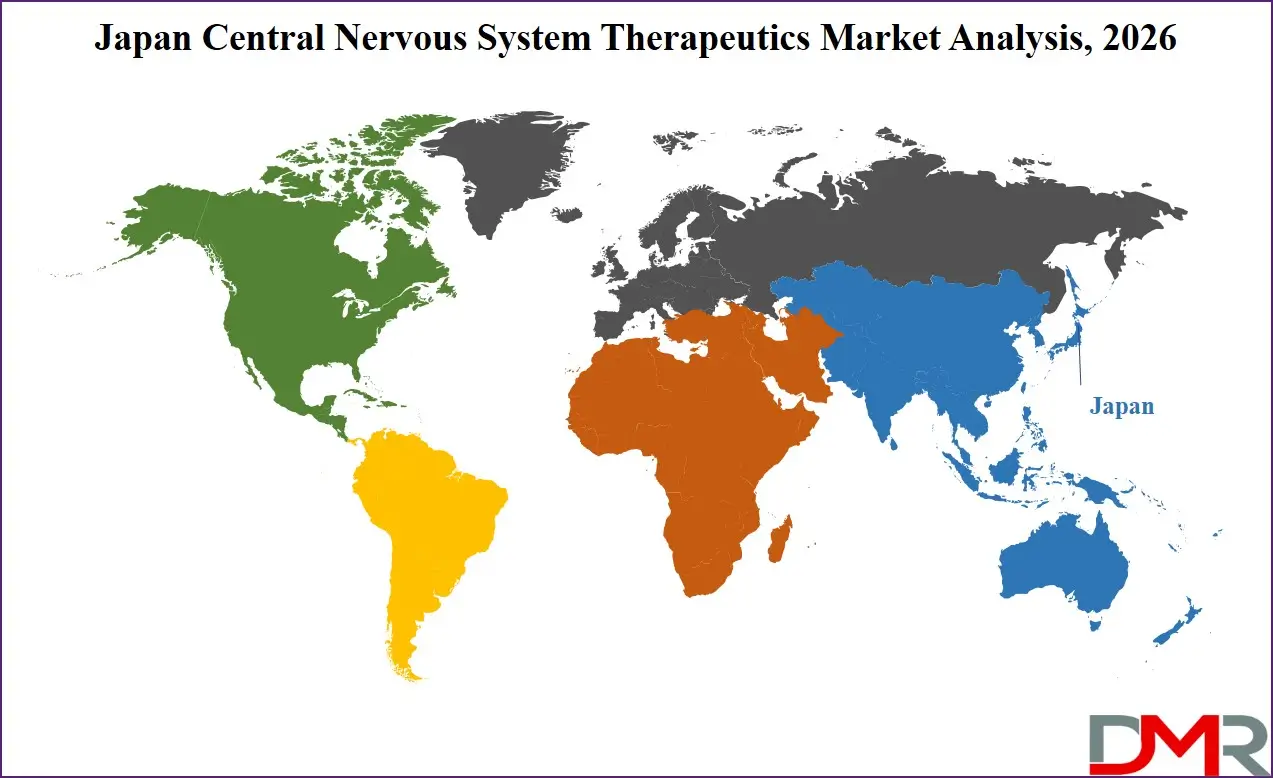
The Japan central nervous system therapeutics market is characterized by intense competition driven by both domestic pharmaceutical leaders and global biotechnology firms, with companies focusing heavily on neuropharmaceutical innovation, product differentiation, and advanced drug development capabilities. Market players compete on the basis of treatment efficacy, safety profiles, and strong clinical pipelines, particularly in high demand areas such as neurodegenerative diseases and psychiatric disorders.
ℹ
To learn more about this report –
Download Your Free Sample Report Here
Strategic collaborations, partnerships with research institutions, and increased investment in regenerative medicine and precision therapeutics are common approaches to strengthen market positioning. In addition, companies are actively pursuing regulatory approvals, expanding their product portfolios, and leveraging Japan’s advanced healthcare infrastructure to enhance market penetration, while ongoing R&D activities and innovation in CNS drug delivery systems continue to shape the competitive dynamics.
Some of the prominent players in the Japan Central Nervous System Therapeutics Market are:
- Otsuka Pharmaceutical Co., Ltd.
- Eisai Co., Ltd.
- Takeda Pharmaceutical Company Limited
- Astellas Pharma Inc.
- Shionogi & Co., Ltd.
- Daiichi Sankyo Co., Ltd.
- Chugai Pharmaceutical Co., Ltd.
- Mitsubishi Tanabe Pharma Corporation
- Sumitomo Pharma Co., Ltd.
- Meiji Seika Pharma Co., Ltd.
- NS Pharma, Inc.
- Sawai Pharmaceutical Co., Ltd.
- Nichi-Iko Pharmaceutical Co., Ltd.
- Teva Pharmaceutical Industries Ltd.
- Pfizer Inc.
- Novartis AG
- Johnson & Johnson
- Biogen Inc.
- Eli Lilly and Company
- AstraZeneca PLC
- Other Key Players
Recent Developments in the Japan Central Nervous System Therapeutics Market
- March 2026: CNS Pharmaceuticals, Inc. announced strategic investment and pipeline expansion plans to build a high value neurology and oncology therapeutic portfolio.
- February 2026: Shionogi & Co., Ltd. collaborated with Cumulus Neuroscience to invest in development of digital biomarkers and CNS disorder research in Japan.
- January 2026: Otsuka Pharmaceutical Co., Ltd. reported commercial availability and expanded clinical data for its CNS related therapeutic pipeline, strengthening its neuropharmaceutical innovation in Japan.
- December 2025: Shionogi & Co., Ltd. announced acquisition of global rights to RADICAVA from Mitsubishi Tanabe Pharma Corporation, strengthening its ALS and neurodegenerative disease portfolio.
Report Details
| Report Characteristics |
| Market Size (2026) |
USD 22.0 Bn |
| Forecast Value (2035) |
USD 57.0 Bn |
| CAGR (2026–2035) |
11.8% |
| Historical Data |
2021 – 2025 |
| Forecast Data |
2027 – 2035 |
| Base Year |
2025 |
| Estimate Year |
2026 |
| Report Coverage |
Market Revenue Estimation, Market Dynamics, Competitive Landscape, Growth Factors and etc. |
| Segments Covered |
By Disease (Neurovascular Diseases, CNS Trauma, Mental Health, Neurodegenerative Diseases, Infectious Diseases, CNS Cancer, and Others), By Drug Class (Anesthetic, Anticonvulsants, Antiemetics, CNS Stimulants, Pain Relievers, and Others), By Distribution Channel (Hospital Pharmacies, Retail Pharmacies, and Others) |
| Country Coverage |
Japan |
| Prominent Players |
Otsuka Pharmaceutical Co., Ltd.; Eisai Co., Ltd.; Takeda Pharmaceutical Company Limited; Astellas Pharma Inc.; Shionogi & Co., Ltd.; Daiichi Sankyo Co., Ltd.; Chugai Pharmaceutical Co., Ltd.; Mitsubishi Tanabe Pharma Corporation; Sumitomo Pharma Co., Ltd.; Meiji Seika Pharma Co., Ltd.; NS Pharma, Inc.; Sawai Pharmaceutical Co., Ltd.; Nichi-Iko Pharmaceutical Co., Ltd.; Teva Pharmaceutical Industries Ltd.; Pfizer Inc.; Novartis AG; Johnson & Johnson; Biogen Inc.; Eli Lilly and Company; AstraZeneca PLC., and Other Key Players |
| Purchase Options |
We have three licenses to opt for: Single User License (Limited to 1 user), Multi-User License (Up to 5 Users) and Corporate Use License (Unlimited User) along with free report customization equivalent to 0 analyst working days, 3 analysts working days and 5 analysts working days respectively. |
Frequently Asked Questions
How big is the Japan Central Nervous System Therapeutics Market?
▾ The Japan Central Nervous System Therapeutics Market size is estimated to have a value of USD 22.0 billion in 2026 and is expected to reach USD 57.0 billion by the end of 2035.
What is the growth rate in the Japan Central Nervous System Therapeutics Market in 2026?
▾ The market is growing at a CAGR of 11.8% over the forecasted period of 2026.
Who are the key players in the Japan Central Nervous System Therapeutics Market?
▾ Some of the major key players in the Japan Central Nervous System Therapeutics Market are Otsuka Pharmaceutical Co., Ltd.; Eisai Co., Ltd.; Takeda Pharmaceutical Company Limited; Astellas Pharma Inc.; Shionogi & Co., Ltd.; Daiichi Sankyo Co., Ltd.; Chugai Pharmaceutical Co., Ltd.; Mitsubishi Tanabe Pharma Corporation; Sumitomo Pharma Co., Ltd., and many others.