Market Overview
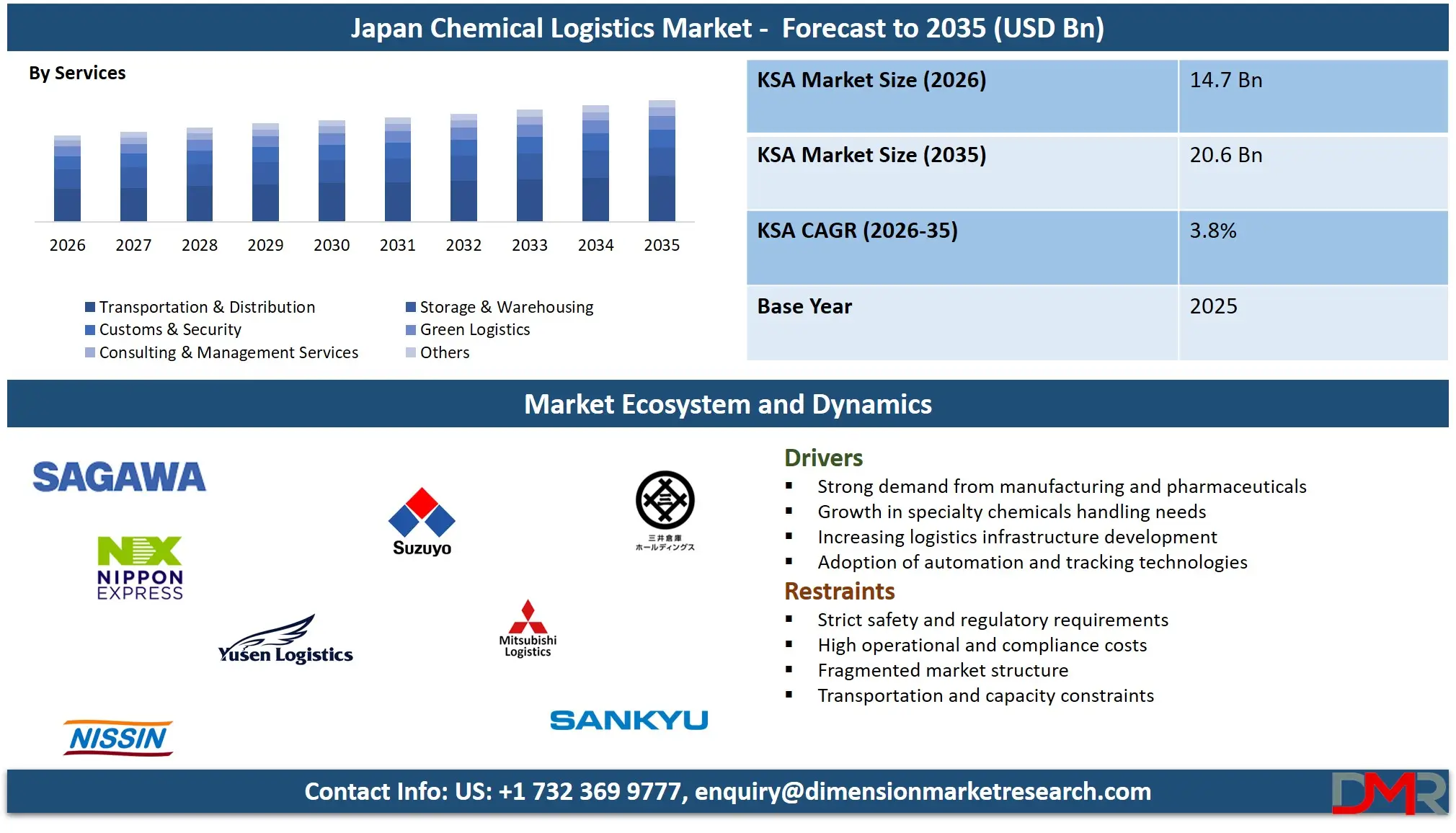
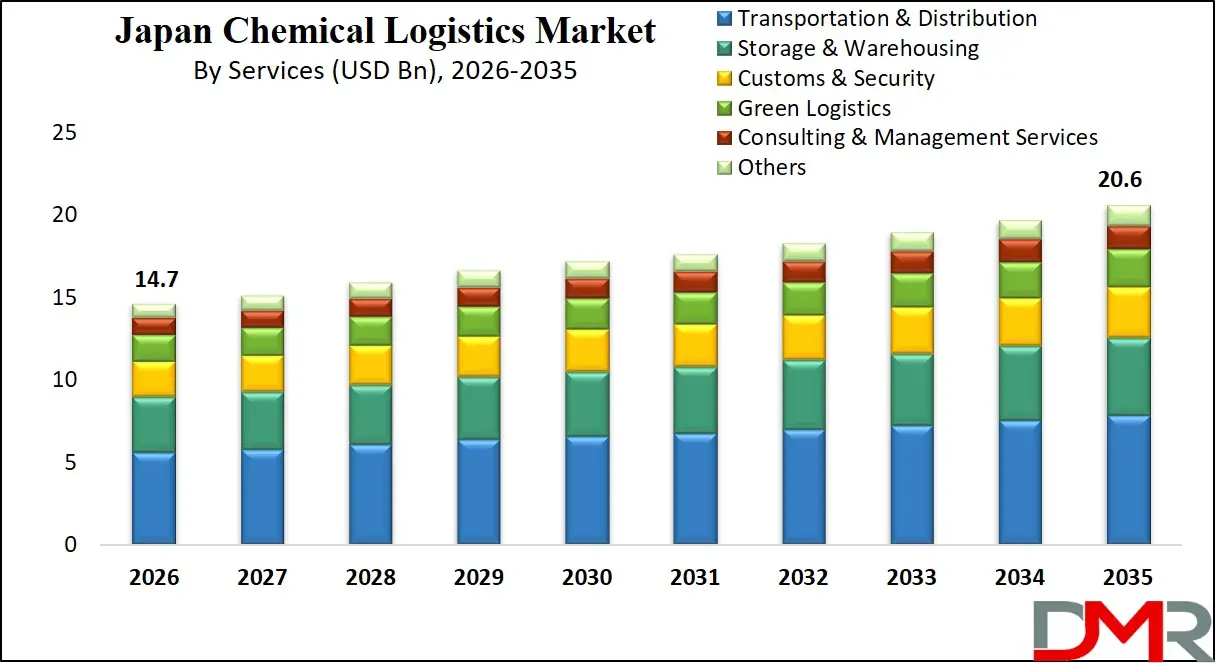
The Japan Chemical Logistics Market size is projected to reach USD 14.7 million in 2026 and grow at a compound annual growth rate of 3.8% to reach a value of USD 20.6 million in 2035.
ℹ
To learn more about this report –
Download Your Free Sample Report Here
Japan Chemical Logistics encompasses the comprehensive system for transporting, storing, handling, and managing chemical products across supply chains with a strong emphasis on safety, regulatory compliance, and operational efficiency. It includes specialized infrastructure such as temperature-controlled warehouses, hazardous material handling mechanisms, bulk transport systems, and compliant packaging solutions. This sector is essential to Japan’s industrial ecosystem, supporting key industries like chemicals, pharmaceuticals, and advanced materials. With strict environmental and safety standards in place, logistics providers operate within a highly regulated framework, ensuring precision and reliability in every stage of the supply chain.
The industry integrates multiple services, including multimodal transportation (road, rail, air, and sea), warehousing, inventory control, labeling, and customs facilitation. It is increasingly driven by advanced technologies such as IoT-based tracking, automated storage systems, and real-time safety monitoring tools. As regulatory requirements intensify and operational complexities grow, companies are investing heavily in digitalization and automation to enhance transparency, traceability, and efficiency. The shift toward high-purity and specialty chemicals, particularly for electronics and healthcare applications, is further pushing the need for customized logistics solutions like contamination-free handling and temperature-sensitive transport systems.
ℹ
To learn more about this report –
Download Your Free Sample Report Here
At the same time, the landscape is evolving with a clear focus on sustainability, innovation, and integrated service models. Companies are adopting green logistics practices, including energy-efficient facilities and low-emission transportation methods, aligning with carbon neutrality goals. Strategic collaborations and infrastructure investments are becoming more prominent to improve capacity and safety standards. Additionally, the transition from conventional bulk logistics to value-added services such as supply chain consulting and risk management highlights the market’s maturity, while automation and AI adoption address workforce challenges and support long-term growth.
Japan Chemical Logistics Market: Key Takeaways
- Market Growth: The Japan Chemical Logistics Market size is expected to grow by USD 5.4 billion, at a CAGR of 3.8%, during the forecasted period of 2027 to 2035.
- By Service: The transportation & distribution segment is anticipated to get the majority share of the Japan Chemical Logistics market in 2026.
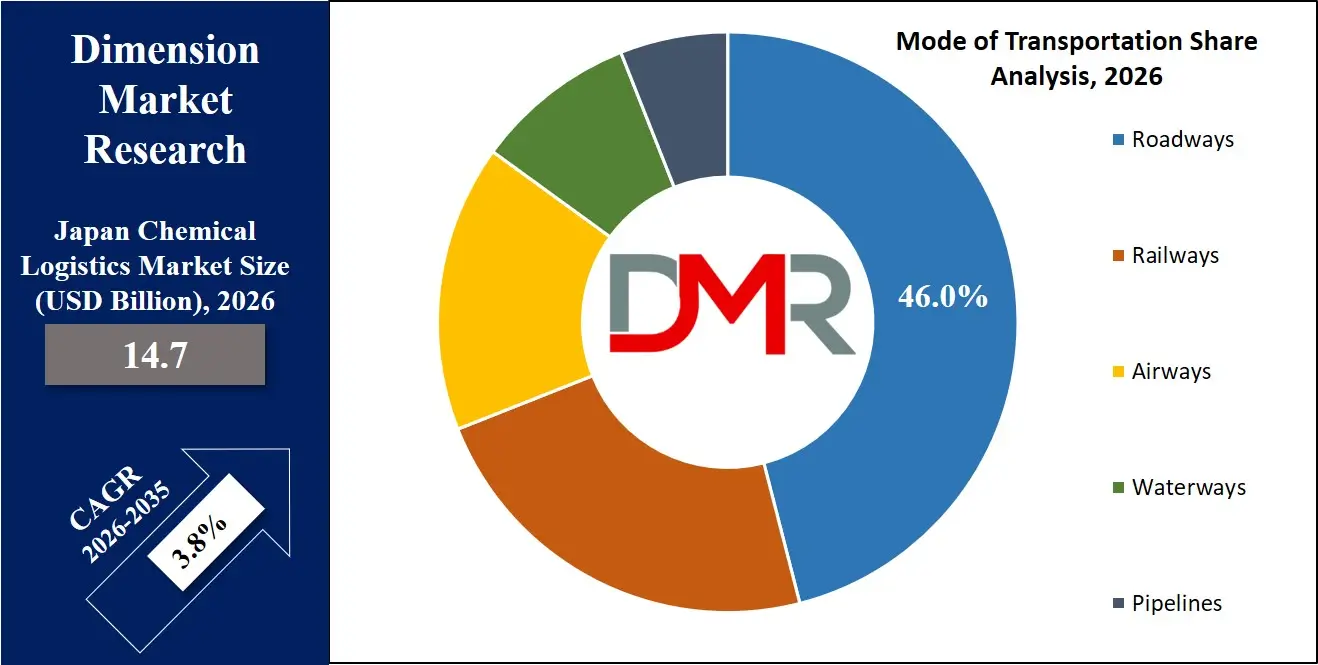
- By Mode of Transportation: The roadways segment is expected to get the largest revenue share in 2026 in the Japan Chemical Logistics market.
- Use Cases: Some of the use cases of Chemical Logistics include temperature-controlled logistics, green logistics solutions, and more.
Japan Chemical Logistics Market: Use Cases
- Bulk Chemical Transportation: Ensures safe and efficient movement of large volumes of industrial chemicals using specialized tankers and containers, minimizing risks associated with hazardous materials.
- Temperature-Controlled Logistics: Supports pharmaceuticals and sensitive chemicals by maintaining precise temperature conditions throughout storage and transit.
- Hazardous Material Handling: Enables secure handling and storage of toxic or flammable substances with strict adherence to safety regulations and protocols.
- Supply Chain Optimization: Uses digital tools and analytics to streamline logistics operations, reduce delays, and improve inventory management.
- Import-Export Facilitation: Assists chemical companies in navigating customs regulations and documentation for international trade.
- Green Logistics Solutions: Focuses on reducing carbon emissions through sustainable transport methods and eco-friendly warehousing practices.
- Specialty Chemical Distribution: Provides tailored logistics solutions for high-value, low-volume chemicals requiring precise handling and delivery.
Stats & Facts
- Ministry of Economy, Trade and Industry (Japan) reported that chemical industry shipments exceeded JPY 45 trillion in 2024.
- Ministry of Land, Infrastructure, Transport and Tourism (Japan) stated that over 90% of domestic freight transport relies on roadways in 2024.
- Japan External Trade Organization noted that chemical exports accounted for approximately 11% of total exports in 2024.
- Statistics Bureau of Japan reported logistics costs represent nearly 5% of Japan’s GDP in 2024.
- Ministry of Environment (Japan) recorded a 12% increase in green logistics adoption initiatives in 2025.
- International Energy Agency stated Japan reduced logistics-related emissions by 8% between 2023 and 2025.
- World Bank indicated Japan’s Logistics Performance Index score reached 4.1 in 2024.
- OECD reported that automation adoption in Japan’s logistics sector increased by 15% in 2025.
- Ministry of Health, Labour and Welfare (Japan) highlighted a 10% rise in pharmaceutical logistics demand in 2024.
- United Nations Comtrade data showed Japan’s chemical imports grew by 6.5% in 2025.
- Japan Chemical Industry Association reported specialty chemicals demand increased by 9% in 2024.
- Asian Development Bank noted infrastructure investment in logistics rose by 7% in Japan in 2025.
Market Dynamic
Driving Factors in the Japan Chemical Logistics Market
Stringent Safety and Regulatory Frameworks
Japan’s highly regulated environment for chemical handling and transportation is a major growth driver for the logistics market. Strict compliance requirements related to hazardous materials, environmental protection, and workplace safety compel companies to invest in advanced logistics solutions. These regulations ensure high operational standards, fostering demand for specialized services such as certified storage, real-time monitoring, and secure transportation systems. As regulations evolve to address environmental concerns and disaster preparedness, logistics providers are continuously upgrading their infrastructure and processes, thereby driving market expansion and innovation.
Growth of High-Value Chemical Industries
The expansion of industries such as pharmaceuticals, semiconductors, and specialty chemicals significantly boosts demand for advanced logistics services. These sectors require precise handling, contamination-free environments, and temperature-controlled supply chains. As Japan strengthens its position in high-tech manufacturing, logistics providers are adapting to meet stringent quality and delivery requirements. This shift toward high-value chemicals increases the need for customized logistics solutions, driving investments in technology and infrastructure while enhancing overall market growth.
Restraints in the Japan Chemical Logistics Market
High Operational and Compliance Costs
The cost of maintaining compliance with stringent safety and environmental regulations is a major challenge. Investments in specialized equipment, training, and infrastructure significantly increase operational expenses. Smaller logistics providers may struggle to meet these requirements, leading to market consolidation. Additionally, the need for continuous upgrades to comply with evolving standards adds financial pressure, potentially limiting the entry of new players and slowing overall market growth.
Aging Workforce and Labor Shortages
Japan’s demographic challenges, including an aging workforce and declining labor availability, impact the logistics sector. Chemical logistics requires skilled personnel for handling hazardous materials and managing complex operations. Labor shortages can lead to increased costs and operational inefficiencies. While automation offers a partial solution, the transition requires substantial investment and time, posing a constraint for many companies in the short term.
Opportunities in the Japan Chemical Logistics Market
Adoption of Smart Logistics Technologies
The integration of IoT, AI, and blockchain technologies presents significant growth opportunities. These technologies enhance visibility, improve safety, and optimize supply chain operations. Smart logistics solutions enable real-time tracking and predictive maintenance, reducing risks and costs. As digital transformation accelerates, companies that invest in these technologies can gain a competitive advantage and tap into new revenue streams.
Expansion of Green Logistics Initiatives
Sustainability is creating new opportunities in the market. Government policies promoting carbon neutrality are encouraging logistics providers to adopt eco-friendly practices such as electric vehicles and energy-efficient warehouses. This transition not only reduces environmental impact but also enhances brand value and compliance with global standards, opening doors to international partnerships and investments.
Trends in the Japan Chemical Logistics Market
Digital Transformation and Automation
The adoption of digital technologies is transforming the logistics landscape. Automated warehouses, AI-driven route optimization, and real-time tracking systems are becoming standard. These innovations improve efficiency, reduce human error, and enhance safety in handling chemicals. The trend is particularly important in addressing labor shortages and meeting the growing demand for precision logistics services.
Shift Toward Integrated Logistics Solutions
Companies are increasingly offering end-to-end logistics services, combining transportation, warehousing, and value-added services. This integrated approach improves supply chain efficiency and reduces costs for chemical manufacturers. Partnerships and collaborations are driving this trend, enabling logistics providers to offer comprehensive solutions tailored to specific industry needs.
Impact of Artificial Intelligence in Japan Chemical Logistics Market
- Predictive Maintenance: AI helps monitor equipment health and predict failures, reducing downtime and maintenance costs.
- Route Optimization: AI-driven algorithms identify the most efficient transport routes, minimizing delays and fuel consumption.
- Inventory Management: AI improves demand forecasting and inventory control, ensuring optimal stock levels.
- Risk Assessment: AI systems analyze data to identify potential safety risks in chemical handling and transportation.
- Automation of Warehousing: Robotics powered by AI enhances storage efficiency and reduces human intervention.
- Real-Time Tracking: AI enables precise tracking of shipments, improving transparency and customer satisfaction.
- Regulatory Compliance Monitoring: AI tools help ensure adherence to safety and environmental regulations.
- Customer Service Enhancement: AI chatbots and analytics improve communication and service delivery.
Research Scope and Analysis
By Services Analysis
Transportation & Distribution leads the Japan Chemical Logistics market and is anticipated to account for nearly 38% of the share by 2026. Its dominance stems from the continuous movement of bulk and specialty chemicals within domestic and global supply chains. The segment relies heavily on road and maritime networks, supported by specialized transport assets such as tankers and ISO containers. Growing demand from pharmaceutical, electronics, and high-tech industries further strengthens its position. In addition, the adoption of advanced route optimization and fleet management technologies improves delivery efficiency and cost control. Strict regulatory standards for chemical transportation also drive ongoing investments in safety, infrastructure, and technology upgrades.
Storage & Warehousing is emerging as the fastest-growing segment in Japan’s chemical logistics sector, primarily due to increasing requirements for specialized storage infrastructure. The need for temperature-controlled environments and strict adherence to hazardous material safety standards is accelerating demand. Companies are increasingly adopting automation, robotics, and smart warehousing systems to enhance operational efficiency and minimize risks. Furthermore, supply chain disruptions and inventory buffering strategies are prompting businesses to expand storage capacities. These factors collectively drive the development of advanced, compliant, and technologically equipped warehousing facilities, making this segment a key growth area within the broader logistics landscape.
By Mode of Transportation Analysis
Roadways hold the largest share in the Japan Chemical Logistics market, projected to reach approximately 46% by 2026. This dominance is driven by the flexibility, accessibility, and efficiency of road transport for short- and medium-distance deliveries. Japan’s well-established road infrastructure enables seamless distribution across industrial zones and urban centers. Road transport is particularly vital for last-mile delivery and smaller shipments requiring timely handling. Technological integration, including GPS tracking and advanced fleet management systems, further enhances operational efficiency and reliability. These advantages make roadways the preferred mode for chemical logistics, supporting consistent and responsive supply chain operations.
ℹ
To learn more about this report –
Download Your Free Sample Report Here
Waterways represent the fastest-growing transportation mode in Japan’s chemical logistics market, supported by increasing global trade and demand for bulk chemical shipments. Maritime transport offers significant cost advantages for large-volume and long-distance movement, making it highly suitable for international logistics. Continuous investments in port infrastructure, shipping capacity, and advanced maritime technologies are strengthening this segment’s growth. Additionally, the ability to handle large quantities efficiently while maintaining safety standards enhances its appeal. As export-import activities expand, waterways are becoming an increasingly critical component of the logistics network for chemical manufacturers and distributors.
By End User Analysis
The chemical industry segment dominates the Japan Chemical Logistics market and is expected to hold around 34% share by 2026. This leadership is attributed to the substantial volume of raw materials and finished chemical products that require efficient transportation and storage. Strong domestic production capabilities and robust export activities further support consistent demand for logistics services. Providers cater to diverse requirements, including bulk shipments and specialized handling of hazardous materials. The need for reliable, compliant, and scalable logistics solutions ensures continuous investment in infrastructure and technology, reinforcing the segment’s leading position in the market.
The pharmaceutical industry is the fastest-growing end-user segment in Japan’s chemical logistics market, driven by rising healthcare demand and the expansion of biopharmaceutical production. This sector requires highly specialized logistics solutions, including temperature-controlled transportation and contamination-free storage environments. Strict regulatory compliance and quality assurance standards further necessitate advanced handling and monitoring systems. Logistics providers are increasingly investing in cold chain infrastructure and digital tracking technologies to meet these requirements. The growing focus on precision medicine and high-value drugs is expected to sustain strong demand, positioning the pharmaceutical segment as a major growth driver in the coming years.
The Japan Chemical Logistics Market Report is segmented on the basis of the following:
By Services
- Transportation & Distribution
- Storage & Warehousing
- Customs & Security
- Green Logistics
- Consulting & Management Services
- Others
By Mode of Transportation
- Roadways
- Railways
- Airways
- Waterways
- Pipelines
By End User
- Chemical industry
- Pharmaceutical Industry
- Cosmetic Industry
- Oil & Gas Industry
- Specialty Chemicals Industry
- Food Industry
- Other End User
Competitive Landscape
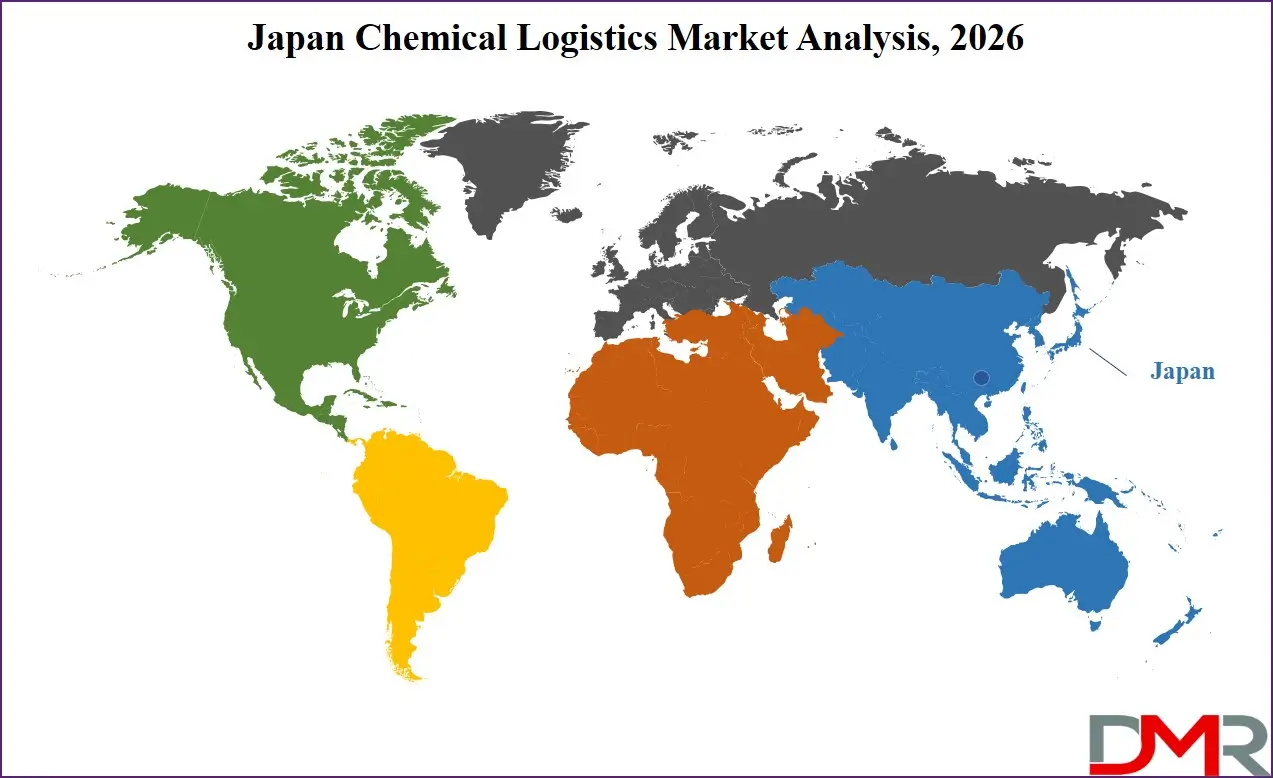
The Japan Chemical Logistics market is characterized by high entry barriers due to stringent regulations, capital-intensive infrastructure, and the need for specialized expertise. Companies compete by investing in advanced technologies, expanding service portfolios, and enhancing safety standards. Strategic partnerships with chemical manufacturers and technology providers are common, enabling integrated logistics solutions.
ℹ
To learn more about this report –
Download Your Free Sample Report Here
Continuous focus on sustainability and digital transformation helps firms differentiate themselves. Market players are also emphasizing geographic expansion and capacity upgrades to strengthen their presence, while innovation in automation and compliance management remains a key competitive strategy.
Some of the prominent players in the Japan Chemical Logistics are:
- Nippon Express Holdings
- Mitsubishi Logistics Corporation
- Mitsui-Soko Holdings Co., Ltd.
- Yusen Logistics Co., Ltd.
- Mitsubishi Chemical Logistics Corporation
- Sankyu Inc.
- Kintetsu World Express (KWE)
- Nissin Corporation
- Suzuyo Co., Ltd.
- Yamato Transport Co., Ltd.
- Sagawa Express Co., Ltd.
- LOGISTEED (Hitachi Transport System)
- Senko Group Holdings Co., Ltd.
- Seino Transportation Co., Ltd.
- Itochu Logistics Corporation
- Japan Freight Railway Company (JRF)
- Toyo Logistics Service Co., Ltd.
- Tosoh Logistics Corporation
- Sumika Logistics Co., Ltd.
- Maruzen Showa Unyu Co., Ltd.
- Other Key Players
Recent Developments
- In March 2025, Nippon Express announced a significant investment in expanding its smart warehouse facilities dedicated to chemical storage. The project includes automation systems, AI-driven inventory management, and enhanced safety mechanisms for hazardous materials. Located near key industrial hubs, the facility aims to improve supply chain efficiency and reduce operational risks.
- In January 2025, Mitsui O.S.K. Lines introduced a new integrated chemical logistics service aimed at enhancing safety and efficiency in bulk chemical transportation. The service combines maritime shipping with advanced tracking technologies, allowing real-time monitoring of hazardous materials. The company also incorporated eco-friendly vessels to align with Japan’s carbon neutrality goals. This initiative strengthens its logistics portfolio and addresses increasing demand from specialty chemical manufacturers.
Report Details
| Report Characteristics |
| Market Size (2026) |
USD 14.7 Bn |
| Forecast Value (2035) |
USD 20.6 Bn |
| CAGR (2026–2035) |
3.8% |
| Historical Data |
2021 – 2025 |
| Forecast Data |
2027 – 2035 |
| Base Year |
2025 |
| Estimate Year |
2026 |
| Report Coverage |
Market Revenue Estimation, Market Dynamics, Competitive Landscape, Growth Factors and etc. |
| Segments Covered |
By Services (Transportation & Distribution, Storage & Warehousing, Customs & Security, Green Logistics, Consulting & Management Services, Others), By Mode of Transportation (Roadways, Railways, Airways, Waterways, Pipelines), By End User (Chemical Industry, Pharmaceutical Industry, Cosmetic Industry, Oil & Gas Industry, Specialty Chemicals Industry, Food Industry, Other End User) |
| Country Coverage |
Japan |
| Prominent Players |
Nippon Express Holdings, Mitsubishi Logistics Corporation, Mitsui-Soko Holdings Co., Ltd., Yusen Logistics Co., Ltd., Mitsubishi Chemical Logistics Corporation, Sankyu Inc., Kintetsu World Express (KWE), Nissin Corporation, Suzuyo Co., Ltd., Yamato Transport Co., Ltd., Sagawa Express Co., Ltd., LOGISTEED (Hitachi Transport System), Senko Group Holdings Co., Ltd., Seino Transportation Co., Ltd., Itochu Logistics Corporation, Japan Freight Railway Company (JRF), Toyo Logistics Service Co., Ltd., Tosoh Logistics Corporation, Sumika Logistics Co., Ltd., Maruzen Showa Unyu Co., Ltd., and Other Key Players |
| Purchase Options |
We have three licenses to opt for: Single User License (Limited to 1 user), Multi-User License (Up to 5 Users) and Corporate Use License (Unlimited User) along with free report customization equivalent to 0 analyst working days, 3 analysts working days and 5 analysts working days respectively. |