Market Overview
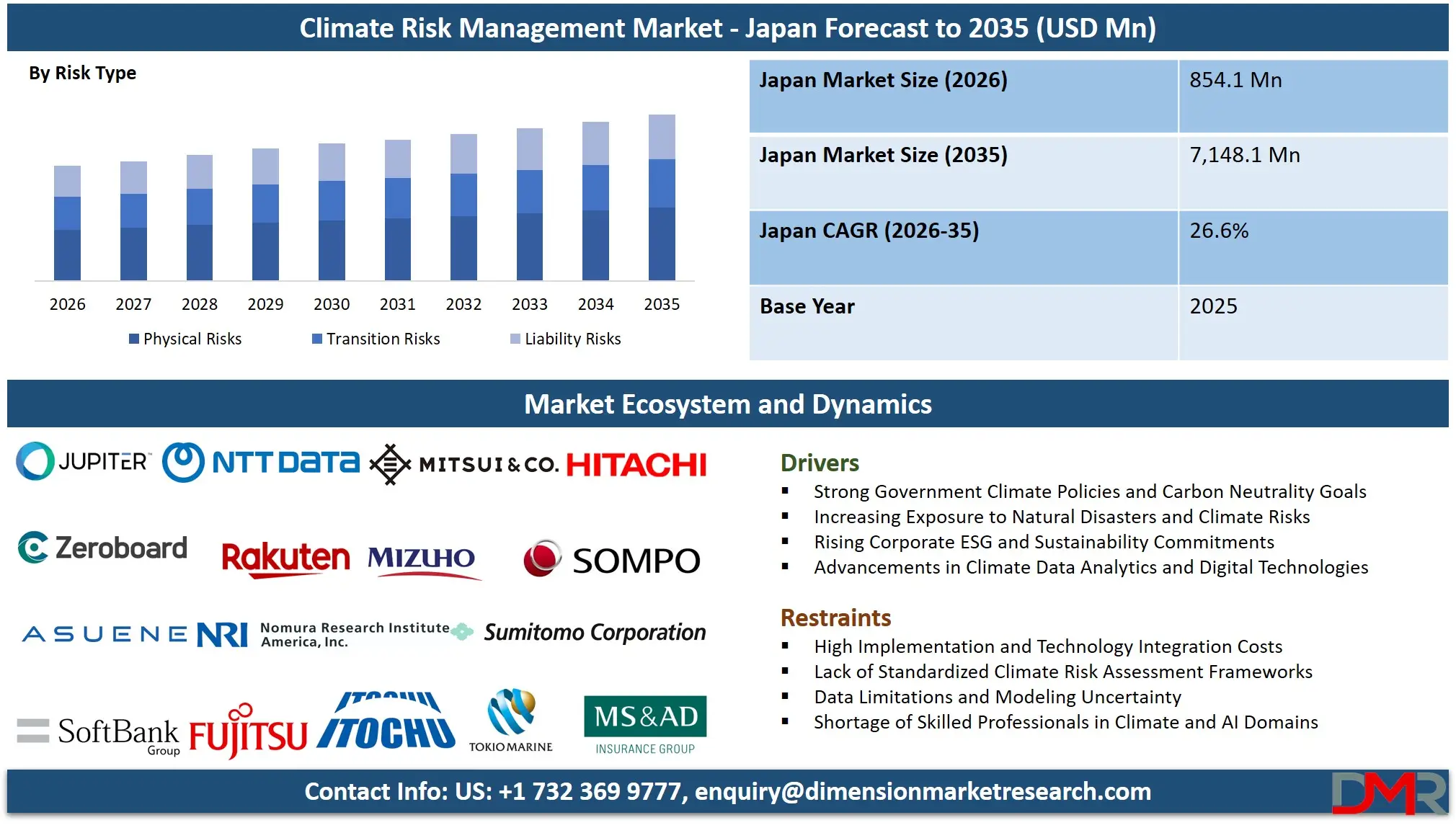
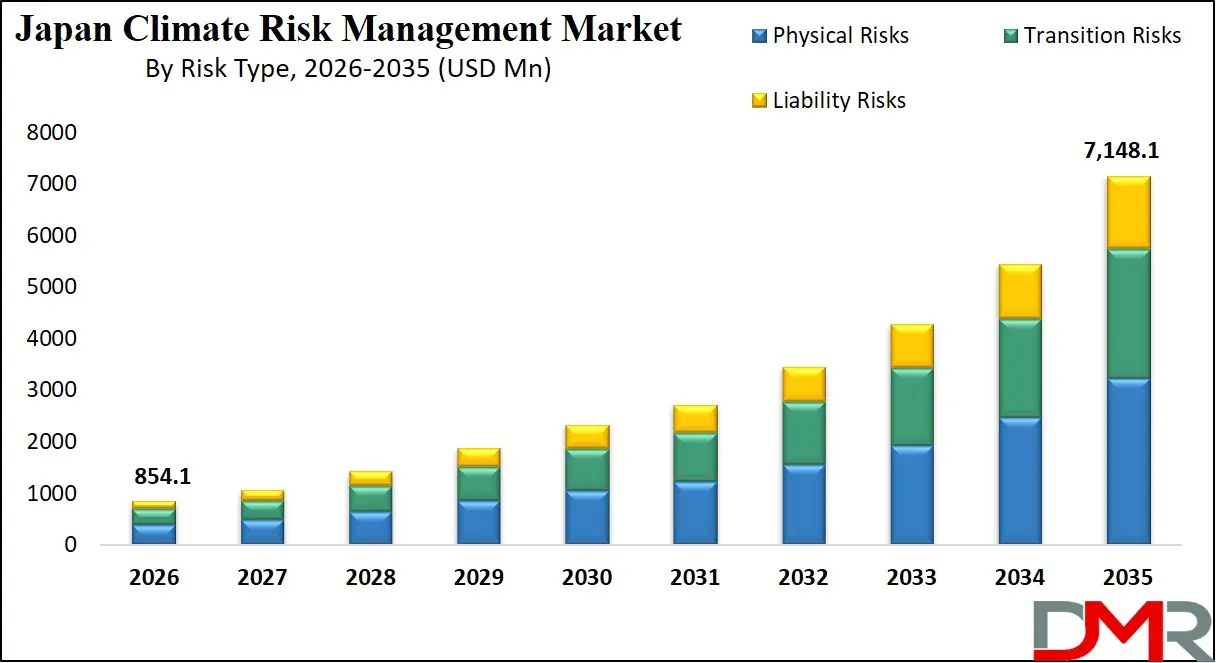
The Japan climate risk management market size is expected to reach a value of USD 854.1million in 2026, and it is further anticipated to reach a market value of USD 2,116.4 million by 2035 at a CAGR of 26.5%.
ℹ
To learn more about this report –
Download Your Free Sample Report Here
Japan Climate Risk Management Market concentrates on the identification, assessment, and alleviation of financial and business hazards due to climate change in the form of extreme weather, disruption of supply chains, and regulatory changes.
The market is focused on the net-zero promise and the growing physical climate effects, thus covering physical risk modeling (floods, typhoons), transition risk analysis (carbon pricing, policy changes), and climate-related financial disclosures in accordance with TCFD.
ℹ
To learn more about this report –
Download Your Free Sample Report Here
The most important ones are climate analytics, scenario analysis, software tools of carbon accounting, and resilience consulting. Most of the leading technology companies, insurers, trading companies and special startups offer services in energy, manufacturing, finance and real estate markets.
Japan Climate Risk Management Market: Key Takeaways
- Market Growth Insights: The market is anticipated to be valued at USD 854.1 million in 2026 and is projected to rise upto USD 2,116.4 million by 2035, at a CAGR of 26.5% during the forecast period.
- By Risk Type Insights: Typhoons, floods, and rise in sea levels cause the most prevalent physical risks that dominate the market. Transition risks are growing at a very high rate with the acceleration of the Japanese Green Transformation (GX) policy and carbon neutrality promises.
- By Deployment Mode Insights: The FSA has required every large financial institution to undertake climate risk scenario analysis and implement climate-related risks in their risk management frameworks, which is an important catalyst to the market.
- Key Players Insights: Major market participants include Mitsubishi UFJ Financial Group (MUFG), Sompo Japan Insurance, Tokio Marine Holdings, Hitachi, NEC Corporation, Mizuho Financial Group, and international firms such as MSCI, Moody's, and Aon.
- Ministry of the Environment, Japan / Japan Meteorological Agency (JMA): The Green Transformation (GX) League program introduced by METI gathers more than 500 businesses and organizes them to work on decarbonization and the shift to green economy, which generates considerable demand on transition risk management and reporting services.
- Financial Services Agency (FSA), Japan: The FSA has mandated that all major financial institutions conduct climate risk scenario analysis and integrate climate-related risks into their risk management frameworks, a key driver for the market.
- Ministry of Economy, Trade and Industry (METI): The Green Transformation (GX) League program introduced by METI gathers more than 500 businesses and organizes them to work on decarbonization and the shift to green economy, which generates considerable demand on transition risk management and reporting services.
Impact of Iran Conflict on the Japan Climate Risk Management Market
The Iran conflict has also had a damaging effect on the energy supply in Japan and this is directly influencing the growth of the climate risk management market. The Strait of Hormuz blockage derailed much of the Japanese crude oil imports leaving the energy prices soaring and leaving structural weaknesses. This energy crisis has made the transition towards renewable energy in Japan a strategic requirement towards national security. This is driving a need to increase the risk management solutions, grid expansion, and clean energy investments, making climate resilience a fundamental element in economic and security planning.
Japan Climate Risk Management Market: Use Cases
- Typhoon and Flood Risk Management for Infrastructure: The Japan infrastructure, especially transportation, power generation and coastal defenses, is extremely vulnerable to typhoons and floods.
- Corporate Climate Disclosure and TCFD Alignment: The Japanese government and the Financial Services Agency have strongly encouraged alignment with the Task Force on Climate-related Financial Disclosures (TCFD).
- Agricultural Risk Management and Food Security: Climate change is affecting the Japanese agricultural sector in the form of variations in temperature, pest pressures and extreme weather events. To deal with the risks to rice, vegetable and fruit production, farmers, cooperatives, and government agencies are adopting climate analytics and precision agriculture technologies.
- Real Estate Portfolio Risk Assessment for Financial Institutions: Climate risk platforms are becoming more and more popular with Japanese banks and real estate investment trusts (REITs) in evaluating the physical susceptibility of their real estate portfolios.
Japan Climate Risk Management Market: Market Dynamic
Driving Factors in the Japan Climate Risk Management Market
Stringent Regulatory Push on Climate Disclosure
The FSA and METI have been on the forefront of encouraging climate-related financial disclosures in the world by the Japanese government. Regulatory compliance is a key driver of the market as a non-negotiable and mandatory demand on the provision of climate risk data, scenario analysis instruments, and consulting services by major listed companies and financial institutions led by a major regulatory mandate of mandatory TCFD-aligned reporting.
High Physical Vulnerability to Climate Extremes
The geographical aspect of Japan predisposes it to be among the most climatic developed countries. Raising rates and severity of typhoons, torrential rains, landslides, and the rise of sea levels threaten lives, infrastructure, and economy directly. This continued risk environment motivates sustained investment in both risk evaluation and physical adaptation interventions in both the public and the private sectors.
Restraints in the Japan Climate Risk Management Market
Integration with Existing Disaster Risk Management
Japan already has very developed systems of disaster risk management. A combination of new, futuristic climate risk management frameworks (e.g., scenario analysis of transition risk) and old, well-established business continuity planning (BCP), and disaster response procedures can be complicated and time-consuming, and it is an organizational issue to many firms.
Aging Infrastructure and High Retrofitting Costs
Many of the infrastructures in Japan such as levees, drainage and coastal defenses were constructed many decades ago and might not be entirely resistant to the climate events in the future. The huge expense of retrofitting or replacing this infrastructure to comply with new climate risk standards is a financial constraint on both public and private sector owners of these assets.
Opportunities in the Japan Climate Risk Management Market
Advanced Climate Analytics and Supercomputing
The leading positions of Japan in supercomputing and earth sciences are an excellent opportunity. By creating commercial AI-enhanced and highly granular climate models that are specifically designed to meet the requirements of the Japanese archipelago, it is possible to generate market leading solutions to the domestic and the larger Asia-Pacific market.
Green Transformation (GX)-Linked Transition Services
The GX initiative by the government is a colossal stimulus to transition risk management. Consulting, technology, and financial service opportunities are also available that can guide companies toward the transition to a green economy, such as carbon accounting, planning to reduce emissions, and obtaining green financing.
Trends in the Japan Climate Risk Management Market
Mainstreaming Climate Risk in Corporate Strategy
The climate risk is no longer a sustainability or risk management department in Japan. One of the trends is that it has become a part of corporate strategy, with boards and CEOs assuming direct control. The resulting change is creating a demand of strategic advisory services and solutions that provide a direct connection between climate risk and financial performance and resiliency of business models.
Digital Twins and Smart City Climate Resilience
The emphasis on climate resilience in the urban planning of Japan is through the development of Society 5.0 and smart cities. Climate implications on complete cities are being simulated using digital twin technologies to optimize the location of green infrastructure, early warning systems, and evacuation plans.
Japan Climate Risk Management Market: Research Scope and Analysis
By Risk Type Analysis
Physical Risks is poised to represent the dominant market segment in Japan, as the country is highly susceptible to typhoons, flooding, landslides, and sea-level rise. Corporations and government departments pay much attention to the measurement and reduction of these material threats to property, functions, and societies. The swiftest expanding category is the Transition Risks which has been driven by the 2050 carbon neutrality objective and the GX initiative of Japan. This group entails carbon pricing risks, technological risks, and risks of the evolving consumer and investor taste. Liability Risks The liability risks represent a newly developed field, and the topic of corporate responsibility to disclose climate-related risks and not to adapt to them is growing in popularity, especially with the activism of shareholders.
By Solution Analysis
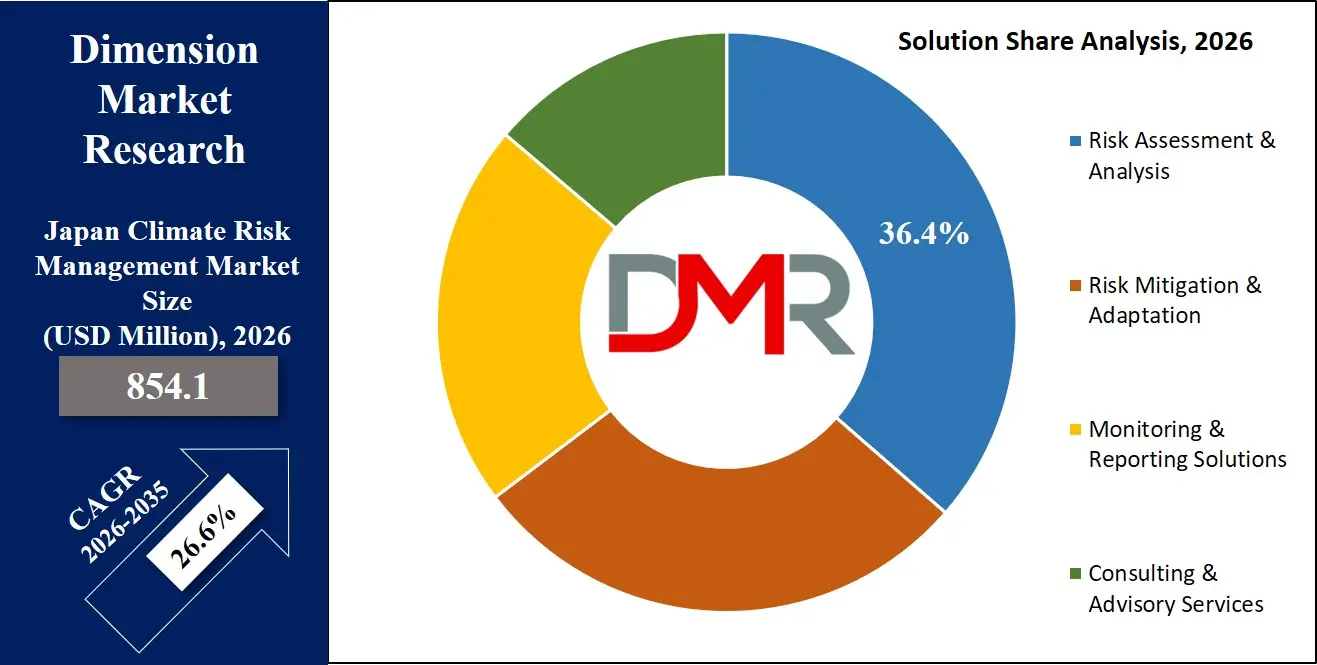
The largest market share in this segment is occupied by risk assessment & analysis solutions because the use of TCFD-aligned reporting is prevalent. This consists of climate scenario analysis, physical risk mapping and carbon accounting tools. The most rapidly expanding part is the Risk Mitigation & Adaptation solutions with public investment into infrastructure resilience and corporate adaptation planning.
ℹ
To learn more about this report –
Download Your Free Sample Report Here
This includes engineering services, green infrastructure and business continuity planning. Monitoring & Reporting Solutions have been highly sought after in order to streamline the current disclosure requirements, whereas the Consulting and Advisory Services are considered important in strategy formulation and capacity building, especially among small businesses.
By Deployment Mode Analysis
In this segment the cloud based solution are projected to exert their dominance. In Japan, cloud-based solutions are becoming extremely popular, and they are preferred due to their scalability, affordability, and compatibility with enterprise systems. Migration to cloud is gaining momentum as firms aim at controlling complex climate information and simplified reporting. On-premises solutions are still significant especially to government agencies, operators of critical infrastructure and to large financial organizations whose data protection needs are highly sensitive and whose infrastructures are old.
By Enterprise Size Analysis
The market is dominated by Large Enterprises, where large corporations in manufacturing, finance, and energy invest in extensive climate risk management systems to respond to regulatory demands and to satisfy the expectations of investors. Small Medium Enterprises (SMEs) are also an important growth potential. Japanese government is vigorously offering subsidies and advice to enable SMEs to embrace climate risk management practices, especially those that comprise bigger corporate supply chains.
By Industry Vertical Analysis
The most prominent vertical is Financial Services & Insurance due to the high regulatory impetus of FSA. Key users of climate risk analytics include banks, asset managers, and insurers in the portfolio management, underwriting, and stress testing. The other important vertical is Manufacturing & Industrial, where global automotive and electronics firms have to deal with the complex supply chain risks. One of the most significant growth areas is Real Estate & Infrastructure, which is concerned with physical risk measurement and accommodation of buildings, transport, and energy properties. The Government & Public Sector is a major market driver, as it is the source of funding and execution of massive climate adaptation programs.
The Japan Climate Risk Management Market Report is segmented on the basis of the following:
By Risk Type
- Physical Risks
- Transition Risks
- Liability Risks
By Solution
- Risk Assessment & Analysis
- Risk Mitigation & Adaptation
- Monitoring & Reporting Solutions
- Consulting & Advisory Services
By Deployment Mode
By Enterprise Size
- Large Enterprises
- Small & Medium Enterprises (SMEs)
By Industry Vertical
- Financial Services & Insurance
- Energy & Utilities
- Agriculture & Forestry
- Manufacturing & Industrial
- Real Estate & Infrastructure
- Government & Public Sector
Impact of Artificial Intelligence in the Japan Climate Risk Management Market
Japanese large historical weather data is being applied to AI and machine learning to dramatically increase the accuracy and lead time of typhoon and flood predictions, thereby enabling more effective early warnings and disaster response planning. Japanese manufacturers are mapping their multi-level and complicated supply chains with AI and evaluating the exposure of suppliers to physical and transition risks around the world early warning of disruption by climatic events or shifts in regulations. AI is employed to track the conditions of critical infrastructure (bridges, levees, and buildings) with the help of IoT sensors. This allows predictive maintenance and allows prioritization of capital investment to make climate adaptation where it is the most required.
Japan Climate Risk Management Market: Competitive Landscape
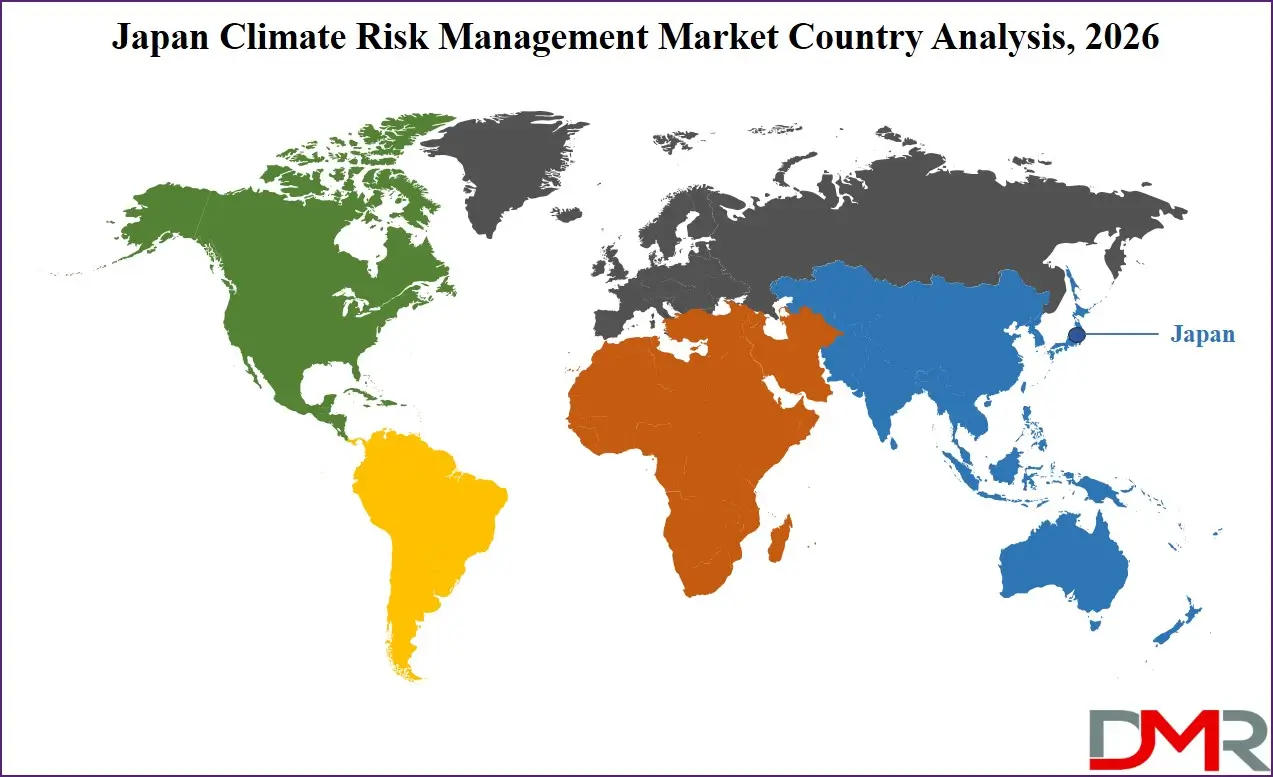
The Japan climate risk management market is an active and a highly competitive environment, where the local knowledge of Japanese financial and technological giants is mixed with the international scope of international data analytics and consulting companies.
ℹ
To learn more about this report –
Download Your Free Sample Report Here
The market is secured by the large financial institutions in Japan, such as Mitsubishi UFJ Financial Group (MUFG), Mizuho Financial Group, and Sumitomo Mitsui Financial Group (SMFG), which are both key consumers and creators of climate risk analytics, particularly of financial sector. The Tokio Marine Holdings and Sompo Japan Insurance are major insurance companies that are leaders in catastrophe risk models and physical risk assessment.
Some of the prominent players in the Japan Climate Risk Management Market are:
- NEC Corporation
- Fujitsu Limited
- Hitachi, Ltd.
- Panasonic Holdings Corporation
- NTT Data Group Corporation
- Mitsubishi Corporation
- Mitsui & Co., Ltd.
- Itochu Corporation
- Sumitomo Corporation
- Nomura Research Institute, Ltd.
- Mizuho Research & Technologies
- Tokio Marine Holdings
- MS&AD Insurance Group
- Sompo Holdings
- Japan Exchange Group
- Rakuten Group
- SoftBank Group
- Asuene Inc.
- Zeroboard Inc.
- Jupiter Intelligence
- Other Key Players
Recent Developments in the Japan Climate Risk Management Market
- In March 2026, Mitsubishi UFJ Financial Group (MUFG) has made an announcement in new climate technology fund aimed at start-ups working on new climate risk analytics and adaptation solutions.
- In February 2026, Tokio Marine Holdings announced it developed a new AI-powered flood risk assessment platform to serve its commercial real estate clients, giving high-resolution flood risk data on properties in Japan.
- In February 2026, The Financial Services Agency (FSA) published revised supervisory guidance on climate risk management, where all major banks were obliged to incorporate climate scenario analysis in the capital adequacy planning in full by 2027.
- In January 2026, Jan Hitchcock of Hitachi, Ltd. announced a new digital twin system to be used in urban climate resilience, which enables cities to simulate the effects of extreme weather on city infrastructure and prepare to adapt to it.
Report Details
| Report Characteristics |
| Market Size (2026) |
USD 854.1 Mn |
| Forecast Value (2035) |
USD 7,148.1 Mn |
| CAGR (2026–2035) |
26.6% |
| Historical Data |
2021 – 2025 |
| Forecast Data |
2027 – 2035 |
| Base Year |
2025 |
| Estimate Year |
2026 |
| Report Coverage |
Market Revenue Estimation, Market Dynamics, Competitive Landscape, Growth Factors and etc. |
| Segments Covered |
By Risk Type (Physical Risks, Transition Risks, and Liability Risks), By Solution (Risk Assessment & Analysis, Risk Mitigation & Adaptation, Monitoring & Reporting Solutions, and Consulting & Advisory Services), By Deployment Mode (Cloud-based and On-premises), By Enterprise Size (Large Enterprises, and Small & Medium Enterprises (SMEs)), and By Industry Vertical (Financial Services & Insurance, Energy & Utilities, Agriculture & Forestry, Manufacturing & Industrial, Real Estate & Infrastructure, and Government & Public Sector) |
| Country Coverage |
Japan |
| Prominent Players |
NEC Corporation, Fujitsu Limited, Hitachi, Ltd., Panasonic Holdings Corporation, NTT Data Group Corporation, Mitsubishi Corporation, Mitsui & Co., Ltd., Itochu Corporation, Sumitomo Corporation, Nomura Research Institute, Ltd., Mizuho Research & Technologies, Tokio Marine Holdings, MS&AD Insurance Group, Sompo Holdings, Japan Exchange Group, Rakuten Group, SoftBank Group, Asuene Inc., Zeroboard Inc., Jupiter Intelligence, and Other Key Players |
| Purchase Options |
We have three licenses to opt for: Single User License (Limited to 1 user), Multi-User License (Up to 5 Users) and Corporate Use License (Unlimited User) along with free report customization equivalent to 0 analyst working days, 3 analysts working days and 5 analysts working days respectively. |
Frequently Asked Questions
How big is the Japan Climate Risk Management Market?
▾ The Japan Climate Risk Management Market size is estimated to have a value of USD 854.1million in 2026 and is expected to reach USD 2,116.4 million by the end of 2035.
Who are the key players in the Japan Climate Risk Management Market?
▾ Some of the major key players in the Japan Climate Risk Management Market are Mitsubishi UFJ Financial Group (MUFG), Tokio Marine Holdings, Hitachi, NEC Corporation, MSCI, and many others.
What is the growth rate in the Japan Climate Risk Management Market?
▾ The market is growing at a CAGR of 26.5 percent over the forecasted period.