Market Overview
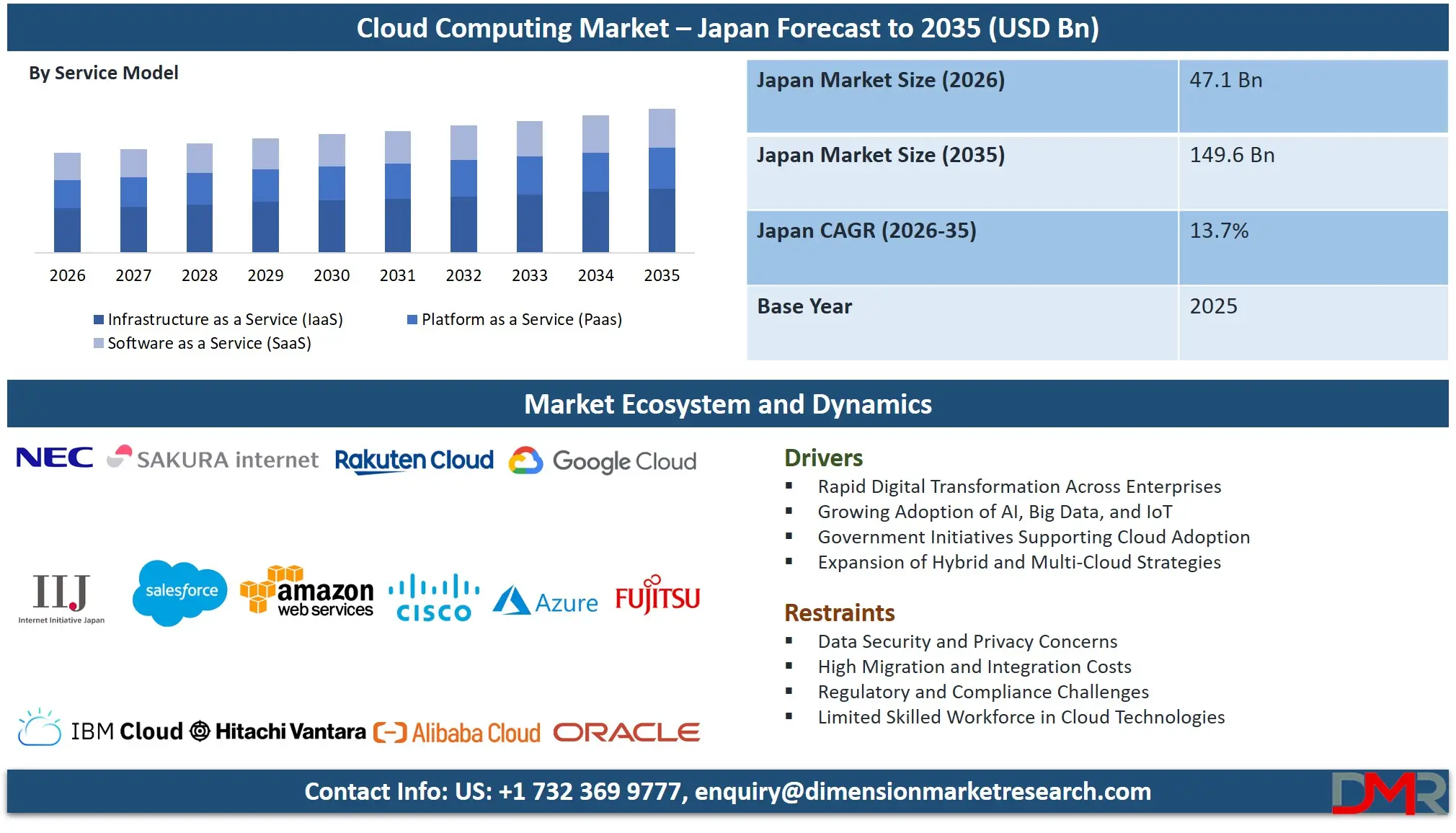
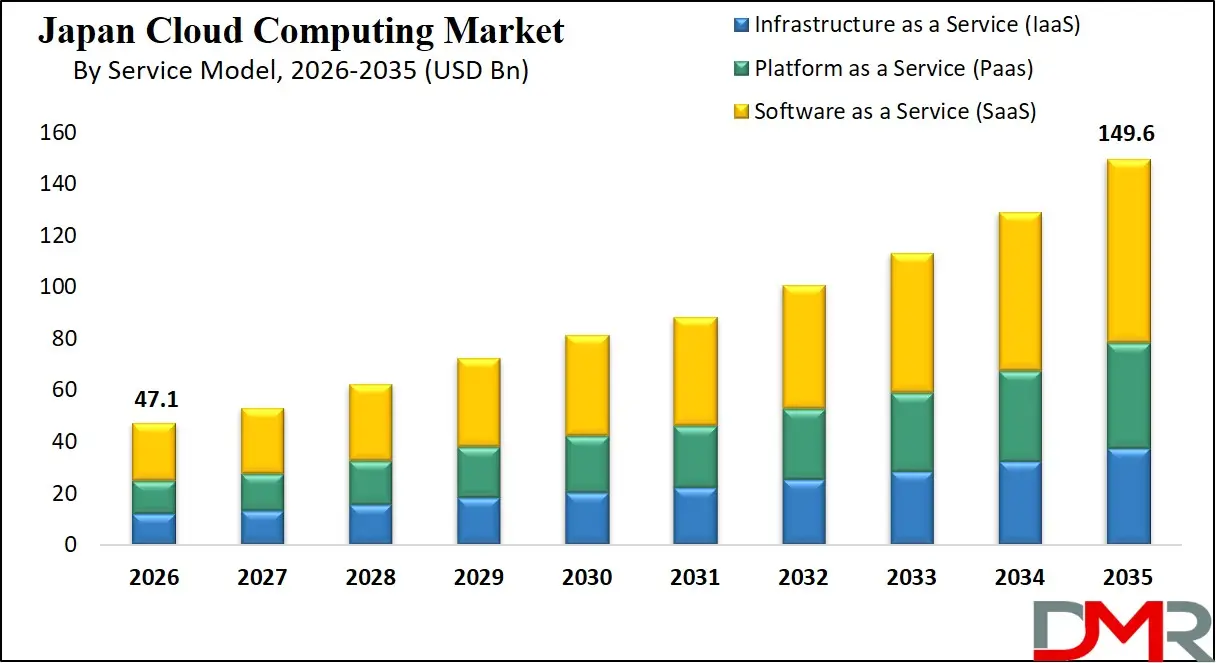
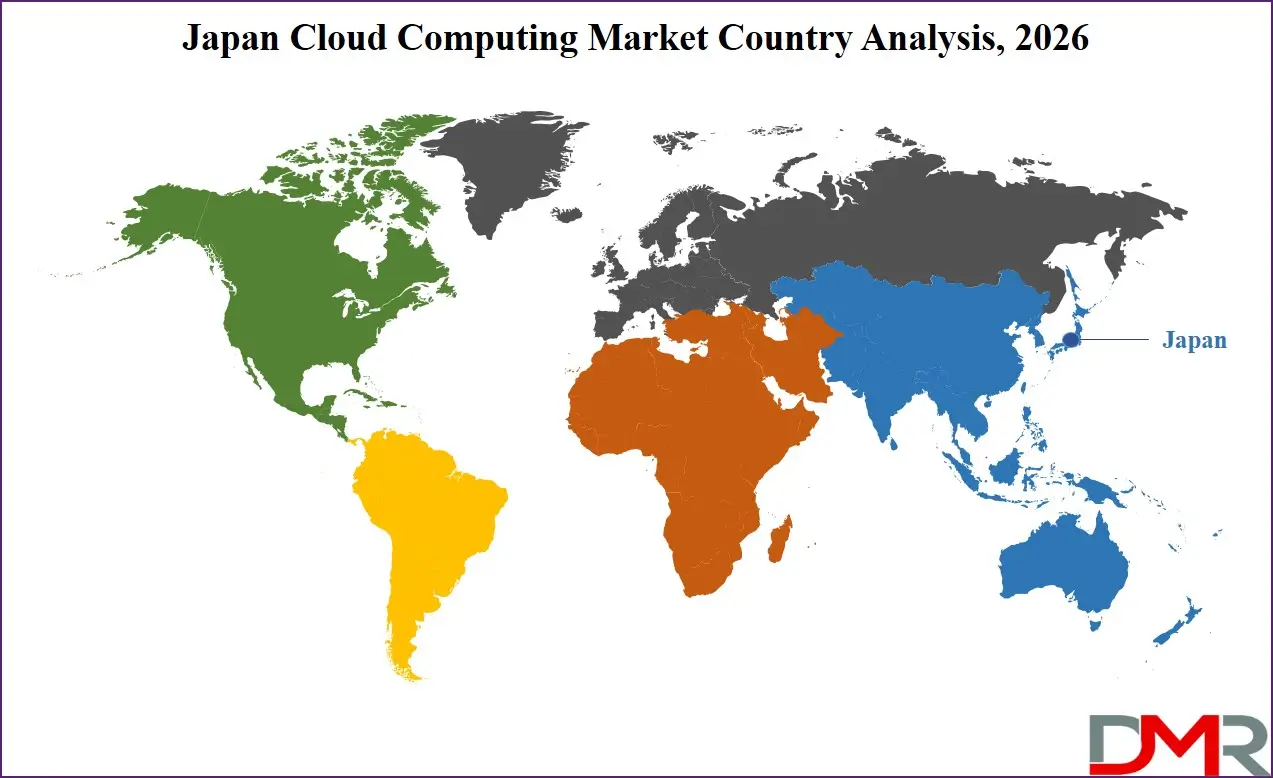
The Japan Cloud Computing Market size is expected to be valued at USD 47.1 billion in 2026, and it is further anticipated to reach a market value of USD 149.6 billion by 2035 at a CAGR of 13.7%.
ℹ
To learn more about this report –
Download Your Free Sample Report Here
The growth of the Japan Cloud Computing Market is driven by factors such as rise in digital transformation, highly developed IT infrastructure, and the growth of the hybrid and multi-cloud movement in the country. The country has seen an increasing number of enterprises moving from traditional technology platforms to cloud computing platforms, which are highly efficient, reliable, and innovative in nature.
In addition, the government has been taking initiatives to improve the digital infrastructure in the country, which has been driving the growth of the cloud computing market in the country. In addition, the increasing need to incorporate technologies such as artificial intelligence, big data analytics, and the Internet of Things has been driving the growth of the cloud computing market in this country.
ℹ
To learn more about this report –
Download Your Free Sample Report Here
Japan Cloud Computing Market: Key Takeaways and Other Influencing Factors
- Market Growth Size Insights: The size of the Japan Cloud Computing Market is estimated to have a value of 47.1 billion in 2026, which is further expected to reach 149.6 billion in size by the end of 2035.
- Japan Market Growth Rate: The market is growing at a CAGR of 13.7 percent over the forecasted period of 2026 to 2035.
- Service Model Segment Insight: The Software as a Service (SaaS) model is expected to have the highest market share in the Japan market, with 47.8%, as the deployment and cost factors are significantly less in this model.
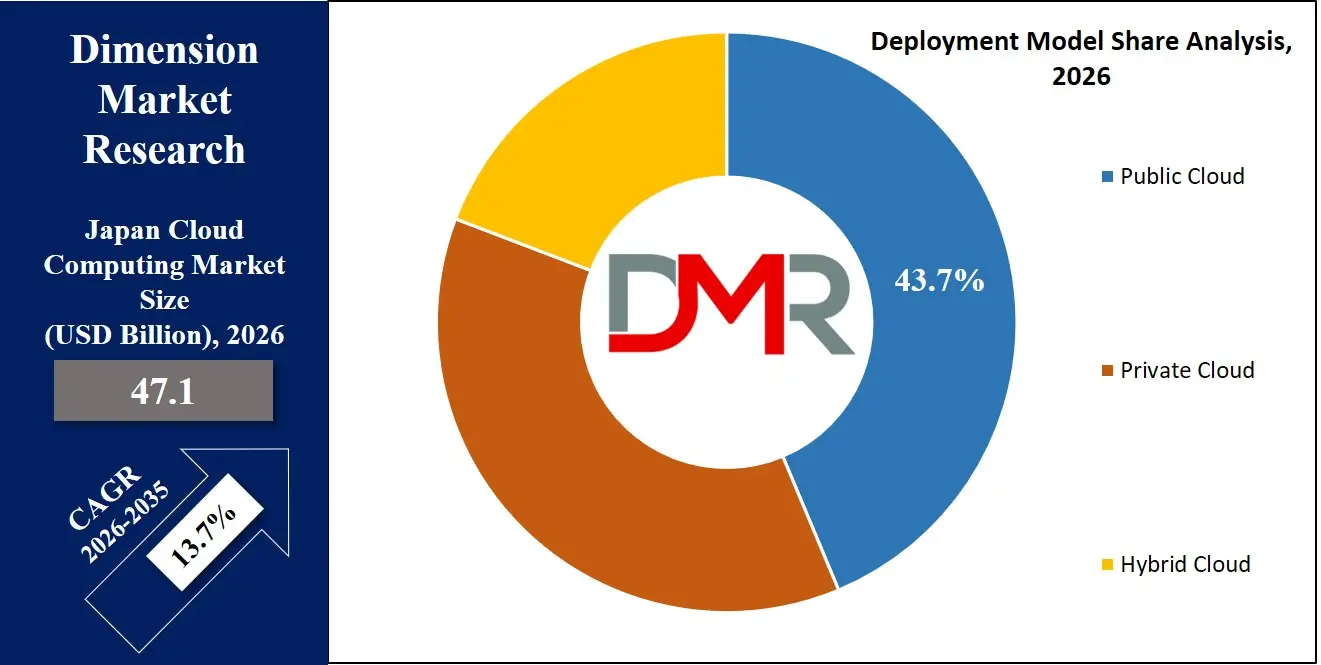
- Deployment Model Segment Insights: Public cloud currently holds a 43.7% of market share in 2026 due to scalability and cost efficiency. This also lead due to the rise in the data security and compliance requirements are high in this model.
- Organization Size Segment Insights: Large enterprises dominate with 65.2% market share, as they have higher IT budgets and early adoption capabilities, while SMEs are growing rapidly due to government support and SaaS adoption.
- Japan Digital Agency or Digital Agency of Japan: The government of Japan has adopted the 'Cloud-by-Default' policy, and the government agencies are compelled to adopt the cloud model for their IT infrastructure. The government is planning to migrate the entire local government infrastructure to the 'Government Cloud' model, which is the centralized cloud infrastructure.
- Ministry of Economy, Trade and Industry (METI – Japan Government): The Japanese government allocated USD 480 million (¥72.5 billion) to subsidies to strengthen their regional cloud and AI computing infrastructure under the Economic Security Promotion Act.
Impact of Iran Conflict on the Japan Cloud Computing Market
The Iran conflict indirectly affects the Japan Cloud Computing Market through global supply chain issues and energy cost fluctuations. The increase in energy costs, as well as fuel costs, will affect the cost of operations, as data centers are energy-intensive facilities. The Iran conflict might indirectly affect the cost of cloud services, as the cost of operations might increase. Moreover, the Iran conflict might affect the supply chain of semiconductors, as the global supply chain might be affected. However, the Iran conflict will positively affect the Japan Cloud Computing Market, as the need to have decentralized and reliable computing infrastructure will increase, and companies will look towards the cloud as an alternative solution. The need to have geographically distributed cloud infrastructure will increase, as companies are looking to avoid geopolitical issues.
Japan Cloud Computing Market: Use Cases
- Enterprises are using the cloud platform to transform legacy IT systems and improve the ability of the enterprise to operate scalably. Hybrid cloud provides companies with the flexibility to keep sensitive data behind the firewall and, at the same time, take advantage of the public cloud's flexibility.
- Cloud computing is being used to improve AI and big data analytics capabilities and process large amounts of big data in real time. These issues have been pushing cloud computing adoption, especially for traditional enterprise companies, where companies prefer new technologies for growth.
- Government agencies are using the cloud platform to improve digital public services and transparency. Cloud computing is now a strategic requirement of the Japanese economy and thus is being adopted at a fast pace by various industries like manufacturing, finance, and healthcare.
- The cloud platform is being used by media and entertainment companies to stream content and improve the ability of the company to stream content.
Japan Cloud Computing Market: Market Dynamic
Driving Factors in the Japan Cloud Computing Market
Rapid Digital Transformation
Due to the popularization of the global economy, the digital transformation of Japanese enterprises is happening at a fast pace to avoid being left behind in the competition. Cloud computing is being increasingly used to replace legacy systems with scalable and flexible systems. Cloud computing provides the ability to innovate at a fast pace and integrate with the latest technologies like AI and IoT. Moreover, the government of Japan launched the program 'Society 5.0' to improve the digital infrastructure of the country.
Growth of Data-Driven Technologies
Artificial intelligence, big data, and IoT technology adoption is increasing in Japan. Cloud computing is witnessing high demand due to the adoption of data-driven technologies. Cloud computing is providing computing power for data-driven technology. Cloud computing is becoming popular in Japan due to cloud analytics. Cloud computing is becoming popular due to an increase in devices associated with cloud computing. Japan is moving towards innovation through automation. Cloud computing is becoming essential for powering data-driven technology and developing a digital ecosystem.
Restraints in the Japan Cloud Computing Market
Data Security and Compliance Concerns
Though the Japan Cloud Computing Market is witnessing rapid growth, data security and compliance issues are some of the major restraints for the Japan Cloud Computing market. Especially for industries like BFSI and healthcare, where data security is of utmost importance, companies are apprehensive about adopting cloud computing technology, considering data security threats and cybercrime issues. Japan has strict data security laws, and companies have to adhere to strict data security measures and compliance guidelines.
High Migration and Integration Costs
This involves significant upfront costs, including migration, integration, and workforce development. Nevertheless, many SMEs in Japan cannot afford the cost of adopting cloud technologies. Besides, cloud integration with legacy applications has been noted to be a challenging process, which might limit the adoption and expansion of cloud technologies.
Opportunities in the Japan Cloud Computing Market
Increased Adoption of Hybrid and Multi-Cloud Strategies
Hybrid and multi-cloud strategy adoption is on the rise in Japan, and this is an extremely exciting opportunity. Companies are looking to have flexible options that combine the public and private nature of the cloud, giving them more detailed control over the management and security of the cloud. With the increased popularity of on-premises and multicloud strategies, the hybrid cloud is expected to generate new cloud services as companies look to take advantage of the flexibility offered by the hybrid cloud, allowing them to take advantage of their existing infrastructure and move towards the multicloud strategy.
Growth in SME Cloud Adoption
The small and medium enterprise sector is an unexplored market in the cloud computing market in Japan. The Micro, Small, and Medium Enterprises 'SME' sector is slowly moving towards the cloud as awareness grows regarding the benefits associated with the cloud, as they are looking to enhance their efficiency along with reducing their expenditure on IT infrastructure. The access to high-tech technology is the major advantage that cloud computing provides to the small and medium entrepreneurs, as they are looking to take advantage of the technology without incurring huge investment costs. The increased demand, owing to the growth of small and medium enterprises (SMEs), is expected to generate growth in the market over the forecast period.
Trends in the Japan Cloud Computing Market
Rise of Edge Computing Integration
Edge computing is now gaining traction as an important trend in the Japanese Cloud Computing Market, as it enables the processing of data close to its source. By moving the data center closer to the source, latency is reduced, and the performance of IoT, autonomous vehicles, and smart cities applications is improved. Moreover, organizations in Japan are now using edge computing solutions and multilayered integrated cloud platforms for better features in data processing in real-time. We expect that the integration of cloud and edge computing technologies will revolutionize the market, especially as digital ecosystems emerge.
Increasing Focus on Sustainability
The Importance of Sustainability in Japan's Cloud Computing Industry. Data centers consume huge amounts of energy, and hence, an individual may not be using an AI service, but they must contribute to cloud providers that are building buildings solely dedicated to this type of work, along with renewable sources of energy. Organizations are now using the concept of the green cloud to reduce carbon footprints and adhere to environmental laws and regulations. The carbon neutrality pledge in Japan is being used as a catalyst to drive breakthroughs in sustainable data center technologies. The trend is now driving cloud providers to develop environmentally friendly solutions that cater to the needs of sustainable businesses, thus boosting the growth of the market as well.
Japan Cloud Computing Market: Research Scope and Analysis
By Service Model Analysis
The Japan Cloud Computing Market has been poised to be dominated by the segment of Software as a Service (SaaS), due to its relatively easy deployment mechanism compared to other cloud computing models, its cost-effectiveness, and its numerous applications in all industries. And then came along SaaS, and saved me from my poor, tortured infrastructure! Businesses in Japan are increasingly turning to SaaS for various activities, such as customer relationship management, enterprise resource planning, and collaborative tools. The growing trend of remote and digital collaboration has also contributed to the increased adoption of SaaS. The SaaS segment also has a continuously evolving structure, incorporating AI-based features to improve productivity and efficiency. The SaaS segment has been dominating the market, contributing to the maximum share, as organizations are moving toward a synergy-based approach.
By Deployment Model Analysis
The public cloud has been dominating the Japan Cloud Computing Market, and this segment has been the most adopted cloud computing model due to its ability to strike a perfect balance between security and scalability. Most organizations prefer hybrid cloud models, allowing them to store critical data securely in a private cloud and utilize the advantages of a public cloud for less critical activities. This model also helps organizations comply with strict data security regulations and allows them to retain flexibility in operations.
ℹ
To learn more about this report –
Download Your Free Sample Report Here
The pubic cloud has been a favorite among Japanese enterprises, especially due to its ability to integrate legacy system infrastructures and support business continuity. For instance, hybrid cloud helps organizations optimize costs and distribute workload. The hybrid cloud, a relatively new phenomenon, has become a favorite among organizations in almost all industries, and with most organizations moving toward a multi-cloud strategy, hybrid cloud has been gaining momentum.
By Organization Size Analysis
The large enterprises segment is a major contributor to the Japan Cloud Computing Market, as these are the early adopters of disruptive technologies and also have a higher IT budget. To fulfill these aspirations, all these organizations are putting high investments into cloud technologies to improve operational efficiency, scalability, and innovation. To get the best cloud performance, tailored to their specific requirements, and to minimize risks, these large-scale organizations are often utilizing multiple cloud technologies. Moreover, these organizations require a robust cloud infrastructure to cater to the demands of high amounts of data and complex applications. BFSI, telecommunication, and manufacturing are the major industry verticals that are utilizing trainable AI. Even though SMEs are slowly embracing this technology, large-scale organizations are dominating this market segment, as these organizations are financially and technically sound.
By Industry Vertical Analysis
The BFSI (Banking, Financial Services, and Insurance) industry segment is dominating the Japan Cloud Computing Market, as this industry is increasingly feeling the need for cloud computing technology. Financial institutions are shifting towards cloud computing to improve customer experience, operational efficiency, and to power digital banking. Cloud computing is also helping to process transactional activities, detect fraudulent activities, and perform data analysis. The need for a secure cloud environment is also fueled by the need for regulatory compliance. The emergence of fintech and digital payment systems is also fueling the adoption of cloud computing technology. BFSI is still dominating the Cloud Computing Market, as financial institutions are modernizing their infrastructure.
The Japan Cloud Computing Market Report is segmented on the basis of the following:
By Service Model
- Infrastructure as a Service (IaaS)
- Platform as a Service (Paas)
- Software as a Service (SaaS)
By Deployment Model
- Public Cloud
- Private Cloud
- Hybrid Cloud
By Organization Size
- Large Enterprises
- Small & Medium Enterprises
By Industry Vertical
- BFSI
- Energy & Utilities
- Government & Public Sector
- Telecommunications
- Retail & Consumer Goods
- Media & Entertainment
- IT & ITeS
- Healthcare & Life Science
- Others
Impact of Artificial Intelligence in the Japan Cloud Computing Market
Artificial intelligence is playing a crucial role in the enhancement of cloud computing services in Japan, as it has the ability to improve data analytics, automation, and predictive capabilities. Moreover, the cloud computing environment has the ability to provide the required infrastructure to support artificial intelligence, which enables the efficient processing of data, thus creating intelligent applications.In conclusion, artificial intelligence has the ability to improve the efficiency of cloud computing services in the country, which is a crucial aspect in the improvement of the services offered in the country.
Japan Cloud Computing Market: Competitive Landscape
The competitive landscape of the Japan Cloud Computing Market is highly competitive, with the presence of global players in the market. The companies in the market are competing in terms of the services offered, pricing, innovations, and security features of the data stored in the cloud environment.
ℹ
To learn more about this report –
Download Your Free Sample Report Here
In addition, the companies are investing in the development of artificial intelligence capabilities, which are integrated into the cloud computing environment, thus enhancing the services offered in the country. The market is witnessing an increase in competition from local players, who are offering customized services to the country, which are tailored to the regulatory environment in the country. As the market continues to grow, the companies are investing in the development of the services offered, which are aimed at capturing the market in the country.
Some of the prominent players in the Japan Cloud Computing Market are:
- Amazon Web Services
- Microsoft Azure
- Google Cloud
- Fujitsu
- NTT Data
- IBM Cloud
- Oracle
- Salesforce
- Alibaba Cloud
- Hitachi Vantara
- NEC Corporation
- Rakuten Cloud
- Sakura Internet
- IIJ (Internet Initiative Japan)
- Toshiba Digital Solutions
- Cisco Systems
- Dell Technologies
- Hewlett Packard Enterprise (HPE)
- VMware
- SAP
- Other Key Players
Recent Developments in the Japan Cloud Computing Market
- March 2026: Amazon Web Services has expanded its generative AI infrastructure in Japan, targeting enterprise use cases. The expansion enhances cloud computing capabilities in Japan, enabling businesses to speedily deploy applications that leverage AI technologies, thus supporting increasing demands for cloud computing services.
- February 2026: Microsoft has announced increased investments in cloud infrastructure in Japan. The expansion targets AI-ready data centers, supporting increasing demands from enterprises for high-performance computing capabilities.
- January 2026: Google Cloud has partnered with various organizations in Japan to enhance AI-powered analytics and cloud computing capabilities. The partnerships will help various organizations in Japan leverage data-driven strategies, enabling increased efficiency in operations.
- December 2025: NTT Data has strengthened partnerships with global cloud companies, enhancing cloud capabilities. The partnerships will support various organizations in Japan in managing complex cloud infrastructure, thus enabling flexibility, security, and performance.
Report Details
| Report Characteristics |
| Market Size (2026) |
USD 47.1 Bn |
| Forecast Value (2035) |
USD 149.6 Bn |
| CAGR (2026–2035) |
13.7% |
| Historical Data |
2021 – 2025 |
| Forecast Data |
2027 – 2035 |
| Base Year |
2025 |
| Estimate Year |
2026 |
| Report Coverage |
Market Revenue Estimation, Market Dynamics, Competitive Landscape, Growth Factors and etc. |
| Segments Covered |
By Service Model (Infrastructure as a Service, Platform as a Service, Software as a Service), By Deployment Model (Public Cloud, Private Cloud, Hybrid Cloud), By Organization Size (Large Enterprises, Small & Medium Enterprises), By Industry Vertical (BFSI, Energy & Utilities, Government & Public Sector, Telecommunications, Retail & Consumer Goods, Media & Entertainment, IT & ITeS, Healthcare & Life Science, and Others) |
| Country Coverage |
Japan |
| Prominent Players |
Amazon Web Services, Microsoft Azure, Google Cloud, Fujitsu, NTT Data, IBM Cloud, Oracle, Salesforce, Alibaba Cloud, Hitachi Vantara, NEC Corporation, Rakuten Cloud, Sakura Internet, IIJ (Internet Initiative Japan), Toshiba Digital Solutions, Cisco Systems, Dell Technologies, Hewlett Packard Enterprise (HPE), VMware, SAP, and Other Key Players |
| Purchase Options |
We have three licenses to opt for: Single User License (Limited to 1 user), Multi-User License (Up to 5 Users) and Corporate Use License (Unlimited User) along with free report customization equivalent to 0 analyst working days, 3 analysts working days and 5 analysts working days respectively. |
Frequently Asked Questions
How big is the Japan Cloud Computing Market?
▾ The Japan Cloud Computing Market size is estimated at USD 47.1 billion in 2026 and is expected to reach USD 149.6 billion by 2035.
What is the growth rate in the Japan Cloud Computing Market in 2026?
▾ The market is growing at a CAGR of 13.7% over the forecast period starting 2026.
Who are the key players in the Japan Cloud Computing Market?
▾ Major players include Amazon Web Services, Microsoft Azure, Google Cloud, Fujitsu, NTT Data, IBM, Oracle, Salesforce, and others.