What is the Japan Cosmetics Market Size?
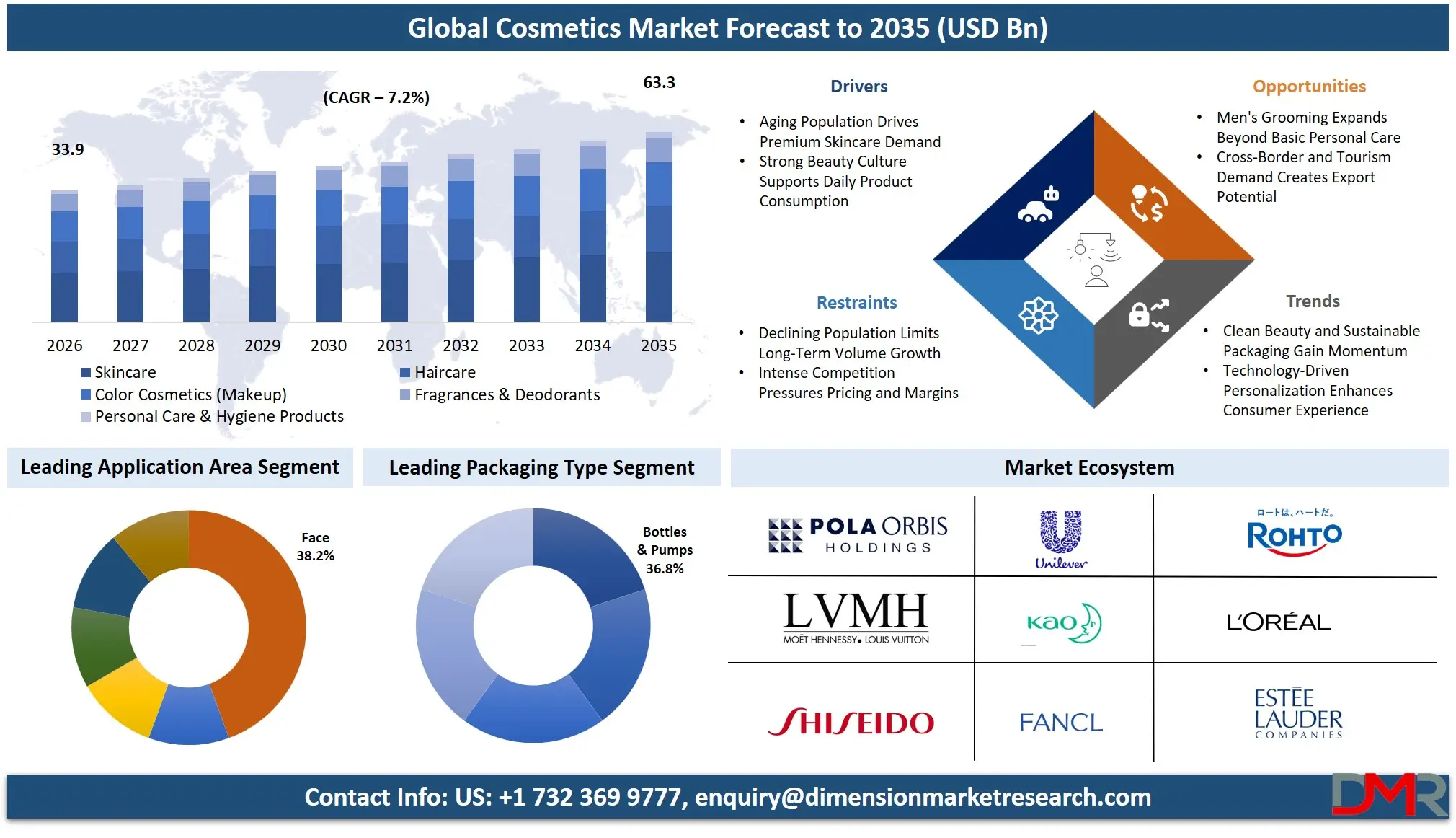
The Japan Cosmetics Market is expected to reach a value of USD 33.9 billion in 2026, and it is further anticipated to reach USD 63.3 billion by 2035, growing at a CAGR of 7.2% during the forecast period.
ℹ
To learn more about this report –
Download Your Free Sample Report Here
The cosmetics market in Japan has witnessed impressive growth, driven by the country's deep-rooted beauty culture and its reputation as a global trendsetter in skincare innovation. The market encompasses a sophisticated array of products, from high-tech skincare and premium color cosmetics to natural and clean-label formulations, catering to a highly discerning consumer base. The rise in demand for preventive aging solutions among Japan's rapidly aging population, coupled with a growing focus on skin health and holistic wellness, has necessitated continuous research and development. The entities carrying out such innovations, from established multinational corporations to agile domestic startups, are the major drivers in this industry. Multi-step skincare routines and hybrid beauty products that blur the line between skincare and makeup continue to be the dominant consumption patterns due to their efficacy and the cultural emphasis on meticulous self-care.
Key Takeaways
- Market Size & Forecast: Based on forecasts, the size of the market for Japan's cosmetics will experience robust growth, attaining a value of USD 33.9 billion by 2026 and expanding dramatically to USD 63.3 billion by 2035 due to two crucial factors: the existence of a tech-savvy consumer base demanding high-efficacy products and a robust pipeline of innovative, science-backed formulations.
- Growth Rate & Outlook: It is predicted that the market will register a CAGR of 7.2%, which will be attributed to the presence of important growth factors, such as a critical mass of research efforts relating to skin biology and biotechnology, and an increased need for specialized anti-aging and moisturizing products in relation to a super-aging society.
- Primary Growth Drivers: Important growth factors will include the strong consumer loyalty to high-quality Japanese brands ("J-Beauty"), an increase in inbound tourism fueling premium beauty spending, and a large number of biotechnology companies working in the area of fermented ingredients and biomimetic compounds.
- Key Market Trends: The market trends are mainly related to "skinimalism" – a shift towards minimalistic routines with high-performance, multi-benefit products; the use of genetic and microbiome research in personalized cosmetics; and an increased interest in holistic beauty solutions like ingestible beauty and wellness devices, since the occurrence of lifestyle-related skin concerns is relatively higher in urban Japanese populations.
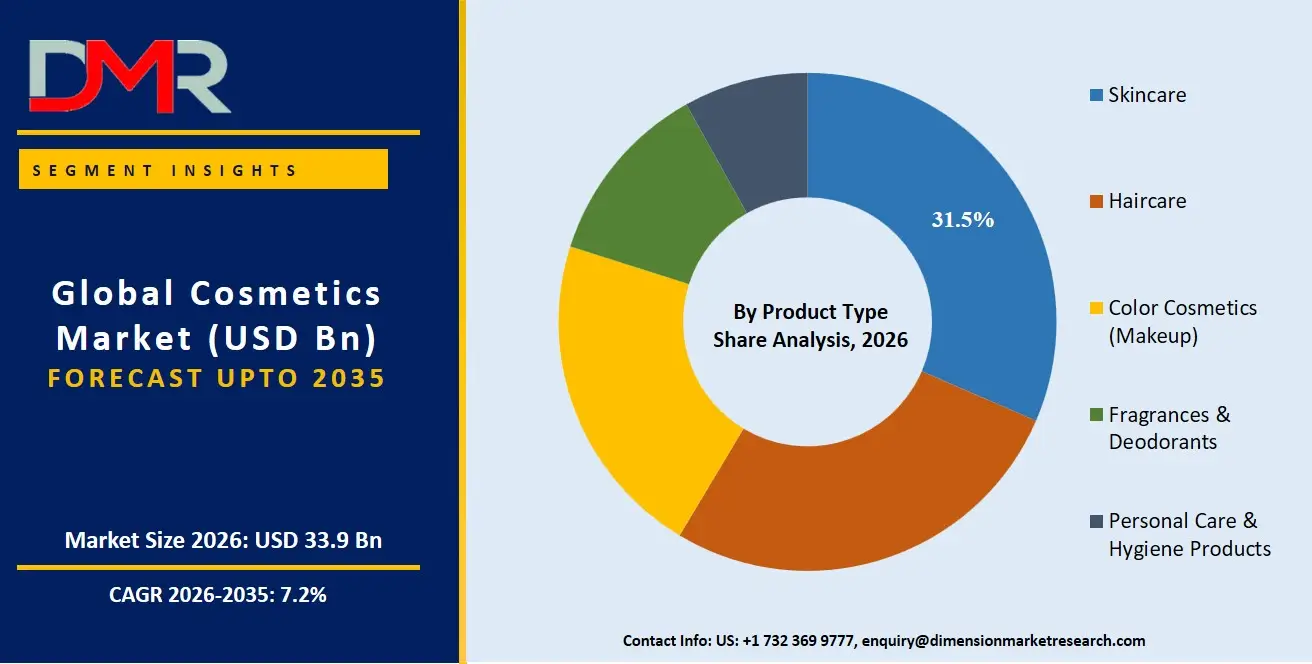
- By Product Type Analysis: The cosmetics market in Japan is driven by the Skincare segment, as it involves the core of J-Beauty philosophy that prioritizes skin health as the foundation of beauty. Multi-step regimens involving cleansers, lotions (toners), essences, and serums are extensively used for daily maintenance and anti-aging, with considerable backing from both the pharmaceutical and cosmetic industries.
- By Distribution Channel Analysis: The cosmetics market in Japan is projected to be dominated by specialty beauty stores and online retail, as they allow for experiential discovery and the introduction of new concepts directly to consumers without the constraints of traditional mass-market shelves.
What is the Cosmetics?
Cosmetics are products designed to cleanse, protect, enhance, or alter the appearance of the skin, hair, nails, lips, eyes, and other external parts of the body without affecting the body's structure or functions. They include a wide range of products such as skincare, makeup, haircare, fragrances, deodorants, and personal hygiene items used for beautification, grooming, and maintaining personal hygiene. Modern cosmetics are formulated using natural, synthetic, or bio-based ingredients to provide benefits such as moisturizing, sun protection, anti-aging, cleansing, and color enhancement. The industry continuously evolves through innovations in dermatology, biotechnology, sustainable packaging, and clean-label formulations. Growing consumer awareness of wellness, aesthetics, and self-care has made cosmetics an essential part of daily routines across all age groups and demographics worldwide.
Use Cases
- Preventive Anti-Aging Skincare Regimen: A daily routine involving a moisturizing lotion, a highly concentrated serum, and a broad-spectrum sunscreen is adopted by consumers of all ages to maintain skin health, prevent hyperpigmentation, and manage fine lines, a practice deeply embedded in Japanese beauty culture.
- Treatment of Hyperpigmentation and Sun Damage: A dermatological-inspired approach involves applying serums and essences containing active ingredients like tranexamic acid and stabilized Vitamin C derivatives to inhibit melanin production and fade existing dark spots.
- Scalp and Hair Rejuvenation: Pharmaceutical-inspired haircare brands and specialty salons apply intensive scalp serums and treatments containing ingredients like adenosine and peptides to stimulate hair follicles, addressing thinning hair concerns prevalent among the aging population.
- Microbiome-Friendly Color Cosmetics: Cosmetic companies adopt the use of prebiotic and probiotic extracts in foundations and lip products to not only provide coverage and color but also to support the skin's microbial barrier, addressing inflammation and sensitivity.
How AI is Transforming the Cosmetics Market?
The impact of AI on the Japanese cosmetics market covers quickening the process of product formulation with safety and effectiveness, as well as optimizing personalized consumer experiences. Speaking of product development, AI-driven prediction tools will be helpful for exploring large amounts of dermatological data in order to develop novel ingredient combinations demonstrating improved stability and skin tropism without any toxicity signs. AI-based skin diagnostics allow predicting the long-term efficacy of formulations and customizing product recommendations.
Furthermore, the role of AI in the consumer journey and retail implementation is quite important. Thus, while engaging customers in-store and online, AI algorithms help explore individual skin data and purchase history in order to identify the most appropriate product routine for their specific concerns. Last but not least, AI-driven virtual try-on tools assist with shade matching for color cosmetics, simulating the application of makeup in real-time and providing an overview of how a product will look, enhancing purchase confidence.
Market Dynamics
Key Drivers in the Japan Cosmetics Market
Aging Population Drives Premium Skincare Demand
Japan's rapidly aging population is a major driver of cosmetics demand, particularly in anti-aging skincare. Consumers increasingly seek products targeting wrinkles, pigmentation, firmness, and hydration, supporting strong sales of serums, essences, and functional creams. High beauty awareness among middle-aged and elderly consumers encourages daily skincare routines and repeat purchases. Domestic brands continue investing in research on collagen, hyaluronic acid, ceramides, and fermented ingredients to address age-related concerns. Premium product positioning and trusted Japanese formulations attract both local and international buyers. As consumers prioritize healthy, youthful-looking skin, anti-aging innovation remains a key growth engine across the Japanese cosmetics market and beauty industry.
Strong Beauty Culture Supports Daily Product Consumption
Japan has a deeply established beauty culture that emphasizes cleanliness, skincare, and personal grooming, creating consistent demand across cosmetics categories. Consumers typically use multiple products each day, including cleansers, lotions, moisturizers, sunscreens, makeup, and haircare items. This routine-based consumption generates stable repeat sales and encourages brands to launch specialized products for different skin types and seasons. High standards for product safety, texture, and performance also support premium pricing and customer loyalty. Beauty trends spread rapidly through social media, influencers, and retail channels, increasing product trial rates. The combination of habitual usage and strong brand trust continues driving long-term growth in Japan's cosmetics market.
Restraints in the Japan Cosmetics Market
Declining Population Limits Long-Term Volume Growth
Japan's declining and aging population presents a structural challenge for the cosmetics industry. Fewer younger consumers entering the market can limit long-term volume expansion, especially in makeup and trend-driven beauty categories. Companies increasingly compete for a shrinking customer base, resulting in higher marketing costs and pressure on product differentiation. While premium skincare demand remains strong, overall market growth can be constrained by demographic trends. Manufacturers must rely more on value-added products, exports, and older consumer segments to sustain revenue growth. This demographic headwind affects both domestic brands and international companies operating in Japan, making innovation and customer retention increasingly important for maintaining market share over time.
Intense Competition Pressures Pricing and Margins
The Japanese cosmetics market is highly competitive, with numerous domestic and international brands competing across mass, premium, and luxury segments. Consumers have access to a wide variety of products through drugstores, department stores, specialty beauty retailers, and e-commerce platforms. This intense competition increases promotional spending, product launch frequency, and pressure to maintain attractive pricing. Smaller brands often struggle to achieve visibility against established players with strong distribution networks and marketing budgets. Frequent product innovation is necessary to retain consumer interest, adding research and development costs. As a result, companies may face margin pressure despite stable demand, particularly in categories where product differentiation is limited or easily replicated.
Growth Opportunities in the Japan Cosmetics Market
Men's Grooming Expands Beyond Basic Personal Care
Japan's men's grooming segment offers significant growth potential as consumers increasingly adopt skincare, haircare, and cosmetic products beyond traditional shaving and deodorant categories. Younger male consumers are becoming more interested in facial cleansers, moisturizers, sunscreens, BB creams, and styling products influenced by social media and changing beauty standards. Brands are responding with dedicated product lines, minimalist packaging, and targeted marketing campaigns. Professional and urban lifestyles also encourage greater attention to appearance and personal care. As acceptance of male beauty routines continues to grow, companies can expand their customer base through specialized formulations, premium grooming products, and digital engagement strategies tailored to male consumers across different age groups.
Cross-Border and Tourism Demand Creates Export Potential
Japanese cosmetics enjoy a strong global reputation for quality, safety, innovation, and skincare expertise, creating substantial export opportunities. Demand from Asian consumers and international tourists continues supporting sales of Japanese beauty products through retail stores, airports, and online platforms. Popular categories include sunscreens, facial masks, lotions, and anti-aging skincare. Companies can leverage this reputation to expand cross-border e-commerce and international distribution partnerships. Tourism recovery further increases exposure to Japanese brands and encourages repeat purchases after travel. By emphasizing authenticity, advanced formulations, and premium packaging, manufacturers can strengthen overseas sales and reduce dependence on domestic market growth, supporting long-term expansion across regional and global beauty markets.
Trends in the Japan Cosmetics Market
Clean Beauty and Sustainable Packaging Gain Momentum
Consumers in Japan are showing growing interest in products perceived as safer, more transparent, and environmentally responsible. Demand is increasing for cosmetics with simplified ingredient lists, naturally derived components, and reduced environmental impact. Brands are responding by introducing refill systems, recyclable packaging, lightweight materials, and sustainability-focused product lines. Packaging innovation has become an important differentiator, particularly in skincare and personal care categories. Consumers increasingly evaluate both product performance and environmental credentials before purchasing. Regulatory attention to sustainability and corporate environmental commitments also encourage investment in greener packaging solutions. This shift toward clean beauty and sustainability is influencing product development, branding, and retail strategies across the Japanese cosmetics market.
Technology-Driven Personalization Enhances Consumer Experience
Digital technology is increasingly shaping the Japanese cosmetics market through AI-powered skin analysis, virtual try-on tools, and personalized product recommendations. Brands are using consumer data to suggest skincare routines, shade matching, and targeted treatments based on individual needs. E-commerce platforms and beauty apps allow consumers to compare products, read reviews, and receive customized guidance before purchasing. This technology-driven approach improves engagement, increases conversion rates, and strengthens customer loyalty. Companies are also integrating online and offline experiences through smart beauty counters and membership programs. As personalization becomes a key purchasing factor, investment in digital tools and consumer analytics is expected to play an increasingly important role in Japan's evolving beauty industry.
Research Scope and Analysis
The Japan cosmetics market is segmented by product type (skincare, haircare, color cosmetics, fragrances & deodorants, and personal care), ingredient type (conventional, natural, and clean-label), packaging type, consumer group, application area (face, hair, body, lips, eyes, and nails), and distribution channel, including supermarkets, specialty stores, pharmacies, department stores, e-commerce, convenience stores, and direct selling.
ℹ
To learn more about this report –
Download Your Free Sample Report Here
By Product Type Analysis
Skincare is projected to dominate the Japan cosmetics market due to strong consumer emphasis on preventive beauty, hydration, anti-aging, and daily skin maintenance. Japanese consumers typically follow multi-step skincare routines involving cleansers, lotions, serums, moisturizers, and sunscreens, resulting in higher spending and purchase frequency than other cosmetic categories. An aging population, rising awareness of skin health, premium product innovations, and demand for functional ingredients such as hyaluronic acid, ceramides, collagen, and fermented extracts further strengthen this segment. Domestic brands enjoy high consumer trust for product safety and efficacy, while premiumization and dermatologist-inspired formulations continue driving value growth, making skincare the largest contributor to Japan's cosmetics industry.
By Ingredient Type Analysis
Conventional ingredient-based cosmetics is expected to dominate the Japanese market owing to their extensive product availability, proven efficacy, established consumer trust, and continuous innovation by leading domestic manufacturers. Most mass-market and premium beauty brands rely on scientifically developed synthetic and naturally derived active ingredients that undergo rigorous safety and quality testing. Consumers prioritize product performance, stability, and long-term effectiveness over ingredient origin alone, supporting sustained demand for conventional formulations. Moreover, advanced research in anti-aging, whitening, moisturizing, and UV-protection technologies enables manufacturers to introduce highly functional products, ensuring conventional cosmetics maintain the largest market share despite growing interest in natural and clean-label alternatives.
By Packaging Type Analysis
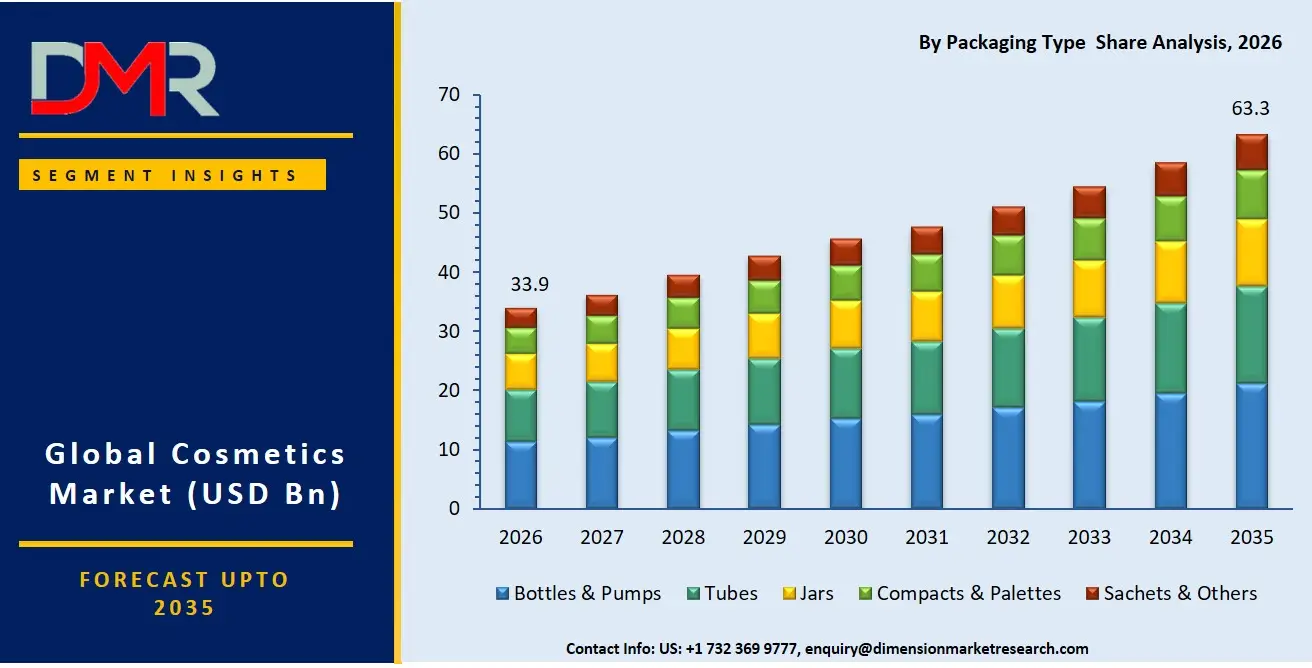
Bottles and pumps is poised to dominate the packaging segment because they are widely used across skincare, haircare, cleansers, lotions, shampoos, conditioners, and liquid cosmetic formulations.
ℹ
To learn more about this report –
Download Your Free Sample Report Here
This packaging format offers superior hygiene, convenient dispensing, accurate dosage control, and better product preservation, which align with Japanese consumers' preference for quality and cleanliness. Premium packaging aesthetics also enhance brand perception, particularly in luxury skincare products. Manufacturers increasingly adopt recyclable plastics, refillable containers, and eco-friendly pump systems to support sustainability initiatives without compromising functionality. Their versatility across multiple product categories ensures bottles and pumps remain the preferred packaging format in Japan's cosmetics industry.
By Consumer Group Analysis
Women is anticipated to represent the dominant consumer group in Japan's cosmetics market due to higher product usage frequency, broader beauty routines, and greater expenditure across skincare, makeup, haircare, fragrances, and personal hygiene categories. Female consumers actively seek premium, anti-aging, brightening, moisturizing, and UV-protection products while embracing both luxury and mass-market brands. Growing workforce participation, rising disposable income, and strong beauty consciousness further stimulate demand. Continuous product launches targeting different age groups and skin concerns sustain market expansion. Although men's grooming is growing steadily, women continue to account for the largest share of cosmetic consumption across nearly every product category.
By Application Area Analysis
Face applications is projected to dominate Japan's cosmetics market as facial skincare and makeup remain central to daily beauty routines. Consumers invest significantly in cleansers, toners, serums, moisturizers, sunscreens, foundations, primers, and anti-aging products to maintain healthy and youthful skin. The country's strong beauty culture emphasizes flawless, hydrated, and protected skin, encouraging consistent product usage throughout the year. Increasing awareness of UV damage, environmental pollution, and age-related skin concerns further supports demand for advanced facial care formulations. Continuous innovation in multifunctional skincare, dermatologically tested products, and premium ingredients reinforces the face segment as the largest application category within Japan's cosmetics market.
By Distribution Channel Analysis
Specialty beauty stores is poised to dominate the distribution channel due to their extensive product assortment, premium shopping experience, knowledgeable beauty consultants, and availability of exclusive domestic and international brands. Japanese consumers often prefer in-store product testing, personalized skincare consultations, and expert recommendations before purchasing premium cosmetics. Leading beauty chains and brand-owned boutiques provide access to newly launched products, limited editions, and loyalty programs that enhance customer retention. Strong brand presentation, professional service quality, and consumer confidence in authentic products further strengthen this channel. Despite rapid e-commerce growth, specialty beauty stores remain the leading retail format in Japan's cosmetics market.
The Japan Cosmetics Market Report is segmented on the basis of the following:
By Product Type
- Skincare
- Cleansers
- Toners
- Moisturizers
- Serums & Essences
- Sunscreens
- Face Masks
- Others
- Haircare
- Shampoo
- Conditioner
- Hair Oil & Serums
- Hair Styling Products
- Hair Color
- Hair Treatment Products
- Color Cosmetics (Makeup)
- Face Makeup
- Eye Makeup
- Lip Makeup
- Nail Makeup
- Fragrances & Deodorants
- Perfumes
- Body Mists
- Deodorants
- Personal Care & Hygiene Products
- Bath & Shower Products
- Hand Care Products
- Oral Care
- Intimate Hygiene Products
- Others
By Ingredient Type
- Conventional
- Natural
- Clean-Label
By Packaging Type
- Bottles & Pumps
- Tubes
- Jars
- Compacts & Palettes
- Sachets & Others
By Consumer Group
By Application Area
- Face
- Cleansing
- Moisturizing
- Anti-aging
- Sun Protection
- Hair
- Cleansing
- Conditioning
- Styling
- Hair Coloring
- Body
- Body Care
- Bath & Shower
- Hand & Foot Care
- Lips
- Eyes
- Nails
By Distribution Channel
- Supermarkets & Hypermarkets
- Specialty Beauty Stores
- Pharmacies & Drug Stores
- Department Stores
- Online Retail (E-commerce)
- Convenience Stores
Competitive Landscape
The Japan cosmetics market is highly competitive, characterized by the presence of established domestic manufacturers alongside leading global beauty companies. Japanese brands compete through continuous product innovation, advanced skincare research, premium formulations, and strong consumer trust built on quality, safety, and efficacy. Companies invest heavily in research and development to introduce anti-aging, whitening, moisturizing, and UV-protection products that address evolving consumer preferences. International brands strengthen their presence through luxury positioning, digital marketing, and collaborations with retailers and influencers. Competition is further intensified by the rapid expansion of e-commerce, direct-to-consumer channels, and personalized beauty solutions powered by AI and data analytics. Sustainability has become a key differentiator, with companies introducing refillable packaging, clean-label formulations, and environmentally responsible manufacturing practices. Strategic partnerships, product diversification, omnichannel distribution, and expansion into men's grooming and premium skincare remain essential strategies for maintaining market leadership and long-term growth.
Some of the prominent players in the Japan Cosmetics Market are:
- Shiseido Company, Limited
- Kao Corporation
- KOSÉ Corporation
- POLA ORBIS Holdings Inc.
- FANCL Corporation
- Rohto Pharmaceutical Co., Ltd.
- Pias Corporation
- Mandom Corporation
- Noevir Holdings Co., Ltd.
- Milbon Co., Ltd.
- The Estée Lauder Companies Inc.
- L'Oréal S.A.
- LVMH Moët Hennessy Louis Vuitton SE
- Beiersdorf AG
- Unilever PLC
- Procter & Gamble Company
- Amorepacific Corporation
- LG Household & Health Care Ltd.
- Natura &Co Holding S.A.
- Revlon, Inc.
- Other Key Players
Recent Developments
- March 2026: KOSÉ Corporation expanded its AI-powered beauty services by enhancing personalized skin analysis, virtual makeup try-on capabilities, and digital customer engagement across its online and retail channels, strengthening its omnichannel strategy and improving personalized beauty experiences for Japanese consumers.
- July 2025: Kao Corporation launched SENSAI TOTAL FORM EXPERT CREAM, expanding its premium skincare portfolio with advanced anti-aging technology designed to improve skin firmness, elasticity, and hydration while addressing increasing consumer demand for luxury skincare solutions.
- November 2024: Shiseido introduced its Action Plan 2025–2026 to strengthen profitability through organizational restructuring, portfolio optimization, enhanced operational efficiency, and increased investment in high-growth skincare brands, digital transformation, and international market expansion to improve long-term business performance.
Report Details
| Report Characteristics |
| Market Size (2026) |
USD 33.9 Bn |
| Forecast Value (2035) |
USD 63.3 Bn |
| CAGR (2026–2035) |
7.2% |
| Historical Data |
2021 – 2025 |
| Forecast Data |
2027 – 2035 |
| Base Year |
2025 |
| Estimate Year |
2026 |
| Segments Covered |
By Product Type (Skincare, Haircare, Color Cosmetics, Fragrances & Deodorants, Personal Care & Hygiene Products), By Ingredient Type, By Packaging Type, By Consumer Group, By Application Area, By Distribution Channel |
| Country Coverage |
Japan |
Frequently Asked Questions
How big is the Japan Cosmetics Market?
▾ The Japan Cosmetics market is poised to be valued at USD 33.9 billion in 2026 and is projected to reach USD 63.3 billion by 2035, driven by the universal need for high-efficacy, science-backed solutions for an aging population with a high rate of lifestyle-related skin concerns.
What is the CAGR of the Japan Cosmetics Market from 2026 to 2035?
▾ The market is expected to grow at a CAGR of 7.2% from 2026 to 2035, reflecting the accelerating innovation pipeline in biotech ingredients and the nation's unique consumer culture that enables a high volume of premium product adoption.
What factors are driving the growth of the Japan Cosmetics Market?
▾ Key drivers include Japan’s hyper-discerning consumer base that demands constant innovation, the escalating beauty needs of a super-aging society, and a deep ecosystem of academic and corporate research excellence in fermentation science and dermatological research.
What are the major trends in the Japan Cosmetics Market?
▾ Major trends include the development of "skinimalist" multi-benefit products for safer and more efficient routines, the shift toward personalized formulations based on microbiome and DNA analysis, and a strong focus on applications in preventive aging and stress-related skin recovery.
Who are the key players in the Japan Cosmetics Market?
▾ Key players in the Japan Cosmetics Market include Shiseido, Kao Corporation, Kosé Corporation, Pola Orbis, SK-II (P&G), L'Oréal Japan, and Rohto Pharmaceutical, driving innovation through research, clinical trials, ingredient development, and omnichannel commercialization activities.