Market Overview
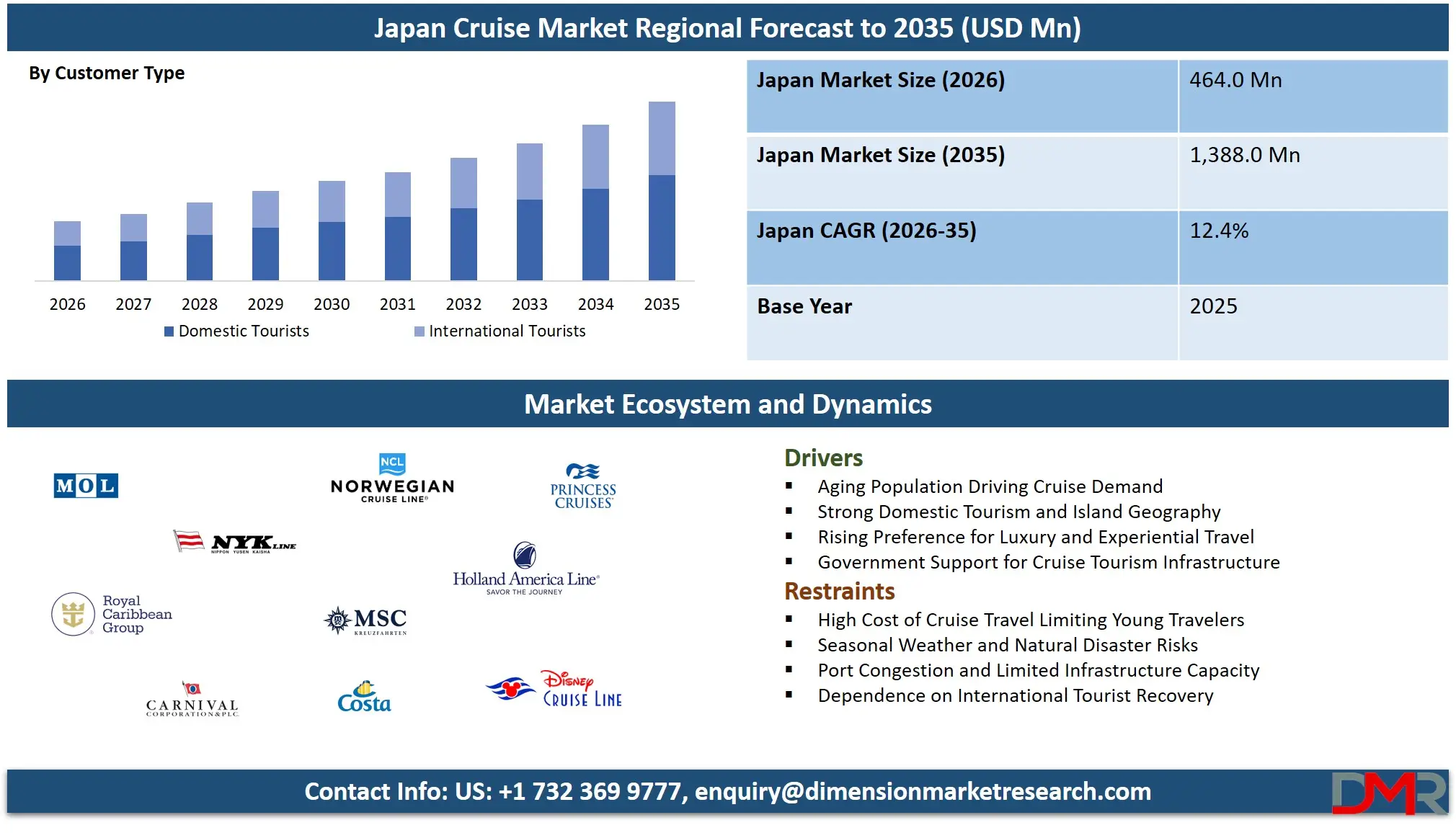
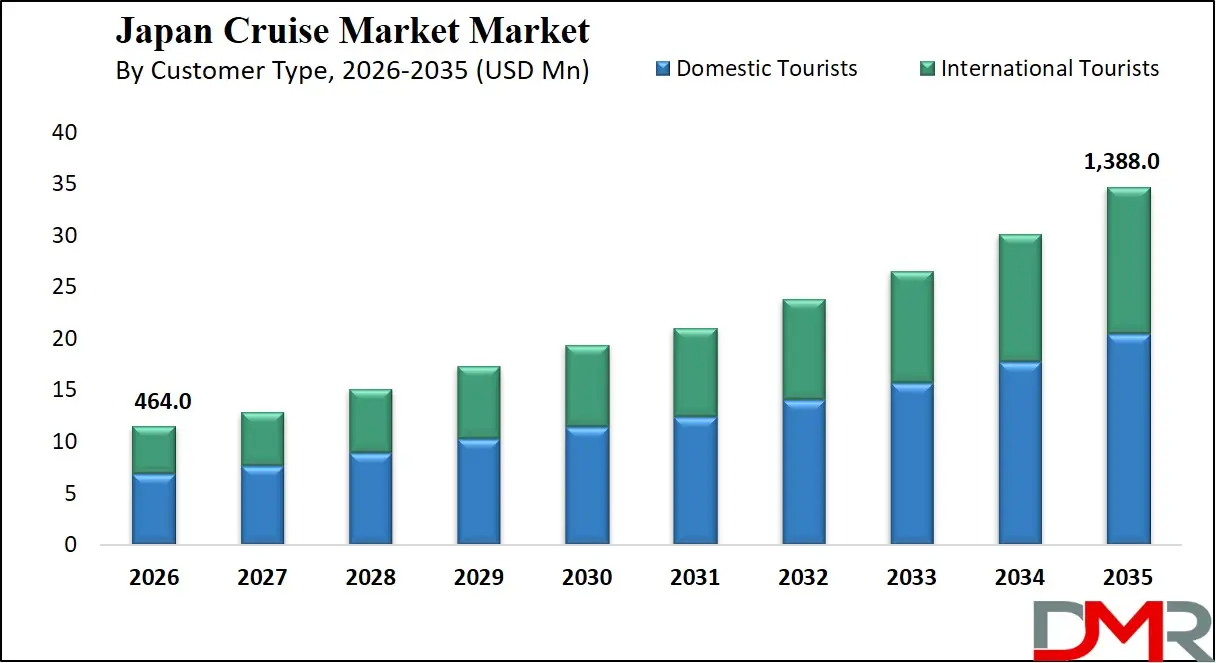
The Japan cruise market size is projected to reach USD 464.0 million in 2026 and is expected to grow at a CAGR of 12.4%, reaching USD 1,388.0 million by 2035, driven by rising cruise tourism demand, expanding maritime infrastructure, and growing preference for luxury and experiential travel.
ℹ
To learn more about this report –
Download Your Free Sample Report Here
Cruise refers to a leisure travel experience in which passengers journey on large passenger ships designed to combine transportation with hospitality, entertainment, and recreation. Unlike conventional travel, a cruise emphasizes the onboard experience as much as the destination, offering accommodations, diverse dining options, cultural programs, wellness facilities, and organized excursions within a single integrated environment. Cruise itineraries may span coastal routes, international waters, or inland waterways, allowing travelers to explore multiple destinations without repeated packing and transit. The concept has evolved into a comprehensive tourism product that blends luxury travel, maritime hospitality, and destination exploration, catering to varied traveler preferences ranging from relaxation and sightseeing to adventure and themed experiences.
The Japan cruise market represents a dynamic segment of the broader travel and tourism industry, shaped by the country’s unique geographic composition, advanced port infrastructure, and strong domestic travel culture. As an island nation with extensive coastlines and well developed maritime networks, Japan supports a wide range of cruise itineraries connecting major ports such as Yokohama, Kobe, and Osaka with regional and international destinations. The market is characterized by high demand for premium onboard services, cultural immersion experiences, and short duration coastal voyages, reflecting the preferences of Japanese travelers who prioritize quality, safety, and convenience. Increasing integration of digital booking platforms and customized travel packages is further enhancing accessibility and consumer engagement in this sector.
ℹ
To learn more about this report –
Download Your Free Sample Report Here
The growth of the Japan cruise market is also influenced by demographic and economic factors, particularly the expanding elderly population with high disposable income and a growing inclination toward leisure travel. Cruise operators are tailoring offerings to include wellness programs, fine dining experiences, and culturally relevant entertainment to meet these expectations. At the same time, inbound tourism is gradually strengthening, supported by favorable government policies, port modernization initiatives, and regional tourism collaborations across Asia Pacific. Sustainability trends are also shaping the market, with increasing adoption of cleaner propulsion technologies and environmentally responsible practices, positioning Japan as a progressive hub for cruise tourism development in the region.
Japan Cruise Market: Key Takeaways
- Rapid Market Recovery: Inbound cruise passengers rose from 356,000 in 2023 to 1,767,000 in 2025, showing strong post-pandemic recovery and growing domestic and international demand.
- Ocean Cruises Dominate: Ocean cruises are projected to capture 62.4% of the Type segment in 2026, highlighting the preference for multi-destination itineraries and large onboard amenities.
- Diesel Propulsion Leads: Diesel-powered cruise ships hold 48.5% of the Propulsion segment in 2026, although LNG-powered vessels are steadily gaining for environmental compliance.
- Senior Travelers Drive Demand: Travelers aged 51–70 years account for 41.3% of total passengers, emphasizing the market’s reliance on affluent, leisure-focused senior demographics.
- Domestic Tourists Are the Core: Domestic travelers dominate the customer type segment with 59.0% market share in 2026, reflecting strong coastal connectivity and culturally familiar travel experiences.
Japan Cruise Market: Use Cases
- Coastal and Domestic Cruise Tourism: Short duration coastal cruises across Yokohama, Kobe, and Okinawa drive domestic tourism demand, supported by strong maritime connectivity and seasonal travel experiences.
- Luxury and Premium Travel Experiences: Rising demand for luxury travel is boosting premium cruise offerings, including fine dining, wellness programs, and personalized onboard services.
- International Cruise Tourism and Transit Hubs: Japan acts as a key Asia Pacific cruise hub, enabling cross border itineraries and increasing inbound tourism with strong port infrastructure.
- Themed and Experiential Cruise Offerings: Growing interest in experiential travel is driving themed cruises focused on culture, cuisine, and entertainment-based maritime tourism.
Impact of US-Iran War on the Japan Cruise Market
- Rising Fuel Costs Increasing Cruise Prices: The conflict has pushed global oil prices higher, increasing bunker fuel costs for cruise operators and raising ticket prices, which can reduce demand in Japan’s price-sensitive segments.
- Disruption in Maritime Routes and Itineraries: Geopolitical tensions in key shipping regions can lead to route diversions and itinerary changes, impacting cruise scheduling and limiting certain international travel routes connected to Asia.
- Decline in Travel Demand Due to Geopolitical Uncertainty: Uncertainty during conflicts affects traveler sentiment, leading to booking slowdowns, higher insurance costs, and reduced demand for international cruise tourism in Japan.
Japan Cruise Market: Stats & Facts
- Ministry of Land, Infrastructure, Transport and Tourism (MLIT) – Cruise Tourism Statistics
- 2023 inbound cruise passengers visiting Japan reached approximately 356,000, recovering to about 14 % of the pre‑pandemic peak in 2017, with 1,854 total cruise port calls at Japanese ports. The number of foreign and Japan‑based cruise ship calls comprised 1,264 foreign and 590 Japan‑based calls, with 92 ports receiving cruise calls in 2023.
- In 2024 the number of inbound cruise visitors quadrupled to about 1,438,000, and cruise ship port calls increased to 2,479, reaching roughly 85 % of the 2018 peak. Of total calls, 1,923 were foreign‑based vessels and 556 were Japan‑based vessels.
- In 2025 inbound cruise passenger numbers further rose to 1,767,000, with total port calls of 3,117 across Japanese ports, of which 2,352 were foreign cruise ships. Japan received calls from 93 foreign cruise ports in 2025.
Japan Cruise Market: Market Dynamic
Driving Factors in the Japan Cruise Market
Growing Aging Population and Leisure Travel Demand
Japan’s rapidly aging population with high disposable income is a key driver for the cruise market. Senior travelers prefer slow-paced, all-inclusive travel experiences, increasing demand for cruise tourism, premium voyages, and long-duration leisure travel.
Strong Maritime Infrastructure and Domestic Connectivity
Advanced port infrastructure in Yokohama, Kobe, and Osaka supports efficient cruise operations. Strong coastal connectivity and government investments in maritime tourism are boosting domestic cruise demand and regional travel.
Restraints in the Japan Cruise Market
High Cost of Cruise Travel
Cruise vacations remain expensive compared to alternative travel options, limiting adoption among younger and price-sensitive travelers despite growing interest in experiential tourism.
Seasonal and Environmental Constraints
Cruise operations are impacted by typhoons, adverse weather conditions, and seasonal disruptions, leading to itinerary changes and operational challenges for cruise operators.
Opportunities in the Japan Cruise Market
Expansion of Luxury and Experiential Cruise Offerings
Rising demand for experiential travel is creating opportunities for themed cruises, cultural journeys, wellness tourism, and premium onboard experiences tailored to niche traveler segments.
Growth in Inbound Tourism and Regional Cruise Circuits
Increasing international tourist inflow and expanding Asia Pacific cruise routes position Japan as a key maritime hub, supporting cross-border cruise tourism and port development.
Trends in the Japan Cruise Market
Adoption of Sustainable and Green Cruise Technologies
Cruise operators are adopting LNG-powered ships, hybrid propulsion, and emission reduction technologies, aligning with sustainability goals and environmental regulations.
Digitalization and Smart Cruise Experiences
Growing use of digital booking platforms, AI-driven personalization, and contactless onboard services is enhancing customer experience and transforming cruise tourism operations.
Japan Cruise Market: Research Scope and Analysis
By Type Analysis
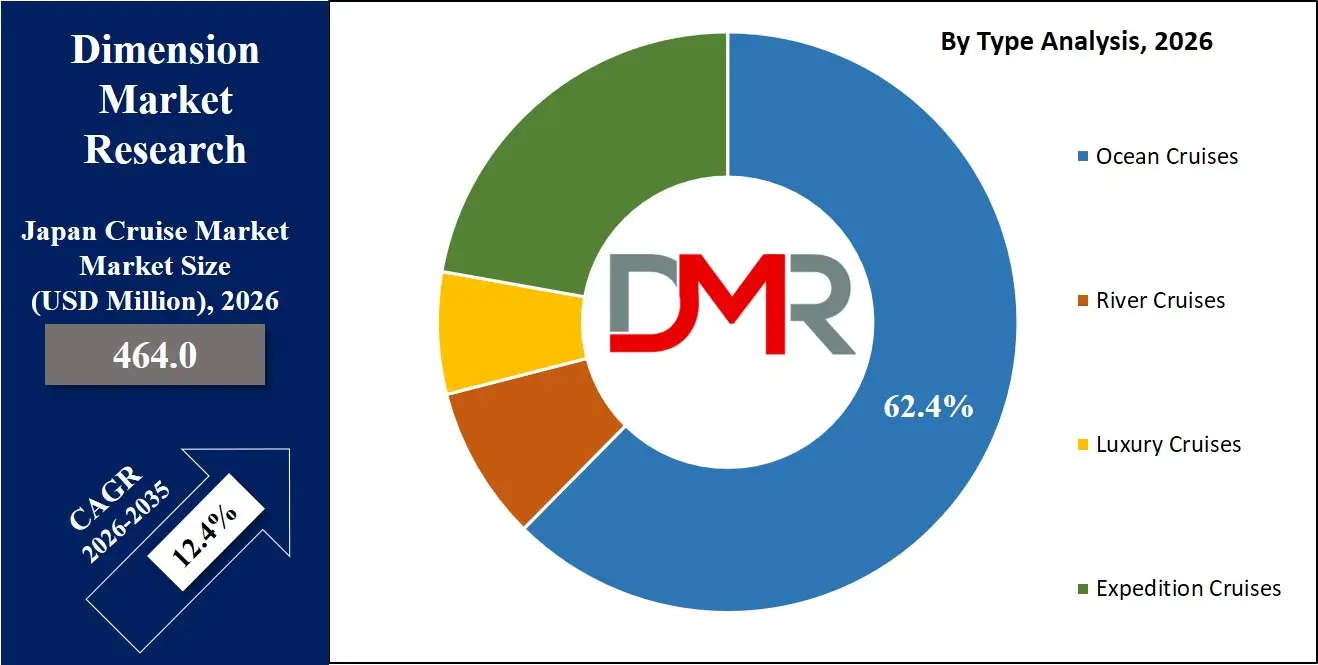
Ocean cruises are anticipated to dominate the type segment in the Japan cruise market, capturing 62.4% of the total market share in 2026, primarily due to the country’s island geography and strong maritime connectivity across major coastal cities and neighboring international destinations. These cruises offer multi destination itineraries, large scale onboard amenities, and flexible travel durations, making them highly attractive for both domestic and international travelers. The segment benefits from well-established port infrastructure in locations such as Yokohama and Kobe, along with increasing demand for leisure travel, scenic coastal experiences, and integrated hospitality services. In addition, the growing popularity of all-inclusive vacation packages, entertainment options, and cultural excursions further strengthens the position of ocean cruises as the preferred travel mode within Japan’s cruise tourism landscape.
ℹ
To learn more about this report –
Download Your Free Sample Report Here
Luxury cruises, while holding a smaller share compared to ocean cruises, represent a high value and rapidly growing segment within the market. This segment is driven by affluent travelers and the expanding elderly population seeking premium travel experiences, personalized services, and high end onboard facilities. Luxury cruise offerings in Japan focus on fine dining, wellness programs, spacious accommodations, and curated itineraries that emphasize exclusivity and comfort. The increasing inclination toward experiential travel, coupled with rising disposable income and demand for upscale tourism, is supporting the growth of this segment. Additionally, luxury cruises often incorporate cultural immersion, gourmet cuisine, and tailored shore excursions, making them particularly appealing to travelers looking for refined and unique maritime experiences.
By Amenity and Service Analysis
Fine dining and culinary experiences are anticipated to dominate the amenity and service offerings segment in the Japan cruise market, capturing 28.7% of the total market share in 2026, driven by the country’s strong food culture and high consumer expectations around quality and presentation. Cruise travelers in Japan place significant emphasis on gourmet cuisine, regional specialties, and premium dining environments, making food a central component of the overall travel experience. Cruise operators are increasingly focusing on curated menus, collaboration with renowned chefs, and inclusion of authentic Japanese and international dishes to enhance onboard hospitality. This trend aligns with the growing demand for luxury travel, experiential tourism, and high end onboard services, further strengthening the role of culinary offerings in attracting and retaining passengers.
Entertainment and live performances also play a crucial role in shaping the onboard experience, contributing significantly to passenger engagement and satisfaction. This segment includes a wide range of activities such as theater shows, live music, cultural performances, and interactive events designed to appeal to diverse traveler demographics. In the Japan cruise market, there is a rising preference for culturally immersive entertainment, including traditional performances and themed shows that reflect local heritage. Cruise lines are investing in advanced entertainment infrastructure and diverse programming to differentiate their offerings and enhance customer experience. The increasing focus on leisure activities, lifestyle experiences, and onboard engagement is supporting steady growth in this segment as part of the broader cruise tourism ecosystem.
By Propulsion Type Analysis
Diesel-powered cruise ships are anticipated to dominate the propulsion type segment in the Japan cruise market, capturing 48.5% of the total market share in 2026, primarily due to their established operational efficiency, wide availability, and lower initial investment costs compared to alternative propulsion technologies. These ships have been the backbone of the cruise industry for decades, offering reliable performance across long-distance routes and accommodating large passenger capacities. Cruise operators continue to rely on diesel propulsion for standard itineraries and high-volume cruises, benefiting from a well-developed supply chain for fuel and maintenance services, as well as the familiarity of crew and port authorities with diesel-powered operations.
LNG-powered cruise ships are emerging as a cleaner and more sustainable alternative within the market, gaining traction due to rising environmental regulations and growing passenger awareness around carbon emissions. LNG propulsion reduces sulfur oxide and nitrogen oxide emissions significantly, making it an attractive option for operators looking to align with global sustainability standards and Japan’s environmental policies. Although LNG-powered ships currently hold a smaller share compared to diesel vessels, their adoption is expected to grow steadily as cruise lines invest in greener technologies, attract environmentally conscious travelers, and promote eco-friendly maritime tourism experiences across domestic and regional routes.
By Age Group of Travelers Analysis
Travelers aged 51–70 years are anticipated to dominate the age group segment in the Japan cruise market, capturing 41.3% of the total market share in 2026. This dominance is driven by the high disposable income, flexible schedules, and growing interest in leisure and experiential travel among the senior population. Passengers in this age group often seek longer itineraries, premium accommodations, and luxury amenities, including wellness programs, fine dining, and cultural excursions. Their preference for comfort, safety, and curated travel experiences makes them a key target for cruise operators, who design offerings to meet the lifestyle and expectations of mature travelers. The segment also benefits from Japan’s aging population trend, which continues to expand the demand for cruise tourism focused on relaxation and high-quality experiences.
Travelers aged 31–50 years represent a significant secondary segment, showing growing interest in cruises that balance leisure with adventure and social experiences. This demographic prefers moderately priced cruise options with a mix of recreational activities, entertainment, and short duration itineraries suitable for family vacations or corporate travel. Increasing adoption of online booking platforms and travel apps among this age group enhances accessibility and convenience, while their inclination toward experiential travel, cultural engagement, and lifestyle-oriented journeys is encouraging cruise operators to develop innovative packages and themed voyages catering specifically to middle-aged adults.
By Booking Channel Analysis
Travel agents are anticipated to dominate the booking channel segment in the Japan cruise market, capturing 46.7% of the total market share in 2026. This dominance is driven by the traditional preference of Japanese travelers for personalized service, expert guidance, and trusted recommendations when planning leisure trips. Travel agents offer tailored cruise packages, handle complex itineraries, and provide support with documentation, excursions, and special requests, making them a preferred choice for both domestic and international travelers. Their ability to offer bundled services, loyalty programs, and exclusive deals further strengthens their position as the primary channel for cruise bookings in Japan, especially among senior and luxury travelers who value convenience and reliability.
Online travel agencies (OTAs) are gaining traction as a growing booking channel in the Japan cruise market due to the increasing adoption of digital platforms and mobile apps among younger travelers and tech-savvy consumers. OTAs provide convenience, real-time availability, and easy comparison of cruise options, enabling users to select itineraries, cabins, and add-on services independently. While currently holding a smaller share compared to traditional travel agents, OTAs are driving market expansion by targeting mid-aged travelers, families, and independent tourists who prefer self-service booking, promotional offers, and instant confirmation, making this channel an important contributor to the evolving cruise distribution landscape.
By Customer Type Analysis
Domestic tourists are anticipated to dominate the customer type segment in the Japan cruise market, capturing 59.0% of the total market share in 2026. This strong presence is driven by the convenience of short domestic itineraries, scenic coastal routes, and well-developed port infrastructure that makes cruising an accessible and attractive option for local travelers. Domestic passengers often prefer cruises that combine relaxation with cultural and seasonal experiences such as cherry blossom viewing or festival-themed voyages. Their familiarity with the language, culture, and travel norms also encourages repeat bookings and long-term engagement with cruise operators, making them the backbone of the Japan cruise market.
International tourists represent a smaller but growing segment, contributing to the expansion of cross-border and regional cruise itineraries. This segment includes travelers from neighboring Asian countries as well as Europe and North America, attracted by Japan’s unique cultural experiences, scenic coastal routes, and high-quality onboard services. International travelers often seek longer, multi-destination cruises and are drawn to themed journeys, luxury accommodations, and curated excursions that highlight Japan’s heritage, cuisine, and natural beauty. The growth of inbound tourism and promotional efforts by ports and cruise lines are gradually increasing the share of international passengers in the market.
By End User Analysis
Families are anticipated to dominate the end user segment in the Japan cruise market, capturing 36.8% of the total market share in 2026. This dominance is driven by the growing popularity of multi-generational travel and the appeal of cruise vacations as an all-inclusive, convenient option for family leisure. Cruises offer a wide range of amenities and entertainment suitable for children, teenagers, and adults, including recreational activities, kids’ programs, family-friendly dining, and onboard excursions. The combination of safety, structured itineraries, and diverse onboard services makes cruises an attractive choice for families seeking quality time together while exploring multiple destinations along Japan’s coastlines and nearby international ports.
Solo travelers represent a smaller but increasingly important segment of the market, driven by the rising trend of independent and lifestyle-focused travel. This group often seeks flexible itineraries, social activities, and wellness or cultural experiences tailored for individual passengers. Cruise operators are responding by offering single cabins, solo-friendly excursions, and networking opportunities onboard to enhance the experience for independent travelers. As awareness of solo travel and personalized vacation experiences grows, this segment is expected to gradually expand, contributing to diversification in the Japan cruise market.
The Japan Cruise Market Report is segmented on the basis of the following:
By Type
- Ocean Cruises
- River Cruises
- Expedition Cruises
- Luxury Cruises
By Amenity and Service Offerings
- Fine Dining and Culinary Experiences
- Entertainment and Live Performances
- Spa and Wellness Services
- Recreational and Sports Activities
- Kids and Family Programs
- Shopping and Duty-Free Retail
By Propulsion Type
- Diesel-Powered Cruise Ships
- LNG-Powered Cruise Ships
- Hybrid Cruise Ships
- Electric Cruise Ships
By Age Group of Travelers
- 18–30 Years
- 31–50 Years
- 51–70 Years
- 71+ Years
By Booking Channel
- Online Travel Agencies (OTAs)
- Cruise Line Direct Booking
- Travel Agents
- Corporate/Group Bookings
By Customer Type
- Domestic Tourist
- International Tourist
By End User
- Solo Travelers
- Families
- Business Travelers
Impact of Artificial Intelligence in the Japan Cruise Market
Artificial intelligence is increasingly transforming the Japan cruise market by enhancing operational efficiency, customer experience, and personalized services. Cruise operators are leveraging AI-powered tools for predictive maintenance of ships, route optimization, and fuel efficiency, which help reduce operational costs and improve safety standards. Onboard, AI technologies enable smart cabin management, automated check-in processes, and personalized recommendations for dining, entertainment, and excursions. These innovations streamline operations, reduce human error, and allow cruise lines to deliver more seamless and efficient experiences for passengers, especially in luxury and premium segments where high service quality is expected.
AI is also driving a shift toward data-driven marketing and personalized travel experiences in the Japan cruise market. By analyzing passenger preferences, booking behaviors, and feedback, cruise companies can tailor itineraries, onboard amenities, and promotional offers to individual travelers or specific demographics such as families, senior travelers, and solo tourists. AI-powered chatbots and virtual assistants improve customer engagement, provide real-time support, and enhance overall satisfaction. Additionally, predictive analytics helps operators anticipate demand trends, optimize pricing strategies, and introduce targeted packages, contributing to higher occupancy rates and stronger market growth.
Japan Cruise Market: Competitive Landscape
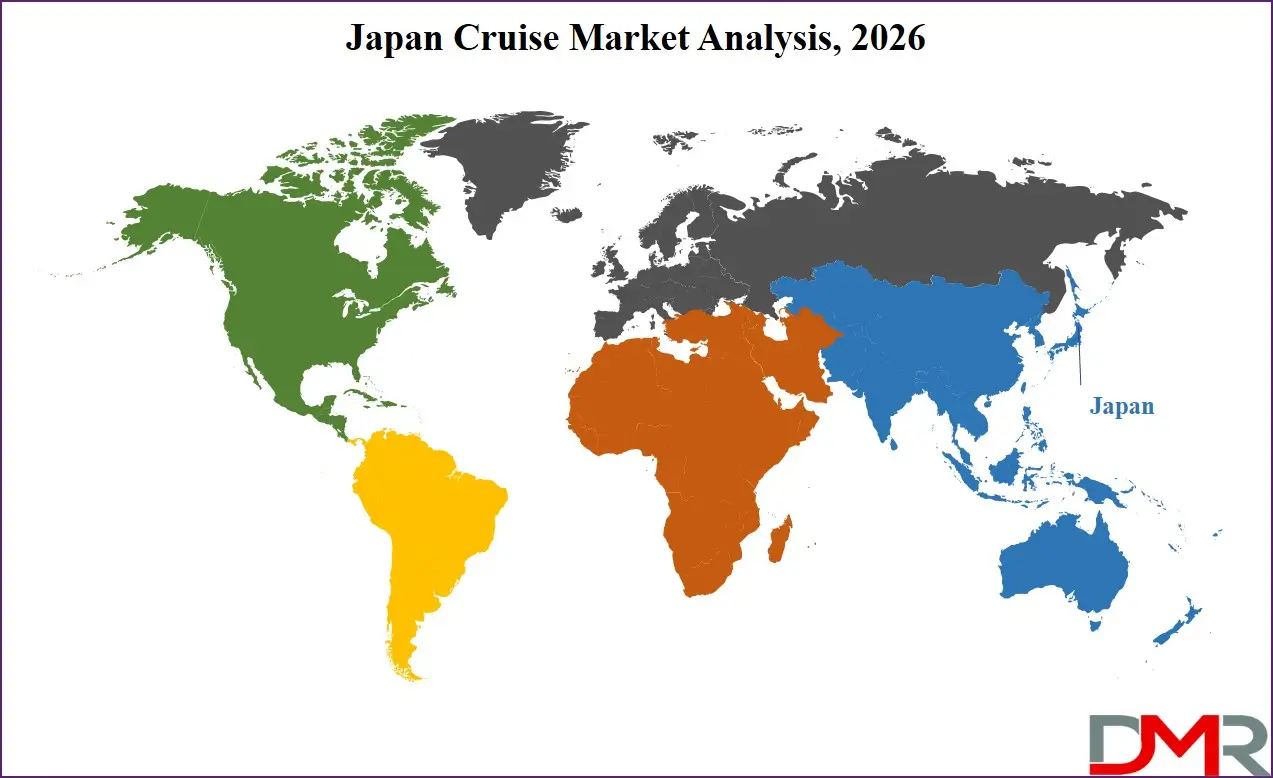
The competitive landscape of the Japan cruise market is characterized by a mix of established global operators and regional players focusing on premium, luxury, and experiential travel offerings. Companies are increasingly differentiating themselves through advanced onboard amenities, themed itineraries, and personalized services tailored to diverse traveler segments, including families, senior citizens, and solo travelers.
ℹ
To learn more about this report –
Download Your Free Sample Report Here
Operators are also investing in sustainable technologies, digital booking platforms, and AI-driven customer engagement tools to enhance operational efficiency and passenger satisfaction. Intense competition has led to innovations in cruise experiences, loyalty programs, and marketing strategies, with an emphasis on expanding domestic coastal routes as well as international itineraries across the Asia Pacific region.
Some of the prominent players in the Japan Cruise Market are:
- Mitsui O.S.K. Lines
- NYK Line
- Royal Caribbean Group
- Carnival Corporation & plc
- Norwegian Cruise Line Holdings Ltd.
- MSC Cruises
- Princess Cruises
- Holland America Line
- Costa Cruises
- Disney Cruise Line
- Ponant
- Silversea Cruises
- Regent Seven Seas Cruises
- Seabourn Cruise Line
- Viking Ocean Cruises
- Celebrity Cruises
- AIDA Cruises
- TUI Cruises
- Star Cruises
- Dream Cruises
- Other Key Players
Recent Developments in the Japan Cruise Market
- July 2025: KEYS Bunkering West Japan Ltd., in partnership with NYK Line, conducted the first LNG bunkering for the cruise ship ASUKA III in Hakata port, reflecting continued investment in clean fuel infrastructure in Japan’s cruise sector.
- April 2025: NYK Cruises officially took delivery of the LNG‑powered cruise ship ASUKA III from Meyer Werft, marking the introduction of one of Japan’s largest and most energy‑efficient vessels designed to enhance sustainable cruise operations.
- March 2025: Mitsui Ocean Cruises confirmed the expansion of its fleet with the purchase of a second luxury vessel previously operated as Seabourn Sojourn, positioning the company for broader domestic cruise offerings.
Report Details
| Report Characteristics |
| Market Size (2026) |
USD 464.0 Mn |
| Forecast Value (2035) |
USD 1,388.0 Mn |
| CAGR (2026–2035) |
12.4% |
| Historical Data |
2021 – 2025 |
| Forecast Data |
2027 – 2035 |
| Base Year |
2025 |
| Estimate Year |
2026 |
| Report Coverage |
Market Revenue Estimation, Market Dynamics, Competitive Landscape, Growth Factors and etc. |
| Segments Covered |
By Type (Ocean Cruises, River Cruises, Expedition Cruises, Luxury Cruises), By Amenity and Service Offerings (Fine Dining and Culinary Experiences, Entertainment and Live Performances, Spa and Wellness Services, Recreational and Sports Activities, Kids and Family Programs, Shopping and Duty-Free Retail), By Propulsion Type (Diesel-Powered Cruise Ships, LNG-Powered Cruise Ships, Hybrid Cruise Ships, Electric Cruise Ships), By Age Group of Travelers (18–30 Years, 31–50 Years, 51–70 Years, 71+ Years), By Booking Channel (Online Travel Agencies (OTAs), Cruise Line Direct Booking, Travel Agents, Corporate/Group Bookings), By Customer Type (Domestic Tourist, International Tourist), and By End User (Solo Travelers, Families, Business Travelers). |
| Country Coverage |
Japan |
| Prominent Players |
Mitsui O.S.K. Lines, NYK Line, Royal Caribbean Group, Carnival Corporation & plc, Norwegian Cruise Line Holdings Ltd., MSC Cruises, Princess Cruises, Holland America Line, Costa Cruises, Disney Cruise Line, Ponant, Silversea Cruises, Regent Seven Seas Cruises, Seabourn Cruise Line, Viking Ocean Cruises, Celebrity Cruises, AIDA Cruises, TUI Cruises, Star Cruises, Dream Cruises, and Other Key Players |
| Purchase Options |
We have three licenses to opt for: Single User License (Limited to 1 user), Multi-User License (Up to 5 Users) and Corporate Use License (Unlimited User) along with free report customization equivalent to 0 analyst working days, 3 analysts working days and 5 analysts working days respectively. |
Frequently Asked Questions
How big is the Japan Cruise Market?
▾ The Japan Cruise Market size is estimated to have a value of USD 464.0 million in 2026 and is expected to reach USD 1,388.0 million by the end of 2035.
What is the growth rate in the Japan Cruise Market in 2026?
▾ The market is growing at a CAGR of 12.4% over the forecasted period of 2026.
Who are the key players in the Japan Cruise Market?
▾ Some of the major key players in the Japan Cruise Market are Mitsui O.S.K. Lines, NYK Line, Royal Caribbean Group, Carnival Corporation & plc, Norwegian Cruise Line Holdings Ltd., MSC Cruises, Princess Cruises, Holland America Line, Costa Cruises, Disney Cruise Line, Ponant, Silversea Cruises, and many others.