Market Overview
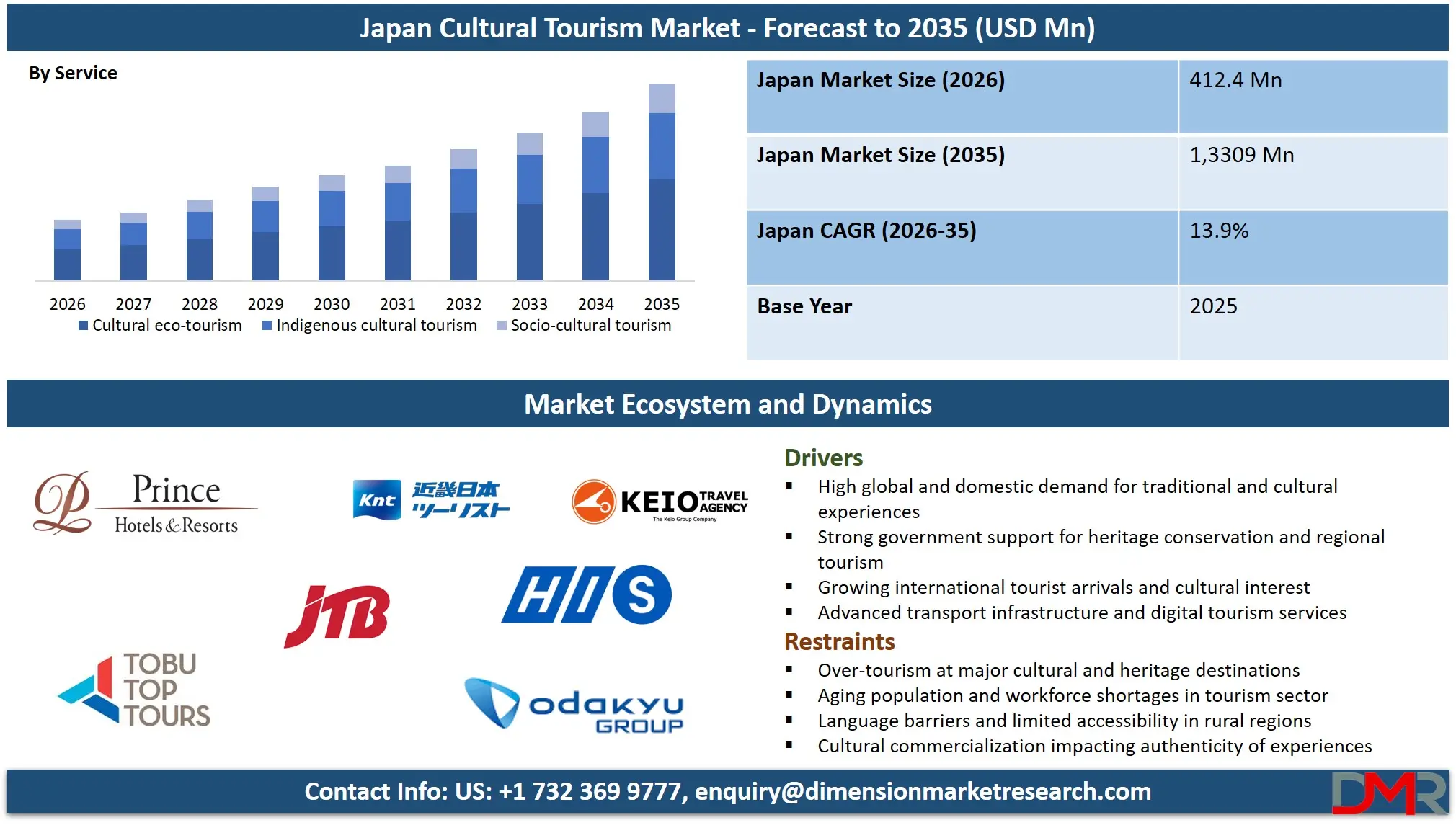
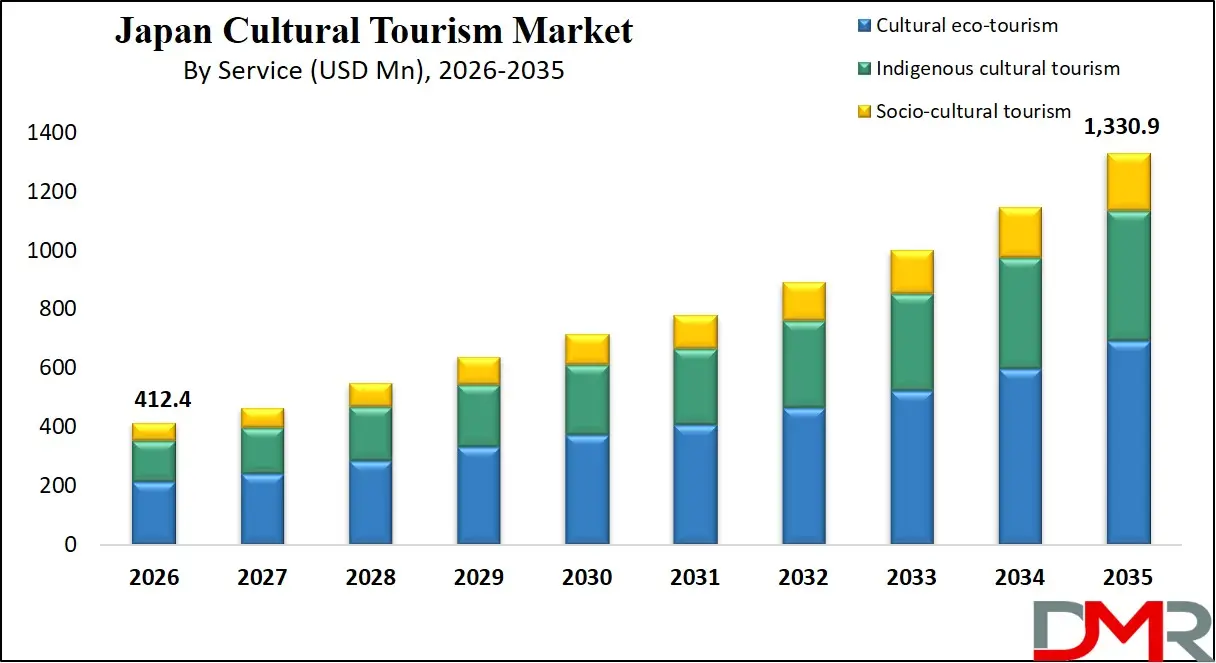
The Japan Cultural Tourism Market size is projected to reach USD 412.4 million in 2026 and grow at a compound annual growth rate of 13.9% to reach a value of USD 1,330.9 million in 2035.
ℹ
To learn more about this report –
Download Your Free Sample Report Here
Japan cultural tourism refers to travel experiences centered on the country’s rich heritage, traditions, arts, and lifestyle practices, including historical sites, festivals, cuisine, and local customs. It encompasses both tangible assets such as temples, shrines, and museums, and intangible elements like tea ceremonies, traditional crafts, and performing arts. This segment plays a crucial role in Japan’s broader tourism industry, acting as a key differentiator that attracts international and domestic visitors seeking authentic and immersive experiences. Cultural tourism also contributes significantly to regional revitalization by promoting lesser-known destinations.
The sector has been evolving rapidly with the integration of digital technologies, enhanced visitor infrastructure, and government-led tourism campaigns. Increasing global interest in experiential travel, combined with Japan’s efforts to preserve and promote its heritage, has strengthened demand. The rise of thematic travel such as anime culture tours, culinary tourism, and heritage trails has diversified offerings and expanded the audience base. Additionally, sustainability and responsible tourism practices are becoming central to cultural tourism strategies.
ℹ
To learn more about this report –
Download Your Free Sample Report Here
Recent years have seen a strong rebound in inbound tourism, supported by relaxed travel restrictions and targeted promotional initiatives. Investments in smart tourism, multilingual services, and cultural preservation projects have enhanced accessibility and visitor satisfaction. The growing collaboration between local communities, tourism boards, and private stakeholders is reshaping the landscape, ensuring long-term growth and cultural authenticity.
Japan Cultural Tourism Market: Key Takeaways
- Market Growth: The Japan Cultural Tourism Market size is expected to grow by USD 867.1 million, at a CAGR of 13.9%, during the forecasted period of 2027 to 2035.
- By Service: The cultural eco-tourism segment is anticipated to get the majority share of the Japan Cultural Tourism market in 2026.
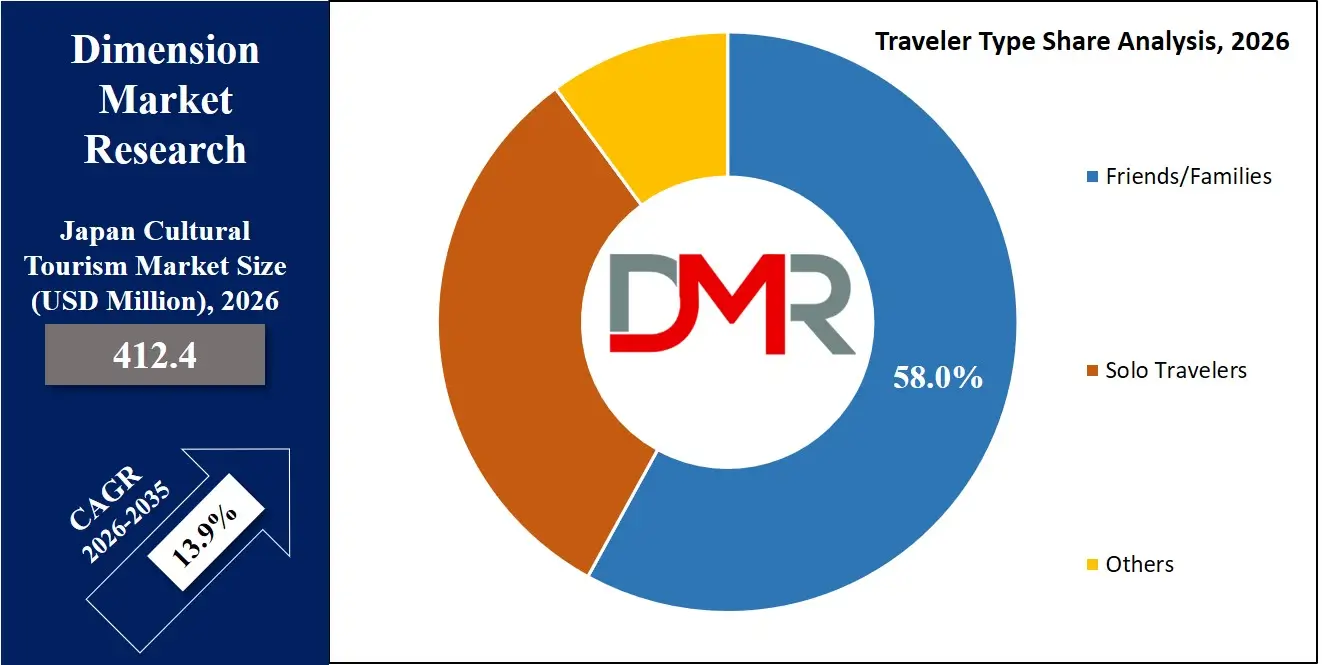
- By Traveler Type: The friends/family segment is expected to get the largest revenue share in 2026 in the Japan Cultural Tourism market.
- Use Cases: Some of the use cases of cultural tourism include heritage exploration, festival based and more.
Japan Cultural Tourism Market: Use Cases
- Heritage Exploration Tourism: Travelers visit historic temples, castles, and UNESCO-listed sites to understand Japan’s architectural and cultural legacy, often guided by curated storytelling experiences and expert-led tours.
- Festival-Based Travel: Tourists plan visits around traditional festivals (matsuri), engaging in local customs, performances, and seasonal celebrations, enhancing cultural immersion.
- Culinary Cultural Tourism: Visitors explore regional cuisines, participate in cooking classes, and experience traditional dining practices, linking food with cultural identity.
- Craft and Artisan Workshops: Tourists engage in hands-on activities such as pottery, kimono weaving, and calligraphy, supporting local artisans and preserving traditional skills.
- Spiritual and Wellness Tourism: Experiences centered around meditation, temple stays, and hot springs combine cultural and wellness elements, attracting global travelers.
- Pop Culture Integration Tourism: Modern cultural elements such as anime, manga, and gaming are integrated with traditional tourism, appealing to younger demographics.
- Rural and Community-Based Tourism: Visitors explore rural areas, participate in farming or village life, and contribute to local economies through authentic cultural exchanges.
Stats & Facts
- Japan National Tourism Organization reported that international visitor arrivals surpassed 25 million in 2024, reflecting strong post-pandemic recovery.
- Japan Tourism Agency stated that cultural tourism-related spending accounted for over 35% of total inbound tourist expenditure in 2024.
- Ministry of Land, Infrastructure, Transport and Tourism highlighted that regional tourism initiatives increased rural visitor numbers by 18% in 2025.
- UNESCO recorded over 25 cultural heritage sites in Japan as of 2025, attracting millions of cultural tourists annually.
- World Tourism Organization indicated that cultural tourism represents nearly 40% of global tourism activities in 2024.
- Japan External Trade Organization noted a 20% rise in demand for experiential travel packages in 2025.
- Ministry of Economy, Trade and Industry reported a 15% increase in investments in cultural preservation projects in 2024.
- OECD tourism data showed Japan among the top five destinations for cultural tourism growth in 2025.
- Japan National Tourism Organization recorded a 22% increase in digital bookings for cultural experiences in 2024.
- World Bank highlighted that tourism contributed approximately 7% to Japan’s GDP in 2025.
- Ministry of Internal Affairs and Communications reported that over 60% of tourists used digital tools for cultural navigation in 2024.
- UNWTO noted that sustainable tourism initiatives in Japan grew by 17% in 2025.
Market Dynamic
Driving Factors in the Japan Cultural Tourism Market
Rising Demand for Experiential and Authentic Travel
The increasing global preference for experiential travel is a major driver of Japan’s cultural tourism market. Modern travelers prioritize immersive experiences that allow them to connect deeply with local traditions, history, and communities. Japan’s rich cultural assets, including traditional arts, festivals, and heritage sites, align perfectly with this demand. Tour operators and local governments are expanding curated experiences such as tea ceremonies, samurai training, and artisan workshops. This shift from passive sightseeing to active participation is significantly boosting tourist engagement, spending, and repeat visits, thereby accelerating overall market growth.
Government Support and Regional Revitalization Policies
Strong government backing through tourism promotion campaigns and regional revitalization policies is another key growth driver. Authorities are investing in infrastructure, digital transformation, and heritage conservation to attract international visitors. Initiatives aimed at promoting lesser-known destinations are reducing congestion in major cities while distributing economic benefits across rural areas. Subsidies, tax incentives, and public-private partnerships are encouraging investments in cultural tourism projects. These efforts are not only enhancing accessibility and visitor experience but also ensuring sustainable development and preservation of cultural assets.
Restraints in the Japan Cultural Tourism Market
Overtourism and Infrastructure Strain in Key Destinations
Popular cultural destinations in Japan face challenges related to overtourism, leading to congestion, environmental degradation, and strain on local infrastructure. Cities with iconic heritage sites often struggle to manage large tourist volumes, affecting both visitor experience and local communities. Overcrowding can lead to deterioration of cultural assets and reduced authenticity. Additionally, rising costs of maintenance and preservation place financial pressure on authorities. These issues may discourage repeat visits and shift tourist interest away from heavily crowded locations, posing a challenge to balanced market growth.
Language Barriers and Limited Accessibility in Rural Areas
Despite improvements, language barriers and limited accessibility in rural regions continue to hinder market expansion. Many culturally rich destinations lack multilingual support, making it difficult for international tourists to fully engage with experiences. Inadequate transportation infrastructure and limited digital connectivity further restrict access to remote areas. These challenges reduce the attractiveness of rural tourism offerings and limit their potential contribution to the overall market. Addressing these gaps is essential to unlocking the full potential of Japan’s cultural tourism sector.
Opportunities in the Japan Cultural Tourism Market
Expansion of Rural and Community-Based Tourism
Rural and community-based tourism presents significant growth opportunities as travelers increasingly seek off-the-beaten-path experiences. Japan’s countryside offers unique cultural practices, traditional lifestyles, and natural landscapes that remain largely untapped. Government initiatives promoting regional tourism are encouraging investments in local infrastructure and experience-based offerings. By leveraging community participation and sustainable practices, these regions can attract niche tourist segments, diversify revenue streams, and reduce pressure on urban centers, thereby contributing to balanced and inclusive growth.
Integration of Digital Technologies and Smart Tourism
The adoption of digital technologies such as augmented reality, virtual tours, and AI-driven personalization is opening new avenues for market expansion. Smart tourism solutions enhance visitor engagement by providing interactive and informative experiences at cultural sites. Digital platforms enable seamless booking, navigation, and translation services, improving accessibility for international travelers. These innovations not only enhance operational efficiency but also create new revenue streams through virtual experiences and hybrid tourism models, positioning Japan as a technologically advanced cultural tourism destination.
Trends in the Japan Cultural Tourism Market
Shift Toward Sustainable and Responsible Tourism
Sustainability has become a central trend in Japan’s cultural tourism market, with increasing emphasis on preserving heritage and minimizing environmental impact. Tour operators and authorities are implementing eco-friendly practices, promoting low-impact travel, and encouraging responsible visitor behavior. Sustainable tourism initiatives include limiting visitor numbers at sensitive sites, promoting local products, and supporting cultural preservation projects. This trend aligns with global travel preferences and enhances Japan’s reputation as a responsible tourism destination.
Blending Traditional and Modern Cultural Experiences
A notable trend is the integration of traditional and contemporary cultural elements to attract diverse tourist segments. Experiences that combine heritage with modern pop culture, such as anime-themed tours or digital art exhibitions in historical settings, are gaining popularity. This fusion broadens the appeal of cultural tourism, especially among younger travelers. By adapting traditional offerings to modern preferences, the market is evolving to remain relevant and competitive in the global tourism landscape.
Impact of Artificial Intelligence in Japan Cultural Tourism Market
- AI-Powered Travel Personalization: AI analyzes traveler preferences to create customized cultural itineraries, enhancing satisfaction and engagement.
- Smart Translation Tools: Real-time AI translation improves communication between tourists and locals, reducing language barriers.
- Virtual Cultural Experiences: AI-driven virtual tours allow users to explore heritage sites remotely, expanding global reach.
- Predictive Analytics for Tourism Flow: AI forecasts visitor patterns, helping manage crowd control and optimize resource allocation.
- Enhanced Museum Experiences: Interactive AI guides provide detailed insights and storytelling, enriching visitor learning.
- Chatbots for Tourist Assistance: AI chatbots offer 24/7 support, improving accessibility and convenience for travelers.
- Cultural Preservation: AI helps digitize and archive cultural assets, ensuring long-term preservation and accessibility.
- Dynamic Pricing and Demand Management: AI optimizes pricing strategies based on demand trends, maximizing revenue.
- Operational Efficiency: Automation of bookings, ticketing, and logistics improves overall tourism management efficiency.
Research Scope and Analysis
By Type Analysis
Heritage sites dominate the Japan cultural tourism market, accounting for approximately 46% of the share in 2026. These include temples, shrines, castles, and UNESCO-recognized locations that attract millions of visitors annually. Their dominance is driven by Japan’s globally recognized historical significance and well-preserved cultural landmarks. Continuous investments in restoration and digital enhancement, such as augmented reality tours, are further boosting their appeal. Government initiatives promoting heritage tourism and improved infrastructure accessibility contribute to sustained growth. Additionally, international marketing campaigns emphasizing Japan’s cultural depth have strengthened visitor inflow, ensuring that heritage sites remain the cornerstone of the market.
Museums represent the fastest-growing segment due to their evolving role in offering interactive and immersive experiences. The integration of digital technologies, including AI and virtual reality, is transforming traditional museum visits into engaging educational journeys. Increased focus on thematic exhibitions and collaborations with global institutions is attracting a wider audience. As tourists seek deeper cultural understanding, museums are becoming key destinations, contributing significantly to market expansion.
By Services Analysis
Cultural eco-tourism leads the services segment with an estimated 52% share in 2026. This segment combines environmental sustainability with cultural exploration, appealing to environmentally conscious travelers. Activities such as eco-friendly heritage tours, nature-based cultural experiences, and community-led initiatives are gaining traction. Government policies promoting sustainable tourism and conservation efforts further support this segment’s dominance. The integration of local communities into tourism activities enhances authenticity while generating economic benefits. As global awareness of sustainability grows, cultural eco-tourism is expected to maintain its leadership position.
Indigenous cultural tourism is rapidly expanding due to increasing interest in authentic and community-driven experiences. Tourists are drawn to unique traditions, crafts, and lifestyles that offer deeper cultural insights. Efforts to preserve indigenous heritage and promote local participation are fueling growth. This segment is expected to see significant expansion as travelers seek meaningful and responsible tourism options.
By Traveler Type Analysis
The friends and families segment is set to hold the largest share at approx. 58% in 2026, driven by group travel preferences and shared cultural experiences. Japan’s cultural attractions, including festivals, heritage sites, and culinary tours, are well-suited for group participation. Family-friendly infrastructure, safety, and diverse offerings enhance its appeal. Travel packages tailored for groups, along with improved accessibility and services, contribute to this segment’s dominance. The emotional and educational value of cultural tourism further encourages family participation, ensuring consistent growth.
ℹ
To learn more about this report –
Download Your Free Sample Report Here
Solo travelers represent the fastest-growing segment, driven by the rising trend of independent and experiential travel. Japan’s safety, efficient transportation, and diverse cultural offerings make it an attractive destination for solo exploration. Digital tools and personalized travel services further support this segment’s growth, enabling flexible and customized itineraries.
The Japan Cultural Tourism Market Report is segmented on the basis of the following:
By Type
- Heritage Sites
- Religious Sites
- Parks & Gardens
- Museums
- Monuments
- Others
By Services
- Cultural eco-tourism
- Indigenous cultural tourism
- Socio-cultural tourism
By Traveler Type
- Solo Travelers
- Friends/Families
- Others
Competitive Landscape
The Japan cultural tourism market is characterized by a mix of public and private stakeholders working collaboratively to enhance offerings and maintain competitiveness. Market participants focus on innovation, digital transformation, and experience diversification to attract a broader audience. High entry barriers exist due to the need for cultural authenticity, regulatory compliance, and significant investment in infrastructure and preservation.
ℹ
To learn more about this report –
Download Your Free Sample Report Here
Strategic partnerships, especially between local communities and tourism operators, are crucial for delivering unique experiences. Continuous investment in research, technology integration, and sustainable practices enables stakeholders to strengthen their market position and adapt to evolving consumer preferences.
Some of the prominent players in the Japan Cultural Tourism are:
- JTB Corporation
- H.I.S. Co., Ltd.
- KNT-CT Holdings
- Nippon Travel Agency
- JR East View Tourism & Sales
- Odakyu Travel
- Keio Tourist Agency
- Tobu Top Tours
- Hankyu Travel International
- Club Tourism International
- Hoshino Resorts
- Prince Hotels
- Fujita Kanko
- Resorttrust
- The Oriental Land Company
- Hato Bus
- Beauty of Japan
- ENJYU JAPAN
- Aiko Japan
- Walk Japan
- Other Key Players
Recent Developments
- In June 2025, JTB Corporation announced a significant investment in a digital platform focused on cultural tourism experiences. The platform leverages AI and data analytics to provide personalized travel recommendations, virtual tours, and seamless booking services. It collaborates with local communities to showcase authentic cultural activities and promote regional destinations. This development enhances accessibility and global reach while supporting small-scale cultural enterprises.
In February 2025, East Japan Railway Company introduced a new luxury cultural tourism train designed to offer immersive travel experiences across historic regions. The service integrates onboard cultural activities such as traditional performances, regional cuisine, and guided storytelling. This initiative aims to promote lesser-known destinations and enhance regional tourism. The train features advanced digital guides and multilingual support, catering to international travelers.
Report Details
| Report Characteristics |
| Market Size (2026) |
USD 412.4 Mn |
| Forecast Value (2035) |
USD 1,330.9 Mn |
| CAGR (2026–2035) |
13.9% |
| Historical Data |
2021 – 2025 |
| Forecast Data |
2027 – 2035 |
| Base Year |
2025 |
| Estimate Year |
2026 |
| Report Coverage |
Market Revenue Estimation, Market Dynamics, Competitive Landscape, Growth Factors and etc. |
| Segments Covered |
By Type (Heritage Sites, Religious Sites, Parks & Gardens, Museums, Monuments, and Others), By Services (Cultural eco-tourism, Indigenous cultural tourism, and Socio-cultural tourism), By Traveler Type (Solo Travelers, Friends/Families, and Others) |
| Country Coverage |
Japan |
| Prominent Players |
JTB Corporation, H.I.S. Co., Ltd., KNT-CT Holdings, Nippon Travel Agency, JR East View Tourism & Sales, Odakyu Travel, Keio Tourist Agency, Tobu Top Tours, Hankyu Travel International, Club Tourism International, Hoshino Resorts, Prince Hotels, Fujita Kanko, Resorttrust, The Oriental Land Company, Hato Bus, Beauty of Japan, ENJYU JAPAN, Aiko Japan, Walk Japan, and Other Key Players |
| Purchase Options |
We have three licenses to opt for: Single User License (Limited to 1 user), Multi-User License (Up to 5 Users) and Corporate Use License (Unlimited User) along with free report customization equivalent to 0 analyst working days, 3 analysts working days and 5 analysts working days respectively. |
Frequently Asked Questions
How big is the Japan Cultural Tourism Market?
▾ The Japan Cultural Tourism Market size is expected to reach USD 412.4 million by 2026 and is projected to reach USD 1,330.9 million by the end of 2035.
Who are the key players in the Japan Cultural Tourism Market?
▾ Some of the major key players in the Japan Cultural Tourism Market include HIS, KNT, JTB and others.
What is the growth rate in the Japan Cultural Tourism Market?
▾ The market is growing at a CAGR of 13.9 percent over the forecasted period.