Market Snapshot
- Market Size (2026): USD 1.9 Bn
- Forecast Value (2035): USD 6.1 Bn
- CAGR (2026-2035): 13.8%
- Leading Component (2026): Software Platforms, around 41%
- Leading Deployment (2026): Cloud, close to 46%
- Key Players: Salesforce, NTT DATA Group, transcosmos and others
What is Japan Customer Experience Management Market and its Market Size?
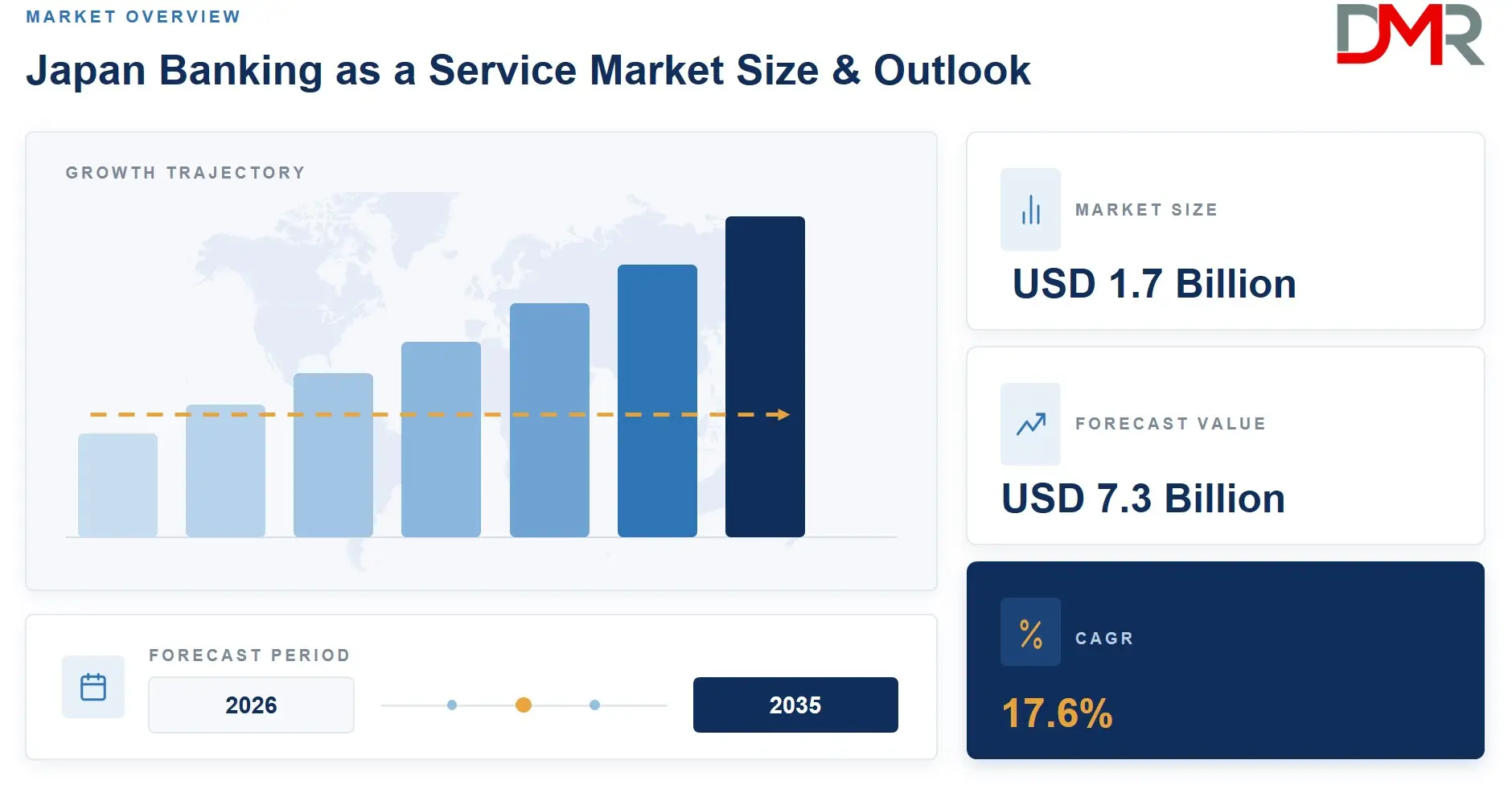
The Japan Customer Experience Management Market size is estimated to reach USD 1.9 Bn in 2026 and is further anticipated to reach USD 6.1 Bn by 2035, at a CAGR of 13.8%.
ℹ
To learn more about this report –
Download Your Free Sample Report Here
Coverage spans the software used to capture, interpret and act on customer interactions, together with the professional and managed services wrapped around it. Voice-of-the-customer tooling, journey orchestration, interaction analytics, customer data platforms and the agent-facing contact centre layer sit inside the boundary. Sizing counts spending on systems serving customers located in Japan, not the worldwide revenue of vendors headquartered there. Advertising technology and e-commerce storefronts sit outside it.
What buyers are actually purchasing is a record of every interaction and a way to act on it while the customer is still present. A telephone call, a LINE Official Account thread, a branch visit and an in-app support session generate separate logs in most Japanese enterprises. Customer experience management systems join those records to a single identity, score satisfaction through structured instruments such as NPS and CSAT, and push the resulting signal back to the agent, the branch manager or the product team.
Demand concentrates in organisations carrying heavy service obligations and thin staffing. Banks, insurers and securities firms buy to satisfy Financial Services Agency expectations on complaint handling and record retention. Telecom carriers and utilities buy to hold churn down across very large subscriber bases. Retail chains and travel operators buy to move routine enquiries away from staffed channels. Mid-sized firms below that tier buy far narrower configurations, usually a chatbot and a survey engine.
Two structural shifts are reshaping purchasing. Labour supply is the first: contact centre seats are difficult to fill at any wage, which converts automation from a margin project into a capacity project. Data governance is the second, since obligations under the Act on the Protection of Personal Information keep a share of interaction data on domestic infrastructure and shape which architectures a regulated buyer approves.
Use Cases
- Regional Bank Service Consolidation: Regional banks merge branch enquiry desks and telephone centres into one queue, routing by customer segment and product holding rather than by dialled number. Complaint records attach automatically to the account, which shortens supervisory reporting cycles and removes manual transcription from branch staff.
- Inbound Lodging and Transport Operators: Hotel groups and rail operators deploy multilingual assistants across booking, check-in and disruption handling for visitors who never reach a Japanese-speaking agent. Front-desk teams keep the exceptions, while routine rebooking and facility questions resolve without a staffed touchpoint.
- Convenience and Specialty Retail Loyalty: Chain retailers, sitting inside a retail and e-commerce segment worth nearly 19% of 2026 demand, link point-of-sale baskets to app behaviour and service contacts. Store managers receive weekly satisfaction signals by location, changing staffing decisions rather than only marketing offers.
- Automotive Dealer Aftersales Networks: Vehicle manufacturers extend a shared service layer across independently owned dealer groups so booking history, recall notices and warranty enquiries follow the vehicle rather than the dealership. Recall completion rates rise, and the manufacturer gains visibility into service quality it could not previously observe.
Key Takeaways
- Market Size & Share: Domestic spending is set to reach USD 6.1 Bn by 2035, compounding at 13.8% across the forecast period.
- Component Analysis: Software platforms are expected to hold around 41% of 2026 revenue, while managed services expand fastest at a CAGR of 17.9%.
- End Use Industry Analysis: BFSI is projected to account for close to 22% of 2026 demand, with travel and hospitality growing quickest at 18.8%.
- Demand Concentration: Large enterprises are set to represent roughly 68% of 2026 spending, a heavier skew than most software categories show.
- Deployment Inertia: On-premise estates should still carry nearly 28% of 2026 spending, reflecting regulated recording and integration debt rather than buyer preference.
- Channel Shift: Messaging and chat is the fastest-growing touchpoint at a CAGR of 19.6%, pulled by business messaging rather than web self-service.
How AI/Gen AI is Transforming the Japan Customer Experience Management Market?
Automation in this market runs through language before it runs through anything else. Japanese automatic speech recognition has become accurate enough to transcribe full call volumes rather than sampled ones, which turns quality monitoring from an audit exercise into continuous measurement. Large language models sit on top of that transcript layer, summarising calls, drafting after-call notes and retrieving answers from product manuals through retrieval-augmented generation.
Honorific register is the practical constraint. Generated replies that mishandle keigo read as careless to Japanese customers, so vendors invest in tuned models and reviewed response templates rather than raw generation. Regulated buyers add a second constraint by requiring inference inside domestic infrastructure, which has pushed carriers and system integrators to stand up local capacity.
- Agent Assist and Call Summarisation: Real-time retrieval and automatic after-call notes remove minutes of wrap-up per interaction, where most measurable labour savings currently sit.
- Autonomous Resolution Agents: Multi-step agents handle repair bookings, address changes and order status end to end, escalating on ambiguity rather than on keyword failure.
- Interaction Mining: Full-transcript analysis surfaces recurring defects and policy friction that survey instruments miss, feeding product and operations teams.
- Compliance Review: Automated screening of recorded interactions flags suitability and disclosure gaps for financial products before supervisory review.
Key Drivers in the Japan Customer Experience Management Market
Two forces account for most incremental spending, and they act on different parts of the buying organisation.
- Contact Centre Labour Scarcity: Seat-filling, not budget, has become the binding constraint on service capacity. Operators across BPO and in-house centres report sustained difficulty recruiting at prevailing wages, and attrition compounds the shortfall because each departure carries several weeks of unproductive training. Voice remains the dominant channel, expected to carry approximately 31% of 2026 touchpoint-related spending, so a reduction in average handle time or transfer rate converts directly into headcount that never has to be hired. That arithmetic changes the business case. Automation stops being a margin project reviewed against payback thresholds and becomes the only route to holding service levels flat as the labour pool contracts, which moves approval upward and shortens procurement cycles.
- Financial Sector Record and Complaint Obligations: Supervisory expectations on suitability assessment, complaint handling and retention require banks, insurers and securities firms to evidence what was said to a customer and how the firm responded. Paper logs and sampled call reviews no longer satisfy that standard at scale. BFSI is projected to account for close to 22% of 2026 demand as a result, with spending concentrated in interaction capture, retention-compliant storage and automated screening rather than in front-end personalisation. The mechanism matters commercially: once every interaction is recorded and indexed for compliance reasons, the marginal cost of running analytics over that corpus falls sharply, and firms extend the same platform into service quality and retention work.
Restraints in the Japan Customer Experience Management Market
Adoption is slower than the underlying need would suggest, and the reasons are structural rather than attitudinal.
- On-Premise Estates and Integration Debt: On-premise deployments are expected to hold roughly 28% of 2026 spending, an unusually high figure for a category that is elsewhere largely cloud-delivered. Japanese enterprises run long-lived PBX estates, custom middleware and core systems that were extended rather than replaced over two decades, and interaction platforms have to reach into all of them. Depreciation schedules on installed telephony often run five to seven years, which pushes replacement decisions out regardless of software readiness. The consequence is that a buyer evaluating a cloud platform is rarely comparing licence costs; they are pricing a multi-year integration programme against continuing to operate what already works.
- Implementation Capacity and Cost: Professional services are set to absorb about 27% of 2026 spending, which reads as a warning rather than an opportunity for buyers. Japanese deployments carry heavier configuration than comparable Western ones: Japanese-language model tuning, honorific response review, custom approval workflows and documentation standards that vendors cannot ship pre-built. System integrator capacity is itself constrained by the same engineer shortage affecting every digital programme in the country, so delivery slots rather than budget frequently set the timeline. Smaller buyers face the sharper version of this problem, since the fixed cost of a competent implementation does not scale down with seat count.
Growth Opportunities in the Japan Customer Experience Management Market
The clearest openings sit outside the large-enterprise BFSI and telecom core where incumbents already hold the accounts.
- Multilingual Service for Visitor-Facing Operators: Travel and hospitality is the fastest-growing end use, expanding at a CAGR of 18.8% through 2035, and its service problem is unusual: a large share of enquiries arrive in languages the operator does not staff for. Hotel groups, regional transport operators, airport concessions and ryokan associations need translation, booking modification and disruption handling that work without a bilingual agent on shift. Vendors that package this as a vertical configuration rather than a platform capability can sell into operators far smaller than their usual threshold, and the buying decision sits with operations rather than with a central IT function.
- Packaged Configurations for Mid-Sized Buyers: Medium enterprises are the fastest-growing organisation-size band at a CAGR of 16.9%, and they are underserved for a specific reason: implementation economics, not software pricing, keep them out. A pre-configured Japanese-language deployment covering survey capture, a bounded chatbot and basic routing, sold through the office-equipment and IT distribution channels that already hold these accounts, removes the fixed cost that blocks adoption. Vendors reaching this band through partners rather than direct sales also avoid the delivery bottleneck that constrains their enterprise business, and they inherit an installed relationship that shortens the sales cycle considerably.
Trends in the Japan Customer Experience Management Market
Buying behaviour is shifting on two axes at once, one architectural and one commercial.
- Hybrid as the Regulated Migration Path: Hybrid deployment is expanding at a CAGR of 17.2%, faster than the market as a whole, because it resolves a conflict rather than splitting a difference. Obligations under the Act on the Protection of Personal Information and sector guidance on cloud use make regulated buyers reluctant to place raw recordings and identifiable customer data in shared environments, while the analytics and model capability they want is built cloud-first. Keeping capture and storage domestic while running orchestration and inference in a managed environment satisfies both. Domestic accelerated-compute capacity added through 2026 has made this architecture practical rather than theoretical.
- Outcome Pricing in Managed Operations: Managed services are growing at a CAGR of 17.9% as outsourcing contracts reprice away from seat-hours. When a provider deploys its own automation into a client's queue, billing per staffed hour penalises the provider for every interaction it deflects, so contracts increasingly settle on resolved-contact volume or on committed service levels with automation risk sitting on the provider. That shift changes competitive position: providers with proprietary platforms can absorb the risk, while those reselling third-party software cannot, and consolidation among Japanese outsourcers follows from that gap.
Research Scope and Analysis
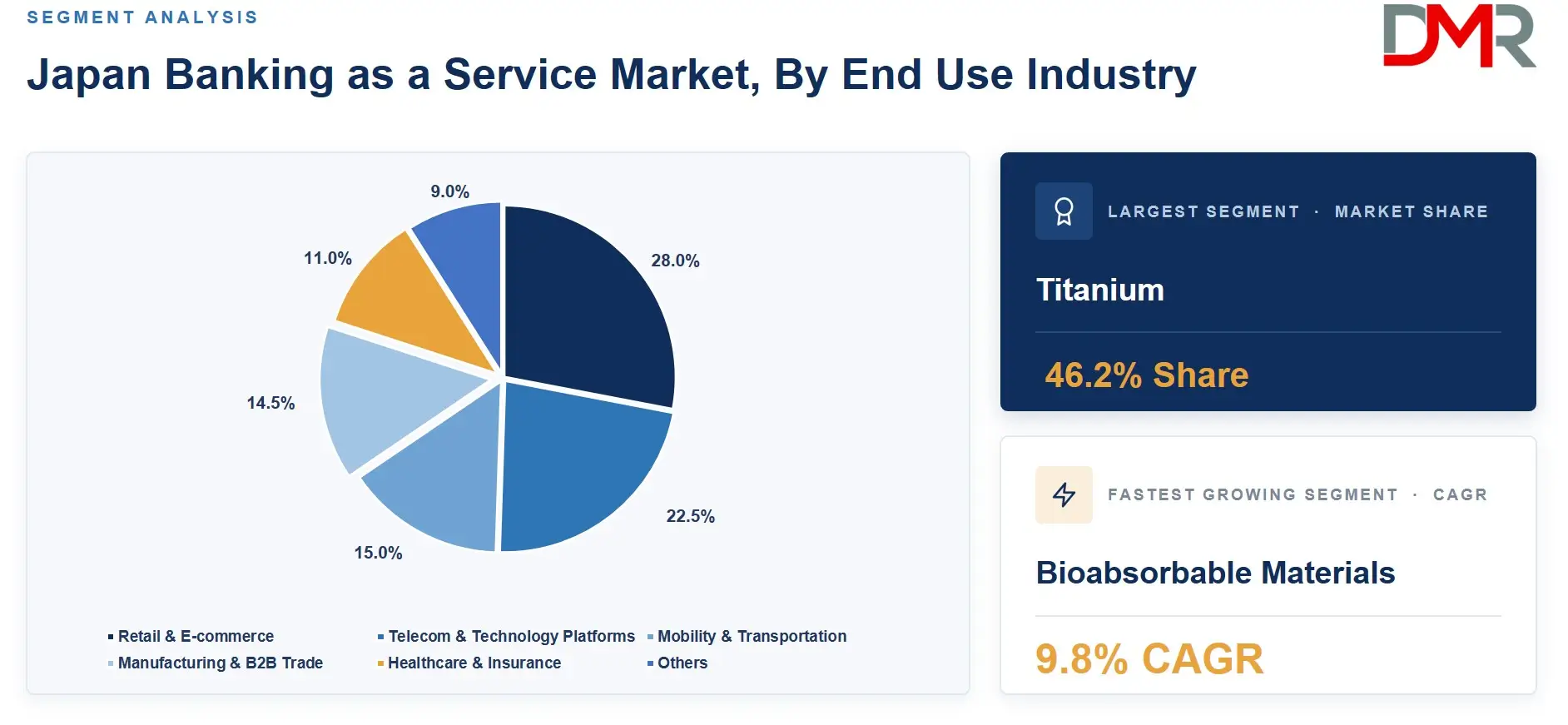
Segment performance is assessed across five axes: component, deployment, touchpoint, organisation size and end use industry. Each axis identifies where 2026 revenue concentrates and which sub-segment expands fastest through 2035, with the commercial reason behind both positions.
ℹ
To learn more about this report –
Download Your Free Sample Report Here
By Component
Software platforms are projected to hold the largest component share in 2026, accounting for just over 41% of revenue, since licence and subscription spending anchors every deployment regardless of how much configuration surrounds it. Renewal rates are high once a buyer has integrated telephony, CRM and recording, which keeps the installed base contributing predictably. The steeper trajectory sits with managed services, growing at a CAGR of 17.9% between 2026 and 2035. Buyers short of internal operators are handing running responsibility to providers rather than staffing it, and providers accept that work on attractive terms because their own automation compresses delivery cost. Support and maintenance grows slowly as subscriptions absorb previously separate contracts.
By Deployment
Cloud deployment is expected to represent close to 46% of 2026 spending, the largest single mode, reflecting a decade of migration among retail, consumer services and technology buyers with no recording-residency constraint. Domestic cloud regions removed the latency and sovereignty objections that slowed adoption. Growth, however, is concentrated in hybrid architectures, advancing at a CAGR of 17.2% through 2035, as regulated buyers find a configuration their compliance functions will approve. Keeping voice recordings and identifiable records on domestic or private infrastructure while running orchestration and inference in a managed environment lets banks, insurers and public bodies adopt current capability without relocating the data that constrains them.
By Touchpoint
Contact centre voice is projected to remain the largest touchpoint in 2026 at approximately 31% of spending, a higher weighting than most developed markets carry, because Japanese consumers in financial services, utilities and healthcare still default to telephone contact for anything consequential. Recording and analytics costs attach disproportionately to that channel. Growth is fastest in messaging and chat, expanding at a CAGR of 19.6% between 2026 and 2035, driven less by web widgets than by business messaging through platforms consumers already use daily. Brands operating official messaging accounts reach customers without asking them to install anything, at a per-interaction cost well below a staffed call.
By Organization Size
Large enterprises are set to account for nearly 68% of 2026 spending, a concentration heavier than most enterprise software categories exhibit, because the buyers with genuine omnichannel complexity, regulatory recording duties and multi-thousand-seat contact operations sit almost entirely in that tier. Procurement here also favours established vendors and long evaluation cycles. The faster expansion sits with medium enterprises at a CAGR of 16.9% through 2035, opened up by packaged Japanese-language configurations sold through distribution partners rather than direct sales teams. When implementation cost falls from a bespoke programme to a defined package, the addressable base widens considerably.
By End Use Industry
BFSI is expected to hold the leading end use position in 2026 with a share of roughly 22%, sustained by supervisory obligations that make interaction capture non-optional and by customer bases large enough to justify dedicated analytics teams. Retail and e-commerce follows, and telecommunications carries heavy churn-driven spending. The sharpest growth belongs to travel and hospitality, compounding at 18.8% between 2026 and 2035 as visitor volumes push operators toward multilingual, always-available service they cannot staff conventionally. Healthcare grows from a low base as clinics and hospital groups adopt appointment and follow-up tooling, constrained by procurement conservatism and record sensitivity.
The Japan Customer Experience Management Market is Segmented Based on the Following
By Component
- Software Platforms
- Professional Services
- Managed Services
- Support & Maintenance
- Others
By Deployment
- Cloud
- On-Premise
- Hybrid
- Others
By Touchpoint
- Contact Centre (Voice)
- Web & Mobile App
- Messaging & Chat
- Email
- Social Media
- In-Store & Branch
- Others
By Organization Size
- Large Enterprises
- Medium Enterprises
- Small Enterprises
- Others
By End Use Industry
- BFSI
- Retail & E-commerce
- Telecommunications
- Manufacturing & Automotive
- Travel & Hospitality
- Healthcare
- Others
Competitive Landscape
Competition splits along a line that rarely appears in other developed markets. International platform vendors hold the software layer in large enterprise accounts, usually arriving through an existing CRM or cloud relationship, while domestic integrators and outsourcers control delivery and often the operating contract underneath it. Neither side displaces the other easily, so partnership rather than rivalry defines most large deals. Concentration is moderate at the platform layer and fragmented in services, where dozens of regional integrators serve mid-market accounts. Differentiation turns on Japanese-language model quality, honorific handling and demonstrated data residency rather than feature breadth. Domestic outsourcers are building or licensing proprietary automation to protect margin as contracts reprice toward outcomes, and consolidation among mid-sized providers follows.
Some of the Prominent Players in the Japan Customer Experience Management Market Are
- Salesforce, Inc.
- Adobe Inc.
- Oracle Corporation
- SAP SE
- Microsoft Corporation
- IBM Corporation
- Amazon Web Services, Inc.
- Google Cloud
- Cisco Systems, Inc.
- Accenture plc
- Genesys Cloud Services, Inc.
- NICE Ltd.
- Verint Systems Inc.
- Qualtrics International Inc.
- Medallia, Inc.
- Sprinklr, Inc.
- Zendesk, Inc.
- Freshworks Inc.
- Five9, Inc.
- Talkdesk, Inc.
- InMoment, Inc.
- Braze, Inc.
- Twilio Inc.
- ServiceNow, Inc.
- SAS Institute Inc.
- NTT DATA Group Corporation
- Fujitsu Limited
- NEC Corporation
- Hitachi, Ltd.
- Nomura Research Institute, Ltd.
- TIS Inc.
- SCSK Corporation
- transcosmos inc.
- Bell System24 Holdings, Inc.
- Altius Link, Inc.
- PKSHA Technology Inc.
- PLUS ALPHA Consulting Co., Ltd.
- Advanced Media, Inc.
- Repro Inc.
- LY Corporation
- Other Key Players
Recent Developments
- In July 2026, transcosmos upgraded its trans-DX for Support platform into trans-DX Plus for Support, adding autonomous agents built with vottia and targeting deployment at 200 client companies within the fiscal year, which positions a domestic outsourcer to sell automation rather than resell it.
- In January 2026, KDDI brought its Osaka Sakai facility into operation on a converted display plant fitted with NVIDIA GB200 NVL72 systems, adding domestic accelerated capacity that regulated buyers can use for Japanese-language inference without moving data offshore.
- In October 2025, Zendesk made its contact centre product generally available in Japan alongside additional AI features, extending a support-focused vendor into voice handling in a market where telephone contact still carries a disproportionate share of volume.
- In May 2025, NEC launched Communication Agent, a language-model voicebot and chatbot for contact centres that integrates with existing CRM and telephony estates, following the speech analysis platform it had introduced the previous year.
- In March 2025, Bell System24 Holdings was among the Japanese operators showcased running AI agents in live call centre operations at a vendor event in Tokyo, signalling that domestic outsourcers had moved automation beyond pilot stage.
| Report Characteristics |
| Market Size (2026) |
USD 1.9 Bn |
| Forecast Value (2035) |
USD 6.1 Bn |
| CAGR (2026-2035) |
13.8% |
| Historical Data |
2021 - 2025 |
| Forecast Data |
2026 - 2035 |
| Base Year |
2025 |
| Segments Covered |
By Component, By Deployment, By Touchpoint, By Organization Size, and By End Use Industry |
| Regional Coverage |
Japan |