What is the Japan Digital Pathology Market Size?
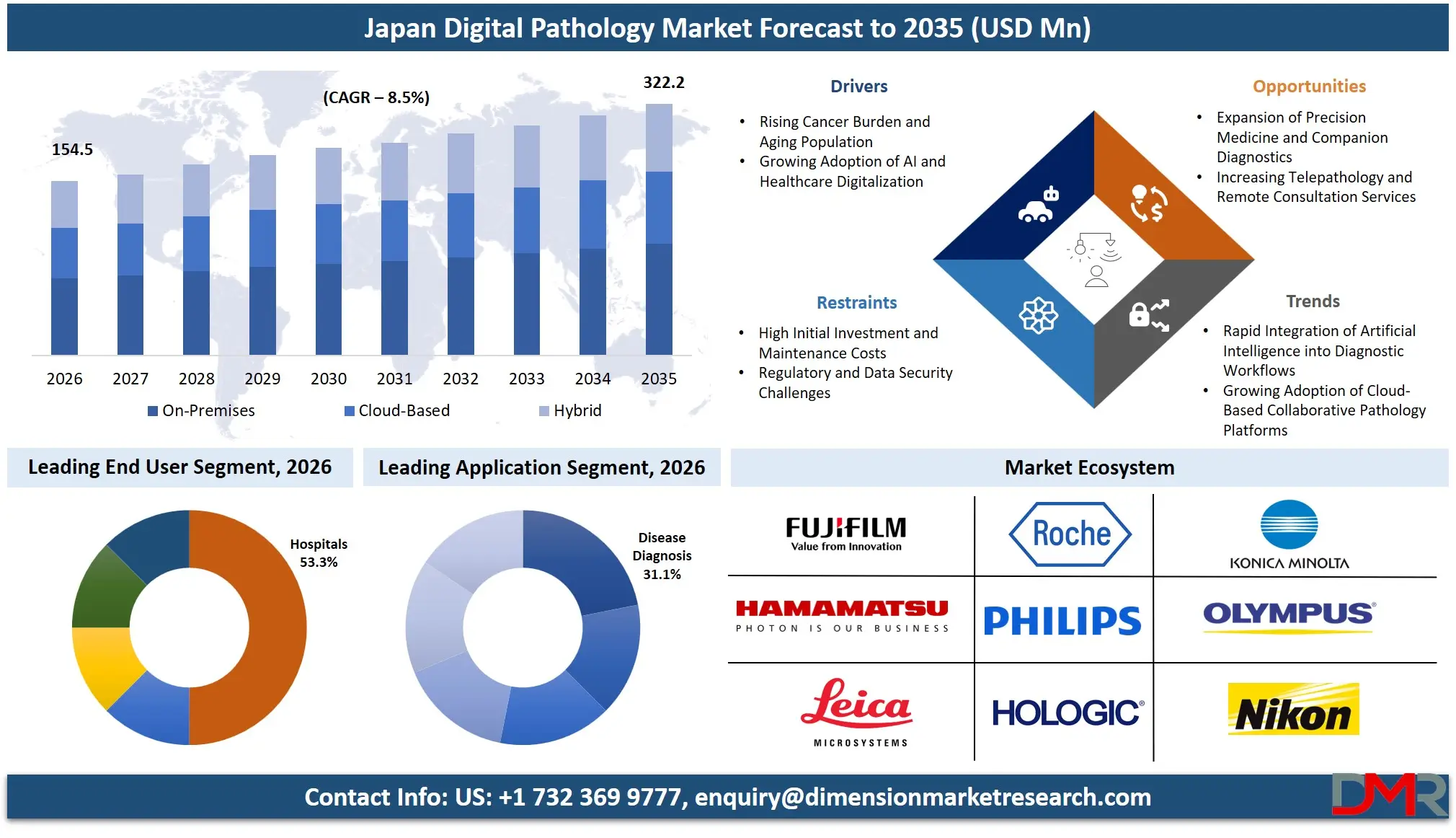
The Japan Digital Pathology Market is expected to reach a value of USD 154.5 million in 2026, and it is further anticipated to reach USD 322.2 million by 2035, growing at a CAGR of 8.5% during the forecast period.
ℹ
To learn more about this report –
Download Your Free Sample Report Here
The digital pathology market in Japan is experiencing robust growth, driven by the nation's strategic focus on healthcare innovation and addressing the challenges of a super-aging society. This market encompasses high-throughput whole slide imaging (WSI) scanners, AI-powered image analysis software, and integrated laboratory information systems (LIS) that are transforming traditional histopathology workflows. The escalating demand for faster, more accurate diagnostic tools to manage the rising cancer burden and chronic diseases is a primary catalyst. Academic research institutions, large hospital networks, and pharmaceutical companies are the major drivers, leveraging digital pathology for drug development, precision medicine, and remote consultations. Cloud-based telepathology and AI-based diagnostic algorithms are emerging as dominant technological forces, offering unprecedented efficiency and diagnostic precision.
Key Takeaways
- Market Size & Forecast: The Japan digital pathology market is forecasted to attain a value of USD 154.5 million by 2026 and expand significantly to USD 322.2 million by 2035, fueled by nationwide initiatives to digitalize healthcare infrastructure and a critical shortage of pathologists.
- Growth Rate & Outlook: The market is projected to register a CAGR of 8.5%, attributed to critical factors such as the integration of artificial intelligence (AI) for primary diagnosis, a surge in cancer screening programs, and the decentralization of pathology services through telepathology.
- Primary Growth Drivers: Key growth drivers include government-led digital health transformation policies, the urgent need to boost workflow efficiency and diagnostic turnaround times amidst an aging population, and substantial investments by pharmaceutical companies in AI-driven tissue biomarker analysis for drug development.
- Key Market Trends: Prominent market trends include the shift toward cloud-based digital pathology platforms for scalable storage and global collaboration, the adoption of AI-based software for quantitative image analysis and predictive prognosis, and the increasing use of telepathology for intraoperative frozen section consultations in remote hospitals.
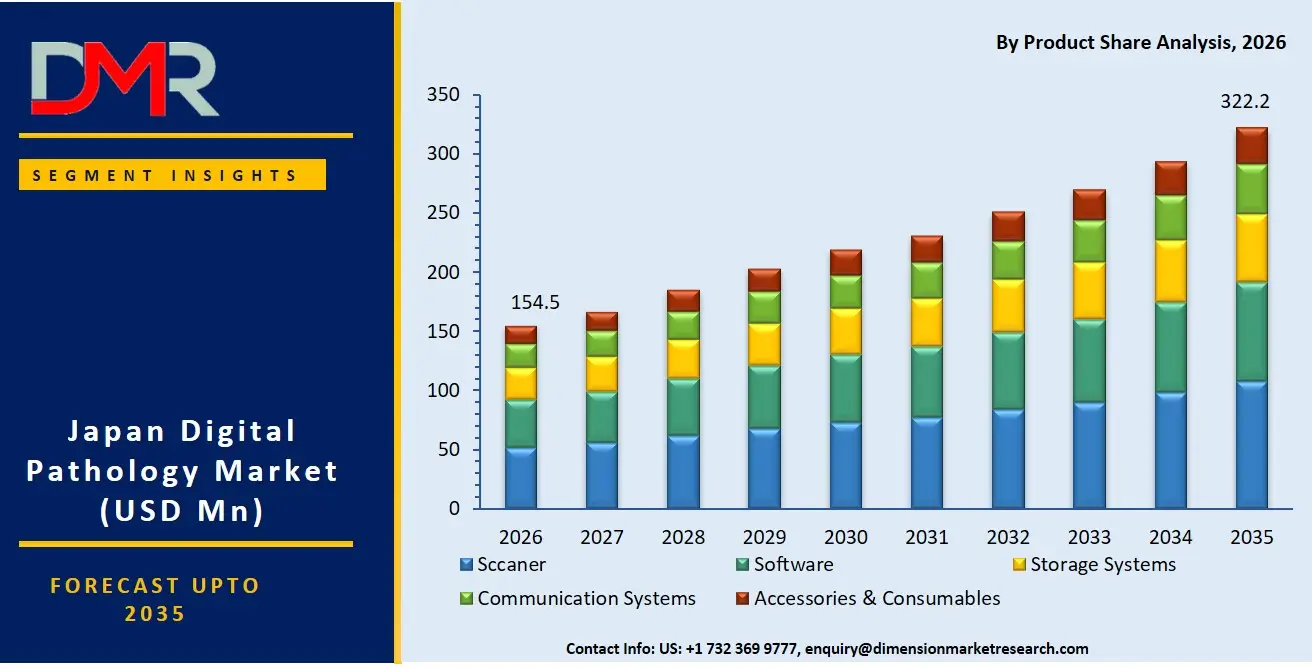
- By Product Segment Analysis: Scanners is poised to dominate the Japan digital pathology market because they are the primary hardware enabling whole slide imaging, digital slide creation, high-resolution image capture, remote consultation, AI-based analysis, and efficient pathology workflow digitization across hospitals, laboratories, and research institutions.
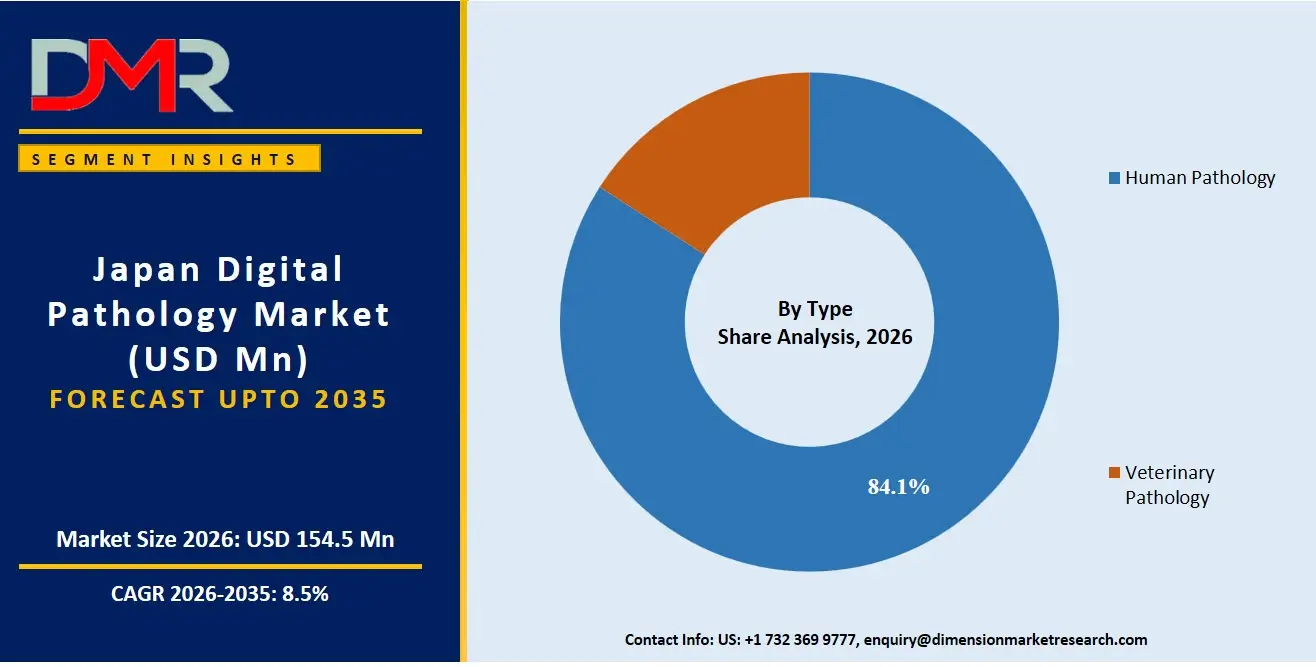
- By Type Segment Analysis: Human pathology is expected to lead the Japan digital pathology market owing to rising cancer incidence, increasing chronic disease diagnosis, an aging population, expanding precision medicine initiatives, higher biopsy volumes, and widespread adoption of digital diagnostic technologies in hospitals and clinical laboratories.
What is the Digital Pathology?
Digital pathology is the practice of converting glass slides into high-resolution digital images using whole slide image (WSI) scanners, which can then be viewed, managed, analyzed, and shared on a computer network. It represents a paradigm shift from physical microscopy to a computationally enabled workflow. This transformation occurs through four key components: acquisition (scanning), management (software and storage), analysis (image analysis and AI algorithms), and communication (telepathology). In Japan, where the regulatory framework for Software as a Medical Device (SaMD) is evolving, digital pathology systems are gaining conditional approval for primary diagnosis, necessitating rigorous post-market surveillance to validate their clinical safety and efficacy.
Use Cases
- Remote Intraoperative Consultation: Specialized hospitals utilize telepathology systems to provide real-time, remote intraoperative frozen section diagnoses to surgeons in regional hospitals lacking on-site pathologists, eliminating geographical barriers and reducing unnecessary patient transfers.
- AI-Assisted Cancer Screening: Diagnostic laboratories deploy AI-based pathology software as a secondary reader to triage and pre-screen cervical cytology and prostate biopsy slides, flagging suspicious areas of interest to ensure no malignant cells are missed by pathologists.
- Quantitative Biomarker Analysis for Precision Medicine: Pharmaceutical companies and clinical research organizations (CROs) use AI-driven image analysis software to precisely quantify complex immunohistochemistry (IHC) and multiplex immunofluorescence biomarkers like PD-L1 and HER2 from tissue samples.
- Centralized Archiving and Education: Academic medical centers employ high-throughput WSI scanners and cloud-based storage systems to digitize extensive glass slide libraries, creating searchable archives for multi-institutional research, competency assessment, and virtual medical education.
How AI is Transforming the Digital Pathology Market?
The impact of AI on the Japanese digital pathology market is revolutionary, moving the field from qualitative observation to quantitative and predictive discipline. AI-driven tools are capable of analyzing vast amounts of complex image data to identify patterns imperceptible to the human eye. In clinical practice, these algorithms assist pathologists in automating tedious and repetitive tasks, such as counting mitotic figures in tumor grading, thereby reducing diagnostic drift and fatigue. Furthermore, AI-based software is being developed to predict genetic mutations and patient prognosis directly from routine H&E-stained tissue images, offering an efficient alternative to costly molecular testing and accelerating the timeline for precision medicine. By enabling seamless LIS integration and workflow automation, AI is optimizing the pre-analytical and post-analytical phases of the pathology pipeline, ensuring the right information is presented to the right pathologist at the right time.
Market Dynamics
Key Drivers in the Japan Digital Pathology Market
Rising Cancer Burden and Aging Population
Japan's rapidly aging population and increasing prevalence of cancer are major drivers of the digital pathology market. As one of the countries with the world's highest proportion of elderly citizens, Japan experiences growing demand for histopathology examinations, particularly for oncology diagnosis. Digital pathology enables faster slide interpretation, efficient case sharing, and improved diagnostic accuracy, helping healthcare providers manage increasing workloads. The technology also supports multidisciplinary cancer care by allowing pathologists to collaborate remotely with specialists. Rising biopsy volumes, coupled with the need for early disease detection and precision diagnostics, continue encouraging hospitals and diagnostic laboratories to invest in advanced digital pathology platforms nationwide.
Growing Adoption of AI and Healthcare Digitalization
Japan's healthcare sector is increasingly embracing artificial intelligence and digital transformation to improve operational efficiency and patient outcomes. AI-powered digital pathology software assists pathologists by automating image analysis, detecting abnormalities, and improving diagnostic consistency while reducing reporting time. Government initiatives promoting digital healthcare infrastructure, combined with investments from hospitals and academic institutions, are accelerating adoption. Integration with laboratory information systems and cloud-enabled workflows further enhances efficiency across pathology departments. Continuous technological innovation by domestic and international companies, together with increasing acceptance of AI-assisted diagnostics, is strengthening the demand for digital pathology solutions across Japan's healthcare ecosystem.
Restraints in the Japan Digital Pathology Market
High Initial Investment and Maintenance Costs
The adoption of digital pathology systems requires substantial capital investment in whole slide scanners, high-capacity storage infrastructure, advanced software platforms, and network upgrades. Japanese hospitals must also allocate budgets for installation, maintenance, cybersecurity, and staff training. Smaller hospitals, regional healthcare centers, and independent pathology laboratories often face financial constraints that delay modernization initiatives. Additionally, periodic software upgrades and equipment servicing increase long-term ownership costs. Although digital pathology offers operational efficiencies over time, the significant upfront expenditure remains a key barrier limiting widespread implementation, particularly among healthcare facilities with constrained capital budgets.
Regulatory and Data Security Challenges
Japan maintains stringent healthcare regulations regarding patient privacy, medical data protection, and clinical software validation. Digital pathology systems must comply with strict standards governing image storage, electronic medical records, and cybersecurity before widespread clinical implementation. Hospitals remain cautious about adopting cloud-based solutions because of concerns surrounding sensitive patient information, data breaches, and compliance with national healthcare regulations. Furthermore, validating AI-based diagnostic tools for routine clinical use requires extensive clinical evidence and regulatory approval. These compliance requirements can prolong deployment timelines and increase implementation complexity, slowing broader adoption across healthcare institutions.
Growth Opportunities in the Japan Digital Pathology Market
Expansion of Precision Medicine and Companion Diagnostics
Japan's growing focus on precision medicine creates significant opportunities for digital pathology adoption. Personalized treatment strategies require detailed tissue analysis and biomarker identification, making digital pathology an essential component of modern diagnostics. AI-assisted image analysis improves biomarker quantification and supports accurate patient stratification for targeted therapies. Pharmaceutical companies increasingly collaborate with hospitals and research institutions to accelerate companion diagnostic development and clinical trials. As oncology precision medicine expands across Japan, demand for advanced digital pathology platforms capable of integrating molecular pathology, genomic data, and AI-driven decision support is expected to grow substantially.
Increasing Telepathology and Remote Consultation Services
The expansion of telepathology presents considerable growth opportunities in Japan, particularly in regions experiencing shortages of experienced pathologists. Digital pathology enables high-resolution slide sharing between hospitals, academic centers, and specialized pathology laboratories, reducing diagnostic turnaround times while improving access to expert opinions. Remote consultations also enhance multidisciplinary cancer care and facilitate second-opinion services without requiring physical slide transportation. Continued improvements in cloud infrastructure, secure digital networks, and high-speed internet connectivity further support nationwide telepathology adoption. These developments are expected to improve healthcare accessibility while creating sustained demand for digital pathology technologies.
Trends in the Japan Digital Pathology Market
Rapid Integration of Artificial Intelligence into Diagnostic Workflows
Artificial intelligence is becoming an integral component of Japan's digital pathology market. Healthcare providers increasingly deploy AI-powered software to assist with tissue segmentation, cancer detection, cell counting, grading, and biomarker analysis. Rather than replacing pathologists, AI enhances diagnostic efficiency, minimizes observer variability, and supports more consistent clinical decisions. Technology developers continue introducing machine learning algorithms capable of analyzing increasingly complex pathology images with higher accuracy. As regulatory approvals expand and clinical validation strengthens, AI integration is expected to become a standard feature across pathology laboratories throughout Japan, significantly transforming diagnostic workflows.
Growing Adoption of Cloud-Based Collaborative Pathology Platforms
Japanese healthcare institutions are increasingly adopting cloud-enabled digital pathology platforms to improve collaboration, education, and research activities. Cloud technologies allow secure storage, rapid retrieval, and remote sharing of high-resolution pathology images among hospitals, universities, and research organizations. These platforms support multidisciplinary consultations, telepathology services, and AI model deployment while reducing dependence on physical slide transportation. Improvements in cybersecurity, cloud infrastructure, and healthcare data management continue increasing confidence in cloud-based pathology solutions. This ongoing shift toward collaborative digital ecosystems is becoming a defining trend shaping the future of Japan's digital pathology market.
Research Scope and Analysis
The Japan Digital Pathology Market is segmented by Product (Scanners, Software, Storage Systems, Communication Systems, Accessories & Consumables), Type (Human Pathology, Veterinary Pathology), Deployment Mode (On-Premises, Cloud-Based, Hybrid), Technology (WSI, Image Analysis, AI-Based Digital Pathology, Cloud-Based Digital Pathology, Telepathology), Application (Disease Diagnosis, Drug Discovery, Academic Research, Telepathology, Training & Education, Precision Medicine), and End User (Hospitals, Diagnostic Laboratories, Academic & Research Institutes, Pharmaceutical & Biotechnology Companies, and CROs).
ℹ
To learn more about this report –
Download Your Free Sample Report Here
By Product Analysis
Scanners is poised to dominate the Japan digital pathology market because they form the foundation of every digital pathology workflow by converting conventional glass slides into high-resolution digital images. Japanese hospitals, university medical centers, and cancer institutes continue investing in whole slide imaging (WSI) scanners to support faster diagnostics, telepathology, AI-assisted image analysis, and digital archiving.
ℹ
To learn more about this report –
Download Your Free Sample Report Here
The country's emphasis on precision diagnostics, aging demographics, and pathology workforce efficiency further accelerates scanner adoption. Continuous technological advancements, including higher scanning speeds, improved image quality, automated slide handling, and compatibility with laboratory information systems, have strengthened demand, making scanners the largest revenue-generating product category in Japan's digital pathology ecosystem.
By Type Analysis
Human pathology is expected to dominate the Japan digital pathology market due to the country's high burden of chronic diseases, cancer, cardiovascular disorders, and an aging population requiring frequent histopathological examinations. Japan has one of the world's most advanced healthcare systems, with hospitals increasingly digitizing pathology departments to improve diagnostic accuracy, workflow efficiency, and specialist collaboration. Government initiatives supporting digital healthcare and precision medicine further encourage adoption of digital pathology solutions for human diagnostics. In contrast, veterinary pathology remains comparatively limited in scale. Consequently, extensive clinical applications, higher testing volumes, and greater investment in hospital pathology infrastructure make human pathology the dominant market segment.
By Deployment Mode Analysis
On-premises deployment is projected to dominate the Japan digital pathology market because healthcare institutions prioritize data security, patient privacy, and strict compliance with healthcare regulations. Large hospitals, academic medical centers, and diagnostic laboratories prefer maintaining digital pathology infrastructure within their own facilities to ensure greater control over sensitive clinical data, image storage, and system performance. Existing investments in hospital IT infrastructure and laboratory information systems also favor on-premises implementation. Although cloud adoption is steadily increasing with advances in cybersecurity, concerns regarding data governance and regulatory compliance continue to support the widespread preference for on-premises deployments across Japan's healthcare sector.
By Technology Analysis
Whole Slide Imaging (WSI) is poised to be the dominant technology in Japan's digital pathology market because it serves as the essential platform enabling complete digitization of pathology workflows. WSI allows entire microscope slides to be scanned into high-resolution digital images that can be reviewed, archived, shared, and analyzed remotely. Japanese hospitals and research institutions increasingly rely on WSI to improve diagnostic efficiency, facilitate telepathology consultations, support artificial intelligence applications, and enhance educational programs. As AI-based pathology software and image analysis solutions require high-quality digital slide images, widespread WSI adoption continues to drive its leadership over other digital pathology technologies.
By Application Analysis
Disease diagnosis is projected to dominate the Japan digital pathology market because diagnostic pathology remains the primary clinical application for digital imaging systems. Hospitals and diagnostic laboratories perform millions of tissue examinations annually for cancer detection, infectious diseases, inflammatory disorders, and other chronic illnesses. Digital pathology enables faster reporting, improved collaboration among pathologists, higher diagnostic accuracy, and streamlined laboratory workflows. Japan's growing elderly population and increasing incidence of oncology cases further strengthen demand for efficient diagnostic technologies. Since accurate pathology diagnosis directly influences treatment decisions and patient outcomes, disease diagnosis continues to represent the largest and most valuable application segment.
By End User Analysis
Hospitals is expected to dominate the Japan digital pathology market because they perform the highest volume of pathology examinations while serving as the primary centers for cancer diagnosis, surgery, and specialized medical care. Large public hospitals, university hospitals, and advanced healthcare institutions have greater financial resources to invest in digital pathology scanners, AI software, laboratory integration, and image management systems. These facilities also benefit from multidisciplinary collaboration, remote consultations, and precision medicine initiatives supported by digital pathology. Continuous modernization of hospital diagnostic infrastructure, combined with increasing patient volumes and government support for healthcare digitalization, firmly establishes hospitals as the leading end-user segment.
The Japan Digital Pathology Market Report is segmented on the basis of the following:
By Product
- Scanners
- Whole Slide Image (WSI) Scanners
- High-Throughput Scanners
- Mid-/Low-Throughput Scanners
- Software
- Image Management Software
- Image Analysis Software
- AI-Based Pathology Software
- Laboratory Information System (LIS) Integration Software
- Storage Systems
- Communication Systems
- Accessories & Consumables
By Type
- Human Pathology
- Veterinary Pathology
By Deployment Mode
- On-Premises
- Cloud-Based
- Hybrid
By Technology
- Whole Slide Imaging (WSI)
- Image Analysis
- Artificial Intelligence (AI)-Based Digital Pathology
- Cloud-Based Digital Pathology
- Telepathology
By Application
- Disease Diagnosis
- Drug Discovery & Development
- Academic Research
- Telepathology
- Training & Education
- Precision Medicine
By End User
- Hospitals
- Diagnostic Laboratories
- Academic & Research Institutes
- Pharmaceutical & Biotechnology Companies
- Contract Research Organizations (CROs)
Competitive Landscape
The competitive landscape of the Japan digital pathology market is intensely dynamic, characterized by strategic collaborations among global imaging corporations, specialized AI software developers, and domestic Japanese camera and optics giants. Success hinges on forging alliances with top-tier academic pathology departments and major hospital chains to clinically validate algorithms in a local context, a crucial prerequisite for PMDA acceptance and market adoption. The race to build proprietary, high-quality annotated pathology datasets for training robust and generalizable AI models is a primary competitive differentiator. The market is witnessing a consolidation trend where large diagnostics and life science companies are actively acquiring innovative AI-pathology startups to integrate their capabilities into a unified, end-to-end digital diagnostic solution, moving from a component-based offering to a comprehensive platform play.
Some of the prominent players in the Japan Digital Pathology Market are:
- Fujifilm Holdings Corporation
- Olympus Corporation
- Hamamatsu Photonics K.K.
- Nikon Corporation
- Konica Minolta, Inc.
- Leica Microsystems Japan
- Roche Diagnostics Japan
- Philips Japan, Ltd.
- Hologic Japan, Inc.
- Epredia Japan
- Carl Zeiss Japan Co., Ltd.
- 3DHISTECH Ltd.
- Visiopharm A/S
- Indica Labs, Inc.
- Paige AI, Inc.
- Proscia Inc.
- Sectra AB
- Agilent Technologies Japan, Ltd.
- Sakura Finetek Japan Co., Ltd.
- Bionovation Co., Ltd.
- Other Key Players
Recent Developments
- March 2026: PHC Corporation, in collaboration with Epredia, received PMDA approval for the E1000 Dx Digital Pathology Solution, a Class II diagnostic assistant device for pathological whole-slide imaging. The solution can digitize up to 1,000 tissue samples per run and entered commercial sales in Japan from April 2026, strengthening the country's digital pathology infrastructure.
- March 2026: Sakura Finetek and Hamamatsu Photonics K.K. announced a global strategic alliance to integrate advanced tissue preparation with digital imaging technologies. The collaboration aims to improve digital pathology workflow efficiency, image quality, and diagnostic consistency for pathology laboratories worldwide, including Japan.
- February 2026: Sectra began implementing its first digital pathology project in Japan at Kameda Medical Center through its local partner Matsunami Glass. The deployment enables fully digital pathology workflows with integrated AI capabilities, enhancing cancer diagnosis, remote collaboration, and pathology efficiency.
Report Details
| Report Characteristics |
| Market Size (2026) |
USD 154.5 Mn |
| Forecast Value (2035) |
USD 322.2 Mn |
| CAGR (2026–2035) |
8.5% |
| Historical Data |
2021 – 2025 |
| Forecast Data |
2027 – 2035 |
| Base Year |
2025 |
| Estimate Year |
2026 |
| Segments Covered |
By Product, By Type, By Deployment Mode, By Technology, By Application, By End User |
| Country Coverage |
Japan |
Frequently Asked Questions
How big is the Japan Digital Pathology Market?
▾ The Japan Digital Pathology market is poised to be valued at USD 154.5 million in 2026 and is projected to reach USD 322.2 million by 2035, driven by the urgent need to enhance diagnostic productivity and accuracy in the face of a severe national pathologist shortage.
What is the CAGR of the Japan Digital Pathology Market from 2026 to 2035?
▾ The market is expected to grow at a CAGR of 8.5% from 2026 to 2035, reflecting the accelerating shift from glass-based microscopy to AI-augmented, computational workflows across clinical and drug development settings.
What factors are driving the growth of the Japan Digital Pathology Market?
▾ Key drivers include a critical shortage of pathologists, proactive government-led healthcare digitalization policies, and the pharmaceutical industry's escalating demand for quantitative tissue-based biomarkers to accelerate precision medicine drug trials.
What are the major trends in the Japan Digital Pathology Market?
▾ Major trends include the transition from mere slide digitization to AI-driven computational pathology for prognostic prediction, the consolidation of enterprise-wide cloud-based platforms, and the convergence of digital pathology with spatial biology for holistic tissue analysis.
Who are the key players in the Japan Digital Pathology Market?
▾ Key players include F. Hoffmann-La Roche, Leica Biosystems, Philips, Nikon, Olympus, Hamamatsu Photonics, PathAI, and Paige AI, driving innovation through advanced scanners, AI-based software, and strategic partnerships for clinical validation.
How is the Japan Digital Pathology Market segmented?
▾ The market is segmented by Product, Type, Deployment Mode, Technology, Application, and End User.