Market Overview
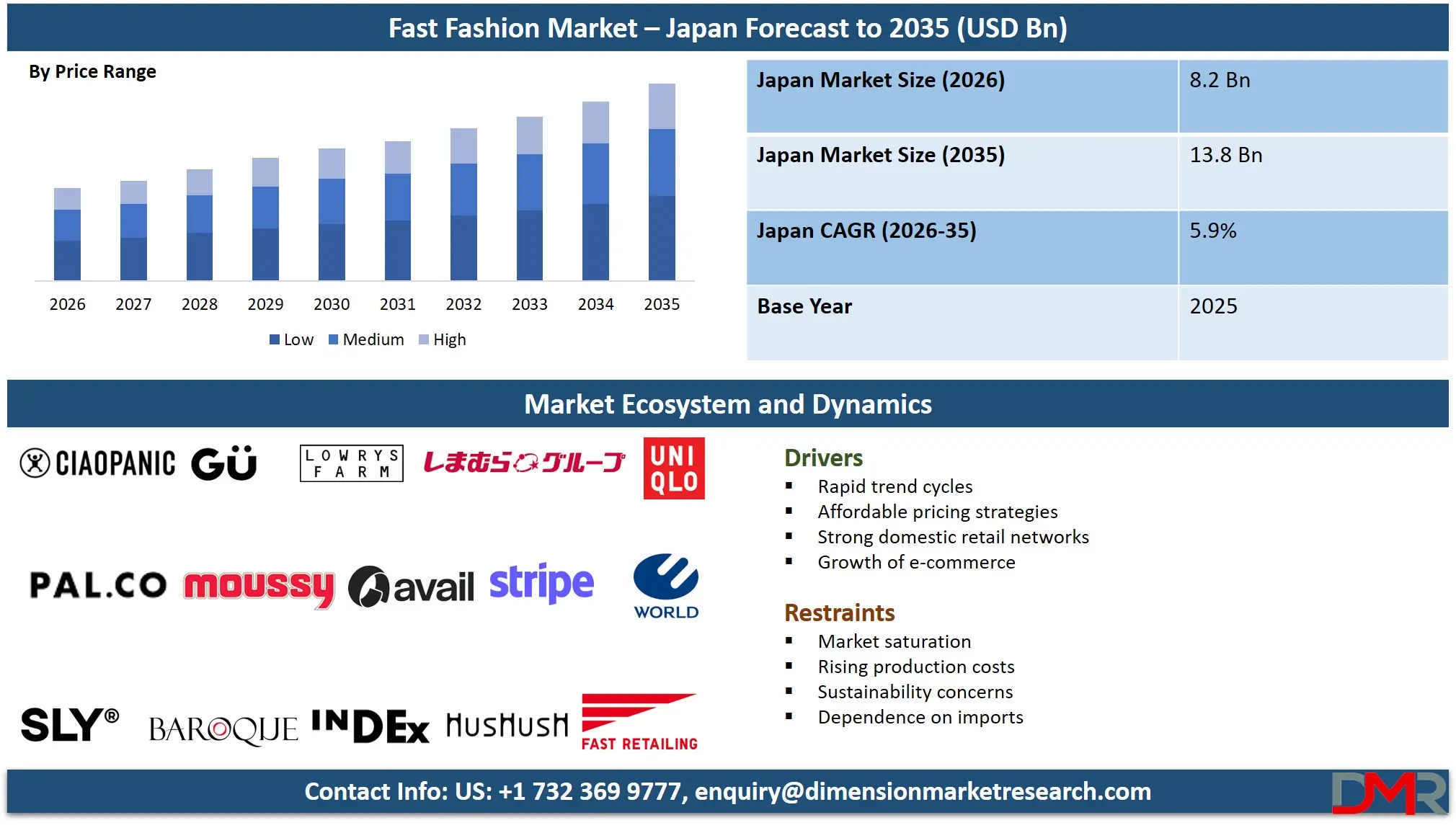
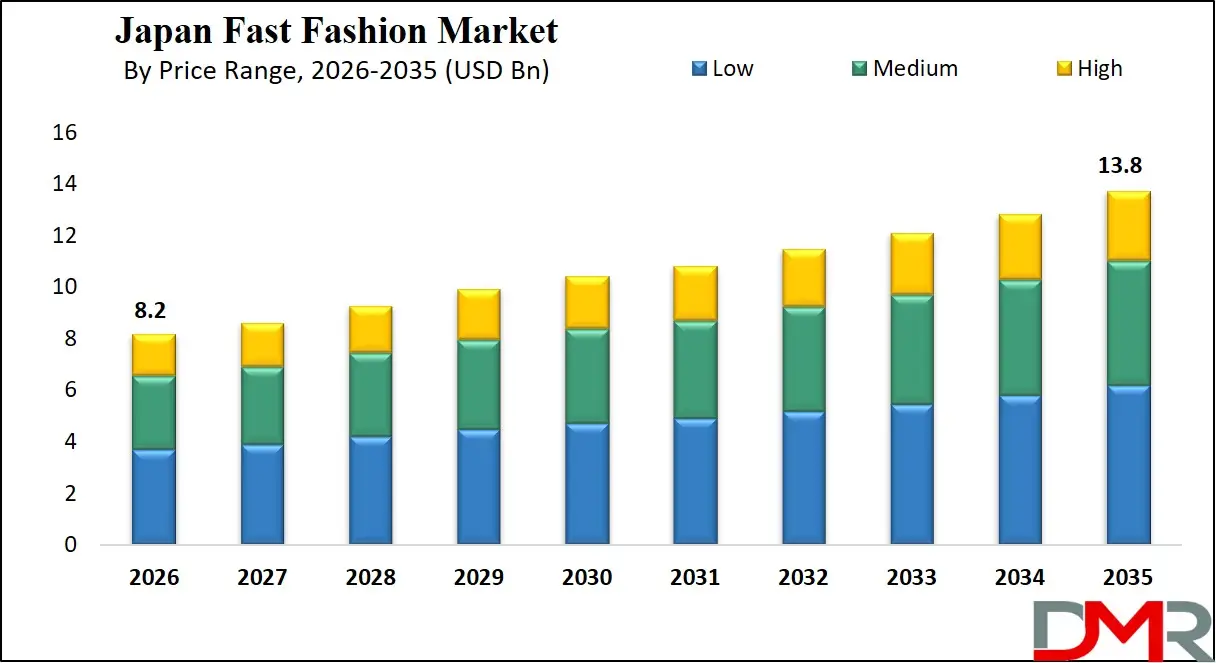
The Japan fast fashion market size is expected to reach USD 8.2 billion in 2026, and it is further anticipated to reach a market value of USD 13.8 billion by 2035 at a CAGR of 5.9%.
ℹ
To learn more about this report –
Download Your Free Sample Report Here
The Japan fast fashion market is one of the most sophisticated and quality-driven apparel markets globally. Being in contrast to the absolutely price-oriented market, Japanese buyers consider affordability, quality, minimalism, and functionality as the mixture. The market is driven by the impact of the streetwear culture, the seasonal fashion trends, and technological integration. Large metropolitan regions like Tokyo, Osaka, and Yokohama are major fashion centres, which trend both the local and international markets.
Japan has the advantage of having a well organised retail ecosystem, developed logistics and domestic brands. In Japan, fast fashion is marked by accuracy in production, quality of fabric used and brand preference. The consumer journey is shifting fast to omnichannel retailing, mobile commerce, and AI-based personalization. Also, the awareness of sustainability and the need to wear durable fashion is affecting the buying habits of both demographics.
ℹ
To learn more about this report –
Download Your Free Sample Report Here
Japan Fast Fashion Market: Key Takeaways and Other Influencing Factors
- Market Growth Insights: The market is anticipated to reach USD 8.2 billion in 2026 and is projected to expand to around USD 13.8 billion by 2035, growing at a CAGR of 5.9%.
- By Product Insights: Apparel will be the most prominent category in the market, with the demand on casual wear, workwear, and seasonal collections, and accessories will be on the rise due to the popularity of minimalist fashion.
- By Price Range Insights: The low price category will be most likely to prevail, with the Japanese consumers demanding value-priced goods of high quality and durability.
- By Distribution Channel Insights: Online channels are rapidly growing, driven by mobile-first consumers, while offline retail remains strong through curated store experiences and flagship outlets.
- By End User Insights: Women are poised to dominate the market demand but the fashion segment of men and unisex is growing at a high rate owing to the changing lifestyle choices and influence of the streets.
- Ministry of Internal Affairs and Communications (MIC), Japan: In Japan, women clothes comprise approximately 60.0% of the total apparel sales in this country, as purchasing patterns are more frequent and fashion demands are varied. Men clothing adds approximately 30.0%, and children clothing adds almost 10.0%, which means that the demand segments are not that big and are comparatively stable.
- Japan Ministry of Economy, Trade and Industry (METI) / Trade Data: Over 90% of apparel sold in Japan is imported, highlighting strong dependence on global supply chains. Apparel and accessories imports reach approximately 3.8 trillion yen, with China contributing nearly 55%, making it the largest sourcing partner.
- Statistics Bureau of Japan: Urban lifestyles make household spending contribute to nearly 62.4% of total apparel demand in Japan. The growth in the monthly spending on clothing is also rising and younger consumers between the ages of 18-24 spend about ¥15,200 a month on fashion purchases.
Impact of Iran Conflict on Japan Fast Fashion Market
The level of geopolitical tension in the world remains a key factor in determining the future of the Japan fast fashion market. Interruptions in the major maritime trade paths especially in Asia and Middle East and instability in world energy costs have greatly enhanced operational uncertainties among fashion retailers. The increase in fuel prices has directly affected the cost of logistics and transportation, and companies have to rethink the approach to pricing and profit margins. Japan depends on raw materials like cotton, synthetic fibers, and finished garments produced in manufacturing centers in other parts of Asia, therefore, any slight shocks in the global supply chains can cause delays in production and shortage of inventory.
Also, inflationary pressures and currency variations have affected the consumer spending trends. The Japanese consumer who is very cautious in their spending habits are also turning to value-at-a-price buying, making them shift away to buying durable and practical clothes as opposed to fashion buying which is impulse-driven. This changing trend is forcing brands to juggle between price and quality and sustainability.
Japan Fast Fashion Market: Use Cases
- Precision Manufacturing Ecosystem: The Japanese fast fashion companies focus on precision, efficiency, and quality with small-batches and tightly controlled production lines. This is the best strategy to reduce overproduction, wastes and maintain uniform products. It also allows the brands to react more efficiently to the demand changes and still be positioned as high-quality.
- Influencer and Streetwear Collaborations: Partnerships with local influencers, designers, and streetwear champions have also emerged as an effective way of targeting younger consumers. Limited-edition drops make it feel exclusive and urgent, which pushes the sell-through rates. The success of these collaborations is further enhanced by the fact that Japan has a strong culture of street fashion.
- Resale and Circular Fashion Integration: Japan boasts of an already developed culture of reuse and recycling, and thus, it is a good market in the case of circular fashion models. Second-hand, resale, and brand-led recycling programs are on the rise. These models do not only prolong the life cycles of a product, but also appeal to environmentally conscious consumers.
Japan Fast Fashion Market: Market Dynamics
Driving Factors in Japan Fast Fashion Market
Digital Commerce Expansion
The fast growth of e-commerce and mobile shopping systems has changed the Japan fast fashion market greatly. Customers are becoming more and more demanding when it comes to smooth online experiences, such as customized recommendations, quick checkout, and effective delivery services. Rakuten and Amazon are some of the platforms that have added accessibility and convenience, allowing customers to shop through broad product lines at any time. The integration of social media and influencer-based marketing also increases the speed of product discovery and purchase. Moreover, the mobile-first approach and the app shopping experience remain the source of engagement, and digital commerce is one of the primary growth engines of fast fashion brands.
Strong Domestic Brand Dominance
The Japan fast fashion is overtaken by domestic brands, including Uniqlo and GU, who are innovative, affordable, and offer a consistent product quality. Their strong knowledge of local consumer needs enables them to provide practical and minimalistic clothes in accordance with cultural preferences. Their market position is further reinforced by strong supply chain performance, high inventory turnover, and location of stores. Also, the Japanese consumers are brand loyal because of trust in quality and value. The technology and sustainability also consume a lot of money, which puts such companies at a competitive edge over foreign fast fashion players that are trying to enter the market.
Restraints in Japan Fast Fashion Market
High Consumer Expectations
The Japanese consumers are characterized as being very demanding in terms of product quality, durability and comfort. This poses a substantial threat to the fast fashion brands which have a long tradition of utilizing mass production that is cost-effective. A high level of investment in high quality materials, production processes, and quality control systems can afford the maintenance of the low cost and fulfill these high demands. Even small flaws can affect the brand perception and customer loyalty. Consequently, firms have to strike a balance between cost effectiveness and high quality workmanship to the effect that more and more companies are more complicated to operate. This dynamic exerts pressure on both the domestic and international brands to constantly improve the quality of the products without undermining the competitive price policy.
Sustainability Regulations and ESG Pressures
The strict environmental policies and continuously growing interest in ESG compliance in Japan are presenting further operational pressures to fast fashion businesses. The sustainable practices to be embraced by the brands include waste minimization, recycling and sourcing of raw materials ethically. Adherence to these standards may need the introduction of environmentally-friendly technologies, transparency in supply chains, and eco-friendly production processes. Although such initiatives improve brand reputation, they also raise production and operational costs. In addition, buyers are increasingly becoming conscious of the environment and this is further compelling businesses to be geared towards sustainability. Such a mix of regulatory and consumer pressure may affect profit margin and restrain aggressive expansion tactics.
Opportunities in Japan Fast Fashion Market
AI-Driven Personalization
Artificial intelligence is presenting a disruptive business opportunity in the Japanese fast fashion market through improved customer engagement and business efficiency. AI-based applications predict consumer preferences, buying behavior, and past purchasing data to offer consumers a product suggestion that is as personal as possible. Such companies as Fast Retailing are using data analytics to manage their inventories in the most efficient way and to enhance their demand forecasting. This decreases overproduction and also minimizes the return rates and this has a direct effect of enhancing profitability. One-to-one shopping experiences enhance customer satisfaction and loyalty as well. The integration of AI will be a key differentiator in a highly dynamic and consumer-driven market setting as digital usage is gradually gaining momentum, and brands need to stay afloat to remain competitive.
Expansion of Circular Fashion Models
The future of sustainable fashion is positive as the demand for such fashion is growing, which prompts brands to consider the transition to a circular business model, such as resale, rental, or recycling programs. Businesses are seeking new methods of product extension and minimising environmental impact. Clothing collection and recycling programs by Uniqlo are an example of increasing industry involvement in sustainability. Circular models not only solve the environmental issues but also generate new sources of revenue and build brand loyalty. The issue of sustainability is a major competitive advantage because consumers are becoming attracted to brands that exhibit ethical responsibility. This change has long-term growth potential and is in line with the international environmental objectives.
Trends in Japan Fast Fashion Market
Functional and Minimalist Fashion
The style of functional fashion and minimalism remains a trend that characterises the taste of Japanese consumers, as the Japanese culture values simplicity and utility. The brands concentrate on minimal designs, color neutrality, and flexible clothes that may be used in various events. Muji is no exception to this trend, as it focuses on the simplicity of the design and practicality. Consumers are more concerned with comfort, durability, and classic value rather than the trends that keep on changing. It is also a sustainable consumption pattern, since a minimalist design will promote a longer lifespan of the products. This has made brands consider functionality and simplicity to be part of their offerings in order to address the changing consumer demands.
On-Demand Manufacturing
On-demand manufacturing is becoming a prominent trend in Japan fast fashion market because it seeks to minimize waste and enhance efficiency. This model presupposes the creation of garments according to the current consumer demand instead of predicting the large amounts in advance. Firms like Zozotown use information-driven insights to aid this strategy. It reduces unnecessary inventory, reduces the cost of storage and matches production with real market requirements. Moreover, on-demand manufacturing helps in the sustainability efforts by minimizing overproduction. This tendency should continue to grow in popularity as brands focus more on agility and environmental accountability.
Japan Fast Fashion Market: Research Scope and Analysis
By Product Analysis
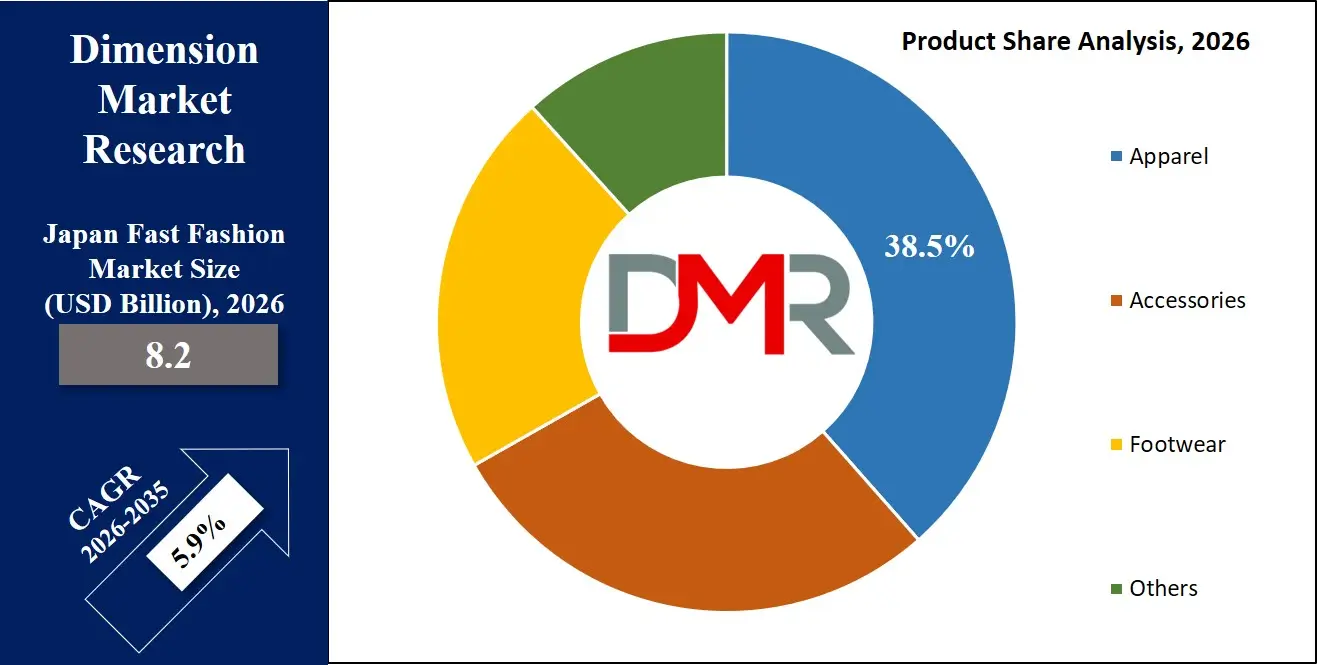
Apprael is poised to be dominate segment of the Japan fast fashion market, which includes casual wear, formal wear, and seasonal collections that are adjusted to the changing preferences of consumers. The major brands such as Uniqlo are still continuing to grow with new materials and utilitarian designs.
ℹ
To learn more about this report –
Download Your Free Sample Report Here
Bags, belts and jewellery are accessories that are sold along with clothes and help to generate incremental revenue. Footwear is also experiencing a consistent growth as a result of increased demand of comfortable but fashionable footwear. New segments, such as loungewear and athleisure, are also on the rise as customers are seeking comfort and utility, further fragmenting the general product environment.
By Price Range Analysis
The Japan fast fashion market is expected to be dominated by the low price segment with consumers driven by a desire to have a balance between quality and affordability. The presence of economic uncertainties and the reluctance of people to spend money stimulates the preference of shoppers towards value-based purchases. The GU brands are able to serve this group by providing trendy designs at competitive prices. The cost optimization strategies and efficient supply chain management allow the companies to sustain margins yet make the prices affordable. The increase of this segment is also supported by younger consumers and the middle-income segment which requires stylish but affordable products which will lead to continuous growth on the market.
By Distribution Channel Analysis
The online distribution channels is projected ti dominate the fast fashion market of Japan because of the convenience that they provide, the large variety of products, and the ease of use. Alternatives such as Rakuten and Zozotown deliver combined shopping and personalized recommendations and quick delivery options. Nevertheless, brick-and-mortar stores are still necessary to engage the brand, providing experiential experiences in flagship stores and edited environments. Physical stores enable the consumer to touch on the products and this increases consumer confidence in making the purchase.
By End User Analysis
The consumer market of the Japan fast fashion industry is poised to be dominated by women due to their frequent buying habits and a wide range of products. There are brands like Uniqlo and GU, which extensively serve women with different styles and seasons. The male market is also growing very fast due to the increased attraction towards street wear and casual style fashion. The unisex category is too becoming popular in line with the changing fashion conventions and inclusivity. In the meantime, the fashion among children is stable, as it is backed by the stable demand throughout all seasons and increased attention of parents to comfort, durability, and affordability of clothing options.
Japan Fast Fashion Market Report is segmented on the basis of the following:
By Product
- Apparel
- Accessories
- Footwear
- Others
By Price Range
By Distribution Channel
By End User
- Men
- Women
- Children
- Unisex
Impact of Artificial Intelligence in Japan Fast Fashion Market
The fast fashion sector in Japan is transforming due to the influence of Artificial Intelligence which is considerably enhancing the efficiency of operations and customer interactions. The major competitors, including Fast Retailing, are using AI to improve the accuracy of demand forecasting, which allows them to plan production more accurately and minimize surplus inventory. Real-time fashion trends also enable the brands to respond in a timely manner to changes in consumer preferences since AI-based analytics enable the brands to track these changes.
This flexibility is paramount in a market where success is determined by speed and being relevant. Also, AI can streamline the supply chain activity by predicting demand variations and enhancing the efficiency of logistics, so the products arrive at stores and customers faster at minimal costs and waste. In addition to the backend work, AI is changing the experience of customers in the digital platforms.
Japan Fast Fashion Market: Competitive Landscape
Japan fast fashion market is quite competitive in nature, which is fuelled by a combination of local market leaders and well-placed international brands. Fast Retailing is also the market leader with its main brands Uniqlo and GU that have strong brand loyalty, supply chain efficiency, and extensive knowledge about the local consumer preferences. These firms keep on innovating in terms of technology in fabrics, prices and shopping experiences thus enabling them to be at the top of the game.
ℹ
To learn more about this report –
Download Your Free Sample Report Here
The fact that they can afford to match quality with low prices makes them enjoy a big edge over their competitors who compete in a very discriminating market. The international brands like Zara and H & M have a competitive advantage through international fashion, fast design-to-shelf, and brand awareness. These firms present foreign designs to the Japanese consumers but they customize them to local preferences. In the meantime, Muji can distinguish itself by its philosophy of minimalist design and a high level of attention to sustainability, which is attractive to the environmentally conscious consumer segment.
Some of the prominent players in Japan Fast Fashion Market are:
- Fast Retailing
- Uniqlo
- GU
- Adastria
- Global Work
- Lowrys Farm
- Stripe International
- Earth Music & Ecology
- World Co., Ltd.
- HusHusH
- Index
- Shimamura Co., Ltd.
- Avail
- Baroque Japan Limited
- Moussy
- SLY
- Pal Co., Ltd.
- CIAOPANIC
- Other Key Players
Recent Developments in Japan Fast Fashion Market
- March 2026: Uniqlo expanded its AI-driven inventory management system to enhance supply chain efficiency, improve demand forecasting accuracy, and reduce stockouts across major retail locations in Japan.
- February 2026: GU launched a digital-only collection specifically targeting Gen Z consumers, focusing on affordability, rapid trend adoption, and strong social media engagement strategies.
- January 2026: Muji introduced an expanded clothing recycling initiative across Japan, reinforcing its commitment to sustainability and promoting circular fashion practices among environmentally conscious consumers.
- December 2025: Zara upgraded its omnichannel capabilities by introducing faster delivery options and improved logistics infrastructure in urban centers, enhancing customer convenience and strengthening its competitive position.
Report Details
| Report Characteristics |
| Market Size (2026) |
USD 8.2 Bn |
| Forecast Value (2035) |
USD 13.8 Bn |
| CAGR (2026–2035) |
5.9% |
| Historical Data |
2021 – 2025 |
| Forecast Data |
2027 – 2035 |
| Base Year |
2025 |
| Estimate Year |
2026 |
| Report Coverage |
Market Revenue Estimation, Market Dynamics, Competitive Landscape, Growth Factors and etc. |
| Segments Covered |
By Product (Apparel, Accessories, Footwear, and Others), By Price Range (Low, Medium, and High), By Distribution Channel (Online, Offline, and Others), By End User (Men, Women, Children, Unisex) |
| Country Coverage |
Japan |
| Prominent Players |
Fast Retailing, Uniqlo, GU, Adastria, Global Work, Lowrys Farm, Stripe International, Earth Music & Ecology, World Co., Ltd., HusHusH, Index, Shimamura Co., Ltd., Avail, Baroque Japan Limited, Moussy, SLY, Pal Co., Ltd., CIAOPANIC, and Other Key Players |
| Purchase Options |
We have three licenses to opt for: Single User License (Limited to 1 user), Multi-User License (Up to 5 Users) and Corporate Use License (Unlimited User) along with free report customization equivalent to 0 analyst working days, 3 analysts working days and 5 analysts working days respectively. |
Frequently Asked Questions
How big is Japan Fast Fashion Market?
▾ Japan Fast Fashion Market size is estimated to have a value of USD 8.2 billion in 2026 and is expected to reach USD 13.8 billion by the end of 2035.
What is the growth rate in Japan Fast Fashion Market in 2026?
▾ The market is growing at a CAGR of 5.9 percent over the forecasted period of 2026.
Who are the key players in Japan Fast Fashion Market?
▾ Some of the major key players in Japan Fast Fashion Market are Nike, Gap Inc., Levi Strauss & Co., Ralph Lauren Corporation, PVH Corp., Tapestry Inc., VF Corporation, American Eagle Outfitters, and many others.