What is the Japan Gene Editing Market Size?
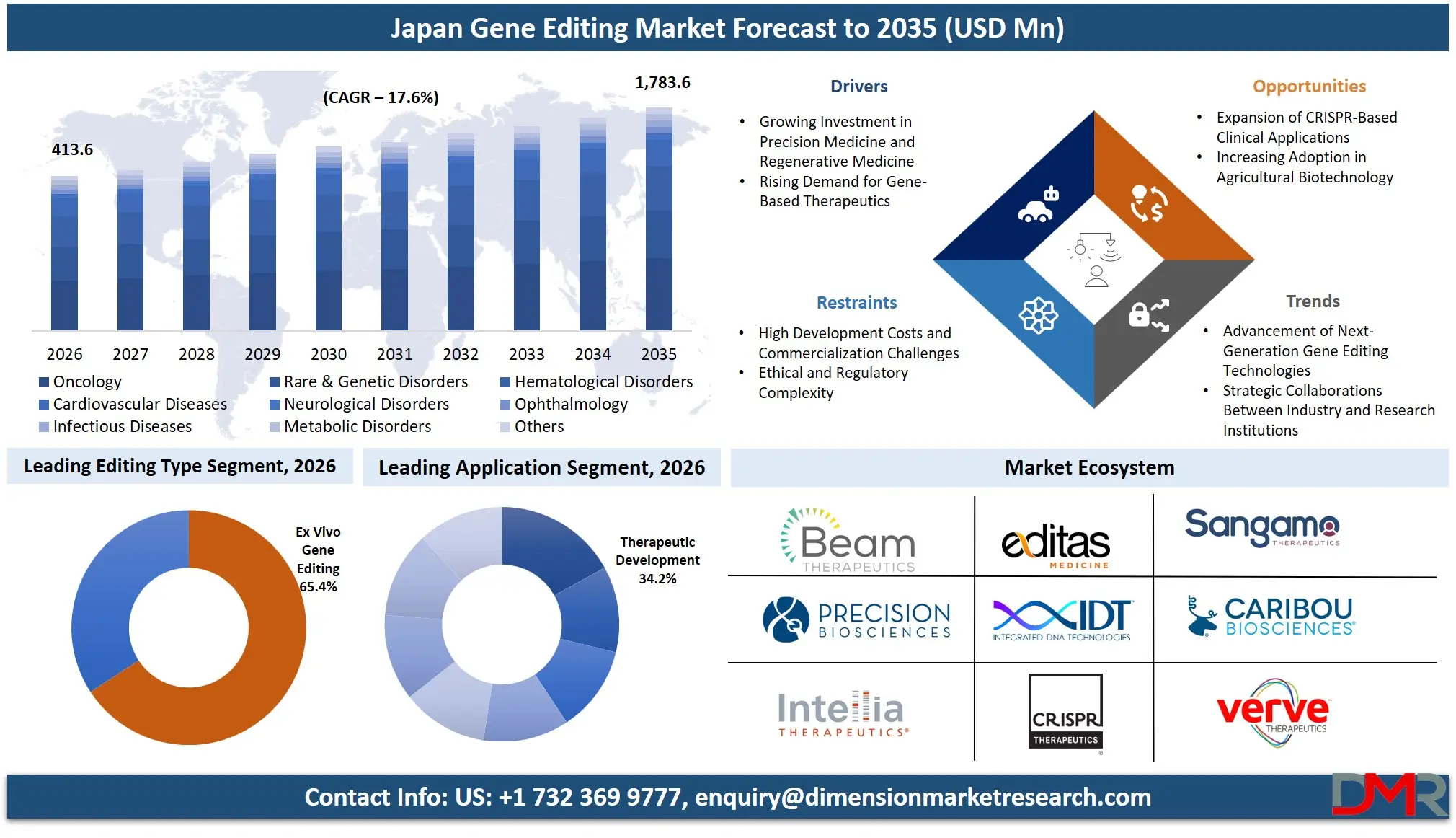
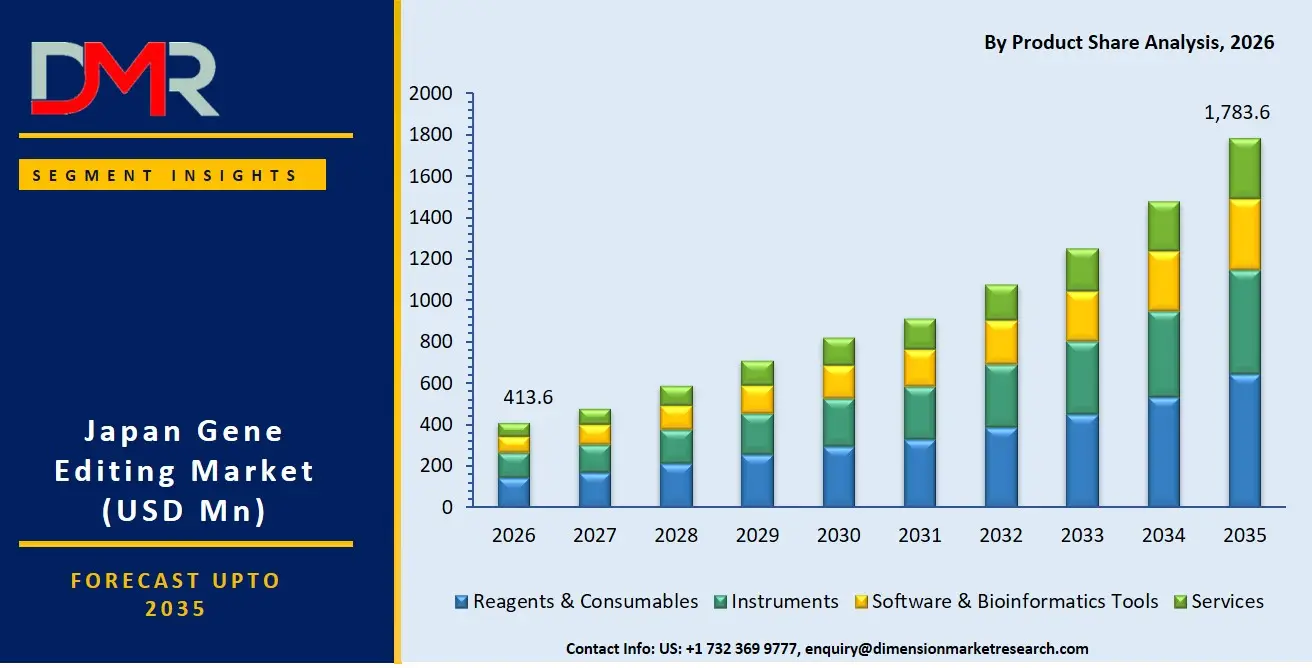
The Japan Gene Editing Market is expected to reach a value of USD 413.6 million in 2026, and it is further anticipated to reach USD 1,783.6 million by 2035, growing at a robust CAGR of 17.6% during the forecast period.
ℹ
To learn more about this report –
Download Your Free Sample Report Here
The market for genome engineering in Japan is experiencing a paradigm shift, fueled by the nation's strategic drive to pioneer regenerative medicine and advanced therapeutic platforms. This market encompasses a sophisticated toolkit of molecular scissors from CRISPR-Cas systems to base editors utilized for precise genetic modification across therapeutic, diagnostic, and agricultural applications. The escalating prevalence of oncological disorders and rare monogenic diseases within Japan's super-aging society is amplifying the demand for curative, one-time interventions. Pharmaceutical conglomerates, innovative biotechnology firms, and premier academic institutions are the primary engines of this ecosystem, with CRISPR-Cas9 and next-generation lipid nanoparticle (LNP) delivery technologies emerging as the cornerstone platforms due to their programmability and therapeutic potential.
Key Takeaways
- Market Size & Forecast: The Japan gene editing market is projected to be valued at USD 413.6 million in 2026, surging to USD 1,783.6 million by 2035, driven by an accelerated regulatory framework for cell and gene therapies and a prolific pipeline of CRISPR-based therapeutics.
- Growth Rate & Outlook: The market will register a CAGR of 17.6%, attributed to intensive R&D investment in genome surgery technologies and the urgent clinical need to address hereditary diseases prevalent in an aged demographic.
- Primary Growth Drivers: Critical drivers include Japan's conditional approval pathway for regenerative medicine products, escalating government funding to curb age-related healthcare expenditure, and a thriving industrial-academic nexus focused on high-fidelity gene-editing enzymes and non-viral delivery vectors.
- Key Market Trends: Dominant trends involve the shift toward in vivo therapeutic editing using LNPs for liver-targeted diseases, the clinical maturation of base and prime editing for single-point mutation correction, and a heightened focus on allogeneic "off-the-shelf" CAR-T and iPSC-based therapies engineered via CRISPR.
- By Technology Analysis: The market is overwhelmingly propelled by the CRISPR-Cas systems segment, particularly CRISPR-Cas9, due to its unparalleled flexibility, cost-effectiveness, and rapid experimental validation. Base editing is an emergent high-growth segment, offering precise single-nucleotide conversion without inducing double-strand breaks, which is critical for autosomal dominant disorders.
- By Delivery Method Analysis: The viral delivery segment, spearheaded by lipid nanoparticles (LNPs), is projected to dominate in vivo editing applications. This supremacy is driven by the imperative to mitigate the immunogenicity and payload constraints of viral vectors, with LNPs demonstrating superior hepatic tropism and favorable safety profiles in clinical-stage rare disease programs.
What is the Gene Editing?
Gene editing, or genome engineering, is a transformative field of molecular biotechnology that enables the precise, targeted modification of an organism's DNA. Unlike traditional gene therapy that adds a functional gene copy, gene editing functions as a "molecular scalpel," allowing for the targeted gene knockout, correction of deleterious mutations, or insertion of therapeutic transgenes at specific genomic safe harbors. This is achieved through programmable nucleases, such as CRISPR-Cas9, which are guided to a specific DNA sequence to create a double-strand break, harnessing the cell's intrinsic homology-directed repair (HDR) or non-homologous end joining (NHEJ) pathways. Within Japan's expedited regulatory pathway for regenerative medicines, gene-edited cell therapies can achieve conditional market authorization based on early-phase clinical safety and efficacy data, mandating long-term post-market surveillance.
Use Cases
- Allogeneic CAR-T Therapy for Hematological Malignancies: Pharmaceutical companies utilize CRISPR-Cas9 to simultaneously disrupt the endogenous T-cell receptor (TCR) and programmed cell death protein 1 (PD-1) in healthy donor-derived T-cells, creating universal, "off-the-shelf" CAR-T therapies that mitigate graft-versus-host disease and immune rejection in B-cell leukemia and lymphoma patients.
- Correction of Hereditary Transthyretin Amyloidosis (ATTR): Biotechnology firms deploy LNPs to systemically deliver CRISPR-Cas9 mRNA and a guide RNA to hepatocytes, enabling precise knockout of the TTR gene to permanently halt the production of misfolded transthyretin protein, addressing the root cause of this debilitating polyneuropathy.
- Engineering Hypoimmunogenic iPSCs for Regenerative Medicine: Research institutes employ multiplexed gene editing using base editors to eliminate human leukocyte antigen (HLA) expression and overexpress immune-evasion factors on induced pluripotent stem cells (iPSCs), creating universal donor cell banks for off-the-shelf cardiovascular and neurological cell replacement therapies.
- Molecular Diagnostics for Infectious Diseases: Diagnostic companies leverage CRISPR-Cas13's collateral RNA cleavage activity to develop ultra-sensitive, point-of-care diagnostic platforms that can detect specific RNA signatures of emerging viral pathogens directly from patient samples, bypassing complex nucleic acid amplification steps.
How AI is Transforming the Gene Editing Market?
Artificial intelligence is fundamentally accelerating the Japanese gene editing landscape by optimizing guide RNA (gRNA) design and predicting off-target editing events with extreme accuracy. Machine learning algorithms, trained on vast genomic datasets, can model the complex three-dimensional chromatin architecture and thermodynamic properties of CRISPR-Cas binding, enabling the in silico design of highly specific gRNAs that minimize genotoxicity a critical requirement for clinical translation. Furthermore, AI-driven protein engineering leverages deep learning models to predict the functional impact of amino acid substitutions, enabling the de novo design of novel, compact Cas enzymes, such as Cas12f or CasΦ variants, that can be efficiently packaged into size-constrained AAV vectors for in vivo delivery. In clinical development, AI platforms analyze longitudinal electronic health records and multi-omics data to stratify patient populations, identify ideal candidates for gene-editing trials, and model long-term safety outcomes for post-marketing regulatory commitments.
Market Dynamics
Key Drivers in the Japan Gene Editing Market
Growing Investment in Precision Medicine and Regenerative Medicine
Japan continues to strengthen its position in precision medicine and regenerative healthcare through substantial public and private investments supporting advanced biotechnology research. Government initiatives encourage the commercialization of innovative gene editing therapies, particularly for rare genetic disorders, cancer, and regenerative medicine. Pharmaceutical companies increasingly collaborate with academic institutions to accelerate clinical translation of CRISPR-based technologies. Expanding genomic research programs, supportive reimbursement policies, and favorable regulatory pathways further stimulate innovation. Rising demand for personalized therapies, combined with Japan's world-class biomedical research infrastructure and aging population requiring advanced treatment options, makes precision and regenerative medicine a major growth driver for the national gene editing market.
Rising Demand for Gene-Based Therapeutics
The increasing prevalence of inherited disorders, cancer, and chronic diseases is driving demand for innovative gene-based therapeutics throughout Japan. Gene editing technologies provide opportunities to correct disease-causing mutations, develop targeted therapies, and improve long-term treatment outcomes. Pharmaceutical and biotechnology companies continue expanding clinical pipelines involving CRISPR, base editing, and other advanced genome engineering platforms. Growing patient awareness, increasing healthcare expenditure, and greater acceptance of personalized medicine encourage adoption of gene editing solutions. Continuous technological advancements, expanding clinical research activities, and strong collaboration between healthcare providers and research organizations further accelerate therapeutic development and strengthen overall market growth across Japan.
Restraints in the Japan Gene Editing Market
High Development Costs and Commercialization Challenges
Gene editing products require extensive investment throughout research, preclinical development, clinical trials, regulatory approval, and manufacturing before commercialization. These lengthy development cycles increase financial risks for biotechnology companies and limit participation by smaller organizations with constrained resources. Advanced laboratory infrastructure, highly skilled personnel, and sophisticated quality control systems further elevate operational costs. Manufacturing gene editing therapies at commercial scale remains technically complex and expensive. Limited reimbursement for certain advanced therapies also creates adoption barriers. These economic challenges slow product launches, reduce accessibility, and restrain broader commercialization of innovative gene editing technologies across the Japanese healthcare ecosystem.
Ethical and Regulatory Complexity
Despite Japan's supportive biotechnology environment, gene editing continues to face ethical concerns and strict regulatory oversight, particularly regarding human germline modification and long-term safety. Regulatory authorities require extensive evidence demonstrating efficacy, safety, and quality before approving new therapies, increasing development timelines. Public discussions surrounding ethical considerations influence policy decisions and patient acceptance of emerging technologies. Researchers must comply with rigorous clinical and laboratory standards throughout development. Variability in international regulatory frameworks also complicates multinational collaborations. These regulatory complexities, combined with evolving ethical guidelines, remain significant constraints affecting investment decisions and delaying commercialization of innovative gene editing products.
Growth Opportunities in the Japan Gene Editing Market
Expansion of CRISPR-Based Clinical Applications
Japan offers substantial opportunities for expanding CRISPR-based clinical applications across oncology, rare diseases, cardiovascular disorders, ophthalmology, and neurological conditions. Improvements in editing accuracy, delivery technologies, and safety profiles are accelerating clinical development and increasing physician confidence. Government support for regenerative medicine and advanced therapeutics encourages companies to invest in innovative treatment platforms. Collaboration between pharmaceutical companies, biotechnology startups, hospitals, and academic institutions strengthens translational research capabilities. Growing patient demand for potentially curative therapies and increasing clinical trial activity create favorable conditions for commercialization, positioning CRISPR-based therapeutics as one of the strongest future growth opportunities within Japan's gene editing industry.
Increasing Adoption in Agricultural Biotechnology
Gene editing presents significant opportunities for Japan's agricultural biotechnology sector by enabling development of crops with higher productivity, improved nutritional value, enhanced disease resistance, and greater climate resilience. CRISPR technology accelerates breeding programs while reducing dependence on conventional genetic modification approaches. Growing concerns regarding food security, sustainable agriculture, and environmental conservation encourage research investments in genome-edited crops and livestock. Government support for agricultural innovation and collaboration between research institutions and biotechnology companies further promote technology adoption. Expanding commercial applications beyond healthcare diversify market revenue streams and create long-term growth opportunities for Japan's overall gene editing ecosystem.
Trends in the Japan Gene Editing Market
Advancement of Next-Generation Gene Editing Technologies
Japan is witnessing increasing adoption of next-generation gene editing technologies such as base editing, prime editing, and improved CRISPR variants that deliver greater precision while minimizing off-target effects. Researchers increasingly utilize these advanced platforms to address complex genetic disorders and improve therapeutic safety. Continuous innovation in editing enzymes, guide RNA design, and delivery methods enhances clinical potential across multiple disease areas. Pharmaceutical companies actively integrate these technologies into drug development pipelines to improve treatment effectiveness. Growing investment in next-generation genome engineering reflects Japan's commitment to maintaining leadership in advanced biotechnology and precision medicine innovation.
Strategic Collaborations Between Industry and Research Institutions
Strategic partnerships between pharmaceutical companies, biotechnology firms, universities, research institutes, and healthcare providers are becoming a defining trend in Japan's gene editing market. These collaborations accelerate technology development, facilitate knowledge sharing, and strengthen commercialization pathways for innovative therapies. Joint research initiatives improve access to advanced laboratory infrastructure, specialized expertise, and funding opportunities while reducing development risks. International partnerships also support technology transfer and global clinical development programs. Increasing collaboration enables faster translation of scientific discoveries into commercial products, enhances competitiveness of Japanese biotechnology companies, and strengthens the country's position within the global gene editing industry.
Research Scope and Analysis
The Japan Gene Editing Market Report is segmented by Product, Technology, Delivery Method, Therapeutic Area, Editing Type, Application, and End User. Product categories include Reagents & Consumables, Instruments, Software, and Services. Technology spans CRISPR-Cas variants, TALEN, ZFNs, Meganucleases, Base Editing, and Prime Editing. Delivery covers Viral and Non-Viral methods, with Applications ranging from Therapeutics and Diagnostics to Agricultural Biotechnology, analyzed across diverse End Users.
ℹ
To learn more about this report –
Download Your Free Sample Report Here
By Product Analysis
Reagents & Consumables is projected to dominate the Japan gene editing market because every gene editing workflow depends on high-quality enzymes, guide RNAs, plasmids, vectors, and specialized kits for genome modification, validation, and analysis.
ℹ
To learn more about this report –
Download Your Free Sample Report Here
These products are repeatedly purchased for research and clinical development, creating recurring demand unlike instruments, which are capital investments with longer replacement cycles. Japan's strong academic research ecosystem, expanding biotechnology sector, and increasing investments in CRISPR-based therapeutics continue to fuel reagent consumption. Continuous product innovation, improved editing efficiency, and compatibility with advanced gene editing platforms further strengthen this segment, making Reagents & Consumables the largest revenue contributor across the country's gene editing industry.
By Technology Analysis
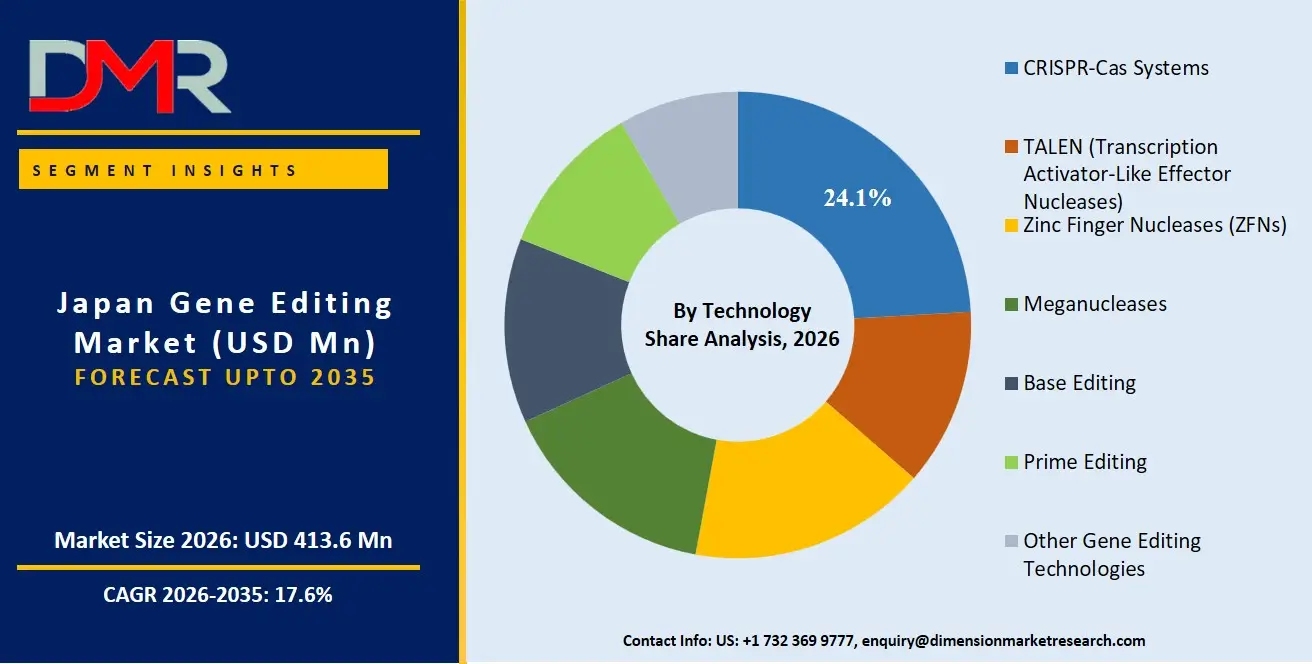
CRISPR-Cas Systems is anticipated to represent the leading technology segment in Japan due to their exceptional precision, simplicity, scalability, and cost-effectiveness compared with earlier genome editing technologies. CRISPR-Cas9 remains the preferred platform for academic research, drug discovery, agricultural biotechnology, and therapeutic development because of its established protocols and broad validation. Japanese pharmaceutical companies, biotechnology firms, and research institutions continue investing heavily in CRISPR-based innovation for rare diseases, oncology, and regenerative medicine. Continuous improvements through newer CRISPR variants, enhanced editing accuracy, and expanding clinical research reinforce CRISPR's market leadership, ensuring it remains the preferred genome editing technology across both research and commercial applications.
By Delivery Method Analysis
Viral Delivery is poised to dominate the Japan gene editing market because viral vectors provide highly efficient transfer of gene editing components into target cells while maintaining stable gene expression. Adeno-associated virus (AAV) vectors are particularly favored for clinical research due to their established safety profile and effectiveness in gene therapy applications. Viral delivery remains essential for many in vivo therapeutic programs targeting inherited disorders, neurological diseases, and ophthalmic conditions. Strong investments in gene therapy development, expanding clinical trials, and continuous advancements in viral vector engineering have strengthened adoption across Japan, making Viral Delivery the leading platform despite increasing interest in emerging non-viral delivery technologies.
By Therapeutic Area Analysis
Oncology is projected to dominate the Japan gene editing market because cancer remains one of the country's leading healthcare priorities, driving significant investment in advanced therapeutic research. Gene editing technologies are increasingly utilized to engineer immune cells, improve precision medicine, identify therapeutic targets, and develop personalized cancer treatments. Japanese pharmaceutical companies, biotechnology firms, and research institutes actively support CRISPR-based oncology research through collaborations and clinical development programs. Rising cancer incidence, growing adoption of cell and gene therapies, increasing government support for innovative treatments, and continuous advancements in precision oncology collectively position oncology as the largest therapeutic application within Japan's expanding gene editing industry.
By Editing Type Analysis
Ex Vivo Gene Editing is expected to dominate the Japan market because modifying cells outside the patient's body enables greater control, higher editing efficiency, and extensive quality verification before clinical administration. This approach minimizes off-target effects while improving treatment safety, making it highly suitable for cell therapies targeting cancer, blood disorders, and inherited diseases. Japan's leadership in regenerative medicine, combined with strong investments in CAR-T therapies and stem cell research, has accelerated adoption of ex vivo technologies. The availability of established manufacturing workflows, regulatory familiarity, and increasing commercialization of engineered cell therapies further reinforce Ex Vivo Gene Editing as the dominant editing approach in Japan.
By Application Analysis
Therapeutic Development is poised to be the dominant application segment because gene editing research in Japan increasingly focuses on creating innovative treatments for genetic disorders, cancer, rare diseases, and chronic illnesses. Pharmaceutical companies, biotechnology firms, and academic institutions invest extensively in developing next-generation gene therapies with improved safety and precision. The country's supportive regulatory framework for regenerative medicine and advanced therapies encourages clinical translation of gene editing innovations. Growing partnerships between industry and research organizations, expanding clinical pipelines, increasing funding for precision medicine, and strong demand for curative therapies position Therapeutic Development as the largest application area within Japan's rapidly expanding gene editing market.
By End User Analysis
Pharmaceutical & Biotechnology Companies is expected to dominate the Japan gene editing market because they account for the highest spending on research, clinical development, manufacturing, and commercialization of gene editing technologies. These organizations invest heavily in discovering novel therapeutic candidates, conducting preclinical studies, advancing clinical trials, and developing scalable production capabilities. Strategic collaborations with academic institutions and technology providers further accelerate innovation. Increasing investments in CRISPR-based therapeutics, regenerative medicine, precision oncology, and rare disease treatments have significantly expanded industry participation. Strong financial resources, robust research infrastructure, and growing product pipelines ensure Pharmaceutical & Biotechnology Companies remain the leading end-user segment in Japan.
The Japan Gene Editing Market Report is segmented on the basis of the following:
By Product
- Reagents & Consumables
- Enzymes
- Guide RNAs (gRNAs)
- Plasmids & Vectors
- Kits
- Other Reagents
- Instruments
- Software & Bioinformatics Tools
- Services
By Technology
- CRISPR-Cas Systems
- CRISPR-Cas9
- CRISPR-Cas12
- CRISPR-Cas13
- Other CRISPR Variants
- TALEN (Transcription Activator-Like Effector Nucleases)
- Zinc Finger Nucleases (ZFNs)
- Meganucleases
- Base Editing
- Prime Editing
- Other Gene Editing Technologies
By Delivery Method
- Viral Delivery
- Adeno-Associated Virus (AAV)
- Lentiviral Vectors
- Adenoviral Vectors
- Other Viral Vectors
- Non-Viral Delivery
- Lipid Nanoparticles (LNPs)
- Electroporation
- Microinjection
- Physical & Chemical Methods
By Therapeutic Area
- Oncology
- Rare & Genetic Disorders
- Hematological Disorders
- Cardiovascular Diseases
- Neurological Disorders
- Ophthalmology
- Infectious Diseases
- Metabolic Disorders
- Others
By Editing Type
- Ex Vivo Gene Editing
- In Vivo Gene Editing
By Application
- Therapeutic Development
- Cell & Gene Therapy
- Drug Discovery & Development
- Functional Genomics
- Agricultural Biotechnology
- Industrial Biotechnology
- Diagnostics
- Others
By End User
- Pharmaceutical & Biotechnology Companies
- Academic & Research Institutes
- Contract Research Organizations (CROs)
- Contract Development & Manufacturing Organizations (CDMOs)
- Hospitals & Specialty Clinics
- Agricultural & Food Research Organizations
Competitive Landscape
The competitive landscape of the Japan Gene Editing Market is a dynamic interplay of global tool providers, domestic pharmaceutical titans, and specialized platform biotechnology firms. Intellectual property surrounding novel engineered Cas enzymes with PAM flexibility and high fidelity is a primary differentiator for tool companies. Domestic giants are actively building internal genome engineering capabilities while forming strategic, multi-faceted alliances with global CRISPR pioneers to secure exclusive therapeutic rights for key genetic targets relevant to Japan's demographic disease burden. Simultaneously, agile biotech startups, often originating from university spinoffs, are deeply focused on vertical niches, such as LNP chemistry for extra-hepatic delivery or base editing for autosomal dominant diseases. The competitive edge is increasingly defined not just by the editing technology itself, but by a comprehensive, integrated "platform-to-patient" solution encompassing proprietary delivery, manufacturing automation, and a deep portfolio of disease-specific guide RNA leads.
Some of the prominent players in the Japan Gene Editing Market are:
- CRISPR Therapeutics
- Editas Medicine
- Intellia Therapeutics
- Beam Therapeutics
- Caribou Biosciences
- Verve Therapeutics
- Precision BioSciences
- Sangamo Therapeutics
- Integrated DNA Technologies (IDT)
- Danaher Corporation
- Thermo Fisher Scientific
- Merck KGaA
- Agilent Technologies
- Bio-Rad Laboratories
- Takara Bio Inc.
- FUJIFILM Holdings Corporation
- Sysmex Corporation
- Shimadzu Corporation
- Kyowa Kirin Co., Ltd.
- Astellas Pharma Inc.
- Other Key Players
Recent Developments
- June 2026: JCR Pharmaceuticals announced that Acumen Pharmaceuticals exercised its exclusive option to develop Alzheimer's disease therapies using JCR's blood-brain barrier delivery platform, highlighting continued investment in advanced genetic and neurological therapeutic technologies in Japan.
- March 2026: Japan Agency for Medical Research and Development selected a joint research project between Terumo Corporation and the CiRA Foundation for funding to accelerate automation and standardization of clinical-grade iPSC manufacturing, strengthening Japan's regenerative medicine and advanced cell therapy ecosystem.
- March 2026: Japan's Ministry of Health, Labour and Welfare granted the world's first conditional approvals for iPSC-derived regenerative medicine products, including Cuorips Inc.'s therapy for ischemic cardiomyopathy and Sumitomo Pharma's therapy for Parkinson's disease, marking a major milestone for Japan's regenerative medicine and gene-editing ecosystem.
Report Details
| Report Characteristics |
| Market Size (2026) |
USD 413.6 Mn |
| Forecast Value (2035) |
USD 1,783.6 Mn |
| CAGR (2026–2035) |
17.6% |
| Historical Data |
2021 – 2025 |
| Forecast Data |
2027 – 2035 |
| Base Year |
2025 |
| Estimate Year |
2026 |
| Segments Covered |
By Product, By Technology, By Delivery Method, By Therapeutic Area, By Editing Type, By Application, and By End User |
| Country Coverage |
Japan |
Frequently Asked Questions
How big is the Japan Gene Editing Market?
▾ The Japan Gene Editing market is poised to be valued at USD 413.6 million in 2026 and is projected to reach USD 1,783.6 million by 2035, driven by the translational potential of curative genomic medicines and a prolific preclinical and clinical pipeline.
What is the CAGR of the Japan Gene Editing Market from 2026 to 2035?
▾ The market is expected to grow at a CAGR of 17.6% from 2026 to 2035, reflecting the technological maturation of CRISPR-based tools, the rise of precision editors, and the regulatory tailwinds for advanced therapy medicinal products in the country.
What factors are driving the growth of the Japan Gene Editing Market?
▾ Key drivers include Japan’s unique accelerated approval pathway for regenerative medicines, the rapidly escalating healthcare expenditure driven by an aging population, and a deep-seated academic and industrial excellence in molecular biology and delivery science.
What are the major trends in the Japan Gene Editing Market?
▾ Major trends include the clinical deployment of allogeneic "off-the-shelf" CAR-T cells via multiplexed CRISPR editing, the rapid rise of base and prime editing for correcting point mutations, and a strategic industry pivot toward non-viral LNP delivery systems for in vivo therapeutics.
Who are the key players in the Japan Gene Editing Market?
▾ Key players include Takeda Pharmaceutical, Astellas Pharma, Daiichi Sankyo, Takara Bio, alongside global leaders like CRISPR Therapeutics, Intellia Therapeutics, and Beam Therapeutics, all driving innovation through internal R&D, strategic licensing, and clinical development activities.
How is the Japan Gene Editing Market segmented?
▾ The market is segmented by Product, Technology, Delivery Method, Therapeutic Area, Editing Type, Application, and End User.