Market Overview
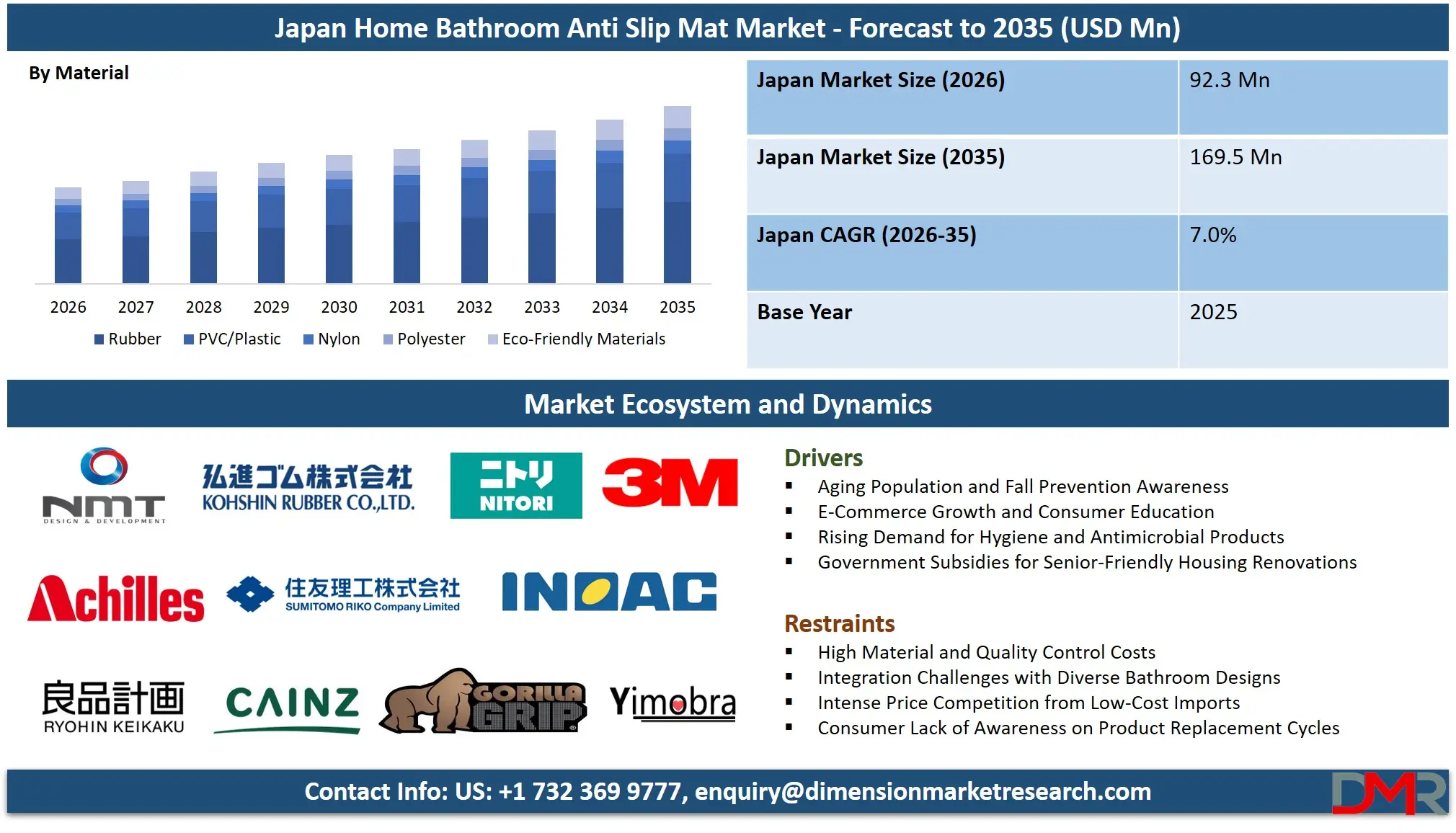
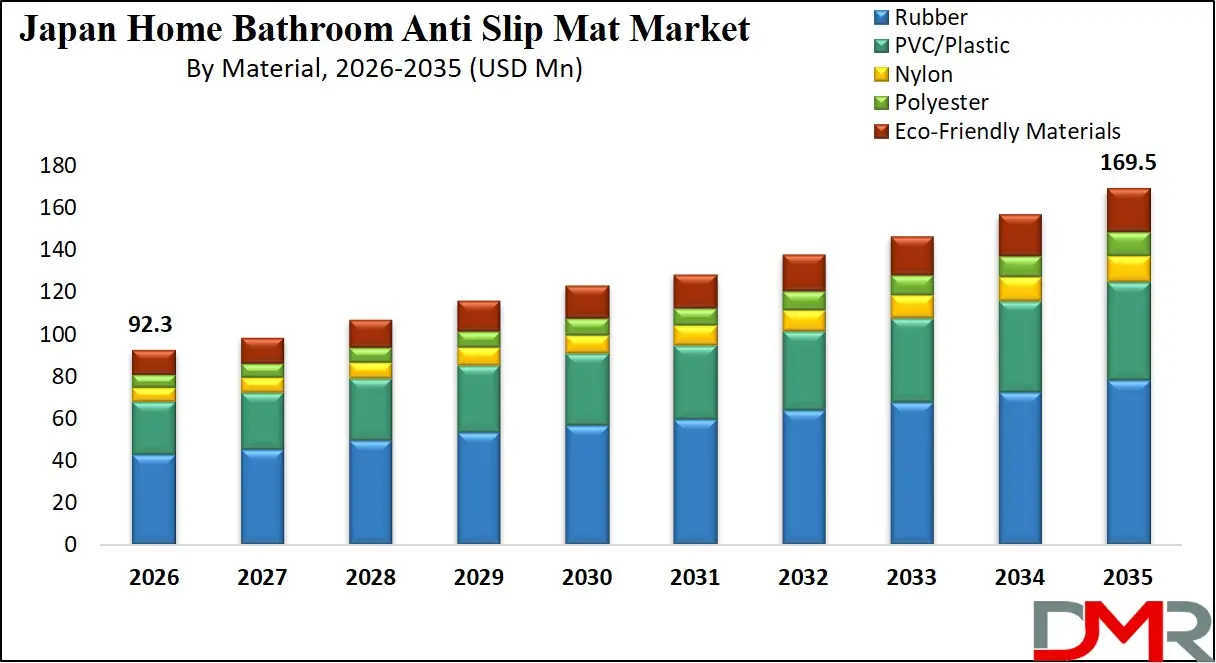
The Japan Home Bathroom Anti Slip Mat Market is projected to attain a valuation of USD 92.3 million in 2026 and is expected to expand significantly, reaching USD 169.5 million by 2035, advancing at a robust compound annual growth rate (CAGR) of 7.0% during the forecast period.
ℹ
To learn more about this report –
Download Your Free Sample Report Here
This growth reflects Japan's position as a technologically advanced nation with a highly sophisticated consumer goods market and a strong focus on home safety and aging-in-place solutions. The demand for high-grip, water-resistant, and antimicrobial mats is accelerating across residential settings, senior care facilities, and hospitality sectors.
Japan has historically been a global leader in product design and quality manufacturing. The integration of advanced materials such as micro-suction technology, antibacterial coatings, and quick-dry fabrics is becoming central to the country's next-generation home safety transformation. Japan's densely populated urban centers, high consumer expectations, and strong industrial base are pushing manufacturers to adopt more durable and aesthetically appealing anti-slip solutions at an unprecedented pace.
Government initiatives such as the "Smart Senior Housing" program and housing renovation subsidies aim to modernize Japan's residential safety standards and address critical fall-related injuries among the elderly. These programs promote investment in barrier-free housing, sensor-integrated bathroom fittings, and sustainable home products, creating a favorable ecosystem for anti-slip mat innovation.
Japan's demographic trends also strongly support adoption. According to national projections, nearly 30% of Japan's population is over the age of 65, creating strong demand for fall-prevention products, bathroom safety equipment, and assisted living accessories. Manufacturers are developing specialized anti-slip mats capable of withstanding high humidity, maintaining suction on textured surfaces, and supporting caregivers in home healthcare settings.
The home renovation sector remains another major growth pillar. Japan boasts one of the most active home improvement markets globally, with consumers demanding increasingly sophisticated safety solutions. Retail giants and e-commerce platforms are integrating anti-slip mat solutions to enable convenient purchasing, detailed product comparisons, and real-time customer reviews.
ℹ
To learn more about this report –
Download Your Free Sample Report Here
In the commercial sector, anti-slip mats are transforming safety protocols in public baths, hotels, and nursing homes through enhanced durability, easy-clean surfaces, and slip-resistant certifications. Meanwhile, material science startups are actively developing biodegradable polymers, recycled rubber composites, and AI-driven design tools for improved grip performance.
Japan's unique combination of technological leadership, demographic necessity, industrial strength, and government-backed modernization programs positions the country as one of the most influential markets for home bathroom safety products globally.
Japan Home Bathroom Anti Slip Mat Market: Key Takeaways
- Market Size Insights: The Japan Home Bathroom Anti-Slip Mat Market is estimated at USD 92.3 million in 2026 and is expected to reach USD 169.5 million by 2035.
- Market Growth Rate: The market is projected to grow at a CAGR of 7.0% from 2026 to 2035.
- Key Players: Major players in the Japan Home Bathroom Anti-Slip Mat Market include Nihon Max Co., Ltd., Kohshin Rubber Co., Ltd., Okamoto Corporation, 3M Company, Gorilla Grip, LLC, Yimobra, Inc., and others.
- Rubber as the Core Material Segment: Rubber-based anti-slip mats are expected to dominate the Japanese market due to the material's superior grip, durability, and resistance to mold and mildew in high-humidity bathroom environments.
- Shower Room as the Leading Application: Japan's widespread preference for separate shower rooms, combined with an aging population requiring fall prevention, makes the shower room the largest application segment.
- Government Policy as a Catalyst: Programs such as the "Housing Safety Certification" and subsidies for senior-friendly renovations promote the adoption of certified anti-slip products and accelerate the integration of safety features in residential bathrooms.
Japan Home Bathroom Anti Slip Mat Market: Use Cases
- Senior Safety and Fall Prevention: Japan's rapidly aging population is significantly accelerating the deployment of anti-slip mats in residential bathrooms. High-traction mats enable elderly individuals to bathe independently and safely, supporting aging-in-place initiatives and reducing the burden on caregivers.
- Healthcare and Nursing Facilities: Japan's extensive network of hospitals and long-term care facilities is driving significant demand for anti-slip mat technologies in institutional settings. Antimicrobial, easy-to-sanitize mats are being deployed in patient showers, hydrotherapy rooms, and assisted bathing areas to maintain hygiene standards and prevent accidents.
- Hospitality and Public Bathhouses: Japan's globally recognized hospitality sector, including ryokan and hot spring bathhouses, relies heavily on anti-slip mats for guest safety. Durable, aesthetically designed mats enable facility operators to meet strict safety regulations while preserving traditional bathing aesthetics.
- Disaster Response and Temporary Housing: Japan's exposure to natural disasters has encouraged the development of portable anti-slip mat systems for emergency shelters and temporary housing units. These products provide immediate fall protection in makeshift bathing facilities, supporting relief efforts and maintaining safety standards during displacement.
- Retail and Omnichannel Integration: Anti-slip mat products are increasingly used within Japan's home goods sector to support omnichannel operations. Retailers deploy these items for in-store display programs, buy-online-pick-up-in-store (BOPIS) fulfillment, and rapid home delivery of bulky or multiple-unit purchases.
Japan Home Bathroom Anti Slip Mat Market: Stats & Facts
Ministry of Health, Labour and Welfare (MHLW)
- Falls are the leading cause of injury-related deaths among Japan's elderly, with bathrooms accounting for a significant proportion of in-home accidents.
- The government's "Long-Term Care Insurance" system covers certain home safety modifications, incentivizing the installation of anti-slip products in senior households.
Ministry of Economy, Trade and Industry (METI)
- Japan's home improvement and interior goods market exceeds USD 50 billion annually, with bathroom safety products representing a rapidly growing segment.
- The ministry supports several "Smart Aging" pilot programs across municipalities to demonstrate the effectiveness of fall-prevention technologies.
Japan Bathroom Manufacturers Association
- Over 90% of Japanese households have separate wet-room bathrooms, creating a distinct market for high-performance anti-slip mats designed for constant moisture exposure.
- The association promotes standardized slip-resistance testing methods to ensure product reliability and consumer safety.
World Bank
- Japan's working-age population is projected to decline substantially by 2040, increasing the need for automated and easy-to-use home safety solutions that reduce caregiving demands.
- Adoption of durable, low-maintenance anti-slip products is helping maintain household safety despite workforce reductions in caregiving sectors.
Japan Interior Furnishings Association
- The recurring replacement and subscription model for bathroom textiles and safety mats has grown significantly, with consumers relying on scheduled deliveries for essential home items.
- Over 70% of Japanese consumers prioritize slip resistance and ease of cleaning when selecting bathroom mats.
Japan Home Bathroom Anti Slip Mat Market: Market Dynamics
Driving Factors in the Japan Home Bathroom Anti Slip Mat Market
Aging Population and Fall Prevention Awareness
Japan's demographic transition toward an aging population is reshaping the home safety industry. As the elderly population grows, households and care facilities are increasingly turning to anti-slip mats to prevent bathroom falls, which represent a leading cause of injury. Manufacturers are implementing enhanced grip technologies, antimicrobial surface treatments, and visual indicators for wear to reduce accident risks. By supporting both safety and independence, anti-slip mat innovations are becoming essential tools for addressing Japan's aging challenges and maintaining quality of life.
E-Commerce Growth and Consumer Education
Japan's rapidly expanding e-commerce sector is one of the strongest drivers for anti-slip mat adoption. As online retail penetration deepens, consumers increasingly have access to detailed product specifications, comparison tools, and user reviews that emphasize safety certifications. Anti-slip mats capable of offering specialized features such as machine-washability or eco-friendly materials have become essential differentiators for brands. In urban areas, dense residential housing and limited storage space encourage the purchase of compact, high-performance mat designs. By supporting both direct-to-consumer and marketplace platforms, anti-slip mat technologies are becoming essential tools for addressing consumer safety demands and maintaining e-commerce growth.
Restraints in the Japan Home Bathroom Anti Slip Mat Market
High Material and Quality Control Costs
The manufacturing of high-performance anti-slip mats requires substantial investment in specialized materials, antimicrobial treatments, and rigorous safety testing. These expenses involve significant capital and ongoing operational investments. As a result, maintaining affordability remains challenging, particularly for small and mid-sized manufacturers. Organizations must also invest in compliance with safety certifications, quality assurance protocols, and sustainable material sourcing, which can further increase operational expenses.
Integration Challenges with Diverse Bathroom Designs
Many Japanese bathrooms feature varied flooring materials, drainage systems, and architectural layouts that were not originally designed for standardized mat dimensions. Integrating anti-slip mats into these environments often requires custom sizing, suction compatibility with textured tiles, and coordination with other bathroom accessories. These challenges can slow product adoption and increase complexity for consumers navigating compatibility options.
Opportunities in the Japan Home Bathroom Anti Slip Mat Market
Expansion of Eco-Friendly and Sustainable Materials
Japan's growing environmental consciousness creates a substantial opportunity for anti-slip mat technologies made from recycled rubber, natural fibers, and biodegradable polymers. As demand for sustainable household products continues to rise, eco-friendly solutions are increasingly being adopted to support corporate sustainability goals and consumer preferences. Mats produced with non-toxic, low-VOC materials help maintain indoor air quality, while recyclable packaging and circular economy initiatives appeal to environmentally aware buyers. These products help retailers differentiate their offerings while managing complex regulatory requirements. As investment in green manufacturing continues, specialized sustainable anti-slip solutions are expected to become essential tools in addressing Japan's long-term environmental and consumer health priorities.
Smart Home Integration and IoT-Enabled Safety
Anti-slip mat technologies are expected to play an important role in advancing smart home safety infrastructure across Japan. The integration of moisture sensors, usage tracking, and alert systems into bathroom mats aligns closely with Japan's vision of creating digitally connected homes through national modernization initiatives. Sensor-embedded mats capable of detecting wet conditions, monitoring mat saturation, or alerting caregivers to potential fall risks can enhance safety and service coverage across urban and rural households. As urban populations remain concentrated in major metropolitan areas, smart safety solutions supported by anti-slip mat technology will help improve living standards, optimize care delivery, and reduce environmental impact.
Trends in the Japan Home Bathroom Anti Slip Mat Market
Expansion of Antimicrobial and Hygiene-Focused Designs
Japan continues to lead global innovation in antimicrobial materials, particularly for products used in humid bathroom environments. Anti-slip mats equipped with silver-ion treatments, photocatalytic coatings, and mold-resistant backing enable sustained hygiene performance with minimal maintenance. In residential and commercial settings, these advanced mats reduce the frequency of washing, extend product lifespan, and inhibit the growth of bacteria and fungi. Beyond antimicrobial properties, innovation is also expanding into self-drying materials and quick-drain structures. By combining advanced material science with user-centric design, manufacturers achieve greater consumer satisfaction while addressing hygiene concerns, making antimicrobial functionality a key trend in Japan's evolving home safety market.
Growth of Aesthetic and Customizable Designs
Aesthetic-driven anti-slip mats are increasingly being adopted across Japan's design-conscious housing market. These products are designed to complement modern bathroom interiors, offering neutral color palettes, natural textures, and minimalist patterns that blend seamlessly with existing décor. In luxury renovations and new construction segments, customizable shapes and premium materials enable homeowners to achieve cohesive bathroom styling without compromising safety. The combination of visual appeal, material quality, and slip resistance allows these products to serve both functional and decorative purposes. As consumers seek greater harmony and personalization in their living spaces, aesthetically refined anti-slip mats are becoming a rapidly growing trend within Japan's home goods market.
Japan Home Bathroom Anti Slip Mat Market: Research Scope and Analysis
By Material Analysis
Rubber is projected to dominate the Material segment of the Japan Home Bathroom Anti-Slip Mat Market. This dominance is driven by the material's natural high-friction properties, superior durability in constant moisture conditions, and the operational control major manufacturers maintain over domestic rubber compounding and molding assets. Rubber provides the highest longevity and grip reliability, particularly in high-traffic residential settings and commercial bathhouses, and enables premium product tiers with antimicrobial treatments and ergonomic surface patterns. While PVC/Plastic addresses the need for lightweight, lower-cost options suitable for rental properties and seasonal use, its adoption can be constrained by concerns over long-term durability and environmental impact. Therefore, the imperative for reliable fall prevention in Japan's aging households, coupled with continuous investment in sustainable rubber sourcing and recyclable formulations to address environmental regulations, secures Rubber's leading market position throughout the forecast period.
Eco-Friendly Materials represent a strategically vital and growing segment of the Japan Home Bathroom Anti-Slip Mat Market, serving the needs of environmentally conscious consumers and corporate sustainability programs. Its importance is underscored by Japan's ambitious carbon neutrality goals and the increasing regulatory focus on plastic waste reduction. This segment relies on advanced material science, with natural rubber, recycled PET, and plant-based polymers as primary inputs, supported by certification frameworks such as EcoMark and sustainable manufacturing partnerships. The growth of Eco-Friendly Materials is fueled by the expansion of green building practices and consumer preference for non-toxic household products. As circular economy principles gain traction through Japan's Resource Circulation Strategy, Eco-Friendly Materials is positioned for robust growth, becoming an increasingly essential component of Japan's home safety product landscape.
By Shape Analysis
Rectangle is projected to dominate the Shape segment of the Japan Home Bathroom Anti-Slip Mat Market. This dominance stems from the versatility of rectangular mats to fit standard shower room floors, bathtub surrounds, and general bathroom areas, with Japan's compact bathroom layouts favoring simple, space-efficient designs. Consumer expectations for straightforward installation, compatibility with common flooring dimensions, and ease of cleaning have elevated rectangular shapes to a practical default for most households. The driving forces are the standardization of Japanese bathroom unit dimensions, the proliferation of rectangular bath floor tiles, and the increasing willingness of consumers to invest in premium, longer-lasting rectangular mats with specialized grip zones. As renovation activity remains steady, the operational case for rectangular mat production scale becomes compelling, making it the primary driver of volume and manufacturing efficiency in Japan's anti-slip mat ecosystem.
Oval represents a significant aesthetic-driven segment, serving consumers seeking softer visual lines or specific bathtub apron configurations where rectangular mats may not align optimally. By providing ergonomic foot placement and visual complement to curved bathroom fixtures, it enables design-conscious homeowners to achieve cohesive interiors. This balance of aesthetic differentiation and functional coverage makes it a valued niche segment. The "Others" category, including circular and custom-contour shapes, contributes to specialty applications such as corner shower stalls or bespoke renovations, relying on flexible manufacturing capabilities that integrate anti-slip mat design directly into unique bathroom layouts.
By Price Range Analysis
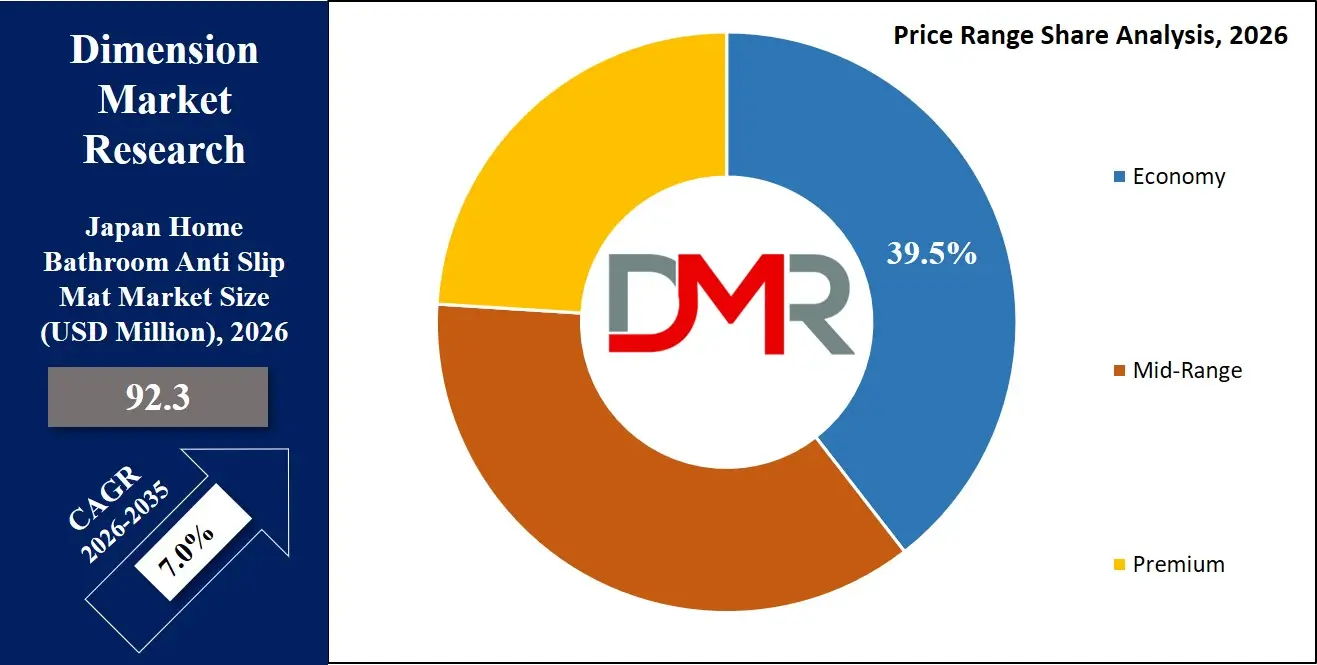
Mid-Range anti-slip mats form a fundamental and dominant price segment, as they provide the essential balance of quality, durability, and affordability required by the majority of Japanese households. This segment serves typical family homes and rental properties where consumers seek reliable slip protection without premium pricing. Mid-Range products are undergoing transformation through improved material blends, machine-washable designs, and antimicrobial treatments that were previously available only in higher tiers. With continuous pressure to deliver value while meeting safety standards, the Mid-Range segment maintains its position as the indispensable volume anchor of Japan's anti-slip mat market.
ℹ
To learn more about this report –
Download Your Free Sample Report Here
Economy is another critical and high-volume segment, directly correlated to price-sensitive consumers, rental property managers, and bulk purchasers such as hospitality businesses requiring frequent replacement cycles. Mats in this segment provide basic slip resistance and essential functionality, often with simplified designs and standard materials. While representing a lower price structure, the accessibility and turnover frequency of Economy products ensure their continued strategic importance, particularly for short-term accommodations and temporary housing applications. Premium serves the luxury renovation market and discerning consumers who prioritize designer aesthetics, advanced material technologies, and extended warranties, offering the highest margin opportunity for manufacturers.
By Application Analysis
Shower Room is poised to be the largest and most dominant application segment in the Japan Home Bathroom Anti-Slip Mat Market, encompassing the wet-area floors of Japan's standard separate shower units where slip risk is highest. The high frequency of daily use, continuous water exposure, and concentration of elderly users in this space create a perfect use case for high-performance anti-slip mats with superior suction and rapid drainage. This segment drives continuous innovation in mat structure, including micro-suction cups, channeled surfaces for water runoff, and quick-dry backing that accommodates Japanese consumer preferences for hygiene and convenience, cementing its position as the primary demand generator for the entire market.
Bathtub ranks as the second-largest application segment, fueled by the continued prevalence of soaking tubs in Japanese homes and the need for safe entry and exit points. The criticality of edge mats for stepping out of wet tubs and full-length mats for interior tub surfaces positions anti-slip products as essential safety accessories for preventing high-impact falls. The cultural importance of daily bathing in Japan, combined with the demographic imperative of supporting an aging population, creates sustained demand for reliable, non-slip surfaces that maintain bathing traditions while ensuring safety. General Bathroom covers dry-area applications such as vanity zones and toilet spaces where moisture tracking creates secondary slip hazards, completing the diverse application landscape that collectively drives Japan's anti-slip mat market toward its projected growth trajectory.
By Distribution Channel Analysis
Offline channels are expected to dominate the Japan Home Bathroom Anti-Slip Mat Market, encompassing home centers, department stores, and specialty bath retailers where consumers can physically evaluate product texture, thickness, and size. The ability to assess grip quality firsthand, combined with immediate purchase availability, makes brick-and-mortar retail the preferred channel for first-time buyers and renovation customers. Major retailers such as Cainz, DCM, and Nitori dedicate significant floor space to bathroom safety products, with trained staff assisting in product selection. As Japanese consumers continue to value tactile evaluation for safety products, the Offline channel maintains its leadership position.
Online represents the fastest-growing segment, driven by the expansion of e-commerce platforms such as Amazon Japan, Rakuten, and direct-to-consumer brand sites. This channel offers access to wider product assortments, detailed specification comparisons, and customer reviews that aid informed purchasing. The growth of scheduled subscription models for replaceable anti-slip mats and the convenience of home delivery for bulky or multiple-unit orders are accelerating online adoption. As digital commerce penetration deepens and younger consumers increasingly prefer online research and purchasing, the Online channel is positioned for robust growth, becoming an increasingly significant component of Japan's anti-slip mat distribution landscape.
The Japan Home Bathroom Anti Slip Mat Market Report is segmented on the basis of the following:
By Material
- Rubber
- PVC/Plastic
- Nylon
- Polyester
- Eco-Friendly Materials
By Shape
By Price Range
- Economy
- Mid-Range
- Premium
By Application
- Shower Room
- Bathtub
- General Bathroom
By Distribution Channel
Japan Home Bathroom Anti Slip Mat Market: Competitive Landscape
The competitive landscape of the Japan Home Bathroom Anti-Slip Mat Market is characterized by the presence of globally recognized consumer goods manufacturers, specialized safety product companies, and material science innovators that are continuously advancing product performance and design offerings. Japan has one of the most mature home safety ecosystems in the world, supported by strong manufacturing infrastructure, stringent quality standards, and government-backed aging-in-place programs. Leading companies such as LIXIL, TOTO, and Sanwa Company dominate the domestic anti-slip mat segment by integrating antimicrobial treatments, ergonomic surface patterns, and sustainable material sourcing into their operations.
ℹ
To learn more about this report –
Download Your Free Sample Report Here
In addition to domestic home goods leaders, specialized safety product manufacturers such as Yamato Hygiene Products and Daikin Industries are actively developing advanced material technologies and customized solutions. These organizations focus on high-grip formulations, easy-maintenance designs, and products tailored for institutional applications. Their innovations emphasize durability, hygiene, and user-centric functionality that allow consumers and facility operators to maintain safe environments effectively.
Japan's home safety innovation is further strengthened by collaboration between corporations, research institutions, and government agencies. Universities and material science centers frequently partner with private companies to accelerate advancements in slip-resistance testing, biodegradable polymers, and smart sensor integration. Programs under national aging-society initiatives encourage the commercialization of next-generation safety products and sustainable home improvement platforms.
Overall, Japan's competitive landscape combines established home goods leaders with emerging technology-focused startups, creating a highly dynamic ecosystem that supports innovation, product diversification, and large-scale deployment of anti-slip mat solutions across multiple consumer and commercial sectors.
Some of the prominent players in the Japan Home Bathroom Anti Slip Mat Market are:
- Nihon Max Co., Ltd.
- Kohshin Rubber Co., Ltd.
- Okamoto Corporation
- Sumitomo Riko Company, Limited
- Inoac Corporation
- Senko Co., Ltd.
- Okato Co., Ltd.
- Clean Tex Japan Ltd.
- Nitori Holdings Co., Ltd.
- Ryohin Keikaku Co., Ltd. (MUJI)
- Cainz Corporation
- DCM Holdings Co., Ltd.
- Aeon Co., Ltd.
- I‑Net International LLC
- 3M Company
- Gorilla Grip, LLC
- Yimobra, Inc.
- AmazonBasics
- SlipX Solutions LLC
- Vive Health, LLC
- Other Key Players
Recent Developments in the Japan Home Bathroom Anti Slip Mat Market
- December 2025: Nitori Holdings Co., Ltd. opened its 13th store in Malaysia, further expanding its footprint in Asia and accelerating the availability of affordable, functional home products such as anti-slip bath mats across international markets.
- November 2025: Achilles Corporation reported continued expansion of its polymer and industrial materials segment in its financial disclosures, supporting broader applications in cushioning and anti-slip surface solutions across residential environments.
- November 2025: Inoac Corporation highlighted ongoing advancements in polyurethane foam technologies in its corporate updates, focusing on durability, water resistance, and grip enhancement for household and safety applications.
- September 2025: DCM Holdings Co., Ltd. announced continued expansion of its private-label product strategy in its financial results, strengthening its portfolio of home improvement and safety products, including anti-slip bathroom solutions.
- June 2025: 3M Company highlighted continued investment in safety and industrial adhesive technologies in its global updates, supporting anti-slip surface solutions widely used in residential and commercial environments, including bathrooms.
Report Details
| Report Characteristics |
| Market Size (2026) |
USD 92.3 Mn |
| Forecast Value (2035) |
USD 169.5 Mn |
| CAGR (2026–2035) |
7.0% |
| Historical Data |
2021 – 2025 |
| Forecast Data |
2027 – 2035 |
| Base Year |
2025 |
| Estimate Year |
2026 |
| Report Coverage |
Market Revenue Estimation, Market Dynamics, Competitive Landscape, Growth Factors and etc. |
| Segments Covered |
By Material (Rubber, PVC/Plastic, Nylon, Polyester, Eco-Friendly Materials), By Shape (Rectangle, Oval, Others), By Price Range (Economy, Mid-Range, Premium), By Application (Shower Room, Bathtub, General Bathroom Floor), By Distribution Channel (Offline, Online) |
| Country Coverage |
Japan |
| Prominent Players |
Nihon Max Co., Ltd., Kohshin Rubber Co., Ltd., Okamoto Corporation, Sumitomo Riko Company, Limited, Inoac Corporation, Senko Co., Ltd., Okato Co., Ltd., Clean Tex Japan Ltd., Nitori Holdings Co., Ltd., Ryohin Keikaku Co., Ltd. (MUJI), Cainz Corporation, DCM Holdings Co., Ltd., Aeon Co., Ltd., I‑Net International LLC, 3M Company, Gorilla Grip, LLC, Yimobra, Inc., AmazonBasics, SlipX Solutions LLC, Vive Health, LLC, and Other Key Players |
| Purchase Options |
We have three licenses to opt for: Single User License (Limited to 1 user), Multi-User License (Up to 5 Users), and Corporate Use License (Unlimited User) along with free report customization equivalent to 0 analyst working days, 3 analysts working days and 5 analysts working days respectively. |
Frequently Asked Questions
How big is the Japan Home Bathroom Anti Slip Mat Market?
▾ The Japan Home Bathroom Anti Slip Mat Market size is estimated to have a value of USD 92.3 million in 2026 and is expected to reach USD 169.5 million by the end of 2035.
What is the growth rate in the Japan Home Bathroom Anti Slip Mat Market in 2026?
▾ The market is growing at a CAGR of 7.0% over the forecasted period of 2026.
Who are the key players in the Japan Home Bathroom Anti Slip Mat Market?
▾ Some of the major key players in the Japan Home Bathroom Anti Slip Mat Market are Nihon Max Co., Ltd., Kohshin Rubber Co., Ltd., Okamoto Corporation, 3M Company, Gorilla Grip, LLC, Yimobra, Inc., and many others.