What is the Japan Hydrogen Fuel Cell Vehicle Market Size?
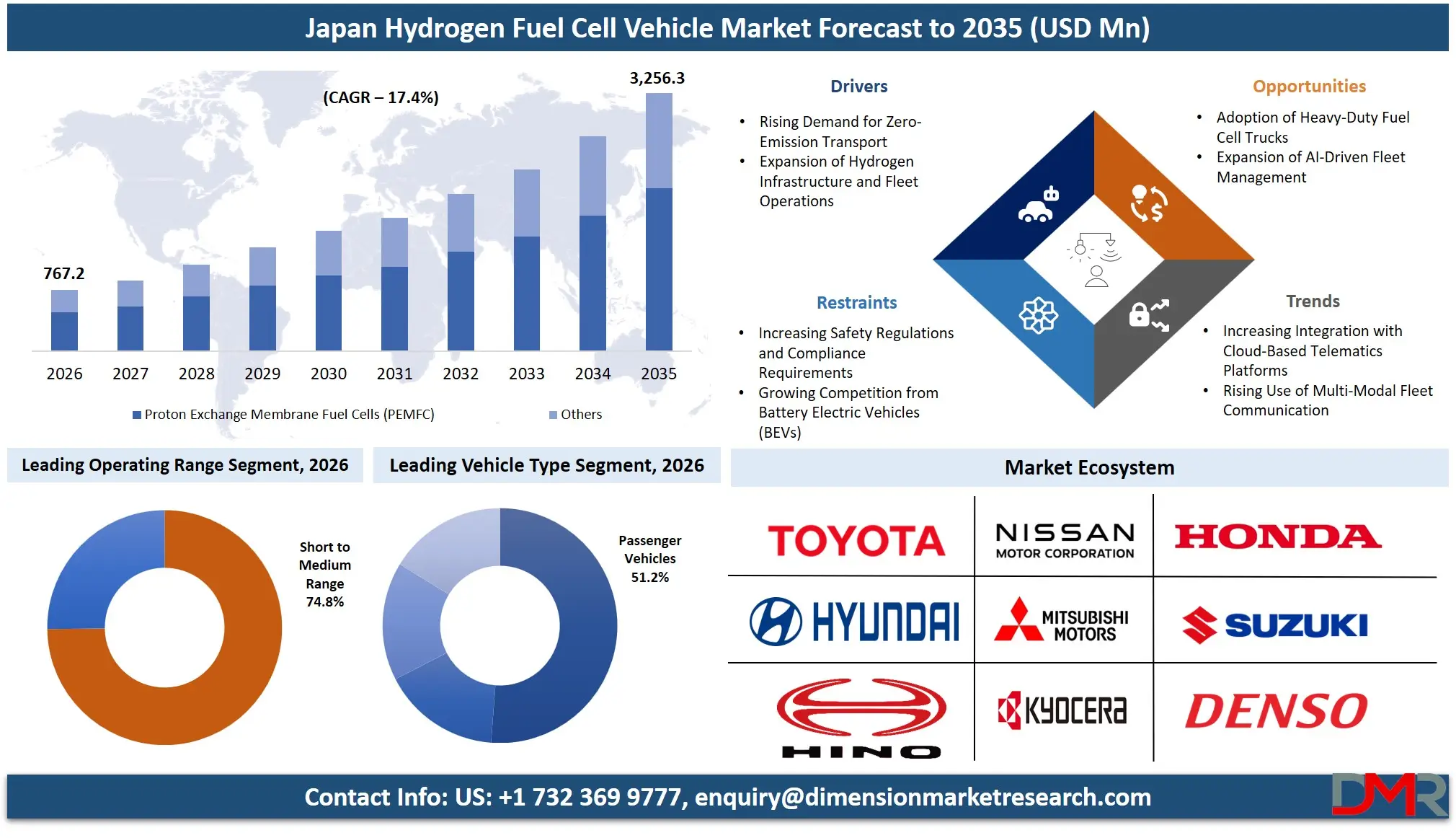
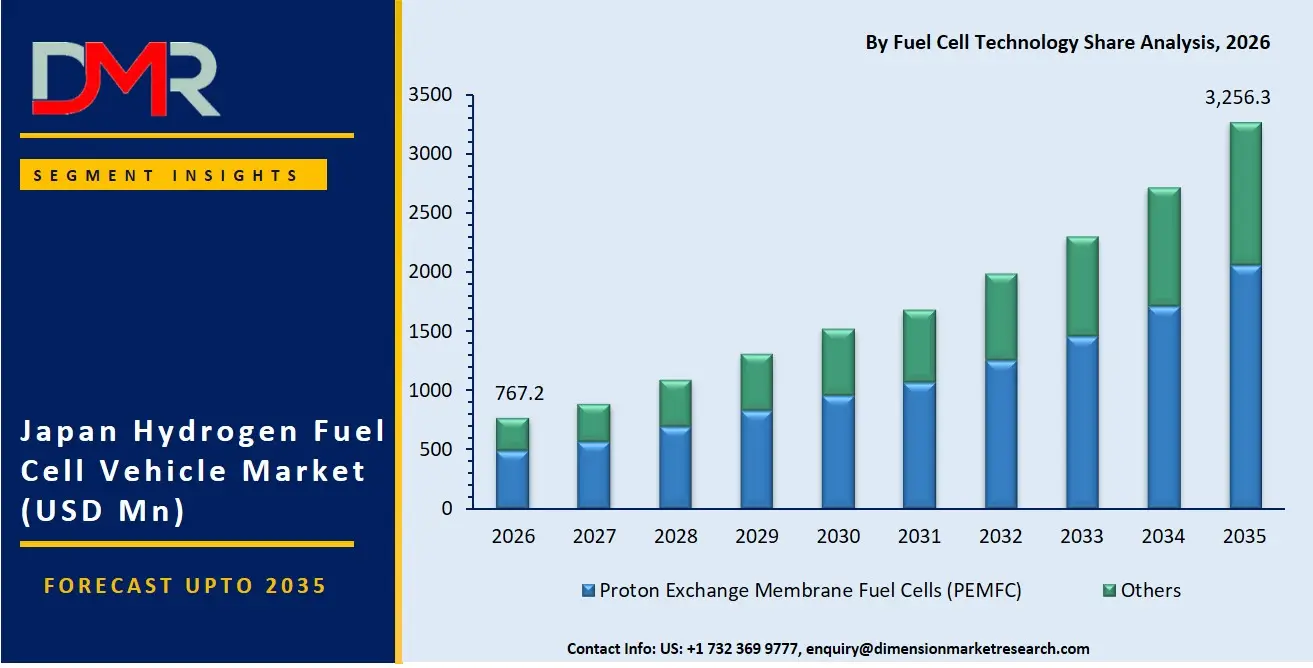
The Japan Hydrogen Fuel Cell Vehicle (FCV) Market is expected to reach a value of USD 767.2 million in 2026, and it is further anticipated to reach USD 3,256.3 million by 2035, growing at a CAGR of 17.4% during the forecast period.
ℹ
To learn more about this report –
Download Your Free Sample Report Here
The hydrogen fuel cell vehicle market has been showing consistent growth due to Japan's rising dependence on zero-emission mobility for effective, secure, and scalable transportation. This includes several vehicle platforms and expert services that help fleet operators deploy hydrogen-powered vehicles for passenger, commercial, and logistics purposes. There has been a rising need for professional services owing to the requirements for implementing a hydrogen refueling infrastructure, securing operational continuity against supply disruptions, and delivering high-performance fuel cell systems to customers. Fleet operators have emerged as the largest consumer segment for FCV services, with passenger vehicles being the most popular choice due to their wide availability and reliability, while there has been rapid growth in heavy-duty trucks and material handling equipment.
ℹ
To learn more about this report –
Download Your Free Sample Report Here
Key Takeaways
- Market Size & Forecast: The Japan Hydrogen FCV market is forecasted to be valued at USD 767.2 million in 2026, growing incrementally to USD 3,256.3 million by 2035, due to the joint efforts of hydrogen strategy deployment on the part of enterprises as well as the obligatory deployment of zero-emission transport technologies.
- Growth Rate & Outlook: Japan market is expected to grow at 17.4% CAGR, propelled by the urgent need to mitigate emerging hydrogen supply chain vulnerabilities, alongside increasing challenges in orchestrating multi-modal fleet operations by passenger vehicles, commercial trucks, and buses.
- Primary Growth Drivers: Major driving factors comprise the transition from traditional internal combustion engines towards modern fuel cell electric solutions, the necessity to deploy secure and robust hydrogen refueling services, as well as the implementation of fleet management APIs necessitating unique platform & services expertise.
- Key Market Trends: Major trends encompass the introduction of heavy-duty fuel cell trucks through commercial vehicle channels, usage of artificial intelligence within telematics platforms for route optimization and preventing hydrogen waste, and increased focus on safe hydrogen storage amidst rising consumer safety considerations of regulators.
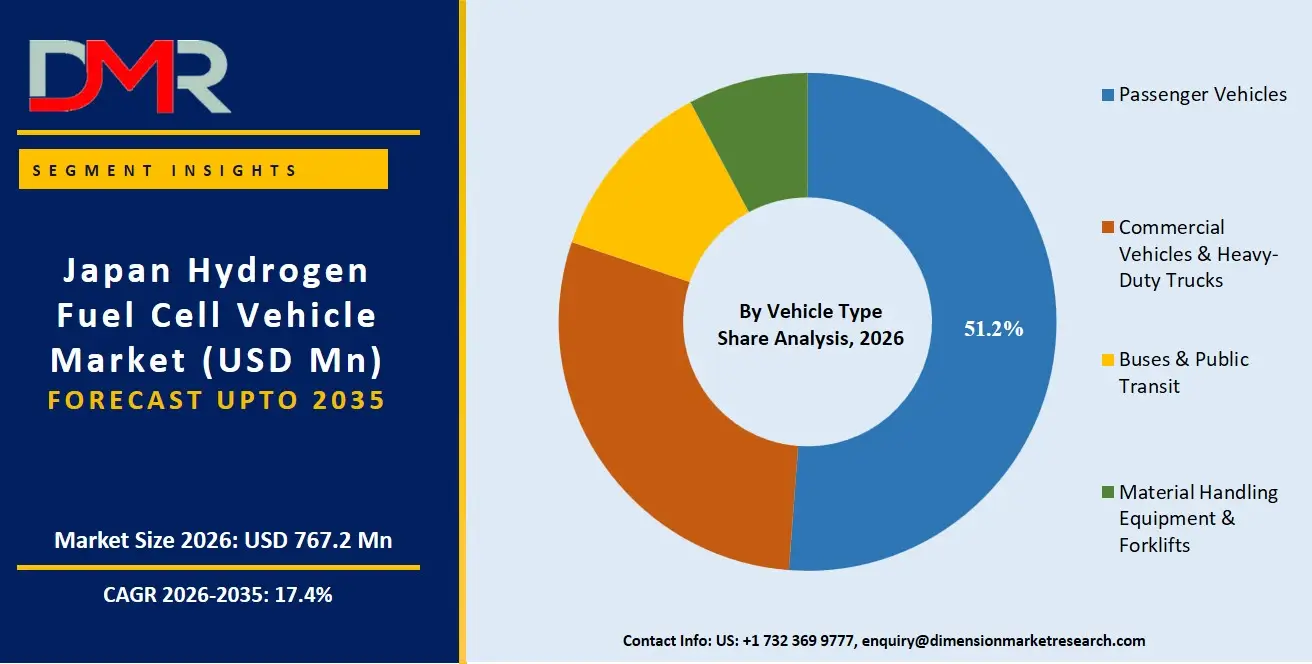
- By Vehicle Type Analysis: The passenger vehicles segment is projected to dominate the Japan Hydrogen FCV Market due to high demand for scalable fuel cell platforms by individual consumers, with capabilities like long range, fast refueling, and zero emissions, which offer daily commuting, regional travel, and real-time performance monitoring activities within private use.
- By Fuel Cell Technology Analysis: The Proton Exchange Membrane Fuel Cells (PEMFC) segment is projected to dominate the Japan Hydrogen FCV Market due to its high power density, durability, capability for cold starts, and use in passenger cars, trucks, buses, and forklifts for logistics, public transit, and emergency services in metropolitan areas, industrial zones, and government fleets.
- By Operating Range Analysis: The long range (above 500 miles / 800 km) segment is anticipated to dominate in the Japan Hydrogen FCV Market as fleet operators adopt vehicles that are scalable, flexible, efficient, accessible for cross-country logistics, provide AI-based route analytics, telematics integration, business continuity, and fleet operations at a higher mileage.
What is the Hydrogen Fuel Cell Vehicle?
A Hydrogen Fuel Cell Vehicle is about the unique set of platforms and expertise involved in operating zero-emission vehicles powered by hydrogen. These vehicles, unlike battery electric vehicles, pertain to "the how and where" of high-mileage, rapid-refueling digital mobility. It entails having a Fuel Cell Platform to provide the means through which hydrogen is converted to electricity for propulsion, and Services to help integrate fleet management, manage refueling costs, and optimize routes. As companies take charge of their decarbonization commitments, it is important to have services that ensure that vehicles will be operated successfully while maintaining cost and safety measures.
Use Cases
- Logistics Fleet Security: Logistics companies employ Hydrogen FCV Services for the installation of long-haul trucking solutions that include real-time hydrogen monitoring and route notifications to avoid supply interruptions and increase operational trust.
- Hospital Patient Transport: Hospital networks rely on Hydrogen FCV Platforms for deploying non-emergency medical transport vehicles, ensuring quiet, zero-emission operation, and maintaining compliance with regional health and safety mandates.
- Public Transit Services: Public transportation authorities incorporate hydrogen bus APIs in order to push refueling schedules and route adherence notifications to central control centers in real-time.
- Port & Warehouse Operations: Retail and logistics organizations leverage material handling equipment/forklift services in a cloud-based telematics platform to initiate geo-targeted asset tracking during peak logistics seasons.
How AI is Transforming the Hydrogen Fuel Cell Vehicle Market?
AI is revolutionizing the hydrogen FCV industry through increased route optimization and predictive maintenance capabilities. The telematics platform suite includes AI-based systems that detect hydrogen consumption anomalies and supply chain inefficiencies in order to resolve them instantaneously, thereby preventing any financial losses and operational damage. In addition, the AI-driven functions of fleet management services help organizations assess driver behavior, determine optimal refueling schedules, and customize their route planning. AI forms an essential part of governance and customer trust initiatives. Professional services involve intelligent agents that monitor compliance and keep fleet maintenance logs free of any non-compliant entries while ensuring that all operations comply with regulations and the stringent hydrogen safety protocols in Japan.
Market Dynamics
Key Drivers in the Japan Hydrogen Fuel Cell Vehicle Market
Rising Demand for Zero-Emission Transport
AI is revolutionizing the hydrogen FCV industry through increased route optimization and predictive maintenance capabilities. The telematics platform suite includes AI-based systems that detect hydrogen consumption anomalies and supply chain inefficiencies in order to resolve them instantaneously, thereby preventing any financial losses and operational damage. In addition, the AI-driven functions of fleet management services help organizations assess driver behavior, determine optimal refueling schedules, and customize their route planning. AI forms an essential part of governance and customer trust initiatives. Professional services involve intelligent agents that monitor compliance and keep fleet maintenance logs free of any non-compliant entries while ensuring that all operations comply with regulations and the stringent hydrogen safety protocols in Japan.
Expansion of Hydrogen Infrastructure and Fleet Operations
The rapid development of the hydrogen economy in Japan creates high demands in the fleet mobility sector in various fields such as logistics, public transit, retail, and last-mile delivery. Companies today use hydrogen FCVs to achieve critical goals related to carbon neutrality, route optimization, fleet tracking, and regulatory compliance. With increased use of long-range fuel cell trucks by many logistics operators, fleet owners have become more interested in adopting an automated telematics system that can handle large vehicle volumes effectively. In addition, there is a growing need for predictable refueling experiences for fleet managers, which increases the adoption rate of hydrogen FCVs.
Restraints in the Japan Hydrogen Fuel Cell Vehicle Market
Increasing Safety Regulations and Compliance Requirements
The increasingly stringent hydrogen safety regulations and high-pressure storage legislations in Japan have brought about difficulties for the FCV vendors as well as fleet operators. The regulatory bodies are tightening their grip on the control of hydrogen refueling station deployments, the acquisition and management of safety consents from local communities, and data protection measures in order to minimize risks related to hydrogen leaks. Enterprises are expected to adhere to the highly stringent operational requirements, making their deployments more complicated and costly. The violation of such rules subjects a fleet operator using hydrogen vehicles to heavy fines, delivery delays, and reputational harm.
Growing Competition from Battery Electric Vehicles (BEVs)
Growth in the usage of battery electric vehicles (BEVs) with fast-charging networks is impacting the future growth of hydrogen FCVs within Japan. BEVs are preferred over hydrogen vehicles for short-range applications since they offer lower operating costs and reduced refueling infrastructure complexity for urban commuting purposes. Fleet operators have also begun using BEVs as part of their last-mile delivery activities, relying less on hydrogen-based campaigns. The use of BEVs also offers enhanced telematics solutions like regenerative braking, battery analytics, and content personalization. Traditional hydrogen FCV services are under growing pressure from competing electric vehicle technologies.
Growth Opportunities in the Japan Hydrogen Fuel Cell Vehicle Market
Adoption of Heavy-Duty Fuel Cell Trucks
There exist many growth opportunities in the hydrogen FCV market in Japan through the increasing implementation of heavy-duty fuel cell trucks. These commercial vehicles allow logistics companies to engage in long-haul, zero-emission freight transport other than using standard diesel trucks. Higher payload capacity, rapid refueling, and lower total cost of ownership are some features that may be implemented by logistics operators in decarbonizing their fleets. Logistics companies based in Japan are starting to consider implementing fuel cell trucks as an alternative for effective green logistics. With improved hydrogen infrastructure by energy suppliers and improved fuel cell durability, many transport organizations will spend much money on heavy-duty FCV systems.
Expansion of AI-Driven Fleet Management
Integration of artificial intelligence in fleet telematics platforms is bringing about great prospects for hydrogen FCV providers in Japan. Many fleet operators are now using AI-based telematics technology that automates route planning processes in order to offer predictive maintenance support to drivers. AI can help organizations understand vehicle behavior, customize refueling schedules, and determine when the best time is for preventive maintenance in order to maximize operational uptime and cost savings. The increasing use of machine learning analytics, intelligent automation, and predictive diagnostics in different sectors such as logistics, public transit, and port operations is driving demand for innovative telematics technology.
Trends in the Japan Hydrogen Fuel Cell Vehicle Market
Increasing Integration with Cloud-Based Telematics Platforms
Increasingly, Japanese fleet operators are adopting cloud-based telematics by integrating hydrogen FCV services that help improve scalability and route automation. Cloud telematics allows organizations to easily integrate vehicle APIs into their dispatch systems, warehouse management solutions, and logistics processes without having to invest heavily in their existing IT infrastructure. The advantages associated with cloud telematics include real-time vehicle management, hydrogen consumption analytics, and multi-modal engagement options. Due to the growing adoption of digital transformation approaches in addition to remote fleet management processes, the use of cloud telematics has been steadily increasing. The adoption of cloud telematics as an alternative to more expensive on-premise FCV solutions has continued to gain popularity in Japan.
Rising Use of Multi-Modal Fleet Communication
Multi-modal approaches are being incorporated by Japanese logistics firms in order to facilitate their fleet operations using a combination of hydrogen trucks, BEVs, mobile alerts, and AI-based routing. Companies are focusing on creating an integrated fleet experience that ensures consistency in the quality of asset utilization through different transport modes. Hydrogen FCVs continue to be an integral part of these multi-modal approaches owing to their long range and rapid refueling. Companies from sectors such as retail logistics, industrial freight, and public transportation have been incorporating FCVs into their digital fleet management solutions.
Research Scope and Analysis
The Japan Hydrogen Fuel Cell Vehicle Market is segmented by vehicle type, fuel cell technology, operating range, and end user. The market supports passenger transport, logistics, public transit, and material handling across individual consumers, fleet operators, public authorities, and logistics companies through cloud-based and on-premise telematics solutions.
ℹ
To learn more about this report –
Download Your Free Sample Report Here
By Vehicle Type Analysis
Passenger vehicles are projected to lead the market of Japan Hydrogen FCVs as a result of the growing need of individual consumers in scaling their daily mobility through vehicle management, telematics APIs, automation, route analytics, and multi-modal support. Japanese consumers have developed a preference for fuel cell passenger vehicles for performing such functions as daily commuting, regional travel, and zero-emission mobility. Early adopters, corporate fleets, and government agencies extensively use passenger vehicles for executing their mobility activities. The wide adoption of hydrogen refueling networks, the development of green taxation policies, and consumer environmental preferences favor passenger vehicles over stand-alone commercial products.
By Fuel Cell Technology Analysis
Proton Exchange Membrane Fuel Cells (PEMFC) are anticipated to hold the highest market share in the technology category in the Japan Hydrogen FCV Market due to their high power density, excellent cold-start capability, strong domestic manufacturing base, and use in passenger and commercial vehicles. Automotive OEMs, logistics companies, transit authorities, and port operators in Japan continue to use PEMFC for passenger cars, delivery trucks, buses, and forklifts. While other fuel cell types need higher operating temperatures, PEMFC is not dependent on any of these requirements, and hence is highly reliable across all vehicle segments. The regulatory confidence and preference of fleet operators for direct operational control are strengthening the role of PEMFC.
By Operating Range Analysis
The long-range (above 500 miles / 800 km) segment is anticipated to dominate the Japan Hydrogen FCV Market owing to the increasing preference of logistics companies toward cross-country freight and minimal refueling stops. Japanese fleet operators are now using long-range FCVs to ensure that inter-prefectural delivery is fast and can be remotely monitored, along with analytics enabled by artificial intelligence, while ensuring smooth integration with warehouse management and digital logistics solutions. It also facilitates the varying cargo volumes during peak seasons, just-in-time manufacturing, and regional distribution services without substantial infrastructure investments. This trend will continue in light of the digital transformation of logistics, telematics-as-a-service solutions, and requirements of business continuity and operational agility.
By End User Analysis
Fleet operators are expected to form the majority of the Hydrogen FCV Market in Japan as most mobility activities by enterprises tend to target their own logistics, delivery, and service operations within Japan. Many logistics companies, retail distributors, transit authorities, and municipal services deploy huge numbers of hydrogen trucks, buses, and vans for daily commercial operations. This is attributed to the solid hydrogen refueling network in place, high adoption of green freight programs in Japan, and high levels of safety and environmental compliance. In addition, the huge e-commerce delivery ecosystem, growing last-mile logistics industry, and use of FCVs for urban freight support the fleet operator dominance.
The Japan Hydrogen Fuel Cell Vehicle Market Report is segmented on the basis of the following:
By Vehicle Type
- Passenger Vehicles
- Commercial Vehicles & Heavy-Duty Trucks
- Buses & Public Transit
- Material Handling Equipment & Forklifts
By Fuel Cell Technology
- Proton Exchange Membrane Fuel Cells (PEMFC)
- Others
By Operating Range
- Short to Medium Range (Up to 500 Miles / 800 km)
- Long Range (Above 500 Miles / 800 km)
By End User
- Individual Consumers
- Fleet Operators
- Public Transportation Authorities
- Logistics Companies
Competitive Landscape
The dynamics of competition in the Japan Hydrogen FCV marketplace have developed to become increasingly dynamic, with a wide range of multinational automotive OEMs, Japanese hydrogen infrastructure aggregators, and telematics platform players specializing in various niche fleet management functions. The essential ingredient for success is found in deep-seated strategic partnerships with hydrogen producers and refueling station operators in Japan, which open up high-quality supply chains and allow premium fuel cell maintenance services to be sold alongside one another. Market consolidation trends are moving rapidly ahead, with established players in the world of automotive and energy providers taking on acquisitions of specialized telematics platform providers to leverage their AI analytics functionalities. Proprietary intellectual property rights, with AI-based predictive maintenance algorithms and route optimization engines, hold increasing importance compared to just competitive vehicle pricing and refueling networks.
Some of the prominent players in the Japan Hydrogen Fuel Cell Vehicle Market are:
- Toyota Motor Corporation
- Honda Motor Co., Ltd.
- Nissan Motor Co., Ltd.
- Hyundai Motor Company
- Mitsubishi Motors Corporation
- Suzuki Motor Corporation
- Hino Motors, Ltd.
- Isuzu Motors Limited
- Panasonic Holdings Corporation
- DENSO Corporation
- Aisin Corporation
- Toshiba Energy Systems & Solutions Corporation
- Kyocera Corporation
- Fuji Electric Co., Ltd.
- Iwatani Corporation
- ENEOS Holdings, Inc.
- Air Liquide Japan G.K.
- Kawasaki Heavy Industries, Ltd.
- Mitsubishi Heavy Industries, Ltd.
- Ballard Power Systems Inc.
- Other Key Players
Recent Developments
- May 2026: Toyota Motor Corporation announced a strategic collaboration with Hyroad Energy to deploy 40 hydrogen fuel cell Class 8 commercial trucks in Southern California, alongside expansion of hydrogen refueling infrastructure, strengthening Toyota's commercial hydrogen mobility ecosystem, and heavy-duty FCV deployment strategy.
- January 2026: Kawasaki Heavy Industries, Ltd. announced the expansion of its hydrogen liquefaction and transport infrastructure initiatives in Japan and Australia, including the development of next-generation liquefied hydrogen carriers to strengthen international hydrogen supply chains supporting fuel cell mobility and industrial hydrogen adoption.
- November 2025: ENEOS Holdings, Inc. announced the expansion of its hydrogen refueling station network across major metropolitan regions in Japan under its carbon-neutral mobility strategy, supporting wider commercial deployment of fuel cell passenger vehicles and hydrogen-powered heavy-duty transport.
- February 2025: Honda Motor Co., Ltd. unveiled specifications for its next-generation fuel cell module at H2 & FC EXPO 2025 in Tokyo, featuring 50% lower production cost, more than double the durability, and over three times higher volumetric power density compared to the current generation system.
Report Details
| Report Characteristics |
| Market Size (2026) |
USD 767.2 Mn |
| Forecast Value (2035) |
USD 3,256.3 Mn |
| CAGR (2026–2035) |
17.4% |
| Historical Data |
2021 – 2025 |
| Forecast Data |
2027 – 2035 |
| Base Year |
2025 |
| Estimate Year |
2026 |
| Segments Covered |
By Vehicle Type, By Fuel Cell Technology, By Operating Range, By End User |
| Country Coverage |
Japan |
Frequently Asked Questions
How big is the Japan Hydrogen Fuel Cell Vehicle Market?
▾ The Japan Hydrogen Fuel Cell Vehicle Market is poised to be valued at USD 767.2 million in 2026 and is projected to reach USD 3,256.3 million by 2035, driven by the universal need for secure, scalable, and reliable digital customer communications.
What is the CAGR of the Japan Hydrogen Fuel Cell Vehicle Market from 2026 to 2035?
▾ The market is expected to grow at a CAGR of 17.4% from 2026 to 2035, reflecting the maturing nature of the SMS market and the accelerating complexity of multi-channel, interactive engagement strategies.
What factors are driving the growth of the Japan Hydrogen Fuel Cell Vehicle Market?
▾ Key drivers include the zero-emission imperative for carbon reduction, the need to modernize legacy diesel fleet systems, the management complexity of multi-modal route orchestration, and the surge in demand for long-range logistics amid evolving green freight laws.
What are the major trends in the Japan Hydrogen Fuel Cell Vehicle Market?
▾ Major trends include the integration of AI into route optimization and predictive maintenance, the rise of heavy-duty fuel cell trucks on commercial channels, the demand for vertical-specific telematics solutions, and the focus on safe, eco-conscious hydrogen storage practices.
Who are the key players in the Japan Hydrogen Fuel Cell Vehicle Market?
▾ Key players include Toyota Motor Corporation, Honda Motor Co., Ltd., Isuzu Motors Limited, and Hino Motors, Ltd., alongside Japanese hydrogen infrastructure leaders such as Iwatani Corporation, ENEOS Corporation, and many more.
How is the Japan Hydrogen Fuel Cell Vehicle Market segmented?
▾ The market is segmented by vehicle type, fuel cell technology, operating range, and end user.