Market Overview
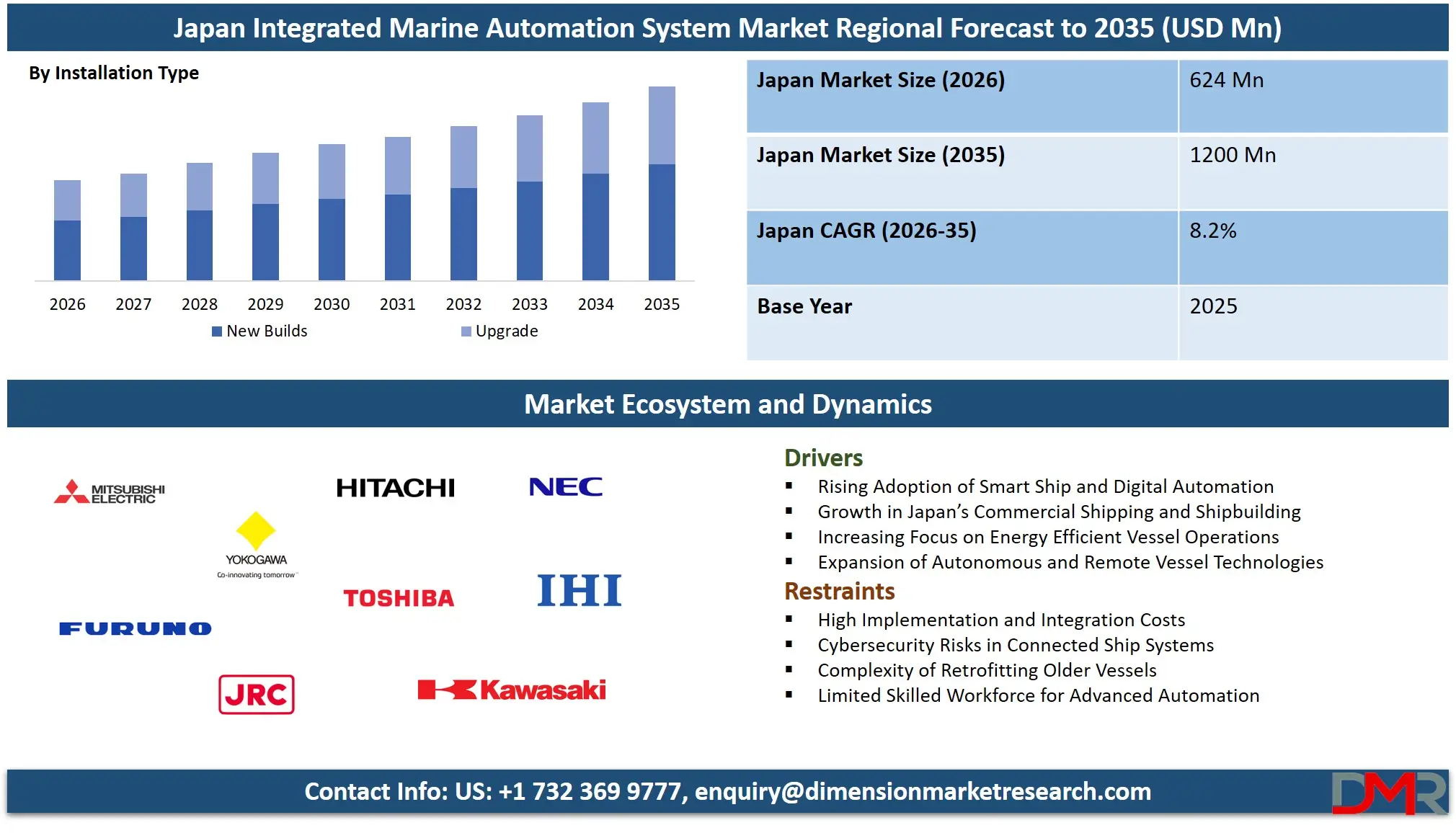
The Japan Integrated Marine Automation System Market is projected to reach USD 624 million in 2026 and expand to USD 1.2 billion by 2035, growing at a CAGR of 8.2%. Growth is driven by increasing adoption of smart ships, digital fleet management, and advanced vessel automation solutions across commercial and naval fleets.
ℹ
To learn more about this report –
Download Your Free Sample Report Here
An Integrated Marine Automation System is an advanced digital platform designed to unify and manage multiple shipboard operations through a single control interface. It combines subsystems such as propulsion management, power distribution, navigation assistance, engine performance monitoring, cargo handling, safety alarms, and environmental control into a centralized network. These systems leverage industrial sensors, programmable logic controllers, communication networks, and intelligent software to enable real time monitoring, automated decision making, and predictive maintenance. By minimizing manual intervention and optimizing operational processes, integrated marine automation systems enhance vessel efficiency, fuel management, safety compliance, and overall maritime operational reliability across commercial, naval, and offshore vessels.
The Japan Integrated Marine Automation System market represents a technologically advanced segment of the country’s maritime industry, driven by the nation’s strong shipbuilding heritage and focus on innovation in digital shipping solutions. Japanese shipping operators and shipbuilders are increasingly adopting integrated automation platforms to improve fleet efficiency, enhance navigational safety, and comply with stringent maritime regulations. The market growth is supported by the development of smart ships, intelligent propulsion management, and remote monitoring systems that allow seamless coordination of mechanical, electrical, and digital operations onboard.
ℹ
To learn more about this report –
Download Your Free Sample Report Here
Furthermore, the market in Japan is propelled by government initiatives promoting energy efficient shipping, environmental compliance, and the adoption of autonomous maritime technologies. Integrated marine automation platforms in Japanese fleets facilitate predictive diagnostics, real time performance analytics, and automated vessel control, enabling operators to reduce operational risks, optimize fuel usage, and maintain continuous monitoring of critical shipboard systems. Collaboration between maritime technology providers and shipbuilders further accelerates innovation, making Japan a hub for advanced marine automation solutions.
Japan Integrated Marine Automation System Market: Key Takeaways
- Rising Market Valuation: The Japan Integrated Marine Automation System Market is projected to reach USD 624 million in 2026 and expand to USD 1.2 billion by 2035, reflecting a robust CAGR of 8.2% over the forecast period.
- Dominance of Hardware Components: Hardware is expected to account for 66% of the total component market share in 2026, highlighting the continued reliance on physical shipboard systems like sensors, control panels, and monitoring devices.
- Partial Automation Prevalence: Partial automation is anticipated to capture 73% of the automation level segment in 2026, indicating the preference for digital-assisted operations with human oversight on most commercial and offshore vessels.
- Commercial Shipping Leadership: Commercial shipping dominates the end-user segment with 71% of the market share in 2026, reflecting widespread adoption of integrated systems across cargo, container, and tanker fleets.
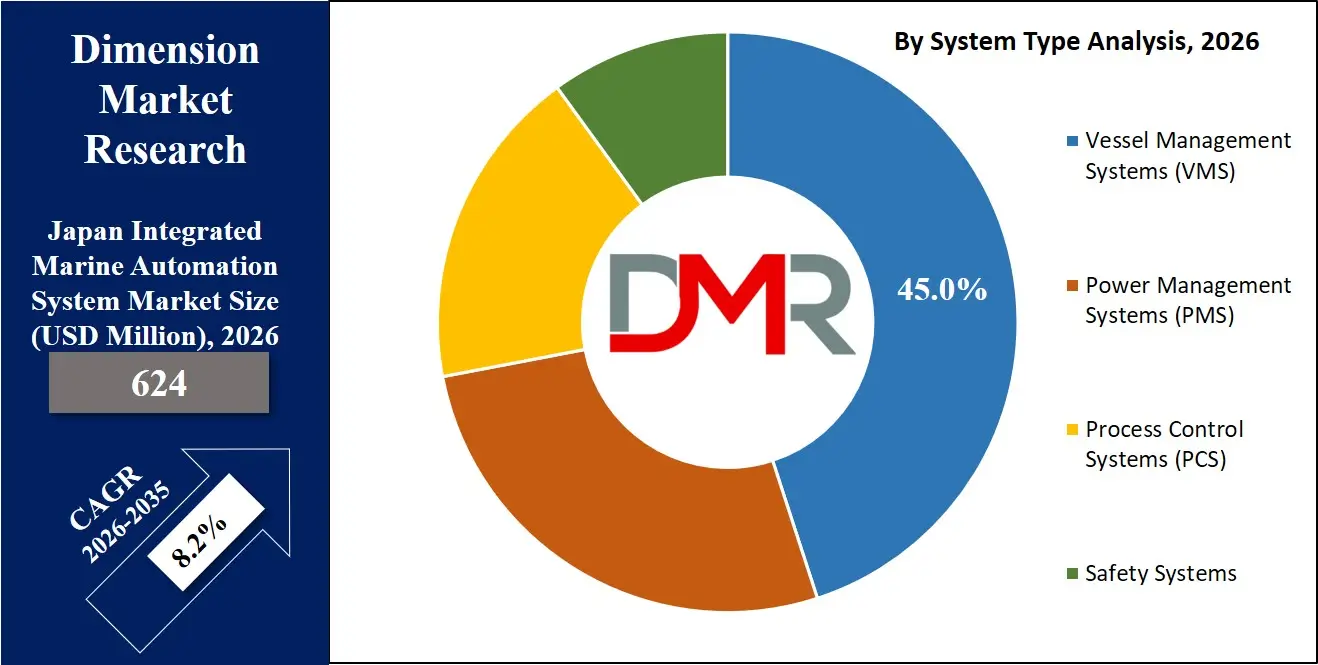
- Vessel Management Systems Adoption: Vessel Management Systems are projected to hold 45% of the system type market share in 2026, emphasizing their central role in unifying propulsion, navigation, safety, and onboard monitoring for fleet efficiency.
Japan Integrated Marine Automation System Market: Use Cases
- Commercial Shipping Automation: Japanese cargo vessels and container ships use integrated marine automation systems to manage propulsion control, engine monitoring, and onboard alarms through centralized control platforms. These solutions improve operational efficiency, reduce human workload, and support digital fleet management across domestic and international shipping routes.
- Offshore Support Vessel Operations: Offshore vessels servicing energy projects in Japan rely on marine automation platforms for power management, machinery supervision, and dynamic vessel control. These systems enhance reliability, safety, and operational efficiency in challenging offshore environments.
- Naval and Defense Vessel Control: Japanese naval fleets deploy integrated automation systems to monitor propulsion, onboard machinery, and safety networks. These platforms enable real time diagnostics, mission readiness, and secure maritime defense operations.
- Smart Ship and Remote Fleet Monitoring: Shipping operators in Japan adopt smart vessel technologies for remote monitoring, predictive maintenance, and performance analytics. Integrated automation systems support energy optimization, connected fleet management, and efficient operational planning.
Japan Integrated Marine Automation System Market: Stats & Facts
- Ministry of Land, Infrastructure, Transport and Tourism Domestic Shipping Statistics (MLIT)
- In January 2023, total domestic shipping volume was 24,168 thousand tons, up 0.2% year‑on‑year, with total cargo distance 12,158 million ton‑kilometers, up 0.6%.
- In March 2025, domestic coastal shipping volume reached 25,571 thousand tons, nearly level year‑on‑year (‑0.1%), with ton‑kilometers at 13,141 million, up 1.5%.
- In April 2025, domestic coastal shipping volume was 24,336 thousand tons, down 4.4% year‑on‑year, with ton‑kilometers 12,299 million, down 6.5%.
- In September 2025, domestic coastal shipping volume was 24,434 thousand tons, down 4.6% year‑on‑year, with 12,16 million ton‑kilometers, down 4.8%.
- In November 2024, November domestic coastal shipping volume was 24,941 thousand tons, down 2.8%, with ton‑kilometers 12,567 million, down 3.7%.
- In December 2024, coastal shipping volume was 26,540 thousand tons, down 1.5%, with ton‑kilometers 13,389 million, down 1.1%.
- In July 2025, domestic coastal shipping data showed volume 24,740 thousand tons, down 6.3% year‑on‑year.
- Container cargo volume by domestic vessels in April 2025 rose 2.3% year‑on‑year to 28.47 million tons, with increases seen in petroleum products, cement, and steel.
- MLIT monthly statistics for November 2025 show coastal freight in November 2025: cargo ships 17.13 million tons (up 8.5%) and oil tankers 8.81 million tons (up 11.8%).
- MLIT external trade statistics for November 2025 showed export container volume at 740 thousand TEUs (up 4.1%) and import container volume at 810 thousand TEUs (up 6.6%).
- MLIT Port Statistics – National Container Handling
- Japan’s preliminary total 2024 container throughput (all ports) was 21,980,000 TEUs, up 0.9% year‑on‑year.
- International foreign trade containers in 2024 were 17,490,000 TEUs, up 1.0%.
- Domestic container throughput in 2024 was 4,490,000 TEUs, up 0.7% versus 2023.
- In June 2025, Japan’s six major ports handled 1,178,215 TEUs, up 3.5% year‑on‑year.
- Foreign-trade exports in June 2025 were 592,004 TEUs (up 2.5%) and imports 586,211 TEUs (up 4.4%).
- Tokyo handled 368,391 TEUs (up 4.2%), Yokohama 241,224 TEUs (up 4.2%), and Nagoya 214,667 TEUs (up 2.5%) in June 2025.
- Osaka handled 169,959 TEUs (up 2.3%) and Kobe 177,129 TEUs (up 3.3%) in June 2025.
- Tokyo Port’s container traffic in the first half of 2025 rose 6.5% to 2.42 million TEUs versus the same 2024 period.
- In the first half of 2025, combined foreign and domestic containers were 2.42 million TEUs, up 6.5% year‑on‑year.
- First-half 2025 export containers were 94.8% of 2024 volumes, while imports were 105.4% of previous year’s figures.
Impact of US-Iran Conflict in the Japan Integrated Marine Automation System Market
- Disruption of Global Shipping Routes: The conflict around the Strait of Hormuz has significantly reduced commercial traffic through one of the world’s most critical maritime chokepoints, forcing carriers to reroute vessels, suspend Gulf transits, and alter schedules. This creates logistical uncertainty for Japanese shipping companies and can increase reliance on automation for dynamic route planning and real-time system monitoring.
- Higher Maritime Insurance Premiums: War-risk insurance premiums for vessels transiting conflict zones have surged, raising operational costs for shipowners and influencing decisions around fleet deployment, risk management, and investment in automated safety and monitoring systems.
- Slower or Delayed Cargo Flows to Japan: Ongoing tensions have disrupted maritime transport links between the Middle East and Japan, affecting the movement of crude oil, LNG, and other cargoes. Delays increase pressure on fleet operations and highlight the need for advanced automation to optimize logistics and reduce downtime.
- Fuel Price and Supply Volatility: Japan imports a high percentage of its oil and energy from the Middle East, and disruptions in the Strait of Hormuz contribute to volatility in crude and LNG prices. Fluctuating fuel costs may encourage shipping operators to prioritize energy-efficient automation technologies and propulsion management systems to control operating expenses.
- Elevated Maritime Safety and Navigation Risk: Threats such as missile attacks, drone activity, and electronic interference in the Gulf increase navigational hazards. This raises demand for advanced automated safety systems, real-time diagnostics, and integrated monitoring platforms aboard Japanese vessels to enhance risk mitigation during voyages through higher-risk corridors.
Japan Integrated Marine Automation System Market: Market Dynamic
Driving Factors in the Japan Integrated Marine Automation System Market
Rapid Adoption of Smart Ship Technologies
Japanese shipping companies are increasingly implementing smart ship solutions that integrate propulsion control, power management, and navigation monitoring. These integrated marine automation systems enhance operational efficiency, reduce human intervention, and enable predictive maintenance, allowing fleet operators to optimize performance and improve safety across commercial and naval vessels.
Government Support for Digital Maritime Infrastructure
Japan’s maritime authorities are promoting digitalization and energy efficiency through regulations and incentive programs. Investments in intelligent shipboard systems, automated monitoring platforms, and real time vessel data analytics support compliance with environmental standards and enhance operational transparency, driving market adoption.
Restraints in the Japan Integrated Marine Automation System Market
High Deployment and Integration Costs
Implementing integrated marine automation systems requires significant capital for sensors, control software, communication networks, and onboard infrastructure. Retrofitting existing vessels adds complexity and cost, limiting adoption among smaller shipping operators and older fleets.
Cybersecurity Challenges in Connected Ship Systems
Increased reliance on digital communication networks and remote monitoring exposes vessels to potential cyberattacks. Unauthorized access to automation platforms or navigation systems could disrupt operations and compromise maritime safety, posing a critical challenge for fleet operators.
Opportunities in the Japan Integrated Marine Automation System Market
Expansion of Autonomous and Remotely Operated Vessels
Japan is actively investing in autonomous vessel technology and remote ship operations. Integrated marine automation systems provide the necessary infrastructure for automated navigation, remote monitoring, and intelligent propulsion management, creating opportunities for innovation in next generation unmanned and semi-autonomous vessels.
Growing Focus on Energy Efficient Operations
Rising fuel costs and environmental regulations encourage Japanese shipping companies to adopt energy management and optimization systems. Integrated automation platforms help monitor engine performance, optimize fuel consumption, and reduce emissions, supporting sustainable maritime operations.
Trends in the Japan Integrated Marine Automation System Market
Integration of Predictive Analytics and Digital Twin Technology
Marine automation platforms in Japan are increasingly incorporating predictive maintenance and digital twin simulations. These technologies allow operators to monitor machinery health, forecast potential failures, and optimize vessel performance, reducing downtime and operational costs.
Adoption of Centralized Bridge and Vessel Control Systems
Shipbuilders and maritime technology providers in Japan are developing integrated bridge solutions that combine navigation, propulsion, and vessel monitoring into a single interface. This trend improves crew situational awareness, enhances operational efficiency, and simplifies fleet management across commercial and defense vessels.
Japan Integrated Marine Automation System Market: Research Scope and Analysis
By Component Analysis
In the Japan Integrated Marine Automation System market, hardware is expected to dominate the component segment, accounting for 66.0% of the total market share in 2026. The strong presence of hardware is driven by the widespread deployment of physical shipboard equipment such as sensors, control panels, programmable logic controllers, communication modules, alarm systems, and monitoring devices. These hardware components form the backbone of vessel automation, enabling real time data acquisition, machinery control, and efficient monitoring of propulsion, engine, and safety systems. Japanese shipbuilders and fleet operators continue to invest heavily in high quality marine electronics and industrial control hardware to improve navigation safety, energy management, and overall operational reliability across commercial and naval fleets.
Software also plays a critical role in this market segment by connecting multiple shipboard subsystems and enabling centralized monitoring, automated decision support, and real time analytics. Marine automation software integrates propulsion monitoring, power management, cargo handling, and navigation tools into a unified interface, providing predictive maintenance insights, alarm management, and remote fleet supervision. As Japanese shipping companies increasingly adopt smart vessel technologies and digital fleet management strategies, the demand for advanced control software, performance analytics platforms, and cybersecurity enabled solutions continues to grow, supporting seamless and intelligent ship operations.
By System Type Analysis
In the Japan Integrated Marine Automation System market, Vessel Management Systems are expected to dominate the system type segment, capturing around 45.0% of the total market share in 2026. These systems act as the central framework for controlling and monitoring multiple shipboard operations, including propulsion, navigation, machinery diagnostics, alarm management, and overall vessel performance. By providing a unified interface and real time data communication, vessel management platforms enhance operational efficiency, safety compliance, and fleet coordination. Japanese shipping operators and shipbuilders are increasingly adopting these systems to support smart ship initiatives, predictive maintenance, and digital fleet management across commercial, offshore, and defense vessels.
ℹ
To learn more about this report –
Download Your Free Sample Report Here
Power Management Systems also play a key role in integrated marine automation by controlling the generation, distribution, and utilization of electrical power onboard. These systems monitor generators, optimize energy consumption, balance electrical loads, and ensure reliable power supply for critical onboard machinery and navigation equipment. In Japanese maritime operations, power management platforms are crucial for maintaining energy efficiency, preventing electrical failures, and supporting hybrid propulsion and electrified ship systems. The growing focus on energy optimization and environmentally sustainable shipping further strengthens the adoption of advanced power management solutions in the market.
By Installation Type Analysis
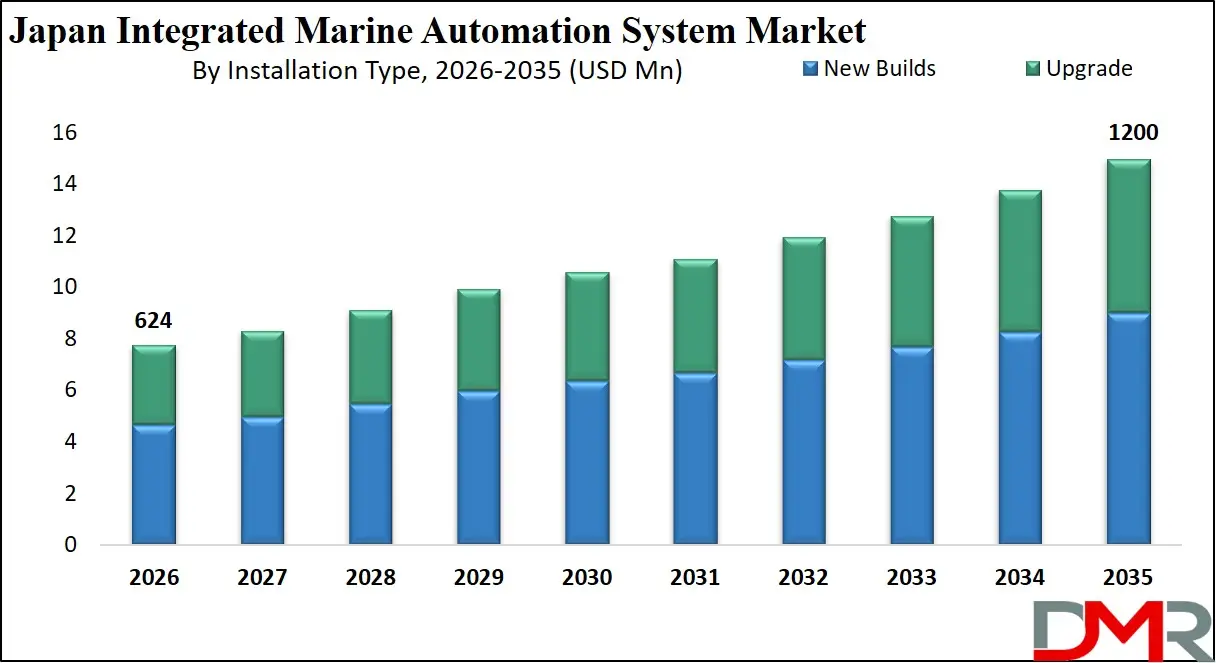
In the Japan Integrated Marine Automation System market, new builds are expected to dominate the installation type segment, capturing around 60.0% of the total market share in 2026. This dominance is driven by Japan’s strong shipbuilding industry, where advanced automation systems are increasingly integrated during the vessel construction phase. Installing marine automation platforms at the design and build stage allows for seamless integration of propulsion monitoring, vessel management, navigation control, and safety systems. This approach ensures optimized operational efficiency, improved fuel management, and enhanced safety from the outset, making new ships more technologically advanced and ready for smart ship operations.
The upgrade segment also holds significance as many existing vessels require modernization to remain competitive and compliant with evolving maritime regulations. Retrofitting older ships with integrated automation solutions, such as updated control software, intelligent monitoring systems, and advanced power management platforms, helps improve engine performance, energy efficiency, and real time vessel data analytics. As Japanese shipping operators aim to extend vessel lifecycles and enhance operational efficiency, the retrofit market continues to support steady demand for upgrades across commercial and defense fleets.
By Automation Level Analysis
In the Japan Integrated Marine Automation System market, partial automation is expected to dominate the automation level segment, capturing around 73.0% of the total market share in 2026. Partial automation systems allow critical ship functions to be controlled digitally while retaining human oversight and decision making. These systems manage propulsion monitoring, machinery diagnostics, alarm systems, and navigation support, improving operational efficiency and safety without fully replacing onboard crews. Most commercial vessels, tankers, and offshore ships in Japan rely on this level of automation to balance advanced control capabilities with crew supervision, ensuring reliable and optimized maritime operations.
The remotely operated segment is also gaining traction as Japanese maritime operators explore advanced vessel control technologies that enable certain ship functions to be monitored or managed from onshore locations. These systems leverage communication networks, real time monitoring platforms, and intelligent automation software to supervise propulsion, navigation, and onboard machinery performance remotely. Although adoption is still emerging compared to partial automation, remotely operated systems are increasingly used for research in autonomous shipping, fleet monitoring, and smart vessel management, providing enhanced operational transparency and support for unmanned or semi-autonomous maritime operations.
By End-User Analysis
In the Japan Integrated Marine Automation System market, commercial shipping is expected to dominate the end-user segment, capturing around 71.0% of the total market share in 2026. The dominance of this segment is driven by the extensive use of integrated automation systems across cargo vessels, container ships, bulk carriers, and tankers operating on domestic and international shipping routes. Shipping companies are adopting these platforms to enhance operational efficiency, optimize fuel consumption, and improve safety management. Integrated marine automation systems enable centralized monitoring of propulsion systems, engine performance, cargo handling, and onboard safety equipment, supporting digital fleet management and more efficient maritime operations.
The defense segment also represents a significant application area for integrated marine automation systems, particularly across Japanese naval fleets and security vessels. These platforms allow for real time monitoring of propulsion systems, onboard machinery, and critical vessel operations through centralized command and control interfaces. By implementing advanced ship automation technologies, defense organizations improve situational awareness, operational readiness, and mission efficiency. The use of integrated marine automation in naval vessels supports modern maritime defense operations, reduces manual workload, and strengthens fleet performance in complex operational scenarios.
The Japan Integrated Marine Automation System Market Report is segmented on the basis of the following:
By Component
- Hardware
- Software
- Services
By System Type
- Vessel Management Systems (VMS)
- Power Management Systems (PMS)
- Process Control Systems (PCS)
- Safety Systems
By Installation Type
By Automation Level
- Partial Automation
- Remotely-Operated
- Fully Autonomous
By End-User
- Commercial Shipping
- Defense
- Others
Impact of Artificial Intelligence in the Japan Integrated Marine Automation System Market
Artificial intelligence is significantly transforming the Japan Integrated Marine Automation System market by enhancing the intelligence and efficiency of shipboard automation platforms. AI-enabled systems are integrated with vessel management tools, propulsion monitoring, and onboard sensor networks to provide real time data processing, predictive maintenance, and automated decision support. By analyzing engine performance, fuel consumption, and machinery health, AI-driven marine automation enables operators to detect potential failures early, optimize propulsion efficiency, and improve overall vessel performance, reducing downtime and operational risks across commercial fleets.
AI also strengthens remote monitoring, smart navigation support, and advanced maritime decision making for Japanese shipping operators. Automation platforms equipped with machine learning and predictive analytics process large volumes of data from navigation systems, weather monitoring, and ship control networks to support route optimization, energy management, and safety monitoring. As Japanese maritime companies continue investing in digital shipping technologies and intelligent vessel management solutions, artificial intelligence is expected to play a central role in advancing autonomous shipping capabilities and next-generation integrated marine automation systems.
Japan Integrated Marine Automation System Market: Competitive Landscape
The Japan Integrated Marine Automation System market is highly competitive, driven by continuous technological innovation, strategic collaborations, and investments in advanced maritime automation solutions. Market players focus on developing integrated vessel management platforms, intelligent power management systems, and automated ship control technologies to enhance operational efficiency, safety, and energy optimization.
ℹ
To learn more about this report –
Download Your Free Sample Report Here
Companies are increasingly incorporating predictive maintenance, real time monitoring, and digital fleet management capabilities into their product offerings to address the evolving needs of commercial shipping, offshore operations, and naval fleets. Strategic partnerships with shipbuilders, maritime engineering firms, and technology providers further accelerate innovation and deployment of next-generation shipboard automation systems across Japanese maritime operations.
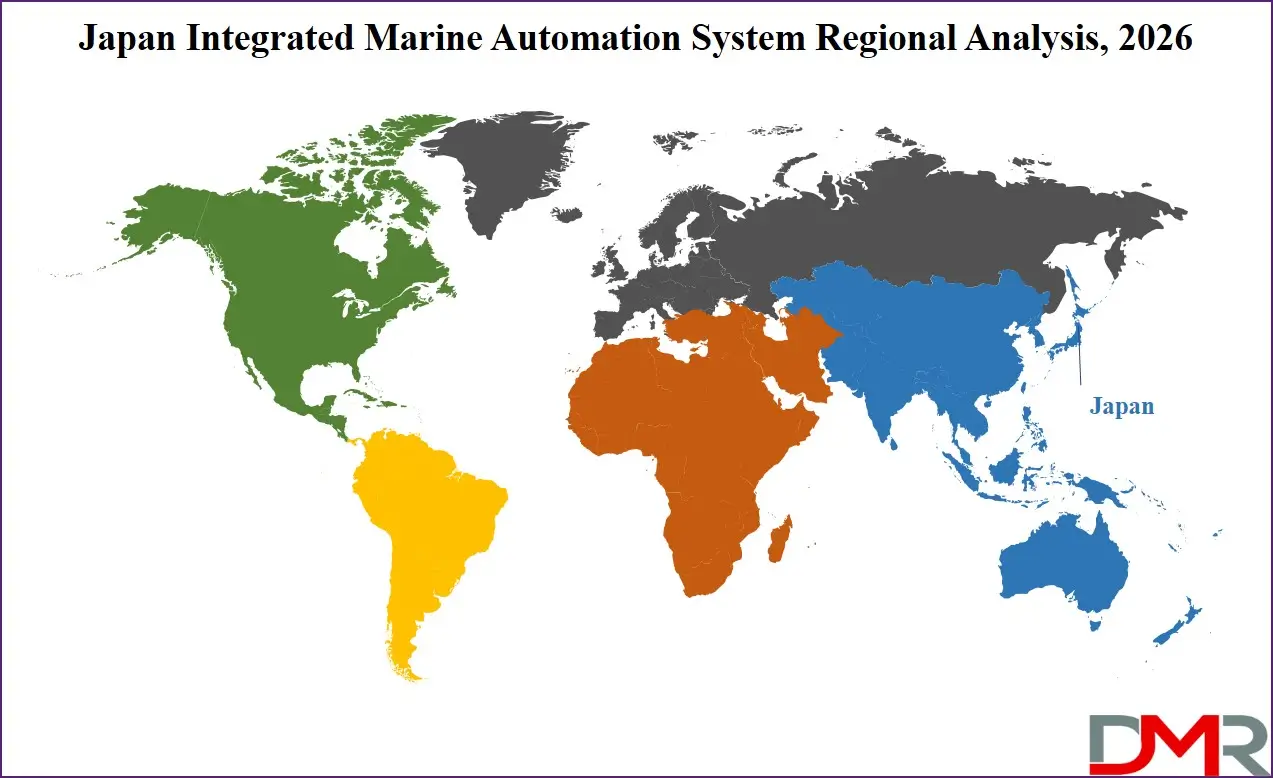
Some of the prominent players in the Japan Integrated Marine Automation System Market are:
- Mitsubishi Electric Corporation
- Yokogawa Electric Corporation
- Furuno Electric Co., Ltd.
- Japan Radio Co., Ltd. (JRC)
- Hitachi, Ltd.
- Toshiba Corporation
- NEC Corporation
- Kawasaki Heavy Industries, Ltd.
- IHI Corporation
- Toshiba Energy Systems & Solutions Corporation
- Sony Group Corporation (Maritime IoT solutions)
- Panasonic Corporation (Industrial systems)
- Shimadzu Corporation
- Sumitomo Heavy Industries, Ltd.
- Nidec Corporation
- Azbil Corporation
- Advantech Co., Ltd.
- OMRON Corporation
- Renesas Electronics Corporation
- NS Solutions Corporation
- Other Key Players
Recent Developments in the Japan Integrated Marine Automation System Market
- December 2025: The Nippon Foundation’s MEGURI2040 program saw the world’s first commercially operating autonomous passenger ferry Olympia Dream Seto enter service with autonomous navigation systems installed, marking a major milestone in practical ship automation.
- October 2025: YANMAR BLUE TECH Co., Ltd., a joint venture between Yanmar Holdings and Sony Group Corporation, was established with capital backing to develop advanced underwater sensing and automated marine robotics solutions for hull inspection and other automated vessel support technologies.
- August 2025: Mitsubishi Electric Corporation’s ME Innovation Fund invested in Pale Blue Inc., a startup working on advanced propulsion and maritime subsystem technologies, signaling broader industry funding interest in marine tech innovation.
Report Details
| Report Characteristics |
| Market Size (2026) |
USD 624 Mn |
| Forecast Value (2035) |
USD 1.2 Bn |
| CAGR (2026–2035) |
8.2% |
| Historical Data |
2021 – 2025 |
| Forecast Data |
2027 – 2035 |
| Base Year |
2025 |
| Estimate Year |
2026 |
| Report Coverage |
Market Revenue Estimation, Market Dynamics, Competitive Landscape, Growth Factors and etc. |
| Segments Covered |
By Component (Hardware, Software, Services), By System Type (Vessel Management Systems, Power Management Systems, Process Control Systems, Safety Systems), By Installation Type (New Builds, Upgrade), By Automation Level (Partial Automation, Remotely-Operated, Fully Autonomous), and By End-User (Commercial Shipping, Defense, Others) |
| Country Coverage |
Japan |
| Prominent Players |
Mitsubishi Electric, Yokogawa Electric, Furuno Electric, Japan Radio (JRC), Hitachi, Toshiba, NEC, Kawasaki Heavy Industries, IHI, Toshiba Energy Systems, Sony, Panasonic, Shimadzu, Sumitomo Heavy Industries, Nidec, Azbil, Advantech, OMRON, Renesas Electronics, NS Solutions, and Other Key Players |
| Purchase Options |
We have three licenses to opt for: Single User License (Limited to 1 user), Multi-User License (Up to 5 Users) and Corporate Use License (Unlimited User) along with free report customization equivalent to 0 analyst working days, 3 analysts working days and 5 analysts working days respectively. |
Frequently Asked Questions
How big is the Japan Integrated Marine Automation System Market?
▾ The Japan Integrated Marine Automation System Market size is estimated to have a value of USD 624 million in 2026 and is expected to reach USD 1.2 billion by the end of 2035.
What is the growth rate in the Japan Integrated Marine Automation System Market in 2026?
▾ The market is growing at a CAGR of 8.2% over the forecasted period of 2026.
Who are the key players in the Japan Integrated Marine Automation System Market?
▾ Some of the major key players in the Japan Integrated Marine Automation System Market are Mitsubishi Electric, Yokogawa Electric, Furuno Electric, Japan Radio (JRC), Hitachi, Toshiba, NEC, Kawasaki Heavy Industries, IHI, Toshiba Energy Systems, Sony, Panasonic, and many others.